YubNub Social YubNub Social
    Advanced Search
  • Login

  • Night mode
  • © 2026 YubNub Social
    About • Directory • Contact Us • Privacy Policy • Terms of Use • Android • Apple iOS • Get Our App

    Select Language

  • English
Install our *FREE* WEB APP! (PWA)
Night mode
Community
News Feed (Home) Popular Posts Events Blog Market Forum
Media
Headline News VidWatch Game Zone Top PodCasts
Explore
Explore Jobs Offers
© 2026 YubNub Social
  • English
About • Directory • Contact Us • Privacy Policy • Terms of Use • Android • Apple iOS • Get Our App

Discover posts

Posts

Users

Pages

Group

Blog

Market

Events

Games

Forum

Jobs

History Traveler
History Traveler
2 yrs

Who Won the Battle of Stones River?
Favicon 
www.thecollector.com

Who Won the Battle of Stones River?

  Tennessee, just south of contested Kentucky, was one of the earliest Confederate targets of the Union. After the Union managed to hold onto the border state of Kentucky, it immediately went after Tennessee, but faced stiff resistance. The Battle of Stones River was an inevitable post-Kentucky showdown between two generals who took their time preparing amid political bickering that neither was up to the task.   Victory Goes to the Union Confederate troops struggling under fire in Stones River during the battle. Source: National Park Service (NPS)   The Battle of Stones River was a brutal slugfest. After eyeing each other in central Tennessee, the armies of Union general William Rosencrans and Confederate general Braxton Bragg planned to attack each other, hoping to win the region for their respective countries. Despite the initial success of a Confederate attack on December 31, 1862, the Union eventually held firm as the Confederate follow-up was uncoordinated. After prematurely declaring victory that evening, the Confederates failed to notice the maneuvering of Union reinforcements.   A second Confederate attack on January 2 failed, thanks to the Union reinforcements, who counterattacked. Bragg realized that Rosencrans had more men and would receive additional reinforcements, which led to his decision to withdraw on January 3. Although little changed for the South, the North saw the narrow victory as very substantial due to US President Abraham Lincoln’s Emancipation Proclamation, given after the Battle of Antietam in September 1862. The Proclamation, which took effect on January 1, 1863, would be seen as meaningful only if it came alongside Union military victories.   Timeline of the Battle of Stones River A map showing the Union and Confederate opening movements during the Battle of Stones River in Tennessee. Source: The American Battlefield Trust   The Union loss at the Battle of Fredericksburg in December 1862 was a morale-crusher for the Union. President Lincoln wanted to both rectify this loss and win a Union victory that would accompany the carrying out of his Emancipation Proclamation on January 1, 1863. In central Tennessee, the army of Confederate general Braxton Bragg was only 30 miles from that of Union general William Rosencrans, setting up an opportune conflict.   Ordered to engage, Rosencrans began moving his army south on December 26, 1862 to find Bragg’s forces.   Late in the day on December 30, the two armies faced each other near Murfreesboro, Tennessee.   Early the next morning, the Confederates struck first and drove back the Union units, with massive casualties on both sides due to fierce, nonstop combat. Rosencrans called up reinforcements, who saved the day from a Union defeat with the help of skillful artillery. Confederate artillery struggled to join the front line through thick forests, giving the Union a firepower advantage.   After a day of rest on January 1, Bragg ordered another attack on the afternoon of January 2. The Confederates ran into massed Union cannons that had a decimating effect on their ranks.   After a Union counterattack pushed the cannon-stricken Confederates back, Bragg withdrew on January 3, 1863.   What Caused the Battle of Stones River? An image showing the role of Kentucky as a border state between the Union and the Confederacy at the beginning of the American Civil War. Source: Frazier History Museum, Louisville, Kentucky   After having saved the border state of Kentucky from joining with the Confederacy, it was time for the Union to take the war into the South. Tennessee was the “top” of the South, and the Union began pushing through it from west to east. Although the Union had been gaining ground in its offensives in this Western Theater, especially with its victory in the Battle of Shiloh, the Confederate victory at Fredericksburg in early December of 1862 seemed to have stalled its momentum. Abraham Lincoln’s Emancipation Proclamation of September 1862 had declared that all enslaved people in states still in rebellion as of January 1, 1863 would be free. He wanted this date to fall on or after a Union victory, not its defeat at Fredericksburg.   The Battle of Stones River was anticipated by both sides in advance, as Rosencrans’ Army of the Cumberland was in close proximity to Bragg’s Army of Tennessee and the region of central Tennessee was clearly the next to be contested. Rosencrans also had some 80,000 men under his command, easily double that of Bragg. This allowed Rosencrans to leave half of them in Nashville, which the Union had seized early in the year, to protect it from Confederate attack. With his manpower advantage and President Lincoln needing a victory, Rosencrans was up to the task.   Why Was the Battle of Stones River Significant? A newspaper image of a successful Union charge during the Battle of Stones River on January 2, 1863. Source: Tennessee State Library and Archives   The Battle of Stones River was significant for multiple reasons, the first of which was its design to give the Union a victory that coincided with the Emancipation Proclamation taking effect. When Bragg withdrew on January 3, President Lincoln had his victory and an omen that the Union would prevail in the conflict. Secondly, the battle was infamous for having the highest percentage of casualties in a major skirmish during the war, with almost 4 percent of committed troops killed in action. Four of the dead were brigadier generals, an unusually high number of top-ranked officers.   After the defeat at Fredericksburg, the Union victory at Stones River was instrumental in maintaining morale and the will needed to continue the war without negotiating for an armistice with the South. Politically, the Lincoln administration was under pressure to show results toward winning the war. Although eventual victory over the Confederacy was virtually guaranteed, many in the North preferred to negotiate an armistice, potentially allowing the Confederacy to remain an independent state, to reduce casualties. Stones River bought Lincoln more time.   5 Facts About the Battle of Stones River The National Park Service provides some trivia about the night before the beginning of the Battle of Stones River. Source: National Park Service   1. Casualties Casualties during the two days of fighting totaled almost 25,000, with slightly more Union than Confederate (though keeping in rough relation to the proportion of troops each side fielded). With just over 75,000 men engaged in the battle, the high number of casualties meant that almost twenty percent, or one out of every five, was at least wounded in combat. Therefore, while Stones River was not one of the largest battles of the war, it does go down as one of the most intense.   2. Commanders Union forces were led by General William Rosencrans, a West Point graduate with relatively little combat experience. Unlike most of his fellow Military Academy alumni, he did not serve in Mexico during the Mexican-American War. An engineer, he worked on several Army projects before resigning from the service in 1854. After the Civil War began with the Battle of Fort Sumter, Rosencrans rejoined the US Army as a staff officer under General George McClellan. He was eventually relieved of his command after his defeat at Chickamauga in September 1863, later retiring to California.   Confederate forces were led by general Braxton Bragg, who had served in both the Seminole Wars in Florida and in the Mexican-American War. Combative by nature, Bragg was almost drummed out of the US Army prior to the Mexican-American War, where his bravery and skill redeemed his reputation. Bragg’s temper toward subordinate officers meant he did not win their loyalty, which led them to call for his resignation after the loss at Stones River. Although Confederate President Jefferson Davis stood by Bragg at the time, he later replaced Bragg after the general’s defeat at Chattanooga.   3. Number of Forces Involved A map showing the location of Union (blue) and Confederate (red) armies during the December 31, 1862 Battle of Stones River in Tennessee. Source: Dickinson College   Under Rosencrans, just over 41,000 Union soldiers were committed to the battle, which constituted about half of the general’s total force in Tennessee. Bragg had some 35,000 men, bringing the total of combatants to about 76,000. Therefore, Stones River was indeed a major battle, but was dwarfed by larger engagements like Antietam and Gettysburg.   4. Visiting Murfreesboro, Tennessee Today Today, visitors can enjoy the Stones River National Battlefield near Murfreesboro, Tennessee. The battlefield has a large visitor center typically open from 9:00 AM to 5:00 PM and includes a bookstore. It can accommodate large groups of visitors, such as history class field trips from nearby schools, and is also open for driving tours. For those staying in the town of Murfreesboro, there are plenty of Civil War historic sites to visit in addition to the battlefield.   5. Trivia: Highest Casualty Rate in a Major Civil War Battle Although not often remembered as a major Civil War battle, the Battle of Stones River is remembered as the most intense single battle, with a death rate of combatants almost reaching four percent. Other noteworthy casualty statistics go to larger battles like Antietam, which had the highest total casualties in a single day, or Gettysburg, which had the highest total casualties over a multi-day engagement. In terms of total casualties, the two-day Battle of Stones River ranks seventh overall, just behind the Battle of Shiloh and just ahead of Antietam.   Aftermath of Stones River: Union Aims at Chattanooga A newspaper image of Union General William Rosencrans’ position in the captured city of Chattanooga, Tennessee. Source: Big Walnut Area Historical Society   After the successful Battle of Stones River, General Rosencrans aimed to protect the captured region of central Tennessee from a possible Confederate return. As a result, he turned much of Chattanooga into a fortress, and did the same with Murfreesboro. Toward this end, Rosencrans was successful: Tennessee became the only Confederate state to be fully occupied by the Union before the end of the Civil War in the late spring of 1865.   The Union victory on January 3 helped underscore the seriousness of Lincoln’s Emancipation Proclamation. By showing that the Union was not giving up the fight against a devoted Confederate resistance, the victory at Stones River helped reinforce the belief among foreign powers like France and Britain that the Confederacy was a lost cause and should receive no recognition or aid. It also likely encouraged more enslaved people in the South to risk seeking freedom by escaping to Union lines, where they could find shelter and employment in Washington DC.
Like
Comment
Share
History Traveler
History Traveler
2 yrs

4 Villains From the Arthurian Legends Who Really Existed
Favicon 
www.thecollector.com

4 Villains From the Arthurian Legends Who Really Existed

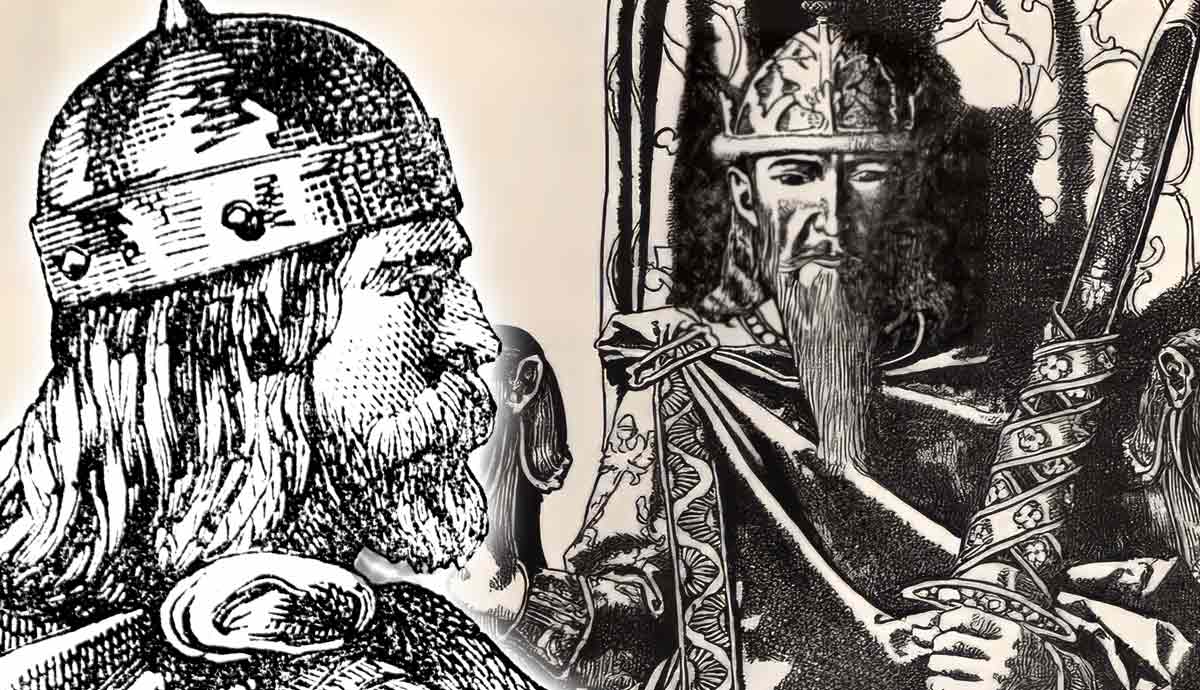
  Although the Arthurian legends are full of references to magic, dragons, and other fanciful elements, they have a definite historical setting. They are based in 5th and 6th century Britain. This was early Dark Age Britain, the era of the Anglo-Saxon conquests. Many of the characters who appear as Arthur’s companions or allied kings can be identified as historical figures of that era. However, the villains of the Arthurian legends have often been ignored in discussions of this subject. Can any of those characters be identified as historical figures?   1. King Mark of Cornwall Illustration of King Mark of Cornwall from The Champions of the Round Table, by Howard Pyle, 1905. Source: Wikiwand   One fairly well-known example is that of King Mark of Cornwall. He appears prominently in the Arthurian legends about Tristan and Isolde. He is described as Tristan’s uncle by marriage. It is very likely that the legendary King Mark can be identified as the historical Conomor, a ruler of part of Brittany in the mid-6th century.   The earliest piece of evidence for this claim is the 9th-century document known as the Life of St Paul Aurelian. In this document, we find a fascinating statement. The writer informs us that the king known as “Quonomorus” was also named “Mark.” The only “Quonomorus” in this era was Conomor of Brittany. Just like King Mark of the Arthurian legends, Conomor of Brittany was infamous for his villainy involving marriages and obsession.   An inscribed stone from Cornwall that dates to about the 6th century includes the name, Conomor. It also, according to the most recent scholarship, includes the name of Tristan, confirming the close connection between the two.   2. Rhita the Giant Statue of Geoffrey of Monmouth at Tintern Station, Wales. Source: Visit Monmouthshire   A somewhat more obscure villain from the Arthurian legends is Rhita Gawr, whose epithet means “Giant.” He appears in European and English tales as Rions or Rience. Geoffrey of Monmouth referred to him as Ritho, a form much closer to the Welsh spelling that is likely close to the original. According to most versions of the Arthurian legends, Rhita Gawr was a giant who lived in North Wales. He was an evil king who had killed various other monarchs and wore their beards on a garment. He challenged Arthur to a duel, but the young and newly-appointed king killed the giant.   Needless to say, this legend is full of fanciful elements, including the very nature of Rhita as a giant. Nevertheless, we are able to make a plausible identification of this character with a historical figure from the period. Bede, the 8th-century English historian, referred to an Irish figure named “Reuda.” He founded the kingdom of Dal Riata, which was named after him.   Map of Argyleshire, broadly equivalent to the medieval kingdom of Dal Riata, From Imperial Gazetteer of Scotland, by John Marius Wilson. Source: The Internet Archive   Notice the similarity between “Reuda” or “Riata” and the name of the legendary giant, “Rhita.” However, we need more than just a similar name to be able to make a convincing case. Although Bede himself does not give a date for Reuda’s reign, later records place the founding of Dal Riata at the very end of the 5th century. This would logically place Reuda in the early Arthurian period. If we could identify Reuda himself more precisely, we could make an even more convincing case.   As it happens, later Irish records say that Dal Riata was founded by three brothers. The son and successor of the most prominent of these three, Fergus Mor, was named Domangart Reti. Given the apparent conflict between Bede’s account of the founding of this kingdom and the later Irish versions, it seems very likely that Bede’s “Reuda” was this Domangart Reti. Thus, the “founder” referred to by Bede was actually the son of one of the three brothers who allegedly conquered the territory originally.   Dunadd hill fort, possible capital of Dal Riada. Source: Britannica   Presumably, Domangart consolidated his family’s rule of the area, thus coming to be known as its founder in some traditions. Domangart Reti is recorded as dying in the early 6th century and this matches with the placement of Rhita’s death in the Arthurian legends. With this evidence in view, it is very likely that the Rhita Gawr of Welsh tradition is identical to the historical Domangart Reti, Bede’s legendary Reuda.   Although it is true that there is no tradition of the kings of Dal Riata dominating North Wales, we would do well to consider what the earliest version of the legend actually says. Geoffrey of Monmouth’s account is the earliest surviving source. He does not specifically say that Rhita (or “Ritho,” as he calls him) ruled over North Wales. He simply says that North Wales is where the battle between him and Arthur took place. Since most Welsh traditions place Arthur in South Wales, meeting a king from Dal Riata halfway between their respective territories, which would be North Wales, is a reasonable scenario.   3. Lucius Tiberius Map of the Western Roman Empire, over which Timasius fought Magnus Maximus’ armies, c. 400 CE. Source: Wikimedia Commons   As well as describing battles in Britain, the Arthurian legends also describe Arthur fighting battles on the continent against the Romans. As scholar David Dumville argued, this part of the legend almost certainly came from Magnus Maximus’ usurpation of the Western Roman Empire, when he invaded from Britain. However, beyond this basic connection, relatively little research has been done on the intricate connections between the legend and its historical basis.   The figure who serves as Arthur’s primary antagonist in the legend is a certain Lucius Tiberius. Although some online sources describe him as an emperor, the earliest version of the legend only ever calls him a military leader.   The two Roman leaders of the army of Emperor Theodosius at the climax of Maximus’ usurpation were Flavius Promotus and Flavius Timasius. Of the two of them, the latter is clearly the better option for the legendary Tiberius. When we consider the customs of medieval scribes, this identification is all but certain.   Magnus Maximus, from The Llanbeblig Hours, 1390-1400. Source: The National Library of Wales   Firstly, it should be noted that the letter “r” and the letter “s” in some medieval Welsh manuscripts are almost identical. In the name “Atroys,” for incidence, found in the Harleian MS 3859, we see both letters in the same name. It is only by a minuscule difference that the letters are distinguishable from each other. For this reason, these two letters were often swapped by mistake, and this tendency also applied to medieval manuscripts from many other locations.   The other main difference between “Timasius” and “Tiberius” is the ‘b’ instead of the “m.” In fact, both letters were sometimes used to represent the same sound. An example of this is seen in the work of Gregory of Tours, who referred to Conomor of Brittany with a “b” in the place of the “m.” Sometimes, the letter “f” or “v” was used in place of both, masking whether “b” or “m” had been there originally.   Therefore, we can see that the evolution from “Timasius” to “Tiberius” (a much more familiar name to the medieval scribes) would have been exceedingly easy. Therefore, Timasius can very likely be identified as the Roman military leader Tiberius from this Arthurian legend.   4. Osla Big-Knife Depiction of Cerdic of Wessex, grandson of the likely Osla, from Theatre, by John Speed, 1611. Source: Cambridge University   Osla Big-Knife is a very obscure villain from the Arthurian legends. His epithet appears as “Gyllellfawr” in the Welsh texts in which he appears. He appears in the late Mabinogi tale known as The Dream of Rhonabwy. This work presents the story of the prelude to Arthur’s famous Battle of Badon. In this tale, the leader of the Saxons is named Osla. Interestingly, a separate Welsh tradition records the name of the leader of the Saxon army as Cheldric. These two bits of information can help us to identify Osla.   The Cheldric who appears as Arthur’s enemy in the Arthurian legends is almost certainly Cerdic of Wessex. He was a historical Saxon leader who fought against the Britons in the south in exactly the era in which Arthur was alive, according to legend, fighting against the Saxons. Notably, Anglo-Saxon genealogies make him the grandson of an otherwise unknown figure called Esla. Very likely, this Esla is the figure recorded as Osla in Welsh tradition. It may be that Cerdic was a young commander in charge of the armies of his grandfather, accounting for the two seemingly contradictory traditions about the leader of the Saxons at Badon.   Historical Villains of the Arthurian Legends An illustration from The Mabinogion, by Charlotte Guest, 1877. Source: Wikimedia Commons   In conclusion, we can see that there are a number of villains from the Arthurian legends who can be identified as historical figures. King Mark, famous from the story of Tristan and Isolde, can almost certainly be identified as Conomor of Brittany. The giant named Rhita whom Arthur killed early in his reign can likely be identified as Domangart Reti and Bede’s “Reuda,” a king of Dal Riata.   In the legend of Arthur conquering parts of Europe, the main antagonist is the Roman military commander Lucius Tiberius. In view of this legend being based on Magnus Maximus’ historical usurpation, it is very likely that Tiberius can be identified as Timasius. He was one of the two primarily military commanders who fought against Maximus.   Finally, we have seen that Osla, the leader of the Saxons at Badon in Welsh tradition, can likely be identified as the obscure figure named Esla from Anglo-Saxon genealogies.
Like
Comment
Share
Conservative Voices
Conservative Voices
2 yrs

Watch: Kamala Harris Tries to Escape Question About Economic Plan as Latest Interview Looks Rough
Favicon 
www.westernjournal.com

Watch: Kamala Harris Tries to Escape Question About Economic Plan as Latest Interview Looks Rough

It's finally happened. And it's exactly what you expected. When Vice President Kamala Harris became the de facto successor to President Joe Biden atop the Democratic ticket, she took over a month to schedule an interview. Except it wasn't a solo gig -- her veep candidate, Minnesota Gov. Tim Walz,...
Like
Comment
Share
Conservative Voices
Conservative Voices
2 yrs

Duchess Meghan Given Humiliating Title by Her Own US Staff, Called a 'Dictator' in New Report - 'She's Relentless'
Favicon 
www.westernjournal.com

Duchess Meghan Given Humiliating Title by Her Own US Staff, Called a 'Dictator' in New Report - 'She's Relentless'

If your boss is a royal pain, take some solace: At least they're not an actual royal. Such is the pain of being an employee of the Duke and Duchess of Sussex -- the grift artists formerly known as Prince Harry and Meghan Markle -- that one report has their...
Like
Comment
Share
Conservative Voices
Conservative Voices
2 yrs

CNN Data Analyst Reports Why Swift Endorsement May Have to Matter for Dems -- And It's Bad News for Kamala
Favicon 
www.westernjournal.com

CNN Data Analyst Reports Why Swift Endorsement May Have to Matter for Dems -- And It's Bad News for Kamala

It may seem laughable -- the idea that, just moments after the debate between Vice President Kamala Harris and former President Donald Trump concluded, pop icon Taylor Swift released an endorsement in which she signed off on her support for the Democratic nominee as a "Childless Cat Lady" for Harris-Walz....
Like
Comment
Share
Conservative Voices
Conservative Voices
2 yrs

Trump Warns: 'There Will Be No Third Debate'
Favicon 
www.westernjournal.com

Trump Warns: 'There Will Be No Third Debate'

Tuesday night in Philadelphia finally saw former President Donald Trump and Vice President Kamala Harris square off in a presidential debate ahead of November. Harris exceeded expectations as she appeared a cut above her usual cackling incoherent self while Trump noticeably showed more aggression than he did during his June...
Like
Comment
Share
Conservative Voices
Conservative Voices
2 yrs

Celebrity's Fast-Food Chain Suddenly Closes All Locations Following Minimum Wage Hike
Favicon 
www.westernjournal.com

Celebrity's Fast-Food Chain Suddenly Closes All Locations Following Minimum Wage Hike

Actor and comedian Kevin Hart has apparently found out there's nothing funny about trying to run a business in leftist California. The four locations of Hart's mini fast-food chain, Hart House, abruptly closed their doors this week without any public explanation. But it's a good chance the product -- plant-based...
Like
Comment
Share
Classic Rock Lovers
Classic Rock Lovers  
2 yrs

“It was early days for the band. We’d gone out on a limb… it was by no means certain that the response would be positive”: Genesis’ early fears for Foxtrot
Favicon 
www.loudersound.com

“It was early days for the band. We’d gone out on a limb… it was by no means certain that the response would be positive”: Genesis’ early fears for Foxtrot

Barely planned, recorded in fits and starts and complete with one of King Crimson’s Mellotron, their 1972 album was, they believe, the moment they began to be taken seriously
Like
Comment
Share
Fun Facts And Interesting Bits
2 yrs

Top 10 Still Existing Companies That Supported the Nazis
Favicon 
listverse.com

Top 10 Still Existing Companies That Supported the Nazis

Many companies still exist today that supported the Nazis leading up to and throughout WWII. While there are dozens of companies that fit the bill, each of these remains an important company in and out of Germany. Many contributed to the war effort by designing and building weapons and equipment, while others benefited from slave […] The post Top 10 Still Existing Companies That Supported the Nazis appeared first on Listverse.
Like
Comment
Share
Fun Facts And Interesting Bits
2 yrs

Future Now: 10 Really Cool Things That Are about to Happen
Favicon 
listverse.com

Future Now: 10 Really Cool Things That Are about to Happen

The future is closer than we think, bringing along some pretty amazing changes that are about to become part of our everyday lives. We’re not just talking about flying cars or robots—though there’s plenty of that, too. What’s coming next will reshape how we live, work, and even play in ways that might surprise you. […] The post Future Now: 10 Really Cool Things That Are about to Happen appeared first on Listverse.
Like
Comment
Share
Showing 12138 out of 56670
  • 12134
  • 12135
  • 12136
  • 12137
  • 12138
  • 12139
  • 12140
  • 12141
  • 12142
  • 12143
  • 12144
  • 12145
  • 12146
  • 12147
  • 12148
  • 12149
  • 12150
  • 12151
  • 12152
  • 12153

Edit Offer

Add tier


Select an image
Delete your tier
Are you sure you want to delete this tier?

Reviews

In order to sell your content and posts, start by creating a few packages. Monetization

Pay By Wallet

Payment Alert

You are about to purchase the items, do you want to proceed?

Request a Refund