YubNub Social YubNub Social
    Advanced Search
  • Login

  • Night mode
  • © 2026 YubNub Social
    About • Directory • Contact Us • Privacy Policy • Terms of Use • Android • Apple iOS • Get Our App

    Select Language

  • English
Install our *FREE* WEB APP! (PWA)
Night mode
Community
News Feed (Home) Popular Posts Events Blog Market Forum
Media
Headline News VidWatch Game Zone Top PodCasts
Explore
Explore Jobs Offers
© 2026 YubNub Social
  • English
About • Directory • Contact Us • Privacy Policy • Terms of Use • Android • Apple iOS • Get Our App

Discover posts

Posts

Users

Pages

Group

Blog

Market

Events

Games

Forum

Jobs

Conservative Voices
Conservative Voices
2 yrs

A Cold Peace With China
Favicon 
www.theamericanconservative.com

A Cold Peace With China

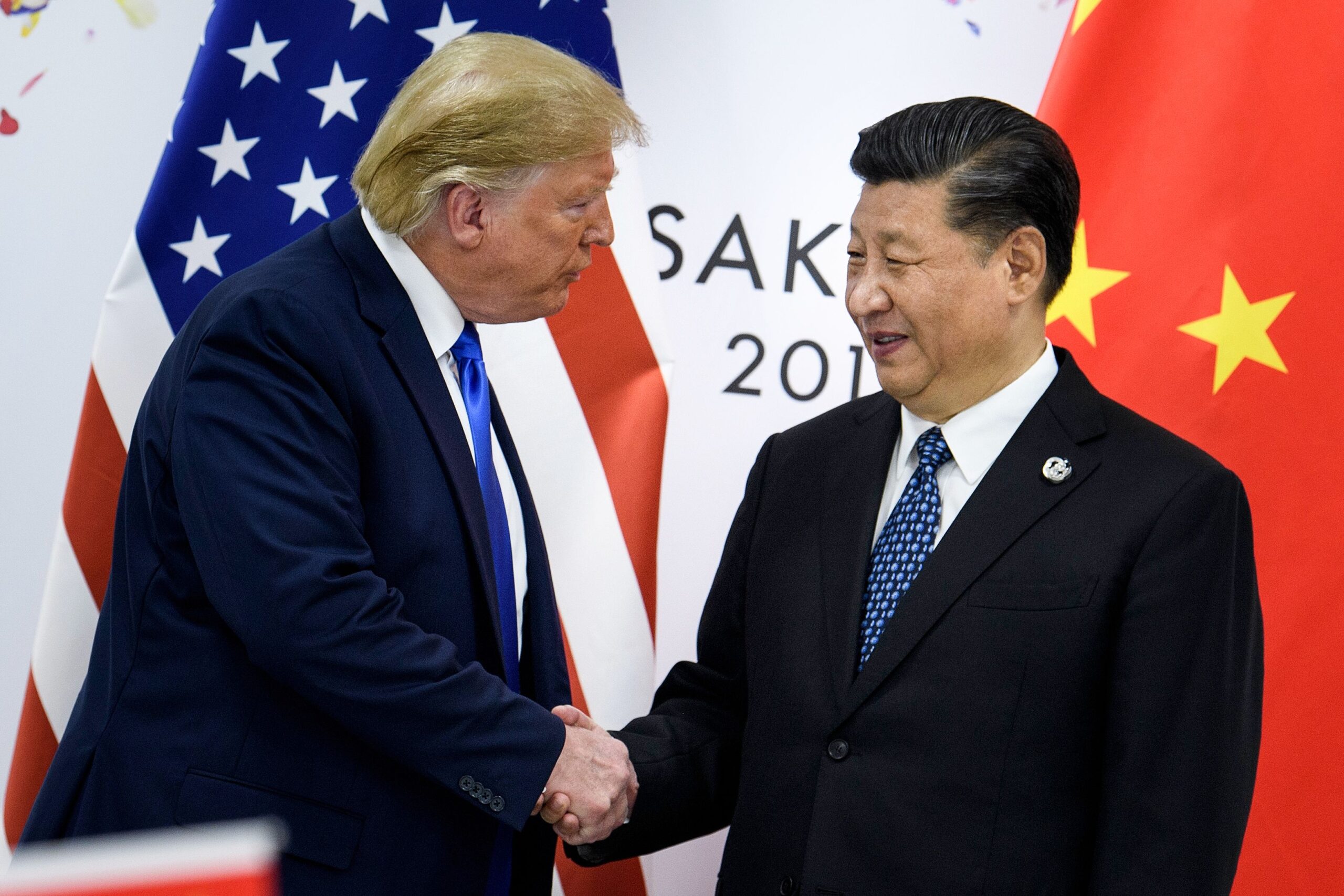
China A Cold Peace With China East Asia is the most important security challenge for Trump’s second term. Trump’s foreign policy record during his first term suggests that the taproot of his personal instincts—not those of his senior national security advisors, who rarely shared his preferences and policy positions—is realist restraint. Trump sought to avoid new military entanglements; extricate the U.S. military from its twenty-year occupation of Afghanistan; engage potentially adversarial states like North Korea, China, and Russia in ways that would lessen the possibility of conflict; deter Iran from continuing to destabilize the Middle East without escalating to a major war in the region; and shift the burden of paying for allied defense to wealthy allies rather than American taxpayers. The first Trump administration’s foreign policy was captured by hawkish advisors—people like Jim Mattis, H.R. McMaster, and John Bolton—who did not share the president’s support for realist restraint. Here, it is important to separate Trump’s rhetoric from the reality of his policies. While Trump talks tough as a means of pressuring other leaders and appeasing his domestic base, as in the case of China during the Covid years, he never acted like a bullying neoconservative primacist. Even with respect to Iran, which appears as a lone exception with the killing of Soleimani and the cancelation of the JCPOA, Trump pulled back several times from the brink of using significant U.S. military force. If Trump wins a second term, the intra-party policy debate between neoconservative primacists, China hawks, and “America First” conservative realists will be decided, provided that this time he hires people who agree with his views. If he loses, the party will remain split until the next Republican president. During a second Trump administration, there is a real danger that the U.S. foreign policy establishment will be captured once again by neoconservatives and primacists, as it was during the first Trump administration. These individuals, and many more, did not share Trump’s policy preferences and actively worked against his agenda, much to the administration’s detriment. Because there is currently a significant debate on foreign policy within the Republican party, there will be many potential foreign policy officials who, once again, may not share Trump’s foreign policy preferences or be interested in using the next four years to advance his foreign policy rather than their own. Combating this tendency will be a major challenge for the next Trump administration, lest a schizophrenic foreign policy emerge. A second Trump administration faces one additional potential danger on the foreign policy front: It needs to separate rhetoric from reality. Tough talk can be helpful in holding another state’s feet to the fire, but we should not believe our own tough talk, e.g., sending missiles to bomb drug cartels in Mexico and assassination squads to target their kingpins. It may be rhetorically useful to talk about the many bad acts of countries like China, Russia, or Iran—we do not, after all, share many values with such countries or even many of our erstwhile allies, like Saudi Arabia—but we do not need to talk ourselves into a new cold war with China or a hot war with regional competitors like Iran, which would harm all Americans in countless ways. Of course, the Trump administration must hold other states accountable and extract the very best deals it can for the United States, but actual military conflict or prolonged periods of hostility are in no one’s best interest. As in the past, the future of world politics will be chiefly defined by competition among the powerful. Asia is the only region where the world’s heaviest hitters come into steady and direct contact with one another. As such, it presents the maximum risk for major-power war. Most critical is the direction of the U.S.-China relationship, and this, in turn, will be significantly affected by China’s power trajectory. What we know is that China, whether it rises or declines, will continue to aspire to regional hegemony. If China’s power grows, so too will its ambitions. If China falters, it will still pursue its regional aims—with one difference. Now a peaking power that sees its relative power position as a wasting asset, China might decide to jump through a closing window of opportunity, adopting reckless policies to achieve its goals. No matter how the future plays out, China will continue using its military buildup to ward off challengers, its economic coercion to bend others to its will, its meddling in others’ domestic politics to get friendlier policies, and its investments in educational and cultural programs to bolster Chinese soft power. Simply put, great powers will continue, as they always have, to adopt policies that try to weaken their rivals and gain advantages over them (and everyone else, for that matter). That is what great powers do, and it will remain so. Nevertheless, it should not be difficult for either Washington or Beijing to manage the U.S.-Chinese security competition. They are more geopolitical rivals than full-fledged adversaries. They both have more to gain by maintaining deep economic ties than by severing them. As Dani Rodrik and Stephen Walt point out, “Given that both are vast countries with large populations, considerable wealth, and sizable nuclear arsenals, neither can entertain any realistic hope of conquering the other or compelling it to change its political system.” Nor does either country intend to conquer or change the political regime of the other. What would be to gain? What would be worth the risk of total annihilation? The Belt and Road Initiative (BRI) and Made in China 2025 (MIC25) may engender competitive anxiety, especially within various power centers in D.C., Detroit, and Silicon Valley, but they do not pose anything resembling an existential threat to the United States. As former ambassador Chas Freeman opined, “There is no military answer to a grand strategy built on a non-violent expansion of commerce and navigation.” Peaceful coexistence is the only sane option, and Trump’s brand of realist restraint is the surest way to secure it. Starting with the first Trump administration, Washington’s aim has been to suppress China’s rise. The West’s use of export controls on cutting-edge technology has become the new frontline balancing behavior of 21st century power politics. Unlike traditional balancing that amasses power through arms and allies to offset the target’s military power, this new form of balancing seeks to prevent, not counter, the further rise of a peer competitor. Preventive balancing was a Trump innovation that has been carried on with gusto by the Biden administration. The goal is to abort the future threat inherent in the rival’s potential power. Accordingly, both Washington and the Europeans want to ensure that Western businesses do not share sensitive technologies with Beijing and to reduce their reliance on Chinese imports in critical sectors (e.g., telecommunications, infrastructure, and raw materials). Since Covid, the West now talks about “reshoring” and “friend-shoring” production in critical sectors and diversifying supply chains by encouraging companies to produce in countries such as Bangladesh, India, Malaysia, and Thailand. Securing a relationship with China that ensures American prosperity and does not increase the likelihood of war may be the supreme challenge of a second Trump administration. Peaceful coexistence and mutually beneficial prosperity must be its watchwords. The vastness and persistent growth of China’s trade and investment with its Indo-Pacific neighbors, Europe, and the United States suggests a future of mutually assured production rather than mutually assured destruction. As such, superpower relations, if managed properly, can remain in a state of Cold Peace—that is, an adversarial peace, wherein rivals avoid the use of military force and focus their relationship, instead, on non-military forms of geopolitical competition. Taiwan is the likeliest path to a military conflict with China; if such a conflict ever occurred, it would run the risk of going nuclear very quickly, creating an unacceptably great risk for the United States. Taiwan, a non-ally, is not worth risking war with China over. We should maintain strategic ambiguity while helping Taiwan arm and defend itself, thereby deterring a Chinese invasion. Taiwan’s independence can be best maintained by building military capabilities sufficient to halt a Chinese invasion and by not seeking to shift the political status quo. If it can do both, it will avoid provoking a military response from China and deterring any military ambitions China has for the island. Should deterrence fail and China invade Taiwan, the United States should help supply munitions and intelligence to Taiwan but otherwise not risk getting into a potentially existential conflict with China. The fate of Western democracy does not depend on the independence of Taiwan. A second Trump administration must also avoid a heightened trade war with China. China’s internal weaknesses will eventually be its downfall; we don’t need to engage in Cold War–esque confrontations with China or a severe trade war that will harm American prosperity and risk military conflict with it over Taiwan. To maintain, at worst, a Cold Peace with China, the cornerstone of Trump’s foreign policy should be the embrace of what the political scientist Robert Jervis called a “spiral model” as opposed to a “deterrence model” view of the Sino-American relationship. A spiral model understanding of foreign affairs recognizes that insecurity and fear arise from the very nature of the self-help, anarchic setting of international relations. The actions that a state takes to make itself secure (building arms and forming alliances) tend to make other states less secure. The problem is that neither party in the relationship appreciates how its actions contribute to their mutual fear, which further exacerbates misperceptions of the adversary’s intentions. Spiral model dynamics explain how the structure of international anarchy promotes misplaced fears and suspicions that can trigger wars among pure security seekers as unintended and undesired consequences of actions meant to be defensive. Consistent with most of Trump’s foreign policy stances, a “spiral model” strategy would directly contradict the hawkish orthodoxy championed by virtually everyone inside the Beltway, including his own administration’s former officials. Spearheading the GOP’s hawkish stance on China, Trump’s former Deputy National Security Adviser Matt Pottinger and U.S. Representative Mike Gallagher recently argued that “Washington should own” the new Cold War with China “and win it”—recognizing that victory will require “greater friction in U.S.-Chinese relations” and the “need to adopt rhetoric and policies that may feel uncomfortably confrontational.”  Contrary to this “deterrence model” approach, a Trumpian strategy rooted in “spiral model” logic would aim to reduce threat perceptions and eliminate imaginary fears that, if maintained, will surely become self-fulfilling prophecies. To be clear, spiral model logic is not always appropriate. When meaningful conflicts of interests exist and the adversary is truly an aggressor, then “deterrence model” logic applies. But when conflicts of interest are more imagined than real, as is the case with current U.S.-China relations, the path to peace is not to demonstrate resolve and a willingness to fight but to wind down the escalation of mutual distrust by means of empathy for the other’s need for security and reassurance of one’s own benign intentions. In practice, America should abandon belligerent military initiatives targeted at China and, instead, hedge against the China threat by adopting a “readiness” strategy that emphasizes research and development, professional training, and organizational planning, such that U.S. military capabilities can be quickly expanded later if necessary. If China does start to flex its muscles in a bid to dominate Asia in the same way that the U.S. dominates the Western Hemisphere, America’s over-the-horizon military forces can be mobilized speedily by means of a robust mobilization plan. More generally, it means that, rather than strategic defense through offense, Washington should de-emphasize power projection, while aiming to keep potential attackers away from its allies’ shores. Consistent with defensive defense, the United States can help develop anti-access/area denial capabilities for its allies to keep China at bay. If China’s intentions prove malign, “spiral model” practices can quickly be replaced by a “deterrence model” strategy—one that does not rely on U.S. military power. China would be contained by a coalition of Indo-Pacific countries, including Japan, India, Australia, Vietnam, and South Korea, whose aggregate power roughly matches that of China. To prevent Beijing from dominating the region, the U.S. simply needs to show that it will reliably back countries that stand up to China (for example, by means of military sales, training, exercises, and other tools to bolster countries confronting Chinese coercion). The core point is that a more secure China is less likely to engage in excessive military buildups that heighten self-fulfilling spirals of fear and hostility. Trump’s second-term strategy should see the U.S. retrench with supreme confidence born of empathy underwritten by unmatched power. The current structure of the international system does not fit any of the four garden varieties: multipolar, tripolar, bipolar, or unipolar. The world is no longer unambiguously unipolar—the United States is not supremely powerful with no peer contender on the horizon. But it is not bipolar either, if by bipolarity we mean two roughly equal poles as existed during most of the Cold War. It has entered, instead, a condition best described as unbalanced bipolarity. If we define a pole as a state that possesses more than half the resources of the most powerful state in the system, there are two and only two poles, both of which are far stronger than all others. Hence, the system is bipolar. But one of the two poles (the United States) remains considerably stronger than the other (China). We see this imbalance in terms of America’s military command of the global commons (land, sea, air, and space) and the dollar’s status as the international economic system’s premier reserve currency, to name but two important power bases. Hence, the system is structurally unbalanced. This international structural change explains the political rise of Trump. It explains why he appeals to his nationalist followers, who disdain what they see as corrupt, power-hungry globalists who put the world’s wellbeing above their own countries’ interests—those transnational elites and their postmodern cosmopolitan views of borders, patriotic nationalism, and other traditional loyalties as mere expendable social constructs. It was not Donald Trump’s election that caused the end of the liberal international order. Nor was it the rise of President Xi Jinping. Both men, though of entirely different personalities, pledged to make their nations great again. This should alert us to the fact that great structural forces are at work here; that the driving impersonal forces of history—the rise of China and relative decline of American power and influence—explain the ongoing demise of Pax Americana and the growth of political fragmentation. Unlike the Cold War, however, the U.S.-China rivalry is a competition of ideas and architectures, not a clash of totalizing ideologies. It is about which capitalist system, authoritarian or democratic, catches more mice—an opportunistic and ad hoc competition over control of the commanding heights in certain technology areas (AI, 5G, quantum computing, etc.) and who will dominate trade networks. No one expects blood to be shed over differences in capitalist domestic structures. This is not a passionate moment in history when a clash of ideas transcends mere “security” to approach something supra-personal, something greater than the individual. It is not a time when individual life is sacrificed without further ado to higher ideas, when individuals unhesitatingly and gladly risk their own lives for such ideas. No, we are not living in those times. Rather than an ideological dispute, the current Sino-American rivalry revolves around traditional balance-of-power concerns: power, influence, security, and prestige. Surrounded by nineteen countries, many of them hostile or unstable, China reasons that it must carve out a broad sphere of influence that includes most of East China and the South China Seas, parts of India, and Taiwan. Vowing to avenge the “century of humiliation” (1839–1949), the CCP will not tolerate Western bullying about its internal affairs, its autocratic rule and human rights record, and it will not hesitate to use anti-foreign nationalism as a source of domestic legitimacy. A late economic developer, Beijing believes that it must adopt mercantilist industrial policies to catch up and eventually gain primacy in leading sector technologies and to remain a central player in global value chains. China and the United States are both geopolitical rivals and each other’s most important trading partners. Both superpowers fear being cut off from vital goods, markets, and trade routes and will secure their economic lifelines by any means necessary, including bribes, aid, arms sales, and military force. These behaviors and objectives fall squarely within traditional balance-of-power concerns, completely unrelated to any notion of global ideological supremacy. This does not signal a return to 1914 or 1930s militarism and disorder. American hegemony is over. Trump understands this structural fact and puts America, not its so-called “liberal world order,” first. That said, we should not fear a future of hopeless disorder. After all, hegemonic orders, of the kind that America enjoyed for decades after the Cold War, are not the only possible frameworks for relatively stable and peaceful international politics. A balance-of-power system, especially an unbalanced bipolar one, can provide a robust and durable order. Stability arises from the structural fact that China will not overtake the United States anytime soon, if ever. The United States still holds the world’s only true global blue-water navy, more than fifty allies (many of them rich), strategic partners, and military bases throughout the world, and control over the global economy, with financial weapons that did not exist until the last three decades.  But this “fact” of U.S. superiority does not mean that it can or should attempt to militarily conquer its weaker rival. We live in a nuclear world. Secure second-strike capabilities make great-power conquest impossible without global annihilation. A second Trump administration should embrace a Cold Peace with China, exercising foreign policy restraint—one guided by a narrow definition of the national interest, economic nationalism, and penchant for viewing world politics in geoeconomic rather than geostrategic terms. If he remains true to his instincts, he will be a leader of his time. The post A Cold Peace With China appeared first on The American Conservative.
Like
Comment
Share
Conservative Voices
Conservative Voices
2 yrs

An Easy Fix for Higher Ed
Favicon 
www.theamericanconservative.com

An Easy Fix for Higher Ed

Education An Easy Fix for Higher Ed An ambitious reform agenda could start with one simple change that wouldn’t need congressional approval. (Photo by: Sergi Reboredo/VW Pics/Universal Images Group via Getty Images) In 2017, Donald Trump signed a law placing a 1.4 percent tax on the net income of university endowments that exceed $500,000 per student. Drew Faust, then the president of Harvard University, decried the tax as “a blow at the strength of American higher education.” If Republicans have their way during a second Trump term, that tax will be only the beginning. Trump has vowed to transform higher education accrediting bodies, in part to ensure that universities remove “wasteful administrative positions,” especially those tied to DEI initiatives. Trump has also stated his intention to bring cases against universities that are found to be in violation of civil-rights law (say, by creating a hostile environment for Jewish students). Schools found to be in violation could be “fined up to the entire amount of their endowment,” according to Trump. Meanwhile, Republicans in Congress have announced their intention to review the billions in federal funding that universities receive for research each year. In 2023, Harvard University alone received $676 million in federal funding, covering about 11 percent of its operating costs. Radical as these proposals may seem, they can be seen as reflecting changes in public sentiment. In 2015, 57 percent of Americans expressed a great deal or quite a lot of confidence in higher education, according to Gallup. This year, only 36 percent of Americans did so. Meanwhile, 32 percent of respondents had very little or no confidence in higher education, up from 10 percent in 2015. Though confidence in universities has fallen most dramatically among Republicans, concern has risen among Democrats and independents as well. Politicization is the most frequent complaint among those who express low confidence in America’s universities. Despite increasing popular skepticism of universities, some of Trump’s proposals will be difficult to enact. Reform of the accreditation system would likely require a revision of the Higher Education Act of 1965—a heavy lift. Civil rights investigations are likely to prove time-consuming and unwieldy. The suspension of research funding is likely to be a political non-starter, given the important role universities play in advancing research with industrial and military applications. There may be a better way for reformers to ensure that universities pursue important goals such as non-discrimination (including against those who are not members of underrepresented minorities, or who hold unpopular views), academic freedom, and curricular rigor. This strategy is narrowly targeted at the administrative bloat that has had so much to do with the politicization of the universities. It does not require congressional action or lengthy investigations. It does not imperil dollars directly allocated for potentially groundbreaking research. All it takes is threatening to stop giving universities generous payments for so-called “indirect costs.” For every dollar in federal research funding that a university receives, the university generally demands a further 30 to 40 cents to cover so-called indirect costs, ranging from janitorial work and building maintenance to administrative overhead. Though claiming some amount of indirect costs is reasonable, universities have exploited weak accounting requirements and lackadaisical negotiating by federal authorities. Administration has been the main beneficiary. By threatening indirect cost rates, the federal government can attack one of the main funding sources for today’s college bureaucracy. Given that this money is directly funding university administrators, it is eminently reasonable to ensure that it is being spent in a way that conforms with the law and serves the interests of American citizens. A university that appears to discriminate against conservatives in its hiring, or that fosters a campus environment hostile to Jews, should not expect to have its administrative costs covered by American taxpayers. Universities found to have done these things should have their indirect-cost rates radically reduced or zeroed out. At present, universities are exploiting the federal government’s lack of vigilance about indirect cost rates. As Jay Greene, a researcher at the Heritage Foundation, has noted, most private foundations that fund research cap those costs at 15 percent, with most refusing to pay them at all. Universities nonetheless accept money from private foundations and make up the difference by overcharging the federal government. (Greene notes that Johns Hopkins University charges taxpayers a 64 percent indirect costs rate.) This means that taxpayers are subsidizing the research priorities of wealthy philanthropies. Because indirect costs are negotiated between federal agencies and each institution, and are reviewed regularly, they are better tools for encouraging institutional reform and monitoring institutional compliance than one-off pieces of legislation. A university can be assessed on whether it has made a good-faith effort to remove administrative bias, as opposed to simply removing the words “diversity, equity, and inclusion” from the job description of an administrator whose duties haven’t changed. Using these rates as a means of institutional reform may prove appealing to Donald Trump, who prides himself on being a skillful negotiator. Given his love for the art of the deal, he should appoint administrators who are ready and able to encourage higher education reform by reexamining the indirect costs attached to federal research spending. This will help to ensure that tax dollars are facilitating innovative research that everyone can support—rather than administrative measures opposed by broad swaths of the American citizenry. The post An Easy Fix for Higher Ed appeared first on The American Conservative.
Like
Comment
Share
Conservative Voices
Conservative Voices
2 yrs

My Dinner With Bobby
Favicon 
www.theamericanconservative.com

My Dinner With Bobby

Localism My Dinner With Bobby He responded to my localist maunderings with genuine insight. I am not in the habit of dispensing advice to political candidates, but that’s okay, because they are not in the habit of soliciting my wisdom. The last counsel I recall tendering was to a friend who was running for county coroner. I gave her a slogan—“No premature burials!”—that she declined to use. She lost. But when an old buddy invited me to Palm Beach for an off-the-record dinner with Robert F. Kennedy Jr. and a dozen of his major financial backers, what could I say?  We supped in April, one week after RFK Jr. had named Nicole Shanahan, philanthropic ex-wife of Google’s cofounder, as his running mate. Had America a functioning press, the story would have been not the past amours of Ms. Shanahan but the fact that anti-competitive ballot access laws make it prohibitively expensive for any independent candidate or insurgent party to challenge the duopoly without adding a sugar daddy (or mama) to the ticket. Kennedy was following the example of 1980 Libertarian Party candidate Ed Clark, who funded his energetic campaign by putting David Koch on his jugate. Shanahan’s Silicon Valley pedigree ought to have provided an opening for Mr. Kennedy to extend a critique made by the patriot Ralph Nader, the only presidential candidate I have ever heard inveigh against family-assaulting screens. In Ralph’s case the target was television, whose insidious idiocies he saw as undermining parental authority; the greater danger today is from smartphones, social media, and other technologies that dumb down discourse, corrupt our communities, erode our humanity, and zombify our people—all with munificent subsidies from public schools and other state entities. (It ain’t the invisible hand that is strangling us.) My impression is that the tripartite Kennedy ’24 universe comprises leftish environmentalists, libertarian-inclined populists, and alternative-medicine types. Previous efforts at building a left-right coalition have foundered in the turbulent seas of cultural and sexual politics. But there is a solvent that can, or should, dissolve these conflicts: federalism, the original American idea. Abortion, drug laws, which bathroom a person should use: the 10th Amendment of the Bill of Rights says that such matters must be decided at the state or local level. Let San Francisco be San Francisco, and let Utah be Utah. We need two, ten, many Dobbses. Nationalists won’t like it, but tough luck.  The defense of our communities against soul-stealers and grim centralizers is a matter that transcends left and right. So, too, is peace. Normal Americans are bored senseless when treated to a discourse on the relative demerits of foreign politicians and movements. What they care about, and what our elite class never deigns to acknowledge, is the domestic cost of war: lives lost, lives disrupted, families sundered, courtships interrupted, community enterprises (churches, volunteer fire departments) deprived of essential members—and of course the billions of taxpayer dollars shipped overseas to be expended in killing people we have never met and who have never threatened our country. To affirm today the classic Middle American position that the U.S. should refrain from involvement in foreign wars is to be called a Putin-lover by Democrats and a Hamas-lover by Republicans. ’Twas ever thus: just ask Martin Luther King Jr., Fighting Bob La Follette, Ron Paul, and every other peacemaker in American history who has been accused of siding with the enemy because he or she rejected war. (RFK Jr. is a Gaza hawk, but then his father was assassinated by a Palestinian…) Strikingly, in our three-and-a-half-hour dinner, Kennedy may have mentioned Covid-19 once but he never spoke of vaccines. I took the first jab and don’t regret it, but I do find it remarkable that the Covid shutdowns are treated by the opining class as ancient history, no more relevant to the 2024 election than the Tariff Act of 1883. The lawgivers closed coffee shops, houses of God, bars, high-school sporting events, even family gatherings—the things that give our lives heft and meaning—while Netflix, Amazon, Google, Walmart, and other cankers upon American society suppurated profits. (In New York State, RFK Jr.’s scumbag ex-brother-in-law, Andrew Cuomo, was the villain-in-chief.) Yet like the architects and mouthpieces of the Iraq War, the bastards who destroyed the livelihoods of working people and small-business owners paid no discernable price, at least in this life. I suppose I’ll cast my futile and inutile vote this November for Kennedy, who responded to my localist maunderings with genuine insight. Trump has guts and a good veep, but anyone who assembles John Bolton, Mike Pompeo, and Nikki Haley as his America First foreign-policy team has blown his chance. Cheers to all—Chase Oliver, Jill Stein, Peter Sonski, Cornel West—who defy a two-party system that presided at the interment of the republic. I’m still opposed to premature burials. The post My Dinner With Bobby appeared first on The American Conservative.

Like
Comment
Share
Conservative Voices
Conservative Voices
2 yrs

The Cult of Kamala
Favicon 
www.theamericanconservative.com

The Cult of Kamala

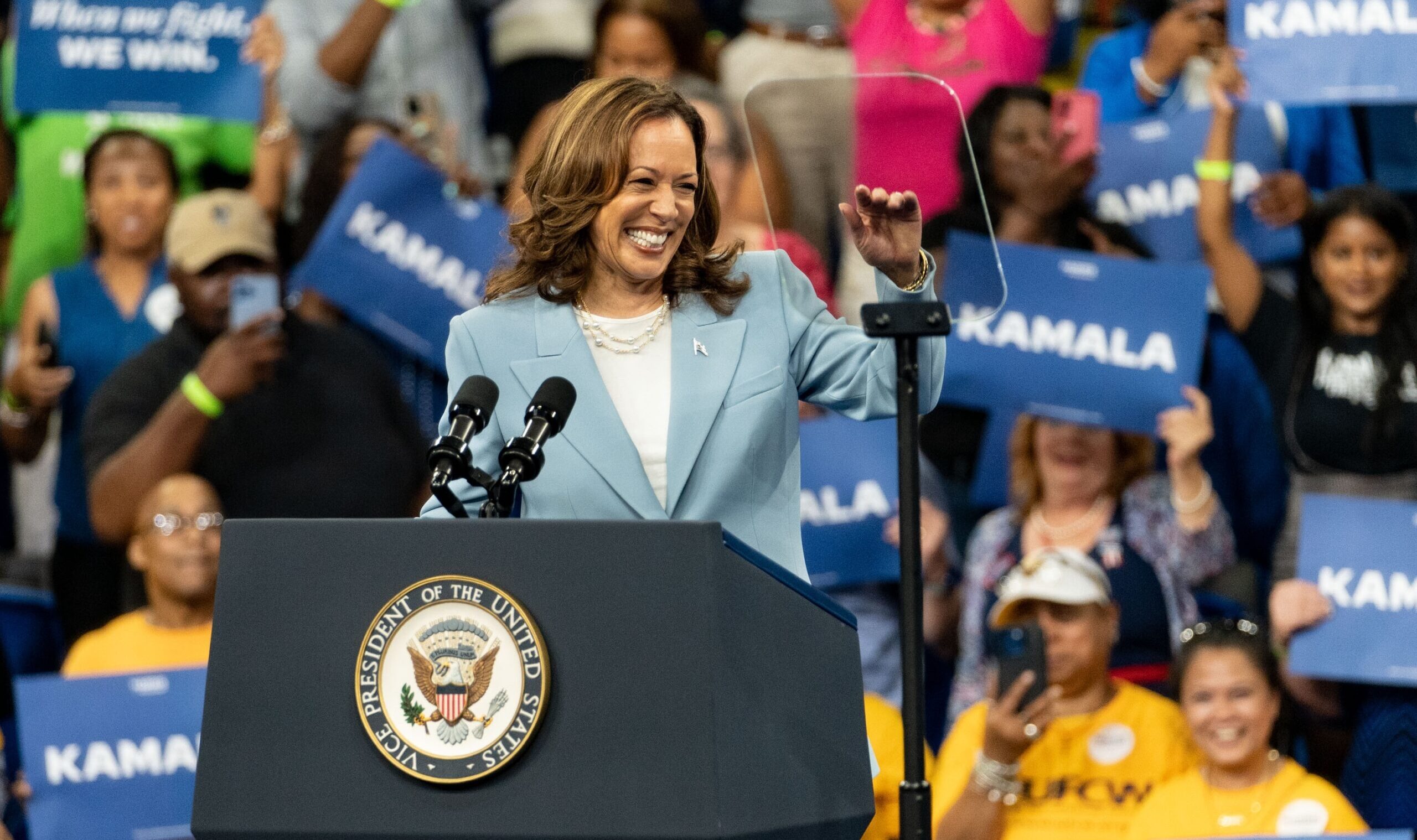
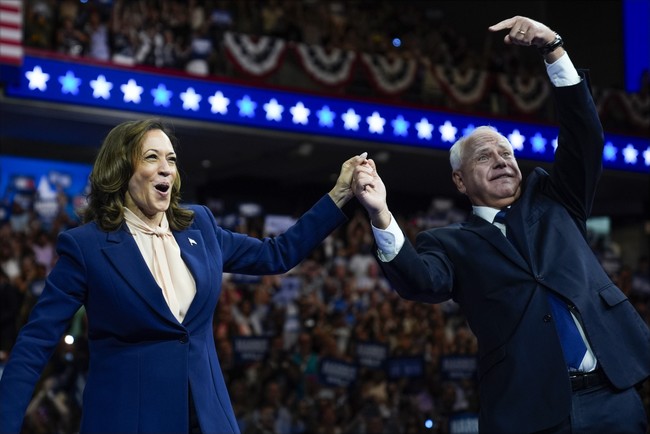
Politics The Cult of Kamala Leftists who accuse conservatives of Trump worship have a new idol of their own. Credit: Phil Mistry via Shutterstock For nearly a decade, the left has described Donald Trump and his populist movement as a cult, in which the MAGA hordes grovel before their messianic former president. It’s not necessarily an issue-driven devotion, though there are policy implications, but more about how Trump makes his admirers feel. A bona fide cult of personality. These critics have a point about the levels of enthusiasm Trump inspires among his faithful. But they are wrong about his phenomenon being unique to him. Take a look at the cult of Kamala. When President Joe Biden left the presidential race and the vice president immediately became the de facto Democratic nominee, she was heralded as a savior whose character and mission were as pure as wind-driven snow. CNN’s Van Jones said that “Kamalamania” gives America a “heartbeat of hope” after the “deathwatch for democracy” that was the original Biden–Trump matchup. Much like popular images and memes of Trump with bulging strongman muscles, Kamala’s clan loves to portray her as Wonder Woman, Captain America, and even the Statue of Liberty. The neoconservative Washington Post Never-Trumper Jennifer Rubin wrote on X, “what is that feeling… ah, the knot in my stomach and the weight on my heart have lifted. I have hope for democracy.” “White Woman for Kamala” and even “White Dudes for Harris” activist groups have sprung up, not dissimilar to “Blacks for Trump.” The View gushed with love for Harris. When her running mate, Minnesota’s Governor Tim Walz, was announced, the mostly unknown politician also became an overnight sensation for Democrats. Never mind that Harris doesn’t have a single policy position on her website. It’s really not about that. Much of this excitement is understandable. Democrats had resigned themselves to having to settle for mentally compromised Biden, and now they are getting a chance to vote for a ticket with members that can complete sentences. A well-appreciated alternative. But much of the love for Trump arises from the fact that Republican voters didn’t want another Mitt Romney, John McCain, or other establishment Bush-Cheney types shoved down their throat yet again. That they can have their own guy, not another GOP leadership tool. That’s legit. While the cult that’s taking shape around Kamala will only grow for the next three months, let’s dispense with Trump’s critics’ delusions about the populist MAGA movement being something unheard of: The cult of Obama was real—we were all there and remember it as such—becoming arguably the greatest Democratic display of president-worship since the Kennedys.  This cult-like behavior for certain political figures is not a left-right thing; it’s a human thing. The independent leftist Senator Bernie Sanders’s devotees were certainly unrelenting in their support for their socialist hero when he ran for president. Young libertarians certainly gave the Republican Representative Ron Paul the star treatment in his 2008 and 2012 presidential bids. As for the greatest Republican hero before Trump: What was the Reagan Revolution if not conservatives who saw their hopes and dreams personified in a California cowboy? Neoconservatives who blather on about Trump’s cult today never had a word to say about the many Republican devotees of George W. Bush who supported his war without hesitation or doubt. In fact, some of that Bush-worship got real weird. Kamala Harris doesn’t really have to do or say anything to garner this unquestioning adulation, and in fact, at the time of this writing, hasn’t said much at all. But she doesn’t have to. She’s not Trump and she’s the one person who can prevent him from becoming president again. To millions of Americans that’s all that matters, and thus she’s become an instant star, elevated far beyond her old mere vice president status. She can do no wrong in the eyes of her supporters between now and November. If Donald Trump having this kind of love means he’s part of a “cult,” Kamala has one too. But don’t expect Kamala Harris fans to call it that. Some cults are better than others. The post The Cult of Kamala appeared first on The American Conservative.
Like
Comment
Share
Conservative Voices
Conservative Voices
2 yrs

The Democrats’ Favorite Game: Manipulation
Favicon 
www.theamericanconservative.com

The Democrats’ Favorite Game: Manipulation

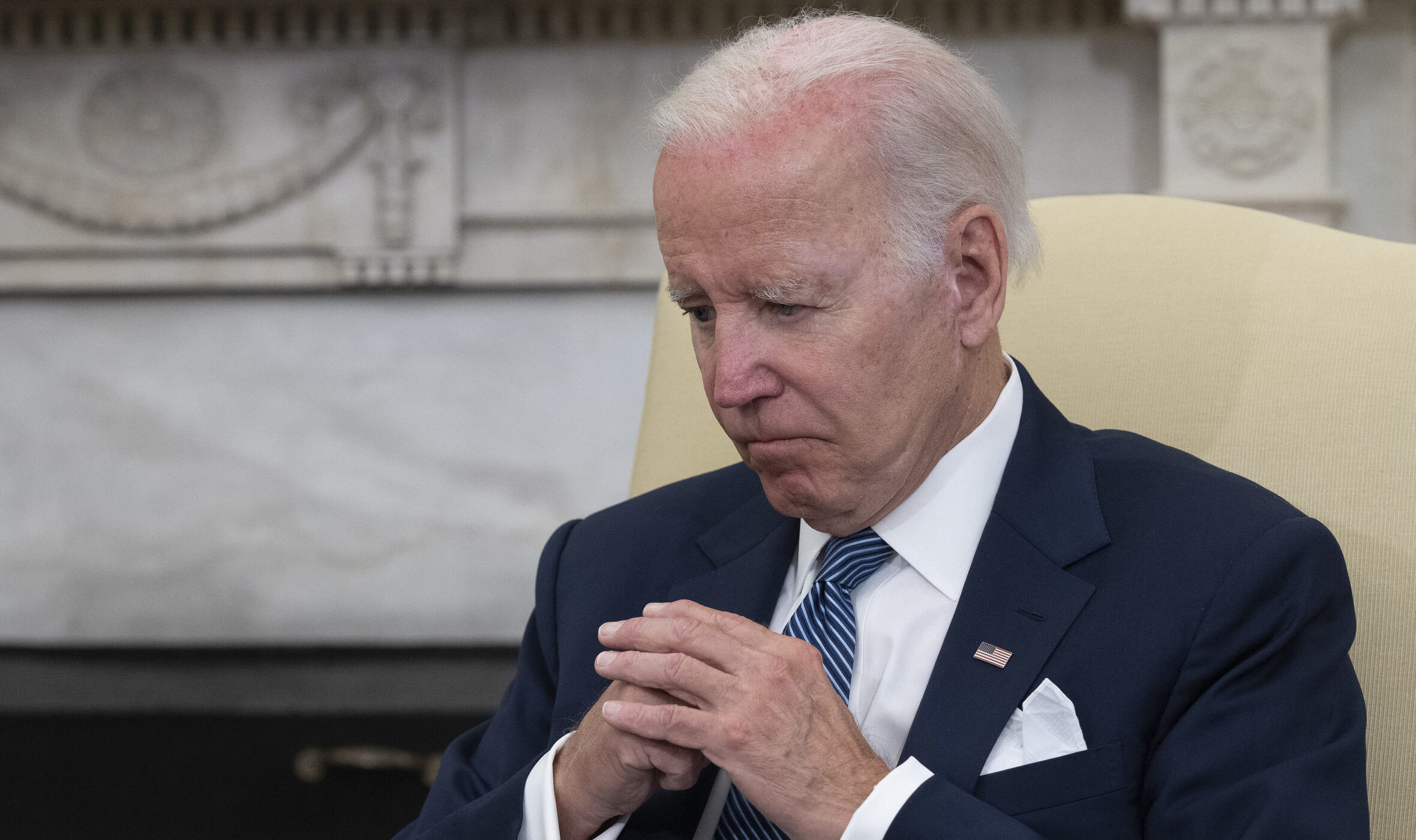
Uncategorized The Democrats’ Favorite Game: Manipulation There’s very little democratic about the Democratic Party these days. (Photo by Chris Kelponis-Pool/Getty Images) The Democrats continue to run to course—manipulating. Most recently, they bullied Joe Biden out of the presidential race. Their history for the last decade has been one of manipulation and dirty tricks, false promises and anti-democratic actions. They campaign claiming Trump is out to destroy democracy when at the same time can’t seem to find enough anti-democratic ways to behave themselves. Dirty tricks have long been a part of politics, but in the last decade the Democrats have turned the machine up to 11. The year 2015 was a pivotal one in that it presented to the American people a massive plot to undermine a candidate for president based solely on direct lies. Russiagate was comprehensive in scope, touching not only on candidate Trump but also on his advisors and key staff. The plot was so outrageous—Trump was an actual Russian agent, a living Manchurian candidate—that it had to be true. The mainstream media certainly believed it. Indeed, the media’s hand-in-glove cooperation with the Democrats is another key feature of the last decade’s shenanigans. Had the Democrats had a straight-forward enough candidate to run against Trump (Hillary dragged way too much baggage around with her to beat a Trump in the process of creating a movement with MAGA, never mind winning a normal election). Clinton was not necessarily the only loser in 2016. “The seeds,” writes the New York Times, “of President Biden’s reaction to the Democratic Party’s 2024 crisis of confidence in him were planted years ago… It was in October 2015 when Biden, then vice president, announced in the White House Rose Garden that he would not run against Hillary Clinton or Bernie Sanders for the Democratic presidential nomination.” What was left unsaid was the manipulation applied to Biden to not take his case to the people but instead allow Clinton, Obama, and Obama’s camp-followers to force him to the sidelines. He was manipulated into not running to clear the path for Hillary. Bernie was dealt with by a similar process, leaving behind a very successful run only to be humiliated at the convention as a has-been. The anti-democratic message to both men was clear: Tonight ain’t your night, kid, the boys from Chicago got the fix in. Yer gonna have to take da’ dive. Trump’s 2016 win was not the end of the Democrats’ manipulation and dirty tricks, simply the beginning of another phase. In addition to the remnants of the whole extended Russiagate plot, Trump faced down the Emoluments Clause threats, two impeachments, multiple hoaxes about his alleged relations to Russia, and a bizarre celebrity Twitter contest about the best way to decapitate Trump (a full list here.) The intent was to try and drive Trump from office either indirectly by humiliating him or directly, by claiming he was mentally ill and the 25th Amendment needed to be invoked. If he could not be actually removed from office, the manipulations were hoped to neuter the president politically even as he still sat in the Oval Office. That they all failed was not for a lack of trying on the part of the Democrats. If the 2024 presidential campaign started the day Trump left office in January 2021, so did the Democratic manipulation campaign against him, this round built on lawfare, the manipulation of actual laws to force Trump into court, convict him as a felon, maybe bankrupt him, certainly embarrass him, all in hopes of driving him from the race or at a minimum weaken his hold on large numbers of voters. Though several cases will likely drag on through the election, they concluded accomplished none of their goals. If anything, Trump the martyr is stronger as a candidate than ever before. What matters here is the ongoing pattern of dirty tricks and manipulations, not whether they succeed, or, like the impeachments and the trials, fail in their larger political purposes. The 2020 election between Trump and Biden was close, so close that the appearance of a laptop belonging to Hunter Biden which showed both Hunter and Joe tangled up in foreign money could have swung the race. Democrats again responded with a manipulation, another full-on falsehood, with 52 deep-state personnel writing an open letter claiming the laptop was likely Russian disinformation designed to discredit Biden and smear the tail end of the campaign. With Big Tech canceling Twitter accounts that sought to tell the truth and the usual prime time pundits barking in unison about the false nature of the laptop, what should have been a turning point in the campaign was squashed. The next Manipulation Grande started in the 2020 campaign, hiding a very old and senile Joe Biden from voters so they did not know what kind of man they were actually voting for. In the 2020 campaign the broad excuse was Covid, relegating Biden to a campaign by TV out of his basement. It was actually a good gimmick for a weary nation, and no one suspected it was all flim-flam to hide Biden’s growing dementia. Once past the victorious 2020 campaign, the media were enlisted to hide Biden’s age-related dilemmas from the public through editing, selective camera angles, denials, and just plain old falsehoods. Biden literally tripped down the stairs of Air Force One several times without much comment from the pundits; why should they comment? they were in on the game, ignoring the real Biden unscripted at events all over the country. In fighting for his political life, Biden cited the “fact” that he won the primaries for the 2024 election. The question is, Whom did people vote for: a spry, older man or a manipulated image of an unhealthy octogenarian? Among other reasons, Biden emphasized the will of Democratic primary voters. “The voters of the Democratic Party have voted. They have chosen me to be the nominee of the party. Do we now just say this process didn’t matter? That the voters don’t have a say?” Biden wrote in a letter to fellow Democrats. “It was their decision to make. Not the press, not the pundits, not the big donors, not any selected group of individuals, no matter how well-intentioned. The voters—and the voters alone—decide the nominee of the Democratic Party.” Others differed. “We never had a real primary process. We never had a real debate in this country,” said one observer. “Everybody decided, for their own political reasons, that the best option was to shut down dissent, shut off choice, and force the public into this choice of an election they never wanted any part of.” That’s called manipulation. What will happen to Kamala, and what will be her cooked up October Surprise? And whither the party, likely to lose in 2024 despite a decade of failed manipulations devoted to winning? Will they play fair next round? The post The Democrats’ Favorite Game: Manipulation appeared first on The American Conservative.
Like
Comment
Share
Intel Uncensored
Intel Uncensored
2 yrs

Royal Arch Mason Donald Trump Has Finally Showed Us Who He Really Is. Wake Up Call
Favicon 
api.bitchute.com

Royal Arch Mason Donald Trump Has Finally Showed Us Who He Really Is. Wake Up Call

Royal Arch Mason Donald Trump Has Finally Showed Us Who He Really Is. Wake Up Call - They Say Divine Intervention - I Say Blasphemy!!! - THE SYNAGOGUE OF TRUMP! NO MATTER HOW MANY TIMES A SNAKE SHEDS ITS SKIN, IT WILL ALWAYS BE A SNAKE! - 14,492 views Aug. 10, 2024 WAKE UP CALL - Give Me a Friggin Break. When the FFFF Have You Ever Heard Lindsey Graham Talk About GOD? - Blasphemy Everywhere. The Christians are the most Self Deceived of All. - I feel ashamed that I was myself also Deceived. I voted for Trump Every Time. Had I known who and what Trump was at the beginning, I would never have voted for him. - A Royal Arch Freemason - DEAL BREAKER - Descendant of King Edward III - DEAL BREAKER - A Jewish Descent Zionist More Loyal to Israel Than America - DEAL BREAKER - Practitioner of Kabbalah - DEAL BREAKER - Not only Covered up False Flags, but Took Part in a False Flag of his Fake Attempted Assassination - DEAL BREAKER - Financially indebted to the Rothschild's - DEAL BREAKER - Tied Directly to the Jewish Mafia - DEAL BREAKER - Cousins of Hillary Clinton - DEAL BREAKER - Friends with Jeffrey Epstein and Ghislaine Maxwell - DEAL BREAKER - In his first term he merely put a bandaid on our Economy. Proving that our Government was Intentionally Sabotaging everything. But there are far more Important Things than a short term improvement in the Economy. - THINGS LIKE FREEDOM - ALL OF THE BIG ACTIONS TAKEN BY TRUMP PUSHED US CLOSER TO UN AGENDA 2030 AND THE GREAT RESET. - I could name 50 separate things Trump Did to Help the Globalists. - I could go on and on. But at this point, why should I have to? - IF YOU STILL SUPPORT TRUMP, WTF? WHY????????? - Yeah, NO. I will NOT be Voting Trump Ever Again. - BUT WHAT ABOUT THE HELL SPAWN KAMALA? - IF WE THE PEOPLE DON'T RISE UP AGAINST THE EVIL COMMIE GLOBALIST PUPPET KAMALA, THEY NEVER WILL * FAIR USE FOR EDUCATIONAL PURPOSES - Mirrored From: https://www.youtube.com/@WAKEUPCALL2024
Like
Comment
Share
Intel Uncensored
Intel Uncensored
2 yrs

UK Riots - Steering The Big Lie. Psyops, Controlled Opposition, False Narrative and Tyranny Mark Win
Favicon 
api.bitchute.com

UK Riots - Steering The Big Lie. Psyops, Controlled Opposition, False Narrative and Tyranny Mark Win

UK Riots - Steering The Big Lie. Psyops, Controlled Opposition, False Narrative and Tyranny. Mark Windows - 4,627 views • Aug 6, 2024 Mark Windows - Windows On The World - This show looks at the steering of the population through The Two Lies and a lot more. An insight into what those who fall for the basic propaganda are not allowed to see. - FAIR USE FOR EDUCATIONAL PURPOSES - Mirrored From: https://www.youtube.com/@windowsontheworld2394
Like
Comment
Share
Intel Uncensored
Intel Uncensored
2 yrs

Must Watch: Mr. Bean (Actor Rowan Atkinson) On Free Speech In The U.K. (From 2012)
Favicon 
api.bitchute.com

Must Watch: Mr. Bean (Actor Rowan Atkinson) On Free Speech In The U.K. (From 2012)

The forerunner of the Defend Free Speech campaign was called "Reform Section 5". This speech by Rowan Atkinson at the launch event in Parliament in 2012 should be heard by every politician, journalist and campaigner before they start calling for laws to silence those they regard as 'extremists'. http://reformsection5.org.uk/ UTL COMMENT:- Atkinson tends to speak up when it comes to freedom and what he has to say here is very good. This applies for every country right now. See also: Free Speech, Censorship, Informed Consent https://rumble.com/playlists/cZ0hNmhMAOg
Like
Comment
Share
Classic Rock Lovers
Classic Rock Lovers  
2 yrs

How to be the ‘It’ girl, according to Brittany Howard
Favicon 
faroutmagazine.co.uk

How to be the ‘It’ girl, according to Brittany Howard

"I fulfil all of those qualities." The post How to be the ‘It’ girl, according to Brittany Howard first appeared on Far Out Magazine.
Like
Comment
Share
Conservative Voices
Conservative Voices
2 yrs

Kamala Chameleon Has No Principles, Only Ambitions
Favicon 
townhall.com

Kamala Chameleon Has No Principles, Only Ambitions

Kamala Chameleon Has No Principles, Only Ambitions
Like
Comment
Share
Showing 16837 out of 56670
  • 16833
  • 16834
  • 16835
  • 16836
  • 16837
  • 16838
  • 16839
  • 16840
  • 16841
  • 16842
  • 16843
  • 16844
  • 16845
  • 16846
  • 16847
  • 16848
  • 16849
  • 16850
  • 16851
  • 16852

Edit Offer

Add tier


Select an image
Delete your tier
Are you sure you want to delete this tier?

Reviews

In order to sell your content and posts, start by creating a few packages. Monetization

Pay By Wallet

Payment Alert

You are about to purchase the items, do you want to proceed?

Request a Refund