YubNub Social YubNub Social
    Advanced Search
  • Login

  • Day mode
  • © 2026 YubNub Social
    About • Directory • Contact Us • Privacy Policy • Terms of Use • Android • Apple iOS • Get Our App

    Select Language

  • English
Install our *FREE* WEB APP! (PWA)
Night mode
Community
News Feed (Home) Popular Posts Events Blog Market Forum
Media
Headline News VidWatch Game Zone Top PodCasts
Explore
Explore Jobs Offers
© 2026 YubNub Social
  • English
About • Directory • Contact Us • Privacy Policy • Terms of Use • Android • Apple iOS • Get Our App

Discover posts

Posts

Users

Pages

Group

Blog

Market

Events

Games

Forum

Jobs

Daily Caller Feed
Daily Caller Feed
2 yrs

FACT CHECK: Does This Photo Show Biden Looking Younger After He Dropped Out Of The 2024 Race?
Favicon 
checkyourfact.com

FACT CHECK: Does This Photo Show Biden Looking Younger After He Dropped Out Of The 2024 Race?

It was taken from a CBS News interview in 2019, not 2024.
Like
Comment
Share
Daily Caller Feed
Daily Caller Feed
2 yrs

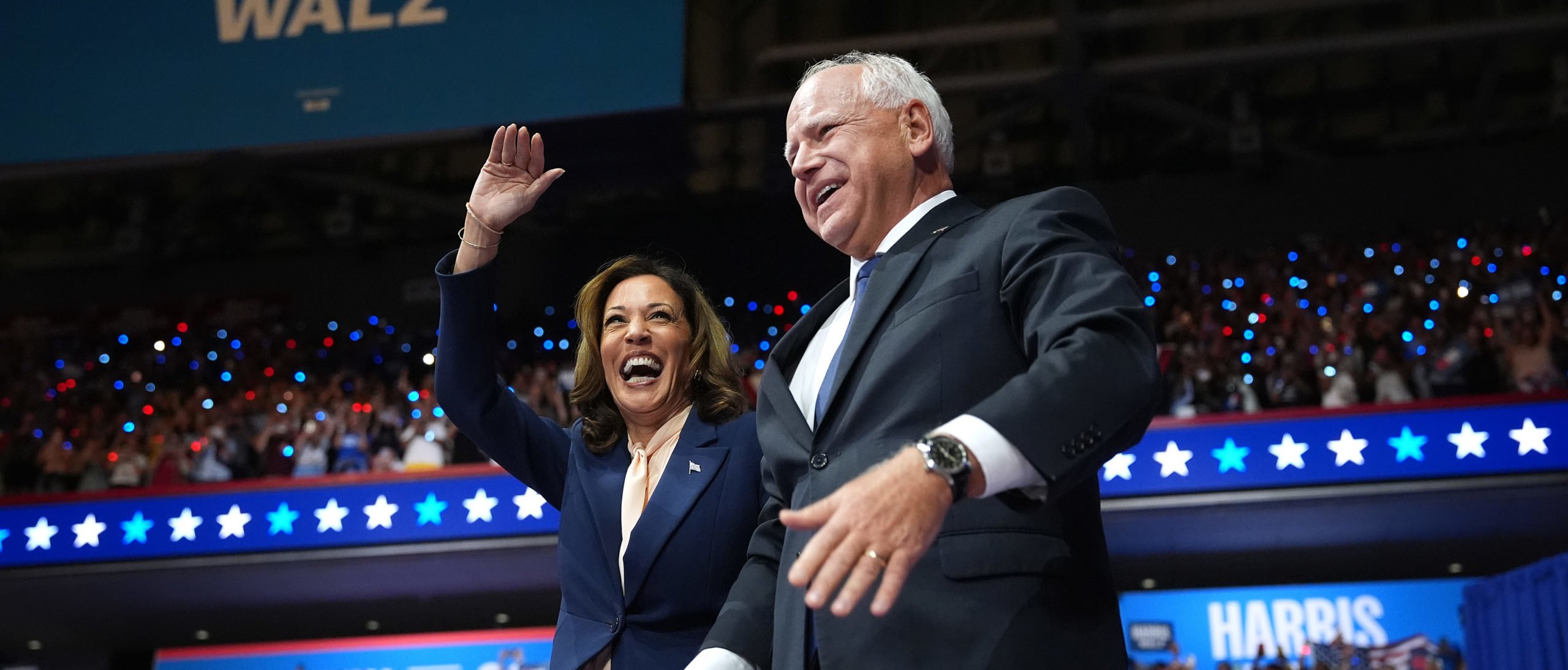
Tim Walz’s Admin Spearheaded Efforts To Cut Most Age Requirements For Genital Surgeries On Kids
Favicon 
dailycaller.com

Tim Walz’s Admin Spearheaded Efforts To Cut Most Age Requirements For Genital Surgeries On Kids

'Remove most age restrictions'
Like
Comment
Share
Daily Signal Feed
Daily Signal Feed
2 yrs

The Symmetrical Vice Presidential Picks: Polarized Politics Continues
Favicon 
www.dailysignal.com

The Symmetrical Vice Presidential Picks: Polarized Politics Continues

There is an uncanny symmetry in the two presidential candidates’ choice of vice presidential running mates. There are a few superficial differences–Republican J.D. Vance is 40, Democrat Tim Walz 60. Vance is bearded, Walz balding. The similarities are greater, and they go beyond the fact of their military service. Both were chosen by principals in moments of exuberance: former President Donald Trump after he’d walloped President Joe Biden in debate and survived an assassination attempt, Vice President Kamala Harris after she’d outperformed expectations and surged to a lead in the polls. Each might have reflected that poll leads can vanish and that, in any case, theirs were not so impressive. Trump never quite reached 50% against Biden, and Harris’ numbers remain well short of Biden’s 4.5-percentage-point popular vote lead that enabled him to win an Electoral College majority by only 42,918 votes in three states. As it often does with politicians, optimism prevailed. Each nominee–Harris has been nominated preconvention over the internet–chose a candidate whose record accentuated the ticket’s differences from earlier party traditions–and who has seemed less likely than possible alternatives to appeal to voters dismayed by both alternatives. Vance is a convert, from a 2016 scoffer at Trumpism to a true believer, in a demotic Republican Party that reflects the cultural discontents and economic grievances of a working-class majority–“demotic” comes from the same Greek root as “democracy.” He articulately defends tariffs, scoffs at Ukraine aid, and celebrates family values not just abstractly but with provocative references to “childless cat ladies.” Walz, despite his roots in Blue Earth County, Minnesota, and occasional centrist congressional votes, has come to represent a metropolitan Democratic Party, whose big majorities in million-plus metro areas owe less to race-defined minorities and more to white college graduates in each electoral cycle. He was sympathetic to rioters in May 2020–he hesitated before sending in the National Guard. He has called for a “working ceasefire” in Gaza and signed a bill putting menstrual pads in fourth- to 12th-grade boys bathrooms. For both sides, the vice presidential nominees have been target-rich environments. Walz, pre-designation, led Democrats in labeling Vance “weird,” and Republicans will undoubtedly respond with gusto. And the candidates at the top of the tickets provide more targets. Trump inexplicably attacked the Republican governor in target state Georgia and suggested he didn’t realize Harris was Black, while Harris, if she ever allows questions from reporters, may have to explain why she ordered campaign aides to tweet renunciations of her 2019 support of abolishing Immigration and Customs Enforcement, banning fracking, and abolishing private health insurance. The Vance and Walz selections can be explained as attempts to set the course of the parties over the long-term future–a demotic Republican Party that will outlast the 78-year-old Trump, a metropolitan Democratic Party that will expand Harris’ coastal California base to the flyover territories. But in the short term, the Vance and Walz picks increase the chances the other party will achieve the trifecta–majorities in both houses of Congress and the White House–which both parties have plausibly sought in every presidential year this century. Democrats achieved it in 2008 and 2020, Republicans in 2004 and 2016. Their 2022 election results suggest that neither vice presidential candidate’s electoral performance adds anything–zero, zip, nada–to each party’s appeal. Vance won his Senate seat in Ohio with 53% of the vote, exactly the same as Trump’s percentage there in 2020. His percentages in metro Cleveland-Akron, 43%, and Columbus, 45%, were identical to Trump’s. He ran 1 point better, 54%, in metro Cincinnati, which includes his boyhood home of Middletown. In the rest of the state, which includes the smaller Dayton, Toledo and Youngstown metro areas and cast 43% of statewide votes, Vance’s percentage, 62%, was identical to Trump’s. Walz’s boosters make much of his 2006-16 wins in a mostly non-million-plus metropolitan congressional district, although one reason was his success in Olmsted County, the upscale high-education home of the Mayo Clinic. Statewide, in races for governor, his percentage actually dropped from 54% in 2018 to 52% in 2022. That drop was greatest in the 38% of the state outside metro Minneapolis-St. Paul, from 46% to 40%. His 2022 performance was uncannily similar to Biden’s in 2020. Both won 52% statewide, both won 71% in the two counties that include metro MSP’s two central cities, and both just narrowly lost, with 48%, in the ring of metro MSP counties beyond. In the rest of the state, Walz’s 40% was just below Biden’s 41%. These numbers suggest we continue to live in an era of straight-ticket voting, with a close balance between the two parties, as they have come to be defined–and reinforced by the Vance and Walz selections. That’s underlined by this week’s primary election returns. In the close Senate race in Michigan, which doesn’t have party registration, 51% of the votes, with 90% of returns in, were cast for Democratic candidates and 49% for Republicans. This is one of six Democratic-held Senate seats in which Democrats lead in polls but usually fall short of 50%. Traditionally, incumbents under 50% were considered vulnerable, but maybe not in a straight-ticket environment, where personal qualities matter less than party identification. If so, Democrats have hopes of holding on to a 50-50 split, with a Vice President Walz casting a tiebreaker. Their hopes for a trifecta, seemingly defunct a few weeks ago, seem alive. So do Republicans’, however. Hopes of retaining their current narrow House majority look a bit better as more Republican than Democratic votes were cast this week in the Democratic-held 3rd congressional districts of Michigan and Washington, which also doesn’t have party registration. Republicans’ hopes of achieving a trifecta appear better than Democrats’–but far from assured. Underlying poll questions suggest most voters have a more positive view of the Trump presidency than of what Republicans are calling the Biden-Harris presidency, that inflation and immigration remain problems for Democrats, and that foreign policy doesn’t seem to help the incumbent party or its nominee. Counterbalancing factors include the determination of most of the press to help Harris defeat Trump, evidenced most recently in the complacency at Harris’ unwillingness to answer questions or speak extemporaneously. And, of course, Trump’s undisciplined alarums and excursions, which helped defeat many Republicans in 2018, ’20, ’21 and ’22, may help defeat the nominee himself in a year when his polling, even with the Harris boom, continues to be stronger than in 2016 or 2020. It’s not over. COPYRIGHT 2024 CREATORS.COM We publish a variety of perspectives. Nothing written here is to be construed as representing the views of The Daily Signal. The post The Symmetrical Vice Presidential Picks: Polarized Politics Continues appeared first on The Daily Signal.
Like
Comment
Share
Daily Signal Feed
Daily Signal Feed
2 yrs

Georgia Gov. Kemp Urges Republicans to Leave the Past Behind, Support Trump
Favicon 
www.dailysignal.com

Georgia Gov. Kemp Urges Republicans to Leave the Past Behind, Support Trump

ATLANTA—Republicans need to set aside past grievances and unite to win the presidential election in November because America cannot withstand four more years with radical Democrats in the White House, Georgia Gov. Brian Kemp said Friday. Kemp spoke at radio talk-show host Erick Erickson’s The Gathering conference on Friday morning in Atlanta, days after former President Donald Trump called fellow Republican Kemp “a bad guy,” “a disloyal guy,” and “a very average governor.” The rift began when Kemp refused Trump’s request to hold a special legislative session to investigate the results of the 2020 presidential election in Georgia. “With a lot of noise out there, as you can imagine, a lot of distractions, in my opinion, is not what we need to be doing right now in the presidential campaign, or on any campaigns that we’re running in the state of Georgia, to keep our majorities in the House and in the Senate,” Kemp said. “Despite all of that noise, my position has not changed.” The Georgia Republican is committed to getting Trump back in the White House, he said. “The thing that bothers me most about the Biden-Harris administration is, they’re picking winners and losers in Washington, D.C.,” Kemp said. It’s crucial to get conservatives back in office to reform executive branch agencies, the Georgia governor said. The governor is hopeful a Republican president can overhaul the administrative state after the Supreme Court’s overturning of the 40-year-old Chevron doctrine, which had the effect of increasing the scope and power of unelected bureaucrats. Kemp in April signed a school choice bill into law, garnering criticism from Biden administration Secretary of Education Miguel Cardona. “Getting kids out of failing schools and giving them an option where they can get out of that failing school, to get an education that they deserve, in our state, to me, that is an absolute no-brainer,” Kemp said. For the first time in history, the gross domestic product growth combined in the South outpaced that of the Northeast. Kemp said that’s because of Republican governors, such as Greg Abbott of Texas, Glenn Youngkin of Virginia, and himself. “It’s because of the Republican governors,” Kemp said. “It’s because of the business environment, and it’s because of the environment in the Northeast and in places like California. They’re literally just running people out of their states, and we’re glad to take them, as long as they vote our way.” The post Georgia Gov. Kemp Urges Republicans to Leave the Past Behind, Support Trump appeared first on The Daily Signal.
Like
Comment
Share
Daily Signal Feed
Daily Signal Feed
2 yrs

Kamala Harris and the Civilizational Jihad of Democratic Street Thuggery
Favicon 
www.dailysignal.com

Kamala Harris and the Civilizational Jihad of Democratic Street Thuggery

On Jan. 21, 2017, hundreds of thousands of feminists wearing pink “pussyhats” protested the prior day’s presidential inauguration of Donald Trump by rampaging throughout Washington, D.C. The “Women’s March on Washington,” an extension of the riots and protests that shook the capital on Inauguration Day itself, was not exactly a peaceful affair. Hundreds of anarchists in total were arrested over the multiday period, typically on rioting or vandalism charges. The “pussyhat”-clad feminist rioters thus constituted the first Trump-era manifestation of destructive Democratic shock troops. Call it Democratic Street Thuggery 1.0. That particularly virulent strain of radical feminism reached a crescendo during the #MeToo societal struggle session of 2017-2018, culminating in the infamous Christine Blasey Ford-led attempt to derail Brett Kavanaugh’s U.S. Supreme Court nomination in Sept. 2018. Arguably the single leading misandrist crusader during that sordid affair, peddling the ludicrous “believe all women” smear from her senatorial dais and casually throwing out five millennia of “innocent until proven guilty” civilizational norms in the process, was none other than dimwitted California Sen. Kamala Harris. Alas, Joe Biden — or what little remained, even back then, of Joe Biden — was so awestruck by Harris’ vile interrogation of Kavanaugh and her own hilariously unimpressive 2020 presidential campaign that he tapped her to be his running mate. Cackling Kamala’s grand contribution to the Biden campaign was to dutifully launder her own swarthy complexion to “empathize” with left-wing America during our next great struggle session, the antifa-Black Lives Matter “racial reckoning” that followed the May 2020 death of St. George Floyd our Martyr. Such “empathy” included Kamala’s unctuous rhetorical support for the rioters, as well as her posting to social media a link to support bail for those rare BLM rioters who were actually arrested. The antifa-BLM rioters, who caused up to $2 billion in property damage during that infamous Summer of Love, constituted Democratic Street Thuggery 2.0. No politician in recent memory has parlayed such little talent into such stratospheric success as Harris. The cackler-in-chief “failed upward” yet again into the vice presidency — and now, following last month’s bloodless coup of Biden, into the Democratic presidential nomination itself. And this Tuesday, in announcing her running mate, Kamala ostentatiously passed on her clearly superior option, popular Pennsylvania Gov. Josh Shapiro, for the insipid prairie socialist Gov. Tim Walz of Minnesota. Walz, as the home-state governor of St. George Floyd our Martyr, was the original arsonist of the Summer of Love nationwide fire. There was no greater fanner of the flames of Democratic Street Thuggery 2.0 than Walz. Choosing Walz over Shapiro is curious for many reasons, but adding to the intrigue is the peculiar context in which it all went down. Kamala made her announcement in Philadelphia, Shapiro’s hometown. It came a few days after the mayor of Philadelphia — or, more accurately, the mayor’s hapless social media intern — inadvertently posted a polished video in support of a Harris-Shapiro ticket. The implication seemed clear enough: The pick was going to be Shapiro. But then, following a weekend of keffiyeh-clad radicals running wild in Philadelphia, waving Hamas and Hezbollah flags and decrying “Genocide Josh,” the Keystone State governor was suddenly tossed aside. Kamala caved to the “death to America!”- and “death to Israel!”-chanting jihadists who constitute Democratic Street Thuggery 3.0. Harris, intellectually challenged and an empty vessel for Democrats to project their basest desires, is the unique politician to find herself at the tripartite Venn diagram of all three Democratic Street Thuggery movements. The overlap of “believe all women”-style destructive feminism, antifa-BLM “racial reckoning” anarchy and Hamas/Hezbollah flag-flying civilizational jihad is embodied in one person: Kamala Harris. She is the perfect totem of the modern Democratic Party, which exalts intersectional victimhood and will whip its shock troops into a violent frenzy to get what it wants. The modern Democratic Party is less political vehicle and more Mafia — right down to the omerta code of silence surrounding Biden’s physical and mental decline. Many European countries have indulged the fiction that jihadist outfits Hamas and Hezbollah — the actual Middle Eastern terrorist organizations, not their useful idiot American supporters — can somehow be divided between “political” and “militant” wings. This is, of course, a lie — it is a distinction without a difference. Similarly, the notion that the Democratic Party can be distinguished between its elite “political wing” and shock troop “militant wing” is also a lie. The elites and the shock troops are one and the same. And Harris and Walz are at the epicenter of it all. On Oct. 30, 2020, this column argued that the then-impending election “pit(s) against each other a fundamentally Americanist vision of governance and a fundamentally insurrectionist vision of anarchic mayhem.” It was true then. And it’s even truer of our election cycle today. COPYRIGHT 2024 CREATORS.COM We publish a variety of perspectives. Nothing written here is to be construed as representing the views of The Daily Signal. The post Kamala Harris and the Civilizational Jihad of Democratic Street Thuggery appeared first on The Daily Signal.
Like
Comment
Share
Hot Air Feed
Hot Air Feed
2 yrs

Labour to 'Define' Islamophobia So It Can More Easily Continue Its War on Native Brits
Favicon 
hotair.com

Labour to 'Define' Islamophobia So It Can More Easily Continue Its War on Native Brits

Labour to 'Define' Islamophobia So It Can More Easily Continue Its War on Native Brits
Like
Comment
Share
Science Explorer
Science Explorer
2 yrs

Wide Mouths, Round Figures, And Impressive Bites: Meet The Pacman Frogs
Favicon 
www.iflscience.com

Wide Mouths, Round Figures, And Impressive Bites: Meet The Pacman Frogs

Sometimes the natural world and the world of computer and video games have a little bit of a crossover – from the frightening zombie fungus from The Last Of Us, to the subject of today’s article. Meet the Pacman frog.Pacman frogs aren’t really called Pacman frogs but because of their pleasingly round bodies and comically wide mouths giving resemblance to – you guessed it – Pacman, the nickname has stuck. However this term actually represents a whole genus of frogs called Ceratophrys or the South American horned frogs, sometimes referred to as the “hopping heads”.Where do Pacman frogs live?Wild South American horned frogs live in marshes and pools across the Amazon, with different species having different distributions and slightly different habitats across the continent. The family Ceratophryidaecontains both the Ceratophrys genus and two others, and numbers around 12 species. The Surinam horned frog is widespread for example, living across countries from Colombia to Brazil, explains National Geographic. Information on the other wild species is patchy but it is thought that the Ecuadorian horned frog (Ceratophrys testudo) is a species found in the mountainous forests where it breeds in temporary rain pools. The species in this genus are popular pets and can be kept well in suitable habitats as they are not particularly difficult to care for. Wide mouths offer the ability to swallow similar-sized prey.Image credit: Alberto Rozzoni/ShutterstockHow big does a Pacman frog get?A Surinam horned frog can grow to 20 centimeters (8 inches) in length, making them a sizable frog species. However, this group of species starts small with what is known as explosive breeding. Clutches can be laid at night and contain as many as 2,100 eggs, typically laid in temporary rainwater pools. What do Pacman frogs eat?The Surinam horned frog is known to hide in leaf litter so that only the head pokes out, waiting for prey to pass by. Members of the Ceratophrys genus are not said to be particularly discerning eaters and will happily munch on anything that crosses their path. Unlike most frog species, these animals will readily bite and have highly adhesive tongues. There is also some suggestion that their enormous mouths help them eat species that are the same size as they are, such as other frogs, lizards, birds, and rodents. The Brazilian horned frog (Ceratophrys aurita) has a similar story as an adult but the tadpoles only eat the tadpoles of other species, according to the IUCN.A study from 2017 found that small horned frogs could bite with a force of 30 newtons, while the larger Brazilian frogs had a bite force of 500 newtons – the equivalent to 51 liters of water balanced on your fingertip, explain some of the study authors in The Conversation. What are the threats to the Pacman frog?Habitat loss, especially due to logging, is a concern but does not present a significant impact, writes the IUCN. There is even the threat of local communities killing species like Ceratophrys ornata due to folkloric beliefs. Many of these species are also found in the international pet trade. Thanks to captive breeding these frogs now come in a variety of bright colors including the strawberry-pineapple Pacman frog with bright yellow and pink coloration. If strawberry animals are your thing, check out these strawberry leopards too.
Like
Comment
Share
Science Explorer
Science Explorer
2 yrs

Space Archaeology, Titanium Hearts, And The Russian Sleep Experiment
Favicon 
www.iflscience.com

Space Archaeology, Titanium Hearts, And The Russian Sleep Experiment

This week on Break It Down: the first archaeological study takes place outside of Earth, the oldest calendar might show a comet impact, a new study thinks the ancient Egyptians were using hydraulic tech to build the pyramids (others disagree), what a rock on Mars could tell us about potential life in the Solar System, a titanium heart is something straight out of sci-fi, and why we get taken in by urban legends like the Russian sleep experiment. Available on all your favorite podcast apps: Apple Podcasts, Spotify, Podbean, Amazon Music, and more.So, sit back, relax, and let’s Break It Down…LinksSpace Archaeology Oldest Calendar Egyptian Hydraulic LiftBiosignature On MarsTitanium Heart TransplantRussian Sleep Experiment Can Dogs Live Longer CURIOUS Magazine 
Like
Comment
Share
Science Explorer
Science Explorer
2 yrs

Google DeepMind Reveals Robot That Plays Table Tennis At A Delightful “Solidly Amateur” Level
Favicon 
www.iflscience.com

Google DeepMind Reveals Robot That Plays Table Tennis At A Delightful “Solidly Amateur” Level

Ever thought, “I’d really like a game of table tennis,” but had no one to play with? Well, do we have the scientific breakthrough for you! Google DeepMind has just unveiled a robot that could give you a run for your money in a match, but don’t assume you’d be in for a trouncing – the engineers say their robot plays at a “solidly amateur” level.From nightmare-inducing faces to team-working robo-snails to the now happily retired Atlas, it seems we’re never far away from another incredible feat of robotics technology. But there are still a lot of things humans can do that robots haven’t quite achieved.When it comes to speed and performance in physical tasks, engineers are still striving to build machines that can mimic human abilities, and now a team at DeepMind has taken a step towards that goal with the creation of their table-tennis-playing robot.“[C]ompetitive matches are often breathtakingly dynamic, involving complex motion, rapid eye-hand coordination, and high-level strategies that adapt to the opponent’s strengths and weaknesses,” the team writes in their new preprint, which is yet to be published in a peer-reviewed journal. These aspects set something like table tennis apart from pure strategy games like chess, which robots are already mastering (albeit with somewhat… mixed results).Human players spend years training to build up their skills. The DeepMind team wanted to build a robot that could provide legitimate competition and an enjoyable experience for a human opponent, and they claim that theirs is the first to reach these milestones.They designed a library of “low-level skills” coupled with a “high-level controller” that selects the most effective skill in each situation. As explained in the team’s announcement of their innovation, the skill library includes a variety of techniques you might call upon during a table tennis match, such as forehand and backhand serves. The controller uses descriptions of these skills, integrated with data about how the game is progressing and the skill level of its opponent, to select the optimal skill that is within its physical capabilities.The robot started off with a small amount of human data and was then trained through simulations that allowed it to build its skills through reinforcement learning. Playing against humans helped it continue to learn and adapt. You can see for yourself in the footage below how that went.  “Truly awesome to watch the robot play players of all levels and styles. Going in our aim was to have the robot be at an intermediate level. Amazingly it did just that, all the hard work paid off,” said professional table tennis coach Barney J. Reed, who helped out with the project. “I feel the robot exceeded even my expectations.”The team held competitive matches, pitting the robot against 29 humans with a range of skills from beginner to advanced+. The matches used the standard rulebook, with one important adaptation – the robot was not physically capable of serving the ball. A win for the robot......and a loss.Against the beginners, the robot won all its matches; by contrast, it lost all the matches against advanced and advanced+ players. Against the intermediate opponents, it won 55 percent of the time, leading the team to judge that it had reached an intermediate human skill level.Importantly, all the opponents, regardless of skill level, rated the matches highly for being “fun” and “engaging” – even where they were able to exploit the robot’s weaknesses, they had a good time doing so. The advanced players felt such a system could beat a ball thrower as a training aid.So, we probably won’t be seeing a robot team at the Olympics any time soon, but as a training aid, it definitely has potential. And as for what the future holds – who knows?The preprint is posted to arXiv.
Like
Comment
Share
Science Explorer
Science Explorer
2 yrs

Money Can Buy Happiness, And There's No Upper Limit On How Much
Favicon 
www.iflscience.com

Money Can Buy Happiness, And There's No Upper Limit On How Much

From the life of the Buddha to A Christmas Carol, to, heck, even Aladdin, the idea that money can’t buy us happiness is pretty baked into most human cultures. Like so many “common sense” ideas, though, it seems like it’s dead wrong – at least, according to a new study from happiness researcher Matthew Killingsworth.“Is there a point beyond which more money is no longer associated with greater happiness?” begins Killingsworth, a senior fellow at the University of Pennsylvania’s Wharton School, in the paper (which is self-published and not peer-reviewed). “In recent research, I found that happiness rose steadily at least up through incomes of hundreds of thousands of dollars per year. But what happens beyond that – does happiness plateau, decline, or continue rising?”Now, listen: we know that, despite what rich people tell us, money can buy you happiness. Living in poverty can make you three times as likely to have depression or anxiety; a sudden windfall, on the other hand, will improve your short-term happiness significantly. A regular salary is the jackpot, psychologically speaking: as research repeatedly bears out, a higher annual income correlates very strongly with overall happiness and well-being.But at some point, you’ve probably heard, there’s a limit to the benefits brought by extra cash. Sure, being able to pay rent and buy food can account for a whole lot of your happiness levels, but once you reach that middle level in Maslow’s hierarchy, more money isn’t going to change much. Right? Not according to Killingsworth’s research. By comparing data from three groups – one comprising more than 33,000 people with any income of at least $10,000, and the other two surveying specifically extremely wealthy individuals with net worths in the millions – Killingsworth drew the unfortunate but not unexpected conclusion that, yes, Elon Musk is probably happier than you. By a lot.Wealthy individuals are "substantially and statistically significantly happier than people earning over $500,000 [per year],” Killingsworth writes. “Moreover, the difference between wealthy and middle-income participants was nearly three times larger than the difference between the middle- and low-income participants, contrary to the idea that middle-income people are close to the peak of the money-happiness curve.”“Finally, the absolute size of the difference in happiness between the richest and poorest people was large,” he continues. “The results suggest that the positive association between money and happiness continues far up the economic ladder, and that the magnitude of the differences can be substantial.”While that may seem like depressing news to about 99 percent of the population, Killingsworth interprets the results in a more glass-half-full kind of way. “If happiness plateaued completely at a modest level of wealth or income, one might argue that this would simplify human life: Each person simply needs to get ‘enough’ and can then rationally shift all of their attention to things besides money,” he writes. But if that were the case, he points out, it would mean at least one of two things was going wrong: either people being unable, even in the highest echelons of wealth, to work out which things would make them happy – or those things failing to exist at all.So it’s with a sense of relief that we should understand the confirmation that those richer than us are also much happier than us. But what could possibly explain this wealth-to-well-being correlation? Ha, stupid question, we know – but to be fair, the link is a little deeper than it may seem at first glance. The key isn’t that richer people can just buy more material goods, Killingsworth says – it’s more to do with the sense of security that a larger reservoir of money imparts.“A greater feeling of control over life can explain about 75 percent of the association between money and happiness,” Killingsworth told The Guardian. “So I think a big part of what’s happening is that, when people have more money, they have more control over their lives. More freedom to live the life they want to live.”And, to be fair, Killingsworth doesn’t suggest that only money is the key to happiness – or that it should be. “Ironically, part of the reason I’m so interested in happiness is because money alone – which we’re already pretty motivated to pursue – is just one small part of the overall equation for happiness,” he said. “Part of the reason I study happiness is to broaden our horizons beyond things like money.”The study can be read on Killingsworth’s Happiness Science website.
Like
Comment
Share
Showing 17095 out of 56670
  • 17091
  • 17092
  • 17093
  • 17094
  • 17095
  • 17096
  • 17097
  • 17098
  • 17099
  • 17100
  • 17101
  • 17102
  • 17103
  • 17104
  • 17105
  • 17106
  • 17107
  • 17108
  • 17109
  • 17110

Edit Offer

Add tier


Select an image
Delete your tier
Are you sure you want to delete this tier?

Reviews

In order to sell your content and posts, start by creating a few packages. Monetization

Pay By Wallet

Payment Alert

You are about to purchase the items, do you want to proceed?

Request a Refund