YubNub Social YubNub Social
    Advanced Search
  • Login

  • Night mode
  • © 2026 YubNub Social
    About • Directory • Contact Us • Privacy Policy • Terms of Use • Android • Apple iOS • Get Our App

    Select Language

  • English
Install our *FREE* WEB APP! (PWA)
Night mode
Community
News Feed (Home) Popular Posts Events Blog Market Forum
Media
Headline News VidWatch Game Zone Top PodCasts
Explore
Explore Jobs Offers
© 2026 YubNub Social
  • English
About • Directory • Contact Us • Privacy Policy • Terms of Use • Android • Apple iOS • Get Our App

Discover posts

Posts

Users

Pages

Group

Blog

Market

Events

Games

Forum

Jobs

SciFi and Fantasy
SciFi and Fantasy  
2 yrs

We Thought He Was a Goner: Stephen King’s Pet Sematary (Part 7)
Favicon 
reactormag.com

We Thought He Was a Goner: Stephen King’s Pet Sematary (Part 7)

Books Reading the Weird We Thought He Was a Goner: Stephen King’s Pet Sematary (Part 7) By Ruthanna Emrys, Anne M. Pillsworth | Published on August 7, 2024 Comment 0 Share New Share Welcome back to Reading the Weird, in which we get girl cooties all over weird fiction, cosmic horror, and Lovecraftiana—from its historical roots through its most recent branches. This week, we continue Stephen King’s Pet Sematary with Chapter 23-25. The novel was first published in 1983. Spoilers ahead! The morning after Jud takes him to the Micmac burial ground, Louis wakes up to a call from Rachel. She asks how everything’s going at home. Louis already feels he “crossed a line” when he described his Thanksgiving evening: Oh, he just went over to Jud’s. Remembering how Jud said, The soil of a man’s heart is stonier…a man grows what he can…and he tends it, he gives Rachel a verbal shrug: Things were okay, a little dull, actually. Ellie then gets on the line asks about Church. He manages his lie with “the perfect note of offhanded casualness”: Church is fine, he had beef stew for dinner, Louis hasn’t seen him yet this morning, nor will he give Church a kiss for Ellie when he does see him—Ellie can kiss her own cat. The call over, he says “That’s that.” The worst thing about his dishonesty? He doesn’t feel guilty at all. * * * His assistant Steve calls to see if Louis wants to play racquetball, but Louis says he has an article to write. In truth, exercise is the last thing he needs after the previous night’s exertions. He does work on the article, but the silent emptiness gets on his nerves, and he goes over to the Crandalls. No one’s home. Jud’s left a note to say that he and Norma have gone shopping. He invites Louis to stop in that evening, then abruptly switches the subject to Church. Jud doesn’t want to butt in on Louis’s family business, but he wouldn’t rush to tell Ellie about the cat’s death. Also, Louis shouldn’t talk around Ludlow about their last night’s doings. Others besides Jud know about the Micmac burying ground and don’t like to discuss it with “outsiders.” The superstitions surrounding that place go back three hundred years; people sort of believe in them and don’t like to think they’re being laughed at. They can talk more later. By then, Louis should understand more. In the meantime, Jud wants him to know he did himself proud, as Jud knew he would. PS: Jud would rather Louis not tell Norma about the situation. He’s told Norma more than one lie in fifty-eight years, as he guesses most married men do. Most, he adds, could confess those lies before God “without dropping their eyes from His.” Louis’s memory of the night has become blurred, dreamlike. Men tell their wives “a smart of lies”? Wives and daughters as well. It’s eerie how Jud seems almost to know about Louis’s call from Rachel that morning. About what’s been going on in Louis’s mind, too. * * * Around 1pm Church comes back, “like the cat in the nursery rhyme.” He strolls into the garage where Louis has been building shelves. Louis’s shock is momentary—it’s like he’s known “in some deeper, more primitive part of his mind” what the hike to the burial ground meant. He picks Church up and with “sick excitement” feels that he’s “live weight” again. He probes the cat’s neck. It’s no longer broken, if it ever was. However, there’s dried blood on Church’s muzzle, and caught in his whiskers are two shreds of Hefty Bag. So Louis will understand more about this soon? He understands more than he wants to right now. He takes Church inside and feeds him. The way the cat purrs unevenly and rubs slickly against his ankles is loathsome. Louis swears Church’s fur smells of sour earth. He wonders if Church has always smacked over his food like he does now. He rushes upstairs and takes a hot bath. As the tension leaves his muscles, he begins to feel better, more reasonable. It was a mistake to think Church died. After all, hadn’t he looked remarkably whole for roadkill? He must have been stunned, nothing more. And Louis was no vet, and it had been nearly dark on Jud’s lawn— A misshapen shadow rises on the bathroom wall. Something touches his shoulder. Louis cringes to see Church perched on the toilet seat cover, his eyes a muddy yellow-green, his body swaying like that of a snake hypnotizing prey. Briefly he tries to believe this is not Ellie’s pet but a strange cat that wandered into the garage by chance. Only the markings are Church’s, and the one ragged ear and funny-looking foot that was caught in a door when he was a kitten. Get out of here, Louis whispers hoarsely. Church stares at him with eyes somehow changed, then leaps awkwardly to the floor and is gone. Louis decides to meet Steve for racquetball, after all. Heading downstairs, he trips over a sprawled Church. Louis barely saves himself from a fall. Church, unperturbed, stands and stretches, seeming to grin at Louis. Louis leaves the house without putting the cat out. Right now he doesn’t think he can bring himself to touch him—to touch it. Libronomicon: Louis is writing an article for The Magazine of College Medicine about treating contagious diseases in an infirmary environment. Or at least, he’s trying. Madness Takes Its Toll: Louis fears that if he learns more about what happened to Church, he’ll “understand myself right into the nearest mental asylum.” Less alarmingly, a phone conversation with a two-year-old is “like trying to play cribbage with a lunatic”. Ruthanna’s Commentary One doesn’t come to literature expecting the very model of a healthy marriage. While horror, as a genre, isn’t as dependent on failed relationships as some others, it’s not unusual for out-of-the-ordinary terrors to grow from everyday miseries, or to mirror them back at supernatural scale. My problem is that it high bar for communication screw-ups to get more reaction from me than “OMG just talk to each other and don’t act like idiots.” It’s not a matter of realism—I’ve been known to annoy people by having this bar in real life too. But the feeling leaks. Once I’m groaning over the assumption that Louis and Rachel couldn’t possibly have an honest conversation touching her phobia, Louis’s inability to handle the consequences of his necromancy get the same response. Not to mention Jud’s inability to have a serious talk with Louis beforehand about “how might you feel if the cat comes back wrong”. No, in fact, lemme mention that one. If you’re going to find a belated father figure, I highly recommend one who will encourage you to talk with your wife. As opposed to, say, take it as given that all husbands lie and that’s fine. The apple, unfortunately, don’t fall far from the retroactive tree. Among the issues that are particularly important for honest discussion are the facts of life: sex, death, taxes, and anything that causes or is caused by that basic list, including violations of the natural order with respect to same. Deal with the devil? Planning an eschatological orgy? Going into the resurrection business? Please talk with your significant other. Ideally beforehand, but after is good too if they’re out of town and cell phones haven’t been invented yet. All of which would’ve been helped if Jud had explained what was going on, or if Louis had expressed his suspicions aloud and thus had to deal with them in advance. Clearly not everyone finds resurrected pets distasteful, or Jud wouldn’t have kept his dog for so long and certainly wouldn’t have thought the whole business an excellent expression of fatherly affection. But presumably Louis is not the first to notice changes in burial ground returnees. Then again, Louis was also convinced that fixing Church completely changed his personality. So we know he’s either (1) exceedingly sensitive to small biological shifts, or (2) exceedingly prone to imagining distressing changes when he knows something’s happened. He reminds himself that post-surgery—not just post-resurrection—Church is “it” rather than “he.” This is not normally how pronouns work and wasn’t in the 80s either. Rachel’s not the only one with phobias getting in the way of common sense.   There’s a bit of Frankenstein here—maybe a lot of Frankenstein. Shelley’s protagonist goes at resurrection more consciously than Louis, and yet screams and runs away the instant it works. If he’d stuck around, he’d have discovered a gentle, moral creature with a taste for literature, and perhaps learned to be a good parent—it’s his profound failure of parenting that turns the creature into a miserably self-conscious monster. The parallels run close.    I’m being unfair, because careful consideration of necromantic ventures is definitely not what one comes to King for. But by the time Louis is flinching at The Cat Came Back Wrong, I’m already annoyed at him for not flinching about lying to his family. And inclined to think that the cat is maybe just fine, and the doctor is wigged out about the cat coming back at all, because if there’s one thing a doctor knows it’s that death is a fact of life. And doctors hate being wrong. The cat, in fact, is probably not just fine. But for the moment, I’m taking that on faith. Because one doesn’t come to King for anything being fine. Anne’s Commentary To what does Louis refer when he thinks that “Church came back like the cat in the nursery rhyme”? My first idea was the adage about the perils of curiosity. King paraphrased this one in his earlier novel, The Shining: “Curiosity killed the cat, my dear redrum. Redrum my dear, satisfaction brought him back.” Since ancient times, people have attributed magical powers to cats. Conspicuous among these powers is the cat’s possession of nine lives; put another way, a cat will revivify eight times before he stays buried or cremated or mummified, whatever. I bought this superstition when I was in second grade, thanks to a Disney live-action movie called The Three Lives of Thomasina (1963). Though different cultures allow cats different numbers of resurrections, Thomasina did have nine. The movie, being 90ish minutes long, only covered three of them. The scene burned into my young brain took place after Thomasina’s first death, when she arrived in cat heaven (pristine white stairs floating among clouds, with the Egyptian cat goddess Bastet upon the highest.) Bastet informed Thomasina she had eight lives left, so no more paradise for her—back to that little girl who was broken-hearted over how her veterinarian father had euthanized her tetanus-stricken pet. It turns out that death’s erased Thomasina’s memory. It will take a near-lightning strike to bring it back. Or maybe the lightning strike caused her second death? I forget. Anyhow, in her third life she remembers all and returns to the little girl. Happy Disney ending! I’m afraid Church didn’t meet Bastet after his interment, but rather a darker god like the Wendigo supposed to prowl Ludlow’s backwoods. Curiosity killed the cat, the adage says, but was it Church’s curiosity that killed him, Church’s satisfaction that brought him back, or the curiosity and satisfaction of his impromptu undertakers? The real “sematary” lures as powerfully as any drug, rewards as deeply, probably addicts even more insidiously. The other reference I found to a cat’s uncanny return is the folksong “The Cat Came Back”. I never learned this one at summer camp, but apparently generations of kids have been regaled with the macabre tale of a cat sent off to probable death. [RE: Including me: it’s been going through my head for the last couple posts.] He always escapes, while the humans involved meet gruesome ends. Here’s the chorus: “But the cat came back the very next day.The cat came back, we thought he was a gonerBut the cat came back; it just couldn’t stay away.Away, away, yea, yea, yea. It doesn’t take Louis long to wish Church had stayed away, away, away. Remember that Jud didn’t give Louis specifics about why taking the cat to the Micmac burial ground would benefit Ellie. Yet in his “deeper, more primitive” brain, Louis has known to expect Church’s homecoming. His shallower, up-to-date brain comes up with possible explanations for Church’s reanimation, but they aren’t probable explanations. Church wasn’t dead, just stunned. It’s not Church strolling into the garage but some stray that looks like him. He knows the truth, though. Even as he feels Church’s “live weight,” he remembers how much heavier Church felt in the Hefty bag. How much heavier Church felt when he was dead. His “sick excitement” gives way to “tottery, sick vertigo,” the sort he’s experienced at “the bitter end of long drunks.” He’s coming down from the necromantic high, all right. And where’s Jud? Taking a daylong shopping trip, when he must know Louis will need him! Jud’s been losing some Old Yankee wholesome-homespun luster in the last chapters, going from a pleasant stereotype to living (sometimes dark) complexity. I didn’t expect this, perhaps because when I read the book decades ago, I overlooked Jud’s darker side in favor of my initial impressions. I wanted him to be the father Louis never knew and the benevolent old sage, conveniently placed to guide the Creeds through their acclimatization. This reread I’m seeing that Jud can lie. Jud can be devious. Jud isn’t a saint immune to uncanny, maybe evil influences. Something in his man’s stonier heart can thrill to the outward-seeping power of the Micmac burial ground and want to get to its stony heart and share its potency. And he senses that Louis could share his secret. Louis could get it. He could do himself proud beyond the deadfall barrier, just as Jud knew he could. Just as Victor Pascow, or his revenant’s controlling angel, feared he could. After the Creeds visit the pet sematary, we see Louis’s essential honesty, his willingness to tell Ellie hard truths about living organisms and their mortal clocks even though it triggers Rachel’s death-phobia. In the face of her anger, he sticks to hard truths. All kinds of shit can happen to living things. And the big one: Dead is dead, Pascow notwithstanding. Has Louis always told his family the absolute truth prior to the burial ground trip? I doubt it. But after that barrier-breaching, he tells an escalating series of lies. He tells Rachel, yeah, he did go to Jud’s Thanksgiving night, but just for the usual beers. He tells her everything’s fine at home. Then he tells the biggest lie to Ellie, sure, Church is okay, stuffed with beef stew in fact. Louis knows he’s “crossed a line” with his people. He’s joined Jud’s Society of Married Gentlemen Who Lie to Their Wives (and Daughters), and without guilt. On the other hand, he only half-lied to Ellie. Church is alive, if not quite well. Alive again, unless there’s a state of existence between life and death. Undeath, maybe? Chill those beers, Jud, and see Norma to bed early. Your day trip must have tired her out. As it was planned to, I figure. Next week, we explore one of the dustier shelves of the archival weird with Sarah Orne Jewett’s “The Gray Man.”[end-mark] The post We Thought He Was a Goner: Stephen King’s <i>Pet Sematary</i> (Part 7) appeared first on Reactor.
Like
Comment
Share
Daily Signal Feed
Daily Signal Feed
2 yrs

The Left Plans to Demolish the Supreme Court
Favicon 
www.dailysignal.com

The Left Plans to Demolish the Supreme Court

The Left has let the mask slip and made clear that it intends to pack or otherwise decimate the Supreme Court. President Joe Biden announced last week in a Washington Post op-ed that he would promote a “reform” of the nation’s highest court that would include term limits and new “ethics” rules for justices. The plan was signed off on by Vice President Kamala Harris, who at this point appears to be the de facto president with Biden’s withdrawal from the presidential race. The Left’s plan to bork the court isn’t just being backed by the White House; it’s being adopted by prominent Democrats and members of the left-wing literati. “The Supreme Court has become a morass, both ethically and substantively,” Senate Majority Leader Chuck Schumer, D-N.Y. told NBC News after Biden’s announcement. “We’re going to look at everything. There are lots of proposals.” A leftist law professor at Northwestern University wrote for The Hill that Biden didn’t go far enough and that the White House should just start packing the Supreme Court without bothering to soft-pedal it with term limits. These threats should be taken seriously. Justice Neil Gorsuch weighed in over the weekend on Fox News, saying that the Biden administration—presumably including Harris—should “be careful” about threatening the independent judiciary. Gorsuch noted that it’s important for Americans to be confident that even “when you’re unpopular you can get a fair hearing under the law and under the Constitution.” Gorsuch then asked, rhetorically: “Don’t you want a ferociously independent judge and a jury of your peers to make those decisions? Isn’t that your right as an American?” I don’t think the Left actually cares about that. Many leftists are seemingly happy with a two-tiered system of justice as long as they control it and decide which people deserve what the Left sees as government-granted rights. The God-given rights explicitly cited in our Declaration of Independence are just a crazy, right-wing, Christian nationalist fantasy, they say. Once leftists think they’ve taken unassailable political power, they think any limitation of their power is unacceptable. Leftists rely on powerful, unelected institutions—whether higher education, nongovernmental organizations (NGOs), Big Tech companies, federal and state bureaucracies, and often the courts—to effectively carry out their agenda perpetually, regardless of elections or their popularity.  They’ve made long-term bets that those who control institutions control the future. And it’s hard to deny that the Left no longer marches through the institutions; the institutions are marching on the Left’s behalf. It’s this institutional ecosystem they’re referring to as they perpetually lament that “our democracy” is under threat by former President Donald Trump or Project 2025 or whatever their boogeyman of the moment is. Which leads us to Democrats’ plan to “reform” the Supreme Court. Right now, the high court operates as one of the few checks on the Left’s power. Instead of just court-packing right away during the Biden presidency, a tactic unlikely to work with Republican opponents in the Senate, leftists used the past few years to do everything in their power to smear the court as illegitimate. The Left likes to promote the idea that public confidence in the Supreme Court has dropped to a “historic low.” That may be technically true, but the court only hit that historic low because of its collapse among Democrats.  Also, how are other institutions doing these days? Mostly a whole lot worse. Much of the Supreme Court’s collapse in trust happened—no surprise—during Biden’s presidency. The court didn’t simply rubber-stamp the administration’s policies and power grabs, and when it overturned the bad precedent of Roe v. Wade, it sent the Left into a tizzy.  The Left’s elite media allies went into action, cooking up bogus scandals to create the illusion that Republican presidents’ appointees to the Supreme Court are crooked or wild-eyed maniacs. Remember the dopey flag stories targeting Justice Samuel Alito? All those reports were meant to ensure that the Left’s base would turn fully against the high court, and that largely worked. Alito, Clarence Thomas, and other conservative members of the Supreme Court on the Left’s hit list haven’t backed down, haven’t resigned, and haven’t recused themselves from specific cases. This gave the Left a green light to say, “See, we tried to appeal to reason, now we have no choice but to take action.” It’s hard to see the Left and the Democrat Party refraining from taking the next step.  The radicals aren’t just going to patiently wait for Supreme Court justices’ retirements this time. They’ve lined up their metaphorical cannons and await the right political moment to declare a mandate and launch the hostile takeover, consequences be damned. The post The Left Plans to Demolish the Supreme Court appeared first on The Daily Signal.
Like
Comment
Share
Daily Signal Feed
Daily Signal Feed
2 yrs

The Truth About Slavery in America: Neither First, Nor Worst
Favicon 
www.dailysignal.com

The Truth About Slavery in America: Neither First, Nor Worst

Today, people are taught, when it comes to slavery, America was the worst. Sen. Tim Kaine, D-Va., actually said, “The United States didn’t inherit slavery from anybody. We created it.” An MSNBC “expert” claims that “American slavery was worse because slaves were treated as property.” “That’s complete nonsense,” replies political science professor Wilfred Reilly in my new video. “Generational slavery, [where] if you’re the son of a slave, you’re a slave … that was extraordinarily common.” Reilly’s new book, “Lies My Liberal Teacher Told Me,” rebuts anti-American propaganda that dominates many American schoolbooks today. Partly thanks to The New York Times’ “1619 Project,” students are taught that “America’s slavery [was] unlike anything that had existed before.” “There’s nothing wrong with acknowledging your historical mistakes,” Reilly responds. “I’m Black, Irish, a bit Native American … . Those are three peoples who have experienced a great deal historically. Nothing wrong with acknowledging that. But it’s extremely odd to focus only on the negatives of your society. And to exaggerate those!” Kids are now taught that slavers bought people in Africa and shipped them to the United States. Few are taught that most were shipped elsewhere. “Between 10.7 million and 12 million slaves from Africa went to the New World. We got a little under 400,000,” says Reilly. That’s less than 4%. “The extreme focus on slavery in the United States, why did that happen?” asks Reilly. “One reason is that a lot of black people survived here. Slavery was harsh, but a lot less harsh than clearing the Brazilian jungle.” “But American blacks are at a disadvantage,” I push back. “They have less capital, financial and educational capital. What’s the harm in pointing out how abusive white people were?” “The harm,” he replies, “is that pointing out how abusive white people were is not going to get black Americans any more capital. Most problems in the modern black community don’t have anything to do with historical ethnic conflict 160 years ago.” Reilly says today’s problems began when government welfare began. “Crime in the black community,” he says, “increased about 800% between [around] 1963 and 1993. Racism didn’t increase between 1960 and the modern era. You’re looking at the impacts of the Great Society, the welfare programs.” It’s better to teach the truth, says Reilly. Almost every society had slavery. “The Arabs were history’s premier slave traders. Muslims took so many blond slaves out of the [Slavic] region, they gave the world the name ‘Slav’ [or] ‘slave,’ to the global slave population.” Arabs captured and enslaved more than 1 million Europeans. Years later, the first people who seriously tried to abolish slavery were white Westerners: The British and then Americans. They called slavery immoral. “Yeah, the British navy,” Reilly explains, “in a story almost no one now knows, sank 1,600 slave ships. They freed 150,000 people that were enslaved at the time.” By contrast, Saudi Arabia only abolished slavery in 1962. And even now, the Global Slavery Index estimates that there are still 700,000 slaves in Saudi Arabia. “Where there were no Westerners,” Reilly notes, “you’d have a lot of slavery for a long time.” American slavery was horrible. But it wasn’t unique. And we didn’t “create it.” Our culture would be healthier if we learned about that. Schools dwelling on early America’s evils hasn’t helped Americans get over them. Gallup polls show that since schools started focusing on racism, race relations has gotten worse. “The idea of generational slavery, the idea of slave trading,” Reilly says, “none of that was unique to America. You don’t need radicalism to critique the worst excess of an existing system. All you need is incrementalism and honesty.” Next week, I’ll report on another myth; namely, the claim that, before Christopher Columbus, the natives were “kind stewards of the environment.” Kids believe it. After all, it’s what Disney movies teach. But that’s not true either. Copyright 2024 BY JFS Productions Inc. Distributed by Creators.com. We publish a variety of perspectives. Nothing written here is to be construed as representing the views of The Daily Signal. The post The Truth About Slavery in America: Neither First, Nor Worst appeared first on The Daily Signal.
Like
Comment
Share
Hot Air Feed
Hot Air Feed
2 yrs

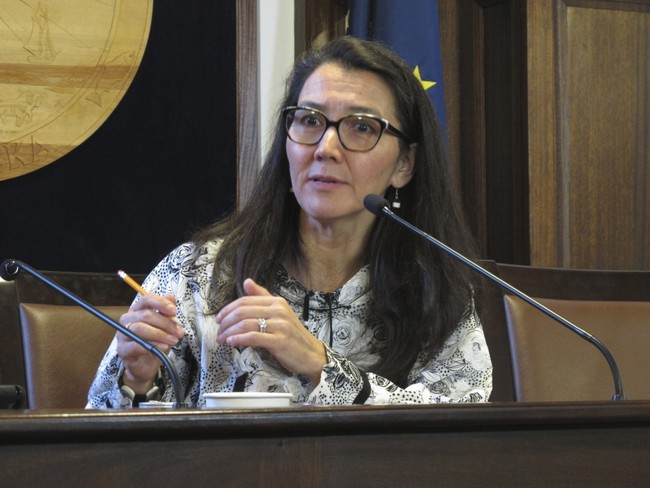
Democrats Meddling in Alaska Congressional Primary
Favicon 
hotair.com

Democrats Meddling in Alaska Congressional Primary

Democrats Meddling in Alaska Congressional Primary
Like
Comment
Share
Hot Air Feed
Hot Air Feed
2 yrs

New Limits on Abortion in New York Introduced by...Planned Parenthood?
Favicon 
hotair.com

New Limits on Abortion in New York Introduced by...Planned Parenthood?

New Limits on Abortion in New York Introduced by...Planned Parenthood?
Like
Comment
Share
Science Explorer
Science Explorer
2 yrs

The Russian Sleep Experiment And Why We Believe In Urban Legends
Favicon 
www.iflscience.com

The Russian Sleep Experiment And Why We Believe In Urban Legends

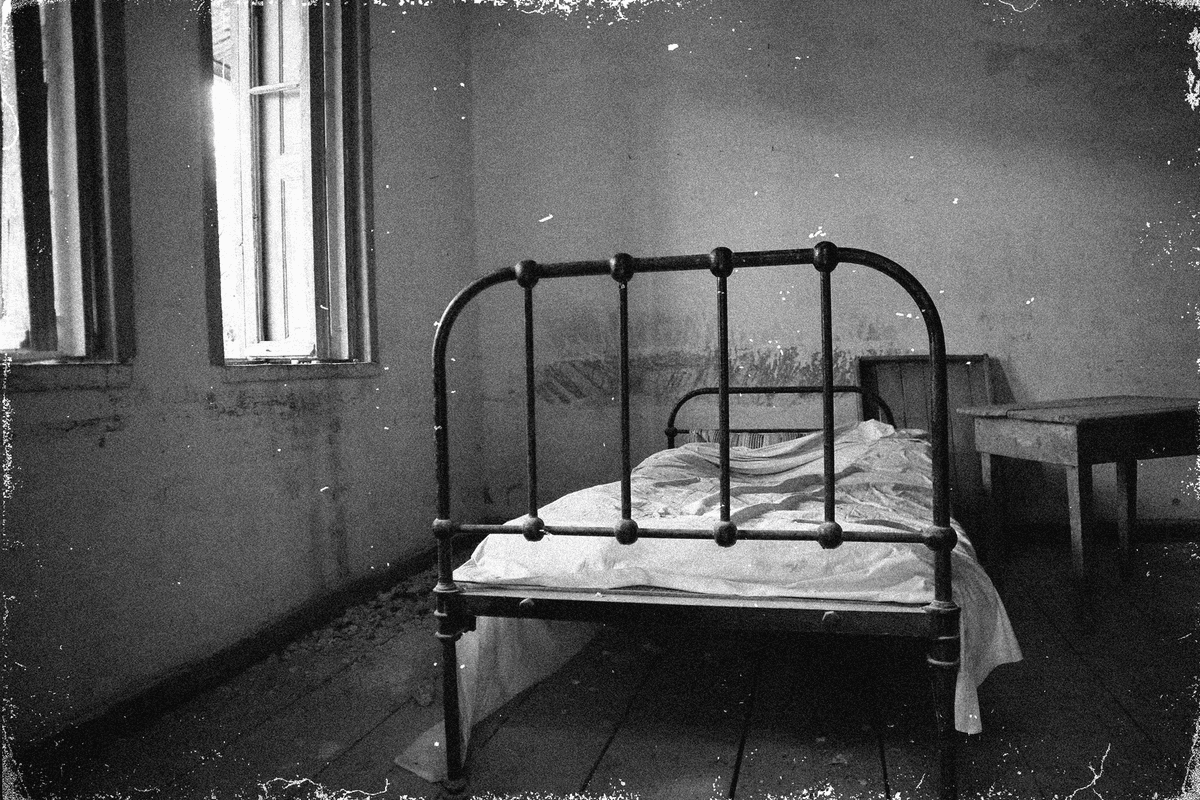
In 1947, a covert Soviet test facility carried out experiments into sleep. The researchers took several test subjects – prison inmates – and sealed them in an airtight space that was then filled with an experimental stimulant gas designed to prevent sleep. Over the next few weeks, the researchers planned to observe their hapless test subjects by way of hidden microphones and two-way mirrors.At first things ran smoothly, but after a week the test subjects began to exhibit signs of stress. They became withdrawn and paranoid, whispering into the microphones about their fellow inmates. But then, a few days later, the screaming started. The prisoners suddenly turned frantic, they ranted and raved, and screamed themselves horse. Some apparently screamed so hard they practically ruptured their vocal cords. And then it all went silent.The experience was terrifying, so the experimenters tried to stop the study and open the chamber. However, they were stopped from doing so when a voice, one of the prisoners, announced “We no longer wish to be freed”.By the time the researchers cut the gas and opened the chamber a few days later, most of the inmates were dead, apparently having mutilated themselves or one another. Some had reportedly resorted to cannibalism. Those who remained alive were in a state of psychosis, refusing to leave and refusing to sleep again. Of course, the Soviet authorities tried to remove all evidence of this grisly event from the record."Photos" can make a story seem convincing but they are easy to edit to look real or older, like we've done here.Image credit: Vladamir Mulder/Shutterstock.com, modified by IFLScienceIf you are familiar with this story, or some version of it, then congratulations, you have come across an urban legend that has made its way onto the internet in recent years. The Russian Sleep Experiment, as it is known, was originally a creepypasta story – a kind of short horror story designed to sound plausible – that has now mutated into a living urban legend. Much like the popular Slender Man that lurked and crept its way from a work of internet fiction to very real tragic events, the Russian Sleep Experiment now has a life beyond the authors who originally created it.But what makes stories like this so “believable”? Or, to put it another way, why do some stories become urban legends when others do not, and why do we accept them?A new folklore Urban legends are effectively a form of modern folklore. The stories can vary in their content, from the mundane culinary experience – the Kentucky fried mouse story – and creature sightings – alligators in the sewers – to the supernatural encounters like Slender Man and the Vanishing Hitchhiker. All these stories are united by a sense of strangeness, albeit to varying degrees, as well as a sliver of believability.This is an important factor for a budding urban legend. No matter how ridiculous, or worrying the content, it has to have a small amount of credibility to survive. This is usually achieved by combining elements of the familiar with the unfamiliar, but only in measured doses.Previous research into the popularity of folk stories, such as those in the Grimm Brother’s fairy tales, has shown that the more popular narratives are those that only use a few supernatural components. For instance, Little Red Riding Hood and Cinderella are fantastical stories with a few references to the weird, but they are also recognizable and extremely popular. In contrast, The Donkey Lettuce (sometimes Cabbage), which appears in the same collection of stories is filled with supernatural elements and yet is barely known.It seems our minds have a credibility threshold beyond which our critical thinking starts to object. The same may be true for urban legends. If they include too many surprising details, then the story becomes less enjoyable or believable.The psychology of urban legendsIn terms of psychology, this could be explained in relation to thinking styles and what is known as the dual processing model. According to this idea, we have two ways of processing information that are distinct but nevertheless interrelated.Essentially this is a kind of “system one” and “system two” approach, Dr Neil Dagnall, a cognitive and parapsychological researcher at Manchester Metropolitan University, told IFLScience. The former favors emotional, instinctive, and subjective evaluations and the latter focuses on objective and critical thinking. [P]eople are likely to engage with urban legends because they're interesting anecdotes or something topical. So [people] latch on to it from that subjective side, and then are less interested in validating its accuracy and more interested in the story for the story's sake.Dr Neil DagnallAlthough these processes work in parallel, each style draws on different cognitive resources. Critical thinking, which relies on established rules of logical reasoning, is more mentally taxing. It’s intentional and attentional, whereas emotional thinking is less demanding, relying on general cognitive processes to interpret information, and is mostly automatic.Previous research into dual processing theories has found that belief in paranormal phenomena is closely related to “system one” thinking, that is, intuitive rather than critical thinking. So perhaps something like that is happening with the belief in urban legends.“[P]eople are likely to engage with urban legends because they're interesting,” Dr Dagnall explained. “They're nice little stories, or they're interesting anecdotes, or something that's topical. So [people] latch on to it from that subjective side, and then are less interested in validating its accuracy and more interested in the story for the story's sake.”This explanation contrasts with others that try to view humans as simply being prone to believing outlandish ideas, that they are generally non-discerning. Or, as psychologist Gordon Pennycook argues, humans will generally believe “bullshit”.Essentially, this suggests some people are simply not discerning and will rely on system one thinking. They are not particularly selective with the information they believe and instead endorse things that are not true. As such, they will believe any form of bullshit, from urban legends to paranormal events to ridiculous conspiracy theories.But Dagnall believes there is more going on here. We know, for instance, that even within the conspiracy theory world, believers in one claim may not necessarily believe in another. For instance, he explains, “I might think Elvis faked his death, I might think Elvis was murdered, but I don't necessarily think that's true of Marilyn Monroe.” Equally, someone who believes in the Flat Earth conspiracies may not necessarily believe in aliens or be opposed to vaccinations.Although it is true that people who believe in conspiracies often do have other unusual beliefs, the situation is more complicated and contextual than simply saying they just believe “bullshit”.Even “within people who engage with urban legends,” Dagnall says, “they're going to be more critical of some of those urban legends than other ones, and the degree to which they're susceptible to them will be influenced by other factors, such as how plausible they think they are.”At the same time, because of the rise of the internet and social media, how such stories spread has changed. Not only is it easier for people to circulate various new urban legends across the internet, but many of us are also too busy to apply critical thinking to everything we see.“There’s less opportunity to evaluate stories or to deal with them...," Dagnall notes. "[I]n the past, if you just get it in an email and you may get a precautionary thing, it's more likely to be the focus of your attention. Now, you just get them popping up all over the place.”This returns us to credibility. Good urban legends are stories that have something believable about them. So the alligators in the sewers story, for instance, works well because it has historical precedence in places where they are native. It is therefore plausible that alligators or crocodiles may have infiltrated other sewer systems, even in places like New York City.This too is true for the Russian Sleep Experiment story. The Soviet Union is remembered as a cruel and barbaric regime that demonstrated a staggering disregard for human life, especially under Joseph Stalin. Couple this with contemporary stories about unethical human experiments, such as those performed by the Nazis in the Second World War, or the CIA's Project MKUltra and you have the framework for a believable narrative about abused inmates and sinister experiments.So like any worthy urban legend, the story may not be true, but for some it may nevertheless feel like it could be.
Like
Comment
Share
Science Explorer
Science Explorer
2 yrs

Space Hurricanes Are Now A Thing – And They Happen A Lot
Favicon 
www.iflscience.com

Space Hurricanes Are Now A Thing – And They Happen A Lot

Just three years ago, researchers discovered a new geomagnetic phenomenon. Dubbed "space hurricanes", scientists saw huge swirling arms of plasma in the Earth’s magnetosphere hundreds of kilometers long around a calm "eye of the storm", just like in a regular hurricane. These events can disrupt satellites in low-Earth orbit and even cause aurorae closer to the ground – and they occur more often than thought.Initially, the discovery was exclusive to the Northern Hemisphere, likely due to more people living near or within the polar region in the North compared to the South. More people means more scientific instruments and observations. However, now scientists have quantified and qualified what space hurricanes are like in the Southern Hemisphere.It appears there aren't any major differences between the two hemispheres. Between 2005 and 2016, there were 329 space hurricanes in the Northern Hemisphere and 259 in the Southern Hemisphere. Space hurricanes are more likely to occur in the dayside polar cap at a magnetic latitude greater than 80°, very close to the magnetic poles. They are strongly dependent on the interplanetary magnetic field, the solar cycle, and even the Earth's seasons.            Space hurricanes are more likely to occur in summer and during the daytime, suggesting that sunlight exposure and magnetic tilt both play a role in the hurricanes. Unfortunately, their high latitude and daytime occurrence make it unlikely they can be witnessed by human eyes.The team estimates the average velocity for the plasma in space hurricanes is 1 kilometer per second (2,237 miles per hour). That sounds pretty fast already, but it is about 10 times faster than the average plasma found around the polar regions.Understanding these events is important as they might play a big role in space weather. The work helps create a three-dimensional picture of these magnetic vortices and how they affect the lower atmosphere. The goal is to be able eventually to be able to predict these hurricanes and be ready to mitigate some of their effects.The study is published in the Journal of Geophysical Research: Space Physics.
Like
Comment
Share
Science Explorer
Science Explorer
2 yrs

Officials Issue Warning After Dog Sets House On Fire By Chewing On Power Bank
Favicon 
www.iflscience.com

Officials Issue Warning After Dog Sets House On Fire By Chewing On Power Bank

Pet cam footage released by the fire department in Tulsa, Oklahoma, has shown the moment a house caught on fire after the owner’s dog chewed into a lithium-ion power bank.According to a statement from the fire department posted to social media, firefighters responded to the house fire back in May. Though the building was significantly damaged, nobody was hurt – including the two dogs and a cat inside, who were able to escape through a dog door.The source of the fire was identified as a lithium-ion power bank or battery pack, which one of the dogs had been chewing whilst lying on its bed. Eventually, the power bank started to spark, causing the dog to drop it. Sparks then turned into flames, the bed caught alight, and a large fire grew.There’s a reason why lithium-ion batteries make a popular choice to base devices like power banks on – they can store a lot of energy for how lightweight they are, which is pretty convenient when you’re out and about without access to a regular charging point.But as the Tulsa Fire Department’s public information officer Andy Little explained in a video accompanying the statement, holding that amount of energy can end up being dangerous.“When this energy is released uncontrollably, it can generate heat, produce flammable and toxic gases, and even lead to explosions,” said Little. “These incidents can occur due to various reasons, such as exposure to extreme heat, physical damage, to the battery overcharging, or even using incompatible charging equipment.”In this case, physical damage means a dog who mistook a battery pack for a tasty snack – but this type of fire appears to be far from an isolated incident.“Fire departments all over the country are seeing fires related to these batteries,” reads the department’s statement, “and we want the public to learn about usage, safe storage and proper disposal of these potentially dangerous batteries.”On that point, Little has some good advice.“It is crucial that you adhere to manufacturer guidelines when using lithium-ion batteries, only using approved chargers and storing them out of reach of children and pets.”“Furthermore,” Little continued, “it is imperative to dispose of lithium-ion batteries properly. They should never be tossed in household garbage or recycling bins as they can cause fires during transportation or at disposal facilities.“Instead, take these batteries to designated recycling centers or household hazardous waste collection points.”
Like
Comment
Share
Science Explorer
Science Explorer
2 yrs

More Research Shuts Down Controversial Claims About Homo Naledi, Star Of Netflix Documentary
Favicon 
www.iflscience.com

More Research Shuts Down Controversial Claims About Homo Naledi, Star Of Netflix Documentary

Yet another study has poured cold water on the sensational claims surrounding Homo naledi, an extinct human relative with a puny brain that has been claimed to have buried its dead.In 2023, archaeologists working at the Rising Star Cave system in South Africa claimed they had found evidence that Homo naledi intentionally buried their dead over 240,000 years ago and decorated their graves with abstract markings.It was a bold assertion because this is well over 100,000 years before Homo sapiens are known to have buried their dead, plus the species possessed a brain that’s no bigger than a chimpanzee's.After posting three pre-print articles on the discovery, the team led by Lee Berger then embarked on a huge media campaign, culminating in a slick Netflix documentary called UNKNOWN: Cave Of Bones.However, skepticism quickly followed. A peer review of their articles found that the evidence was “incomplete and inadequate, and should not be viewed as finalized scholarship,” while other researchers dished out some strongly worded rebuttals.In a new paper, another group of researchers put forward more evidence that Berger’s conclusions are unfounded.           The burial theory centers around where the 15 Homo naledi skeletons were found in the Rising Star Cave system. The bodies are found at the back of the cavern in a hard-to-reach spot that takes modern cavers more than half an hour to reach, laid out in a seemingly ordered position. What’s more, the 2023 papers argued the bodies were laid to rest in a shallow dug-out pit and covered with soil, as if they were given an organized funeral. The new paper believes this isn’t the case. The researchers carried out a re-analysis of the geochemical and sedimentological data used by the original authors to conclude that none of the surrounding sediment shows the dirt was shifted around to entomb the bodies in a deliberate burial. It is still uncertain how the Homo Naledi bodies ended up in this peculiar position. Others have speculated whether it was the work of scavenging animals, the flow of water, or a roof collapse. However, there’s a lack of evidence to support these claims too. The researchers in the latest study don’t attempt to provide an alternative answer, simply concluding that “the interpretations, the narrative, and the data are not aligned” in Berger’s work. They do, however, believe the whole saga shows the perils of using sleek TV shows to hype up ideas before they've been rigorously peer-reviewed.“I hope that this work is able to instill some skepticism in the public when it comes to archaeological research in the public eye,” Professor Kimberly Foecke, author of the new study from the Anthropology department at George Mason University, said in a statement.“We see so often flashy shows with charismatic archaeologists presenting huge claims about the past, but we must hold scientists who communicate with the public accountable to the science itself and ensure that we as a field are doing good work,” she added.   The new study is published in the journal PaleoAnthropology.
Like
Comment
Share
Science Explorer
Science Explorer
2 yrs

Forget Changing With Age, People's Moral Values Change With The Seasons
Favicon 
www.iflscience.com

Forget Changing With Age, People's Moral Values Change With The Seasons

If you ask citizens of wealthy English-speaking countries which moral values they consider most important, their answers vary by the time of year, according to a new study. Naturally, the variation is not enormous, or people would have noticed it before, but it is large and surprisingly consistent over many years and may shape choices when it comes to election time.When Robert Bolt called Sir Thomas More “A Man For All Seasons” (borrowing from More’s contemporary Whittington), he was referring to the way More held true to his values even as the political climate shifted around him. The implication was that this was rare, but “Seasons” was used metaphorically, and it probably didn't occur to anyone that it might be relevant for literal seasons of the year. However, University of British Columbia researchers thought to check and found that for many of us, the time of year does affect what we believe.Social scientists have been asking people about the importance of values like loyalty and kindness for decades as a way to understand their behavior.Based on an impressive sample of 232,975 people, their data collected through yourmorals.org, UBC doctoral student Ian Hohm looked at whether the views of these values shift with the seasons, and found that they do, but in some curious ways.Purity, loyalty, and respect for authority – values venerated by traditional conservatism – often go together, and are collectively known as “binding values”, so it is no surprise they rise and fall together over the course of a year. What is stranger is that instead of peaking in summer or winter, this trio is most valued in spring and fall, and considered less important both when it is hot and cold. The effect was far stronger than required to meet tests of statistical significance and remained robust when controlling for the fact that older and wealthier people were more responsive in spring and summer.How survey respondents considered purity, loyalty, and respect for authority, showing a clear seasonal trend.Image credit: Evolutionary Social Cognition Laboratory at UBCMeanwhile, values typically  emphasized by liberals and progressives, like fairness and caring for others, showed less variation throughout the year. To the extent they did, the pattern was less clearly seasonal. Consequently, in summer and winter, they were more influential, relatively speaking.“People’s endorsement of moral values that promote group cohesion and conformity is stronger in the spring and fall than it is in the summer and winter,” Holm said in a statement. “Moral values are a fundamental part of how people make decisions and form judgments, so we think this finding might just be the tip of the iceberg in that it has implications for all sorts of other downstream effects.”Historically, this means US conservatives may have had a small boost from the requirement to hold elections at the start of November. Whether American history would be significantly different if they were held in summer or winter is hard to tell. This survey could also not tell if this advantage has been weakened now that a number of those who call themselves “conservative” have become openly contemptuous of the authority of science.In countries where the prime minister or president gets to choose the date of the election, the findings could be even more interesting to politicians. The authors looked at other English-speaking countries and found a similar pattern in Australia and Canada. In the UK, on the other hand, support for binding values fell strongly in summer, but peaked in winter. However, in each case the sample size was less than a tenth of that available for the US, so these results require more caution. It seems logical that people's values will change more with the seasons in places where the difference between summer and winter is greater than where seasons are barely a thing. Indeed, the variation observed was considerably larger for Canada than Australia, but the authors didn’t break the US variation down by state to see if Alaskan values vary more than, for example, Floridian values.Explanations for this pattern might be easier to come up with if winter and summer were opposites, instead of close matches, but the authors did find a major clue in terms of mood. Americans are more anxious in spring and fall, a follow-up study using similar methods found. “This correlation suggests that higher anxiety may drive people to seek comfort in the group norms and traditions upheld by binding values,” said senior author Professor Mark Schaller. Schaller has recently published work on how much seasons affect other aspects of psychology.The data was collected weekly over ten years, and the same pattern was seen each time, so it's unlikely it was too skewed by specific events of a particular season. Then again, anniversaries like September 11 could be an ongoing factor unrelated to the weather, and the authors speculate Christmas may have some influence.The authors also note that it is not just elections that could be affected by these trends. Criminal convictions imply a disrespect for authority, and suggest further investigation into whether judges impose heavier penalties in certain seasons as a result. Moral values also shape how we respond to crises, with the authors using the COVID-19 pandemic as an example. Knowing that respect for authority and loyalty are higher at some times than others might affect the targeting of public health campaigns. The study is published in Proceedings of the National Academy of Sciences. 
Like
Comment
Share
Showing 17402 out of 56670
  • 17398
  • 17399
  • 17400
  • 17401
  • 17402
  • 17403
  • 17404
  • 17405
  • 17406
  • 17407
  • 17408
  • 17409
  • 17410
  • 17411
  • 17412
  • 17413
  • 17414
  • 17415
  • 17416
  • 17417

Edit Offer

Add tier


Select an image
Delete your tier
Are you sure you want to delete this tier?

Reviews

In order to sell your content and posts, start by creating a few packages. Monetization

Pay By Wallet

Payment Alert

You are about to purchase the items, do you want to proceed?

Request a Refund