YubNub Social YubNub Social
    Advanced Search
  • Login

  • Night mode
  • © 2025 YubNub Social
    About • Directory • Contact Us • Privacy Policy • Terms of Use • Android • Apple iOS • Get Our App

    Select Language

  • English
Install our *FREE* WEB APP! (PWA)
Night mode
Community
News Feed (Home) Popular Posts Events Blog Market Forum
Media
Headline News VidWatch Game Zone Top PodCasts
Explore
Explore Jobs Offers
© 2025 YubNub Social
  • English
About • Directory • Contact Us • Privacy Policy • Terms of Use • Android • Apple iOS • Get Our App

Discover posts

Posts

Users

Pages

Group

Blog

Market

Events

Games

Forum

Jobs

RedState Feed
RedState Feed
1 y

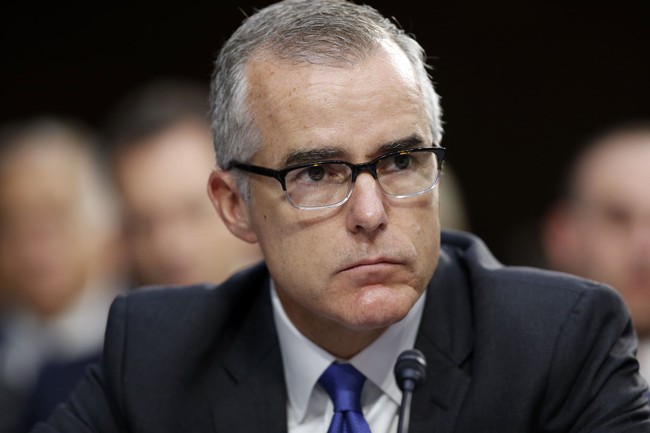
DELICIOUS: Andrew McCabe Throws a Fit on CNN Over Trump Nomination of Kash Patel
Favicon 
redstate.com

DELICIOUS: Andrew McCabe Throws a Fit on CNN Over Trump Nomination of Kash Patel

DELICIOUS: Andrew McCabe Throws a Fit on CNN Over Trump Nomination of Kash Patel
Like
Comment
Share
YubNub News
YubNub News
1 y

The American Electorate Revolted Against False Values
Favicon 
yubnub.news

The American Electorate Revolted Against False Values

[unable to retrieve full-text content]The defeat that the Democratic Party has just sustained is being blamed by its more fanatical adherents on racism, misogyny, reaction against ‘lawfare,’ the stubbornness…
Like
Comment
Share
Conservative Voices
Conservative Voices
1 y

Shocking footage of unaccompanied children at border raises concerns
Favicon 
www.brighteon.com

Shocking footage of unaccompanied children at border raises concerns

Follow NewsClips channel at Brighteon.com for more updatesSubscribe to Brighteon newsletter to get the latest news and more featured videos: https://support.brighteon.com/Subscribe.html
Like
Comment
Share
Conservative Voices
Conservative Voices
1 y

BREAKING: Trump nominates Kash Patel as FBI director
Favicon 
www.brighteon.com

BREAKING: Trump nominates Kash Patel as FBI director

ollow NewsClips channel at Brighteon.com for more updatesSubscribe to Brighteon newsletter to get the latest news and more featured videos: https://support.brighteon.com/Subscribe.html
Like
Comment
Share
Classic Rock Lovers
Classic Rock Lovers  
1 y

“I admire that”: The songwriters Patti Smith envies
Favicon 
faroutmagazine.co.uk

“I admire that”: The songwriters Patti Smith envies

Merging pop and poetry. The post “I admire that”: The songwriters Patti Smith envies first appeared on Far Out Magazine.
Like
Comment
Share
Conservative Voices
Conservative Voices
1 y

Jordan Peterson Sees the Awesome Power of Stories
Favicon 
spectator.org

Jordan Peterson Sees the Awesome Power of Stories

What A Long Strange Trip It’s Been is the title Jordan Peterson (or his organization) gave to his 500th podcast, released last week. Apt for Peterson, who has chalked up a few psychedelic journeys and has talked about them with seriousness and insight (though not so much lately), to use as his title the most famous lyric phrase in the entire Grateful Dead songbook. Peterson is challenging us to make our lives a part of the great story right now so that we no longer will flirt so closely with disaster. Apt as well because Peterson is emphasizing adventure as central to life lived at its deepest. Jerry Garcia of the Grateful Dead guessed that that was at the core of his band’s appeal: “Maybe that’s it, maybe we’re just one of the last adventures in America.” In recording #500, Peterson sees the call to adventure as biblical, in God’s imperative to Abraham to get up and leave everything familiar behind and go to the place He would show him. He sees it in the willingness of Jacob to wrestle with God, and has titled his newest book, We Who Wrestle With God, in reverence to the story of Jacob receiving the name Israel after he literally wrestles with a divine being. Putting adventure at the core of the relationship with God requires two things. First, it requires dedication to truth. For Peterson this means a commitment to that which is beyond the limits of our ability to control or manipulate, something which requires the surrender of our pretensions. Truth measures us. We can respond to that measure and commit ourselves to the adventure that ensues, or we can reject that open-endedness and the fear of the unknown for an endless sorry rehash of our own cycle of behaviors. We can dare to put out our thoughts so that, as Alfred North Whitehead wrote, our bad ideas can die instead of us. Whitehead, too, wrote of religion as adventure: The worship of God is not a rule of safety — it is an adventure of the spirit, a flight after the unattainable. The death of religion comes with the repression of the high hope of adventure. In the second place, adventure implies a story. An adventure is not experienced or remembered as a list of facts or a series of abstractions. Rather we experience it as a tale, a narrative. Peterson reminds us that there is nothing older or more central to human culture than stories. They treat truth as something that grips our lives and shapes us and the world. They recreate us as we hear them and tell them, awakening the inner feeling of adventure as we put ourselves in the place of the heroes of our stories and see the world through their eyes. In the best narratives, the mind and heart are an organic unity. They help us be whole. No wonder, says Peterson, that story is central to the Bible and spiritual traditions that have stood the test of time. Peterson has been influenced by Carl Jung’s deep dive into the narratives that are the stuff of our culture and of our inner lives. Peterson believes that Western culture made a catastrophic blunder in turning away from Jung’s exploration of deep narrative as the key to our psyche. Instead, the West turned to the Deconstructionists’ rejection of any coherent narrative except their own nihilism. To the deconstructionists, we differ so completely in how we read that in the end, no story can unite us. To them, all meanings are entirely in the separate and unrelated minds of the author and reader. When this literary nihilism merged with the political and moral nihilism of Marxism, Wokeism exploded onto the scene, attempting to level every monument and every meaning, to clear the cultural field of everything except their own unaccountable power. Like most readers of American Spectator, Peterson sees in the stunning events of this year’s election evidence of the resurgence of values the wokeists had thought dead and gone. The great narrative of the Bible and of the civilization that built on its foundation is turning out to be stronger than Derrida or Foucault understood. We see ourselves as part of a great story that will not be denied. The Bible begins with stories and doesn’t seriously turn to law until well into its second book. It engages us first. It takes pains through the story to invite us into a law that is godly and inviting. The model of law of the Roman emperors was top-down. Justinian’s code inspired those who wanted all power in their hands and who would use the Biblical narrative only to put a divine enforcer behind to terrorize those who might dare to defy the tyrant’s strong arm. Modern tyrants continue in that mode. But the Biblical narrative was seamlessly integrated with a law that reflected the power of the story. It is a law that lives, that inspires love as well as respect, and that is studied lovingly by every citizen: You shall love the Lord your Lawgiver (the Hebrew word used here is also used in Scripture to mean a human judge) with all your heart, all your soul, and all your might. And these words which I command you this day shall be upon your hearts … and you shall teach them to your children. The Bible doesn’t teach a mindless obedience to a larger power. It tells first a long, long story which puts its law in the necessary context: the absolute benevolence of a Supreme Being who shares his very self with a universe upon whom He bestows a freedom like His own. A being so dedicated to love that He gives humans the power to disobey and pain Him radically, just so long as in the end, they could choose to love. About 1900 years ago, a great teacher, Rabbi Akiva, proposed that the overarching principle that integrates God’s revelation — the Torah — is the command in Leviticus to love your neighbor as yourself. As is typical in the Godly freedom of study of the Word, Rabbi Akiva’s student, Ben Azzai, differed with him. He cited another Biblical verse, Genesis 5:1-2: “This is the storybook of Adam’s kind — when G-d created Adam, He made him in the likeness of God, male and female … ” The Bible’s story, Ben Azzai was saying, gives us the grounding that we need to love. Failing to know who we are at core, created out of love by a loving God in His own image, we can easily despair of being able to love even our own lives, let alone someone else. The core gift of the Bible’s story is that of our innate worth, which is not a product of our own effort or choice but is God’s irrevocable gift. We then are challenged by God to use that gift in a way that furthers His story and ours. This is the basis of the kind of law that the Bible generates in societies which are imbued with its message, a law that respects worship and learns from the greatest Lawgiver of all that our freedom is key. With that model of love and respect animating the law, the country so governed can inspire the love and respect of its citizens to strive together, governing themselves for the common weal. We nearly threw this concept of law out in the garbage. It is quite the tale now to add to the great narrative: how a nihilistic and cynical human tyranny could not quench the great story of the Bible or loose its hold on our hearts. Peterson is challenging us to make our lives a part of the great story right now so that we no longer will flirt so closely with disaster, in our private lives or in our life as a nation and as a world. May Peterson go forward from strength to strength as he makes his next 500 recordings. His story and example beckon us to join the great adventure and become fearless acolytes of truth ourselves. READ MORE from Shmuel Klatzkin: Big Money and Big Media Lost in 2024 With Trump’s Win, The Law Wins The post Jordan Peterson Sees the Awesome Power of Stories appeared first on The American Spectator | USA News and Politics.
Like
Comment
Share
Conservative Voices
Conservative Voices
1 y

Is the Transgender Movement Really Backing Down?
Favicon 
spectator.org

Is the Transgender Movement Really Backing Down?

On Tuesday, the New York Times published an article declaring that transgender activists are in the beginning stages of wondering whether they went too far when they, in essence, adopted a strategy of screaming “Bigot!” at anyone who dared question even one of their precepts. The article comes at a moment when many Democrats are pinning Kamala Harris’ election loss on the narrative that emerged from the famous “Kamala Is For They/Them. President Trump Is For You” campaign ad: that Democrats are at the mercy of ideological radicals, and are less focused on working for everyday Americans. But Strangio and the ACLU…. believe “transitioning” children is of utmost priority and a critical civil right that needs to be protected. In reality, the number of transgender activists who are actually questioning their movement’s tactics — such as deeming it “violence” to “misgender” someone, steamrolling the medical community into saying such insanities as “birthing parent” and “pregnant people,” and calling evil anyone who questions giving little boys estrogen and little girls testosterone (to supposedly turn them into the opposite sex) — is quite small. (WATCH Ellie Gardey Holmes: The Spectator P.M. Ep. 94: Congress’ Bathroom Fight Shows Shift on the Left) In fact, the New York Times was only able to find two transgender activists willing to say so on the record. This is in spite of the fact that the author, Jeremy W. Peters, said he did everything he could to get transgender activists to do so. He explained, “A lot of LGBTQ leaders and advocates didn’t want to say they had concerns because they worried about dividing their movement.” The two people who did express some reservations with the transgender movement’s aggressive tactics to the New York Times were Rodrigo Heng-Lehtinen, executive director of Advocates for Transgender Equality, and Mara Keisling, the funder of the National Center for Transgender Equality. For his part, Heng-Lehtinen said, “We have to make it OK for someone to change their minds…. We cannot vilify them for not being on our side. No one wants to join that team.” Keisling, meanwhile, said activists had “looked unreasonable” when they called people who opposed allowing men in women’s sporting events bigots. But even as there is an increasing feeling on the Left that things have gone too far in regard to transgender activism, most transgender activists are doubling down. When future member of Congress Sarah McBride, a man who identifies as a woman, agreed to not use the women’s bathroom at the Capitol, many transgender activists decried it as a terrible retreat. LGBTQ publication The Advocate quoted a person who identifies as transgender as responding: “The reaction I am seeing from prominent trans journalists and activists is extremely negative. They are seeing this as a betrayal.” Additionally, the LBGTQ organization GLAAD responded to the whole episode with McBride by asserting that the phrase “biological sex” is a term that is merely used to dehumanize people: The resolution seeks to ban transgender women from using female restrooms inside the Capitol, barring both House members and employees from “using single-sex facilities other than those corresponding to their biological sex [sic].” “Biological sex” is not an accurate nor a scientific term, but is used by opponents of transgender people to dehumanize them and deny their equal access to society. Others are sending out clarion calls begging the Left to not back away from transgender activism. For instance, columnist Will Bunch wrote for the Philadelphia Inquirer last week: “Whether hate-filled TV ads helped elect Trump is no reason to stop fighting for the humanity of 1 million transgender Americans.” Kentucky Gov. Andy Beshear has also gone on a media tour reiterating full support for transgenderism. Beshear vetoed a bill that would have protected minor girls in his state from being injected with testosterone and given mastectomies as part of their parents’ attempts to turn them into men. Last week, he said on Face the Nation, in explaining his veto, “That’s my faith, where I’m taught that all children are children of God, and I wanted to stick up for children who were being picked on.” The ACLU’s Transgender Extremism The ACLU, which has a major role in advancing transgender radicalism, in particular has elucidated total support for the same aggressive tactics on transgenderism. In a podcast episode earlier this month, Cecillia Wang, the organization’s national legal director, focused on transgenderism when explaining her plans for the organization’s efforts to diminish the impact of the Trump administration. Before discussing anything else, she worried about Trump’s proposal to cut off Medicaid funding to hospitals that give children medical interventions to attempt to turn them into the opposite sex. She referred to this as “life-saving medical care.” The ACLU will be before the Supreme Court next month in the case United States v. Skrmetti. The organization decided to send an attorney who identifies as transgender, Chase Strangio, to argue the case. The case concerns a Tennessee law that bans children from receiving puberty blockers, cross-sex hormones, mastectomies, phalloplasties, and vaginoplasties. Even many on the Left are questioning the ACLU’s wisdom in taking that case to the Supreme Court, as the 6–3 conservative majority makes it unlikely that the Supreme Court would overturn the circuit court’s ruling. For example, Kate Redburn, an academic fellow at Columbia Law School, told New York Magazine: “It’s understandable to some extent why the case was brought up…. But now the question is, What will the Court do? … I can’t tell the future, but I think the signs are bad.” (READ MORE: DEI Proponents at the University of Michigan Are Panicking but Refusing to Budge) But Strangio and the ACLU are undeterred. They believe “transitioning” children is of utmost priority and a critical civil right that needs to be protected. “The consequences of these 24 state laws banning medical care for trans young people are so drastic and so severe,” she explained to New York Magazine. In the end, it makes more sense for the transgender movement to continue its aggressive tactics. After all, when your movement is founded upon pushing a total lunacy that defies human experience (that some men are secretly women on the inside and vice versa), it turns out that aggressive social control is the only reasonable path toward success. The post Is the Transgender Movement Really Backing Down? appeared first on The American Spectator | USA News and Politics.
Like
Comment
Share
Conservative Voices
Conservative Voices
1 y

Wicked Bewitches and Beguiles at the Box Office
Favicon 
spectator.org

Wicked Bewitches and Beguiles at the Box Office

Wicked, the much-anticipated film adaptation of the longest-running Broadway musical is enchanting audiences everywhere garnering close to $200MM in global box office revenue in its first week. The film also has the distinction of delivering the strongest box office opening ever for a screen adaption of a Broadway musical.   On one hand, it is a very adult story which satirizes political corruption, personal ambition, and prejudice. Loosely inspired by Gregory Maguire’s 1995 novel, Wicked: The Life and Times of the Wicked Witch of the West, Wicked was conceived as a prequel to L. Frank Baum’s book The Wonderful Wizard of Oz (1900), on which the legendary film The Wizard of Oz  (1939) is based. Maguire’s Wicked depicts an elaborate backstory in which Elphaba, the Wicked Witch of the West,  was friends with Glinda, the Good Witch of the North, while the two women were university students. Starring pop star Ariana Grande as Glinda, and Broadway actress and singer Cynthia Erivo as Elphaba, Wicked is a visual and emotional masterpiece with stand-out performances by the two leads along with the marvelous presence of Michelle Yeoh as Madame Morrible and Jeff Goldblum as the Wizard.  Directed by Jon M. Chu (Crazy Rich Asians), Wicked was filmed in two segments with Part Two scheduled for release in November 2025. (READ MORE from Leonora Cravotta: AI Snake Oil: Separating Hype From Reality in Artificial Intelligence) The film opens with Glinda, the Good Witch of the North, proclaiming the death of Elphaba, the Wicked Witch of the West, to the citizens of Munchkinland.  Following these remarks, a young woman in the crowd asks Glinda to confirm a rumor that she and Elphaba were once friends. While Glinda tries to downplay their relationship by saying that their paths crossed, this exchange serves as the vehicle for the recounting of how she and Elphaba became acquainted as students at Shiz University, a school for would-be sorcerers. The film provides a detailed portrait of Elphaba’s painful early childhood where she was rejected by her father and ridiculed by other children for her green complexion. Although Elphaba was deeply hurt by the way others treated her for being different, she soon became cognizant that she possessed an ability to move objects with her mind. It is this magical power that served as the catalyst for both her successful academic career at Shiz and her unlikely friendship with the beautiful, superficial but ambitious Glinda. Wicked’s blockbuster performance at the box office is not surprising given the incredible popularity of the long-standing Broadway production which debuted in 2003, and the public’s familiarity with the show’s signature songs including “Popular,” “I’m Not That Girl,” and “Defying Gravity.” Moreover, the decision to cast Grande and Erivo, who are both blessed with magnificent singing voices, was also critical to the film’s runaway success. Furthermore, having the two stars record the songs live instead of looping the vocals in later additionally enhances the cinematic experience. Wicked pays homage to the original Broadway production by including a scene showcasing the singing talents of Idina Menzel, the original Elphaba, and Kristen Chenoweth, the original Glinda. Wicked is also peppered with references to MGM’s The Wizard of Oz (1939). For instance we witness Grande as Glinda arriving in Munchkinland via a pink bubble just as Billie Burke did in the classic movie. There are other more subliminal references such as the scene where Elphaba while a student at Shiz inadvertently turns over a vase filled with poppies and puts the whole class to sleep. This scene recalls Margaret Hamilton, the Wicked Witch of the West in the 1939 film, attempting to circumvent Dorothy, the Scarecrow, the Tinman, and the Cowardly Lion’s journey to the Emerald City by sprinkling their path with poppies. The Politics of Wicked The story further honors The Wizard of Oz legacy by embedding political messaging into the plotline. Since its initial publication, L. Frank Baum’s novel has been described as a political allegory with Dorothy representing everyman, the Scarecrow the agricultural worker, the Tinman the industrial worker, and of course the Wizard representing the U.S. president and Emerald City, Washington D.C. When Baum’s book was published in 1900, William McKinley was president. McKinley would die the following year as a result of an infection from an assassination attempt by an anarchist named Leon Czolgosz. The death of McKinley ,who was very popular at the time, only reinforces the immense power of the political machine and the ultimate humanness of those serving as its representatives. Interestingly enough, when Gregory Maguire published his novel in 1995, Bill Clinton was president, yet because George W. Bush was president in 2003 when the Broadway production was launched, critics interpreted the story as satirizing Bush. The Wizard as played by Jeff Goldbum is also a parody of  the contemporary president of one’s choosing. Although production wrapped on the film in January 2024 when Joe Biden was president and the presumptive Democratic Party nominee for the 2024 Presidential Election, liberals are already reading anti-Donald Trump messaging into the film. While the movie has several political references, perhaps the most compelling is Shiz University’s decision to discriminate against animals by forbidding them from serving as university instructors and physically locking them up in cages. Not surprisingly, Elphaba sees a parallel between the hardships she experienced as a result of her green skin and the silencing and othering of the animal professors. Consequently, she takes up their cause, a decision which ultimately puts her at odds with Madame Morrible and the Wizard. (READ MORE: Follow The Washington Trail: New Cloak and Dagger Mystery Lampoons DC Corruption) Wicked captivates audiences because like The Wizard of Oz, it has multilayer appeal. On one hand, it is a very adult story which satirizes political corruption, personal ambition, and prejudice. The film also raises existential questions such as whether people are born evil or become evil as a result of their life experience. On the other hand, Wicked is also appropriate for older children in that it celebrates the friendship between Elphaba and Glinda, two very different individuals.  Children benefit from the teachable moment that not only is it important to be tolerant of those who look or act differently from us, but that these differences enhance and enrich friendships. I highly recommend Wicked as a fantastically entertaining, intelligent production. I am already looking forward to Part Two. The post <i>Wicked</i> Bewitches and Beguiles at the Box Office appeared first on The American Spectator | USA News and Politics.
Like
Comment
Share
Conservative Voices
Conservative Voices
1 y

What is the Scientific Theory of Intelligent Design?
Favicon 
spectator.org

What is the Scientific Theory of Intelligent Design?

While Intelligent Design (ID) is a term which is becoming more familiar in our culture it is safe to say most people still misunderstand it.  Since critics often misrepresent ID, and paint ID advocates as a fanatical fringe group, it is important to understand what intelligent design is, and what it is not. Contrary to popular belief, to be an ID proponent you do not have to believe that all species were created simultaneously a few thousand years ago. Until Charles Darwin, almost everyone everywhere believed in some form of intelligent design (the majority still do): not just Christians, Jews and Muslims, but almost every tribesman in every remote corner of the world drew the obvious conclusion from observing animals and plants that there must have been a mind behind the creation of living things. Darwin thought he could explain all of this apparent design through natural selection of random variations. In spite of the fact that there is no evidence that natural selection can explain anything other than very minor adaptations, his theory has gained widespread popularity in the scientific world, simply because no one can come up with a more plausible theory to explain the development of life, other than intelligent design, which is dismissed by most scientists as “unscientific.” But, in recent years, as scientific research has continually revealed the astonishing dimensions of the complexity of life, especially at the microscopic level, support for Darwin’s theory has continued to weaken, and since the publication in 1996 of Darwin’s Black Box by Lehigh University biochemist Michael Behe, a growing minority of scientists have concluded, with Behe, that there is no possible explanation for the complexity of life without intelligent design.  If scientists can spend time and money developing tools and algorithms to detect dubious signs of extraterrestrial intelligence in weak signals from outer space, why are they required to ignore the evidence in living cells where design practically leaps out at you? What Intelligent Design Scientists Believe But what exactly, do these “ID scientists” believe? There is no general agreement among advocates of intelligent design as to exactly where, when, or how design was manifested in the history of life. Most, but not quite all, accept the standard timeline for the beginning of the universe, of life, and of the major animal groups. Some accept common descent, although most recognize that this “descent” was not really gradual. (In fact, most of the animal phyla appear quite suddenly in the fossil record about 500 million years ago in the “Cambrian explosion,” as documented in Steven Meyer’s 2013 book Darwin’s Doubt.)  Probably all reject natural selection as an adequate explanation for the development of life, but so do many other scientists who are not ID proponents. So what exactly do you have to believe to be an ID proponent? Perhaps the best way to answer this question is to state clearly what you have to believe to not believe in intelligent design. Peter Urone, in his 2001 physics text College Physics writes, “One of the most remarkable simplifications in physics is that only four distinct forces account for all known phenomena.” The prevailing view in science today is that physics explains all of chemistry, chemistry explains all of biology, and biology completely explains the human mind; thus, physics alone explains the human mind and all it does. This is what you have to believe to not believe in intelligent design, that the origin and evolution of life, and the evolution of human consciousness and intelligence, are due entirely to a few unintelligent forces of physics.  The new video A Mathematician’s View of Evolution dramatizes this through reductio ad absurdum, pointing out that if you don’t believe there was intelligence involved in the origin or evolution of life, or in the origin of human intelligence, you essentially believe that a few unintelligent forces of physics alone could have rearranged the fundamental particles of physics on Earth into computers and science texts and jet airplanes. Contrary to popular belief, to be an ID proponent you do not have to believe that all species were created simultaneously a few thousand years ago, or that humans are unrelated to earlier primates, or that natural selection cannot cause bacteria to develop a resistance to antibiotics. If you believe that a few fundamental, unintelligent forces of physics alone could have rearranged the basic particles of physics into Apple iPhones, you are probably not an ID proponent, even if you believe in God. But if you believe there must have been more than unintelligent forces at work somewhere, somehow, in the origin of life and the development of intelligent humans: congratulations, you are one of us after all! Furthermore, the evidence uncovered in the last half century have forced many scientists who insist that unintelligent laws of nature explain everything to accept that design is required to explain the spectacular fine-tuning for life, and even of the laws and constants of physics themselves. These scientists are sometimes considered to be intelligent design supporters as well.  One of the three discoveries discussed in Stephen Meyer’s 2021 best seller Return of the God Hypothesis: Three Scientific Discoveries that Reveal the Mind Behind the Universe  is this well-documented fine-tuning.  Notice the long list of distinguished scientists who have formally endorsed the book, including physics Nobel prize winner Brian Josephson who writes, “This book makes it clear that far from being an unscientific claim, intelligent design is valid science.” READ MORE from Granville Sewell: Venezuela Follows the Classic Path of Radical Socialism Route 60: The Biblical Highway: More Than a Road Map The post What is the Scientific Theory of Intelligent Design? appeared first on The American Spectator | USA News and Politics.
Like
Comment
Share
Conservative Voices
Conservative Voices
1 y

Making Nice With the Young Progs at Your Table
Favicon 
spectator.org

Making Nice With the Young Progs at Your Table

Since the election we have been regaled with articles detailing the steps angry progressives intend to take against anyone not expressing performative outrage at the reelection of Donald Trump. Tik Tok is full of head shaving, sex strikes, and of course the old faithful, threats to hector relatives at holiday meals. So be polite to your young prog, ask interested questions, nod appreciatively, and thank them for explaining things. Sympathetic media outlets have offered their Harris-supporting readers tips for dealing with their MAGA cousins and uncles, mostly deriving from the tired false consciousness trope. Apparently only graduates of elite Ivy League schools can identify the true interests of small business owners and blue collar workers.  Some leftie stalwarts recommend a boycott of benighted families altogether, but their less-exalted acolytes are unlikely to pass on an opportunity for a thrilling bout of rage over the roast turkey. Which leaves those of us who prefer to protect the bonds of familial affection from the corrosive influence of partisan politics in a bit of a bind as the holidays approach.  Our love for our families is not contingent on a series of political tests. We can still adore our nieces and nephews as they try out various astonishing ideologies, and hope that they may mature into sturdy tax-paying bourgeoisie. We can appreciate their intellectual experiments, and tolerate the emotional riptides that course through the arguments animating them. Youthful passion can be a lovely thing even when applied to tawdry politics. Familial love can help prevent this passion from curdling into hate, the heroin of emotions: euphoric, destructive, and highly addictive. There is nothing more hypnotic for young zealots than righteous hatred. Your political opponents aren’t just wrong, they are in fact evil and every fiber of your moral being can be devoted to smiting them down.  Which explains the growing penchant for violence among the extreme left. If we are to save our family members from this dire addiction, we must engage with them even when they prefer spiky rhetoric to civil discourse. Unfortunately, our major media outlets offer little advice to those likely to endure explosions of progressive rage over the holiday table. We are presumably meant to enjoy a dollop of leftist reeducation with our pumpkin pie.  Prior generations could employ the “Bless your heart” tactic, which was the presiding grandmother’s way of saying “please shut up now,” but the white-hot rage animating young progressives these days is unlikely to defer to traditional politesse. Quiet forbearance may only create further unpleasantness as the angry young progressive senses apostasy and seeks to expose the infidel. Once the witch hunt begins, it will be impossible to restore the good humor needed to turn to less fraught topics, such as whether Alabama deserves a spot in the college football playoffs. The first step to restoring family comity and perhaps forestall an incipient addiction to partisan hatred is to understand the sources of progressive rage since the election. Much has been made of the quasi-religious aspects of contemporary progressivism: the original sin of Western capitalism, doomed to be punished by the angry secular deity of climate change. A creed offering sin without grace can unleash the inner Cotton Mather in young students insulated from base material considerations like supporting a family amid high inflation. Yet this doesn’t exactly explain the explosion of rage after either the 2016 or 2024 presidential elections. After all, further evidence of America’s fallen state should be a source of calm satisfaction and smug superiority to adherents of a progressive religion. The key to understanding our young progressives is to grasp that what animates them is not ersatz religion, but something much more toxic: thwarted consumer vanity. Young Americans are the most ferocious consumers the world has ever seen. Before they commit to any purchase, they can instantly compare prices and product reviews online, trawl the recommendations of favored influencers, and check Instagram for the preferences of their social superiors. Value for money is less important than the status capital imparted by the clothes they wear, the music they prefer, the cars they drive. Thanks to the internet and smartphones, we have created Veblen’s nightmare: a generation of sovereign consumers who accept no constraint on their ambition to adorn themselves with the most socially flattering goods and preferences. For these self-regarding young consumers, political opinions are just another product category. High status influencers, the ultimate cool kids table, are more important than boring policy analysis. Our young progs may never enjoy a dinner party with Taylor Swift or John Stewart, but social media offers them the chance to break bread virtually with their idols. Any attempt to test the merits of their political claims becomes alarming iconoclasm, and actual disagreement becomes a mortal threat to their carefully curated identity.  You could view the politics of many young progs not as a set of coherent policy prescriptions but rather as a personal marketing campaign designed to win a place in the virtual constellation of high status media figures or failing that, maybe a freelance gig at Slate. Seen from this perspective, the deranged reactions to the election make more sense. Young progressives were outraged by the country’s refusal to endorse their consumer preferences and harbor a creeping fear that their personal marketing campaigns have gone awry. They bought the Kamala Harris brand because it flattered their social aspirations, in the same way that they embraced Obama as the cool black friend of every young liberal’s dreams. All the best people working in journalism and entertainment assured our young progs that only the retrogrades doing manual labor out there in the provinces would vote Trump. The mandate of the great and good or at least the stinking rich in New York and LA would sweep Kamala to victory. When the country rejected Harris in both the electoral college and the popular vote, it threatened them with the worst rebuke possible in their rarefied consumer world: your favorite product is for losers. How can we show affection for our angry young relatives determined to wreak havoc on our holiday gatherings? Consider this analogy: suppose your young nephew fresh out of college shows up at Thanksgiving driving a new BMX X6. You suspect he can’t afford the payments, much less the repair bills. You may agree with experts (me) that this car with its Nostrils of Doom is an ugly, overpriced dog. Yet you also know that he is very proud of the thing, that he is committed to the image of himself this purchase is meant to enhance. So what do you do? You nod politely, and ask questions about horsepower and features.  You might even sit in it and make positive noises.  Your relationship with your nephew is much more important than his choice in automobiles.  In much the same way, your relationship with the young progs in the family is more important than any damn fool opinions they may have. So be polite to your young prog, ask interested questions, nod appreciatively, and thank them for explaining things.  No ugly car and no opinion short of endorsing cannibalism is worth ruining your family. You are not going to save the world by engaging in heated debate over the oyster casserole, so don’t.  Show them your love, and rely on life itself to administer the necessary rebukes to their unfortunate consumer preferences. READ MORE from Karl Pfefferkorn: For the Democrats, It’s the Keffiyehs vs. the Tote Bags Failure Is for Other People The post Making Nice With the Young Progs at Your Table appeared first on The American Spectator | USA News and Politics.
Like
Comment
Share
Showing 1745 out of 56669
  • 1741
  • 1742
  • 1743
  • 1744
  • 1745
  • 1746
  • 1747
  • 1748
  • 1749
  • 1750
  • 1751
  • 1752
  • 1753
  • 1754
  • 1755
  • 1756
  • 1757
  • 1758
  • 1759
  • 1760

Edit Offer

Add tier


Select an image
Delete your tier
Are you sure you want to delete this tier?

Reviews

In order to sell your content and posts, start by creating a few packages. Monetization

Pay By Wallet

Payment Alert

You are about to purchase the items, do you want to proceed?

Request a Refund