YubNub Social YubNub Social
    Advanced Search
  • Login

  • Night mode
  • © 2026 YubNub Social
    About • Directory • Contact Us • Privacy Policy • Terms of Use • Android • Apple iOS • Get Our App

    Select Language

  • English
Install our *FREE* WEB APP! (PWA)
Night mode
Community
News Feed (Home) Popular Posts Events Blog Market Forum
Media
Headline News VidWatch Game Zone Top PodCasts
Explore
Explore Jobs Offers
© 2026 YubNub Social
  • English
About • Directory • Contact Us • Privacy Policy • Terms of Use • Android • Apple iOS • Get Our App

Discover posts

Posts

Users

Pages

Group

Blog

Market

Events

Games

Forum

Jobs

BlabberBuzz Feed
BlabberBuzz Feed
2 yrs

One Down, A Few More To Go: This Possible Harris VP Pick BACKS OUT!
Favicon 
www.blabber.buzz

One Down, A Few More To Go: This Possible Harris VP Pick BACKS OUT!

Like
Comment
Share
Living In Faith
Living In Faith
2 yrs

How to Pastor a Church Through an Election Season
Favicon 
www.thegospelcoalition.org

How to Pastor a Church Through an Election Season

Over the last few weeks, a series of high-profile moments—the presidential debate, the removal of pro-life language from the Republican party platform, the assassination attempt on former president Donald Trump, and the switch of current president Joe Biden for vice president Kamala Harris at the top of the Democratic ticket—has heated up a previously ho-hum election race. “Even for church leaders who want to keep up with current events and guide Christian engagement, the pace of this election season is overwhelming,” said Collin Hansen, The Gospel Coalition’s vice president of content and editor in chief. It can seem like the country is splitting apart in multiple directions—by gender, by geography, by age. Pastoring faithfully in this context can feel “like the scene in Spider-Man Homecoming when he’s holding together the ferry that’s splitting in half,” said McLean Presbyterian Church pastor Ryan Laughlin. So what’s a pastor supposed to do? TGC asked several pastors of established churches in Washington, DC, for their best advice on how to approach politics in light of the gospel. 1. Preach the Bible and help people apply it. About 1,500 years ago, when Rome was collapsing and refugees were pouring into North Africa, Augustine didn’t preach politics. He focused on expositing the Word week to week instead of reacting to that day’s controversies. Most of the time, pastors don’t need to say anything specific from the pulpit other than what’s next in their preaching plan. The difficulty is deciding when to comment on current events or issues. Several DC-area pastors said preachers might be surprised by how often preaching through the Bible will naturally bring you into contact with modern cultural issues. Handle them carefully, said Glenn Hoburg, founding pastor of Grace Downtown Church. “A pastor can make two errors here—ignore the topic or pretend he’s an expert on policy.” That’s because policies are always a lot more complex than a headline or media sound bite can convey and because DC pastors nearly always have someone in their congregation who knows more about the bills than they do. Policies are always a lot more complex than a headline or media sound bite can convey. “Once you’ve been schooled by them once or twice, you think again,” Hoburg said. Instead, he focuses on preaching biblical principles and letting his congregation work out their application. “I remember a member saying it was part of their job to research opponents during the election cycle and to dig up dirt on them,” he said. “As a Christian, they were struggling with where the line was. My sympathy has grown for people who work in this area. It’s very complex.” After a sermon on the good Samaritan, a member at McLean asked Laughlin how he could show love to a political opponent who was attacking him in the media. “We talked about what he might and might not say on social media,” Laughlin said. “You can be someone of conviction but also show a level of charity and restrain from dehumanizing people.” Sometimes, you can figure out a way forward. But sometimes, you can’t. At several DC churches, people who’d been training to work in political administration, or who’d been working for certain politicians, couldn’t in good conscience continue the work. They’ve had to look for jobs elsewhere. 2. Find healthy unity through a proper theology of the conscience. In a polarizing country, political unity seems increasingly impossible without uniformity. Denomination and church splits can send the same message: unless we agree on everything, we can’t be together. Over the last few years, churchgoers have increasingly reported worshiping with people who share their political views. But only 44 percent of evangelicals said they prefer a politically homogenous church, compared to 54 percent of nonevangelicals. And just 6 percent of evangelicals in 2017 said they’d strongly consider leaving a church that expressed political views different from theirs, compared to 13 percent of nonevangelicals. So pastors need to articulate a way for Christians to be together without being the same. “The doctrine of bearing God’s image is fundamental to what it means to be human and live alongside others who may or may not agree with you,” Laughlin said. “We need to get more mileage out of that.” If everyone, even a non-Christian, in some way bears God’s image and is capable through common grace of right actions or discovering truth, then Christians should be both careful and charitable in dealing with others (Matt. 10:16). When dealing with each other, Christians can think in terms of conscience, several pastors said. While there are primary issues that Christians should agree on—such as justification by faith alone, Scripture’s authority, or the Trinity—there are also secondary and tertiary issues where there’s room for disagreement. In the same way, loving your neighbor is a direct command of Scripture that all Christians should agree on, Laughlin said. But it’s not always clear how that informs, say, immigration policy. In Good and Bad Ways to Think About Religion and Politics, Robert Benne uses the terms “straight-line” and “jagged-line” issues. For example, a straight-line issue would be a ballot measure to make abortion illegal. In that case, it’d be easy to draw a line from the Bible—“Do not murder”—and know how to vote. A jagged line issue is trickier—something like a ballot measure to restrict abortion after 12 weeks. Christians could either vote against it, reasoning that it would allow too many deaths, or vote for it, reasoning that some restrictions are better than none. Emphasizing the conscience can make room in the church for healthy conversations around different points of view. Over the years, pastors in DC have tried various ways to do this. “In a previous election cycle, we brought in different speakers each week to address different topics,” Laughlin said. “The speakers were excellent, but the format didn’t always lend itself to a balanced conversation.” If he did it again, he’d probably opt for a panel. Panels have worked well at Grace Downtown, Hoburg said. They’ve also hosted classes and cohorts created by two church members. One caveat: When considering different points of view, guard against assuming the right way is somewhere in the middle. While it’s tempting to be centrist, that allows the left and right to define biblical morality. Instead, seek the Bible’s guidance. When your congregation does that together, it can be a beautiful witness. “We don’t establish that unity—it’s based on the Trinity, and has to be taken with all seriousness,” Hoburg said. “Jesus made it clear our love and unity becomes the way we are salt and light in the world.” 3. Encourage political vocations that are submitted to Christ. “The Reformed understanding is that the state is a God-established sphere, a place where the just will of God is enforced and common good is guarded,” Hoburg said. “It needs to be affirmed as a good and necessary thing.” Doing that can guard us from cynicism or dismissing other people’s passions, he said. Emphasizing the conscience can make room in the church for healthy conversations around different points of view. “Earlier on in my ministry, I didn’t acknowledge that enough,” he said. “I saw the ugly side of politics—I almost went to ‘Repent of your idols because you’re too passionate.’ But people that come to DC don’t just make a wrong turn and end up here. They come here for a purpose because they care about some issue.” Instead of shutting down someone’s zeal, he said, pastors can keep politics in perspective by pointing people to an even greater love—Christ and his church. That’s already happening. “I get it,” Laughlin said. “DC can seem like a mess from the outside. But one of the privileges of serving as a pastor here is knowing so many really earnest Christians care deeply about the country; hold their views with humility; are incredibly thoughtful, biblical thinkers; and are giving time, energy, and talent to work in our nation’s capital.” There are more than 60 churches in the TGC directory within 10 miles of Washington, DC. “It’s hard not to be encouraged when you see that,” he said. “I’m grateful, excited, and encouraged that they are able, with wisdom and good counsel and the Holy Spirit, to be an ambassador for Christ in this time and place.” 4. Encourage local political engagement, even if you live in DC. The best tip DC pastors have for healthy political engagement is to look for real needs in your neighborhood or town—even if that’s the nation’s capital. Hoburg encourages people to “work at a food pantry or pregnancy center, or get on city council.” Taking action can blunt the frustration of living in a broken system—it feels better to organize a coat drive for the homeless or a diaper drive for a pregnancy center than to read social media posts or watch the news. And stepping into various situations—a public school, an immigration office, a food pantry—can help people to understand the motivations of those on the other side, even if they don’t agree with them, Hoburg said. “If you are interacting with a person who disagrees with you, but you like that person or see he or she is a believer, that helps lower the anxiety,” Laughlin said. Those situations give Christians an opportunity to put biblical ethics into practice, he said. “For example, if you’re on the local school board and talking about curricula you think is wrong, you can speak clearly but not in a dehumanizing way,” he said. “We can talk about patience or longsuffering, but working alongside someone you disagree with forces you to figure out how to do it.” Taking action can blunt the frustration of living in a broken system. Hoburg agrees. “You have to have Spirit-led maturity to sit with someone with whom you disagree and not be driven crazy by it,” he said. “When your heart is beating and your blood pressure goes up, you can calm down by telling the gospel to yourself.” 5. Pray for leaders in power, even if you don’t like them. Several DC-area churches pray publicly for the president every week. For some visitors, that can be hard to hear—it might seem like the congregation is waving a certain political flag. But praying for your leaders is consistent with Scripture (1 Tim. 2:1–4). It also disciples the congregation in how to pray for one’s leaders and, sometimes, one’s enemies. Willingness to pray can also be a diagnostic of your heart: Can you pray for your enemies? Can you ask the Lord to save them, heal them, bless them? 6. Trust in God’s sovereignty when things don’t go your way. Hoburg has other diagnostic questions: Where does your sense of security come from? Does powerlessness in the political sphere scare you? If so, why? “As I preach and teach and shepherd, I’m trying to get to our deeper anxieties because those are tied to our hopes and our idolatries,” he said. “What are you fearful about? Where is your hope? What is your anchor?” Those can be difficult questions for people who may lose their jobs or have to move if their candidate doesn’t win. They may even be tough for those whose lives are less immediately affected. One tip: Remind them God is sovereign and that he’s good. If that’s cold comfort, try asking them to talk to their kids about the sovereignty and goodness of God. Sometimes translating and applying theology can be a helpful way to remember it’s true.
Like
Comment
Share
Living In Faith
Living In Faith
2 yrs

Get Strong: Embrace Weakness
Favicon 
www.thegospelcoalition.org

Get Strong: Embrace Weakness

When I was a kid, the worst thing you could be was weak. Weakness was dangerous. A “weak” kid walking into school—like me as a sensitive, uncoordinated, bookish, artsy, and nerdy boy—was like a side of beef tossed into a den of hungry lions. As a result, I’m not predisposed to view weakness positively. Yet, as a Christian, I’m called to weakness. According to the gospel, I am weak. And that’s a good thing. In The Good Gift of Weakness: God’s Strength Made Perfect in the Story of Redemption, Eric Schumacher explores the purpose of weakness in our lives through the lens of the Bible’s redemptive narrative. Dependent in Everything Weakness didn’t emerge as a result of the fall. Weakness was with us from the beginning. “Weakness isn’t a bug in the design of the universe. It’s a feature. It’s how God made us,” writes Schumacher, a pastor and author (14). Why did God make us weak? Why are we subjected not just to relative weakness (our inability compared to another’s) and consequential weakness (the sort of weakness introduced and magnified by sin’s presence) but also to natural weakness—something inherent to our being? A cynical reader might see it as God needing to be needed. But this misses the point of who God is. God is the only being who isn’t weak. He lacks nothing. He’s entirely self-sufficient. And even if he did have a need, if he were hungry, he wouldn’t tell us, because the world and everything in it are his (Ps. 50:12). So why? Because our weakness is designed to point us to our Creator as the source of life—to help us live by faith. As Schumacher notes, He didn’t create us to live by our own power, only introducing the need for faith once we needed to be saved from sin and death. Life, liberty, and happiness aren’t founding our independence. They’re rooted entirely in our dependence on the Lord. From the beginning, God made us look to him for all we are and all we need. Weakness is the soil in which faith grows—and faith is where life flourishes. (27) Every aspect of our lives reminds us we aren’t self-sufficient. We depend on God for everything, from the food we eat (Ps. 145:15) to the atomic structure of the universe holding together (Col. 1:17). If we reject this sort of dependence, we’re really rejecting God. Weakness in Scripture Scripture highlights weakness in the characters of many of the heroes of the faith. We see it in the stories of Abraham, Jacob, and Joseph. The same is true for Moses and Gideon. Though it isn’t immediately obvious, we even see the call for weakness when Joshua is called to be “strong and courageous” (Josh. 1:9). As Schumacher notes, “Joshua did not need to be afraid of failure, because the Lord would be with him” (77). Joshua’s strength was borrowed; it came from God. Every aspect of our lives reminds us we aren’t self-sufficient. We depend on God for everything. In many cases, God’s people in Scripture fail because they reject their God-ordained weakness. They don’t see themselves the way God does. They fail to trust him; they go their own way. Israel pleaded for a king. God knew they’d want one long before they asked (Deut. 17:14–20), and he called for the king to model dependence on the Lord. He was to lead in his example of living by faith for the well-being of the nation. But this is exactly the opposite of the king the people wanted: “There shall be a king over us, that we also may be like all the nations, and that our king may judge us and go out before us and fight our battles” (1 Sam. 8:19–20). By saying this, they were rejecting God’s design for their monarchy, and also God himself. This is why they rejected Jesus—by human standards, he was a weak king without splendor or majesty. They were too focused on being liberated from Rome to see how Jesus’s weakness would liberate them from a greater tyranny (2 Cor. 13:4). Weakness Is the Way We have to reject the mindset that forsakes dependence on God for worldly strength. This isn’t a new problem, of course, nor are we immune to it. The provocative and performative nature of “muscular Christianity” in its many iterations holds up worldly strength as the ideal. Societal influence, political power, and wealth are powerful drugs that leave us with a powerless, compromised, weakened witness—one that’s weak because it requires pursuing strength on the world’s terms. This is the sort of Christianity that is sometimes found among Christian nationalists like Stephen Wolfe who, in his The Case for Christian Nationalism, asserts, “Christian nationalism should have strong and austere aesthetic” (469). The Jesus of a muscular Christianity is often a fabrication: someone who loves and hates what those who idealize worldly strength love and hate. That’s Talladega Nights Christianity, where we choose the Jesus we want and the things about him that make us comfortable. It’s often barely recognizable as Christianity at all. Societal influence, political power, and wealth are powerful drugs that leave us with a powerless, compromised, weakened witness. We shouldn’t mistake Schumacher’s (and, indeed, Scripture’s) rejection of that sort of strength as a rejection of strength altogether. If you read the book too quickly, you might. But God calls us to a certain kind of strength. For example, Scripture includes many athletic (e.g., 1 Cor. 9:24–26) and battle-oriented (e.g., Eph. 6:10–20) metaphors to describe the Christian life. And, of course, we need grit and tenacity to live faithfully in our “present evil age” (Gal. 1:4). Scripture reminds us we need real strength. Yet God’s power is “made perfect in weakness” (2 Cor. 12:9). True strength doesn’t exist in contrast to weakness. It’s born out of it. And that’s the encouragement readers find in The Good Gift of Weakness. Let’s be strong the way God intends us to be—even when it seems dangerous. We’re strong in the Lord when we embrace our weakness and accept his strength.
Like
Comment
Share
Living In Faith
Living In Faith
2 yrs

Salvation and Assurance in Christ: 1 John 5:4–21
Favicon 
www.thegospelcoalition.org

Salvation and Assurance in Christ: 1 John 5:4–21

Don Carson expounds on 1 John 5:4–21 and our assurance of salvation through faith in Christ. Carson addresses interpretations of John’s writings, particularly the symbolism of water and blood, which affirm Jesus’s baptism, death, and divine nature. Emphasizing the importance of grounding our assurance in God’s promises, Carson encourages believers to deepen their understanding of Jesus’s identity and the transformative power of faith in him alone.
Like
Comment
Share
NewsBusters Feed
NewsBusters Feed
2 yrs

REGIME MEDIA: Reid, Alcindor Fawn Over Kamala Harris At Georgia Rally
Favicon 
www.newsbusters.org

REGIME MEDIA: Reid, Alcindor Fawn Over Kamala Harris At Georgia Rally

Advancing Kamalamania is, predictably, the order of the day at MSNBC. But, even by those standards, the fawning by Joy Reid and Yamiche Alcindor ahead of Vice President Kamala Harris’s speech at her Atlanta Rally was quite ridiculous. Watch as Reid and Alcindor deliver “reporting” that would make a North Korean news anchor blush: MSNBC THE REIDOUT 7/30/24 7:02 PM JOY REID: Joining me now from the rally in Atlanta is NBC News Washington correspondent Yamiche Alcindor. Yamiche, even- if you can hear me, because I know it’s super loud there, talk about the crowd, the vibe, and what you are seeing around you. YAMICHE ALCINDOR: Well, Joy, good evening. Right behind me, the rapper Quavo is speaking, and this crowd of 10,000 people, the campaign tells me, is really just so- so excited. I’ve been talking to people here who feel relieved, who feel like Kamala Harris has the momentum and the enthusiasm to win this election. All night, people have been dancing, they've been- they’ve been doing the Cupid Shuffle. People have been saying they're going to walk it out to the polls. Megan Thee Stallion, the rapper, the acclaimed Grammy-winning rapper was just performing and someone had a sign saying Hotties for Harris. And what you feel when you're around these people is this sense that this party feels like they- their vision for America will go forward and that Vice President Harris has really ignited this energy for people. So she's actually taking the stage right now. And you can hear Beyoncé playing. And it just tells you sort of how she's going to keep leaning in on what she considers this campaign that's going to be a little swaggy, a little bit more modern, a little bit more fresh. Definitely a difference from President Biden who people have said has a great legacy, but people are saying it's time to turn a page, it’s time to make history, and this black woman, this South Asian woman, these voters are telling me, is the reason why so many people are excited in this state of Georgia where, of course, it’s going to be critical to win the state, possibly, because Biden won the state by 12,000 votes, just under 12,000 votes. So this is going to be a close election and Vice President Harris from my understanding is going to be saying that she needs all of these people, not just to dance, not just to be here, but to go to the polls to mobilize, to make calls, to knock on doors. That's going to be the message along with talking about the economy and a number of other issues, Joy. JOY REID: Yamiche Alcindor, NBC's Yamiche Alcindor with a great assignment, getting to hang out there and do your great reporting in the midst of all of that fun and excitement, Yamiche. Thank you so much.  There is an obvious attempt here to manufacture the idea of Harris as a change candidate despite her being the de facto incumbent, at least in the court of public opinion, hence all the talk about “energy” and “enthusiasm”. Between that and the forced cultural references and chatter about the multiple celebrity endorsements, it is clear that there is an effort underway to recreate Obama 2008, and that the media are part of that effort. Throughout, there were references to Harris’s attire, focus on abortion, and “rise”. But the worst fawning was, by far, by Alcindor, who quite clearly struggled to put the occasional “supporters say” into her breathless superlatives.  98 days left, folks. This is only the beginning.  
Like
Comment
Share
RedState Feed
RedState Feed
2 yrs

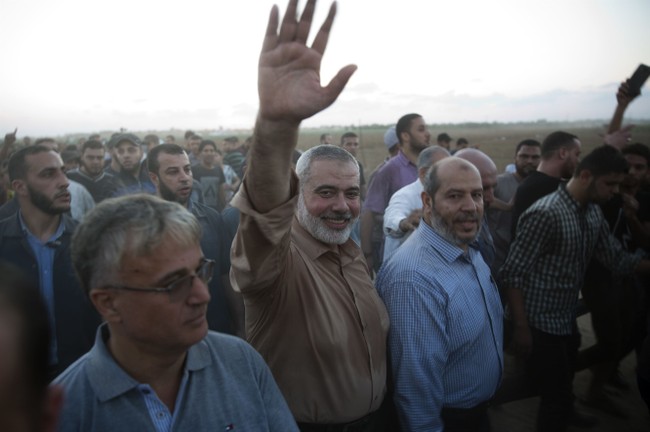
BREAKING: Senior Hamas Leader Ismail Haniyeh Assassinated On Iranian Soil
Favicon 
redstate.com

BREAKING: Senior Hamas Leader Ismail Haniyeh Assassinated On Iranian Soil

BREAKING: Senior Hamas Leader Ismail Haniyeh Assassinated On Iranian Soil
Like
Comment
Share
YubNub News
YubNub News
2 yrs

Why Does Trump Believe Dem Lies About Project 2025?
Favicon 
yubnub.news

Why Does Trump Believe Dem Lies About Project 2025?

Donald Trump has an excellent record in some ways, but he also has a tendency to shoot himself in the foot. A clear example of that now is his persistence in disavowing Project 2025 on the basis of Democrat…
Like
Comment
Share
YubNub News
YubNub News
2 yrs

Kamala Harris Called ‘Most Vile Anti-Catholic Threat Of Any Leading Candidate For President In American History’
Favicon 
yubnub.news

Kamala Harris Called ‘Most Vile Anti-Catholic Threat Of Any Leading Candidate For President In American History’

Under the administration of Joe Biden and Kamala Harris, Americans of faith often have fared poorly. The leftists have tried to force doctors who oppose abortion to perform those grisly procedures, and…
Like
Comment
Share
Science Explorer
Science Explorer
2 yrs

Complex Life on Earth May Be 1.5 Billion Years Older Than We Thought
Favicon 
www.sciencealert.com

Complex Life on Earth May Be 1.5 Billion Years Older Than We Thought

That's quite a shift.
Like
Comment
Share
Science Explorer
Science Explorer
2 yrs

Wild Study Finds Your Name Has an Incredible Effect on Your Face
Favicon 
www.sciencealert.com

Wild Study Finds Your Name Has an Incredible Effect on Your Face

This is mind-blowing.
Like
Comment
Share
Showing 18390 out of 56670
  • 18386
  • 18387
  • 18388
  • 18389
  • 18390
  • 18391
  • 18392
  • 18393
  • 18394
  • 18395
  • 18396
  • 18397
  • 18398
  • 18399
  • 18400
  • 18401
  • 18402
  • 18403
  • 18404
  • 18405

Edit Offer

Add tier


Select an image
Delete your tier
Are you sure you want to delete this tier?

Reviews

In order to sell your content and posts, start by creating a few packages. Monetization

Pay By Wallet

Payment Alert

You are about to purchase the items, do you want to proceed?

Request a Refund