YubNub Social YubNub Social
    Advanced Search
  • Login

  • Night mode
  • © 2026 YubNub Social
    About • Directory • Contact Us • Privacy Policy • Terms of Use • Android • Apple iOS • Get Our App

    Select Language

  • English
Install our *FREE* WEB APP! (PWA)
Night mode
Community
News Feed (Home) Popular Posts Events Blog Market Forum
Media
Headline News VidWatch Game Zone Top PodCasts
Explore
Explore Jobs Offers
© 2026 YubNub Social
  • English
About • Directory • Contact Us • Privacy Policy • Terms of Use • Android • Apple iOS • Get Our App

Discover posts

Posts

Users

Pages

Group

Blog

Market

Events

Games

Forum

Jobs

Daily Caller Feed
Daily Caller Feed
2 yrs

Lauren Alaina Abruptly Cancels Concerts After Father Passes Away
Favicon 
dailycaller.com

Lauren Alaina Abruptly Cancels Concerts After Father Passes Away

'We lost my daddy last night, and I really don’t have words yet'
Like
Comment
Share
Daily Caller Feed
Daily Caller Feed
2 yrs

Watchdog Says Biden’s Education Secretary Violated Law By Using Office To Attack Republicans
Favicon 
dailycaller.com

Watchdog Says Biden’s Education Secretary Violated Law By Using Office To Attack Republicans

'You almost have to admire the chutzpa'
Like
Comment
Share
SciFi and Fantasy
SciFi and Fantasy  
2 yrs

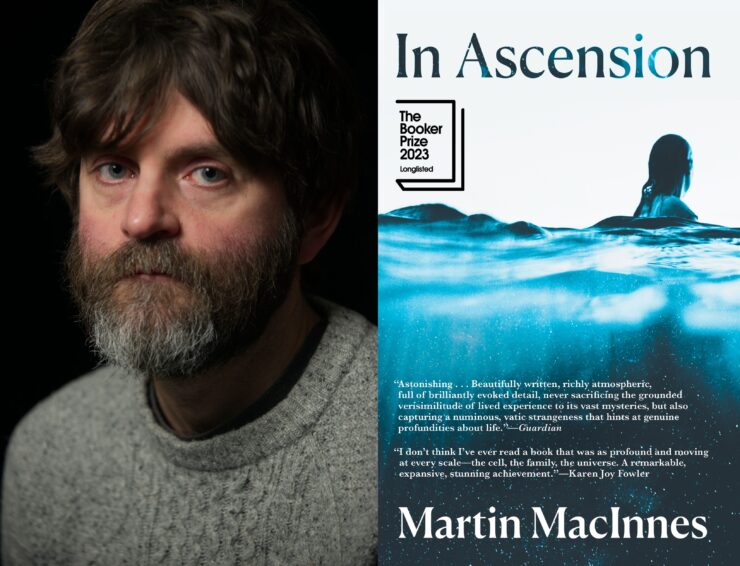
Martin MacInnes Wins the 2024 Arthur C. Clarke Award for In Ascension
Favicon 
reactormag.com

Martin MacInnes Wins the 2024 Arthur C. Clarke Award for In Ascension

News Arthur C. Clarke Award Martin MacInnes Wins the 2024 Arthur C. Clarke Award for In Ascension Congratulations to the author! By Molly Templeton | Published on July 25, 2024 Author photo by Rob McDougall Comment 0 Share New Share Author photo by Rob McDougall Martin MacInnes has won the 38th Arthur C. Clarke Award, given to the best science fiction novel published in the previous year, for his novel In Ascension. MacInnes receives £2024 and a trophy. Dr. Andrew M. Butler, chair of the judging panel, said of the book: “As always, the judging session was filled with emotion and intelligence and it took a while for Martin MacInnes’s In Ascension to emerge as the front runner. It shows us, in the words of one judge, ‘vistas between the cellular and the cosmic.’ It’s an intense trip and for once it’s a winner that is in the tradition of Clarke’s own novels.” In Ascension, MacInnes’s third novel, was previously longlisted for the Booker Prize. Writing for The Wall Street Journal, Heller McAlpin said of the book, “Few novels toggle so beautifully between the minute and the vast, the personal and the theoretical, the quotidian and the extraordinary, the knowable and the unfathomable. In Ascension raises big questions about the universe and humanity’s place in it. Even better, it evokes wonder at every turn.” Five other novels were shortlisted for this year’s Clarke award: Chain-Gang All-Stars by Nana Kwame Adjei-Brenyah; The Ten Percent Thief by Lavanya Lakshminarayan; The Mountain in the Sea by Ray Nayler; Some Desperate Glory by Emily Tesh; and Corey Fah Does Social Mobility by Isabel Waidner. The judging panel consisted of Dolly Garland and Stark Holborn for the British Science Fiction Association, Nic Clarke and Tom Dillon for the Science Fiction Foundation, and Glyn Morgan for the SCI-FI-LONDON film festival.[end-mark] The post Martin MacInnes Wins the 2024 Arthur C. Clarke Award for <i>In Ascension</i> appeared first on Reactor.
Like
Comment
Share
SciFi and Fantasy
SciFi and Fantasy  
2 yrs

Shaun of the Dead Returns to Theaters for Its 20th Anniversary
Favicon 
reactormag.com

Shaun of the Dead Returns to Theaters for Its 20th Anniversary

News shaun of the dead Shaun of the Dead Returns to Theaters for Its 20th Anniversary How’s that for a slice of fried gold? By Molly Templeton | Published on July 25, 2024 Screenshot: Focus Features Comment 0 Share New Share Screenshot: Focus Features Time flies when you’re running away from zombies. Somehow, it’s been twenty whole years since the phrase “You’ve got red on you” was introduced to the public consciousness in Edgar Wright’s Shaun of the Dead. According to Deadline, on the occasion of its 20th anniversary, the movie will be re-released in theaters, “fully remastered with Dolby Vision and Dolby Atmos for an elevated experience that highlight subtle details, ultra vivid colors and immersive sound.” You don’t just have red on you; you have ultra vivid red on you. In a statement, Wright said, “Twenty years ago, the worldwide release of Shaun of the Dead changed my life forever. Its reception since then has continued to be incredible, largely due to the passionate fans who have championed it with cricket bats aloft. Now, as we celebrate its bloody 20th anniversary with a brand-new Dolby Atmos and Vision remastered version, I’m beyond excited for everyone to experience it once again on the big screen—the way it was always meant to be seen: large, loud, and with quite a lot of red on it.” A recent oral history of the film at IndieWire is full of delightful details about the making of the film, including the fact that Sade quickly signed off on allowing the filmmakers to smash one of her records against a zombie’s head, and Bill Nighy grumbled about his costumes. (Not dapper enough.) If it’s been a while since you hung out with Simon Pegg, Nick Frost, and the rest of the extremely well-cast gang, now’s your time. Shaun of the Dead is in theaters August 29th.[end-mark] The post <i>Shaun of the Dead</i> Returns to Theaters for Its 20th Anniversary appeared first on Reactor.
Like
Comment
Share
SciFi and Fantasy
SciFi and Fantasy  
2 yrs

Captain America (Very) Lite — Captain Battle: Legacy War
Favicon 
reactormag.com

Captain America (Very) Lite — Captain Battle: Legacy War

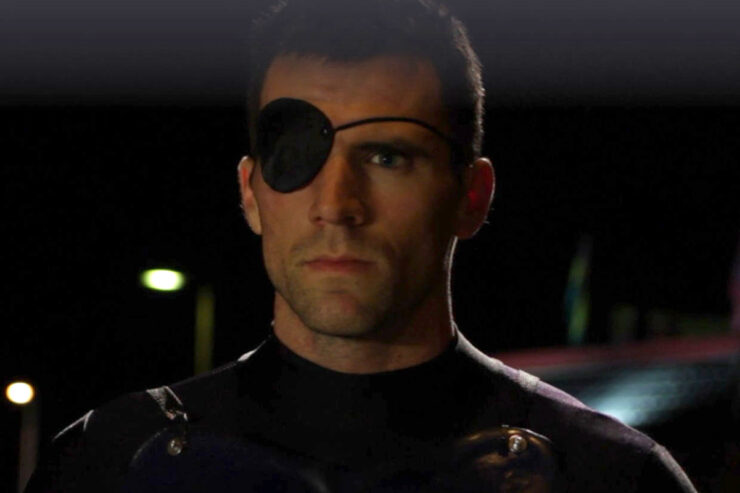
Movies & TV Superhero Movie Rewatch Captain America (Very) Lite — Captain Battle: Legacy War By Keith R.A. DeCandido | Published on July 25, 2024 Comment 0 Share New Share From August 2017 – January 2020, Keith R.A. DeCandido took a weekly look at every live-action movie based on a superhero comic that had been made to date in the Superhero Movie Rewatch. He’s periodically revisited the feature to look back at new releases, as well as a few he missed the first time through. The character of Captain Battle was created by Jack Binder and Carl Formes for Silver Streak Comics in 1941. A veteran of the Great War named Jonathan Battle—who lost an eye in the conflict—he worked to prevent another war from happening. Obviously, he didn’t succeed, and while he was popular enough to get his own comic, Captain Battle Comics wound up only lasting four issues. The short run was possibly due to the United States’ entry into the very war that Captain Battle was struggling to prevent, causing a downturn in interest in a character who was trying to prevent war. The Timely Comics hero Captain America (who punched Hitler in the face on the cover of his first issue) proved to be much more popular and enduring. In 2011, Captain America starred in his first successful theatrical release, subtitled The First Avenger and featuring Chris Evans in the title role. It was followed up a year later by Avengers, which featured Evans’ Cap quite prominently. In response to this, a bunch of folks got together and did a Captain Battle movie. The character is, after all, in the public domain. Writers Kenny White and Keith Parker, director David Palmieri, and producer David S. Sterling didn’t have much of a budget to work with (he says, understating the case tremendously), so they set it in modern times rather than the 1940s. However, they did still have him fighting Nazis, with a neo-Nazi group trying to clone Himmler and Hitler. While the Captain Battle of the movie is a legacy, it’s from his father, not a veteran of the twentieth century’s World Wars. He does, however, wear the same costume, complete with eyepatch, though Sam Battle doesn’t have any reason to. He also wears it on his right eye, rather than the left the comic character wore it on (though there are a couple of shots where he has the eyepatch on his left eye). Initially titled Captain Battle: Legacy War, the movie was reissued under the more generic title of Battle Soldier, possibly because the tie-in to an obscure 1940s comic book character nobody’s ever heard of proved to be a less than efficacious marketing strategy. As an added bonus, your humble rewatcher co-edited an anthology in 2023 called Double Trouble: An Anthology of Two-Fisted Team-Ups, featuring classic characters pairing up, and Dayton Ward wrote a Captain Battle story that teamed him with another hero who appeared in a backup feature of Captain Battle Comics, Blackout. Captain Battle: Legacy WarWritten by Kenny White & Keith ParkerDirected by David PalmieriProduced by David S. SterlingOriginal release date: January 13, 2013 “We can make things very uncomfortable for you” We open with a car chase, where a guy in a mullet faces off against some skinheads, but is eventually blown up by an RPG. A soldier named Sam Battle is on patrol in Iraq with a fellow soldier, when he’s jumped by a couple of insurgents and stabbed in the belly. He’s brought back to HQ, where his friend, Brandon Storm, an Army medic, works on him. At the orders of his colonel, he tries an untested formula on Battle, which saves his life. The wounds are still bad enough that he’s sent home, and months later, Storm checks on him. He feels healthier than ever now, which makes Storm happy, as it means the formula is doing what it’s supposed to do. At one point, they’re joined by Storm’s sister Jane. Jane is a reporter for a newspaper (Battle makes a jokey comment saying he didn’t realize that newspapers still existed). Jane mentions the rise of neo-Nazis when Battle drives her home after her brother passes out (they’ve been drinking). We meet some of those neo-Nazis, who are at a strip club and get a lap dance—then pull out a gun and kidnap the stripper and toss her into the back of their Honda Element. Yes, really. And apparently they are in the only strip club in the entire country that doesn’t have metal detectors and/or bouncers. Storm is also kidnapped by the same neo-Nazis. Battle calls the police, though Jane is concerned that they won’t do much. She also takes Battle to Steve Kelly, another journalist who was an old friend of Battle’s father. Kelly tells a surprised—and disbelieving—Battle that his old man was a vigilante who fought crime (he’s the guy that got blown up in the opening sequence). Battle doesn’t believe it, even though Kelly gives him the red-white-and-blue outfit and eyepatch that his father apparently wore when he was fighting crime. He had retired to raise Battle, though since his son joined the Army, he’d taken up the cause again. Battle eventually comes around, especially when he returns home to find his place has been ransacked. And then Jane is also kidnapped. Storm initially refuses to help the neo-Nazis, who are led by a woman named the Necromancer. She’s been kidnapping the strippers in order to get them pregnant—and then abort the fetuses so they can harvest stem cells. They plan to clone Adolph Hitler, but they’re doing a test run first by resurrecting Heinrich Himmler via cloning. They need Storm’s help, which he finally provides once he finds out that they’ve kidnapped Jane. Battle is ambushed by some skinheads. Kelly has determined several possible locations “in the Midwest” (every single motor vehicle in this movie has California plates) that the neo-Nazis could be using. Battle tries interrogating one of the skinheads (from whom he saves a woman from being raped), but he apparently doesn’t know anything. The Necromancer succeeds in creating a clone of Himmler, with a combination of Storm’s science and her own magic. For reasons the script doesn’t bother to explain, Himmler’s face is entirely red, though just his face, not his neck or ears. He starts training the troops by making them do push-ups. Sure. Battle attacks a gang of skinheads, but Himmler shows up (with the red makeup now covering everything) and he knocks Battle out, and they make their escape in the Honda Element. Yes, really. They leave the unconscious Battle behind for reasons the script doesn’t bother to explain, especially since they then go to his house and kidnap him. They tie him to a chair, enabling the Necromancer to monologue at him for a bit, but then he escapes. He calls the cops and gives them the location. Storm—who suddenly has the full run of the place for no compellingly good reason—finds and frees his sister. Battle is able to stop most of the skinheads, aided by two detectives who show up without any backup and start shooting. The neo-Nazis are mostly captured, but the Necromancer escapes with her plan to clone Hitler still in play. “I hope he can handle everything I just said” While my self-imposed mandate to be as complete as humanly possible in this feature meant I kinda had to cover this movie once I discovered it existed, I suspect that I wouldn’t have bothered if I hadn’t already been made aware of the character of Captain Battle through Dayton Ward’s story in Double Trouble. But, having not only learned of the character but come to like him through Dayton’s story and reading the original comics, I was really curious about this movie that did the same thing Jonathan Maberry and I did for Double Trouble: use a character’s public-domain status as a means to tell new stories. Alas, Captain Battle: Legacy War disappoints on every possible level, except cheese. It’s possible to do a good movie on an exceedingly low budget. This is very much not one of those, as it’s blindingly obvious how little money was spent on everything. The “medical equipment” in the cheap tent set up on a back road in southern California that’s trying to be Iraq looks like stuff pilfered from a grammar school classroom. In one shot, Battle’s eyepatch doesn’t cover his entire eye, and once or twice it’s on the wrong eye. At one point, after Kelly, Battle, and Jane are sitting in a room talking, Kelly invites Battle and Jane to another room—where they sit and talk. There was no reason to go to the other room except maybe the person who owned the house the first bit was shot in needed their house back. And then there’s the fact that the Necromancer’s pet skinheads drive a Honda Element. Yes, really. To call the acting in this movie amateurish is a grave insult to amateurs everywhere. To call the plot nonsensical is a huge insult to nonsense. And to call the CGI SFX awful is a hilarious insult to awful things. No, seriously, the SFX in this movie are laughably bad. I know, because I laughed at all of them. They look like they were done with the 1995 version of MS Paint by someone who never really learned how to use it properly. All in all, if you want to see a Captain Battle story, read the original comics. Or Double Trouble. Or pretty much anything but this movie… Next week, we look at the first of two late 2023 releases, The Marvels.[end-mark] The post Captain America (Very) Lite — <i>Captain Battle: Legacy War</i> appeared first on Reactor.
Like
Comment
Share
History Traveler
History Traveler
2 yrs

How Cutty Sark Became the Fastest Sail-Powered Cargo Ship Ever Built
Favicon 
www.historyhit.com

How Cutty Sark Became the Fastest Sail-Powered Cargo Ship Ever Built

Standing proud on the bank of the Thames, a half-mile from the Prime Meridian, is one of Britain’s most famous ships: the Cutty Sark. She is the fastest sail-powered cargo ship ever built, nowadays poised in permanent dry dock at Greenwich, the locus of British maritime science. It was at the height of Britain’s global, imperial power that Cutty Sark embarked on treacherous journeys across the world’s biggest oceans. Not only was she the fastest vessel of her day, but she could carry a million pounds of tea from China to Britain to quench the thirst of the Victorian public. Vessels like the Cutty Sark were a central plank in Britain’s expanding networks of trade and commerce, which drove the empire’s growth in the 19th century. By 1901, the year Queen Victoria died, the British empire embraced 12 million square miles of the globe. British merchants also thronged the wharves of ports outside of Britain’s possession, as in China, Syria and South America. Photographed by Green, Allan C., 1926.Image Credit: State Library Victoria / Public Domain The goods these ships carried introduced Victorians to new products: tea from China and India; coffee from the Middle East; spices from Southeast Asia; textiles from Egypt; timber from Canada; and frozen meats from Australia and New Zealand. These arrived as raw commodities from Britain’s colonies, and returned as manufactured goods, protected on the high seas by the Royal Navy. Although British merchant vessels had the Navy’s protection, they could not afford complacency when it came to speed and efficiency. Key to Cutty Sark’s fame and success was the state-of-the-art technology with which she was outfitted. State-of-the-art At the time, competing fleets utilised whatever technological advantages were available in order to dominate trade and commodities. Among the Cutty Sark’s forest of sheets and halyards is evidence of significant changes in shipbuilding. Cutty Sark’s hull is among the sharpest among tea clippers, meaning it required ballast for stability when unladen. Constructed from teak above the waterline, rock elm below and with a keel of pitch pine, it also featured metal sheeting over its hull. This kept the hull cleaner, so it sailed faster. It also had a wrought-iron frame to which all external timbers were secured by bolts. This made it stronger and less susceptible to leaks which would occupy valuable crew time to remedy. “To maintain their edge, shipbuilders and architects are having to pioneer and innovate new technologies and techniques of shipbuilding,” explains Max Wilson, Senior Archivist at Lloyd’s Register Foundation, a public-facing library and archive holding material concerning over 260 years of marine and engineering science and history. which possesses one of the best archives of ships and ship-building in the world. “We see this starkly over the 19th century.” A plan and survey report for the Cutty Sark.Image Credit: Lloyd's Register Foundation Designers aimed to maximise the speed of cargo delivery, harness cargo carrying capacity to bolster the safety of passengers and goods, and to increase the number of journeys ships could undertake. Ultimately, they aimed to increase their share of the merchant trade. Victorian sensation Cutty Sark was built by John Willis in Scotland in 1869 against a backdrop of great transformations in shipbuilding. Shipbuilding moved northwards in Britain, while motive power was shifting from wind to steam and wood construction was being replaced with iron and composite solutions. As the ‘age of sail’ threatened to pass into memory, the Cutty Sark was a last throw of the dice. In 1840 steam ships made up about 4 percent of Britain’s merchant fleet: by around 1870, this had grown to around 20 percent. By 1890, this would be around 75 percent. The Cutty Sark was built as a way to demonstrate the power of sail and wind against steam power. “The sailing ships were still very reliable at that time,” says Zach Schieferstein, Archivist at Lloyd’s Register Foundation. “Ships like the Cutty Sark that were built for a purpose of transporting tea were built for speed and travelling long distances, getting the first tea of the season ready to sell for those high premiums.” The Cutty Sark’s fastest recorded speed was 17.5 knots, considerable for a container ship, and the furthest she travelled in a 24-hour period was around 350 nautical miles. “It wasn’t uncommon to make the journey from Shanghai to ports in Britain in about 100 to 120 days. For the time, it was really setting records.” Helping her rack up these miles were 32 sails, which could stretch over 32,000 square feet, suspended on 11 miles of rigging. She carried an average of 26 crew and was larger than clippers that had come before: with a gross tonnage of 963, a length of 212.5 feet, breadth of 36 feet and depth of 21 feet. Cutty Sark traded between China, Australia, later to South Africa and South America, and for a while held the record for journeying between Australia and Britain. Over the course of the century, tea had emerged as the national drink and the Cutty Sark became associated with tea races. The annual tea race was a Victorian sensation. A premium or bonus was paid to the ship that arrived with the first tea of the year. Clipper ships like Cutty Sark raced from China’s tea ports to London to fetch the highest price for its cargo. In 1866’s so-called ‘great tea race’, the progress of ships was reported by telegraph and followed in the papers, with bets placed on the outcome. First-rate In this period there was a simultaneous explosion in the service industries attached to shipping. For example, Edward Lloyd’s Coffee House had become known as the meeting place in the City for those seeking shipping intelligence. A committee called The Register Society, made up of underwriters and brokers, ship-owners and merchants who associated through Lloyd’s coffee house, was formed in 1760. The Register Book published by the Society, later to become Lloyd’s Register, provided critical information on vessel seaworthiness which was critical for merchants and underwriters assessing the risks of any one voyage. This was the true beginning of classification and Lloyd’s Register as the first classification society which now possesses a vast archive and library. In 1760, merchants who met at Edward Lloyd’s London coffee shop established the Society for the Registry of Shipping. From 1764, it funded surveyors to list, rate and class the condition of vessels. This was the origin of the world’s first classification society in Lloyd’s Register, which today possesses one of the best archives of ships and ship-building in the world. “It was born out of this desire to have reliable and up-to-date information on merchant shipping,” explains Schieferstein, “and to make it safer as well, for passengers, for cargo and for the crew.” The first mention of the Cutty Sark in the Register Book, from the supplements section of the 1869 Register Book.Image Credit: Lloyd's Register Foundation Lloyd’s Register’s surveyors would assess a ship, using “A1” from 1768 to indicate a ship of the highest class. they thereby introduced the term “first rate” to denote quality. Cutty Sark was given this A1 rating. Continuing developments in steam technology resulted in the sale of Cutty Sark, to serve first as a Portuguese cargo ship, and later as a training vessel in Cornwall and on the Thames. It was towed into its current dry dock in 1953 to become one of the nation’s most treasured heritage sites, whose story becomes richer with the documents and records collated by Lloyd’s Register Foundation. You can find out more about the history of Lloyd’s Register Foundation and their work supporting research, innovation and education to help the global community tackle the most pressing safety and risk challenges at www.lrfoundation.org.uk
Like
Comment
Share
History Traveler
History Traveler
2 yrs

How Polluting Shipwrecks Imperil the Oceans
Favicon 
www.historyhit.com

How Polluting Shipwrecks Imperil the Oceans

The First and Second World Wars saw an unprecedented deployment of technologically advanced ships in warfare, at a significant cost in lives and vessels. The wrecks of these heavily armed and resourced vessels often settled on the seabed, where they continue to affect sub-aquatic ecosystems. Managing pollution from these shipwrecks is complicated by slim data and limited international cooperation, often rendering responses too late to prevent serious harm to marine ecosystems and coastal communities. Yet hazardous shipwrecks is an issue which the Lloyd’s Register Foundation has selected as one where the deployment of its funding and knowledge networks can make an impact. Potentially Polluting Wrecks Of the approximately 3 million sunken and deserted vessels in the world’s seas, over 8,500 are deemed “potentially polluting wrecks” by organisations such as the International Union for the Conservation of Nature (IUCN). The greater part of these wrecks date to the world wars of the 20th century. These sundered craft contain harmful chemicals, unexploded munitions and around 6 billion gallons of heavy fuel oil. By comparison the 2010 Deepwater Horizon spill, one of the largest environmental disasters in world history, released 210 million US gallons of crude oil into the Gulf of Mexico – a figure some 30 times smaller. Given shipwrecks are prone to continuing corrosion and breakdown, leaks from sunken vessels are inevitable. Severe weather events resulting from climate change will likely speed this up. Studying the shipwreck of the MESSENGER. (Image credit: NOAA/NOS/Thunder Bay National Marine Sanctuary; NOAA/OAR/GLERL/FLICKR)Image Credit: Public Domain / NOAA A 2022 report in Frontiers in Marine Science highlighted how sediment chemistry and microbial ecology surrounding the wreck of an 80-year-old German patrol boat in the North Sea was influenced by its leaching chemicals. The V-1302 John Mann had been bombed and sank and despite the wreck being relatively benign, compared to those powered by oil, was proved to be polluting the seabed. The researchers estimated that, in addition to munitions, shipwrecks from both world wars contained between 2.5 and 20.4 million metric tonnes of petroleum products. However, scientists have limited data to make predictions on where leaks might take place. Responding to leaks when they do occur is also expensive, and it’s not clear who should bear the cost. Certainly for the developing nations who are often affected, many of whom were not participants in the world wars, the cost is prohibitive. In coastal nations such as the Philippines, there are limited technical and financial resources to manage the threat of hazardous wrecks. Under the legal doctrine of sovereign immunity, ships sunk in war are not subject to the jurisdiction of any other state. In other words, they are still owned by the country they sailed for. Improving the safety of the oceans Oil pollution from shipwrecks is a threat which the IUCN Resolutions determine is in need of evaluation and tools with which to address it. The charity Lloyd’s Register Foundation has developed a programme of work to support this, directly funding projects focused on safety and engineering solutions. Lloyd’s Register Foundation has set out to move the reactive, ‘emergency response’ mode of intervention towards a more strategic approach by contributing to the development of technical standards and protocols. To this end, experts are brought together through the strengthening of coalitions including the International Committee on Monuments and Sites (ICOMOS) and The Ocean Foundation. Spanish cruiser Almirante Oquendo, sunk 3 July 1898.Image Credit: User Ignacio García Bailón on Wikimedia Commons / CC BY-SA 4.0 On the other hand, Lloyd’s Register Foundation’s funding of the secretariat of the Cultural Heritage Framework Programme of the UN Decade of Ocean Science for Sustainable Development is intended to improve collaboration between ocean stewardship efforts and heritage bodies, and support initiatives relating to low carbon shipping and blue finance (climate-aware investing related to ocean-friendly projects and water supply resources). Years of erosion on the 8,500 potentially polluting sunken vessels have shifted the issue of ocean and marine ecosystem-threatening fuel leakage to a ‘when’, bringing the topics of safety and remediation to the surface. You can find out more about the work of The Ocean Foundation, Waves Group and Lloyd’s Register Foundation on the Project Tangaroa website: https://www.project-tangaroa.org/
Like
Comment
Share
Hot Air Feed
Hot Air Feed
2 yrs

Biden Is Suddenly George Washington
Favicon 
hotair.com

Biden Is Suddenly George Washington

Biden Is Suddenly George Washington
Like
Comment
Share
Science Explorer
Science Explorer
2 yrs

Why Swimming Wasn’t Allowed In The Ancient Olympics
Favicon 
www.iflscience.com

Why Swimming Wasn’t Allowed In The Ancient Olympics

Mark Spitz and Michael Phelps may be among the greatest modern Olympians, but their exploits in the pool would not have found much appreciation in Ancient Greece. In fact, at no point in the history of the original Olympic Games did swimming feature as an event, despite the fact that most Greeks knew how to swim and even prided themselves on their aquatic competence.The Ancient Olympics were held between the eighth and fourth centuries BCE and included events such as wrestling, boxing, and pentathlon. A popular insult from this period was to say that someone knew neither how to read nor swim, indicating that skill in the water was considered a respectable attribute. Exactly why the sport was never included in the Games has therefore baffled historians.Seeking to solve the conundrum, some scholars have hypothesized that swimming was excluded because it was not seen as a military activity, and that all Olympic sports had to involve disciplines that were of use on the battlefield. However, the famous historian Herodotus has described how Greek soldiers were able to escape a massacre during the Persian Wars by swimming to safety, while other reports suggest that swimmers were used to deliver supplies to the besieged Spartans during the Peloponnesian War.It has also been noted that many of the Ancient Olympic events had little to do with warfare and weren’t included in typical military training – the high jump and discus, to name just two.Dismissing the military theory, Dr Edward Clayton from Central Michigan University has penned a new paper proposing that “swimming events did not take place [in the Ancient Olympics] because of the danger that such events could have been won by fisherman, oyster divers, or other men who earned their livelihood from swimming.”According to Clayton, the Games were about far more than just sporting prowess. Rather, they provided an opportunity for contestants to display the beauty and excellence of their soul – a characteristic known as arete. “This meant that they needed to come from families which were capable of having such arete, and in Athens, this meant the aristocratic [class],” writes the author.Fishers and others who swam as part of their occupation, however, would have belonged to the laboring class, known as the banausoi. By definition, then, they lacked the necessary arete to be considered athletes, and any event they might excel at could not therefore be considered an Olympic sport.According to the likes of Aristotle, banausic activities degraded both body and soul rather than perfecting them, and it was generally accepted that no true athlete could use their body for economic gain. “It would be unthinkable to associate an athletic contest with an activity that was undertaken for money, or one that was undertaken by someone who needed to work for a living,” writes Clayton. Ultimately, then, any event likely to be won by a man who lacked the prerequisites for a beautiful soul could never be included in an athletic competition, and swimming certainly fell into this category.Moreover, the Ancient Greeks believed that arete was reflected in a man’s physical beauty, and the exhibition of this carnal quality was a vital component of all Olympic sports. According to the study author, this partially explains why Olympians competed butt naked, ensuring that their excellence was fully visible and enjoyable to all spectators.“That athletic competitions had a strong erotic component for the ancient Greeks is beyond dispute,” writes Clayton. “Swimming events would not have allowed for this element of competition, since such competitions would have obviously taken place in the water, which would have substantially obscured the view of the competitors by the audience.” “Their bodies would not have been seen glistening with oil and dust as were those of the other competitors,” he adds; “indeed, it would have been hard for them to be seen at all.”The study is published in the Athens Journal of Sports.
Like
Comment
Share
Science Explorer
Science Explorer
2 yrs

NASA Streams 4K Video From The ISS Using Lasers Ahead Of Moon Landings
Favicon 
www.iflscience.com

NASA Streams 4K Video From The ISS Using Lasers Ahead Of Moon Landings

For the first time, NASA has used laser communication to send 4K video from a plane to the International Space Station (ISS) and back again.So far, NASA has relied on radio communication to send and receive messages to missions in space. While effective – we can communicate with Voyager 1, which is over 15 billion miles (24 billion kilometers) away – by using infrared laser light it is possible to transmit 10 to 100 times more data, and faster too.NASA is now exploring laser communication as it sets its sights on the Moon and Mars as part of its Artemis program. The hope is that the technology could be used to live-stream footage of astronauts as humanity takes its next steps on the lunar surface currently planned for 2026. In the test, NASA’s Glenn Research Center in Cleveland attached a portable laser terminal to the underside of a Pilatus PC-12 aircraft. Data from the aircraft was sent to an optical ground station in Cleveland, and sent via Earth-based channels White Sands Test Facility in Las Cruces, New Mexico. From there, it was beamed to NASA’s orbiting Laser Communications Relay Demonstration (LCRD) platform, which relayed the signal to the ILLUMA-T (Integrated LCRD LEO User Modem and Amplifier Terminal) mounted on the ISS.The communication path during the test.Video credit: NASA/Morgan JohnsonBetween experiments, NASA found issues and made improvements. “These experiments are a tremendous accomplishment,” Dr Daniel Raible, principal investigator for the HDTN project at Glenn, said in a statement. “We can now build upon the success of streaming 4K HD videos to and from the space station to provide future capabilities, like HD videoconferencing, for our Artemis astronauts, which will be important for crew health and activity coordination.”As well as streaming video, the project aims to make communicating with missions in space much more efficient beyond Earth orbit. Though the ILLUMA-T is no longer attached to the ISS, the team will continue to conduct tests using the Pilatus PC-12 aircraft throughout the rest of July.
Like
Comment
Share
Showing 19084 out of 56670
  • 19080
  • 19081
  • 19082
  • 19083
  • 19084
  • 19085
  • 19086
  • 19087
  • 19088
  • 19089
  • 19090
  • 19091
  • 19092
  • 19093
  • 19094
  • 19095
  • 19096
  • 19097
  • 19098
  • 19099

Edit Offer

Add tier


Select an image
Delete your tier
Are you sure you want to delete this tier?

Reviews

In order to sell your content and posts, start by creating a few packages. Monetization

Pay By Wallet

Payment Alert

You are about to purchase the items, do you want to proceed?

Request a Refund