YubNub Social YubNub Social
    Advanced Search
  • Login

  • Night mode
  • © 2026 YubNub Social
    About • Directory • Contact Us • Privacy Policy • Terms of Use • Android • Apple iOS • Get Our App

    Select Language

  • English
Install our *FREE* WEB APP! (PWA)
Night mode
Community
News Feed (Home) Popular Posts Events Blog Market Forum
Media
Headline News VidWatch Game Zone Top PodCasts
Explore
Explore Jobs Offers
© 2026 YubNub Social
  • English
About • Directory • Contact Us • Privacy Policy • Terms of Use • Android • Apple iOS • Get Our App

Discover posts

Posts

Users

Pages

Group

Blog

Market

Events

Games

Forum

Jobs

Conservative Voices
Conservative Voices
2 yrs

Germany Halves 2025 Military Aid to Ukraine
Favicon 
spectator.org

Germany Halves 2025 Military Aid to Ukraine

Germany recently approved a budget that will reduce its military aid to Ukraine from $8 billion to $4 billion. The decision will affect the outcome of the war in Ukraine, as countries may reconsider their current and future military contributions.  Although next year’s budget adds $1.4 billion more in defense spending than in 2024, Germany will nearly halve its military aid to Ukraine. NATO membership requires countries to dedicate at least 2 percent of their GDP to its military. For years, Germany has been criticized for failing to meet the NATO target. Despite pledges at the 2014 alliance summit to reach this benchmark, for years Germany’s defense spending hovered around 1.5 percent of GDP. In 2022, after Russia invaded Ukraine, Germany established a $100 billion special defense fund. With this fund, the country promised to exceed the NATO requirements.  However, it wasn’t until 2024 that Germany hit 2 percent for the first time since the early 1990s. This year, it allocated more than $8 billion to directly support Ukraine, second only to the U.S., which sent $107 billion. Last August, the German government removed a clause making it a legal requirement to spend 2 percent on defense each year. Instead, Germany’s spending goal has been adjusted to an average of 2 percent over five years. Next year, Germany’s spending will barely reach the 2 percent requirement. After the special fund is used up or expires, as it is expected to do in 2028, defense spending will fall well below 1.2 percent of GDP. European Union rules further restrict Germany’s financial flexibility. Consequently, the 2025 budget is less generous to Ukraine. German Finance Minister Christian Lindner argues that “Ukraine’s financing is secured for the foreseeable future thanks to the European instruments and the new G7 loans.” Germany’s new defense budget marks a significant shift that will test the solidarity and resolve of global support for Ukraine. Once the G7’s 50 billion dollar loan runs out, who will take financial responsibility? Will the U.S., Europe, or other actors step up their contributions, or will this mark the beginning of a global decrease in aid to Ukraine? Given the financial uncertainties, Ukraine may face difficult decisions regarding its future. The post Germany Halves 2025 Military Aid to Ukraine appeared first on The American Spectator | USA News and Politics.
Like
Comment
Share
Intel Uncensored
Intel Uncensored
2 yrs

GLOBAL IT OUTAGE SOLVED
Favicon 
www.sgtreport.com

GLOBAL IT OUTAGE SOLVED

from State Of The Nation: Watch this video to understand who was behind the unparalleled global IT outage….. But why did Zionist Israel put on such a dramatic show of raw cyber-power worldwide? Because, PM Benjamin Netanyahu is coming to the United States to speak to the entire U.S. Congress–THAT’S WHY! TRUTH LIVES on at https://sgtreport.tv/ […]
Like
Comment
Share
Intel Uncensored
Intel Uncensored
2 yrs

2024 Political Shockwaves: Election Year Turmoil
Favicon 
www.sgtreport.com

2024 Political Shockwaves: Election Year Turmoil

by James Wesley Rawles, Survival Blog: With each successive election cycle in the 21st Century, Americans seem to be growing more divided and more strident. This political divisiveness has spilled over into popular culture, movies, and even rifts in some religious denominations. College and university campuses have become flashpoints for large protests. Policing and prosecutions […]
Like
Comment
Share
Intel Uncensored
Intel Uncensored
2 yrs

TGP – Where’s the Blood? ICU Trauma Surgeon Notes Rally Shooter’s Lack of Blood
Favicon 
www.sgtreport.com

TGP – Where’s the Blood? ICU Trauma Surgeon Notes Rally Shooter’s Lack of Blood

from Gateway Pundit: TRUTH LIVES on at https://sgtreport.tv/
Like
Comment
Share
Let's Get Cooking
Let's Get Cooking
2 yrs

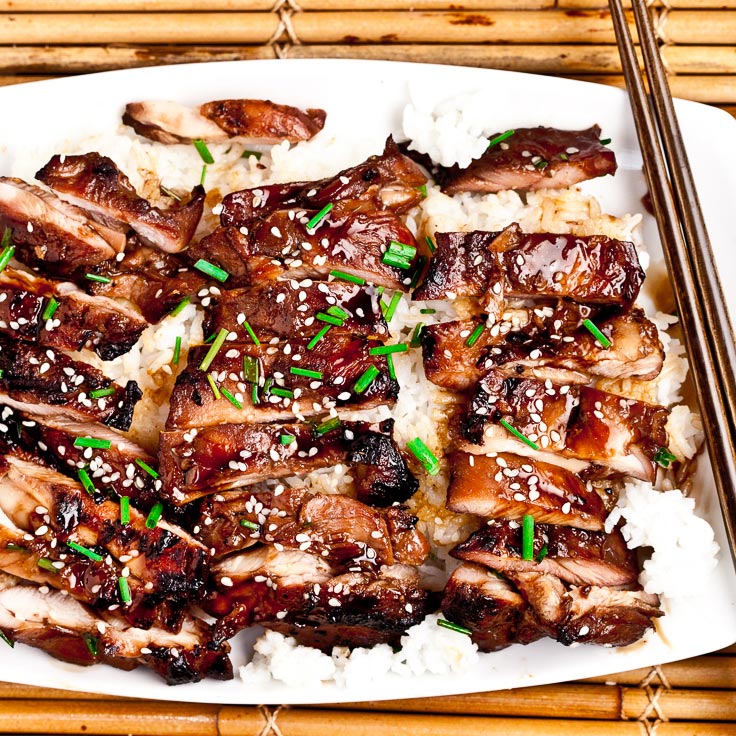
Grilled Teriyaki Chicken with Sauce
Favicon 
www.chewoutloud.com

Grilled Teriyaki Chicken with Sauce

Grilled Teriyaki Chicken is easy, authentic, and big on flavor. The teriyaki sauce is like magic, and works wonders for any protein. This prep-ahead recipe is perfect for weeknight dinners as well as casual gatherings. Grilled Teriyaki Chicken is our favorite better-than-takeout dish! In This Article 1-Minute Video: Grilled Teriyaki ChickenWhy This Recipe Stands OutKey Recipe IngredientsStep-By-Step Recipe InstructionsHow to Prep AheadCan I use Chicken Breasts Instead? Tips for Extra Tenderness and FlavorWhat to Serve with Teriyaki ChickenGrilled Teriyaki Chicken Recipe View more 1-Minute Video: Grilled Teriyaki Chicken Why This Recipe Stands Out Not many dishes can compare to the sweet, savory, tender goodness of grilled Teriyaki Chicken done right: It Smells Amazing – The aroma of this dish cooking on your grill will make your family (and neighbors) voraciously hungry. Not at all Boring – Summer means grilling, and this teriyaki chicken is the most exciting chicken that’ll hit the grill all season long. Also try this Hawaiian Burger for a not-boring burger. Friends and Family Devour This: Once you serve this tender, succulent teriyaki chicken to your eaters, they’ll request it on repeat. Ideal for Meal Prep – If you love meal prep recipes, you will adore this teriyaki chicken. It’s easy to make a big batch at the start of your week! Use your outdoor grill OR an indoor grill pan for perfectly tender, grill-marked chicken. Key Recipe Ingredients Boneless, skinless chicken thighs: Chicken thighs are highly recommended for best flavor and tenderness. Cornstarch: This helps thicken the sauce, while keeping it gluten-free and non-grainy. Soy Sauce or Tamari Sauce: Use high quality soy sauce or tamari sauce for a gluten-free choice. White and Brown Sugars: We use a mixture of both white and brown sugar for flavor and depth. Mirin: This is a Japanese sweet rice wine; do not accidentally use rice vinegar. Garlic and Ginger: Freshly minced garlic and ginger impart the best aromatics. Garnishes: Thinly sliced scallions and toasted sesame seeds add flavor to the finish. Step-By-Step Recipe Instructions Thoroughly dissolve the cornstarch with soy sauce, whisking until any bits of white cornstarch no longer visible. Add soy sauce, both sugars, mirin, garlic, ginger, and pepper. Whisk sauce until ingredients are well combined. Set aside. Thoroughly dry chicken thighs with paper towels, and trim. Cover chicken with cling wrap. Use meat tenderizer to pound chicken evenly to about 1/2 in. thick. Remove cling wrap. Using a fork, poke holes all over chicken pieces; this allows marinade to soak in. Whisk marinade again and pour just enough to completely cover every chicken piece; reserve remaining sauce. Pour unused marinade in an airtight container and keep chilled. One hour before cooking, remove chicken from fridge. Generously grease and preheat outdoor grill (or indoor stovetop cast iron grill) until oil is smoking hot. Grill chicken on medium-high heat until just-cooked. Pour desired reserved unused/clean sauce in a saucepan. Bring to a boil, stirring 1 minute until slightly thickened. If desired, add a bit more sugar to taste. Set aside.  Slice cooked chicken into strips. Serve with rice, sauce, and garnishes. How to Prep Ahead Everything in this recipe can be prepared ahead of time. Mix the sauce up to several days ahead and keep chilled until ready to use. Marinade the chicken overnight (up to 2 nights ahead) for incredible flavor and tenderness. All that’s left is to throw the chicken onto hot grill while your guests munch on edamame hummus and chips. Can I use Chicken Breasts Instead? If you’re tempted to use chicken breasts, may we suggest sticking with fresh boneless, skinless thighs here. They turn out so much more tender and flavorful, as thigh meat is significantly more forgiving than breast meat. Tips for Extra Tenderness and Flavor Always towel-dry chicken pieces to remove excess moisture prior to marinading. Marinade chicken overnight for tenderness and flavor. We recommend having extra marinade to keep in the fridge, as it keeps well and is fabulous over steak and shrimp on a whim. Baste while cooking; throw out any sauce that has come into contact with raw chicken. Heat up clean, reserved marinade for serving as a sauce. What to Serve with Teriyaki Chicken Appetizer: Edamame Hummus, served with pita chips, pretzel chips, or tortilla chips. Can be made 1-2 days ahead. Main Dish: Grilled Teriyaki Chicken or these Asian chicken skewers can be prepped ahead. Side Dish: Hawaiian Macaroni Salad, can be made 1 day ahead. Green Salad: Crunchy Asian Ramen Salad, dressing can be made ahead. Dessert: Almond Jello, can be made up to 2 days ahead. Drinks: Mango Coolers (can be made kid-friendly) Teriyaki Party: Let your guests choose their protein! They’ll love this 30-Minute Beef Teriyaki and Teriyaki Salmon. Print Grilled Teriyaki Chicken This Teriyaki Chicken is easy, authentic, and big on flavor. The sauce is like magic, and works wonders. Be sure to let chicken marinate overnight.  Course MainCuisine Asian AmericanDiet Gluten FreeMethod Grill, Stovetop Prep Time 30 minutes minutesCook Time 10 minutes minutes Servings 6 Calories 202kcal Author Amy Dong Ingredients3 lbs boneless skinless chicken thighs2 TB cornstarch1 ½ cups regular soy sauce or gluten-free Tamari sauce1 ½ cups white sugar¾ cups brown sugar¾ cups mirin Japanese sweet rice wine; not rice vinegar3 cloves garlic minced2 TB freshly grated ginger1 tsp freshly ground black pepperOptional Garnish: Thinly sliced scallions and toasted sesame seeds InstructionsIn a medium bowl, combine cornstarch with soy sauce. Thoroughly dissolve the cornstarch, whisking until any bits of white cornstarch no longer visible. Add both sugars, mirin, garlic, ginger, and pepper to the soy sauce mixture. Whisk sauce until ingredients are well combined. Set aside.Thoroughly dry chicken thighs with paper towels, and trim. Working one at a time, place each piece on a cutting board and top chicken with cling wrap. chicken evenly to about 1/2 in. thick.Remove cling wrap. Using a fork, poke holes all over chicken pieces; this allows marinade to soak in.In a large bowl, pour in just enough marinade to completely submerge chicken; reserve unused sauce. Cover and let sit in fridge overnight, turning chicken pieces over once while marinading. Pour unused marinade in an airtight container and keep chilled.One hour before cooking, remove chicken from fridge. Generously grease and preheat outdoor grill (or indoor cast iron grill) until oil is smoking hot. Remove chicken from marinade, discarding used marinade. Grill chicken on medium-high heat until just-cooked. If using outdoor grill baste generously and frequently; less frequently for indoor grill. Cook approximately 5 minutes per side (actual cook time varies depending on heat of your grill.) While chicken is cooking, pour desired amount of remaining, unused/clean sauce in a saucepan. Bring to a boil, stirring 1 minute until slightly thickened. If desired, add a bit more sugar to taste. Set aside. Slice cooked chicken into strips. Drizzle with teriyaki sauce and garnish with chopped scallions and toasted sesame seeds, if desired. Video Notes Mirin is a Japanese sweet rice wine that can be found at Asian supermarkets, as well as regular grocery stores in their Asian or ethnic aisle. Chicken thighs will yield the most tender, flavorful results. You can also use chicken breasts, but they tend to dry out easier during cooking.  Serve teriyaki chicken with brown rice, jasmine rice, or Hawaiian style macaroni salad.  NutritionCalories: 202kcal | Carbohydrates: 25.6g | Protein: 16.4g | Fat: 3.2g | Saturated Fat: 0.8g | Cholesterol: 70mg | Sodium: 692.4mg | Fiber: 0.2g | Sugar: 21.9gThe post Grilled Teriyaki Chicken with Sauce appeared first on Chew Out Loud.
Like
Comment
Share
Let's Get Cooking
Let's Get Cooking
2 yrs

I Just Discovered the Smartest Way to Store Paper Towels in Your Kitchen (It’s a Game-Changer!)
Favicon 
www.thekitchn.com

I Just Discovered the Smartest Way to Store Paper Towels in Your Kitchen (It’s a Game-Changer!)

It has so many uses. READ MORE...
Like
Comment
Share
Let's Get Cooking
Let's Get Cooking
2 yrs

Le Creuset Just Dropped Two New Cookware Pieces That You’ll Use All Summer Long
Favicon 
www.thekitchn.com

Le Creuset Just Dropped Two New Cookware Pieces That You’ll Use All Summer Long

Made for boiling seafood, cooking pasta, and more! READ MORE...
Like
Comment
Share
History Traveler
History Traveler
2 yrs

What Is the (Delicious) History of Pizza?
Favicon 
www.thecollector.com

What Is the (Delicious) History of Pizza?

  The concept of the pizza is a simple one. It is essentially a flatbread with toppings. Throughout thousands of years, these food items evolved and changed, shaped by the cultures that made them.   Today, pizza is one of the most common foods in the world, and it is distinctively Italian, although the influence of the United States and the transformation it underwent in this country cannot be understated.   From street food, to restaurants, and home delivery, pizza has become a staple of American culture, and its popularity has spread to every corner of the world. This is the history of one of the most beloved foods ever invented.   Ancient Forerunners to Pizza Manakish. Source: Wikimedia Commons   The idea of putting toppings on flatbread is not a particularly complex idea. Different flatbreads were produced all across the ancient world, and they were enhanced by putting local foods, herbs, and spices on top of them.   Much of what was eaten thousands of years ago is lost to history, and can only be the subject of speculation, however, several flatbreads are still known because they survive to this day!   Manakish is one of these foods. Popular in the Levant, manakish has been recognized by UNESCO as being emblematic of Lebanon. It is usually topped with za’atar, a mixture of ground beef and spices, or topped with cheese.   Popular in many parts of Spain is the coca, a form of flatbread that is eaten with a huge variety of toppings which include both savory and sweet.   The pita bread, often associated with Greece, actually has a history that stretches across the Middle East and was probably one of the very first types of bread to be cooked. The evolutionary start of the pita bread can be traced back to Natufian culture around 12,500 BCE. This was during the stone age when mankind had barely started experiments with farming.   In northern Italy, the flatbread of choice is the piadina, which is topped with a variety of ingredients, including cheese.   Focaccia. Source: Wikimedia Commons   Perhaps the most direct evolutionary lineage of the pizza is the focaccia which has been around since before Roman times. It was eaten by the Greeks and Estruscans, and is a flatbread garnished with olive oil, herbs and spices. Of course, it is noticeable that the focaccia lacks two ingredients that are vital to the process of making a pizza – cheese and tomatoes.   Cheese would be readily available in the centuries that followed, but for tomatoes, the Italians would have to wait for them to be discovered in the New World.   Tomatoes Tomatoes. Source: Rauf Allahverdiyev / pexels.com   Italy, known for its tomato-based recipes, only gained this reputation relatively recently. Significant trade started with the Americas in the 16th century, and is during this time that the tomato was introduced to Italy via Central and South America, where it is native.   The first mention of the word “pizza” comes from Naples during the 16th century. It referred to the local flatbread, but it is unlikely that the first iterations of the “pizza” were made with tomatoes. These pizzas were street food and generally made to cater to the poorer people in Napoletano society.   It is unknown exactly when tomatoes were introduced to Naples. Sources vary, with some claiming the introduction between the 16th to the late 17th century. For many decades after their introduction, tomatoes were considered poisonous because they are members of the nightshade family.   By the beginning of the 1800s, however, tomatoes were very much on the menu, and pizzerias began opening up all over Naples and tomatoes were being used as a topping on their culinary product.   A traditional Neapolitan pizza. Source: Wikimedia Commons   A variation of pizza without cheese was developed called the “pizza marinara.” It was topped with tomato paste and various herbs, and according to legend, received its name because it was made by a mariner’s wife for when he came home after fishing in the Bay of Naples each day.   A standard form of the Neapolitan pizza, however, emerged that included mozzarella cheese and basil leaves. This became known as the margherita, and it is the standard form of pizza today, although in most cases outside of Italy, it is made without the basil leaves.   This pizza was allegedly created by Raffaele Esposito, a cook who was tasked with creating a pizza for the king and queen of Italy. Queen Margherita, for whom the pizza was named, wanted a dish that evoked the colors of the Italian flag, and thus the margherita was born.   This transformed the pizza’s reputation in Italy and it became a food accepted by all people of all walks of life, and gaining traction far beyond its birthplace of Naples. This expansion, however, was slow, and it would be decades before pizza became commonplace throughout all of Italy.   Pizza in North America Chicago-style deep dish pizza. Source: Wikimedia Commons   Pizza found a new home in the United States when it was created by Italian immigrants in the late 19th century. While the pizza continued to grow in popularity in Italy, it was really in the United States where the dish soared in popularity to become one of the most widely consumed foods in the world.   The first pizzeria to be opened was G. Lombardi’s, which opened in 1905 in the Little Italy section of Manhattan. Gennaro Lombardi is credited with creating the New York-style pizza. This style of pizza has a very thin base, which is only thick along the crust. It is by far the most popular style of pizza today.   One hundred nineteen years later, Lombardi’s is still in operation, making pizzas for the people of New York.   In the decades that followed, pizza spread throughout the New England area, but was generally a unique phenomenon, isolated in the areas of cities where Italian immigrants lived. The food had been introduced to those not of Italian heritage and in the English lexicon, pizza was named “tomato pie,” but had not made the leap into mainstream American culture.   In 1934, Tommaso’s Pizzeria opened in San Francisco, signaling the spread of pizza to the West Coast, and in 1943, Uno’s opened in Chicago.   Freezers in a Norwegian supermarket stocked with frozen pizza. Source: Wikimedia Commons   It wasn’t until after the Second World War, however, when pizza became widespread amongst the American population as a whole. During the war, many American soldiers  fought up the boot of Italy and tasted the local cuisine, including pizza.   When these soldiers returned home, they sought out the pizza which they had grown fond of. One of these soldiers was Ira Nevin who invented the gas-fired pizza oven in 1945, allowing the baking of pizza to be done much faster. His “Baker’s Pride” oven revolutionized the pizza industry, and made it much more efficient.   Over the next few years, pizzerias began sprouting up all over the United States. The success of pizza during this time was partly due to the fact that it was large and cut into slices. It was the perfect communal food that brought people together.   Meanwhile, in Canada, the first pizzeria opened in Montreal in 1948, and as in the United States, the pizza gained immense popularity throughout the 1960s.   In the 1950s, frozen pizza became available for cooking and consumption in the convenience of one’s home. The Celentano Brothers were the first to introduce this trend to America, but the Totino brand from Minneapolis was the first big name in the frozen pizza market.   A small Domino’s pizza with mushrooms and pineapple. Source: Wikimedia Commons   From 1958, the pizza industry exploded as franchises appeared. In this year the first Pizza Hut opened, followed by Little Caesar’s in 1959, and Domino’s in 1960. Nineteen years later, Papa John’s entered the business, and has become hugely successful over the past three decades.   In Canada, chains such as Boston Pizza and Pizza Pizza have become successful across the nation, and currently compete with American brands, which have moved into the lucrative Canadian market.   A Growing World Market Peppe’s Pizza in Norway. Source: KEN (Creative Commons Attribution ShareAlike 3.0), Wikimedia Commons   Pizza continues to grow on an international level. Latin America, Eastern Europe and Asia Pacific are all experiencing significant growth in the pizza market, while other regions also increase at a steady pace. Western Europe competes with North America for the world’s largest share of the pizza market, and Norway leads the charge as the country with the largest per capita consumption. The average Norwegian consumes around eleven pounds of pizza every year, and pizzerias can be found almost everywhere in Norway.   Meanwhile, Germany, Russia, Japan, France, Australia, the United Kingdom, and of course, Italy, have significant per capita consumption rates.   Pizza. Source: Wikimedia Commons   Pizzas in America have also been characterized by delivery services, and as such, pizzas have become the ultimate convenience food for those not wishing to leave the house. Although other foods are now readily available for delivery to your doorstep, it was the pizza industry that popularized the trend.   Not only are pizzas convenient, but they are versatile. An infinite assortment of toppings can be applied and it can be argued that pizzas in this case, have more flavors than any other food! From pepperoni, to mushrooms, to asparagus to anchovies, and pineapple, the choices are truly endless.   Over three billion pizzas are eaten in the United States alone every year. On any given day, 13 percent of the American population consumes pizza. This is a phenomenal achievement which puts pizzas in the same league as hamburgers, French fries, buffalo wings, and many other staples of American cuisine.
Like
Comment
Share
Country Roundup
Country Roundup
2 yrs

Still the One: 11 Iconic Country Star Couples Then + Now
Favicon 
tasteofcountry.com

Still the One: 11 Iconic Country Star Couples Then + Now

For these country star couples, love never goes out of style. Continue reading…
Like
Comment
Share
Country Roundup
Country Roundup
2 yrs

What It Means if You See a McDonald's With Black Arches
Favicon 
tasteofcountry.com

What It Means if You See a McDonald's With Black Arches

Just when you thought all arches were "golden." Continue reading…
Like
Comment
Share
Showing 19447 out of 56670
  • 19443
  • 19444
  • 19445
  • 19446
  • 19447
  • 19448
  • 19449
  • 19450
  • 19451
  • 19452
  • 19453
  • 19454
  • 19455
  • 19456
  • 19457
  • 19458
  • 19459
  • 19460
  • 19461
  • 19462

Edit Offer

Add tier


Select an image
Delete your tier
Are you sure you want to delete this tier?

Reviews

In order to sell your content and posts, start by creating a few packages. Monetization

Pay By Wallet

Payment Alert

You are about to purchase the items, do you want to proceed?

Request a Refund