YubNub Social YubNub Social
    Advanced Search
  • Login

  • Night mode
  • © 2026 YubNub Social
    About • Directory • Contact Us • Privacy Policy • Terms of Use • Android • Apple iOS • Get Our App

    Select Language

  • English
Install our *FREE* WEB APP! (PWA)
Night mode
Community
News Feed (Home) Popular Posts Events Blog Market Forum
Media
Headline News VidWatch Game Zone Top PodCasts
Explore
Explore Jobs Offers
© 2026 YubNub Social
  • English
About • Directory • Contact Us • Privacy Policy • Terms of Use • Android • Apple iOS • Get Our App

Discover posts

Posts

Users

Pages

Group

Blog

Market

Events

Games

Forum

Jobs

Nostalgia Machine
Nostalgia Machine
2 yrs ·Youtube History

YouTube
1970s Toys You'll Never See Again!
Like
Comment
Share
Hot Air Feed
Hot Air Feed
2 yrs

Do Biden's Delegates Have a 'Loophole' at the Convention?
Favicon 
hotair.com

Do Biden's Delegates Have a 'Loophole' at the Convention?

Do Biden's Delegates Have a 'Loophole' at the Convention?
Like
Comment
Share
Science Explorer
Science Explorer
2 yrs

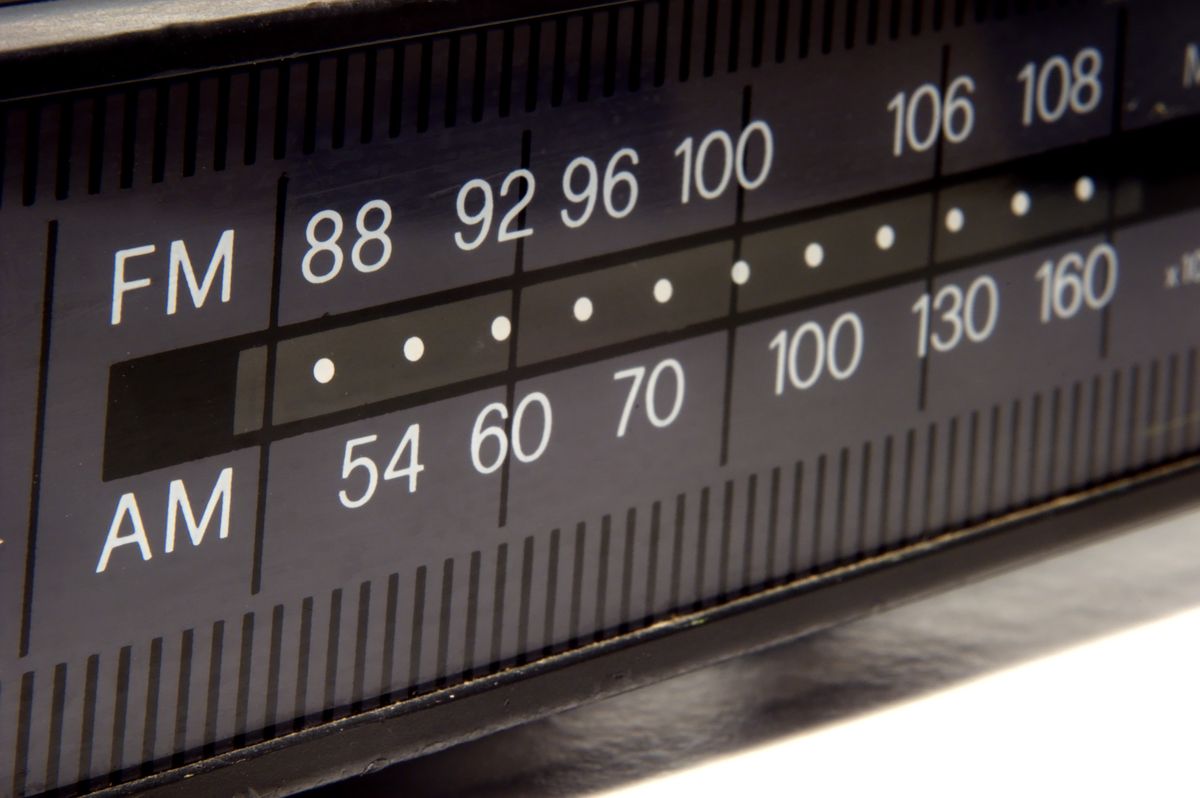
Some People Are Just Realizing The Difference Between FM And AM Radio
Favicon 
www.iflscience.com

Some People Are Just Realizing The Difference Between FM And AM Radio

With the advent of mobile phones and easy access to digital broadcasts, long gone are the days of twiddling about with your radio and giving yourself a jumpscare when you accidentally switch from FM to AM (RIP to any headphone users who did this with their portable radio). But what’s actually the difference between the two?How does radio work?To understand the difference between AM and FM, it’s first important to know how radio stations – which still use traditional broadcasting methods – get the music to our stereos.Stations start off with a carrier signal, and electromagnetic wave – in this case, a radio wave – that has a constant frequency and amplitude. When they play a song or the presenter reads out the weather forecast, for example, that information is encoded into the carrier wave by changing those variables.This newly mixed signal is then sent out by those big transmitters you see attached to radio stations, and then picked up by the receiver on a radio, which decodes the information using a demodulator and converts it into sound waves.What’s the difference?AM stands for amplitude modulation, which gives you a hint as to how it works. The amplitude is the height of a wave, and for stations that use AM broadcasting, they alter the amplitude of the carrier wave in order to encode information.FM, on the other hand, stands for frequency modulation, and as you might be able to guess at this point, in this case stations adjust the frequency of the carrier wave.AM vs. FMBoth AM and FM are still used to this day, but is one better than the other?AM has one pretty significant issue that can deter people from using it. Lots of other sources produce radio waves similar to that of AM, like power lines, lightning, and even the Sun. Waves can interfere with each other and in this case, the other sources can interfere with the carrier signal and also modulate the amplitude.The result of this is our radios blasting out a bunch of static, hence getting the living daylight scared out of you when you switch the radio to AM out of curiosity.Listening to a FM radio station, however, tends to be far crisper experience; because the information is encoded by changes in frequency, a little bit of amplitude-changing interference doesn’t really make a difference to the end product. Having a greater bandwidth to choose from also helps.So if that’s the case, why on Earth do people still use AM radio?The answer is that, because it has longer wavelengths, it has a far greater broadcast range than FM and can penetrate even in building-dense areas. Radio is about more than just music – AM’s ability to reach far and wide can come in pretty handy in the case of broadcasting emergency messages.
Like
Comment
Share
Science Explorer
Science Explorer
2 yrs

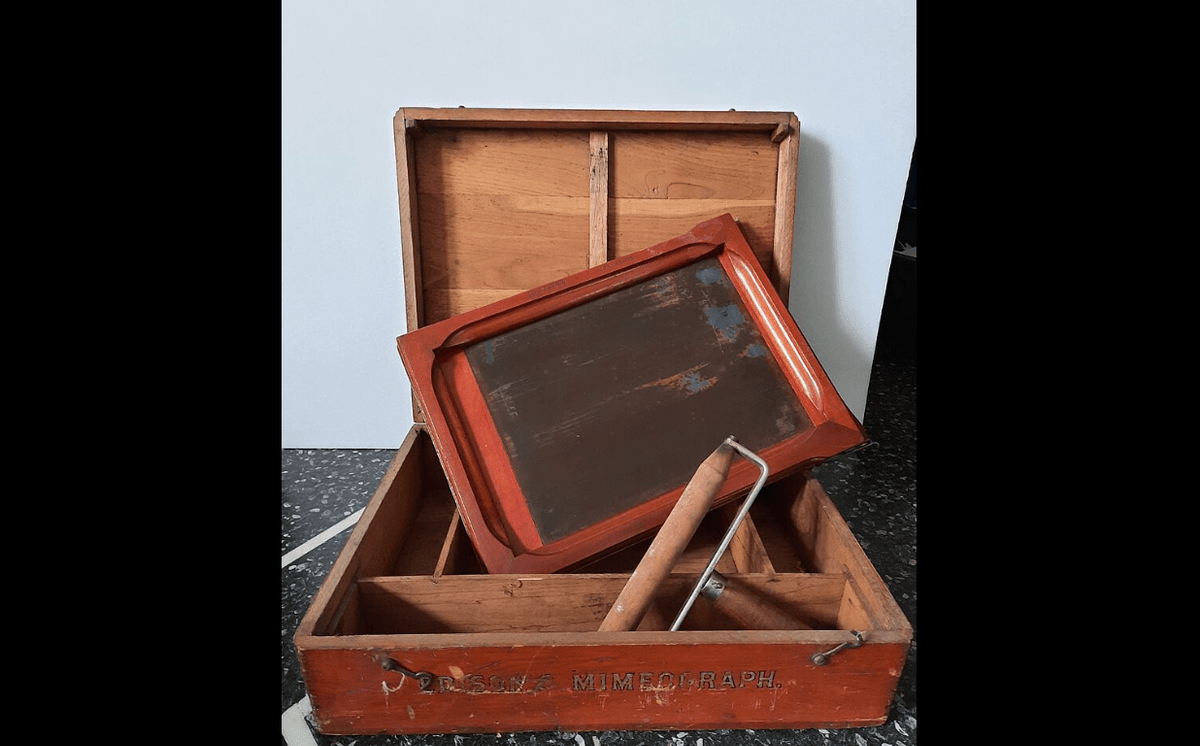
What Is A Mimeograph Machine?
Favicon 
www.iflscience.com

What Is A Mimeograph Machine?

Have you ever heard of a mimeograph machine? Unless you’re reasonably old or have a particular interest in the ways people used to duplicate information, we wouldn’t be surprised if you hadn’t – but it made a particularly big mark (or perhaps, ink splatter) on the history of printing.What is a mimeograph and how does it work?For those wondering what on Earth a mimeograph machine is, it was, in essence, the forebear to the modern-day photocopier – people used it to make copies of written information using good old ink, paper, and a stencil.With either an electric pen, as it first started out, or with a typewriter, the desired information was etched out onto a blank stencil. The stencil could then be inserted into an ink press with a blank piece of paper, pushed down, and the ink would then be pushed through onto the paper below, making a copy of whatever was crafted into the stencil material.Who invented the mimeograph machine?The first person to file a patent for a version of the mimeograph machine in the US was the infamous American inventor and businessmen Thomas Edison, who did so in 1876. This first iteration of the machine involved using an electric pen to cut the stencils, followed by the use of a flatbed ink press. Edison’s work was then built upon by fellow inventor Albert Blake Dick, who made improvements to the stencils by making them out of waxed paper, patented it, and released what he named the Edison Mimeograph in 1887.Over the years, others also made improvements to the process, such as swapping the flatbed duplicator for a rotating cylinder – which could feature a motor or a hand-crank – with an automatic ink feed. Later versions were also capable of using typewriters to cut out the stencils.Was the mimeograph machine popular?The mimeograph machine took off in popularity because for one, getting your hands on one of the machines was more affordable, and thus accessible to far more people, than going to a print shop to get copies made, or persuading one of the big-name presses to do it for you. Back in 1950, a mimeograph machine cost somewhere between $50 to $100, about $600 to $1,300 in today’s money.It was also relatively easy to use, and it could make copies quickly, sparking the wider production of handmade poetry books and zines. “It’s not so much different from blogging or tweeting now,” Kyle Schlesinger, a typography professor at the University of Houston-Victoria told National Geographic.Mimeography is now used far less in a day and age where many people have photocopiers and printers in their homes, but hey, maybe when your printer stages a protest for the fifth time in a week, it might be worth considering.

Like
Comment
Share
Strange & Paranormal Files
2 yrs

Signs of the existence of life were discovered on Venus
Favicon 
anomalien.com

Signs of the existence of life were discovered on Venus

Two teams of scientists have announced that, as a result of new observations of Venus using ground-based telescopes, they have discovered two gases in the planet’s atmosphere – phosphine and ammonia. These gases indicate the potential existence of alien life. It is worth saying that the temperature on Venus is so high that metals can melt, and the atmosphere is very toxic. Simply put, Venus is not the most habitable planet. Yet extraterrestrial life may be hiding in the clouds of the second planet from the Sun, writes The Guardian. Scientists have found evidence of phosphine and ammonia in the atmosphere of the toxic and hot planet. On the surface of Venus, the temperature reaches 450 degrees Celsius, that is, it is hot enough to melt lead and zinc. The pressure on the planet is 90 times higher than the pressure on Earth. And the atmosphere of Venus is filled with toxic sulfur. Two teams of scientists have announced that, as a result of new observations of Venus using ground-based telescopes, they have discovered two gases in the planet’s atmosphere – phosphine and ammonia. These gases indicate the potential existence of alien life. It is worth saying that the temperature on Venus is so high that metals can melt, and the atmosphere is very toxic. Simply put, Venus is not the most habitable planet. Yet extraterrestrial life may be hiding in the clouds of the second planet from the Sun, writes The Guardian. Both phosphine and ammonia are among the so-called biosignature gases that may indicate the presence of life. But new discoveries cannot yet serve as proof that life on Venus really exists, even if not on the surface, but in the clouds of the planet. Scientists say the new data raises the possibility that life on Venus may have emerged and flourished in the distant past, when the planet had a more temperate climate. It is also possible that this life in the form of microbes may still inhabit the planet’s atmosphere. On the surface of Venus, the temperature reaches 450 degrees Celsius, that is, it is hot enough to melt lead and zinc. The pressure on the planet is 90 times higher than the pressure on Earth. And the atmosphere of Venus is filled with toxic sulfur. But at an altitude of about 50 km from the surface of Venus, temperature and pressure levels are closer to those on Earth, meaning potentially very hardy microbes could survive there, scientists say. The results of the new research are preliminary and more observations are needed to say for sure that phosphine and ammonia are present in the atmosphere of Venus. If this is the case, then the next step for scientists will be to try to find a possible biological source of these gases. Or maybe these gases are still created as a result of unknown chemical processes on Venus, which can also be discovered. The post Signs of the existence of life were discovered on Venus appeared first on Anomalien.com.
Like
Comment
Share
Twitchy Feed
Twitchy Feed
2 yrs

WATCH: ‘Man’ Who Let Joe Biden Creep on His Daughter Goes the Full Baghdad Bob on Biden Drop-Out Rumors
Favicon 
twitchy.com

WATCH: ‘Man’ Who Let Joe Biden Creep on His Daughter Goes the Full Baghdad Bob on Biden Drop-Out Rumors

WATCH: ‘Man’ Who Let Joe Biden Creep on His Daughter Goes the Full Baghdad Bob on Biden Drop-Out Rumors
Like
Comment
Share
Twitchy Feed
Twitchy Feed
2 yrs

Sen. Josh Hawley Found Out What It Took to Draw Attention From Authorities at Site of Trump Shooting
Favicon 
twitchy.com

Sen. Josh Hawley Found Out What It Took to Draw Attention From Authorities at Site of Trump Shooting

Sen. Josh Hawley Found Out What It Took to Draw Attention From Authorities at Site of Trump Shooting
Like
Comment
Share
Gamers Realm
Gamers Realm
2 yrs

Elden Ring: How To Find The White Reed Armor Set
Favicon 
www.dualshockers.com

Elden Ring: How To Find The White Reed Armor Set

Elden Ring has no lack of creativity when it comes to weapons and armor for players, and the White Reed Armor Set is no exception. This is one of the most visually identifiable armor sets for anyone using the Samurai class and one you do not want to miss out on when testing various builds.
Like
Comment
Share
Trending Tech
Trending Tech
2 yrs

This $1,695 smart bassinet’s best features are now behind a premium subscription
Favicon 
www.theverge.com

This $1,695 smart bassinet’s best features are now behind a premium subscription

Image: Happiest Baby The Snoo, a very expensive but widely regarded smart bassinet, now has some of the best features of its app locked behind a new $19.99 monthly premium subscription. The change, which went into effect this week, has infuriated many Snoo owners, as the subscription puts some previously free features that new parents rely on behind a pricey paywall. A bunch of threads in the Snoo subreddit have exploded with complaints since the plan was announced last month. “Wild choice,” wrote one user. “It’s actually disgusting to take advantage of parents who are just trying to get their kids to sleep and already paying a large sum for the pleasure of something that a) may not work, b) can only be used for a short period before becoming useless, c)... Continue reading…
Like
Comment
Share
Trending Tech
Trending Tech
2 yrs

A few weeks with the Daylight DC-1 tablet: rethinking screen time
Favicon 
www.theverge.com

A few weeks with the Daylight DC-1 tablet: rethinking screen time

The DC-1 is very much an outdoor tablet in a world filled with indoor tablets. | Photo: David Pierce / The Verge So far, this thing doesn’t seem like a very impressive tablet. But Daylight is more a display company than a tablet company — and the display is pretty great. Continue reading…
Like
Comment
Share
Showing 19711 out of 56670
  • 19707
  • 19708
  • 19709
  • 19710
  • 19711
  • 19712
  • 19713
  • 19714
  • 19715
  • 19716
  • 19717
  • 19718
  • 19719
  • 19720
  • 19721
  • 19722
  • 19723
  • 19724
  • 19725
  • 19726

Edit Offer

Add tier


Select an image
Delete your tier
Are you sure you want to delete this tier?

Reviews

In order to sell your content and posts, start by creating a few packages. Monetization

Pay By Wallet

Payment Alert

You are about to purchase the items, do you want to proceed?

Request a Refund