YubNub Social YubNub Social
    Advanced Search
  • Login

  • Night mode
  • © 2026 YubNub Social
    About • Directory • Contact Us • Privacy Policy • Terms of Use • Android • Apple iOS • Get Our App

    Select Language

  • English
Install our *FREE* WEB APP! (PWA)
Night mode
Community
News Feed (Home) Popular Posts Events Blog Market Forum
Media
Headline News VidWatch Game Zone Top PodCasts
Explore
Explore Jobs Offers
© 2026 YubNub Social
  • English
About • Directory • Contact Us • Privacy Policy • Terms of Use • Android • Apple iOS • Get Our App

Discover posts

Posts

Users

Pages

Group

Blog

Market

Events

Games

Forum

Jobs

Science Explorer
Science Explorer
2 yrs

Man Caught In China Smuggling Over 100 Live Snakes Inside His Pants
Favicon 
www.iflscience.com

Man Caught In China Smuggling Over 100 Live Snakes Inside His Pants

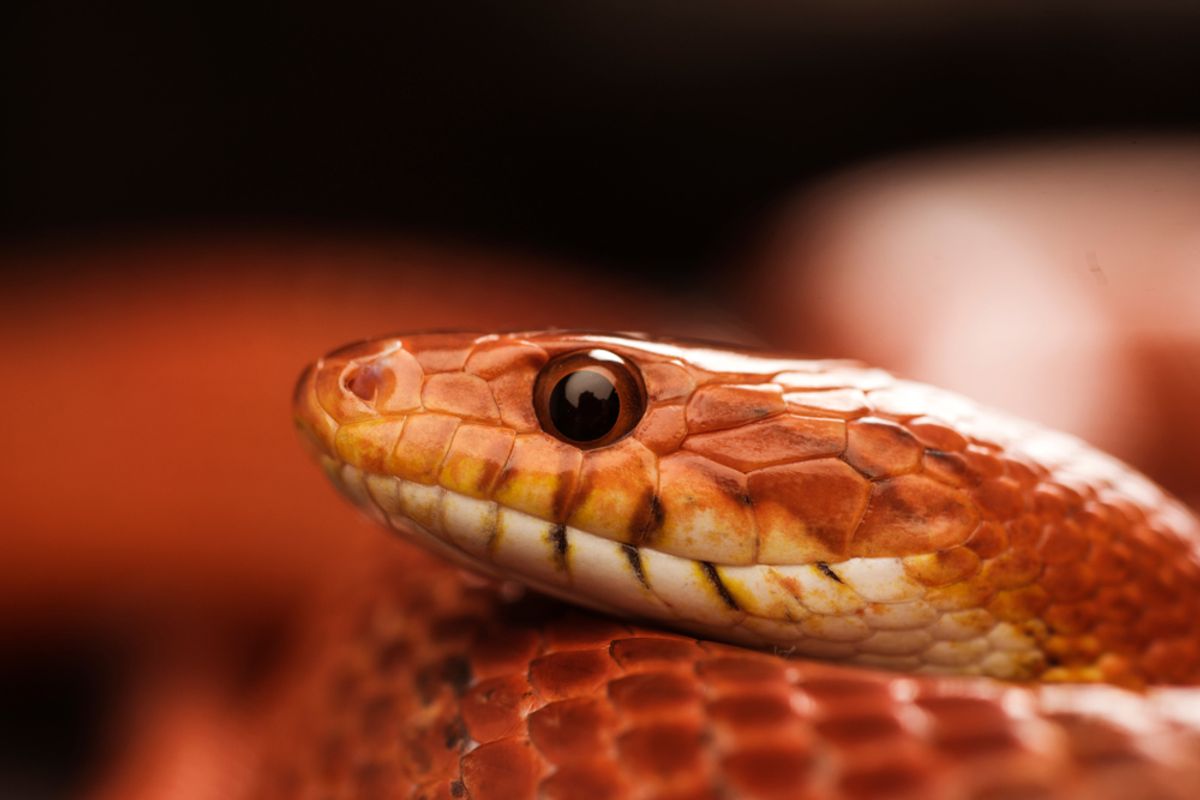
A man in China has been caught trying to smuggle more than 100 live snakes into the country inside his pants – bringing new meaning both to the term “trouser snake” and also the term “holy cow dude, seriously, why would you EVER DO that?”The traveler was intercepted by customs agents in Futian Port, on the boundary between Hong Kong and Shenzhen, China. “Upon inspection, customs officers discovered that the pockets of the trousers the passenger was wearing were packed with six canvas drawstring bags and sealed with tape,” reported a statement from China’s customs agency this week. “Once opened, each bag was found to contain living snakes in all kinds of shapes, sizes and colors,” it added.While the transportation method is, let’s face it, absolutely bananas, the smuggler did at least seem to have some sense when it comes to keeping predatory reptiles next to your nether regions: while only a handful of the snakes have so far been identified, none appear to be venomous. Many were non-native to the region, however, including milk snakes, western hognose snakes, corn snakes, Texas rat snakes, and bullsnakes.It’s a noteworthy example of what is, sadly, an all-too-common problem: the illegal wildlife trade. Despite international efforts to curb the smuggling and sale of exotic and endangered animals, the industry is currently worth a huge $20 billion per year, and increasingly linked to organized crime, armed violence, and of course, environmental damage on a truly massive scale. “The illegal wildlife trade is the fourth biggest illegal activity worldwide, behind only arms, drugs and human trafficking,” notes ZSL London Zoo. “[It] leaves a trail of destruction which is wiping out species and destroying people's lives.”“For every baby chimp that becomes a victim of illegal trade, 10 chimps are killed in the process,” it adds.The trade has been of particular concern in China, where demand for illegal wildlife is devastatingly high. Animals are often smuggled in for use in traditional Chinese medicine, as well as for pets and investments – to take just one species as an example, the country saw at least 192 incidents of pangolin smuggling between 2010 and 2021, amounting to at least 74,500 dead pangolins, the Environmental Investigation Agency reported last year.That said, China has attempted to curb its reputation as an epicenter for the animal smuggling in recent years. In February 2020, the country’s top legislature announced a decision to “thoroughly ban the illegal trading of wildlife and eliminate the consumption of wild animals to safeguard people's lives and health.” Those species that were already illegal to trade had their protections beefed up, with the Chinese government suggesting that punishments for those caught smuggling illegal animals would receive harsher punishments than previously – potentially even including the death penalty.While opinions may vary on the severity of the punishment, the fact that such a high-demand country is cracking down on animal trafficking is welcome news to both animal lovers and, presumably, around 100 newly freed snakes.“Those who break the rules will be […] held liable in accordance with the law,” the statement from the customs agency warned. While no news has been reported as to whether the smuggler was arrested, we wouldn’t like to be in his shoes right now. Or, for that matter, his pants.
Like
Comment
Share
Science Explorer
Science Explorer
2 yrs

Signs Of COVID Virus In The Body Years After Original Infection
Favicon 
www.iflscience.com

Signs Of COVID Virus In The Body Years After Original Infection

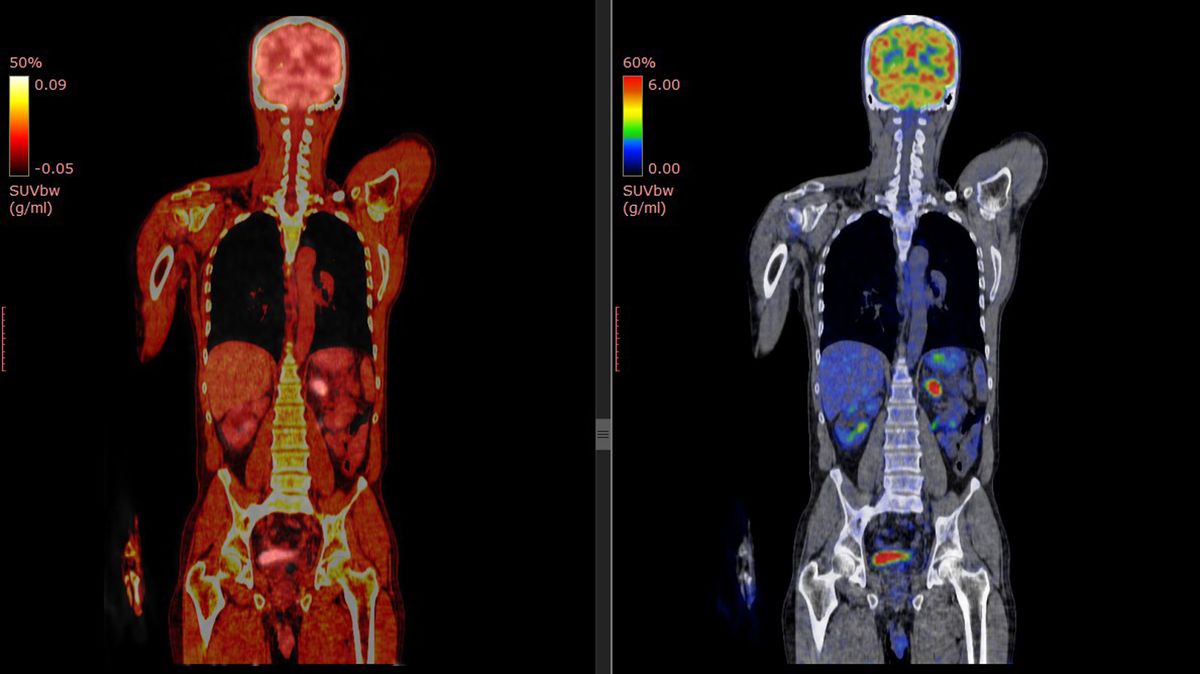
Once upon a time, COVID-19 was two weeks of coughing and an inability to smell your new candle. Then we discovered the existence of Long COVID – a vague conglomeration of more than 200 symptoms that can be debilitating months or even years after the original disease seems to have cleared up.Now, four years into the pandemic, we’re still not totally sure what’s behind the extended condition – but a new study that followed 24 Covid patients over a period of up to 900 days has revealed a potential factor that has previously gone unnoticed: your T cells.It’s not the first study to link COVID-19 with these particular immune cells – only last month, a study from Imperial College London hinted at the potential for targeted T cell therapies to fight the condition. But it is one of the longest-running: it was set up in 2020, long before the idea that COVID-19 might hang around in the body was widely accepted.That’s not all that sets it apart, however. The team behind the study was inspired by their experience researching HIV – a disease practically defined by its ability to kill T cells. Unable to monitor antibodies so early into the pandemic, they instead used PET scans to study the behavior of T cells inside the body after infection.“[It] is a novel approach […] that allows them to map activated T cells in the body,” explained Danny Altmann, Professor of Immunology at Imperial College London, co-author of the Penguin Handbook of Long Covid and lead investigator of the NIHR WILCO LONG COVID Study, who was not involved in the study. “They find patterns of long-term T cell activation that may help to explain patterns of Long Covid symptoms,” he said. “For example, people with respiratory symptoms showed long-term homing of activated T cells to the lung.”Other scans showed activated T cells swarming to the gut wall, prompting the team to analyze gut biopsies. Again, they found the presence of COVID-19 RNA – a “long-term virus reservoir,” Altmann explained.The finding was even more stark when compared to six control samples – scans from before the pandemic, “before anybody on the planet could’ve possibly had this virus,” Michael Peluso, assistant professor of medicine at the University of California, San Francisco, and lead author of the paper, told Stat. While T cells were activated in these scans, they were concentrated where you’d expect – the liver, kidneys, and other places known to help clear inflammation. In the Long Covid patients, they were everywhere.“It’s really striking,” Peluso said. “‘Oh, my goodness, this is happening in someone’s spinal cord, or their GI tract, or their heart wall, or their lungs.’”While the study isn’t a slam-dunk – it’s not actually certain what the T cells are reacting to, and the researchers aren’t sure whether the scans are showing remnants of old infections, or active virus particles – it’s nevertheless alluring. “There has been a large amount of inferential data supporting a view that a key factor underpinning Long Covid may be that some people do not properly clear the virus and harbor reservoirs of SARS-CoV-2 in their tissues,” Altmann noted – but “it’s been hard to prove.”In that respect, this study “should be seen as a significant step in advancing our understanding of this disease process,” he said, “and thus shifting nearer to treatments that could offer hope to the tens of millions of patients.”“At a time when there’s desperate need for new clinical trials, studies like this help to point the way.”The study is published in the journal Science Translational Medicine.
Like
Comment
Share
Science Explorer
Science Explorer
2 yrs

How Long-Haul Flights Affect The Body - And What To Do About It
Favicon 
www.iflscience.com

How Long-Haul Flights Affect The Body - And What To Do About It

You’ve got your shiny new luggage, battled your way through the airport, and now you’re only one step away from that much-needed vacation. Just 14 hours on a plane and you’ll be there. But what happens to your body spending all that time up in the air?Feeling DryWhy it happensEver feel like that fake alien mummy when you get off a long flight? You’re probably lacking moisture.That’s because the humidity inside a plane is super low. The air that circulates around is far drier than the lovely balmy destination that you’re likely off to as it’s taken from the air outside, which is notoriously dry at high altitudes. The result of that can be dry skin, lips, nose, and eyes.While those things aren’t the most comfortable, the low humidity on an aircraft isn’t going to dehydrate you in the more clinical sense; according to the UK Civil Aviation Authority, the amount of fluid loss over an 8 hour flight is only around 150 milliliters.You can also get dehydrated more generally if you don’t drink enough water or have a bunch of drinks that make you pee more, like alcohol and caffeinated beverages. That can land you with dizziness, fatigue, and a headache – not ideal when you step off a plane and into the bright sunshine and blistering heat.How to prevent itTo avoid feeling like a raisin, stick to the age-old hydration advice – drink plenty of fluids, particularly water. If you don’t fancy spending half your holiday fund on a bottle from duty-free, you could take an empty one through customs and get it filled up on the other side. We wouldn’t be so foolish as to tell you not to have a cheeky brewski to start your vacation, but not going too crazy with the amount of alcohol will also help.As for skin and lips, slap on moisturizing products to your heart’s content (at least, in the amounts that you can actually take in your hand luggage) like creams and lip balms. Sprays for the nose and eyes can help to stop them feeling dry and irritated, as can swapping contact lenses for glasses for the latter.Blood clotsWhy they happenAnother of the potential side effects of long-haul air travel is the formation of blood clots in the legs, known as deep vein thrombosis (DVT). However, it’s not actually being up in the air that increases the risk of developing DVT – it’s mostly being immobile for long stretches of time.When we sit in one position for too long, blood flow in the veins in our legs can slow right down. This can increase the chance of a blood clot forming, with one review finding that the longer the flight, the more likely it is to happen. Although there’s still only a small chance of it happening overall, recently having had surgery or a baby, being pregnant, hormone replacement therapy or birth control containing estrogen, and a family history of blood clots can also bump up the risk.How to prevent themThe simplest thing a person can do to avoid blood clots forming in this situation is to get moving: stand up and walk around the plane as much as possible and make sure there’s enough leg room to switch sitting positions. There’s even exercises you can do that’ll still help even if you’re sitting down, like flexing and extending your ankles.For people who are already at risk of developing blood clots, healthcare professionals might also recommend compression stockings, which help to improve blood flow.If a clot does form, it can often go away by themselves without someone knowing it was there. When that isn’t the case, there are some key warning signs that you can keep an eye out for after the flight: swelling in the leg, ankle, or calf; red or discolored skin; and skin feeling warmer to the touch. If someone has any of those symptoms, they should see a healthcare professional.Jet lagWhy it happensThis next one comes after a long-haul flight rather than on it, but seeing as it can be quite the ass-kicker, it’s definitely worth a mention – jet lag.The longer you spend on a plane, the more likely it is you’ll cross multiple time zones. When you land, there’s then a mismatch between your body’s internal clock – the circadian rhythm – which is set to your original time zone, and the time zone you find yourself in.Understandably, the body isn’t a fan of that and that can cause the classic symptoms of jet lag: disrupted sleep, feeling wiped out during the day, stomach problems, and trouble remembering and concentrating.How to minimize itWhile jet lag is temporary, you don’t necessarily want to spend the first few days of your holiday in bed feeling ill. At the same time, it can’t be completely avoided, but there are at least a few things that can be done to try and make it less intense.For longer trips, it’s often recommended to take a few days before you leave getting your body to adjust to the new time zone. This means going to bed at least an hour later than usual if traveling west and at least an hour earlier if traveling east.As for how to best approach sleep, trying to catch some Zs on the plane can help if it’s going to be nighttime when you land. If it’s going to be during the day, however, the best bet is to stay awake, which can be helped by strategically exercising or downing a coffee.When you finally do go to bed, don’t forget to set an alarm – not what we’d like to do on holiday, but it’ll help to stop you from accidentally sleeping through, which can make the problem worse.Plus, it’ll make sure you don’t miss out on the breakfast buffet, where eating a smaller meal (and then stashing some more to have on the loungers later – shhh we’ve all done it) can ward off jet lag-related stomach issues.All “explainer” articles are confirmed by fact checkers to be correct at time of publishing. Text, images, and links may be edited, removed, or added to at a later date to keep information current.The content of this article is not intended to be a substitute for professional medical advice, diagnosis, or treatment. Always seek the advice of qualified health providers with questions you may have regarding medical conditions.  
Like
Comment
Share
Twitchy Feed
Twitchy Feed
2 yrs

Dark Brandon Takes A Swipe At Trump On X Gets Owned Gloriously
Favicon 
twitchy.com

Dark Brandon Takes A Swipe At Trump On X Gets Owned Gloriously

Dark Brandon Takes A Swipe At Trump On X Gets Owned Gloriously
Like
Comment
Share
Gamers Realm
Gamers Realm
2 yrs

Call Of Duty Isn't Collaborating With Deadpool, Confirms WWE Crossover For Season 5
Favicon 
www.dualshockers.com

Call Of Duty Isn't Collaborating With Deadpool, Confirms WWE Crossover For Season 5

Activision has announced that a new collaboration with WWE will be coming to Call of Duty in Season 5, which also received a confirmed start date of Wednesday, July 24.
Like
Comment
Share
RedState Feed
RedState Feed
2 yrs

Game-Changer? Multi-Billionaire Elon Musk Steps off the Sidelines, Donates 'Sizable Amount' to Trump PAC
Favicon 
redstate.com

Game-Changer? Multi-Billionaire Elon Musk Steps off the Sidelines, Donates 'Sizable Amount' to Trump PAC

Game-Changer? Multi-Billionaire Elon Musk Steps off the Sidelines, Donates 'Sizable Amount' to Trump PAC
Like
Comment
Share
Science Explorer
Science Explorer
2 yrs

Do animals have friends?
Favicon 
www.livescience.com

Do animals have friends?

Friendship is a key component of human social relationships. Is this also true for animals?
Like
Comment
Share
Science Explorer
Science Explorer
2 yrs

Webb Detects the Smell of Rotten Eggs in an Exoplanet’s Atmosphere
Favicon 
www.universetoday.com

Webb Detects the Smell of Rotten Eggs in an Exoplanet’s Atmosphere

Studying the atmospheres of exoplanets is helpful for several reasons. Sometimes, it helps in understanding their formation. Sometimes, it helps define whether the planet might be habitable. And sometimes, you allow a press officer to write the headline “Stench of a gas giant? Nearby exoplanet reeks of rotten eggs.” That headline was released by John Hopkins University’s (JHU) press department after a study describing the atmosphere of one of the nearest known “hot Jupiters” was recently published in Nature. The malodorous stench from rotten eggs is caused by a compound known as hydrogen sulfide. In the case of exoplanet HD 189733, the atmosphere has trace amounts of the molecule. Technically, even a tiny amount is enough to cause a rancid smell. Still, given all the other components of the planet’s atmosphere, it might not even be noticeable to a physical nose. So, how did astronomers detect it? By using spectral analysis from the James Webb Space Telescope. It showed not only hydrogen sulfur in the planet’s atmosphere but also other types of sulfur, which is considered one of the building blocks of life as we know it and, therefore, a prime candidate for detection in the hunt for habitable worlds. Fraser interviews exoplanet atmosphere expert Joanna Barstow. HD 189733 is clearly not habitable. It is 13 times closer to its host star than Mercury and suffers from notoriously bad weather, including sideways raining glass, 8,000 kph winds, and temperatures above 900 C. However, it does pass in front of its parent star once every two Earth days, making it a baseline case for exoplanet atmospheric observations. Discovering hydrogen sulfide in its atmosphere, which had not been previously detected, was only one of the atmospheric findings of the study by Guangwei Fu of JHU and his colleagues. Another important one was the lack of methane in the atmosphere. Despite physical conditions that would make it unlikely that methane could exist in the planet’s atmosphere, previous studies have found it. In contrast, Dr. Fu’s comprehensive study clearly did not see methane in HD 189733’s atmosphere. It does have metals in its atmosphere, though. Just like stars, exoplanets can have a “metallicity” level. Metallicity can help determine how a star’s mass can vary with its metal content. In our own solar system, Neptune and Uranus have higher metal concentrations than Jupiter and Saturn despite having less mass. Scientists are still studying that correlation. JWST is turning into a fine planet hunter and atmosphere discerner, as Fraser describes. Overall, exoplanet creation is a hot research topic, and understanding the atmospheres of as many planets as possible will allow scientists to create better models of how exoplanets form. JWST is one of humanity’s most powerful tools to do that, and describing HD 189733’s atmosphere in such detail is a very good baseline to compare other exoplanet’s atmospheres. And JWST is far from done collecting new primary data on those exoplanet atmospheres. As more data is collected and analyzed, HD 189733’s atmosphere will serve as a touchstone for comparing other gas giants in other solar systems. At least scientists won’t have to smell it to do so. Learn More:JHU – Stench of a gas giant? Nearby exoplanet reeks of rotten eggs. And that’s a good thingFu et al. – Hydrogen sulfide and metal-enriched atmosphere for a Jupiter-mass exoplanetUT – Carbon Dioxide Detected on Exoplanet HD 189733bUT – What’s the Weather Like on Extrasolar Planet HD 189733b? Lead Image:Artist’s depiction of HD 189733b with star.Credit – ROBERTO MOLAR CANDANOSA/JOHNS HOPKINS UNIVERSITY The post Webb Detects the Smell of Rotten Eggs in an Exoplanet’s Atmosphere appeared first on Universe Today.
Like
Comment
Share
Science Explorer
Science Explorer
2 yrs

The Moon Occults Spica This Weekend For North America
Favicon 
www.universetoday.com

The Moon Occults Spica This Weekend For North America

The ‘Great North American Occultation’ sees the Moon blot out Spica Saturday night. Few events in the sky transpire as quickly as occultations. While the path of the planets may move at a leisurely pace, and the orbits of double stars may be measured in terms of a lifetime or more, occultations are swift vanishing acts. North American observers have a chance to witness just such an event this coming weekend, when the waxing gibbous Moon passes in front of the bright first magnitude star Spica. The Moon meets Spica Saturday night. Credit: Stellarium. The Moon is 52% illuminated (just past 1st Quarter) when the event transpires centered around 2:31 (UT) Universal Time (10:31 PM EDT), and most of Canada down through the contiguous United States (CONUS) south into Mexico will witness the entire event; only northwesternmost Canada and Alaska will miss out. The U.S. West Coast sees the occultation occur under dusk skies, while the U.S. Eastern Seaboard and the Canada Maritimes will see the beginning of the event (ingress) underway just before moonset. The sky on the evening of July 13th. credit: Stellarium. The International Occultation Timing Association (IOTA) has a list of ingress/egress times for select locales inside the occultation footprint here. The Moon moves its own apparent diameter (30′ or half a degree) about once per hour, and waxing occultations are especially dramatic, as the dark edge of the Moon leads the way. The footprint for Saturday night’s occultation. Credit Occult 4.2. Spiking to Spica Also known as Alpha Virginis, Spica is the brightest star in the constellation Virgo and is located about 250 light-years distant. A spectroscopic binary with a companion star in a close orbit, Spica is one of the closest stars to our solar system with the potential to explode as a Type II supernova in the next few million years. Located close to the ecliptic plane, Spica played a role in helping the ancient Greek astronomer Hipparcos to deduce the precession of the equinoxes, as a temple in Thebes built on an alignment with the star in 3200 BC had since changed position with respect to the sky. Why Occultations Beyond just providing a great show, occultations can reveal unseen companions and even tell us something about the nature of the target object, to include its apparent diameter. In the current epoch, the Moon can occult three other major first magnitude stars in addition to Spica: Antares, Regulus, and Aldebaran. The Moon could also occult Pollux (Beta Geminorum) up until 117 BC, after which, precession and the star’s own proper motion carried it out of the Moon’s path. The Moon’s path is a busy one in July. This weekend’s Spica event is part of a current series of occultations of the star by the Moon once per lunation, running out until November 17th, 2025. Follow that Moon in the next few weeks, we have: -Wednesday, July 17th: The +84% waxing gibbous Moon occults the bright star Antares (Alpha Scorpii) for South Africa. -Sunday, July 21st: The Moon reaches Full phase… the July Full Moon is known as the Thunder, Buck or Hay Moon. -Wednesday, July 24th: The -86% waning gibbous Moon occults the planet Saturn for southeast Asia. -Thursday, July 25th: The -80% waning gibbous Moon occults the planet Neptune for the western Pacific. -Monday, July 29th: The -36% waning crescent Moon occults the Pleiades star cluster (Messier 45) for southeast Asia. All this, from simply watching one celestial body pass in front of another. Keep in mind, these are all part of a busy series of occultation cycles for the Moon in 2024. If skies are clear, don’t miss Saturday night’s occultation of Spica by the Moon. The post The Moon Occults Spica This Weekend For North America appeared first on Universe Today.
Like
Comment
Share
Science Explorer
Science Explorer
2 yrs

Exoplanet Could be an Enormous Version of Europa
Favicon 
www.universetoday.com

Exoplanet Could be an Enormous Version of Europa

Certain exoplanets pique scientists’ interest more than others. Some of the most interesting are those that lie in the habitable zone of their stars. However, not all of those planets would be similar to Earth – in fact, finding a planet about the size of Earth is already stretching the limits of most exoplanet-hunting telescopes. So the scientific community rejoiced when researchers at the Université de Montréal announced they found an exoplanet in the size range of the Earth. However, it appears to be almost entirely covered in water, making it more similar to a giant version of Europa, the ice-covered moon of Jupiter.  There’s a lot to unpack in the press release describing the discovery. The exoplanet they studied is known as LHS 1140b. It’s located 48 light-years away in the constellation Cetus, making it one of the closest known exoplanets in its star’s habitable zone. That star, LHS 1140, is only about 20% the size of our Sun, and the energy it puts out is smaller. LHS 1140b is one of two potential exoplanets orbiting it, but until now, scientists have debated whether it was a “mini-Neptune” or a “super-Earth.” If it were a “mini-Neptune,” it would be surrounded by hydrogen gas, but the researchers did not find that. LHS 1140b has long been a center of attention for astronomers – as Anton Petrov describes here.Credit – Anton Petrov YouTube Channel They used “director’s discretionary time,” which means observational time directly assigned by the project’s director of the James Webb Space Telescope (JWST). They combined it with data collected from TESS, Spitzer, and Hubble. After looking closely at LHS 1140 b’s atmosphere, they saw something familiar—nitrogen. This was interesting for a few reasons. First, it ruled out the possibility of LHS 1140b being a “mini-Neptune,” as the hydrogen-rich atmosphere would have been very distinct in the data.  Second, it is now officially the first known temperate exoplanet to have a “secondary” atmosphere – i.e., one created after the planet’s formation. Nitrogen does not naturally form part of a planet’s atmosphere at the outset and must be developed later through chemical processes. So far, no exoplanets in their star’s habitable zones have been observed with this gas in their atmosphere, though it had long been theorized since our own planet’s atmosphere is so rich in it. But even more intriguingly, with the possibility that it was a “mini-Neptune” eliminated, it seemed LHS 1140b became a good candidate for a “super-Earth” – about 1.7 times larger than our home planet and 5.6 times its mass. However, the researchers also noticed the planet was much less dense than expected, indicating that about 10-20% of that mass could be water rather than rock. Fraser discusses how we JWST to find exoplanets. Having that much water could lead to several different outcomes. First, there is the possibility of LHS 1140b being a “Hycean world,” which would be entirely covered by a liquid-water ocean. This seems unlikely, as the star’s energy output doesn’t provide enough energy to keep an entire planet-sized ocean warm enough not to freeze. This leads to the second possibility—a “snowball” world where a thick layer of snow covers the rocky interior. This is still possible, but it requires weather patterns that might be hard to discern remotely, even with JWST. So that leaves a final possibility—an ice world, where thick sheets of ice cover the entirety of the planet’s surface. We already know of one such world a lot closer to home—Europa. It is completely covered in ice, though intriguingly, it also has a liquid ocean underneath those ice sheets. The researchers think there is a good chance a similar subsurface ocean could exist on LHS 1140b as well. Fraser discusses how to research exoplanet atmospheres with JWST. That would make it the first known exoplanet to have confirmed liquid water. However, the data suggested another intriguing possibility – it could be a snowball planet with a “bull’s eye ocean” at the point where the star’s heat is strongest on it. This ocean could be around 4,000 km across, about half the size of the Atlantic Ocean on Earth. Models suggest that the water temperature in the ocean could even reach 20 C, a comfortable room temperature, though a bit cold to swim in.  However, none of these details have been confirmed yet, and doing so will require—you guessed it—more observational time. In particular, the researchers are interested in whether there is carbon dioxide in LHS 1140b’s atmosphere. A greenhouse gas could make it more likely that the planet’s overall temperature would be warm enough to make it a Hycean world rather than a snowball with one isolated ocean.  Observing carbon dioxide in an exoplanet as far away as LHS 1140 could take years of intermittent observational time on JWST. While LHS 1140b is now definitively one of the most promising candidates for finding liquid water on a planet’s surface – and therefore be a prime candidate for finding life on an exoplanet – continued observation of that kind would have to compete with all the other worthy use cases for JWST’s time.  For now, the researchers hope to receive more observational time, even if it isn’t enough to confirm the presence of carbon dioxide. However, eventually, there will be more and stronger planet-hunting telescopes than even the JWST. Someday, there will be enough observational time on at least one of them to confirm whether or not LHS 1140b does indeed have a liquid ocean. That day might be one of the most monumental in the history of the study of exoplanets—and maybe for humanity itself. Learn More:Université de Montréal – Astronomers Find Surprising Ice World in the Habitable Zone with Webb DataCadieux et al. – Transmission Spectroscopy of the Habitable Zone Exoplanet LHS 1140 b with JWST/NIRISSUT – Is This The Exoplanet Where Life Will First Be Found?UT – A New Venus-Sized World Found in the Habitable Zone of its Star Lead Image:Illustration of exoplanet LHS 1140 b, including a “bulls-eye ocean”.Credit – B. Gougeon / UdeM The post Exoplanet Could be an Enormous Version of Europa appeared first on Universe Today.
Like
Comment
Share
Showing 20685 out of 56670
  • 20681
  • 20682
  • 20683
  • 20684
  • 20685
  • 20686
  • 20687
  • 20688
  • 20689
  • 20690
  • 20691
  • 20692
  • 20693
  • 20694
  • 20695
  • 20696
  • 20697
  • 20698
  • 20699
  • 20700

Edit Offer

Add tier


Select an image
Delete your tier
Are you sure you want to delete this tier?

Reviews

In order to sell your content and posts, start by creating a few packages. Monetization

Pay By Wallet

Payment Alert

You are about to purchase the items, do you want to proceed?

Request a Refund