YubNub Social YubNub Social
    Advanced Search
  • Login

  • Day mode
  • © 2026 YubNub Social
    About • Directory • Contact Us • Privacy Policy • Terms of Use • Android • Apple iOS • Get Our App

    Select Language

  • English
Install our *FREE* WEB APP! (PWA)
Night mode
Community
News Feed (Home) Popular Posts Events Blog Market Forum
Media
Headline News VidWatch Game Zone Top PodCasts
Explore
Explore Jobs Offers
© 2026 YubNub Social
  • English
About • Directory • Contact Us • Privacy Policy • Terms of Use • Android • Apple iOS • Get Our App

Discover posts

Posts

Users

Pages

Group

Blog

Market

Events

Games

Forum

Jobs

RetroGame Roundup
RetroGame Roundup
2 yrs ·Youtube Gaming

YouTube
Commodore Amiga -=Momospace II=- WIP
Like
Comment
Share
RetroGame Roundup
RetroGame Roundup
2 yrs

Hidden Palace Releases Prototypes of Unreleased Saturn Port of Hard Boiled
Favicon 
www.retrorgb.com

Hidden Palace Releases Prototypes of Unreleased Saturn Port of Hard Boiled

Another unreleased Saturn game made its way into the public’s hands when Hidden Palace released three prototypes of Hard Boiled on its website Saturday. The prototypes are from June, July and August 1997 and were provided to Hidden Palace by the game’s programmer, David “Pipozor” Saulnier. Hard Boiled is a futuristic rail shooter somewhat in […]
Like
Comment
Share
RetroGame Roundup
RetroGame Roundup
2 yrs

Unreleased Genesis Game
Favicon 
www.retrorgb.com

Unreleased Genesis Game

Hidden Palace has just posted a prototype of a previously unreleased Sega Genesis / Mega Drive beat-em-up game, based on the 1993 comic series Out Of The Vortex.  While the game is glitchy, it’s still very playable.  Gameplay footage can be found in the video above and you can try it yourself via the link […]
Like
Comment
Share
Conservative Voices
Conservative Voices
2 yrs Politics

rumbleRumble
The Ingraham Angle (Full episode) - Tuesday, July 9
Like
Comment
Share
Conservative Voices
Conservative Voices
2 yrs Politics

rumbleRumble
Hannity (Full episode) - Tuesday, July 9
Like
Comment
Share
Let's Get Cooking
Let's Get Cooking
2 yrs

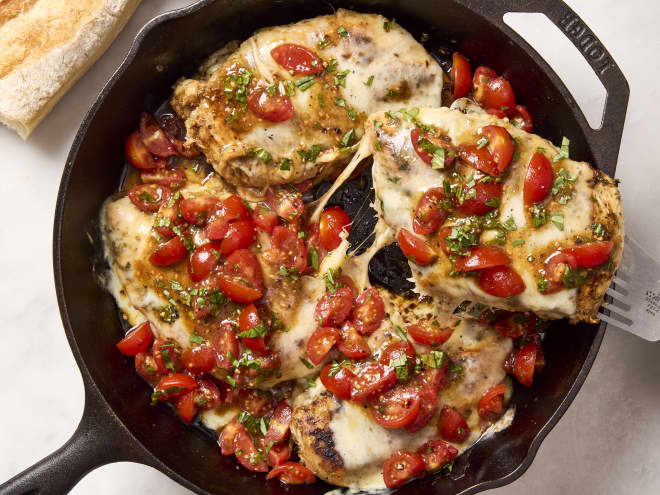
I Promise My "Bruschetta Chicken" Is the Best Dinner You'll Make All Summer
Favicon 
www.thekitchn.com

I Promise My "Bruschetta Chicken" Is the Best Dinner You'll Make All Summer

Juicy summer bruschetta meets easy, one-pan chicken dinner. READ MORE...
Like
Comment
Share
Let's Get Cooking
Let's Get Cooking
2 yrs

Before & After: Moody Green Cabinets and ’70s Accents Bring the Drama to a “Totally Blank” Kitchen (Instantly!)
Favicon 
www.thekitchn.com

Before & After: Moody Green Cabinets and ’70s Accents Bring the Drama to a “Totally Blank” Kitchen (Instantly!)

Plus, all the ways the homeowners kept remodel costs low. READ MORE...
Like
Comment
Share
History Traveler
History Traveler
2 yrs

England’s Reformation: Edward VI’s Protestant Reforms
Favicon 
www.thecollector.com

England’s Reformation: Edward VI’s Protestant Reforms

  When Protestantism is discussed in the context of English history, it is often Edward VI’s father, Henry VIII, who comes to mind first. Yet despite this, Edward was, by far, the most serious Protestant out of all of the Tudor monarchs. There were a multitude of reasons why Edward ensured Protestantism in his kingdom would thrive.   Protestantism in England Portrait of Edward VI, by William Scrots, c. 1550, Source: Sotheby’s   Protestantism was well established in Europe by the time Edward VI was crowned in 1547 thanks to the works of Martin Luther and John Calvin. Edward’s father had also adopted a form of Protestantism when he formed the Church of England after seeking a divorce from his first wife, Catherine of Aragon.   Henry VIII is seen as a Protestant king — he established the Church of England and called himself “Supreme Head of the Church,” as well as ordering revisions to Catholic religious practices, however, he was never really a true Protestant. In fact, some historians argue that he passed away a Catholic on his death bed. Nevertheless, the wheels were in motion by the time Edward came to be crowned, and thanks to his upbringing and those in charge of his education, Edward was a serious Protestant, despite only being nine years old.   Edward VI’s Upbringing Henry VIII, by Hans Holbein the Younger, c. 1537, Source: Liverpool Museums   An important part of Henry VIII’s establishment of Protestantism in his kingdom was making sure that Edward had a Protestant education. Edward excelled in subjects such as history, geography, geometry, and languages, and he was by all accounts a very intelligent young boy. Education was hugely important according to Henry, and it undoubtedly shaped the way Edward’s reign would pan out.   By the time Prince Edward was six years old, he began his formal education. It was Archbishop Thomas Cranmer who chose his educators and the path his education would take. Cranmer was the Archbishop of Canterbury, and one of the most significant reformers in the country. Richard Cox and John Cheke were both chosen to be Edward’s educators, as they themselves were also reformers.   Edward VI’s Early Reign Jane Seymour, by Hans Holbein the Younger, 1536-7, Source: Kunsthistorisches Museum, Vienna   When Henry VIII died on January 28, 1547, Edward was proclaimed King of England. However, because he was still a child, he was in what was known as his “minority” — he had older men looking after his government while he was still a child.   This had happened to many other English monarchs in the past, including Henry III, Richard II, and Henry VI, to name just a few. One of Edward VI’s most senior governors was his uncle, Edward Seymour (brother of his late mother, Jane Seymour).   Edward Seymour was a serious Protestant and a key reason why Edward VI’s reign was so associated with the rise of Protestantism. In fact, it was such a Protestant-heavy reign, that the period of Edward’s reign is known by itself as the Edwardian Reformation.   One of the first Protestant reforms under Edward VI was the Sacrament Act, passed in December 1547. This act was a deliberate attempt to move away from Catholic theological practices. It established that everyone was allowed to take Communion in the form of bread and wine, representing Christ’s body and blood — prior to this, only Catholic priests were allowed to drink the Communion wine. By offering it to all members of the Church it was initially deemed a step forward for Protestantism.   The Dissolution of the Chantries (1547-48) Gisborough Priory, Source: English Heritage   During his father’s reign, the tragic Dissolution of the Monasteries had taken place. This was the forced removal and destruction of monasteries across England as part of Henry VIII’s Protestant reforms. It happened between 1536 and 1541, and the legacy of these reforms can still be felt across England today, where the ruins of hundreds of these former monasteries and abbeys still stand, such as Guisborough Priory in North Yorkshire, pictured above.   However, Edward VI focussed on dissolving the Chantries. Chantries were religious institutions that helped with the education of the populace in poor rural and urban areas. Unfortunately for the chantries in Edward VI’s reign, this education was deemed too Catholic.   The reasoning that Edward also gave for their dissolution was that it was an attack for the greater good (Protestantism); the chantries promoted the belief in Purgatory—a Catholic belief—and prayers for the dead. The idea of Purgatory was not followed in Protestantism, therefore, there was no need for the chantries anymore.   Another reason for their dissolution was similar to his father’s reason for dissolving the monasteries in the 1530s — money. Chantries often came with lots of land, goods, and money. Bringing this revenue back to the Crown could fund further expeditions, wars against France and Scotland — and further Protestant reforms.   The legacy of the dissolution of the chantries was immediately felt. Once the priests had been removed, education simply stopped. Additionally, many former chantries were sold to private buyers.   The Act of Uniformity (1549) Thomas Cranmer, by Gerlach Flicke, 1545, Source: The National Portrait Gallery, London   Thomas Cranmer made an appearance once again with another Protestant reform under Edward VI: The Act of Uniformity, signed in January 1549. The Act promoted the new Book of Common Prayer, which was now mandatory to be used in all churches throughout the kingdom.   The Book of Common Prayer contained the wording of prayers and the order of service to be used instead of the traditional Catholic services. Naturally, it did not go down well with many people. It sparked a rebellion in Devon and Cornwall (known as the Prayer Book Rebellion) in Summer 1549. Ultimately, the rebels were defeated by forces led by John Russell, who had been sent by Seymour to crush the rebellion. Nonetheless, it still showed great resistance to Edward VI’s Protestant reforms.   It was also around the turn of 1550 that Edward VI abolished the old Catholic doctrine of clerical celibacy, and he announced that priests would be allowed to marry.   Church Décor Reforms (1550-53) and the New Act of Uniformity (1552) Edward VI when Duke of Cornwall, by Hans Holbein the Younger, 1545, Source: The Metropolitan Museum of Art   Another element of Edward VI’s Protestant reforms was that churches needed to move away from idolatry — the worship of idols. Many Catholic churches were adorned with statues of the Virgin Mary, for example, and objects such as extravagant candelabras. Edward VI ordered the removal of all of these, and even the removal of stone altars in churches. His Protestantism was bordering on Puritanism at the time, which would be adopted by Oliver Cromwell in the mid-17th century.   Even as late as 1552-53, new commissioners had again been instructed to inspect churches to see if they were adhering to Edward’s reforms. There were some churches that were literally stripped to the bare essentials for worship during this period — even altar cloths were taken, as well as candlesticks and chalices, too.   In April 1552, Parliament issued the New Act of Informity, which stated that all clergy had to use the new prayer book for services, making it even more difficult for priests of any sort to have any control over their services. They were essentially state-mandated services and are a good example of the authoritarian nature of Edward VI’s Protestant reforms.   The Forty-Two Articles (1552) Queen Elizabeth I, c. 1575, Source: The National Portrait Gallery, London   The penultimate piece of Protestant legislation in Edward VI’s reign was the Forty-Two Articles, compiled by Thomas Cranmer. The purpose of these articles was to outline the doctrines and practices of the Church of England, with the aim of reforming it in line with mainland European Protestant churches.   However, Edward died before the articles could be approved by Parliament — and it was not until Elizabeth I’s reign that they were approved. In 1571, they were issued as the Thirty-Nine Articles, after she had removed some of the more Catholic-leaning articles. To this day, the Thirty-Nine Articles form the basis of the doctrine of the Anglican Church of England.   The Succession Plan (1553) Death of Edward VI, Source: Meisterdrucke.uk   It was clear by early 1553 that Edward VI was gravely ill. He had generally been quite a sickly child, but by 1553 it was clear that a succession plan was needed to prevent his Catholic half-sister Mary from taking the throne and undoing all of his Protestant reforms.   He bypassed both Mary and Elizabeth (despite the fact that Elizabeth was a Protestant), and instead opted to give the succession to his first cousin once removed, Lady Jane Grey. While Jane was a Protestant and did have a claim to the throne, it is likely that she was chosen as the successor because she had married Lord Guilford Dudley in May 1553. Guilford Dudley’s father happened to be a younger son of the Duke of Northumberland, who was Edward VI’s chief advisor at the time.   Edward VI’s Death and Legacy Lady Jane Grey, c. 1590s, Source: The National Portrait Gallery, London   Edward VI died aged 15 on July 6, 1553. Lady Jane Grey reigned for nine days as queen, before Mary overthrew her, and was crowned Queen Mary I of England.   Being a daughter of Catherine of Aragon (and thus a granddaughter of the famous Spanish Catholic Monarchs Isabella and Ferdinand), and after having watched her father divorce her mother and move away from Catholicism, Mary was a staunch Catholic.   As a result, once Mary had been proclaimed queen, one of the first acts of the Privy Council was to formally end the Edwardian Reformation, and usher in the new age: The Marian (Catholic) Reformation. However, the legacy of Edward VI’s Protestant reforms can still be felt today across England — such as the eating of bread and drinking of wine (rather than the traditional Catholic wafer) in Protestant Churches. In addition, Mary spent her entire (albeit short, five year reign) trying to undo all of the Protestant reforms, only for Elizabeth I to establish England as a Protestant country once again. Edward’s reign was characterized by his heavy focus on Protestant reforms, and he has generally gone down in history as a Protestant king, rather than simply a King of England.

Like
Comment
Share
History Traveler
History Traveler
2 yrs

Spice Wars: The European Fight for the Spice Trade
Favicon 
www.thecollector.com

Spice Wars: The European Fight for the Spice Trade

  The spice trade was arguably one of the first conflicts which engulfed the majority of the globe. Spice wars were fought between three major European players at different times—the English, the Portuguese, and the Dutch, although the French and Spanish also had their part to play.   The Spice Trade in the Ancient World Map depicting the locations in Periplus of the Erythraean Sea, art by Abraham Ortelius, 1597, Source: Wikimedia Commons   Even before the major European players came to dominate the spice trade in the sixteenth to eighteenth centuries, a trade in spice had been going on for centuries, predominantly between African and Asian nations. Indonesian sailors in particular established trade routes and Indonesia would come to be known as “the Spice Islands” in the Early Modern Period, when trade started booming with European nations. These routes were generally between Indonesia and other kingdoms in and around Southeast Asia, with evidence of trade with Chinese merchants from as early as 1500 BCE.   With North Africa also becoming involved in the spice trade, ancient Greek and ancient Roman merchants got a taste for the goods that the trade could offer. Merchants from Persia and North Africa reached the Mediterranean, and exotic spices such as black pepper began to appear in the villas of wealthy Greeks and Romans.   The Medieval Spice Trade  Calicut, India, from Civitates Orbis Terrarium, 1572, Source: Wikimedia Commons   So why did the spice trade from the ancient world seemingly shut down until the Early Modern Period? One theory is after the rise of Islam dominated the Iberian peninsula from the 7th century CE until 1492, Arab and Ottoman traders held sway over the major trading routes and controlled what came in and out of Europe via the Red Sea and the entrance to the Mediterranean Sea via the Atlantic Ocean.   It was not until 1498 that the biggest factor came about which opened up the spice trade. The Portuguese explorer, Vasco da Gama, became the first person to successfully navigate around the Cape of Good Hope (in modern-day South Africa) to reach India. This opened up a whole new trading route—once ships could sail past the perilous Cape of Good Hope and head onward to India, they could get their spices from the source—particularly spices such as black pepper, cinnamon, and cardamom.   It was also around the turn of the 15th century—thanks to discoveries of Vasco da Gama and Christopher Columbus’ discovery of the Americas—that the Early Modern Period began. Developments in technology and trade would see the beginning of the European spice trade, and ultimately, the spice wars.   The Portuguese in India Vasco da Gama, c. 1525-50, Source: Wikimedia Commons   Thanks to Vasco da Gama’s successful circumnavigation and his arrival in India (he landed in Kerala, South India), the spice trade opened up to the European powers.   Naturally, Portugal was the first European nation to profit from this expedition, and they quickly established colonies in Southern India, especially on the western coast. Areas such as Goa on India’s southwest coast still have a heavy Portuguese influence, which can be seen today in its historic architecture.   The Spanish Influence Ferdinand Magellan on his ship, after Jan Van Der Straet, 1589, Source: The British Museum   Portugal’s neighbor, Spain, who had had more success sailing west with Christopher Columbus’ discovery of the Americas in 1492, also began to turn their attention eastwards to get in on the spice trade. In 1519, King Charles V of Spain sent explorer Ferdinand Magellan to sail westward around the world. Sadly, Magellan lost his life in what is now the Philippines (which, in the early 1540s were named after the Spanish monarch, King Philip II). However, even though Magellan had died, and four of his five ships had been lost, his remaining ship brought back huge quantities of black pepper and other spices to Spain, thus rendering the trip a financial success in Charles V’s eyes.   The Dutch in Control The Noord-Nieuwland in Table Bay, 1762, likely 1762, Source: Wikimedia Commons   The third big European player in the spice trade was Holland (now known as the Netherlands). Back on European soil (or rather, waters), the Dutch as a nation had begun to boost their economy by supplying ships to Portugal in the 16th century. As a result of their ship-building skills, the Dutch grew as a European power and eventually gained control of shipping and trade across northern Europe. Eventually, they decided that they wanted to expand their seafaring powers and also wanted in on the spice trade—and this is where the conflict really begins.   The Dutch Monopoly Over the Spice Islands Map of the Spice Islands, by William Blaeu, 1630, Source: The Old Map Company   In the early 17th century, it was abundantly clear that the Dutch wanted to take control of the spice trade, and would do so at any cost. In 1607, they forged an alliance based on the trade of cloves with the Sultan of Ternate in the Spice Islands. Two years later, they occupied the Banda Islands (which they would hold until 1623), which gave them control of the nutmeg trade.   The Dutch adopted the classic colonizer mentality in order to oppress Indonesian locals and spice growers in particular. They forged many treaties and attempted to trade spices for items that the native islanders did not even need, such as knives.   One notable figure from the Spice Wars was a Dutchman named Jan Pieterszoon Coen. He was the Dutch Governor-General of the Dutch East India Company (VOC) and a particularly brutal man. In order to keep the spice trade locations in the Spice Islands as secret as possible, he almost wiped out the native population of the Banda Islands. He decided to establish Jakarta (the capital of modern-day Indonesia) as the global center of the spice trade.   The Dutch did have a monopoly over spice during the early years of the 17th century. However, when the English East India Company was formed during the reign of Queen Elizabeth I in 1600, they provided serious competition for the Dutch.   The people of the Banda Islands continued to sell nutmeg and mace to English merchants, which infuriated Coen. In response, he had almost the entire population of the Banda islands either deported or killed and replaced them with slaves the VOC had captured.   The Dutch vs. the Portuguese Peace negotiations with the Portuguese in Angola, 1657, Wikimedia Commons   It was not just the native population that the Dutch would oppress. They realized that they could expand their control over the spice trade further north, and some pivotal moments during the Spice Wars came in the form of confrontations between the Dutch and the Portuguese.   In India, the Dutch took many 15th-century Portuguese settlements by force, thus establishing a monopoly on the Indian pepper trade. Later, during the rise of the British Empire, these Dutch settlements would be taken by the British.   However, the Portuguese did have one more trick in their arsenal. Like the Dutch, the Portuguese had taken advantage of slavery—wherever they went, slaves followed, or so it seemed.   Following Vasco da Gama’s travels south of Portugal, around the Cape of Good Hope, and up past the Horn of Africa, the Portuguese established colonies at key strategic points, often with ports so that they could trade cargo, refresh their crews, and stock up on supplies for the perilous journey to India, the Spice Islands, and beyond.   One of these key stop-offs was Angola, in the southwest of the African continent. The Portuguese Empire colonized Angola (and Mozambique) where they could gather up slaves. Some of these would be traded back in Europe, others would travel with the merchants on the ships and be forced to work on spice plantations in Asia.   The Portuguese were one of the major slaving nations, and it has been argued that their seizure of Angola was a turning point in European attitudes towards Africa, eventually culminating in the Scramble for Africa in the 19th century.   Jan Pieterszoon Coen, by Jacob Waben, c. 1610-34, Source: Wikimedia Commons   Realizing the importance of having colonies in Africa for their strategic needs, the Dutch also established colonies around modern-day South Africa—which is why the Dutch language is not too dissimilar to Afrikaans. As well as for trading purposes, the Dutch colonies in South Africa helped sailors in the long term.   Realizing that many were dying from scurvy and rickets due to a lack of vitamin C, the Dutch established colonies in South Africa, where they used slaves (as well as Dutch farmers) to grow exotic fruit trees so that the sailors could replenish themselves on the way to the Spice Islands. If it was not for these Portuguese and Dutch colonies in Africa, it is highly unlikely that the European spice trade would have boomed as much as it did during the 17th century and beyond.   The End of the Spice Wars Bowls of spice, photo by Agnieszka Stankiewicz, Source: Unsplash   While spices are still in demand today, the spice trade of the early modern world did eventually come to an end. There are various reasons why, although the general consensus is because of the settlement of the Americas.   From the Americas came potatoes, coffee, and tobacco—all of which were in much higher demand than exotic spices. New trading routes across the Atlantic to the Americas had opened up, meaning that sailors were no longer required to undertake the perilous journey around the Cape of Good Hope in order to reach the Spice Islands.   In the eighteenth and nineteenth centuries, the Dutch and English East India Companies collapsed. As a result, the centralization of the spice trade, which had been solely based in Southeast Asia came to an end. The similar climate of Central America meant that spices could be grown there, too—thus making it easier for European merchants.
Like
Comment
Share
History Traveler
History Traveler
2 yrs

When Did the Korean War Start?
Favicon 
www.thecollector.com

When Did the Korean War Start?

  Korea’s modern history before 75,000 North Koreans invaded in the Korean War was harsh. Japan’s 1899 defeat of China and Russia in 1905 left it dominant in East Asia. Japan moved in fast, making Korea a protectorate. Upon the assassination of the queen, annexation followed in 1910. For the next thirty-five years, Japan occupied Korea, banning the Korean culture language and taking both resources and people to work in Japan. Great efforts were made at assimilation. The occupation’s harsh nature led to thousands of Koreans fleeing into Manchuria to form fierce independence groups. The Japanese impressed several million Koreans as forced labor during World War II across their Greater East Asia Co-Prosperity Sphere.    The Five Years Between: 1945-50 American Troops in Korea. Source: The Nation   Japan surrendered unconditionally in 1945. Americans landed in the south, and the Russians seized the north, dividing the Korean Peninsula at the 38th Parallel. By the decade’s end, two clear-cut countries emerged: North Korea, led by Kim Il Sung, and anti-Communist South Korea, led by Syngman Rhee. As each country formed as the Cold War began, the area got special attention from the Soviets, China, and America.    Both sides wrangled about Korea’s fate, usually in the United Nations. With no real political progress and after aiding Communist South Korean sympathizers plus a failed rebellion, the Soviet-backed North Korea decided on war.    Onto War: June 1950 U.S. Troops Dig In 1950 Source: Department of Defense   At 4 AM on June 25, 1950, North Korea’s army invaded, making maximum effort, which almost worked. South Korean (ROK) and the small American forces got pushed back or destroyed finally being besieged in Pusan in the far south. America, caught completely unprepared, dispatched any troops available from Japan.    The United Nations War: July 1950 Incheon War map invasion. Source: Thoughtco.   June 25, the United Nations condemned the North Korean invasion; only the Soviet Union abstained. On July 7, 1950, the U.N. established a command to fight. Now, America led an international fight, not its own war. President Harry Truman called this a “police action.” U.N. members sent troops under American command for over three years. The overall commander was Douglas McCarthur, of World War II fame.   Twenty-two countries sent troops or supplies, many for the duration. Many responded to the U.N. declaration, but others, like Ethiopia, sent troops for other reasons. In the early 1940s, the Allies defeated Mussolini, whose forces annexed Ethiopia.   Incheon – The Game Changer: September 1950 Chinese troops cross Yalu River Source: Retro Newser   The North’s sudden invasion had been swift and violent, annihilating the ROK, or South Korean army, before capturing Seoul. The one American division, the 24th Infantry, was mauled. Besieged in far southern Pusan, the U.N. forces began to plan their comeback. General MacArthur launched an operation at the port of Incheon, well behind the North Korean army, on September 15, 1950. The operation involved some 75,000 troops and 261 vessels. Incheon fell after a short fight, being undefended. MacArthur’s troops hit hard, spreading out, and headed for Seoul.   The U.N. troops in Pusan attacked, coordinating with the landings. The North Koreans fought hard but collapsed. Seoul fell back into U.N. control on September 26 as the North Koreans fled over the 38th Parallel and further north. Their retreat turned into a route as American units crossed over as well.   Across the Yalu: October 1950 Safe Conduct Pass Source: National Museum of the United States Air Force   The Korean War took a critical turn when China’s Red Army crossed the Yalu River between North Korea and China, smashing into American units on October 16, 1950. McArthur had not heeded their warnings. Surprised and outnumbered, the U.N. forces conducted a fighting withdrawal.    Not all went well, such as the Chosin Reservoir Battle. Both sides lost thousands in Korea’s December winter weather. The fighting settled along the 38th Parallel, like before. This stalemate graduated into a three-year war of attrition.   Continual Stalemate A map showing the wartime advances and present-day borders of North and South Korea. Source: PBS & GBH Educational Foundation   Fighting continued along the 38th Parallel from 1951. No seesaw battles like those from 1950 occurred- both sides fortified their lines. The Communists greatly outnumbered the U.N. forces. The Americans used superior firepower and airstrikes, but nothing changed.    Negotiations over the later termed “Forgotten War” started in July 1951. They moved to Panmunjom, which lasted for two years. Battles like Pork Chop Hill occurred to test political will. The U.N. negotiated, concerned that Korea would ignite a world war, so an armistice was signed on July 27, 1953. The Korean War shaped the region for decades, and tensions still linger. These flare up but never erupt. Officially, no peace treaty has been signed, only an armistice. 
Like
Comment
Share
Showing 21056 out of 56670
  • 21052
  • 21053
  • 21054
  • 21055
  • 21056
  • 21057
  • 21058
  • 21059
  • 21060
  • 21061
  • 21062
  • 21063
  • 21064
  • 21065
  • 21066
  • 21067
  • 21068
  • 21069
  • 21070
  • 21071

Edit Offer

Add tier


Select an image
Delete your tier
Are you sure you want to delete this tier?

Reviews

In order to sell your content and posts, start by creating a few packages. Monetization

Pay By Wallet

Payment Alert

You are about to purchase the items, do you want to proceed?

Request a Refund