YubNub Social YubNub Social
    Advanced Search
  • Login

  • Night mode
  • © 2026 YubNub Social
    About • Directory • Contact Us • Privacy Policy • Terms of Use • Android • Apple iOS • Get Our App

    Select Language

  • English
Install our *FREE* WEB APP! (PWA)
Night mode
Community
News Feed (Home) Popular Posts Events Blog Market Forum
Media
Headline News VidWatch Game Zone Top PodCasts
Explore
Explore Jobs Offers
© 2026 YubNub Social
  • English
About • Directory • Contact Us • Privacy Policy • Terms of Use • Android • Apple iOS • Get Our App

Discover posts

Posts

Users

Pages

Group

Blog

Market

Events

Games

Forum

Jobs

History Traveler
History Traveler
2 yrs

Today in History for 10th July 2024
Favicon 
www.onthisday.com

Today in History for 10th July 2024

Historical Events 1936 - 112°F (44°C) at Martinsburg, West Virginia (state record) 1956 - 650,000 US steel workers go on strike 1971 - Failed assassination attempt on King Hassan II of Morocco, 101 killed 1990 - Final day of Test Cricket for Richard Hadlee as New Zealand go down by 114 runs in 3rd Test v England at Edgbaston 1994 - Revival of Henrik Ibsen's stage drama "Hedda Gabler", starring Kelly McGillis, opens at Criterion Theater, NYC; runs for 33 performances 2001 - Amerada Hess agrees to acquire Triton Energy for $2.7 billion in cash More Historical Events » Famous Birthdays 1419 - Emperor Go-Hanazono, 102nd Emperor of Japan (d. 1471) 1870 - Maurice Lugeon, Swiss geologist (nappism), born in Poissy, France (d. 1953) 1900 - Mitchell Parish [Michael Pashelinsky], Lithuanian-American lyricist ("Stardust"; "It's Wonderful"; "Moonlight Serenade"; "Sweet Lorraine"), born in Lithuania, Russian Empire (d. 1993) 1921 - Harvey Ball, American inventor and designer of popular 'smiley-face' graphic, born in Worcester, Massachusetts (d. 2001) 1946 - Sue Lyon, American actress (Lolita, Night of the Iguana), born in Davenport, Iowa 1951 - Phyllis Smith, American actress (Phyllis Vance-The Office), born in The Hill, St. Louis, Missouri More Famous Birthdays » Famous Deaths 1590 - Archduke Charles II of Austria (b. 1540) 1621 - Karel Bonaventura Buquoy, French soldier (b. 1571) 1851 - Louis-Jacques Daguerre, French inventor and photographer (daguerreotype), dies at 63 1953 - Sidney Homer, American composer, dies at 88 1973 - Wallace "Bud" Smith, American boxer (World lightweight title 1955-56), dies of gunshot wounds at 49 2005 - Roland Bengtsson, Swedish guitarist, lute player and double bassist, dies at 88 More Famous Deaths »
Like
Comment
Share
Classic Rock Lovers
Classic Rock Lovers  
2 yrs

"My girlfriend had to leave the room when I played the album": The 10 records that changed Fish's life
Favicon 
www.loudersound.com

"My girlfriend had to leave the room when I played the album": The 10 records that changed Fish's life

Former Marillion frontman Fish takes a trip to the past to explore the records that shaped his path through music
Like
Comment
Share
BlabberBuzz Feed
BlabberBuzz Feed
2 yrs

DEI Nightmare: Fired Space Force Officer Reveals SHOCKING Truth About Diversity Command Structure
Favicon 
www.blabber.buzz

DEI Nightmare: Fired Space Force Officer Reveals SHOCKING Truth About Diversity Command Structure

Like
Comment
Share
Twitchy Feed
Twitchy Feed
2 yrs

Someone (Allegedly) Tried to Carjack the U.S. Marshals Guarding Justice Sotomayor’s Home
Favicon 
twitchy.com

Someone (Allegedly) Tried to Carjack the U.S. Marshals Guarding Justice Sotomayor’s Home

Someone (Allegedly) Tried to Carjack the U.S. Marshals Guarding Justice Sotomayor’s Home
Like
Comment
Share
Science Explorer
Science Explorer
2 yrs

Your Fingernails Have Unexpectedly Precise Sensory Capabilities
Favicon 
www.sciencealert.com

Your Fingernails Have Unexpectedly Precise Sensory Capabilities

All the better to give scritches with.
Like
Comment
Share
Science Explorer
Science Explorer
2 yrs

New Test Could Tell if You Have Early Signs of Dementia With High Accuracy
Favicon 
www.sciencealert.com

New Test Could Tell if You Have Early Signs of Dementia With High Accuracy

Predicting your risk well before it takes hold.
Like
Comment
Share
Rocky Wells
Rocky Wells
2 yrs

image
Like
Comment
Share
Conservative Voices
Conservative Voices
2 yrs

GOP Can Learn Abortion Lesson from Methodist Infighting 
Favicon 
www.theamericanconservative.com

GOP Can Learn Abortion Lesson from Methodist Infighting 

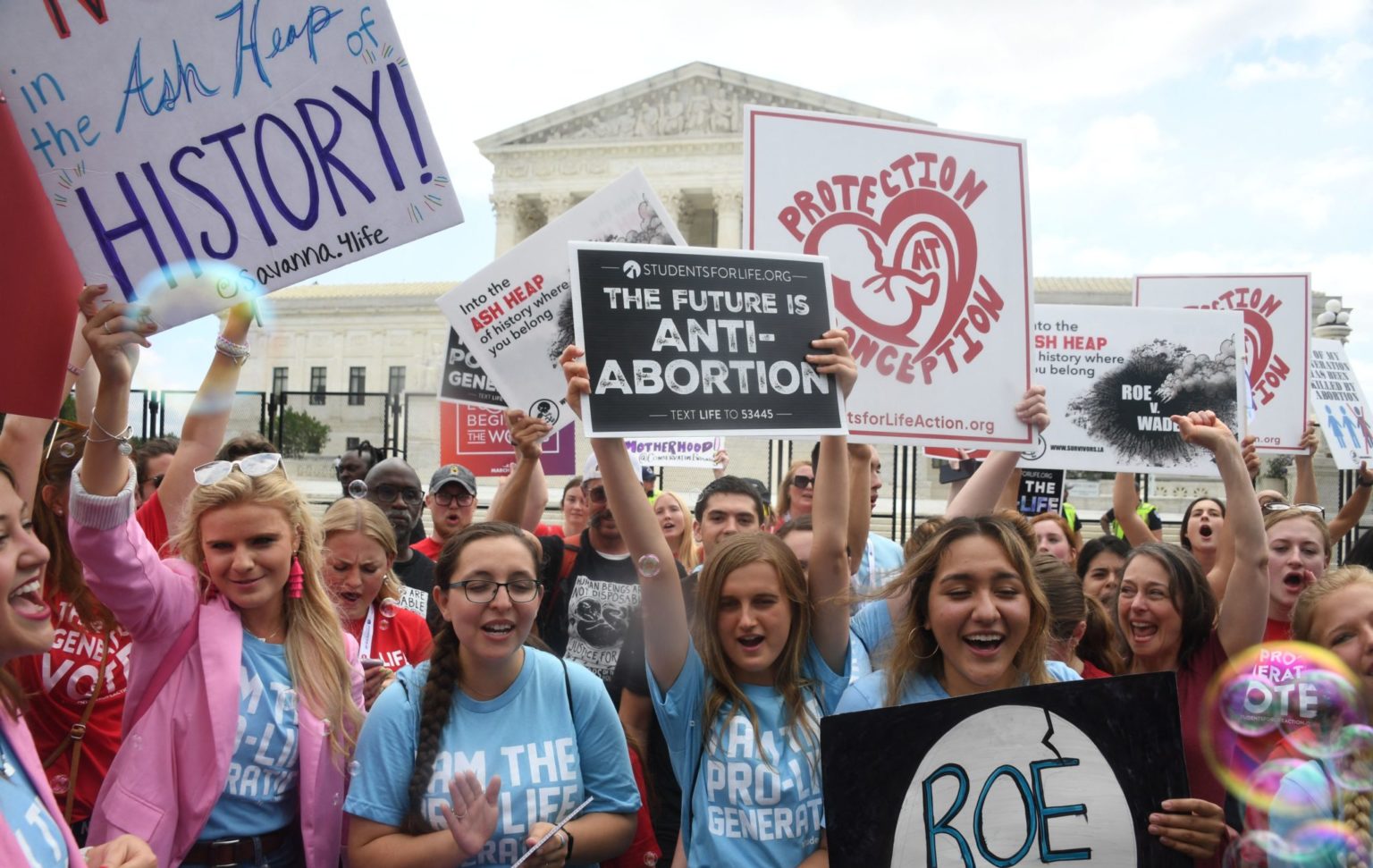
Religion GOP Can Learn Abortion Lesson from Methodist Infighting  Republicans must remain the pro-life party. Anti-abortion campaigners celebrate outside the US Supreme Court in Washington, DC, on June 24, 2022. (Photo by OLIVIER DOULIERY / AFP) (Photo by OLIVIER DOULIERY/AFP via Getty Images) Before my United Methodist Church began its final descent into theological madness, disparate elements were trying to drag it left or right on various issues through the denomination’s messy democratic process. Nowhere was this more apparent than on abortion. The church was an early adopter of the “prayerfully pro-choice” position before Roe v. Wade, but its teachings were gradually revised in a more pro-life direction over time as the more conservative Methodists organized to fight back against leftward drifts. This included opposition to abortion as a form of birth control, recognition of at least potential fetal personhood, and eventually support for banning partial-birth abortion. Despite this incremental improvement, the Methodist social principles on abortion even at their best were a bit of a muddled mess. Of course, that is true of public opinion about abortion in general and is what you would expect of compromise language written for people with divergent views. This brings us to the newly revised GOP platform in which the pro-life plank is, if not quite gutted, the most equivocal it has been since 1976, when it truly was a compromise between Republicans on different sides of the abortion debate, after the convention fight between Gerald Ford and Ronald Reagan. Ford and Jimmy Carter went into the general election with relatively nuanced positions on abortion by today’s standards, with the parties not really sorting on the issue until Reagan won four years later. The former President Donald Trump recognizes that Democrats have successfully branded any federal legislation on abortion post-Roe as a “national ban” or “federal ban” on abortion. This is true even when the public supports the details of the actual bill in question, which is a problem because they do oppose a blanket “national ban.” Trump is eager to avoid this problem. He therefore wishes to avoid federal legislation on the topic and rebrand the Democrats as extremist defenders of late-term abortion. I think Trump is generally correct as a matter of short-term political strategy and that abortion lawmaking cannot be as divorced from public opinion as judicially imposed abortion policy was for nearly 50 years of Roe. Where Trump goes off the rails is in his conceit that some final Art of the Deal compromise can be reached on abortion. The mixture of federalism and the Fourteenth Amendment makes the abortion plank incoherent, which could be forgiven as a matter of democratic haggling finally allowed by Dobbs v. Jackson Women’s Health Organization, and also likely to inflame both sides.  States possess police powers under the Constitution. That is the proper level of government to regulate abortion as a practice that involves the taking of innocent human life. The laws that protect magazine editors and political columnists from homicide are largely enacted at the state level. But, under the Fourteenth Amendment, a state legalizing the killing of magazine editors and political columnists would be problematic. A better approach would be for the Republican platform to explicitly oppose abortion except in cases of rape, incest, and when the mother’s life is in danger without specifying the level of government that should enact this policy. This has been Trump’s formal position on abortion since circa 2016 and that of every Republican presidential nominee since Reagan.  The plank should take a victory lap on the reversal of Roe, which could also justify the deletion of the human life amendment endorsement. Here you could talk up states getting back the power to legislate abortion. One problem with this is that the Fourteenth Amendment language was obviously the get for the big pro-life groups, even if it is simultaneously the hook Democrats are using to claim Republicans still support a federal ban on abortion without appeasing grassroots pro-life activists who are demoralized by the platform. Party platforms are mainly symbolic, but it is still important to avoid the GOP drifting away from being pro-life. Trump’s mifepristone stance, for example, is a troubling substantive rather than strategic concession. But it is also likelier that a Democratic White House and Congress will pass a bill “codifying Roe” that negates many state-level pro-life laws than the same combinations of Republicans getting a 15-week ban across the finish line. Eventually, most conservatives decided to leave the United Methodist Church and now it is free to let its freak flag fly on abortion. While a church is more important than a political party, that’s hopefully not a window into the Republican future.  The post GOP Can Learn Abortion Lesson from Methodist Infighting  appeared first on The American Conservative.
Like
Comment
Share
Conservative Voices
Conservative Voices
2 yrs

French Elections Could Have Been Worse
Favicon 
www.theamericanconservative.com

French Elections Could Have Been Worse

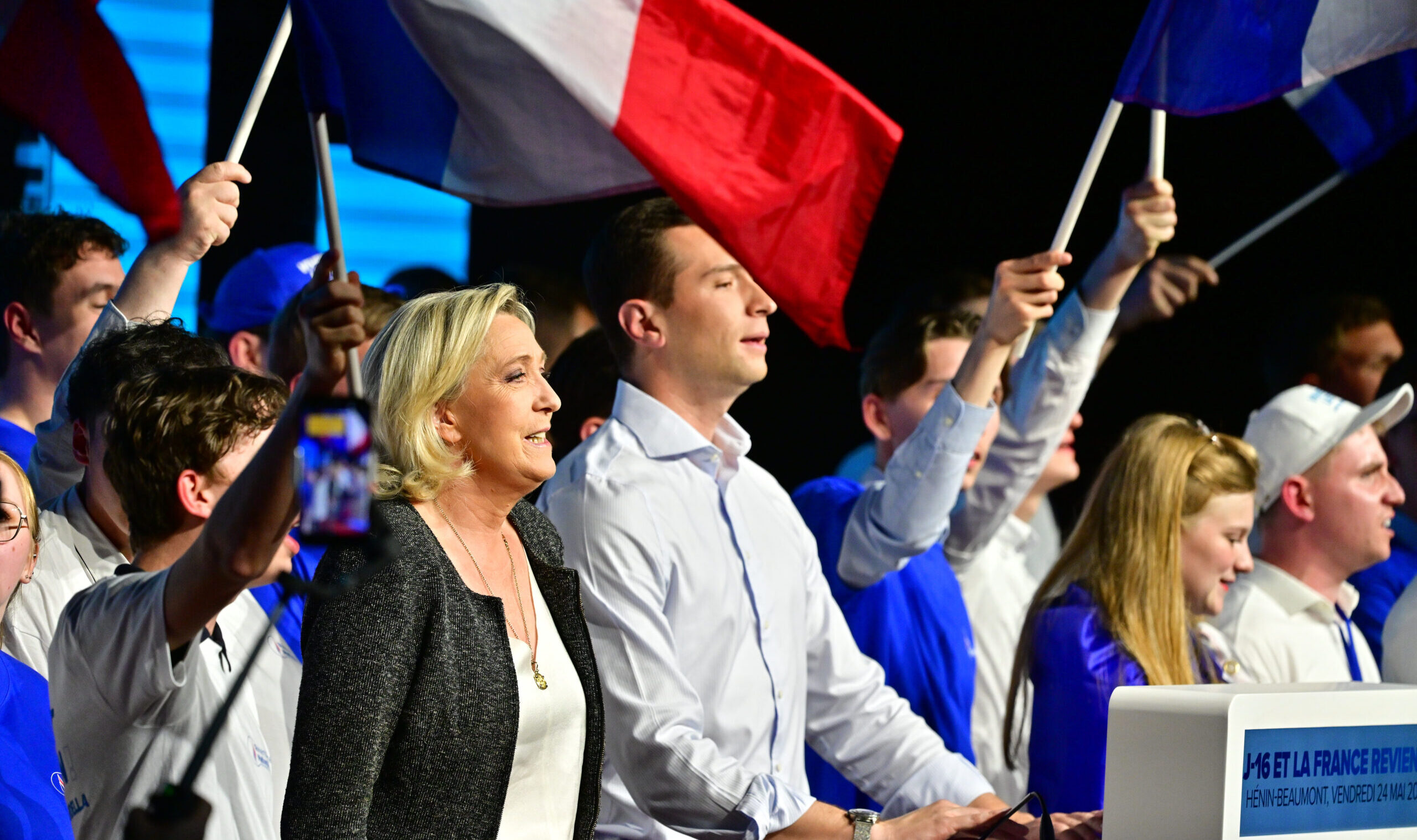
Foreign Affairs French Elections Could Have Been Worse Rassemblement National still has the wind at its back. Credit: Christian Liewig – Corbis/Corbis via Getty Images If you are someone who hopes and believes that France will, under some form of right or right-center or centrist government, effectively stop mass Third-World migration and say no to the “Great Replacement,” last Sunday’s election results are not the worst possible news. Marine Le Pen’s National Rally party received far and away the most votes, though not what counts: the most elected deputies. The trick of proclaiming the that the Le Pen party is “far-right” and beyond the pale still works in France to a degree; in the second round of voting, candidates from the liberal technocratic Macronists allied with the moderate and far left, standing down and endorsing one another in many districts and keeping the National Rally to about 140 delegates. Polls which had a week ago forecast a substantial National Rally victory—200 delegates, perhaps 250—shifted in the final days. Le Pen’s young protégé, 28-year-old Jordan Bardella, will not be France’s next prime minister.  For friends of the French right, broadly defined, this may not be the most terrible outcome. It was admittedly a little difficult to imagine Bardella, almost unknown in France two years ago, actually becoming prime minister of France right now. The National Rally ran a handful of candidates who were not ready for prime time, which Bardella acknowledged in his concession speech Sunday night. The issues that have propelled the National Rally to be the first party in France—the combined sense that French elites are out of touch with common people, and that immigration is bit by bit making France unrecognizable to itself—have not been resolved. They certainly won’t be by whatever strange coalition Emmanuel Macron’s still unnamed new prime minister will come up with, which will necessarily include communists, former Trotskyites, more moderate socialists, and militantly Third-World members of La France Insoumise, veteran left-winger Jean-Luc Mélenchon’s party.  It is almost a given that such a coalition will not be able to govern coherently, and it is not clear what ideological faction will hold sway. Confidence that the “center”—embodied by Emanuel Macron, whose bourgeois technocratic adherents are known by the derisive term la macronie—will obviously prevail in any face-off with their new leftist partners seems unrealistic. The French are weary of Macron; Mélenchon, for all his catering to the extreme Third-Worldist left, still comes across as a traditional French politician, masculine in a way that appeals to both men and women—and that Macron does not.  One obvious silver lining of the election results is that Macron’s bid to get France more involved in the Ukraine war (he floated the idea of sending French troops there earlier this year) is almost certainly dead for now. His new governing coalition partners include extreme hawks: The socialist leader Raphaël Glucksmann is as war mongering as Tom Cotton, but is in the company of leftists with residual pro-Russia sentiments and NATO skeptics like Mélenchon. The political forces that might support an escalation of the war against Moscow have been weakened.  As for the future, France does not have a stable and coherent governing majority now, and won’t for a year, which is when the soonest new parliamentary elections can be held. The country will hold together—there is robust and competent civil service—but the prevailing winds that brought the National Rally to the top of the polls blow still. The overall electoral trend for the National Rally in terms of deputies and voter support is overwhelmingly favorable over that of the past 10 years. Whether this points to an eventual National Rally victory, or a still conceivable alliance between a center-right politician and Le Pen’s party—a Sarkozy with some populist force behind him—is unknown, but it could and should happen. Seeing the far left in partial power—a genuinely violent Antifa type actually won in one district, supported by la macronie—makes such a development more likely.  It is, of course, possible that France could have a realigning election in the other direction, something that signals that the old France is genuinely dead, that a new multicultural post-France is being born. Something like that election of the “moderate” Islamist in Michel Houellebecq’s novel Soumission. But it didn’t happen last Sunday. The post French Elections Could Have Been Worse appeared first on The American Conservative.
Like
Comment
Share
Conservative Voices
Conservative Voices
2 yrs

Why ‘America First’ Means Pro-European Union
Favicon 
www.theamericanconservative.com

Why ‘America First’ Means Pro-European Union

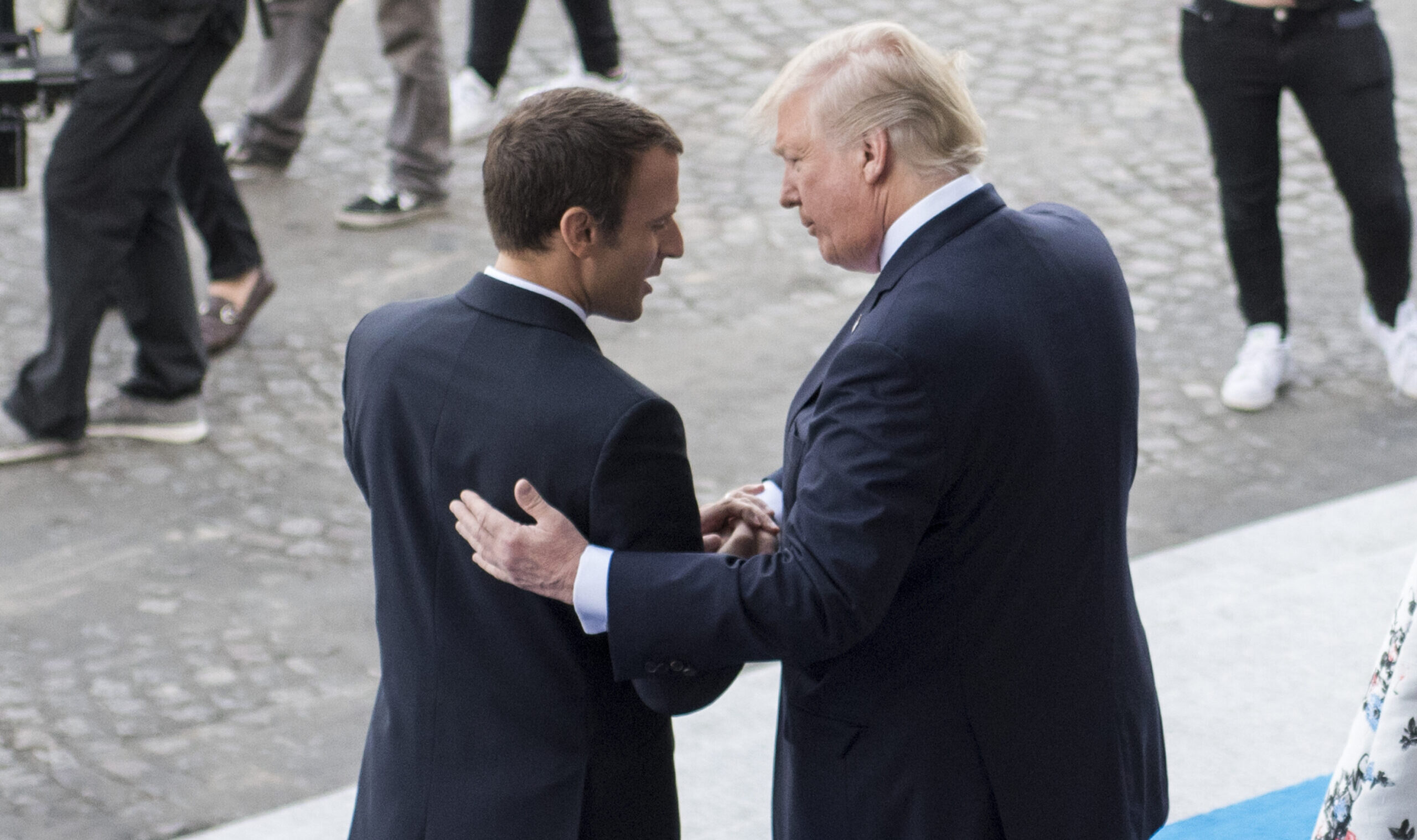
Politics Why ‘America First’ Means Pro-European Union The EU is the best bet for American disentanglement from the continent. Donald Trump hasn’t yet commented on the stunning election results in France, but it’s a good bet he was disappointed that the Rassemblement National underperformed, coming in third place behind the far-left and centrist blocs.. Trump and Marine Le Pen, the face of the right-populist party, have long supported one another. And Euroskeptic leaders outside France also feel an affinity with the 45th president, whose hostility to the European Union and forceful defense of nationalism they admire. But while Trump and the MAGA Republicans have a natural affinity with European right-populists, the two groups are not, upon closer examination, natural allies. Trump wants the U.S. to start disengaging militarily from Europe, but that’s less likely to happen if the continent is torn apart by petit nationalisme. To convert his America-First rhetoric into reality in a second term, Trump will need Europe to unify as a great power on the world stage—and pro-EU centrists, not anti-EU right-populists, are the ones pushing for unification. France’s President Emmanuel Macron has led the charge in advancing what he calls “Power Europe,” while European Commission President Ursula von der Leyen and outgoing foreign policy chief Josep Borrell have been pushing to turbocharge Europe’s defense industrial capacity. These leaders, widely despised by right-populists the world over, are responding rationally and strategically to global developments. Putin’s invasion of Ukraine has made the unthinkable—high-intensity war on the continent—a grim reality again. And with the rise of China and the dawn of multipolarity, Washington’s attention is being diverted away from Europe to the Asia-Pacific. But the surge of right-populism across Europe could slow, if not reverse, European integration in the security sphere. Reactionary nationalism threatens to hobble the formation of pan-European identity. More prosaically, if right-populists take over the EU, they will return the powers of Brussels to the capitals of member nations, complicating efforts to centralize strategic planning and coordinate weapons procurement. The liberal center is holding, for now, but a sharp right-populist turn would drag Europe toward geopolitical disunity—which is precisely where MAGA Republicans should not want it to go. Trump supporters who favor a more restrained US foreign policy, or who see China and not Russia as America’s main adversary, say Europe should shoulder a greater defense burden in its region. Senator J.D. Vance (R-OH), a possible Trump running mate, is one of MAGA-world’s most eloquent spokesmen for this view. In an op-ed for the Financial Times entitled “Europe Must Stand on Its Own Two Feet on Defense,” Vance wrote that Europe’s deep cuts in military spending since the Cold War have amounted to “an implied tax on the American people to allow for the security of Europe.” The Ohio senator continued: “The question each European nation needs to ask itself is this: are you prepared to defend yourself? And the question the U.S. must ask is: if our European allies can’t even defend themselves, are they allies, or clients?” Vance’s perspective follows in an American tradition tracing back to the Founding. George Washington and Thomas Jefferson warned of entangling alliances that outlive their utility. James Monroe, in proclaiming his namesake doctrine, not only warned European powers to cease interference in the western hemisphere but foreswore American involvement in European affairs. The Jacksonian variant of this tradition eschews nation-building and missionary liberalism, opposes wars of choice, but supports decisive force to win wars that are in the national interest. In the 20th century, Pat Buchanan took up the mantle of this very American, realist sub-tradition in his campaigns for president and in books like A Republic, Not an Empire. Vance has been called the “heir” of Buchanan, and Trump’s political rhetoric and instincts, if not his policy record, are Buchananite. Paradoxically, a neo-Buchananite, Trumpist American foreign policy program dovetails with Macronism, not Le Penism, and for two reasons: First, if a withdrawal of American power from Europe ultimately revitalizes intra-European, nationalistic rivalry, the U.S. may be compelled to resume its presence there to calm tensions. Second, while neither France nor Germany nor Italy can be a great power in the 21st century, Europe can be—and only a great power can safeguard the region from Chinese dominance, Russian intimidation, and American dependency. Macron dreams of a sovereign and united Europe, while his right-populist rivals in France, sensing a threat to national sovereignty, seek to thwart his vision. Macron has a better relationship with President Joe Biden than with Trump, but realism teaches that, in an anarchic international system, individual leaders and their interpersonal bonds matter less than the distribution of military power. While Macron initially welcomed Biden’s presidency, he’s been disappointed by Biden’s pursuit of anti-China policies that have damaged European interests. Meanwhile, Biden’s embrace of the transatlantic alliance, by reassuring European centrists, has dampened their push to become less dependent on America. Macron should see Trumpism as a blessing in disguise for Europe. The French President’s controversial aim to extend France’s nuclear umbrella over the continent will attract more support if doubts grow about the reliability of America’s own umbrella. More generally, Trump’s antipathy to NATO helps Macron make the case for European strategic autonomy. Macron will need more than pretty speeches to convince his European compatriots to build a robust security community—he’ll need precisely the structural incentives that a second Trump presidency would make stronger and more salient. Trump, for his part, instead of mocking Macron and casting the European Union as a “foe,” should praise European integration as being in America’s national interest. And rather than simply disparaging NATO’s over-reliance on America, Trump should offer an alternative vision: a “dormant NATO” that sees EU nations take the lead in Europe while the U.S. waits in the wings, ready to act, if needed, as an offshore balancer. During the Cold War, Europe relied on the U.S. to contain the Soviet Union. Afterwards, it was content to let the remaining superpower continue subsidizing its defense. Today, amid the rise of China and resurgence of Russia, if Europe doesn’t take responsibility for its own security, either the U.S. will become badly over-stretched or American support will be wrenched away before Europe is ready.  Trump, not Biden, is pushing Europe to stop being an American protectorate and become a legitimate world power, so that America can devote scarce resources elsewhere. And since European right-populism undermines this project, “America First” means pro–European Union, however paradoxical that may seem. The post Why ‘America First’ Means Pro-European Union appeared first on The American Conservative.

Like
Comment
Share
Showing 21123 out of 56670
  • 21119
  • 21120
  • 21121
  • 21122
  • 21123
  • 21124
  • 21125
  • 21126
  • 21127
  • 21128
  • 21129
  • 21130
  • 21131
  • 21132
  • 21133
  • 21134
  • 21135
  • 21136
  • 21137
  • 21138

Edit Offer

Add tier


Select an image
Delete your tier
Are you sure you want to delete this tier?

Reviews

In order to sell your content and posts, start by creating a few packages. Monetization

Pay By Wallet

Payment Alert

You are about to purchase the items, do you want to proceed?

Request a Refund