YubNub Social YubNub Social
    Advanced Search
  • Login

  • Night mode
  • © 2026 YubNub Social
    About • Directory • Contact Us • Privacy Policy • Terms of Use • Android • Apple iOS • Get Our App

    Select Language

  • English
Install our *FREE* WEB APP! (PWA)
Night mode
Community
News Feed (Home) Popular Posts Events Blog Market Forum
Media
Headline News VidWatch Game Zone Top PodCasts
Explore
Explore Jobs Offers
© 2026 YubNub Social
  • English
About • Directory • Contact Us • Privacy Policy • Terms of Use • Android • Apple iOS • Get Our App

Discover posts

Posts

Users

Pages

Group

Blog

Market

Events

Games

Forum

Jobs

SciFi and Fantasy
SciFi and Fantasy  
2 yrs

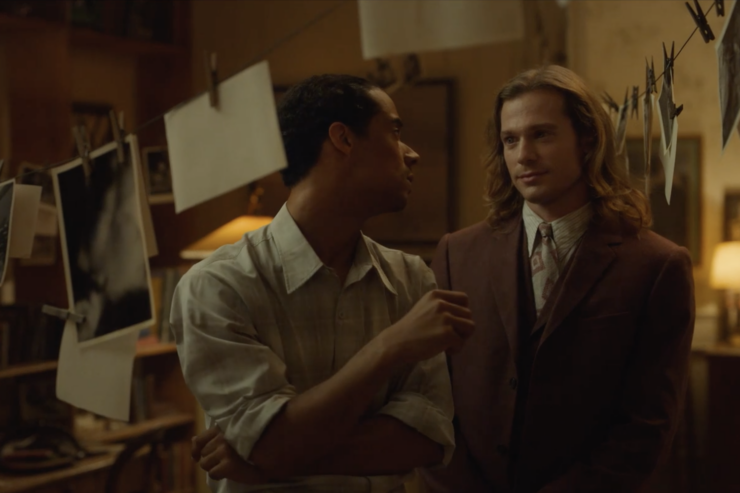
Interview with the Vampire: The Good, the Great, and What’s Next for this Haunting, Spectacular Show?
Favicon 
reactormag.com

Interview with the Vampire: The Good, the Great, and What’s Next for this Haunting, Spectacular Show?

Movies & TV Interview with the Vampire Interview with the Vampire: The Good, the Great, and What’s Next for this Haunting, Spectacular Show? In this latest season, Louis’ odyssey of recollection is a nightmare voyage that is utterly enthralling to watch–but where will it take us in Season 3? By Tyler Dean | Published on July 9, 2024 Credit: AMC Comment 0 Share New Share Credit: AMC It was just eight short weeks ago that I wrote about the first season of Interview with the Vampire on AMC. Like so many shows from 2022, Interview took two years to return to our screens due to a combination of pandemic scheduling and studio resistance to the writers’ strike. But now that the second season has come and gone and the show has been renewed (somewhat bafflingly) for season three, it’s time to reflect on how this last season stood up to one of the best debuts of any series and whether or not it remains, far and away, the most thoughtful telling of Anne Rice’s classic novel. I’ll hash out what worked, what didn’t, and what’s next below, (including spoilers for both seasons). Memory Is the Monster “Does anyone ever ask Lazarus if he wanted to be woken?” Louis de Pointe du Lac (Jacob Anderson), the titular vampire, asks rhetorically towards the start of season 2’s finale. Daniel Molloy (Eric Bogossian), the interviewer, responds with “No one gives a shit about Lazarus’ point of view is what I remember.” And that’s a pretty good summation of the sophomore season’s aims. It’s asking if immortality is worth it when love is uncertain and sorrow is guaranteed. Louis has always perceived his vampiric existence as a curse, and a hundred and twelve years after being turned, he seems adrift, despondent in one moment, passionate about returning to the past the next. He is the unconsulted Lazarus, finally getting to tell his story but never, so he thinks, in charge of what happens to him. He is a being of profound passivity and the show, especially in this second season, serves as a record of all the moments in which he feels powerless, recollecting what happened and as unable to change the past as he is the present. But that doesn’t mean that he’s not fun to watch. Louis in late ’40s Paris is a joy to see. The show invokes a little bit of James Baldwin during his time in Paris (when he wrote Giovanni’s Room): not fully comfortable, but marveling and, to a small extent, reveling in his freedom from colorist American racism. One of the best things about the show’s obsession with memory and all its pitfalls is the way it sells a time and place to its audience. In Louis’ narrated memory, New Orleans at the turn of the century and post-war Paris are complex but compelling fantasies, equally interested in historical accuracy and the soft-focus wash of nostalgia. Loneliness Is the Curse Credit: AMC Anne Rice’s 1976 novel mainly takes place in New Orleans and Paris. But there is a detour, around the middle of the book, to Romania. It gives Rice a chance to explore the intersection of her vampires (who are rooted in the French and creole culture that she, herself, grew up in) and the most famous vampires in Western culture—the Romanian monsters who helped to inspire Bram Stoker’s Dracula. Rice describes the vampires of Romania as feral, corpse-like, and unintelligent: “We had met the European Vampire, the creature of the Old World. He was dead” (Rice 192). It’s later explained away as being a subspecies with rotten, impoverished blood. This whole act was cut from the 1994 film and it doesn’t register much with fans of the book. Part One has Lestat, part three has Armand, but the forgotten second part of the novel has relatively little in the way of tortured vampire romance. But, as a vampire completionist, I’m glad the show found room for it. They also managed to make it an important part of the season’s central theme: loneliness  Instead of depicting the Romanian vampire as having an inferior bloodline, the show tells us that the vampires that live in currently war-torn Romania—contending with first the Nazis and then the Soviets—are drinking from blood that has been poisoned by grief. They are feeding on the thin and sorrowful life force of a Europe that has become overwhelmed by the tragedies of the Second World War. Louis explains that he cannot seem to get warm subsisting off of it. And when the malnourished, lonely vampire they encounter in the Romanian wilderness tries to make more of her kind, they are corpse-like revenants, unable to regenerate, unable to speak, barely sentient, subsisting, as they do, on impoverished human misery.  The Romanian episode sets the tone for the rest of the season. Louis spends half the season hallucinating Lestat and arguing with him, wracked with guilt for trying to kill him and desperately lonely without him. The best episode of the season, “Don’t Fret It’s Just the Tapes,” takes us to the original interview in 1973 where we see what actually occurred (and how well it tracks with Rice’s original narrative). That hour of television is a harrowing one, where a young Molloy (Luke Brandon Field) is held prisoner by Louis and Armand—physically tortured and threatened with death. But the real gut punches of the episode are with Louis, contemplating and, eventually, attempting suicide, lost in the misery of a life without Claudia and Lestat. It informs every present-day twitch and tear and long, sad look into the middle distance that Jacob Anderson gives us. The odyssey of recollection is a nightmare voyage that is utterly enthralling to watch. Seriously, that episode alone deserves all the awards and recognition. Anderson is perfect in it.  By the end of the season, we get an even more explicit invocation of loneliness as Lestat, during his testimony in the on-stage trial at Les Théâtres de Vampires, says that it is the worst thing a vampire can experience. He claims (perhaps a bit facetiously) that Louis threatening him with it is the greatest of his crimes and forces a few moments of it onto an audience member who can only shout “shame on you” in response to a few seconds of Lestat’s heartbreak. It makes for a compelling object lesson in the point the show keeps dancing around: immortality breeds loneliness because, as the years accrue, remembering life’s sorrows increasingly dominates the mind. It sets up Louis and Lestat’s reunion towards the end of the show and turns it from the book’s final proof of Lestat’s unworthiness, into one of the most touching moments the series has yet shown us. Monsterf***ing Love Story Credit: AMC Interview is a show (and a book) about utterly irredeemable monsters. In the season 2 premiere, Louis admits to Molloy that “I had taken 7,000 souls by then, but Lestat was the only one that felt like murder.” It echoes Rice’s assertion at several points in the novel that a human being must die every night for a vampire to live. It’s not an ignorable fact in either book or show. There’s a current trend in smutty-lit, tumblr-adjacent, BookTok/GoodReads circles towards what is colorfully described as, well “Monsterf***ing.” A lot of it focuses on the inhuman physicality of monsters in romance novels that feature sentient dragons (for example) instead of ripped farmhands. But, in the trend, there is much less variety when it comes to the monstrousness of a soul.  Unlike most monsters, vampires are scary because they look human. In many legends (and in the overwhelming majority of modern representations), they are attractive, seductive beings who rely on their external beauty to hunt. The monstrousness of most vampires is in the inability to tell exactly how human they are. Are they immortals with more or less human psyches and feelings who happen to need to drink blood to survive? Are they apex predators who use their ability to seem human the way an anglerfish uses a lure? Rice’s books and the show settle on something in between. Vampires are deeply human in their capacity to feel and most are amoral—unable, perhaps, to be judged by human mores. The effect of putting the monster back into monsterf***ing, in this second season, is to linger on what makes Interview with the Vampire so compelling—it’s a love story. The show doubles down on the fact that it is a love story between Louis and Lestat. By the season’s end, the show has undone its little twist of having Louis and Armand stay together for decades. It lets Daniel Molloy be an active participant in the plot by having him figure out that it was Armand who masterminded Claudia’s death. It lets us revel in and recoil from the stunning cruelty of Les Théâtres de Vampires. It lets Lestat have one, truly selfless act: letting Louis go by refusing to take credit for saving him. It lets Louis and Lestat reconnect in a Ninth Ward hovel as a hurricane batters the walls. It mostly lets us accept Louis and Lestat as lovers in a way that doesn’t have to look too closely at the hideousness of Lestat’s vanity or his cruelty or his grotesque manipulation of Louis. Armand provided the deeper betrayal. Lestat did the right thing in the end. Every vampire is monstrous and morally grotesque by their very nature, so reading the minutiae of their behaviors is to miss the point. Vampire love is relief from the immortal loneliness we cannot, as humans, imagine…and a show that can let us, unironically, be swept up in the romance of a truly despicable pair, even as it draws attention to their moral vacuity, is a special, subtle, and riveting achievement.  The Claudia Problem Credit: AMC Last season of Interview with the Vampire starred Bailey Bass as Claudia, the child vampire who serves as surrogate sister and daughter to Louis and Lestat. She was magnificent in the role. Due to apparent scheduling conflicts, Bass was unable to return for season 2 and was replaced by Delainey Hayles. I want to be very clear—Hayles does a great job with the role and, given the direction of Claudia’s plot this season (behind the scenes videos continually refer to her as “an older version of Claudia”), it is possible that Bass would have turned in a similar performance. But I can’t help but lament the recast just a bit.  Hayles, who is British, struggles a bit with the New Orleans accent that her countryman, Jacob Anderson, nails so effortlessly. It can be distracting at times. And, while she, again, is very talented and does well with the material, she’s missing a sort of menace that Bass so perfectly embodied. Every time Bass was on screen, she engendered a kind of unhinged uneasiness. She joined the ranks of Jack Gleason on Game of Thrones and Antony Starr on The Boys in achieving a kind of uncomfortable magnetism: upsetting to watch, for fear of what their characters might do, but completely impossible to look away from. Hayles is great and she shouldn’t have to be held to the standard of her predecessor. But here we are and, alas, it’s hard not to look back and think of the performance Bass might have delivered.  Superb New Additions Credit: AMC Hayles isn’t the only new (or mostly new) cast member this season. We have a much-expanded role for Armand (Assad Zaman) and the show gives us two bravura roles in Santiago (Ben Daniels) and Madeleine (Roxane Duran). They are all great and welcome additions with the latter sharing most of her scenes with Hayles and both actors elevating one another.  Assad Zaman was woven through the first season, of course—lurking in the background of most interview scenes—playing an Armand masquerading as Louis’ valet, Rashid. Watching Zaman play Armand as himself, however, is deeply rewarding. He looks much closer to the book’s characterization than his fellow Armand-alum, Antonio Banderas, as a cherubic, youthful-looking vampire (in the books, he was turned at seventeen; the show opts for a more reasonable twenty-seven), who seems to have stepped out of a Caravaggio painting. Much like the race-bent Louis and Claudia, Armand has been changed from a Kievan Rus (modern Ukraine) serf to a Delhi-born slave (Zaman is British, of Bangladeshi heritage). In both book and show, Armand is an adopted name, his birth name in the books is Andrei, versus Arun in the show.  Zaman imbues Armand with a thousand-yard stare that it is easy to project deep sadness into. We learn, by season’s end, that it’s quite intentional. Louis believes Armand to be a tragic figure, haunted and broken, and while that may not be strictly untrue, it is also a conscious feint. Armand is a selfish, cruel creature, willing to lie to those he loves most and burying his lack of empathy under an anodyne mask that’s hard to fully parse. He tells Louis in episode four, “Am I the history I have endured? Am I the job I do not want? I do not know anymore. No one has painted me in over 400 years.” He’s only real when observed—only solid and legible when someone else has projected something onto him. Zaman is a talented actor and his best move is capturing a blankness that the audience, much like Louis, is able to believe hides non-existent depths and profound feeling. Equally fun to watch but entirely different in manner is Rogue One and The Crown’s Ben Daniels, who plays Santiago—Armand’s scheming primo uomo at Les Théâtres de Vampires. Santiago is the tertiary antagonist of Rice’s novel and serves, in this season, as the primary one up until the twist reveal of Armand’s perfidy. Daniels plays Santiago with the sort of classic, queer-coded, arch-camp, moustache-twirling villainy that one would expect out of a mid-’90s Alan Rickman or Jeremy Irons. He chews the scenery with a preening malice that lessens, only subtly, when he’s off-stage. He helms Les Théâtres de Vampires performances which are giddy, enthralling, ludicrously campy, and just tinged enough with actual, stomach-churning terror to effectively communicate why the company has such a dedicated following. Basing so much of your season around a Grand Guignol surrealist theater that produces plays which, in Louis’ own words, are weird, might have been a disaster, but Daniels sells it from start to finish. He plays enough of a complicated, touchy, insecure bastard that he ultimately serves as a deeply effective red herring, directing us away from Armand.  I’ve saved the best for last. In Rice’s book, Madeleine Eparvier is a minor character—a dollmaker who loves Claudia as her own little living doll, is eventually turned by Louis, and is condemned to death by Les Théâtres de Vampires along with Claudia. The show makes her something much more consequential. She is Claudia’s lover and confidante, another fearless outsider who chooses Claudia every time. There’s more great remixing in squaring the book’s character to the time period. Madeleine is a Parisian dressmaker now, instead of a dollmaker. She is also the target of endless harassment by fellow Parisians who saw her decision to sleep with a young, now-dead Nazi soldier as capitulation to Nazi rule. They spray-paint swastikas on her windows and we see tiny glimpses of a public humiliation after a mob show trial. Duran’s Madeleine projects a vigorous, defiant bitterness—a refusal to play by the rules prescribed for her. The show asks you to consider that her liaison with a Nazi soldier is not a cut-and-dried case of moral hideousness but it also never demands that you exonerate her. She has armored herself up and has a prickly aggression hiding her lonely anhedonia. Duran plays it, quietly, to the hilt. The Madeleine of the book seems to love Claudia in ways that are both maternal and akin to a child playing with a toy—the dollmaker thing makes sense. It’s creepy, like everything about Claudia’s arc is creepy, but it’s vaguely understandable. The show makes Madeleine and Claudia lovers, explicitly, and hinges our emotional investment in Claudia’s death on our buy-in to their relationship. Hayles is a young adult playing a forty-seven-year-old vampire trapped in the body of a prepubescent fourteen-year-old. She does it well (seriously, I can’t stress enough that Hayles is good in this role), but Duran has to sell it. She has to make us believe that this relationship is consensual, natural, and genuine—that Madeleine loves Claudia for Claudia and that there is no hint of pedophilia or infantilization or anything else that would stunt our ability to root (and, eventually, grieve) for them. And she makes it work. Duran is the best new thing about the series. She lends humanity to a character who is only the most minor of footnotes in the book, and lets Delainey Hayles show off a range that, even if she’s not quite as magnetic as Bass, is worthy of celebration. What’s Next? Credit: AMC The second season of the show finishes off the plot of the book for which it is named. It even goes quite a bit beyond, folding in the plots of The Vampire Lestat and The Vampire Armand in the forms of retold backstories for both of those titular vampires. The interview ends. We have a pretty good record of Louis’ life as a vampire (even if the time between the first interview in 1973 and the second in 2022 is a bit adumbrated). The show even has a post-interview epilogue (more on that later) which gives us a glimpse into what both Louis and Daniel have been up to between 2022 and 2024. It feels like an ending—a real ending. But the show has been renewed for a third season. So where do we go from here? Obviously, there are more Vampire Chronicles novels to draw off of. Rice’s Interview with the Vampire ends in 1973 and The Queen of the Damned, The Tale of the Body Thief, Memnoch the Devil, Merrick, Prince Lestat, and others all have events that take place afterwards. The villain of Tale of the Body Thief, Raglan James, even shows up this season played by an inscrutably accented Justin Kirk (of Weeds and Angels in America fame) and Akasha, the first vampire and villain of Queen of the Damned, gets mentioned in the season finale in a way that seems like she may be important going forward. So, seeds have been sown for the future.  But the show has gone thoroughly off-book insofar as it places Louis at the center of the vampire universe. That makes sense from the perspective of the show. Jacob Anderson is nothing short of remarkable (if only the Emmy Awards recognized acting in genre shows with any consistency) and, casting a Black man as the centerpiece of Rice’s sometimes painfully white, Eurocentric chronicle lets the show talk meaningfully about race in precisely the way that the books never could or, indeed, wanted to. But in terms of what is left to adapt, Louis’ tale is mostly already told. He is the protagonist of 2000’s Merrick—a book that mostly rehashes his relationship with Claudia, something the show has already, thematically, covered—and, otherwise, hangs around the periphery of Lestat’s odyssey. Much like Louis, Rice herself seems ensorcelled by Lestat and makes him the undeniable protagonist of the series. Now that the show will continue, it’ll have to be much more liberal with its adaptation.   So let’s talk about the ending of this season. In the premiere, Daciana (Diana Gheorghian), the lonely Romanian vampire, says that “we [vampires] own the night.” It becomes the last line of the final episode, though Louis makes it personal: “I own the night.” In throwing out Armand and in being the subject of Molloy’s now-bestselling book, Louis has made himself the face of vampirism across the world. His final scene is filled with a susurrus of whispered, psychic threats and resentments from vampires in a dozen different languages. He is the enemy of the conservative, vampire old guard and tells them to come after him if they want—he can rebuff their attacks…after all, he owns the night. It works as a denouement to a series but maybe less as a plot point that needs to be followed up on. What will come next is going to be extraordinarily different, tonally and structurally, from the first two seasons—there will have to be far fewer flashbacks and, without the interview itself, the show’s delicate, beautiful interplay between past and present–truth, lie, and mis-memory—will likely be lost.  And speaking of the interview, the show gives us an odd, somewhat unsatisfying, final beat with Daniel Molloy. After publishing his book and becoming both a journalistic pariah for claiming that it’s true, as well as even more of a literary phenom for selling a record number of self-published copies, Molloy becomes a vampire. Now, this, in and of itself, isn’t a huge problem. The show has always been explicit (and consistent with the book) about his desire to become one and, with his advancing Parkinson’s, shattered personal life, and unwieldy career, it makes sense that he would be increasingly desperate to transcend his humanity. Molloy even becomes a vampire in later books. He’s sired by Armand—though, given the events of this season, it seems unlikely that the show will keep that detail. The problem lies in how much we skip over to have the end reveal. Again, if this were the final season of the show, it would be enough of a tease to give Molloy a twist at the end of his arc. As a setup for season three, it feels like a rushed development that robs the viewer of the pleasures of seeing how he relents and what the exact circumstances of his rebirth are. Did this Lazarus want to be woken? Telling us in flashback feels less powerful than if we had seen it unfold across next season. In Conclusion I mean, this season was great. The show continues to have it both ways: going from bombastically melodramatic to quiet and subtle without feeling tonally inconsistent. Anderson and Bogossian continue to give career-best performances, backed up by a solid ensemble. It’s beautifully filmed, costumed, decorated, and lit. I’m writing about House of the Dragon every week here at Reactor and I’m consistently surprised that Interview with the Vampire looks this good on a budget that—though unconfirmed—has to be exponentially lower than House of the Dragon’s $20 million per episode.  I am trepidatious about future seasons. While, in the end, I trust the showrunners enough to continue to be excellent and thought provoking, a part of me will always wish that it had remained a near-perfect two seasons, adapting the first and best of Rice’s novels. Queen of the Damned is a romp, for sure, but it’s not exactly a subtle, emotionally charged meditation on immortality. There is some of that quiet reflection in Merrick but it’s far from her best novel (and so much of what makes it interesting has already been folded into the first two seasons). At the end of the day, they’ve adapted Rice’s best work, and the writer and showrunners will need to really step up their game if they want to take on the rest of it.  And then there is the matter of AMC’s Anne Rice-focused “Immortal Universe.” I wasn’t particularly sold on their second show, Mayfair Witches (whose first season premiered about six months after Interview). As the pressure to make these shows an interconnected cinematic (televisual?) universe, akin to the CW’s Arrowverse, increases, it can only make each individual show feel less interesting and thoughtfully planned. To my mind, the MCU’s recent lapses in quality feel like they stem, in large part, from the need to spend each film setting up the next franchise or arc, rather than letting them be their own, self-contained experience. Furthermore, the obvious connective tissue between all of the Immortal Universe’s properties—the paranormal research secret society, the Talamasca—isn’t particularly interesting to me and hasn’t been particularly compelling when it has been featured on either Mayfair Witches or Interview with the Vampire.  I’m not a doomer when it comes to more of this show—I will absolutely be watching season three—but I am a bit dubious about its future, especially because what it already accomplished is so very, very good. Interview with the Vampire regularly makes me tear up, and gasp, and give little, involuntary wriggles of excitement and delight while I’m watching. That’s all I want from good TV and, no matter what, these first two seasons will remain in the constellation of my all-time favorite television series, going forward.[end-mark] The post <i>Interview with the Vampire</i>: The Good, the Great, and What’s Next for this Haunting, Spectacular Show? appeared first on Reactor.
Like
Comment
Share
SciFi and Fantasy
SciFi and Fantasy  
2 yrs

The Rise of Cozy Fantasy
Favicon 
reactormag.com

The Rise of Cozy Fantasy

Books The Rise of Cozy Fantasy Lots of books qualify as comfort reads—but what makes cozy distinctive is that it offers sanctuary. By Sarah Beth Durst | Published on July 9, 2024 Photo: Lucas George Wendt [via Unsplash] Comment 0 Share New Share Photo: Lucas George Wendt [via Unsplash] Pour yourself a cup of tea or a mug of hot chocolate, cuddle up with your (winged) cat, and come sit by the fire… Hello and welcome! Let’s talk cozy fantasy, a subgenre rising in popularity. Cozy fantasy didn’t spring out of Zeus’s head, fully armored and sipping tea. There are plenty of older novels that, if they came out today, would be called cozy fantasy (to name just two: Howl’s Moving Castle by Diana Wynne Jones and Dealing With Dragons by Patricia C. Wrede). But cozy fantasy blossomed into a distinct and popular subgenre with its own label in 2020. Yeah. That year. Born in a time of pain and fear and loneliness and discontent and boredom and ever-present existential dread, it rose to fill a need. We (okay, not everyone, but me and a whole lot of other readers) needed to escape. And not just escape—we needed to escape someplace that felt warm and gentle and safe. A cozy fantasy novel is intended to be a gift from the writer to the reader. It’s not only an escape from whatever is hurting you or upsetting you or disappointing you in the world—lots of books are an escape, and lots of books qualify as comfort reads—but what makes cozy distinctive is that it offers sanctuary. It provides a place where you can take a deep breath, in addition to a dose of serotonin. Like every other subgenre under the sun, cozy fantasy has a set of common tropes, settings, characters, and details that unite its books—and I’ll be talking about all of that in future columns—but what defines it more than anything else is that deep-breath sensation. In other words: the vibe. To me, cozy fantasy feels like a warm hug. It’s a snowy day with a crackling fire in the hearth, a warm blanket around you and a cat on your lap, and a mug of hot chocolate with a swirl of whipped cream in your hands. It’s a summer afternoon in a wildflower meadow. Blue sky above. Birds chirping in the trees. You’re on a picnic blanket, and there’s an apple crumb pie, still warm, waiting for you in a basket. Really good apple crumb pie, the kind packed with layers of apple slices and not just cinnamon goo. It’s a friend who sits next to you and tells you everything will be okay. In March 2020, that friend was the book The House in the Cerulean Sea by TJ Klune. I don’t believe it was officially dubbed “cozy fantasy” at the time of its debut, but it was very quickly identified as one—and its instant popularity paved the way for the rest of the subgenre. The House in the Cerulean Sea is about forty-year-old Linus Baker, a quiet, uptight, and lonely man who is a case worker at the Department in Charge of Magical Youth. In the words of the novel itself, “If one were to ask if Linus Baker was lonely, he would have scrunched up his face in surprise. The thought would be foreign, and made his stomach twist, there was a chance he would still say no, even though he was, and almost desperately so.”  Buy the Book The House in the Cerulean Sea TJ Klune An enchanting love story about the profound experience of discovering an unlikely family in an unexpected place… Buy Book The House in the Cerulean Sea TJ Klune An enchanting love story about the profound experience of discovering an unlikely family in an unexpected place… An enchanting love story about the profound experience of discovering an unlikely family in an unexpected place… Buy this book from: AmazonBarnes and NobleiBooksIndieBoundTarget He’s assigned to assess the living conditions of six children at an orphanage on an island far from his rain-soaked city home. Once there, he meets Arthur Parnassus, the kind and loving master of the orphanage, and his unusual charges: Talia (an ornery garden gnome who’s protective of her friends), Chauncey (a boy made of goo whose life dream is to be a bellhop), Sal (a shy boy who occasionally transforms into a Pomeranian), Theodore (a wyvern who loves buttons), and Lucy (the son of the devil, who is both innocent and vulnerable, in addition to having an overdramatic sense of humor). All adorable, earnest characters who just want to be understood and loved. As Linus spends time on the island with the orphans, he discovers he has a choice. He can continue on the path he’s been on (as a caseworker for an organization that doesn’t care about him or any of the people they’re supposed to be helping), or he can choose love. The novel is about his journey from loneliness to companionship (yay, found family!), from self-denial to self-love, and from a life of pent-up and repressed emotion to one of beauty, joy, and even well-placed and well-expressed anger at a system and society that lacks empathy.  It is, at its core, about hope—hope that good people can triumph over apathy and cruelty, that love and friendship can save you, and that it’s never too late to connect with others. That commitment to hope is one of the defining features of cozy fantasy. And the book knowingly embraces it: “‘Hope,’ Mr. Parnassus repeated. ‘Because that is what we must give him, what we must give all of them. Hope and guidance and a place to call their own, a home where they can be who they are without fear of repercussion.’” Subgenres don’t rise in a vacuum. They exist in a specific moment in history, reflecting the needs of their writers and readers. Cozy fantasy is designed to be an antidote to the casual (and sometimes deliberate) cruelty of life in this day and age. It embodies and promotes empathy, tolerance, and kindness. It is the promise of peace and comfort and joy. When I was reading The House in the Cerulean Sea, I marked the moment when Linus first sees the ocean with the note, “This is it.” This is the moment that solidifies the book as a true cozy fantasy. And this is the moment that I fell in love with it: It was as if the rain clouds had reached as far as they could. The gray darkness gave way to a bright and wonderful blue like Linus had never seen before. The rain stopped as they passed out of the storm and into the sun. He closed his eyes briefly, feeling the warmth through the glass against his face. He couldn’t remember the last time he’d felt sunlight. He opened his eyes again, and that’s when he saw it, in the distance.There was green. Bright and beautiful greens of waving grass, and what appeared to be flowers in pinks and purples and golds. They disappeared into white sand. And beyond the white was cerulean. This passage revels in sensory details—a hallmark of cozy fantasy. It focuses on both the character’s emotional and visceral reaction to the world around them, and it ties that sensory experience directly to the character’s internal transformation. This moment is the catalyst that cracks open his heart and mind, readying him for all that he’ll discover at the orphanage. Linus is forever changed by his experience of viewing the cerulean sea. I had a similar experience when I read this book. It was a revelation, opening me to possibilities. I remember closing this book and thinking, “I want to write a book that feels like this.” It struck the spark that eventually led me to write my forthcoming book, The Spellshop.  My book, The Spellshop, is a cozy fantasy about a rogue librarian and her best friend, Caz, a talking spider plant, who take on the low-stakes market of illegal spell-selling and the high-risk business of starting over. And I poured every bit of delight and joy into it that I could. It’s filled with hope and peace and comfort, as well as raspberry jam, winged cats, and merhorses. And I might not have written it if I hadn’t first gazed out at the cerulean sea.[end-mark] Buy the Book The Spellshop Sarah Beth Durst Stolen spellbooks, unexpected friendships, sweet jams, and even sweeter love… Buy Book The Spellshop Sarah Beth Durst Stolen spellbooks, unexpected friendships, sweet jams, and even sweeter love… Stolen spellbooks, unexpected friendships, sweet jams, and even sweeter love… Buy this book from: AmazonBarnes and NobleiBooksIndieBoundTarget The post The Rise of Cozy Fantasy appeared first on Reactor.
Like
Comment
Share
Reclaim The Net Feed
2 yrs

EU Reportedly to Issue “Final” Warning to X Under Censorship Law; Risks 6% Revenue Fine
Favicon 
reclaimthenet.org

EU Reportedly to Issue “Final” Warning to X Under Censorship Law; Risks 6% Revenue Fine

If you're tired of censorship and dystopian threats against civil liberties, subscribe to Reclaim The Net. According to anonymous sources cited in the press, the European Union (EU) is continuing with enforcement of its Digital Services Act (DSA) (known among opponents as the censorship law) – and the target this time is X. Internal Market Commissioner Thierry Breton is expected to issue “a final warning” to X before EU bureaucrats go on their summer vacations. Failure to comply with the warning, according to the sources, could result in the social media company having to pay fines amounting to 6 percent of its global revenue. The issue that the EU has with X in this particular case is the platform’s alleged failure to combat what the DSA designates to be “dangerous” content. If the formal warning is given, the EU will move to make a decision on whether to punish X at some point later in the year. The accusations are contained in the European Commission’s preliminary findings concerning major social platforms’ compliance with the law. The probe into X was announced in December and has to do with the way content related to the October 7 Hamas attacks was “handled” on the social site. X has chosen not to comment on these reports, while the Commission is quoted as stating that there are “no time limits on the next step” in its probe into the platform’s conduct. Although DSA came into force last August, the EU seems to have chosen 2024 to launch its efforts to crack down on various platforms, with others under investigation now being another US giant, Meta, but also China’s TikTok and AliExpress. According to the EU, the law is designed to force major tech companies to deal with content that is considered to be misinformation, hate speech, cyberbullying, terrorist propaganda, etc. What the EU believes (or says it does) will result in improved “content moderation” – what free speech advocates see as yet another tool to ramp up censorship and pressure tech companies. These firms themselves have in the past criticized DSA for lacking clarity (now they know how their users feel when they are censored based on broad and vague platform rules) and also as a threat to innovation – and to freedom of speech. If you're tired of censorship and dystopian threats against civil liberties, subscribe to Reclaim The Net. The post EU Reportedly to Issue “Final” Warning to X Under Censorship Law; Risks 6% Revenue Fine appeared first on Reclaim The Net.
Like
Comment
Share
Hot Air Feed
Hot Air Feed
2 yrs

Poll: Few Americans Believe a College Education is Worth It
Favicon 
hotair.com

Poll: Few Americans Believe a College Education is Worth It

Poll: Few Americans Believe a College Education is Worth It
Like
Comment
Share
Hot Air Feed
Hot Air Feed
2 yrs

Has Biden Gone MAD?
Favicon 
hotair.com

Has Biden Gone MAD?

Has Biden Gone MAD?
Like
Comment
Share
Science Explorer
Science Explorer
2 yrs

Turns Out Blowing Up Whales Isn’t The Answer – Science Has A Better Solution
Favicon 
www.iflscience.com

Turns Out Blowing Up Whales Isn’t The Answer – Science Has A Better Solution

Dealing with dead whales might be about to change thanks to a study that’s highlighted the sustainable, cultural, and ecosystem benefits of leaning on nature to get rid of the bodies. Not only has it revealed that we can forecast where they might turn up with “surprisingly high accuracy,” but the alternative solution can keep whales’ nutrients in the marine ecosystem and off of our cars – something previous disposal methods have failed to achieve.Who could forget the great Oregon Whale Explosion of 1970? Back in 2020, we got to witness it in glorious 4K when the Oregon Historical Society celebrated its 50th anniversary by releasing footage of the frankly baffling event.When the highway patrol was tasked with disposing of a beached sperm whale, they called the Navy and were informed the best course of action was to blow it up. Many flocked to the beach to witness the bloody spectacle, but left with more than just a few gory photos as cars were destroyed by giant falling chunks of dead whale.It seems evident, then, that blowing up carcasses isn’t the way to go, but leaving enormous corpses to rot – and possibly explode of their own volition – isn’t ideal when members of the public are around. So, what else?A chance encounter with a 14-meter female humpback whale offered scientists led by Dr Olaf Meynecke, from Griffith University’s Whales and Climate Research Program, an opportunity to work that out. It’s thought a ship strike brought the whale’s life to a premature end back in July 2023, and so they intercepted the remains before they washed up on the shore.Instead, they repositioned it 30 kilometers (18.6 miles) out to sea and attached a satellite tag that could tell them where it went during the six days it drifted before sinking. It was the first study of its kind to track the movements of whale remains, and proved to be an efficient way to keep the whale away from any beaches until it was ready to become whale fall – known to be a big event for bottom-dwelling scavengers."As we’ve seen more and more whales stranding on Australian beaches in past years, the effective, safe, and culturally sensitive removal of whale remains near or on public beaches has become a major issue,” said Meynecke in a statement. “Our study shows that forecasting of where whale remains might end up when floating at sea is possible with surprisingly high accuracy.” Whale carcasses are highly valuable to critters on the seafloor, but it takes a few days for them to sink, during which time they can end up on beaches.Image credit: Craig Smith NOAA, Public Domain, via WikimediaAt present, there are seven key ways of disposing of whale carcasses:Move to landfillTransport to a facility that can break them down to by-productsCompostingBurialNatural decomposition where they beachedSinking the remainsUsing explosives to break them downHowever, none of these are a perfect solution as they are all either costly, logistically complex, or – as we saw with the Oregon incident – not especially safe. It seems, then, that simply towing the whales out to sea could provide a simple solution with multiple benefits.“Perished whales provide a substantial nutrient source for marine ecosystems, and strategically placing whale remains offshore can enhance nutrient cycling and foster biodiversity, contribute to carbon removal and marine floor enrichment for up to seven years,” Meynecke added. “Their gradual decomposition sustains scavengers and detritivores, and support microbial communities and deep-sea organisms.”“The best strategy for handling whale remains depends on multiple factors and should be decided on a case-by-case basis. Offshore disposal can be an ethical, cost-effective, and safe option if managed appropriately.”The study is published in the Journal of Marine Science and Engineering.
Like
Comment
Share
Science Explorer
Science Explorer
2 yrs

Florida Cactus Is First Local Extinction In USA Due To Sea Level Rise
Favicon 
www.iflscience.com

Florida Cactus Is First Local Extinction In USA Due To Sea Level Rise

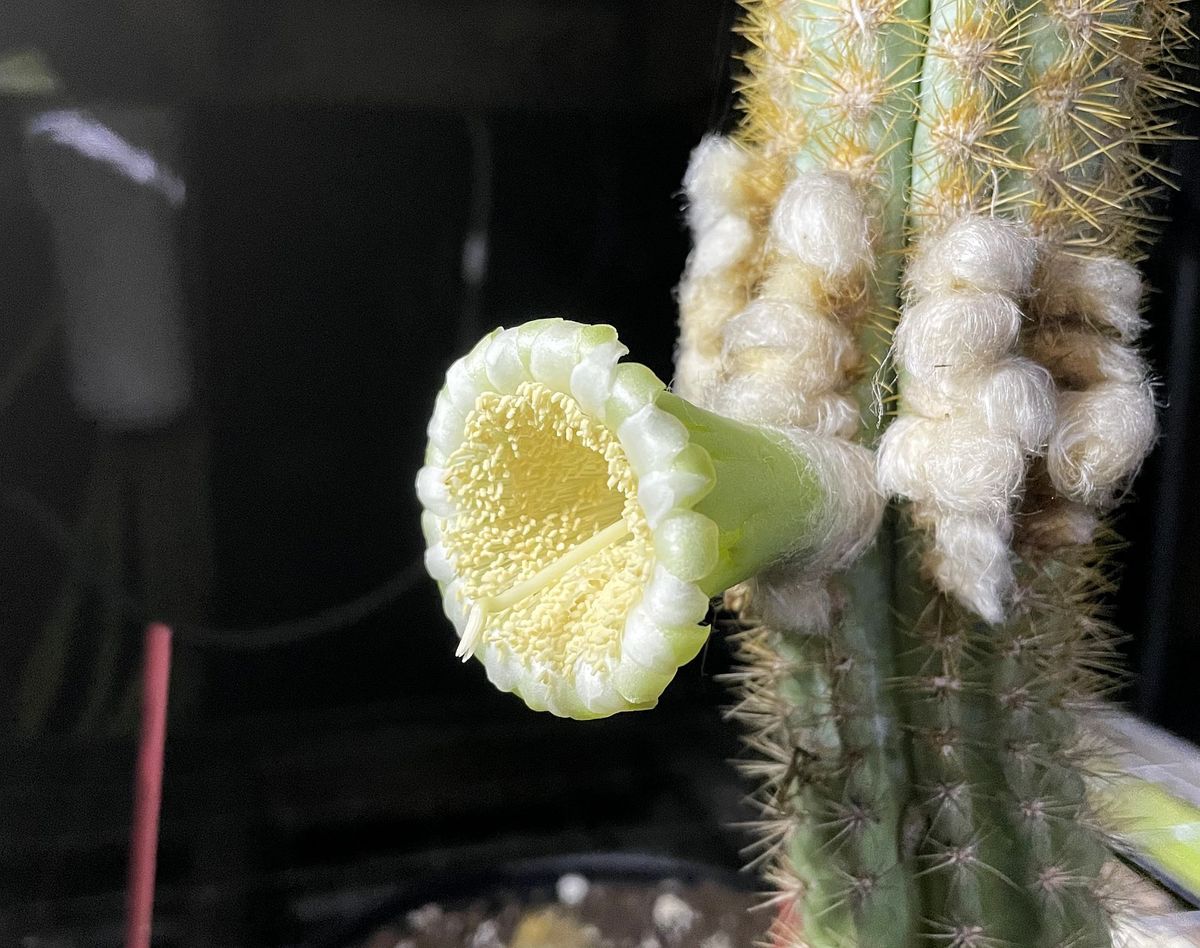
The global climate crisis is playing havoc with temperatures and environments across the world. In Death Valley, the highest-ever recorded temperature looks like it could be broken once again as scorching heat leads experts to put out warnings. Sea level rise has also claimed its first local extinction in the USA in the form of the Key Largo tree cactus. The Key Largo tree cactus (Pilosocereus millspaughii) was only discovered in 1992, in a small population in the Florida Keys. The species does still grow on the Caribbean islands of the Bahamas and northern Cuba. By 2021, the population in Florida had been reduced from 150 stems to just six, owing to harsh weather conditions, saltwater intrusion, and the effects of mammals grazing on the plants. “Unfortunately, the Key Largo tree cactus may be a bellwether for how other low-lying coastal plants will respond to climate change,” said Jennifer Possley, director of regional conservation at Fairchild Tropical Botanic Garden and lead author on a study that documents the population’s decline, in a statement.In good conditions, the species can grow to be more than 6 meters (20 feet) tall, and has flowers that both smell like garlic and reflect the moonlight, which attracts their bat pollinators. Initially, when first discovered, the Key Largo tree cactus resembled the Key tree cactus (Pilosocereus robinii), leading to confusion about the identity of this new species. Both species also possess purple and red fruits but there are key differences between them.“The most striking difference is the tuft of long, woolly hairs at the base of the flowers and fruits,” said Alan Franck, currently the herbarium collection manager at the Florida Museum of Natural History. The hair is so thick, it looks as if the cactus is covered in drifts of snow. The spines of the Key Largo cactus are also twice as long as those of the Key tree cactus.The Key tree cactus has also faced significant problems, declining 84 percent between 1994 and 2007, and listed as federally endangered in 1984. The two biggest problems facing these species seem to be herbivory and the increased salinity of the surrounding soil, caused by particularly high ocean tides know as "king tides".                In February 2016, a rescue mission began and the researchers collected stem fragments to cultivate at a nursery. By 2021, it was clear that the population did not have hope of recovery. A final fruiting season allowed the researchers to collect the cactus fruits which contained some viable seeds. The green parts of the cactus were then harvested and taken to two nurseries. Now, the population is restricted to this captive collection of 36 salvaged fragments, 25 seedlings, and more than 1,000 seeds held in storage. The researchers had no choice but to remove the cactus from the habitat to try to save the species.Image Credit: Trudy FerraroThe team returned to the area in both 2022 and 2023 in the hopes of collecting more samples that could have been missed. Only in 2023 did they find a small fragment that they chose to remove from the area since it was clear it would succumb to sea level rise. Species in the Florida Keys are especially vulnerable to sea level rise because of the low-lying nature of the land in that region. Extreme weather, habitat destruction, and poaching all play a part in reducing population sizes of vulnerable species. The team suggests that long-term conservation plans for other at-risk plants are already in progress, and cooperation is still needed at both local and governmental levels to succeed at protecting these species both in and ex-situ. The paper is published in the Journal of the Botanical Research Institute of Texas.
Like
Comment
Share
Science Explorer
Science Explorer
2 yrs

We Now Know How Much Faster Time Ticks By On The Moon
Favicon 
www.iflscience.com

We Now Know How Much Faster Time Ticks By On The Moon

A new study has precisely calculated how fast time on the Moon goes compared to time on Earth, and the Solar System's barycenter.Time passes at different rates for different observers, depending on their relative speeds and their proximity to (and strength of) nearby gravitational fields. This doesn't normally figure into your everyday calculations. If you want to meet someone next Tuesday, you don't need to worry about your clocks being all that different – unless, in the intervening days, one of you spends that time flying around at relativistic speeds, or on a planet or Moon with vastly different gravity.This is a problem for NASA and other space agencies, however, as humanity aims at creating bases on the Moon and Mars. Currently, there is no agreed time zone on the Moon. Uncrewed missions generally use the time corresponding to the craft's country of origin, while the crewed Apollo missions used Ground Elapsed Time (GET), counting from the moment of launch. As the Moon becomes more full (of robots, and then, fingers crossed, humans) this could pose some problems that the US hopes to overcome by establishing a Coordinated Lunar Time."The establishment of a standardized lunar time is essential for synchronizing activities and operations on the Moon," the new paper posted to pre-print server arXiv, which has not yet been peer-reviewed, explains. "With missions involving multiple landers, rovers, and orbiters, having a common time reference ensures that all units can coordinate effectively, avoiding conflicts and enhancing collaboration. Accurate timing is crucial for communication between Earth and lunar missions, facilitating reliable data transmission and reception, and ensuring that autonomous systems can operate seamlessly."In the new paper, the team calculated the relative speed of time on the surface of the Moon, Earth, and at the solar system's barycenter, the common center of mass of the Solar System. "Although relativistic time transformations between the Solar System Barycentric (SSB) coordinate reference frame and the surface of the Earth are familiar, an analogous transformation for the surface of the Moon has not been established," the team writes. "In particular, the constants that describe the behavior of the two time scales as time progresses are needed."According to the team's calculations, time on the lunar surface ticks by at 0.0000575 seconds faster than on the surface of the Earth per day. For ease of calculation, it would take around 100,000 days (or about 274 years) for someone on the Moon to age 5.75 seconds more than somebody on Earth. That doesn't sound like a whole lot to worry about, but if the difference is not accounted for it could cause problems in lunar operations."Failing to account for the discrepancy between a transmitter clock on the Earth and how it is perceived by a receiver on the Moon will result in a ranging error," Arati Prabhakar, Assistant to the President for Science and Technology and Director, Office of Science and Technology Policy, wrote in a memorandum instructing NASA and other agencies to work together to create the new Moon time system. "Precision applications such as spacecraft docking or landing will require greater accuracy than current methods allow."More discussion and calculations will take place before the establishment of coordinated lunar time, and we will have to see the exact system that NASA and other space agencies come up with. One thing that NASA is clear on already, however, is that the Moon, with its 29.5 Earth days-long days, will not have to endure daylight savings time.The paper is posted to the pre-print server arXiv.
Like
Comment
Share
Pet Life
Pet Life
2 yrs

Teen watches a runaway horse sprint towards the highway and takes matters into her own hands
Favicon 
animalchannel.co

Teen watches a runaway horse sprint towards the highway and takes matters into her own hands

Caroline, a 16-year-old girl, recently captured widespread admiration for her bravery and quick thinking during an extraordinary rescue. This young heroine found herself in the midst of a dangerous and chaotic situation when she saved a runaway horse on a busy highway. Her remarkable act of courage not only ensured the horse’s safety but also... The post Teen watches a runaway horse sprint towards the highway and takes matters into her own hands appeared first on Animal Channel.
Like
Comment
Share
Pet Life
Pet Life
2 yrs

Fed-up woman dumps tarantula down the stairs to get roommate to move out
Favicon 
animalchannel.co

Fed-up woman dumps tarantula down the stairs to get roommate to move out

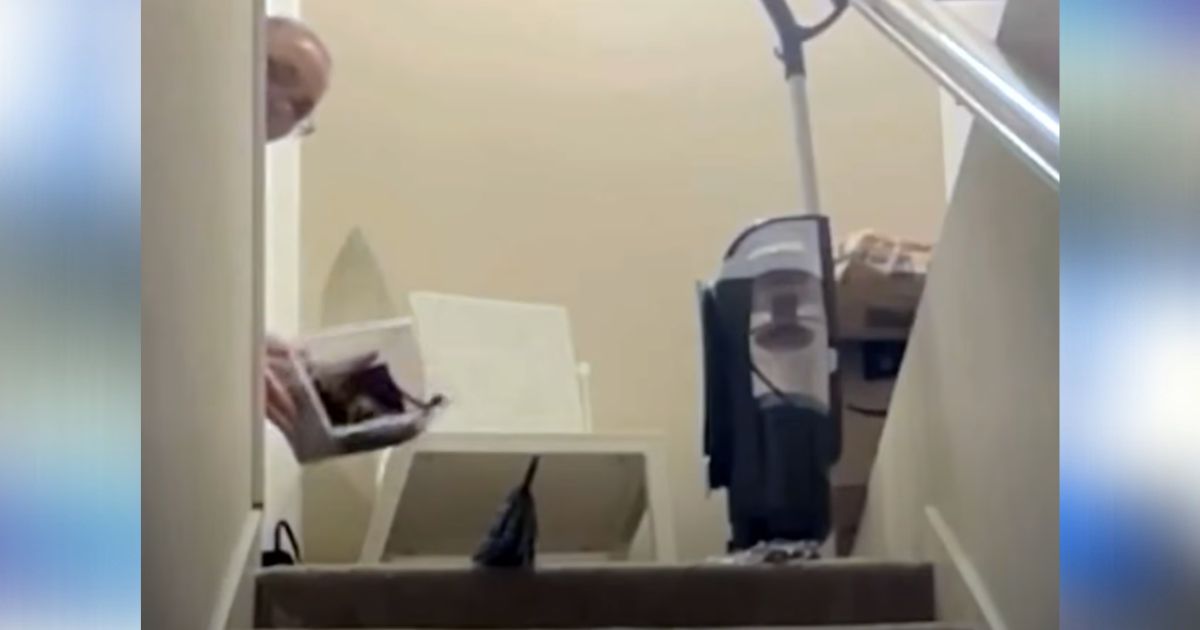
Two women renting space in a house quickly realized they were not going to be friends. What began as a shared living arrangement soon turned into a hostile environment, with tensions escalating significantly between the two. Their cohabitation woes reached a breaking point, culminating in a bizarre and troubling incident that has since captivated public... The post Fed-up woman dumps tarantula down the stairs to get roommate to move out appeared first on Animal Channel.
Like
Comment
Share
Showing 21253 out of 56670
  • 21249
  • 21250
  • 21251
  • 21252
  • 21253
  • 21254
  • 21255
  • 21256
  • 21257
  • 21258
  • 21259
  • 21260
  • 21261
  • 21262
  • 21263
  • 21264
  • 21265
  • 21266
  • 21267
  • 21268

Edit Offer

Add tier


Select an image
Delete your tier
Are you sure you want to delete this tier?

Reviews

In order to sell your content and posts, start by creating a few packages. Monetization

Pay By Wallet

Payment Alert

You are about to purchase the items, do you want to proceed?

Request a Refund