YubNub Social YubNub Social
    Advanced Search
  • Login

  • Night mode
  • © 2026 YubNub Social
    About • Directory • Contact Us • Privacy Policy • Terms of Use • Android • Apple iOS • Get Our App

    Select Language

  • English
Install our *FREE* WEB APP! (PWA)
Night mode
Community
News Feed (Home) Popular Posts Events Blog Market Forum
Media
Headline News VidWatch Game Zone Top PodCasts
Explore
Explore Jobs Offers
© 2026 YubNub Social
  • English
About • Directory • Contact Us • Privacy Policy • Terms of Use • Android • Apple iOS • Get Our App

Discover posts

Posts

Users

Pages

Group

Blog

Market

Events

Games

Forum

Jobs

Science Explorer
Science Explorer
2 yrs

Modern Human DNA Contains Bits From All Over The Neanderthal Genome – Except The Y Chromosome. What Happened?
Favicon 
www.iflscience.com

Modern Human DNA Contains Bits From All Over The Neanderthal Genome – Except The Y Chromosome. What Happened?

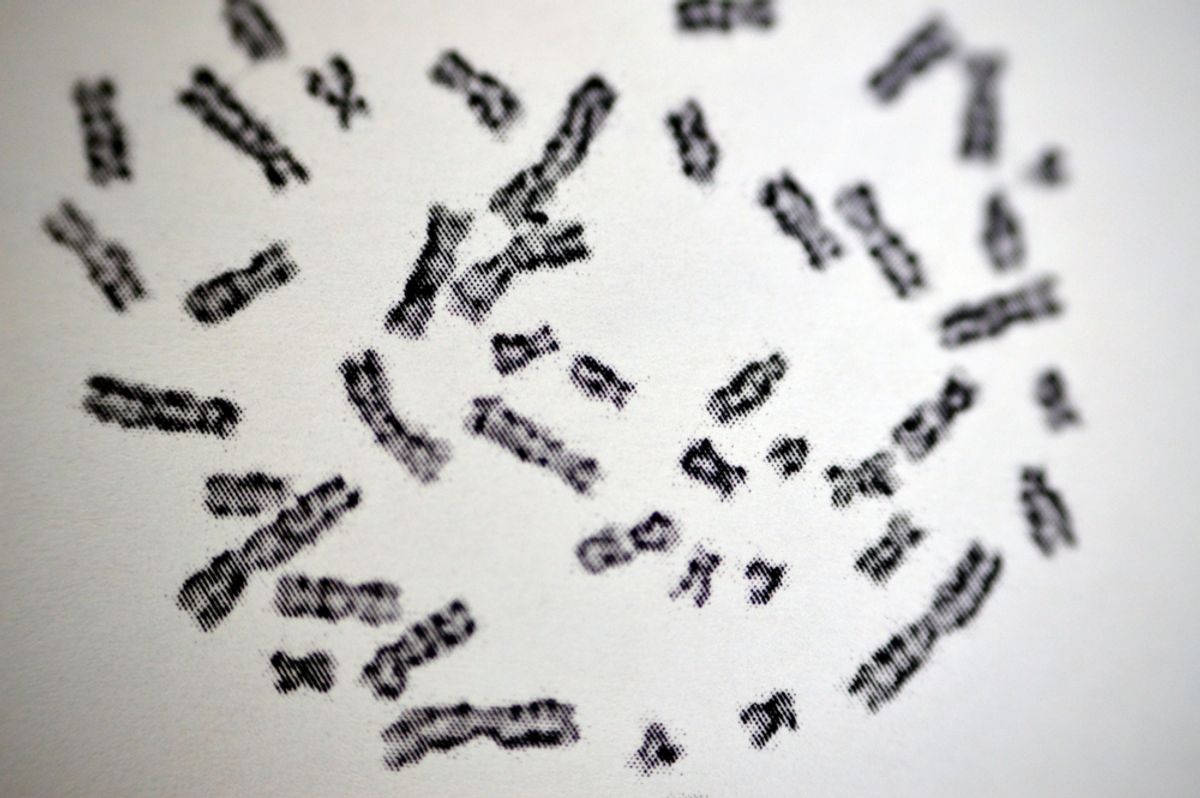
Neanderthals, the closest cousins of modern humans, lived in parts of Europe and Asia until their extinction some 30,000 years ago.Genetic studies are revealing ever more about the links between modern humans and these long-gone relatives – most recently that a rush of interbreeding between our species occurred in a relatively short burst of time around 47,000 years ago. But one mystery still remains.The Homo sapiens genome today contains a little bit of Neanderthal DNA. These genetic traces come from almost every part of the Neanderthal genome – except the Y sex chromosome, which is responsible for making males.So what happened to the Neanderthal Y chromosome? It could have been lost by accident, or because of mating patterns or inferior function. However, the answer may lie in a century-old theory about the health of interspecies hybrids.Neanderthal sex, genes and chromosomesNeanderthals and modern humans went their separate ways somewhere between 550,000 and 765,000 years ago in Africa, when Neanderthals wandered off into Europe but our ancestors stayed put. They would not meet again until H. sapiens migrated into Europe and Asia between 40,000 and 50,000 years ago.Scientists have recovered copies of the full male and female Neanderthal genomes, thanks to DNA from well-preserved bones and teeth of Neanderthal individuals in Europe and Asia. Unsurprisingly, the Neanderthal genome was very similar to ours, containing about 20,000 genes bundled into 23 chromosomes.Like us, they had two copies of 22 of those chromosomes (one from each parent), and also a pair of sex chromosomes. Females had two X chromosomes, while males had one X and one Y.Y chromosomes are hard to sequence because they contain a lot of repetitive “junk” DNA, so the Neanderthal Y genome has only been partially sequenced. However, the large chunk that has been sequenced contains versions of several of the same genes that are in the modern human Y chromosome.In modern humans, a Y chromosome gene called SRY kickstarts the process of an XY embryo developing into a male. The SRY gene plays this role in all apes, so we assume it did for Neanderthals as well – even though we haven’t found the Neanderthal SRY gene itself.Interspecies mating left us with Neanderthal genesThere are lots of little giveaways that mark a DNA sequence as coming from a Neanderthal or a H. sapiens. So we can look for bits of Neanderthal DNA sequence in the genomes of modern humans.The genomes of all human lineages originating in Europe contain about 2% Neanderthal DNA sequences. Lineages from Asia and India contain even more, while lineages restricted to Africa have none. Some ancient Homo sapiens genomes contained even more – 6% or so – so it looks like the Neanderthal genes are gradually fading out.Most of this Neanderthal DNA arrived in a 7,000-year period about 47,000 years ago, after modern humans came out of Africa into Europe, and before Neanderthals became extinct about 30,000 years ago. During this time there must have been many pairings between Neanderthals and humans.At least half of the whole Neanderthal genome can be pieced together from fragments found in the genomes of different contemporary humans. We have our Neanderthal ancestors to thank for traits including red hair, arthritis and resistance to some diseases.There is one glaring exception. No contemporary humans have been found to harbour any part of the Neanderthal Y chromosome.What happened to the Neanderthal Y chromosome?Was it just bad luck that the Neanderthal Y chromosome got lost? Was it not very good at its job of making males? Did Neanderthal women, but not men, indulge in interspecies mating? Or was there something toxic about the Neanderthal Y so it wouldn’t work with human genes?A Y chromosome comes to the end of the line if its bearers have no sons, so it may simply have been lost over thousands of generations.Or maybe the Neanderthal Y was never present in interspecies matings. Perhaps it was always modern human men who fell in love with (or traded, seized or raped) Neanderthal women? Sons born to these women would all have the H. sapiens form of the Y chromosome. However, it’s hard to reconcile this idea with the finding that there is no trace of Neanderthal mitochondrial DNA (which is limited to the female line) in modern humans.Or perhaps the Neanderthal Y chromosome was just not as good at is job as its H. sapiens rival. Neanderthal populations were always small, so harmful mutations would have been more likely to accumulate.We know that Y chromosomes with a particularly useful gene (for instance for more or better or faster sperm) rapidly replace other Y chromosomes in a population (called the hitchhiker effect).We also know the Y chromosome is degrading overall in humans. It is even possible that SRY was lost from the Neanderthal Y, and that Neanderthals were in the disruptive process of evolving a new sex-determining gene, like some rodents have.Was the Neanderthal Y chromosome toxic in hybrid boys?Another possibility is that the Neanderthal Y chromosome won’t work with genes on other chromosomes from modern humans.The missing Neanderthal Y may then be explained by “Haldane’s rule”. In the 1920s, British biologist J.B.S. Haldane noted that, in hybrids between species, if one sex is infertile, rare or unhealthy, it is always the sex with unlike sex chromosomes.In mammals and other animals where females have XX chromosomes and males have XY, it is disproportionately male hybrids that are unfit or infertile. In birds, butterflies and other animals where males have ZZ chromosomes and females have ZW, it is the females.Many crosses between different species of mice show this pattern, as do feline crosses. For example, in lion–tiger crosses (ligers and tigons), females are fertile but males are sterile.We still lack a good explanation of Haldane’s rule. It is one of the enduring mysteries of classic genetics.But it seems reasonable that the Y chromosome from one species has evolved to work with genes from the other chromosomes of its own species, and might not work with genes from a related species that contain even small changes.We know that genes on the Y evolve much faster than genes on other chromosomes, and several have functions in making sperm, which may explain the infertility of male hybrids.So this might explain why the Neanderthal Y got lost. It also raises the possibility that it was the fault of the Y chromosome, in imposing a reproductive barrier, that Neanderthals and humans became separate species in the first place. Jenny Graves, Distinguished Professor of Genetics and Vice Chancellor's Fellow, La Trobe UniversityThis article is republished from The Conversation under a Creative Commons license. Read the original article.
Like
Comment
Share
Science Explorer
Science Explorer
2 yrs

Ultra-Processed Foods Should Be Given "Tobacco-Style" Warnings, Scientist Argues
Favicon 
www.iflscience.com

Ultra-Processed Foods Should Be Given "Tobacco-Style" Warnings, Scientist Argues

Ultra-processed foods are so harmful to health that they should be sold carrying tobacco-style warnings, according to the epidemiologist who coined the term.“UPFs [Ultra-processed foods] are increasing their share in and domination of global diets, despite the risk they represent to health in terms of increasing the risk of multiple chronic diseases,” Carlos Monteiro, a professor of Nutrition and Public Health at the University of São Paulo, told the Guardian.“[They] are displacing healthier, less processed foods all over the world, and also causing a deterioration in diet quality due to their several harmful attributes,” he said. “Together, these foods are driving the pandemic of obesity and other diet-related chronic diseases, such as diabetes.”Speaking at the International Congress on Obesity 2024 this week, Monteiro warned that ultra-processed foods, or UPFs, are now so prevalent, and so impactful upon human health, that their sale and consumption should be heavily restricted, with “front-of-pack warnings […] similar to those used for cigarette packs” introduced for offending foodstuffs.On the face of it, the idea seems logical – albeit a bit drastic. UPFs really have overtaken the diets of many in the West, with more than half of the average diet in the US and UK comprising this type of food. They increase the average calorific intake of those who eat them – even when compared to unprocessed diets which have been matched for salt, fat, and sugar content – and have been linked to dozens of harmful effects on the body, including an increased risk of heart disease, various cancers, diabetes, and can even reduce your mental health. So Monteiro’s argument that UPFs should be treated as a public health hazard, similar to tobacco products, is not without merit. “Both tobacco and UPFs cause numerous serious illnesses and premature mortality; both are produced by transnational corporations that invest the enormous profits they obtain with their attractive/addictive products in aggressive marketing strategies, and in lobbying against regulation; and both are pathogenic (dangerous) by design,” Monteiro pointed out. “Reformulation is not a solution.”But some have called the banning or restriction of UPFs overly simplistic. For one thing, the kinds of food that would be affected by such a move might surprise you: while it sounds dramatic, the term “ultra-processed” really only describes food which comprise multiple ingredients with additives – so, yes, the fast-food hamburger meal that you’re thinking of counts, but so does baby formula, fruit yogurt, and even store-bought bread.The consumption of UPFs is also highly skewed towards those in poverty. “We already know that consumption of ultra-processed foods and snacks high sugar are associated with rising rates of obesity. We also know that there are socioeconomic disparities in health and diet,” noted Paul Coleman, Honorary Senior Research Fellow at the Centre for Food Policy, City, University of London, and Senior Public Health Registrar at Leeds Teaching Hospital NHS Trust, back in November 2023. For these parents, more labeling would not be useful: “they know [UPFs] are bad for their child’s health,” Coleman said – but they have “little option but to buy these unhealthy options […] The low-cost and long-shelf of unhealthy snacks make them the most logical option, despite parents wanting to make healthy purchases.”Equally, while Monteiro draws a comparison with tobacco products, other scientists reject the analogy: “There is no such thing as a safe cigarette, even second-hand, so banning them is relatively straightforward in that the health case is very clear,” Hilda Mulrooney, a reader in nutrition and health at London Metropolitan University, told The Guardian. “However, we need a range of nutrients including fat, sugar and salt, and they have multiple functions in foods – structural, shelf-life – not just taste and flavor and hedonic properties,” she explained. “It is not as easy to reformulate some classes of foods to reduce them and they are not the same as tobacco because we need food – just not in the quantities most of us are consuming.”The International Congress on Obesity 2024 is running from 26-29 June 2024 in São Paulo, Brazil.
Like
Comment
Share
Science Explorer
Science Explorer
2 yrs

How Are Underwater Tunnels Built?
Favicon 
www.iflscience.com

How Are Underwater Tunnels Built?

Thousands of people take the Tube from the north side of London to the south, or pop across the English Channel via the Channel Tunnel every day, but they’re only able to do so thanks to one pretty important feature – underwater tunnels. But how is such an impressive feat of engineering built?The tunneling shieldUnderwater tunnels had people stumped until French-British engineer Marc Isambard Brunel took inspiration from nature back in 1818. After watching how a shipworm’s shell plates allowed it to bore through wood, Brunel took that principle and scaled it up into the tunneling shield.In this case, it was a giant, rectangular cast iron casing with shutter openings on its wall, which were opened one at a time so that miners could dig away the soft earth outside. The shield was then pushed forward using screw jacks and the process repeated, with the protective “shell” of the tunnel built out of bricks in the freshly carved area behind.This led to the first-ever underwater tunnel being built under the River Thames in London, completed in 1842. Later tunnels under the Thames improved upon this method by pressurizing the air in front of the shield to try and stop flooding during construction. Tunneling shields are still used today, but are instead cylindrical and tend to be made out of steel, which is also used to make the tunnel’s support rings. Modern variations also make use of hydraulic jacks to push the shield forward, but when it’s not moving the area in front of the shield can be accessed via a door. To protect those who go out to work there, shields also feature a protective hood.Tunnel boring machinesOf course, digging through soft earth is one thing – boring through underwater rock is another thing entirely. That’s where modern technology has changed the game, in the form of tunnel boring machines (TBMs), which were used in the construction of the Channel Tunnel.TMBs have a function similar to the tunneling shield, but in this case, a mechanical spinning cutting head, rather than human force, is used to dig through the rock in front. It does this by exerting stress on the rock, which causes it to fracture. And rather than people having to lug the debris out of the way, the fractured rock is taken back on a conveyor belt.A total of 11 TMBs were used to dig out the three 56.3-kilometer (35-mile) long tunnels (yep, there’s more than one), which in their underwater stretches, are found 45 meters (148 feet) below the sea bed.Immersed tube tunnelsWith the previous methods, the tunnel walls are constructed as digging goes, but that’s not the only way to do it. There’s also immersed tube tunneling, a technique developed by American engineer W.J. Wilgus.This method involves making the tunnel elsewhere first, creating multiple prefabricated segments, whilst a trench is dredged from the river or seabed where the tunnel is destined to be. The segments are then floated to the area, and sunk into place, after which the water is emptied from them, and excavated material is placed over the tunnel to bury it and restore the bed.
Like
Comment
Share
Science Explorer
Science Explorer
2 yrs

The Fascinating Sex Lives Of Insects
Favicon 
www.iflscience.com

The Fascinating Sex Lives Of Insects

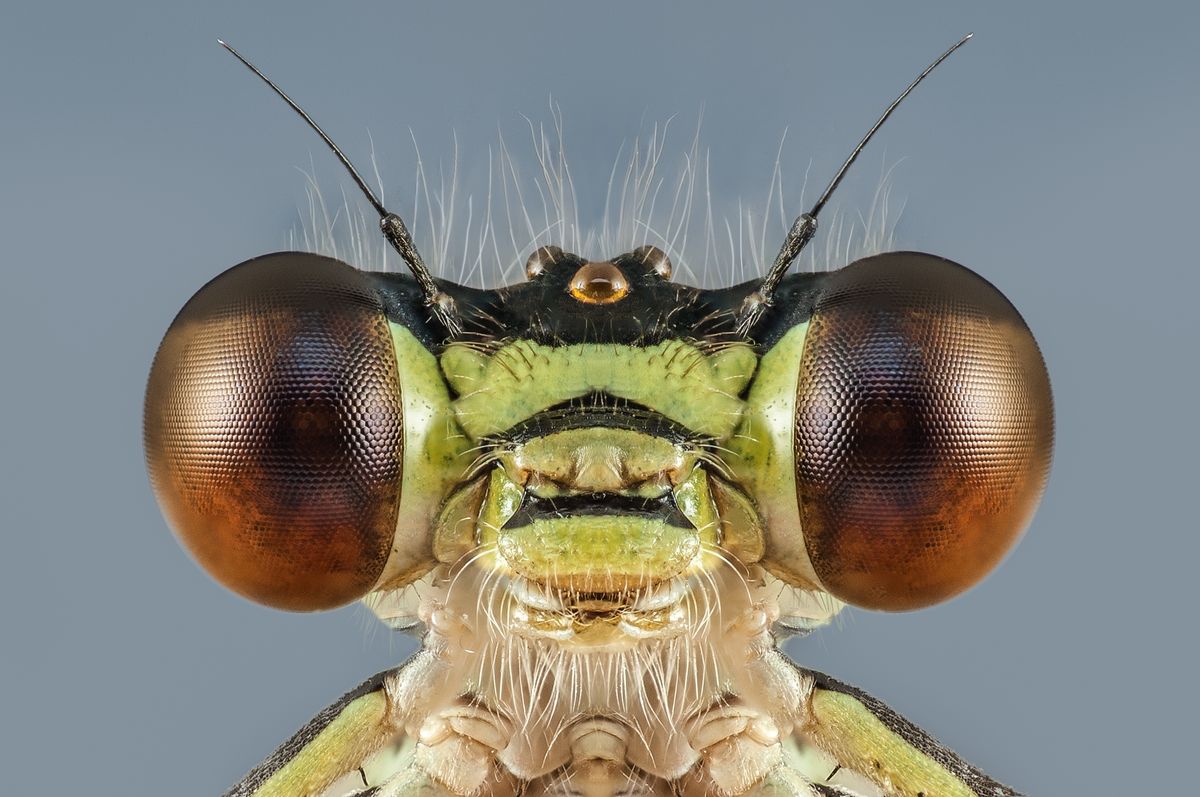
Some insects have detachable penises, others produce sperm that is 20 times the size of their own body. Others have evolved with special equipment to help them tear rivals off potential mates. Insects can be creepy, promiscuous or murderous – but they are rarely dull.The stag beetle male – Europe’s largest beetle has huge jaws known as antlers designed for prising mating pairs apart. This behaviour is seen in numerous beetles, with horns of various shapes horns that have evolved to lever males off females. The Japanese rhinocerous beetle has a horn resembling a fork. Antlers are also used in battle to wrestle other males over access to females.The Japanese rhinoceros beetle has a sinister looking horn. Mark Brandon/ShutterstockIn many of these species, smaller males don’t stand a chance of winning a fight, so instead have evolved sneaky mating tactics. They wait for males to fight, then slink in and copulate with the female while the males are distracted. Small male dung beetles slip past large males that guard entrances to tunnels containing females, and dig secret passages to find the underground females while the larger males’ backs are turned.Sperm competitionIn addition to the physical contests between males, competition to fertilise an egg also happens between sperm. In the animal kingdom, females are rarely faithful to their mates, so there is probably sperm from a number of males inside a female reproductive tract. Males have evolved several ways to counter this, such as producing large sperm. Fruit fly sperm, is almost 6cm long when uncoiled, around 20 times the size of the fly.But, perhaps the most extraordinary method to win the sperm competition is seen in the odonata (dragonflies and damselflies) who have evolved ornate penises. These come complete with hooks and whips, to dislodge the sperm of rival males and pack the male’s own sperm into the far corners of the female reproductive tract, away from other male penises.And it’s not just the males that have elaborate penises. The female cave insects of Brazil compete for access to males. The insects have sex-reversed genitalia, where the males have an opening and the females have a spiky erectile organ. The female uses her “penis” to suck sperm out of the male, and she can even decide which of two chambers in her body to store the sperm in. It is thought that this behaviour evolved as an adaptation to a limited food supply as the females gain energy from feasting on the seminal fluid acquired during copulation, which can last up to 70 hours.Butterflies only live for a few weeks, so if males are going to father any offspring, they can’t hang around. Except, some do. Many butterflies are sexually mature as soon as they emerge from their chrysalis. So, in some species the males emerge a few days before the females, then sit and wait, copulating with the females as soon as possible.More disturbing behaviour is seen in the bed bug. Males simply pierce a female’s abdomen then inject sperm through the wound into her abdominal cavity. As insects have an open circulatory system without arteries and veins, the sperm can easily migrate from the abdominal cavity to the ovaries for fertilisation.Male bed bugs have a brutal approach to mating. TinoFotografie/ShutterstockSexual cannibalismProbably the most famous of the insect sexual behaviour is that of the praying mantis, where the female bites the head off her partner during or after sex, gaining nutrients for herself and her offspring. This behaviour increases the number of eggs that males fertilise. Recently, scientists found that males also attack females. They don’t eat the females although they sometimes seriously injure them. Males that won fights with females were more likely to go on to mate rather than just get eaten.Chastity beltsMany male insects only get to mate once, even when they aren’t eaten by their partners. For example, male bees ejaculate with such explosive force that it is loud enough for humans to hear. This ensures the sperm is passed to the female, but it results in paralysis of the male, which kills him. So, males need to make the most of their exploits.One way of preventing other males from mating with a female is to produce a copulatory plug – something that will prevent a different male from inserting his sperm inside a female to fertilise her eggs. The European dwarf spider produces a plug by secreting a liquid during copulation that hardens over time. Researchers have found that longer copulations result in larger plugs which are more difficult for other males to remove.In order to ensure that nobody else mates with his female once he is dead, the male orb-web spider has evolved an extreme copulatory plug. He has a detachable penis that remains inside the female once copulation is over. Although it is common for the tip of a spider’s penis to break off inside a female, preventing other males from entering, the orb-web spider’s detachable penis has an additional function as it continues to transfer sperm on its own - for over 20 minutes – increasing mating success.So you see, insects are, in fact, amazing. Louise Gentle, Principal Lecturer in Wildlife Conservation, Nottingham Trent UniversityThis article is republished from The Conversation under a Creative Commons license. Read the original article.
Like
Comment
Share
Science Explorer
Science Explorer
2 yrs

Saunas: Great For Health Or Just A Lot Of Hot Air?
Favicon 
www.iflscience.com

Saunas: Great For Health Or Just A Lot Of Hot Air?

On the face of it, spending any amount of time in a small, 80°C (176°F) room might sound thoroughly unenjoyable – but many people do it willingly on a regular basis. How? Visiting saunas, which are a regular part of life in countries like Finland but have recently shot up in popularity elsewhere too. That might be in part because of their apparent health benefits, but how true are these claims? Do saunas have any health benefits?DementiaRecent years have seen headlines purporting the apparent benefits of saunas for the brain, particularly when it comes to preventing Alzheimer’s disease and other types of dementia. Why? It may well be due to two studies, one from 2016 and the other from 2020, that suggest a link between frequent sauna use and a lower risk of dementia.The earlier study used data that followed over 2,000 healthy Finnish adult males for an average of roughly 20 years, who had to fill out a questionnaire about their typical weekly sauna use, including frequency, duration, and temperature. The second study was similar, but larger; it followed nearly 14,000 Finnish men and women over 39 years and their typical sauna activity in a month. Both studies identified whether or not participants went on to get diagnosed with dementia.In both cases, the studies concluded that frequent sauna use could potentially reduce the risk of developing dementia, even when taking into account other risk factors for the condition. The 2016 study found, for example, that sauna bathing four to seven times a week was associated with a 66 percent reduced risk of Alzheimer's, compared to only having one session per week.Though not going so far as to define exactly how this might work, the researchers suggest it could involve a reduction in blood pressure or the activation of protective heat shock proteins.It all sounds promising, but the two studies should be interpreted with caution. For example, the questionnaire about typical sauna use was only filled out once – people’s habits may well have changed over the years.And unlike clinical trials, where researchers intervene – in this case, they’d be splitting people into groups and getting them to use saunas differently – both studies are observational.This means there was no intervention, and they weren’t carried out with the purpose of proving that sauna use affects dementia risk. That doesn’t mean there isn’t a potential link, but neither study proves it – more research would be needed to do so.Cardiovascular healthThe same group of researchers from the 2016 study on dementia also followed the same group of Finnish males for their cardiovascular (heart and blood vessels) health. In a separate paper on this subject, they found that more frequent use of saunas could be linked to a “considerable decreased risk” of sudden cardiac death, fatal coronary heart disease, and fatal cardiovascular disease.That being said, the problems with the study are the same as before; clinical trials would be required to provide solid evidence of a link and figure out exactly how risk reduction works. The researchers also caution that their findings should be treated with care by people with certain cardiovascular conditions; saunas can reduce blood pressure, which is more than a bit dangerous for people whose blood pressure is already low.Sauna bathing alone might not be the answer anyway – another way of improving cardiovascular health is regular exercise, which a more recent, small study suggests could be beneficial when combined with sauna use.Mental healthOne area that might seem to benefit from getting our sauna on is our mental health, and according to the Global Sauna Survey, which had 482 valid responses, that seems to be the case. For example, 83.5 percent of all those surveyed reported having better sleep after sauna use, and those respondents who reported using saunas between five and 15 times a month had slightly higher wellbeing scores compared to less frequent users.Then again, the most cited motivation for using a sauna was relaxation and stress reduction; the act of simply setting aside that time for that specific purpose may well have helped. Add to that the fact the survey was conducted online in a non-random group of people, and only represented 29 countries – with all apart from Finland, Australia, and the US making up less than five percent of participants each – and the results can’t necessarily be considered reliable or be applied to everyone.Do saunas have any health risks?Even if saunas were found to have health benefits in abundance, using them does still carry some risks. That’s because, well, they’re hot – and getting that bit too hot can be a problem for the body. One of the main risks from the sweltering temperatures is dehydration, thanks to the hefty amount of sweat produced by the body in response to that heat (and before you think it, no, you don't "detox" via sweat - that's what your liver and kidneys are for). If that fluid isn’t replenished, then the body can’t function normally, and you can wind up with headaches, low blood pressure, and tiredness.Some have also expressed concern about the effect of saunas on fertility in males, after a study of 10 healthy males found reduced sperm count and motility after 3 months of two sauna sessions per week. However, it should be noted that a) it’s a small study, so further research is needed to validate it and b) a lower sperm count may not necessarily harm your fertility. How to stay sauna safeRegardless of whether they have health-related superpowers, people clearly still enjoy using saunas – it’s just important to do so safely. The general tips for avoiding the riskier elements of a sauna include:Avoid alcohol – that can increase the risk of dehydrationDon’t stay in for longer than 15-20 minutesTake your time cooling down afterwardsDrink plenty of water after you’re out – around two to four glasses’ worthDon’t use if you’re illAll “explainer” articles are confirmed by fact checkers to be correct at time of publishing. Text, images, and links may be edited, removed, or added to at a later date to keep information current.  The content of this article is not intended to be a substitute for professional medical advice, diagnosis, or treatment. Always seek the advice of qualified health providers with questions you may have regarding medical conditions.
Like
Comment
Share
Science Explorer
Science Explorer
2 yrs

How Often Should I Wash My Office Coffee Mug?
Favicon 
www.iflscience.com

How Often Should I Wash My Office Coffee Mug?

The humble mug is one of the most important parts of an office. It’s there to hold your coffee when you need that boost first thing in the morning, to show off your personality with a funky pattern or amusing joke, or to hold on to for warmth when someone else is controlling the aircon. It cares for you – but are you giving it the love and attention it truly deserves? In other words, are you giving it a regular wash?Take a look at Reddit and you’ll soon find that people take a lot of different approaches to cleaning their coffee mugs; some wash it every day, others just give it a quick rinse between uses and some, well, they just like to let all the flavors of every drink they’ve ever had mix together.A survey of over 2000 British adults had similar findings. Those who cleaned their office mugs after every single use were in the majority – at least if they were telling the truth – but there were plenty who went multiple uses without giving it a good scrub and 3 percent who confessed to never washing it at all (although Brits are even worse when it comes to washing towels).While that could be a problem if some delightfully fluffy mold starts to grow, the bacteria that lurk within an unwashed mug aren’t necessarily a problem.“If I went and cultured the average unwashed coffee cup, of course I’m going to find germs,” Dr Jeffrey Starke, an infectious disease specialist, told the Wall Street Journal. “But remember the vast majority came from the person who used the cup.”So what about the germs that don’t come from the mug’s owner? Dr Charles Gerba, a professor of microbiology, environmental sciences, and public health at the University of Arizona, told LifeHacker that “around 90% of most office coffee mugs harbor dangerous germs, and 20% of those carry fecal bacteria."Unless someone in the office is taking inspiration from Andy Samberg’s character’s antics in the “Like A Boss” music video, both Starke and Gerba suggest that any of the nastier bacteria that could be lurking in your mug might actually come from… cleaning it.The sponge in the break room probably has the highest bacteria count of anything in the office,” said Starke, speaking to the Wall Street Journal. That would make a lot of sense – it touches a lot of different stuff, sits there damp, and probably isn’t replaced all that often. As Starke quite accurately concluded: “Most people would call that gross.”With that, it might seem better to leave it unwashed, though plenty of people would also be grossed out by that prospect. In that case, experts recommend making use of paper towels, alongside soap and hot water, to scrub your office mug as well as to dry it. Better still, take it home and pop it in the dishwasher if you have one. As for how often you should do so, some would say after every use – but we won’t tell if you don’t. 
Like
Comment
Share
Strange & Paranormal Files
2 yrs

It turned out where alien life is hiding on the satellites of Jupiter and Saturn
Favicon 
anomalien.com

It turned out where alien life is hiding on the satellites of Jupiter and Saturn

New modeling has shown that low-temperature hydrothermal vents could exist at the bottom of the underground oceans on Jupiter’s moon Europa and Saturn’s moon Enceladus for a very long time. They could warm the oceans and give rise to alien life. On Earth, hydrothermal vents are both a source of energy and heat and one of the possible places for the origin of life. The study was published in the journal Geophysical Research: Planets, reports Space. Although there are both high-temperature and low-temperature hydrothermal vents in the Earth’s oceans, a much larger volume of water passes through the latter. High-temperature hydrothermal vents rely on volcanic activity. Saturn’s moon Enceladus And they can pump energy and heat from the Earth’s hot core. But the icy moons of Jupiter and Saturn do not have hot cores. So scientists created simulations to find out how common low-temperature vents are on Europa and Enceladus. Given the lack of data on the oceans on these satellites, which lie beneath the icy surface, the scientists based their modeling on the water circulation system in the northwest Pacific Ocean. There, cool seawater sinks and flows into the rock at the bottom through extinct volcanic cavities called seamounts. The water passes through the rock, heats up, and rises through another seamount. According to scientists, the water comes out at a higher temperature and has a completely different chemical composition. Jupiter’s moon Europa By applying this water circulation model to Europa and Enceladus, scientists modified properties such as gravity, temperature, seafloor composition, and water circulation depth to better match the potential conditions in the oceans of these moons. Modeling has shown that low-temperature hydrothermal vents can exist at the bottom of underground oceans under a wide range of conditions. At the same time, lower gravity ensures greater heating of the water coming out of the sources. Scientists believe that conditions on the satellites allow these sources to exist for billions of years. And this is enough for alien life to arise there. Therefore, theoretically, life could exist in hydrothermal vents on Europa and Enceladus. Now all that remains is to explore their oceans and discover it, if it really is there. The post It turned out where alien life is hiding on the satellites of Jupiter and Saturn appeared first on Anomalien.com.
Like
Comment
Share
Strange & Paranormal Files
2 yrs

Impossible Matter Found in Nearby Galaxy
Favicon 
anomalien.com

Impossible Matter Found in Nearby Galaxy

The authors of a new study published in The Astrophysical Journal Letters believe that the galaxy neighboring the Milky Way consists of a hypothetical form of dark matter, the particles of which can interact with each other. But this contradicts the basic cosmological model that explains the nature of the Universe. Orbiting the Milky Way about 380,000 light-years away is its fourth-largest satellite galaxy, Crater 2. It is approximately 6,500 light-years in diameter and consists of several billion old stars. In recent years, astronomers have been trying to figure out exactly what properties this dwarf galaxy has that allows it to maintain its structure and relatively large size. It is known that the evolution of the Crater 2 galaxy over thousands of years is influenced by the gravity of the Milky Way. It also influences the dark matter halo surrounding the galaxy and its stars. According to scientists, the gravitational influence of our galaxy can remove both dark matter and stars from its neighbor, which will reduce the mass of the galaxy over time. The study authors found that the gravitational influence of the Milky Way is too weak to explain the density of dark matter in Crater 2 if it consists of cold dark matter particles, reports Space. Dark matter is the invisible part of the Universe and makes up more than 80% of its mass. It is believed that thanks to dark matter, all galaxies can be held together as a single whole. But no one has yet seen dark matter directly. Dark matter is the invisible part of the Universe and makes up more than 80% of its mass. It is believed that thanks to dark matter, all galaxies can be held together as a single whole. But no one has yet seen dark matter directly. The main cosmological model called the Lambda-CDM Model, which explains the nature of the Universe, tells us about the existence of cold dark matter, the particles of which cannot interact with each other. At the same time, there is a theory that suggests that dark matter may consist of self-interacting particles. These particles interact with each other using an as-yet unknown force that goes beyond gravity. Scientists believe that exactly this kind of dark matter exists in the Crater 2 galaxy, because, among other things, the gravity of the Milky Way should have reduced its mass much more strongly, which is not observed. The simulations show a surprisingly large agreement between the theory of self-interacting dark matter and observations of the Crater 2 galaxy. According to scientists, in this dwarf galaxy, despite the predictions of the Lambda-CDM Model, there is no bulge of dense dark matter that is directed from the halo closer to the center of the galaxy. This can again be explained by the fact that dark energy particles transfer energy between themselves during collisions and this means that the dark matter halo is aligned around the galaxy. According to the self-interacting dark matter theory, the galaxy is likely to grow inside a dark matter halo and this explains the size of Crater 2 better than the Lambda-CDM Model. Scientists have concluded that the properties of the Crater 2 galaxy challenge the main cosmological model and it may indeed consist of dark matter particles that collide with each other, although this contradicts modern ideas about the mysterious substance. Now the authors of the study want to find other galaxies similar to Crater 2, where the same properties can be observed. The post Impossible Matter Found in Nearby Galaxy appeared first on Anomalien.com.
Like
Comment
Share
NewsBusters Feed
NewsBusters Feed
2 yrs

'Don’t Talk About the Press': Acosta Fights With Former Trump Advisor
Favicon 
www.newsbusters.org

'Don’t Talk About the Press': Acosta Fights With Former Trump Advisor

On Friday, CNN’s Newsroom with Jim Acosta hosted an interview with Bryan Lanza, who was the deputy communications director for Donald Trump’s 2016 campaign. The discussion quickly got heated as the two disagreed on how the recent presidential debate went. Acosta unsurprisingly started the segment by sharing a CNN analysis regarding Trump: “at least one lie for every three minutes.” He added that supposedly “Donald Trump made more than 30 false claims during last night's 90-minute debate.” Also, according to CNN, President Joe Biden only made “nine false or misleading claims.”     He then made an outrageous claim that Biden actually “let Trump off the hook with a shaky performance” because Trump “was lying over and over again.” Lanza responded “Listen, I wouldn't say Joe Biden let Donald Trump off the hook at all last night. I think what we saw last night was the mental deterioration of Joe Biden.” He continued to state that “what the American public saw was a president who just doesn't have the cognitive fitness to be president.” Lanza also hinted that the 25th Amendment may be exercised next month if the “Democratic Party tries to find a new candidate.” In response to Acosta claiming Trump lied about Democrats’ abortion beliefs, Lanza then countered how Trump “was proud of nominating Supreme Court justices who did overturn Roe v. Wade.” He reminded Acosta that “CNN can sort of cover, or MSNBC and Atlas can try to sort of focus on the lies,” but Acosta quickly interjected before he could finish his point, ““Don't go -- don't talk about the press. Come on. He's lying over and over again. No, Bryan, he said that January 6th defendants are, quote, ‘so innocent.’” The subtle discussion quickly turned into a competition of both men trying to talk over the other. Acosta decided to not give up as he continued to interrupt Lanza and prohibit him from speaking his thoughts. Acosta declared “We're focusing on what Donald Trump said last night because he lied repeatedly over and over again.” Focusing back on the voters’ view of the debate, Lanza stated: “So, all voters at this particular point made a decision that January 6th is not relevant to their lives. They're saying inflation is relevant to their lives. They're saying immigration is relevant to their lives. I get it that the media wants to give cover to Joe Biden and focus about the past, but the future is going.” Acosta concluded the interview by asking Lanza what he thought about Democrats replacing Biden on the ticket. Lanza responded, “The next candidate, if Joe Biden were to drop out, is going to be Kamala Harris. And the voters have made the decision that they trust President Trump far more than Kamala Harris.” Click "Expand" to view the transcript: CNN Newsroom with Jim Acosta 6/28/2024 10:23:06 AM EDT JIM ACOSTA: We should note CNN has calculated nine false or misleading claims for President Biden, obviously outweighed by the former president. Let's discuss with Bryan Lanza. He was deputy communications director for Trump's 2016 campaign. And, Bryan, I mean, the president sort of let Donald Trump off the hook last night with a shaky performance because Trump, over and over again, he was lying, he was pushing these widely debunked conspiracy theories. Why does he keep doing that? BRYAN LANZA (FORMER SENIOR TRUMP CAMPAIGN AIDE): Listen, I wouldn't say Joe Biden let Donald Trump off the hook at all last night. I think what we saw last night was the mental deterioration of Joe Biden. And we can talk about, you know, Donald Trump said this, we can talk about, you know, Joe Biden's lie here. But what the American public saw was a president who just doesn't have the cognitive fitness to be president. And we'll have a conversation in next month, you know, whether the 25th Amendment is exercised, where the Democratic Party tries to find a new candidate. I think Joe Biden should be on the ballot through November. I don't think they shouldn't be allowed to switch candidates at this point. They voted. They want him there. We're running. We spent resources. It feels cheating to try to change it at this point. ACOSTA: Well, you don't want that to happen because you want your candidate to win, obviously. But, I mean, let me ask you about -- LANZA: I want the American public to be in a better position tomorrow than they are today. ACOSTA: But let me ask you about some of these -- let me ask you, why does Trump keep saying that Democrats want to execute babies after birth? That's a lie. It's not true. LANZA: Sure, I think what you have to do is you have to sort of have the conversation with the campaign to see where they lie. I think the most important thing that I walked away from the abortion conversation last night was that President Trump was proud of nominating Supreme Court justices who did overturn Roe v. Wade and returned it to the states, which is where the American public has wanted it for a significant amount of time. Now, sure, CNN can sort of cover, or MSNBC and Atlas can try to sort of focus on the lies. ACOSTA: Don't go after-- don't talk about the press. Come on. He's lying over and over again. LANZA: You have to talk about the press. ACOSTA: No, Bryan, he said that January 6th defendants are, quote, "so innocent." LANZA: Correct. ACOSTA: These are people who are criminals.   LANZA: And what did voters decide on that? And what did voters decide on that? ACOSTA: They stormed the Capitol. LANZA: Yes. ACOSTA: They broke the law. That would have never happened had Donald Trump just accepted the results of the 2020 election, and you know that. LANZA: Sure. But what have voters decided on that? The voters decided that is not their priority when they're voting this election. They're deciding – ACOSTA: Republican voters decided it. LANZA: Sure. And he's winning independent voters and he's winning the general election in these swing states. So, all voters at this particular-- at this point made a decision that January 6th is not relevant to their lives. They're saying inflation is relevant to their lives. They're saying immigration is relevant to their lives. They're saying two wars are relevant to their lives with a third one about to start. I get it that the media wants to give cover to Joe Biden and focus about the past, but the future is green. ACOSTA: The media wants to give cover to Joe Biden? Everybody is reporting, we just went through all the headlines and all the major newspapers, all the networks are all saying that the president had a shaky debate performance last night. LANZA: And you want to focus on January 6th. The voters aren't focusing on January 6th. ACOSTA: We're focusing on what Donald Trump said last night-- LANZA: Let me tell you-- ACOSTA: -- because he lied repeatedly over and over again. And the president went after Trump at one point on his character. Let's listen to that because I think that's an important part of this too. (...) ACOSTA: Does anybody believe that? LANZA: Listen, what everybody believes is that the economy today, inflation is ruining their lives. And so sort of focusing -- I think that's the problem that Joe Biden and his campaign have, is they can't focus on their accomplishments of the past that address immigration, that address inflation, that address the wars. They have to focus on these other things. And so going forward, Jim, you tell me what's better for the country? Having a conversation about January 6th or having a conversation about immigration and inflation? The voters are making that choice. ACOSTA: Well, I mean, accepting election results is awfully important. LANZA: Listen, I encourage Joe Biden to keep talking -- ACOSTA: I mean, and the former president last night did not accept the election results. [CROSSTALK] LANZA: -- under a second President Trump term, and we both know it today. ACOSTA: But let me ask you this, if Joe Biden is somehow not on the ticket, the Trump campaign is worried. LANZA: Joe Biden. ACOSTA: They're worried if there's another candidate that rises up and becomes the Democratic nominee? LANZA: No. Listen, if Joe Biden were to step down, it's clearly going to be Kamala Harris. We're not worried about Kamala Harris. In fact, that's what the voters need to understand. This performance last -- ACOSTA: Can Trump beat Gavin Newsom? Gavin Newsom's not the candidate. He's in a -- it's not about Gavin. The next candidate, if Joe Biden were to drop out, is going to be Kamala Harris. And the voters have made the decision that they trust President Trump far more than Kamala Harris. ACOSTA: All right. Bryan Lanza, thanks for coming in. I appreciate it.
Like
Comment
Share
NewsBusters Feed
NewsBusters Feed
2 yrs

NewsBusters Podcast: Who Will Tell Joe Scarborough He Needs to Quit?
Favicon 
www.newsbusters.org

NewsBusters Podcast: Who Will Tell Joe Scarborough He Needs to Quit?

After Joe Biden's mentally feeble performance in the CNN debate, it's obvious that no one in the pro-Biden media more aggressively defended Biden as mentally sharp than MSNBC's Joe Scarborough. Maybe his friends need to tell him he needs to quit. The show's embarrassing.  Scarborough is the very last person in the American media who should be appearing on television today like he has not been severely discredited. Joe Scarborough has repeatedly rushed to the front of the Mental Acuity Wars, proclaiming this year's Biden is the sharpest Biden ever -- "intellectually, analytically." When Biden's cognitive decline went  on display, Scarborough quickly folded and said Biden should get out of the race. As Scott Jennings proclaimed on CNN, every Democrat and every Democrat journalist who insisted Biden was mentally sharp lied to the American people. Morning Joe regular Katty Kay tweeted after the debate: "Wondering what Dean Philips is thinking today. He complained that he couldn't get traction in the press or in the primaries because the race wasn't truly open. The incumbent had a lock on the system." Congressman Philips ran against Biden to make the argument that he wasn't mentally fit enough to defeat Trump. But the Democrats and their media enablers never gave him a chance, and never suggested it was plausible that Biden would have to engage in primary debates. It's only fair to admit that the CNN moderator team of Tapper and Bash showed remarkable restraint, which we did not expect. I boasted to the AP reporter that we were going to be counting anchor interruptions of the candidates. Nick Fondacaro counted one for each candidate. It was more common that they had to tell the candidates they still had time.  Nick counted the ideological tilt of questions, and it was 11 from the left, 8 neutral, and 3 from the right. And that’s being generous. The opening question stating the realities on the economy counts as a Republican question, even if it’s a factual question. The best question from the right was Bash asking Biden if he favored ANY restrictions on abortion. He didn't name any, but he claimed he's not in favor of late-term abortions. This is a Pants on Fire lie.. Just look at the 2020 Democrat platform. No restrictions.  Enjoy the podcast below, or wherever you listen to podcasts.   
Like
Comment
Share
Showing 22390 out of 56670
  • 22386
  • 22387
  • 22388
  • 22389
  • 22390
  • 22391
  • 22392
  • 22393
  • 22394
  • 22395
  • 22396
  • 22397
  • 22398
  • 22399
  • 22400
  • 22401
  • 22402
  • 22403
  • 22404
  • 22405

Edit Offer

Add tier


Select an image
Delete your tier
Are you sure you want to delete this tier?

Reviews

In order to sell your content and posts, start by creating a few packages. Monetization

Pay By Wallet

Payment Alert

You are about to purchase the items, do you want to proceed?

Request a Refund