YubNub Social YubNub Social
    Advanced Search
  • Login

  • Night mode
  • © 2026 YubNub Social
    About • Directory • Contact Us • Privacy Policy • Terms of Use • Android • Apple iOS • Get Our App

    Select Language

  • English
Install our *FREE* WEB APP! (PWA)
Night mode
Community
News Feed (Home) Popular Posts Events Blog Market Forum
Media
Headline News VidWatch Game Zone Top PodCasts
Explore
Explore Jobs Offers
© 2026 YubNub Social
  • English
About • Directory • Contact Us • Privacy Policy • Terms of Use • Android • Apple iOS • Get Our App

Discover posts

Posts

Users

Pages

Group

Blog

Market

Events

Games

Forum

Jobs

Conservative Voices
Conservative Voices
2 yrs

David Boaz: Practical Libertarianism
Favicon 
spectator.org

David Boaz: Practical Libertarianism

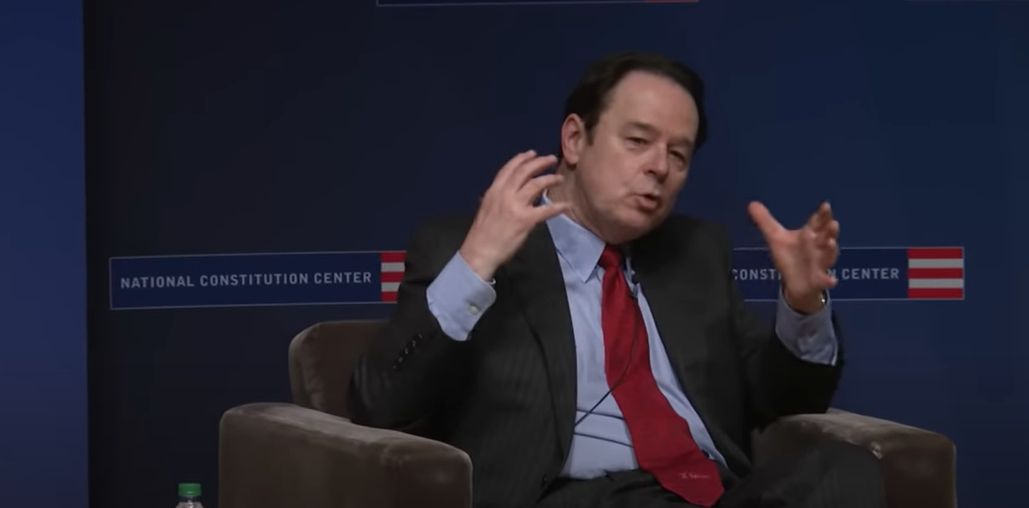
David Boaz, the Cato Institute’s long-time executive vice president, left us last week. His passing was an obvious personal loss to his family and friends. It was a professional loss for the Cato Institute. It was political loss for libertarians. And for the larger conservative movement as well. The evidence is overwhelming that … morality is best modeled and taught, rather than imposed with threats of prosecution and prison. Back in the mists of time — sometime in 1978, I believe — I ran into a Stanford University graduate student by the name of Williamson Evers. I was in law school at the time but was devoting much of my time to journalistic and political endeavors with a libertarian bent. He told me I should visit the Cato Institute in San Francisco. So I drove up into the city, a rare trek for me, and met Ed Crane, Cato’s founding president, Charles Koch, who provided Cato’s seed capital, and David Boaz. (READ MORE from Doug Bandow: Iran Tries To Stem Religious Conversions From Islam) It was my first contact with organized, institutional libertarians. It was a transformative experience. Although I signed on with the Ronald Reagan presidential campaign, which brought me to Washington, I was hooked on the libertarianism. While in the campaign I began writing for Roy Childs, editor of Libertarian Review and later Cato’s first foreign policy analyst. When Cato moved to DC I reestablished contact with Ed and David. When my libertarian-minded boss, Martin Anderson, who was Reagan’s domestic policy adviser, left the White House, I headed into what I considered to be the realist libertarian camp, determined to bring a hardline commitment to liberty to the rather barren territory of Washington, D.C. I started out at Inquiry magazine and soon ended up at Cato. At the latter it was immediately evident that David was essential to the institute’s success. Ed was Cato’s outsize outside face, driven by policy but unconstrained by management theorems. The world incorrectly thought Cato was an acronym, but when it came to operations it really did stand for Crane and the Others. Except when it came to David. He, too, was driven by a commitment to liberty. And he promoted a free society in multiple ways. For instance, he worked on the Ed Clark presidential campaign in 1980, a serious effort perhaps unmatched until former New Mexico governor Gary Johnson’s run decades later. But it was at Cato where David combined two roles, fleshing out libertarian ideas and turning them into practical policy proposals, and ensuring that their presentation was professional and persuasive. It is hard to overstate the importance of the latter role. The libertarian movement was by turns enthusiastic, rabid, antagonistic, didactic, passionate, angry, anarchic, careless, revolutionary, and more. David was calm, deliberative, intellectual, thoughtful, principled, and, above all, professional. He introduced many to libertarianism with his seminal books, The Libertarian Mind: A Manifesto for Freedom and The Libertarian Reader. He also wrote shorter though important pieces throughout his career — an early article in the New York Times before drug legalization was popular fueled the fight against prohibition. Although David never hesitated to insist that he was a liberal, in the classical rather than modern sense, and not a conservative, his personal life illustrated his commitment to libertarianism, not libertinism. He was quite abstemious: no smoking or drinking, and certainly no illicit substances of the sort that often showed up at libertarian gatherings. I started at his position, but eventually gave in to the temptations of wine. More seriously, gay and in a committed relationship that lasted three decades until his death, he long ago made the case for gay activists to be pro-family: “Gay leaders would be better off making a pro-family case, playing up their commitment to their partners and their desire for a legal union.” He also challenged social conservatives — especially those once and twice divorced, often adulterous leaders on the right who lecture the rest of us on Western civilization — about the real remedies for very genuine social problems. With some asperity, he observed: “you won’t reduce the costs of social breakdown by keeping gays unmarried and not letting them adopt orphans.” Disagree with him you may, but this was not a rhetorical flourish. He was pushing conservatives toward better policies. Surely rampant adultery, which rarely seemed to attract the same high decibel denunciations from political social conservatives, was a bigger threat to the family than gay marriage (which, in the interests of full disclosure, I opposed in favor of civil partnerships). However, it was in ensuring that Cato’s multiple products were serious, persuasive, well-written, and, above all, professional that David was essential. I always did what I could to avoid the office — working at home and traveling often. I was particularly determined to evade dealing with the details of production, preferring to write and speak and leave the rest to others. David, though a fine writer and speaker, recognized the economic principle of comparative advantage and devoted himself to the tougher but necessary work of professionalizing Cato’s work. Without that, the Institute would not have achieved the reputation for scholarship that it enjoys today. In the battle for the future of conservatism, libertarians might currently look to be the losers. Certainly, David was no Pollyanna, untethered from the reality of current politics. Yet he also looked to the future beyond the next administration and was optimistic. The evidence is overwhelming that economic liberty in its many forms has delivered a freer as well as more prosperous society. That morality is best modeled and taught, rather than imposed with threats of prosecution and prison. And that the promiscuous war-making of establishment conservatives and their Neocon allies is just another form of Big Government social engineering, only far more destructive than the New Deal, Great Society, and other attempts to remake Americans at home. (READ MORE: Leftists Blatantly Celebrate Lenin’s Legacy in New Book) David continued to work and promote liberty even as his health flagged, a sign of his dedication to creating a better future for other people. His departure is a loss personally and professionally. I remember someone once complimented me on my fine drug legalization piece in the New York Times. I have written (and spoken) a lot on the issue and was tempted to cheerfully accept the accolade. However, conscience got the better of me and I had to fess up that it was written by David, not me. It was not the only time that I wished I had written something that bore David’s name. RIP faithful crusader on behalf of liberty. The post David Boaz: Practical Libertarianism appeared first on The American Spectator | USA News and Politics.
Like
Comment
Share
Conservative Voices
Conservative Voices
2 yrs

Grade Inflation and Campus Protests
Favicon 
spectator.org

Grade Inflation and Campus Protests

Why the outburst of campus protests in recent years, culminating in the sizable and sometimes violent demonstrations at such prestigious universities as Harvard, Columbia, Northwestern, and Stanford? While many factors are at work, one that seldom gets mentioned: boredom. Students often have a lot of free time. TikTok, Instagram, drinking, sex, and internet porn do not provide adequate fulfillment. [S]chools receiving federal financial support should not be allowed to have average cumulative grade point averages above 3.0 (“B”). Why? Most college students don’t have much to do academically. Why is that? Grade inflation. Surveys of time use by the federal government suggest that the amount of time college kids spend on their academic work has fallen from an average of perhaps 40 hours weekly in the middle of the last century to about 27 or so hours today. Since a “year” in American collegiate parlance is actually only about 32 or so weeks, college students probably average less than 900 hours annually working on school tasks, probably less than much younger elementary or high school students — and less than half as much as the highly productive professional, technical, or managerial workers that most college students aspire to be. (READ MORE from Richard K. Vedder: College Football Is About To Change Forever) Harvard’s great political scientist Harvey Mansfield has taught in every decade since the 1960s — seven in total (as have I). In a great recent interview in the Wall Street Journal, Mansfield recalls how students do far less reading and writing in class than they did decades ago — but for much higher grades. Mansfield taught at the oldest and most elite of our colleges, while I had very similar experiences, teaching a bit at highly selective schools, but mostly at a very typical high mid-quality state institution with only moderately selective admission criteria, Ohio University.  When I started teaching American economic history in the 1960s, students were expected to read a textbook and about five other supplemental books. In my last years of teaching (until a couple of years ago), I considered it an accomplishment if students read the text and maybe a couple of short supplemental readings. Looking at old gradebooks, in the mid-1960s, my average grade in an introductory economics class was a “C” and it was rare for even 10 percent of students to get an “A.” Mansfield notes that a majority of grades today at schools like Harvard are “A” or “A-.” Nearly all students wrongly consider themselves Masters of the Universe. The grade system provides vital information not only to the universities themselves but to future employers wishing to separate the best and brightest from the mediocre and mundane. If everyone gets nearly the same grades, their informational value is virtually lost. Student incentives to work hard are dramatically reduced, allowing them time to form campus encampments and demonstrate for days over events occurring thousands of miles away that only very tangentially touch on their lives. A major factor in the rise of grade inflation probably was the introduction of institutionally administered student evaluations of professors on most campuses in the late 1960s or 1970s. In an attempt to make colleges more comforting and responsive to students in order to avoid unwanted campus discontent, college administrators initiated evaluations that at many schools were perceived by the professoriate to have some importance — bad evaluations sometimes severely reduced the prospects for tenure, for example. By giving high grades, professors thought that could buy some popularity and indirectly job security. I believe the increased role of the federal government has lowered the quality of American higher education materially in the last half century or so, but a case could be made that schools receiving federal financial support should not be allowed to have average cumulative grade point averages above 3.0 (“B”) for the undergraduate student body (exceptionally good students could still get near 4.0 averages). State governments could do the same for the universities they subsidize.  Another approach would be to introduce a “grade inflation tax” whereby schools would lose a proportion of subsidies — including research support, Pell Grants, etc., — if the accumulative grade point average of all undergraduates exceeded a “B” average. Collegiate apparatchiks, in turn, would have to harass or incentivize faculty into making the grading system useful again. (READ MORE: The Age of the Lazy American) To be sure, there are other factors involved in today’s campus protests, and one can legitimately argue that peaceful protests that do not interfere substantially with the pursuit of knowledge and discovery of truths are actually good — signs of a vibrant campus with a considerable diversity of views and members of the university community interested in the broader world. The protests of the Vietnam War era, for example, occurred when grade inflation was dramatically lower. But students today are not challenged by their academic duties enough, leading to such modern phenomenon as excessive time spent on social media rather than learning the verities contributing to prosperous and long lives. College should be more than four or five “gap years” of fun between secondary school and the “real world.” Richard Vedder is Distinguished Professor of Economics Emeritus at Ohio University and Senior Fellow at the Independent Institute. The post Grade Inflation and Campus Protests appeared first on The American Spectator | USA News and Politics.
Like
Comment
Share
Conservative Voices
Conservative Voices
2 yrs

The Supreme Court Defends Free Speech
Favicon 
spectator.org

The Supreme Court Defends Free Speech

Earlier this month, in National Rifle Association (NRA) v. Vullo, the gun-rights organization won a landmark victory at the Supreme Court. Given the Court’s conservative majority, a casual court-watcher might find this unsurprising. Less intuitively, the NRA received legal representation from an ideological antipode — the ACLU. Further, the unanimous majority opinion came from staunch liberal justice Sonya Sotomayor. Uniting these disparate factions was the simple notion that the Constitution forbids governments to choke free speech by coercing third parties to dissociate from disfavored speakers. The state action in question violated the First Amendment in a clear and explicit fashion. The High Court ruled that — if the fact pattern alleged in lower courts proves true — New York State’s efforts to sever the NRA from its insurance providers constituted such coercion. After the 2018 mass shooting in Parkland, Florida, the then-director of the New York Department of Financial Services (DFS), Maria Vullo, made clear to insurers that continued ties with the gun-rights advocate would invite regulatory retaliation. “Vullo was free to criticize the NRA and pursue the conceded violations of New York insurance law,” Sotomayor wrote. “She could not wield her power, however, to threaten enforcement actions against DFS-regulated entities in order to punish or suppress the NRA’s gun-promotion advocacy.” (READ MORE from David B. McGarry: New York’s Attempted Hit on the NRA Violated the First Amendment) Nonetheless, New York did just that. The multi-pronged offensive went as follows. Vullo issued a guidance letter urging insurance providers to consider “reputational risks” that could attach to doing business with the NRA. In the context of the relevant financial-services regulatory regime, invoking such “risks” constitutes a not-so-veiled threat of regulatory sanction. Vullo also met privately with the NRA’s financial partners. Meeting with one partner, Lloyd’s of London, she made her aim explicit. As Sotomayor describes it, “Vullo told the Lloyd’s executives ‘that DFS was less interested in pursuing the[se] infractions’ unrelated to any NRA business ‘so long as Lloyd’s ceased providing insurance to gun groups, especially the NRA.’”  In other words: comply, or else.  Vullo’s censorial campaign had its intended effect. Financial institutions — including Lloyd’s — abandoned the NRA. The record suggests they did so against their will, solely to deflect regulatory scrutiny. According to a court filing, the chairman of one erstwhile NRA partner “placed a distraught phone call to the NRA,” saying that, “Although [the firm] wished to continue doing business with the NRA … it would need to ‘drop’ the NRA for fear of ‘losing [our] license’ to do business.”  Vullo presented simple facts and few legal ambiguities. The state action in question violated the First Amendment in a clear and explicit fashion.  The state’s actions fell well outside the parameters set in Bantam Books v. Sullivan (1963), whose precedent directed the Court’s reasoning. The future seems far less clear, however. In recent decades, government officials have routinely threatened, cajoled, and enticed private actors to achieve various desired ends. Particularly when it concerns expressive activity under the protection of the First Amendment, this phenomenon — known as “jawboning” — raises significant constitutional questions. The Supreme Court will soon rule on another jawboning case (a headline magnet, Murthy v. Missouri), which questions whether the Biden administration’s attempts to shape social-media platforms’ content moderation policies consisted of constitutionally appropriate efforts at persuasion or impermissible coercion. Murthy presents a far more convoluted and extensive factual record than Vullo, containing endless ambiguity and variation.  From one angle, Vullo’s clear-cut fact pattern offers little indication respecting the likely complexities of Murthy’s outcome. However, the unanimous Court’s emphatic adoption of Bantam Books’ coercion standard — rather than other, more malleable standards that lower courts favored in Murthy — suggests the justices may enjoin only those instances of jawboning that seem clearly coercive in nature. “A government official can share her views freely and criticize particular beliefs, and she can do so forcefully in the hopes of persuading others to follow her lead,” Sotomayor wrote. Absent this ability, she argued, “the government could barely function.” Should this reasoning carry forward, it seems near impossible that the Court would uphold the totality of the 5th U.S. Court of Appeals’ sweeping injunction against the Biden administration. (READ MORE: Government’s Attack on Free Speech Can Only Be Stopped by Congress) Combing through the entrails of judicial opinions for portents of the future, while edifying to court watchers, distracts from the immediate importance of the Vullo ruling. A unanimous Court — at the behest of a two otherwise-diametrically-opposed advocacy groups — emphatically rebuked an act of petty and censorial tyranny. It preserved the First Amendment’s speech protections, which have never been more robust. While it is a feature of republican governments to be rocked incessantly by partisan antics and overreaches, the Constitution provides antagonistic checks and balances as necessary stabilizers. It is not perpetual calm, but a strong and resilient institutional bulwark, that defines a healthy system.  In the Vullo saga, the Supreme Court did its work. The system held firm. David B. McGarry is a policy analyst at the Taxpayers Protection Alliance. The post The Supreme Court Defends Free Speech appeared first on The American Spectator | USA News and Politics.

Like
Comment
Share
Conservative Voices
Conservative Voices
2 yrs

Missing the Target on Bump Stocks
Favicon 
spectator.org

Missing the Target on Bump Stocks

The National Firearms Act of 1934 (“NFA”) defines a machine gun as “Any weapon which shoots, is designed to shoot, or can be readily restored to shoot, automatically more than one shot, without manual reloading, by a single function of the trigger.” (emphasis mine) There is a simple remedy for the disparate treatment of bump stocks and machine guns. Congress can amend the law. A bump stock is a device that uses the recoil of a firearm to cause a finger to re-depress the trigger of a semiautomatic firearm (meaning a firearm that requires a separate trigger pull for each shot) resulting in rapid trigger pulls and near-machine-gun rates of fire. But a bump stock is obviously not a weapon, does not have a trigger, and cannot rationally be defined as a machine gun or otherwise regulated under the current language of the NFA. Nevertheless, in 2018 after the prior year’s horrific mass murder in Las Vegas when a madman (whose motives were never determined) who used a bump stock to fire into a music festival crowd, killing 58 (some say 60) and wounding hundreds, the Trump administration’s Federal Bureau of Alcohol, Tobacco, Firearms, and Explosives (“ATF”) changed years of regulatory interpretation to promulgate a rule that banned bump stocks as “devices (that) convert an otherwise semiautomatic firearm into a machinegun.” An early version of a bump stock was called the Atkins Accelerator which was submitted to the ATF in 2002. That device included a spring that “caused the firearm to cycle back and forth impacting the trigger finger, which remained rearward in a constant pull without further input by the shooter while the firearm discharged multiple shots. The device was advertised as able to fire approximately 650 rounds per minute.” While ATF initially ruled that this did not quality as a machine gun, four years later they changed their view but also determined that removal and disposal of the internal spring would render the device a non-machine gun under the statutory definition. Hence, ATF advised individuals who had purchased the Akins Accelerator that they had the option of removing and disposing of the internal spring, thereby placing the device outside the classification of machine gun and allowing the purchaser/possessor to retain the device in lieu of destroying or surrendering the device. Since then, bump stocks without springs have been legally available. In 2017, in the justifiably emotional aftermath of the deadliest mass shooting in American history, the federal government began looking at their authority to ban bump stocks. At the time, the Department of Justice determined that they had no such authority. Even anti-gun former Senator Dianne Feinstein (D-CA) noted, regarding ATF, “that current law does not allow the agency to ban or regulate bump-fire stocks.” (READ MORE from Ross Kaminsky: Universities and the ‘Common Good’) However, DOJ and ATF were pressured by President Trump to ban bump stocks … and so they did despite their own understanding that they had no such authority. The new rule was challenged in federal court by a man named Michael Cargill (thus the name of the lawsuit, Garland v Cargill) who owned two bump stocks, complied with the rule to turn them in and then sued to get them back. On Friday the Supreme Court, by a 6-3 vote, ruled that ATF does not have the authority to ban bump stocks as machine guns and overturned the rule. The ATF had to know it was coming and that their action was not supported by the text of the law. Nevertheless, they made whatever arguments they could after being pushed initially by President Trump and subsequently under the maniacally anti-gun Biden administration, focusing more on “automatically” than on “a single function of the trigger,” both of which the Court’s majority rejected as a basis for banning bump stocks: A semiautomatic rifle equipped with a bump stock is not a “machine gun” as defined by §5845(b) because: (1) it cannot fire more than one shot “by a single function of the trigger” and (2) even if it could, it would not do so “automatically.” ATF therefore exceeded its statutory authority by issuing a Rule that classifies bump stocks as machineguns. As usual, many pundits and many people are reacting to this case as if it is about whether a bump stock is a good idea. And as usual, those pundits and people are missing the real target. Anti-gun activists spent the day talking about how “bump stocks cause immense destruction and violence” (well, they sure did once but I’m unaware of any other time they’ve been used in a crime) and that the Court “has put countless lives in danger” (also manifestly not in evidence beyond that one tragic day.) One of my radio show listeners texted me: “Hey yeah Ross, you saw the result of those bump stocks. You see how great they are for massacring people…not good for accuracy but great for massacring people. Totally something we should have available to everybody, no problem.” But nobody in this case — as far as I can tell not even the plaintiff, and certainly not the Justices — argued either that bump stocks are a good idea or that they cannot ever be banned. Simply that they cannot be banned by current law. Indeed, just as bump stocks are not machine guns they are equally not firearms (or even weapons) of any kind. Therefore, they would have no Second Amendment protection should Congress or a state legislature pass a law to ban them. In his brief concurrence with the judgment, Justice Samuel Alito noted: The horrible shooting spree in Las Vegas in 2017 did not change the statutory text or its meaning. That event demonstrated that a semiautomatic rifle with a bump stock can have the same lethal effect as a machine gun, and it thus strengthened the case for amending §5845(b). But an event that highlights the need to amend a law does not itself change the law’s meaning. There is a simple remedy for the disparate treatment of bump stocks and machine guns. Congress can amend the law — and perhaps would have done so already if ATF had stuck with its earlier interpretation. Now that the situation is clear, Congress can act. The liberal dissent spends paragraphs talking about the history of machine guns and of their regulation, trying to convince us that a bump stock is a form of machine gun. To be fair, their argument is that by using one’s own power to pull a trigger once, a shooter using a bump stock can cause rapid fire of multiple rounds, thus functioning as a machine gun. The problem of course, is that in fact the trigger is being depressed for each round. The dissent says that the law regarding a “single function of the trigger” should be read as “a single human act” performed on the trigger but even that isn’t really true since the finger — albeit with non-human assistance — is pulling the trigger for each shot. (READ MORE: The Unsettling Truth About Climate Science and Politics) It’s worth repeating that it wasn’t just the Court’s majority that disagreed with the dissent’s interpretation; the ATF themselves disagreed until Donald Trump pressured them to pass a rule that the ATF knew to be extralegal. I don’t care about bump stocks. As a libertarian, my default is against government banning things and I think the fact that you can only name one time a bump stock has been used in a crime (albeit a truly terrible one) implies that, as usual, recency bias colored the conversation about them. That said, if a government (state or federal) banned bump stocks by a new act of law, it wouldn’t be a tragedy. What is a tragedy, what truly represents the erosion or intentional degradation of the rule of law on which civil society is based, is allowing bureaucracies to usurp the function of legislators, making law either at their own whims or at the whims of political executives driven by short-term emotion or electoral calculation. Those risks are especially high when the president of the United States is not restrained by Constitutional and legal guardrails, whether by temperament or by insufficient checks and balances. But the Constitution and the body of law that properly emanates from it are all that separate us from being the greatest nation in history and just another country that once seemed to have promise but inexorably drifted into bureaucratized tyranny. Bureaucrats cannot be allowed to write law. Whenever there is a dispute in which the question arises of whether a regulation is supported by actual law, courts’ default position must be against the regulation. And arguments about the purported (and maybe actual) beneficial impact of the regulation must be ignored in that decision-making process. (Fixing this problem will require the Supreme Court’s overturning of their egregious creations known as Chevron deference and Auer deference, the former of which is the subject of two current Supreme Court cases whose results we should get within a few weeks.) If we allow extralegal regulations to stand where we like the outcomes (and I’m not saying that was my position regarding bump stocks because, again, I really don’t care about them) what will be our firm ground from which to oppose extralegal regulations whose outcomes we don’t like? (READ MORE: The Cancer of Critical Race Theory) If government is to ban something, then ban it by clearly written law. When the law does not allow a ban, and even (or perhaps especially) when the law is ambiguous, agencies must not be allowed to nevertheless enforce one. Anything else is the path to tyranny. The post Missing the Target on Bump Stocks appeared first on The American Spectator | USA News and Politics.
Like
Comment
Share
Intel Uncensored
Intel Uncensored
2 yrs

The War On Your Food Supply
Favicon 
www.sgtreport.com

The War On Your Food Supply

from OPERATION FREEDOM: TRUTH LIVES on at https://sgtreport.tv/
Like
Comment
Share
Intel Uncensored
Intel Uncensored
2 yrs

Analysis Shows More Children Died After COVID Shots Than Previously Reported
Favicon 
www.sgtreport.com

Analysis Shows More Children Died After COVID Shots Than Previously Reported

by Matt Agorist, The Free Thought Project: Many VAERS reports list “age unknown” for people who were injured or died following a COVID-19 vaccine. VAERS analyst Albert Benavides said a closer look at the report summaries often reveals the victim’s age — yet VAERS doesn’t update the reports to reflect this. If it did, the […]
Like
Comment
Share
Jihad & Terror Watch
2 yrs

Will Far Left Jew-hating Democrat lawmakers be part of the mob of pro-Hamas thugs who plan to shut down Washington DC when Benjamin Netanyahu comes to address Congress?
Favicon 
barenakedislam.com

Will Far Left Jew-hating Democrat lawmakers be part of the mob of pro-Hamas thugs who plan to shut down Washington DC when Benjamin Netanyahu comes to address Congress?

A far-left organization in New York City that has been at the forefront of anti-Israel protests has vowed to “shut down DC” when Israeli Prime Minister Benjamin Netanyahu arrives to speak before Congress. Even worse, anti-Israel Democrats plan to disrupt the speech in an unprecedented show of hostility toward the democratically-elected leader of one of […]
Like
Comment
Share
BlabberBuzz Feed
BlabberBuzz Feed
2 yrs

Tensions Rise: Biden And White House Correspondents Clash Over Press Conference Questions
Favicon 
www.blabber.buzz

Tensions Rise: Biden And White House Correspondents Clash Over Press Conference Questions

Like
Comment
Share
Twitchy Feed
Twitchy Feed
2 yrs

AP: President Joe Biden Goes Straight From G7 to Hollywood Fundraiser
Favicon 
twitchy.com

AP: President Joe Biden Goes Straight From G7 to Hollywood Fundraiser

AP: President Joe Biden Goes Straight From G7 to Hollywood Fundraiser
Like
Comment
Share
YubNub News
YubNub News
2 yrs

Italian PM Meloni gives France's Macron 'death stare' after clash over G-7 statement
Favicon 
yubnub.news

Italian PM Meloni gives France's Macron 'death stare' after clash over G-7 statement

Join Fox News for access to this content You have reached your maximum number of articles. Log in or create an account FREE of charge to continue reading. By entering your email and pushing continue,…
Like
Comment
Share
Showing 24101 out of 56670
  • 24097
  • 24098
  • 24099
  • 24100
  • 24101
  • 24102
  • 24103
  • 24104
  • 24105
  • 24106
  • 24107
  • 24108
  • 24109
  • 24110
  • 24111
  • 24112
  • 24113
  • 24114
  • 24115
  • 24116

Edit Offer

Add tier


Select an image
Delete your tier
Are you sure you want to delete this tier?

Reviews

In order to sell your content and posts, start by creating a few packages. Monetization

Pay By Wallet

Payment Alert

You are about to purchase the items, do you want to proceed?

Request a Refund