YubNub Social YubNub Social
    Advanced Search
  • Login

  • Night mode
  • © 2026 YubNub Social
    About • Directory • Contact Us • Privacy Policy • Terms of Use • Android • Apple iOS • Get Our App

    Select Language

  • English
Install our *FREE* WEB APP! (PWA)
Night mode
Community
News Feed (Home) Popular Posts Events Blog Market Forum
Media
Headline News VidWatch Game Zone Top PodCasts
Explore
Explore Jobs Offers
© 2026 YubNub Social
  • English
About • Directory • Contact Us • Privacy Policy • Terms of Use • Android • Apple iOS • Get Our App

Discover posts

Posts

Users

Pages

Group

Blog

Market

Events

Games

Forum

Jobs

Science Explorer
Science Explorer
2 yrs

Why aren't we crushed by the weight of Earth's atmosphere?
Favicon 
www.livescience.com

Why aren't we crushed by the weight of Earth's atmosphere?

Earth's atmosphere is heavy, so why doesn't it weigh us down more?
Like
Comment
Share
Science Explorer
Science Explorer
2 yrs

Physicists Transformed a Quantum Computer Into a Time Crystal
Favicon 
www.sciencealert.com

Physicists Transformed a Quantum Computer Into a Time Crystal

A radical new first for physics.
Like
Comment
Share
Conservative Voices
Conservative Voices
2 yrs

Trump administration's new Attorney-General nominee Pam Bondi is an 'impressive pick'
Favicon 
www.brighteon.com

Trump administration's new Attorney-General nominee Pam Bondi is an 'impressive pick'

Follow NewsClips channel at Brighteon.com for more updatesSubscribe to Brighteon newsletter to get the latest news and more featured videos: https://support.brighteon.com/Subscribe.html
Like
Comment
Share
Conservative Voices
Conservative Voices
2 yrs

'Censorship' is not the way to 'combat' misinformation: Michael Shellenberger
Favicon 
www.brighteon.com

'Censorship' is not the way to 'combat' misinformation: Michael Shellenberger

Follow NewsClips channel at Brighteon.com for more updatesSubscribe to Brighteon newsletter to get the latest news and more featured videos: https://support.brighteon.com/Subscribe.html
Like
Comment
Share
Intel Uncensored
Intel Uncensored
2 yrs

Tactics of Psychological Manipulation: Dr. Robert Malone on American Thought Leaders
Favicon 
api.bitchute.com

Tactics of Psychological Manipulation: Dr. Robert Malone on American Thought Leaders

Tactics of Psychological Manipulation: Dr. Robert Malone on American Thought Leaders - 3,328 views November 23, 2024 Dr. Malone - American Thought Leaders - The Epoch Times - “The battleground is your mind.” How are powerful forces using technology to propagandize and shape behavior? And what effect is it having on society? - ? Watch the extended version of this episode: https://ept.ms/Y1107RobertMalone - In this episode, Jan Jekielek sits down with scientist and physician Dr. Robert Malone to discuss his latest book, “PsyWar,” co-authored with his wife, Dr. Jill Malone. “Someone is making a decision about how people should think, what they should think, how they should feel, how they should behave in the world without consulting them, and you’re using a technology that is so powerful and effective that you’re literally reprogramming their mind without their consent,” says Dr. Malone. - CHAPTER HEADERS 0:00:00 - Introduction to Psywar 0:01:39 - Defining Psywar 0:03:14 - Manipulation in Society 0:05:35 - Realizing the Moral Implications 0:07:35 - Tactics of Psywar 0:13:25 - Nudge Technology and Authoritarian Decisions 0:15:11 - Psychological Bioterrorism 0:20:00 - Disaster Cronyism and Pump-and-Dump Strategies 0:22:35 - Conclusion - ? Sign up for the American Thought Leaders ALERTS newsletter to stay up-to-date on new episodes, releases, and special events ? https://ept.ms/ATLnewsletter - FAIR USE FOR EDUCATIONAL PURPOSES Mirrored From: https://www.youtube.com/@AmericanThoughtLeaders
Like
Comment
Share
RetroGame Roundup
RetroGame Roundup
2 yrs ·Youtube Gaming

YouTube
Over 80 Atari Games Arcade Games In Under 1 Hour
Like
Comment
Share
Intel Uncensored
Intel Uncensored
2 yrs

Majority of Americans Back Trump’s Second Term Plans: Pew Research
Favicon 
www.sgtreport.com

Majority of Americans Back Trump’s Second Term Plans: Pew Research

from The National Pulse: Following the 2024 election, American public sentiment toward President-elect Donald J. Trump has brightened significantly compared to previous elections. A Pew Research Center survey released on Friday highlights that 53 percent of Americans approve of Trump’s agenda for his upcoming term, compared to 46 percent disapproving. This survey, conducted from November 12 to 17 with over 9,500 adult participants, […]
Like
Comment
Share
Intel Uncensored
Intel Uncensored
2 yrs

Russia Conducts Nuclear Drills as NATO Supports Long-Range Strikes on Russian Soil
Favicon 
www.sgtreport.com

Russia Conducts Nuclear Drills as NATO Supports Long-Range Strikes on Russian Soil

from Your News: Russia conducts nuclear readiness exercises amid rising tensions with NATO over Western-backed missile strikes from Ukraine. By yourNEWS Media Newsroom Russia conducted nuclear drills on Saturday, escalating tensions with NATO and the West as France joined the United States and the United Kingdom in supporting Ukraine’s use of long-range missiles targeting Russian […]
Like
Comment
Share
Fun Facts And Interesting Bits
2 yrs

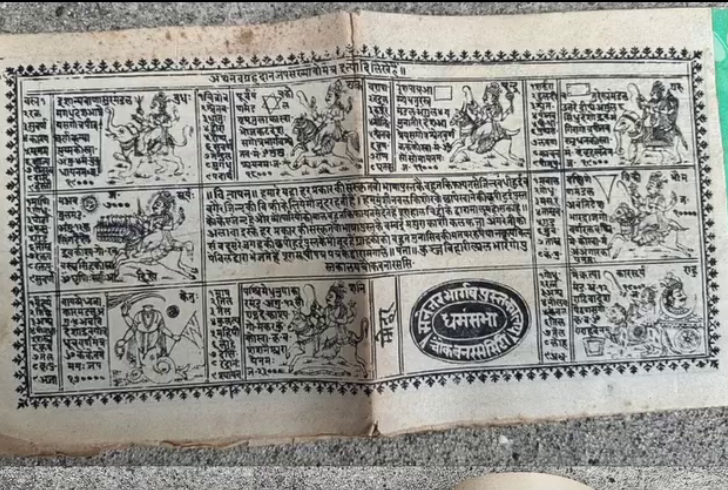
Mysterious Sanskrit Text Found in Germany Sparks Online Decoding Efforts
Favicon 
funfactsfordays.com

Mysterious Sanskrit Text Found in Germany Sparks Online Decoding Efforts

A man in Hamburg, Germany, made an exciting discovery that amazed people all over the world. While exploring a flea market, he found an old Sanskrit text. Without wasting time, he shared photos of it on Reddit and asked for help. Almost immediately, users from different backgrounds joined the conversation. They shared their thoughts and theories about the mysterious text, which sparked everyone’s curiosity. The Hindu Calendar Found in Hamburg In his Reddit post, the man uploaded pictures of two yellowed pages. These pages were covered in Devanagari script, which is used for Sanskrit and Hindi. Since the script was unfamiliar to him, he asked, “Found this at a flea market in Hamburg, Germany. Can anyone tell me what it is?” Soon, one user recognized it. They explained that the text was a “Panchang,” a Hindu calendar and almanac. According to them, this Panchang was likely printed in Banaras, a famous city in northern India. Interestingly, in Hindu culture, a Panchang is more than just a calendar. It helps people plan important rituals and ceremonies by providing key dates and astrological events. Instagram | newzybites | A rare Hindu Panchang, written in Sanskrit, was found in Hamburg. Connection to Bhargava Press and Pandit Nawal Kishore Bhargava As the conversation continued, more details about the text were discovered. One user pointed out that the Panchang was printed by Bhargava Press, an important publishing house in India. They explained that Bhargava Press was run by Pandit Nawal Kishore Bhargava, a well-known figure in 19th-century publishing. He was famous for printing religious and cultural texts, which became highly respected in Indian literature. Additionally, a user who claimed to be a descendant of Bhargava shared some personal insights. They explained that the Panchang found in Hamburg could be between 150 and 180 years old. “This is a Hindu calendar, a Panchang, printed by Bhargava Press,” they said. “Pandit Nawal Kishore Bhargava was a leading publisher. His family still lives in Lucknow, but the press no longer operates.” Theories About How the Sanskrit Text Reached Germany As more people joined the Reddit thread, many began wondering how this ancient Sanskrit text ended up in Germany. Some believed it could be linked to ancient exchanges of knowledge. For example, one user mentioned the time of Chandragupta Maurya, an ancient Indian ruler, and his scholar Chanakya. They suggested that copies of the text may have spread after being taken from India. “Germany has many Sanskrit texts like this, possibly taken from India,” they said. Furthermore, another user pointed out that European scholars had been studying Sanskrit texts since the 18th century. During this period, many Europeans became fascinated by India’s ancient knowledge and culture. Even though there is no clear evidence that this particular Panchang was taken during that time, the theory intrigued many. It certainly made people think about the journey of ancient texts across the world. The Purpose of a Panchang Instagram | freepressjournal | A Panchang guides daily life with astrological insights. A Panchang is not just a calendar. It serves as an almanac, filled with information about auspicious dates, lunar phases, and planetary movements. In Hindu tradition, a Panchang guides people to choose the best days for religious ceremonies, events, and even daily tasks. This guidance is rooted in ancient astrological principles. Written in Sanskrit, one of the world’s oldest languages, the Panchang reflects the richness of Hindu culture. For centuries, Hindu communities have relied on it to align their lives with cosmic cycles. The detailed information in a Panchang shows how deeply astrology influences traditional Indian practices. Growing Interest in Ancient Sanskrit Texts The discovery of this Sanskrit text in Hamburg shows how people are becoming more interested in ancient manuscripts. Today, more and more people value cultural items that link different parts of the world. Thanks to social media platforms like Reddit, users can easily share such finds and connect with others who are interested in history. This Sanskrit text reminds us of India’s global influence in literature, science, and spirituality. Cultural treasures like the Panchang continue to interest people around the world. As a result, the curiosity about these ancient texts remains strong and will likely encourage more exploration and learning across different cultures. The post Mysterious Sanskrit Text Found in Germany Sparks Online Decoding Efforts appeared first on Fun Facts For Days.
Like
Comment
Share
History Traveler
History Traveler
2 yrs

8 Fashion Trends of the Roaring Twenties
Favicon 
www.thecollector.com

8 Fashion Trends of the Roaring Twenties

  The Roaring Twenties are one of the most fascinating years in fashion, characterized by radical change in silhouettes, demonstrative excess, and the rejection of all previous beauty standards. The iconic Flapper girl, with her short hair, straight short dress, and a cigarette became a cultural archetype that was often referenced and recycled by popular culture. Some trends, like dramatic makeup or headwear still occasionally make a comeback. Others, however, remain a dated yet recognizable marker of the epoch and mostly appear in films or costume parties.   1. Drop Waist: The Signature and Controversial Roaring Twenties Trend Drop waist dresses on the March 1927 Vogue Britain illustration. Source: Vogue Britain   The drop waist dress, perhaps the most recognizable trend of this decade, was short-lived and faded into obscurity by the early thirties. Contrary to the accentuated waists of previous decades, the most fashionable 1920s dress would have a waist so low it almost disappeared, creating a boyish and slim figure. From the waist, hips, or breasts of a wearer, the sensual emphasis moved to her legs, with hems as short as ever, reaching just the kneecap.   The radical change of the silhouette was not entirely invented by fashion designers. The most important event in fashion history that changed the perception of body shape was the rejection of corsetry in favor of more comfortable and versatile lingerie. The changing lifestyles of women led to the simplification of dress styles, making clothes easier to wear and adjust. Moreover, during World War I, the production of corsets declined significantly since steel, used for corset bones, was needed for the war effort. The transformed lingerie styles offered less support and allowed for a more relaxed-fitting dress silhouette.   2. Sportswear as the New Trend Sports outfits on the cover of Judge magazine, June 12th, 1926. Source: Wikimedia Commons   Part of the reason why women sought an alternative to corsets was their growing interest in sports, which required more mobility and flexibility. For that reason, the 1920s were the time when the segment of sportswear started to emerge. But forget about yoga pants and sports bras—a century ago, garments for active women looked completely different.   Tennis and golf were popular sports accessible to women. Many also enjoyed swimming and cycling, and these actions needed specific sets of garments. The 1920s sportswear designers offered their clients dresses and skirts long enough to protect their modesty yet wide enough not to obstruct their movements. Women wore underpants to ride bicycles, while short and top combos were worn to beach parties. By today’s standards, these garments seem almost formal but initially, these pieces had a function of balancing between comfort and respectability.   3. Bobbed Haircut Illustration by the National Hairdressers’ Association, 1924. Source: Glamour Daze   The short haircut was a war necessity that quickly turned into a trend. Initially, women bobbed their hair to hide it under the nurses’ or workers’ caps. As World War I ended, the style became a symbol of emancipation and newly found independence. It was also actively promoted by actresses and celebrities. The short haircut was expensive to maintain, so some women pinned their hair so it would appear to be shorter. The curly bob became the signature haircut of the famous flapper girl Zelda Fitzgerald, the American writer and socialite.   The short hair trend caused an outrage within conservative circles. Within newspapers, rumors circulated that some fathers locked up or even killed their daughters for cutting their hair. Traditionalists blamed short-haired women for emasculating men, ruining their families, and even imposing baldness, infertility, and hormonal problems upon themselves. Short hair as a marker of feminine agency posed a threat to the old world order, with women attempting to attack the imbalanced power dynamic.   4. Original Jewelry and New Materials Art Deco emerald, onyx, and diamond bracelet, by Oscar Heyman & Brothers, c. 1925. Source: Christie’s   The 1920s jewelry had two major trends, varying in aesthetic and affordability. The most well-known was the Art Deco style with its strict geometry and precious stones and metals evoking associations with modern technology. Art Deco jewelers used the most exquisite and expensive materials yet radically detached themselves from tradition. They experimented with stone cuts and mountings, creating pieces that were never seen before.   On a more affordable note, many fashion designers preferred to focus on construction rather than on the value of materials. The 1920s jewelry accepted the legacy of Art Nouveau, using cheap materials like horn, lacquer, and newly discovered synthetic materials. Another breakthrough of the century came with the artificially cultivated pearls. Instead of employing divers looking for the precious material, jewelry companies could now afford to grow them in any amount, making the famous long-layered necklaces affordable to a wider audience.   5. Headwear of All Shapes Actress Norma Shearer wearing a cloche hat, 1927. Source: Wikipedia   The 1920s fashion was remarkable for the abundance of headwear of all shapes, sizes, and styles. A particular element of headwear, the cloche hat has now become one of the most recognizable symbols of the Roaring Twenties fashion. Apart from its own aesthetic qualities, the bell-shaped hat had one more nuance that made it desirable. The tight-fitting hat was impossible to wear over pinned hair, thus automatically revealing its wearer to be brave enough to cut her hair short.   For formal occasions, women could choose between a variety of headbands and decorations made from beads, pearls, feathers, stones, or any other precious material. Other popular accessories were decorative hair combs made from horns or the newly invented synthetic material bakelite, similar in quality to plastic.   6. Dramatic Makeup Actress Clara Bow wearing her signature makeup with painted eyebrows, c. 1927. Source: In Their Own League   Bold makeup was one of the signature elements of the flapper—a young, independent, and fashionable woman. The generation of the flappers’ mothers considered visible makeup shameful and indecent. In contrast, their daughters proudly wore dark eyeshadow, blush, bold lipstick, and dark nail polish that became available on the market. Lipstick in a portable metal container, which was just recently invented, became the most desirable accessory. Women painted their lips in a fashionable Cupid’s Bow form. For mascara, women mixed Vaseline with coal, creating thick heavy eyelashes.   Mass culture also left a tremendous impact on makeup trends. The popularity of live performances (such as jazz concerts) and black-and-white films helped shape the preferences of female audiences. The harsh scenic light and bad image quality required the performers to wear heavy makeup with dark contrasting accents. The popular obsession with Egyptian culture, propelled by the colonial exploration of the land, also contributed to the popularity of heavy kohl eyeliner.   7. Trousers on Women Actress Louise Brooks wearing palazzo trousers, mid-1920s. Source: Mintsquare   Although the idea of women wearing trousers was not particularly new in the 1920s, it nonetheless caused many scandals. Although pants first appeared in collections of popular fashion designers in the 1910s, fashion legends like Paul Poiret insisted that they were to be worn in the privacy of home only. For Poiret, it was a seductive garment that referenced the exotic imagery of Eastern harems. Such interpretation was partially a counter-movement to the suffragettes, who weaponized trousers as a marker of their agency and fight for change.   Until the 1920s, a woman could be arrested and even imprisoned for wearing trousers in public. However, during World War I, pants were a necessity for working women fulfilling their duties. After peace was briefly reinstalled, many women refused to change back into skirts and petticoats. Soon, wide-leg trousers that still looked like skirts from a distance became fashionable, particularly as an element of sportswear.   8. Cultural Appropriation: The Racialized Trends of the Roaring Twenties Mandarin coat, by Paul Poiret, loosely inspired by Chinese art, 1923. Source: The Kyoto Costume Institute   One of the signature yet most problematic issues of the 1920s fashion was the rampant and completely insensitive cultural appropriation. Women’s fashion designers often referenced colonized cultures of Asia, the Middle East, or Africa, hardly diving into the meanings behind used symbols. Eastern menswear, such as turbans, often transformed into fashionable accessories for Western women. Some dress historians regard this appropriation as the act of symbolic emasculation of the Eastern man and the assertion of white male dominance. Orientalist fashion imitating Chinese or Indian costumes graced the pages of magazines, yet non-white models rarely appeared in them.   The widespread appropriation of cultural symbols would not be as problematic if it was not paralleled with the violent and ruthless destruction of the same people it borrowed from. Colonized people were continuously reminded of their inferiority, yet their art and culture were deemed good enough to be appreciated. Such an approach led to the misinterpretation of many cultural symbols and contexts, such as the popularized Ancient Egyptian aesthetic.

Like
Comment
Share
Showing 2613 out of 56670
  • 2609
  • 2610
  • 2611
  • 2612
  • 2613
  • 2614
  • 2615
  • 2616
  • 2617
  • 2618
  • 2619
  • 2620
  • 2621
  • 2622
  • 2623
  • 2624
  • 2625
  • 2626
  • 2627
  • 2628

Edit Offer

Add tier


Select an image
Delete your tier
Are you sure you want to delete this tier?

Reviews

In order to sell your content and posts, start by creating a few packages. Monetization

Pay By Wallet

Payment Alert

You are about to purchase the items, do you want to proceed?

Request a Refund