YubNub Social YubNub Social
    Advanced Search
  • Login

  • Night mode
  • © 2026 YubNub Social
    About • Directory • Contact Us • Privacy Policy • Terms of Use • Android • Apple iOS • Get Our App

    Select Language

  • English
Install our *FREE* WEB APP! (PWA)
Night mode
Community
News Feed (Home) Popular Posts Events Blog Market Forum
Media
Headline News VidWatch Game Zone Top PodCasts
Explore
Explore Jobs Offers
© 2026 YubNub Social
  • English
About • Directory • Contact Us • Privacy Policy • Terms of Use • Android • Apple iOS • Get Our App

Discover posts

Posts

Users

Pages

Group

Blog

Market

Events

Games

Forum

Jobs

Gamers Realm
Gamers Realm
2 yrs

All JAK Aftermarket Parts in Modern Warfare 3 (MW3) Season 4 and how to unlock them
Favicon 
www.pcinvasion.com

All JAK Aftermarket Parts in Modern Warfare 3 (MW3) Season 4 and how to unlock them

Season 4 is upon us, and boy, are there a lot of JAK Aftermarket parts to unlock in Modern Warfare 3. Here is how to get your hands on them all. All Jak Aftermarket Parts in MW3 Season 4 There are a total of 8 new JAK aftermarket parts to unlock for various weapons in Season 4 of Modern Warfare 3. Some only make minor changes, while others will be considered meta in no time. JAK Harbinger Kit – M4 Assault Rifle This is an obscene JAK Aftermarket part for Modern Warfare 3. It allows you to chamber the M4 for .50 cal rounds, lowering the fire rate but delivering absolute missiles. Expect recoil that will blow your shoulder out. You can unlock it by completing any 5 challenges from Week 1 of MW3 Season 4. Screenshot: PC Invasion JAK Gunslinger – Basilisk Handgun A huge boost to the rate of fire and responsiveness to trigger with a .357 ammunition attachment. You can unlock it by completing any 5 weekly challenges of MW3 Season 4. JAK Volkh – KV ...
Like
Comment
Share
Gamers Realm
Gamers Realm
2 yrs

How to reduce the respawn time in Warzone Resurgence
Favicon 
www.pcinvasion.com

How to reduce the respawn time in Warzone Resurgence

Reducing respawn time in Warzone Resurgence will allow you a huge edge over your competitors, as your teammates will be able to get back into the fight quicker than theirs can. Here’s how to do it. How respawning works in Warzone Resurgence Everyone knows your teammates will respawn in Warzone Resurgence as long as at least someone from the team is alive. However, there are different timers and factors to keep into account before you understand how to reduce the respawn times. There are three playzones in Warzone Resurgence, and they each have their own respawn timer. During the first playzone, players will respawn in 15 seconds. After that, players will respawn in 39 seconds until the Rebirth Countdown runs out. Image: Raven Software After 9 minutes and 15 seconds, respawning will cease, and players will duke it out till one team remains. As Warzone Resurgence becomes a lot more tense as the round draws on, and teammates take longer to respawn, you’ll nee...
Like
Comment
Share
Gamers Realm
Gamers Realm
2 yrs

Wuthering Waves Void Thunder Echo farming route and locations
Favicon 
www.pcinvasion.com

Wuthering Waves Void Thunder Echo farming route and locations

If you’re looking for the perfect Echoes for an Electro-type Resonator in Wuthering Waves, here’s a farming route for all the Void Thunder Echo locations. Void Thunder Echo farming route and locations in Wuthering Waves You can collect a total of 13 Echoes with the Void Thunder Sonata in Huanglong, which are the best types of Echoes for someone like Calcharo. Having a two-set boosts your +10% Electro DMG, and having a five-set grants you +15% Electro DMG after releasing a Heavy Attack or Resonance Skill. Here are the best farming routes for Void Thunder Echoes. Screenshot: PC Invasion Tiger’s Maw Around Tiger’s Maw, you can find five Void Thunder Echoes. This is the most you’ll find in one area, which makes it the best farming spot. NumberEchoType1Traffic IlluminatorSpectro2Fission Junrock–3Vanguard Junrock–4Fusion WarriorFusion5Aero PredatorAero Screenshot: PC Invasion Desorock Highland & Central Plains Although ...
Like
Comment
Share
Gamers Realm
Gamers Realm
2 yrs

CoD x Fallout: Skins, bundles, release date, and event details for Modern Warfare 3 (MW3) and Warzone
Favicon 
www.pcinvasion.com

CoD x Fallout: Skins, bundles, release date, and event details for Modern Warfare 3 (MW3) and Warzone

Thanks to leakers, we now know about the CoD and Fallout collab that’ll be adding skins and other cosmetics to the game. Here’s everything we know. Table of contentsCoD x Fallout event detailsCoD x Fallout release dateCoD x Fallout skins and bundles CoD x Fallout event details Thanks to a leaked promotional image, we know that CoD not only plans to collab with Fallout, but have already been working on it. In the promotional image, which is all we have for now, we can see some of the main characters (Soap, Ghost, Captain Price, and Gaz) donning the blue and gold outfit of the Vault Dwellers. Interestingly, they are standing in front of Vault 141, which doesn’t officially exist in the canon, or at least it hasn’t been mentioned in any official Fallout media. We can expect to get skins and bundles like with the Warhammer 40K event, and that’s likely about it. As more info drops, I’ll be there to update you about it. CoD x Fallout re...
Like
Comment
Share
Hot Air Feed
Hot Air Feed
2 yrs

Gaza Pier Is Biden Presidency in a Nutshell
Favicon 
hotair.com

Gaza Pier Is Biden Presidency in a Nutshell

Gaza Pier Is Biden Presidency in a Nutshell
Like
Comment
Share
Science Explorer
Science Explorer
2 yrs

Neuralink’s Got Competition! World Record Smashed For Electrodes Placed On A Human Brain
Favicon 
www.iflscience.com

Neuralink’s Got Competition! World Record Smashed For Electrodes Placed On A Human Brain

The world record for the largest number of electrodes placed onto a human brain was just broken by brain-computer interface developers Precision Neuroscience. They successfully placed four arrays, each containing 1,024 tiny electrodes, onto the surface of a living patient’s brain, doubling the previous total record of 2,048.Brain-computer interfaces (BCIs) combine implanted electrodes that record brain activity in specific regions with a computerized device that can generate some kind of output, with the aim of replacing or enhancing particular functions. There are BCIs that help people communicate, operate robotic limbs, and – perhaps made most famous recently by Elon Musk’s Neuralink – control a computer with their mind. Co-founded in 2021 by Ben Rapoport, who also co-founded Neuralink but departed the following year, Precision has been developing its investigational system, the Layer 7 Cortical Interface, as a way to maximize electrode density. The aim is for more electrodes – generating more precise data – to be added to the brain’s surface without damaging it. “It is easy to see the impact that high resolution cortical mapping could have in the operating room,” explained Dr Joshua Bederson, who led the record-breaking surgery, in a statement. “It could be used to guide more precise and efficient procedures, which could potentially lead to better outcomes for patients.”  Bederson’s team carried out the procedure at the Mount Sinai Health System in New York in April 2024, as part of a larger clinical study of the Layer 7 Cortical Interface. Each electrode array measures only 1.6 square centimeters (0.2 square inches), meaning that once all four were in place, the surgeons had managed to pack a whopping 4,096 electrodes into an area of just over 8 square centimeters (1.2 square inches), as first reported by CNBC.The procedure was a planned operation to remove a benign tumor that also happened to provide a great opportunity to test the device for the 14th time in a living person. Bederson described to CNBC, who attended the surgery, that placing four electrode arrays was “a little bit awkward”, but the efforts paid off when they began successfully collecting data.Key to Precision’s ethos is the minimally invasive nature of their device. The Layer 7 Cortical Interface is designed to reversibly attach to any part of the brain’s surface during a simple and speedy surgical procedure. If the arrays need to be removed at a later date, it should not cause any tissue damage.Neuralink’s N1 device, which was recently implanted into its first human recipient, takes a slightly different approach by relying on 64 super-fine wires containing a total of 1,024 electrodes that are threaded a few millimeters deep into the brain tissue. This process caused some issues shortly afterward when a number of the threads retracted, putting many of the electrodes out of action. This is not a two-horse race between Precision and Neuralink, however. There are a number of other private companies, academic researchers, and government bodies working in this area. At the same time, politicians and lawmakers are beginning to grapple with the legal and ethical implications of BCIs becoming more commonplace. For now, though, this kind of technology is still considered experimental. Tests of the Layer 7 Cortical Interface are continuing, and Precision hopes to bring a commercial product to market sometime in 2025. Commenting on the record-breaking achievement, Rapoport said, “This record is a significant step towards a new era. The ability to capture cortical information of this magnitude and scale could allow us to understand the brain in a much deeper way.”
Like
Comment
Share
Science Explorer
Science Explorer
2 yrs

Conspiracy Theorists Are Asking How The Moon Buggy Fit Inside The Apollo Lander
Favicon 
www.iflscience.com

Conspiracy Theorists Are Asking How The Moon Buggy Fit Inside The Apollo Lander

If there's one thing we can say for Moon landing conspiracy theorists, it's that they've really got some stamina. Even 55 years after the first Moon landing, and with all the evidence we have that they happened, people are still clinging to the belief that they were faked.Though conspiracy theorists tend to focus on the first landing, some appear to believe they have proof that subsequent landings were faked. One reason given is that they cannot figure out how the Lunar Roving Vehicle (LRV) – aka the "Moon buggy" – managed to fit inside the Apollo lander. This conspiracy has resurfaced recently, for fairly unfathomable reasons.         IFLScience is not responsible for content shared from external sites.So how do we know NASA was able to get the LRV to the Moon? For a start, there is plenty of awesome footage available of the buggies racing around on the lunar surface.       Then of course, there's the fact that it would be weird for NASA to launch the most successful conspiracy in Earth's history, manage to conceal the truth despite the 400,000 people who worked on the program, and then forget to check whether the car could fit in the lander.The real answer is that NASA, given all the weight and space restrictions involved in leaving the Earth, is quite good at packing.                "The frame was made of aluminum alloy 2219 tubing welded assemblies and consisted of a 3 part chassis which was hinged in the center so it could be folded up and hung in the Lunar Module quad 1 bay," NASA explains. "It had two side-by-side foldable seats made of tubular aluminum with nylon webbing and aluminum floor panels."So that clears that up. The Moon landings happened, and if you think you've found an image that disproved it, Google is your friend. And whatever you do, don't go near Buzz Aldrin with your ideas.
Like
Comment
Share
Science Explorer
Science Explorer
2 yrs

Spock Officially Homeless As A Further Study Disproves Planet In 40 Eridani A System
Favicon 
www.iflscience.com

Spock Officially Homeless As A Further Study Disproves Planet In 40 Eridani A System

The planet confusingly known as 40 Eridani Ab has been confirmed not to exist. After previous studies had raised questions about whether activity on the star 40 Eridani A had been misinterpreted as the influence of a planet, a new paper provides proof. Under ordinary circumstances, this might be of interest only to specialists, but this faint star system has a towering role in fiction as the home system of the Vulcans, including Dr Spock. On the plus side, the methods used take us closer to finding real planets, including those in habitable zones.The star 40 Eridani A is visible to the naked eye away from city lights, but only barely. The first sign it was special came with the discovery of two companions, Eridani B and C, which orbit each other every 230 years, while both being in an 8,000-year orbit around Eridani A. In 1910, Eridani B was the first star to be identified as a white dwarf. Although not the closest star of this type, it remains the easiest to see.These intriguing aspects, and the fact the system is only 16 light years away, led to the system being designated as the location of planet Vulcan in the Star Trek Universe. Although life would almost certainly be impossible for a planet orbiting Eridani B or C, Eridani A looks like a good candidate for a host star. It’s quite old and fainter than the Sun, but not so faint as to make its habitable zone dangerously exposed to stellar flares as occurs for red dwarfs. The companion stars are distant enough not to pose much danger, both would be fainter than our Moon, for example.All this background meant that reports in 2018 of a suspected planet orbiting 40 Eridani A caused unusual excitement. It was promptly named Vulcan. However, even the initial study admitted to doubts – and these were reinforced last year. Now, the final nail has been put in Vulcan’s coffin, with a paper literally titled “The Death of Vulcan.”Initial reports of Vulcan didn’t use the method by which we have found the majority of planets so far – dips in their light as the planet obscures part of the star. Instead, astronomers were using the radial velocity method, by which most of the early planetary discoveries were made, and still favored for nearby systems. In these cases, the gravity of the planet pulls the star towards Earth and then away from us, creating blue and red shift.When a planet’s gravity is small, the change in radial velocity can be tiny, and easily mimicked by the behavior of the star itself.Dartmouth College graduate student Abigail Burrows and colleagues tested the movement of specific emission lines in 40 Eridani A’s spectrum, comparing these with the overall average. If the variation astronomers had detected was coming from a planet these should all be changing in sync. The team found they weren’t, with some lines moving on different timescales from others.40 Eridani A has a 39-45-day rotation period – about 60 percent longer than our Sun’s. The similarity of this period to the length of the proposed planet’s 42.4-day orbit was one of the things that raised doubts initially, and Burrow’s technique suggests the variations are almost certainly rotation-related. Most likely a combination of starspots and convection within the star is causing the apparent signal.Don’t be too sad for planet Vulcan, however. Like the proposed planet in our own system, it orbited far too close to its star to be habitable by microbes, let alone intelligent beings, logical or otherwise. It’s still possible there is a planet orbiting 40 Eridani A further out, including within the system’s habitable zone. The more distant a planet’s orbit, the harder it is to detect through the radial velocity method, particularly if it has a gravity more like Earth’s than Jupiter’s. A five to 10-fold increase in precision is needed if we want to use this method to find planets like the Earth in nearby stars’ habitable zones.The greater capacity to distinguish between planetary effects and internal stellar behavior Burrows demonstrated means that if there is a planet in 40 Eridani A’s habitable zone we’re now closer to being able to detect it.If that happens, however, we might need a new name – surely two failed Vulcans are enough.(Note: Stars in multiple systems are designated with capital letters, starting with A for the brightest. Planets have small letters, and start with b. If a planet only orbits one star, rather than having a Tatooine-like orbit around both, it uses the capital of the star it orbits, followed by its order of discovery – thus 40 Eridani Ab. You can see why nicknames like Vulcan are popular).The study is open access in The Astronomical Journal.
Like
Comment
Share
Science Explorer
Science Explorer
2 yrs

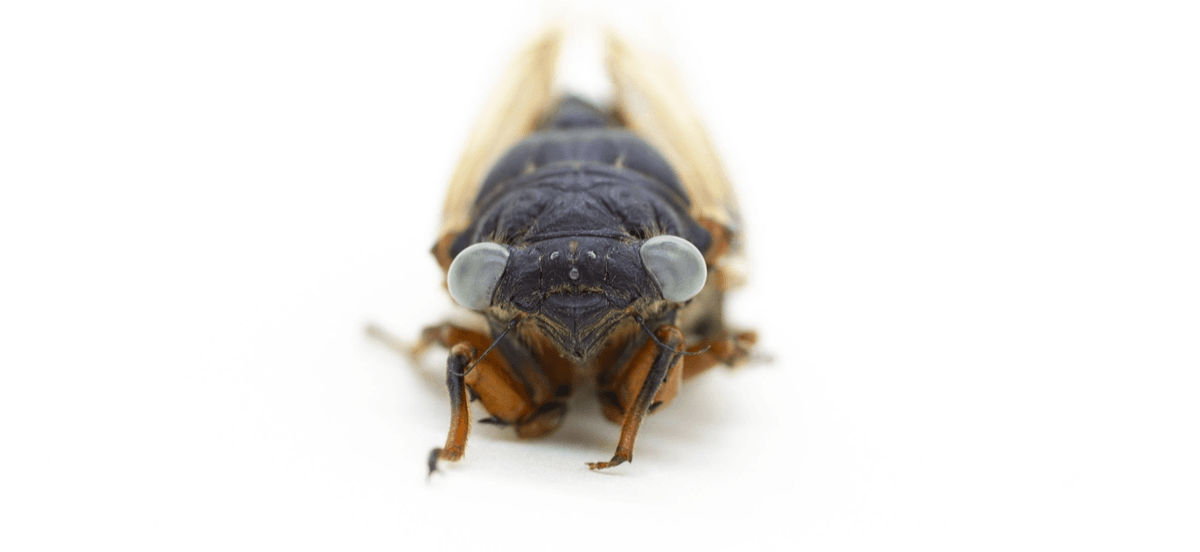
"One In A Million" Blue-Eyed Mutant Cicada Found By Kid In Illinois
Favicon 
www.iflscience.com

"One In A Million" Blue-Eyed Mutant Cicada Found By Kid In Illinois

Among the countless cicadas emerging across the eastern US this spring as part of a rare double-brood emergence, a kid from Illinois stumbled across one extraordinary individual: a blue-eyed mutant.Experts consider the special cicada to be “one in a million” as these cicadas' eyes are usually red, and it’s already been snapped up by the Field Museum of Natural History in Chicago where it will be on display until the end of June.The blue-eyed cicada, a female belonging to the species Magicicada cassini, was first spotted by Jack Bailey in his family’s yard in Wheaton, Illinois, during this year’s double-brood cicadapocalypse event. “My 4-year-old son, Jack, has been in heaven since they started emerging and has taken to collecting a lot of them. My daughter, Caroline, looked into his collection bucket and saw the blue-eyed one. She brought it inside and showed it to me,” Greta Bailey, the children’s mother, said in a statement.“I thought it was cool and unique and had not heard that blue-eyed cicadas even existed. I took a few pictures and Caroline let it go. Well, after telling my family about it, we came to find out how rare they are and were kicking ourselves for not keeping it,” she added.Upon realizing its rarity, the family searched the yard with flashlights and, remarkably, managed to find it again.Greta, Jack, and Field Museum collections assistant Jim Louderman with the rare cicada.Image credit: Daniel Le/Field Museum“One of our neighbors told us that the Field Museum is interested in the blue-eyed cicadas so I emailed the research and collections department last night in hopes that they would want it,” said Bailey.The blue-eyed cicada has since died as these insects have very short lifespans once they emerge (RIP).Almost all cicadas of this species have vibrant orange-red eyes, but an extremely small number have blue eyes, likely due to a rare genetic mutation. Little is known about the underlying cause of the blue eyes, but scientists at the Field Museum hope to sequence the DNA of the recently found bug to discover the genes responsible for its blue eyes.Another view of the blue-eyed Magicicada cassini,Image credit: Daniel Le/Field MuseumIt could be argued that 2024 is offering the best chance to find a blue-eyed cicada because this year is witnessing a rare double-brood event.Cicadas spend most of their life underground, with groups known as broods only emerging once every 13 or 17 years. This year will be particularly dramatic as two broods of cicadas are about to synchronize their awakening for the first time in 221 years: Brood XIX, which has a 13-year life cycle, and Brood XIII, which has a 17-year life cycle.The two broods are set to emerge across parts of Alabama, Arkansas, Georgia, Illinois, Indiana, Iowa, Kentucky, Louisiana, Michigan, Mississippi, Missouri, North Carolina, South Carolina, Tennessee, Oklahoma, Maryland, Wisconsin, and Virginia. The emergence began earlier in May, but it might persist in some areas until late June – so keep your eyes peeled.“I have been in Chicago for five periodical Cicada emergences of our BroodXIII, and this is the first blue-eyed cicada I have seen,” explained Jim Louderman, a collections assistant at the Field Museum. “I have also seen two emergences of Brood X in Indiana and two emergences of Brood XIX in Central Illinois. These rare insect emergences are always infertile and can not have offspring, which is why they remain so rare."If you are determined to find a blue-eyed bug, David Attenborough himself has a top tip on how to seduce a cicada that might be worth trying...
Like
Comment
Share
Science Explorer
Science Explorer
2 yrs

Ever Wondered How Scientists Collect Plant Sperm? A Plant Biologist Reveals All
Favicon 
www.iflscience.com

Ever Wondered How Scientists Collect Plant Sperm? A Plant Biologist Reveals All

You go walking in a glorious field of flowers, you take in a deep breath... and immediately the idyllic peace and tranquility is ruined by a sneeze attack. You, my friend, are allergic to plant sperm – also known as pollen. Plant scientists across the globe are continuously researching all aspects of our pretty floral friends and we had some questions. Who else should we ask but Dr James Walker?Dr Walker is a postdoctoral fellow and undergraduate mentor from the Salk Institute for Biological Studies in San Diego, but he previously hailed from the United Kingdom where he did his PhD at the John Innes Centre, Norwich.Dr James "Jimmy" Walker.Image courtesy of Dr James WalkerYou used to work with plant sperm… can you explain like I am 5 what sperm cells in flowering plants are?JW: It’s the classic story of the birds and the bees. Imagine flowers and bees playing a game where bees help flowers to share tiny packets called pollen. These pollen packets contain daddy’s tiny instructions inside sperm cells that mix with a mummy’s instructions in another flower. This mix makes seeds, which are baby plants waiting to grow. How do you get plants in the mood to collect sperm samples? JW: Some plants make swimming sperm like humans do (except they have two tails!), which corkscrew through water when it rains to fertilise the female eggs. The plants sense light quality during the day to know when to make sperm, so I use a far-red light bulb to mimic these conditions and create the right mood lighting. Then, I simply apply drops of water to the male sex organs to cause sperm release and then I collect the water in a tube, which takes up a single Wednesday afternoon.In simple terms, what is methylation and why is it important in plants and eukaryotes? JW: DNA methylation is a chemical tag that is sometimes added to the Cs in DNA. It is often called the fifth letter: methyl-cytosine (mC). These tags can block certain parts of DNA and this stops RNA and proteins being produced. It’s vital because it helps determine which parts of the plant DNA are active or inactive during different growth stages, affecting how the plant develops and functions.What is single-cell genomics and how does it contribute to plant science research? JW: When we crush up the leaf cells of a plant, we can look at the DNA methylation and see how it relates to RNA and protein. The problem is, it’s a mix of all the cells we crushed up – like blending fruit into a smoothie and seeing the pink of the strawberries and yet tasting banana! Single-cell genomics is a great new technique that lets us go directly to each cell and look at their methylation and RNA so that we know the direct effect of DNA methylation in each cell type, such as photosynthetic cells and leaf vein cells, so we can now see red and taste strawberry and see yellow and taste banana. It’s shown us that the DNA methylation patterns are much more dynamic than we used to think!What are you currently researching? JW: I’m exploring new, unique patterns of DNA methylation across various stages of plant development. This research is uncovering surprising differences in how DNA methylation occurs, not only in well-studied plants but also in less familiar species, offering fresh insights into plant genetics.Understanding how plant DNA is turned on and off brings us closer to controlling these genetic mechanisms ourselves. Techniques like CRISPR-Cas9 now allow us to direct DNA methylation to specific genes, enabling us to influence plant development for improved crop yields and adaptation to changing climates.I aim [in the future] to characterise DNA methylation across a broader range of plants, including ferns and algae, to understand their evolutionary significance. From this I’m hoping to establish a set of rules that explain the role of methylation in plant biology and how methylation patterns are made.How did you get into this career? JW: In school I loved puzzles – especially secret messages sent between me and my friends that I solved using a cypher. I was fascinated by Biology when I learned about the As, Gs, Cs, and Ts of DNA and how combinations of these letters also "code" for proteins that make all living things work. The many puzzles that this branched into have kept me busy ever since! I coupled this interest to plants after a brilliant teacher showed us how plants have adaptations to thrive in their environment, like curling their leaves to trap moisture in dry conditions. This teacher ran a gardening club after school and I was shocked how just some water, dirt, and tiny seeds could produce entire cucumbers, carrots, and cabbages, which we could then eat!What has been your biggest achievement in your scientific career (so far)?JW: I discovered a plant that uses a rare form of DNA methylation (4mC instead of the typical 5mC). It has previously only been seen in bacteria, but I found that the plant has adopted the bacterial gene, which then goes into overdrive in the sperm to methylate DNA more than has ever been seen before. We think this methylation helps to package the genetic material for sperm function, an exciting development that we’re preparing for publication!Have you got any crazy lab stories? JW: During my undergraduate degree at university in my first lab, a colleague’s glass bottle containing alcohol that was being used for sterilisation smashed and caught fire from a nearby Bunsen burner! We succeeded in putting out the fire but it had melted some plastic on the bench and set off the fire alarm, so the whole building was temporarily evacuated. It was a cold English November evening and all the scientists huddled together outside kept asking what had happened. The lab switched to plastic bottles after that and there haven’t been any problems since!What is your favorite plant? JW: My favourite plant is Ipheion uniflorum, the first plant I ever worked on when I was a student at Kew Gardens in London. Close-up of the Ipheion uniflorum flower.Image credit: James Goldfinch/Shutterstock.comIt’s admired for its beautiful flowers that come in different colours, but it strangely smells like onion! I spent a year sequencing DNA from the different varieties to look at plant evolution, as its DNA often breaks apart and rearranges itself into new combinations. I still smile every time I see the flowers in someone’s garden.
Like
Comment
Share
Showing 26443 out of 56670
  • 26439
  • 26440
  • 26441
  • 26442
  • 26443
  • 26444
  • 26445
  • 26446
  • 26447
  • 26448
  • 26449
  • 26450
  • 26451
  • 26452
  • 26453
  • 26454
  • 26455
  • 26456
  • 26457
  • 26458

Edit Offer

Add tier


Select an image
Delete your tier
Are you sure you want to delete this tier?

Reviews

In order to sell your content and posts, start by creating a few packages. Monetization

Pay By Wallet

Payment Alert

You are about to purchase the items, do you want to proceed?

Request a Refund