YubNub Social YubNub Social
    Advanced Search
  • Login

  • Night mode
  • © 2026 YubNub Social
    About • Directory • Contact Us • Privacy Policy • Terms of Use • Android • Apple iOS • Get Our App

    Select Language

  • English
Install our *FREE* WEB APP! (PWA)
Night mode
Community
News Feed (Home) Popular Posts Events Blog Market Forum
Media
Headline News VidWatch Game Zone Top PodCasts
Explore
Explore Jobs Offers
© 2026 YubNub Social
  • English
About • Directory • Contact Us • Privacy Policy • Terms of Use • Android • Apple iOS • Get Our App

Discover posts

Posts

Users

Pages

Group

Blog

Market

Events

Games

Forum

Jobs

Gamers Realm
Gamers Realm
2 yrs

How to cheese Twin Heron for an easy 110 Echo in Wuthering Waves
Favicon 
www.pcinvasion.com

How to cheese Twin Heron for an easy 110 Echo in Wuthering Waves

Gathering the red special enemies in Wuthering Waves will equip your team with 5-star echoes, so it is well worth seeking them out. One of the strongest red enemies is the Twin Heron, and there is a clever way to cheese it and add it to your Wuthering Waves team build. How to cheese the Twin Heron in Wuthering Waves This method will take a bit of skill, some good timing, and a little luck, but keep trying until you nail it. The Twin Heron is a beast to fight, but this method will make killing it a breeze. You need to simply trap it in the waterfall, and let it drown. When you locate the Twin Heron arena you should notice they are in a lake. At one side of the lake is a waterfall which is what we are going to use to cheese the Twin Herons in Wuthering Waves. First, land in their area and trigger the fight by attacking one. I would suggest using a ranged character just to make sure you keep your distance. Screenshot: YouTube MMOJACKX57 Once you have triggered the Twin Her...
Like
Comment
Share
Reclaim The Net Feed
2 yrs

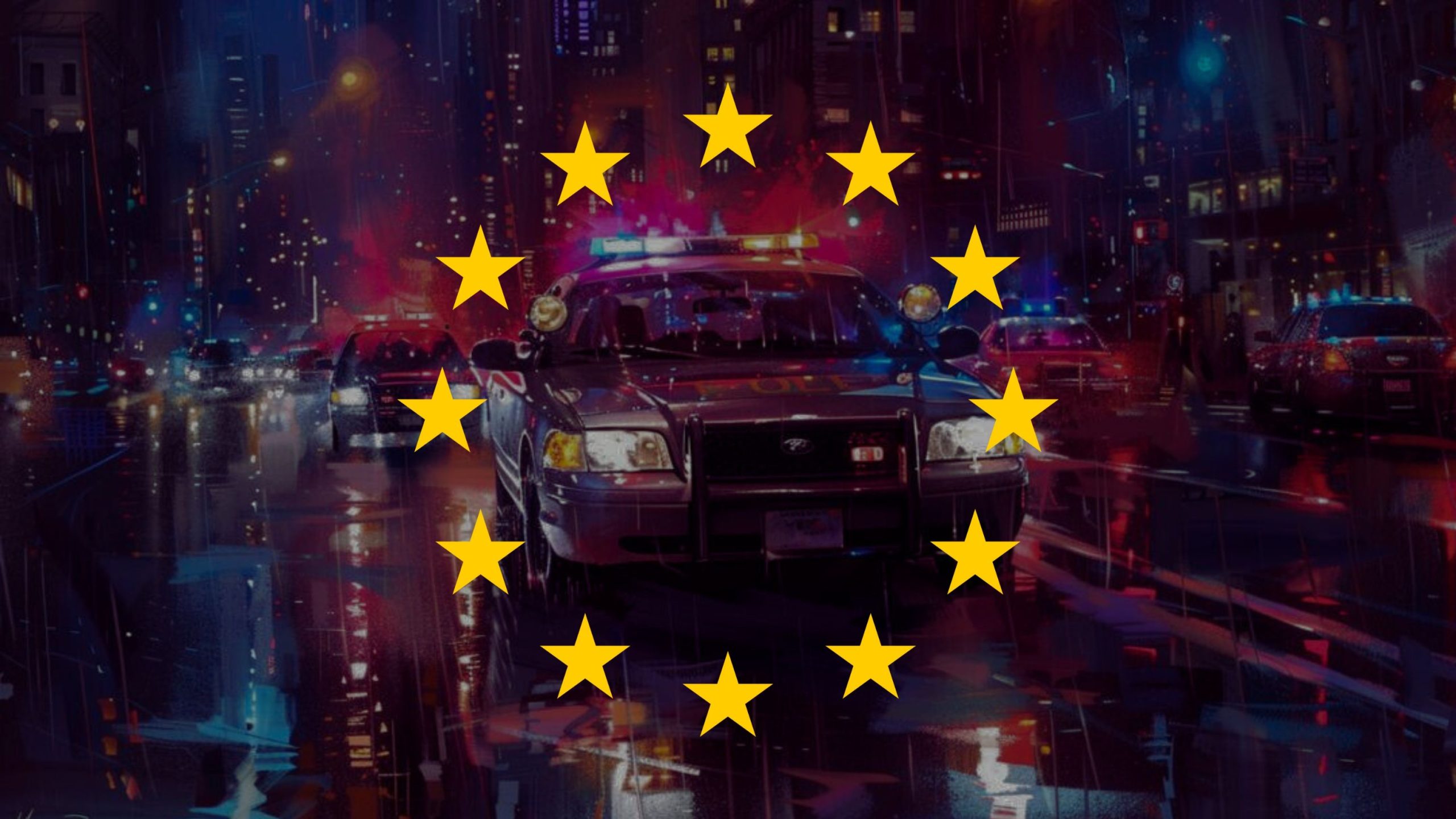
European Council Approves “Rapid Response Teams” To Combat “Disinformation”
Favicon 
reclaimthenet.org

European Council Approves “Rapid Response Teams” To Combat “Disinformation”

If you're tired of censorship and dystopian threats against civil liberties, subscribe to Reclaim The Net. The EU has announced a guiding framework that will make it possible to set up what the bloc calls “Hybrid Rapid Response Teams” which will be “drawing on relevant sectoral national and EU civilian and military expertise.” These teams will be created and then deployed to counter “disinformation” throughout the 27 member countries – but also to what Brussels calls partner countries. And Ireland might become an “early adopter.” For a county to apply, it will first need to feel it is under attack by means of “hybrid threats and campaigns” and then request from the EU to help counter those by dispatching a “rapid response team.” The EU is explaining the need for these teams as a result of a “deteriorating security environment, increasing disinformation, cyber attacks, attacks on critical infrastructure, and election interference by malign actors” – and even something the organization refers to as “instrumentalized migration.” The framework comes out of the EU Hybrid Toolbox, which itself stems from the bloc’s Strategic Compass for Security and Defense. Mere days after the EU made the announcement last week, news out of Ireland said that the Department of Foreign Affairs welcomed the development, stating that they will “now begin on operationalizing Ireland’s participation in this important initiative.” The department explained what it sees as threats – there’s inevitably “disinformation,” along with cyber attacks, attacks on critical infrastructure, as well as “economic coercion.” Ireland’s authorities appear to be particularly pleased with the EU announcement given that the country doesn’t have a centralized body that would fight such a disparate range of threats, real or construed. The announcement about the “reaction teams” came from the Council of the EU, and was the next day “welcomed” by the European Commission, which repeated the points the original statement made about a myriad of threats. The Hybrid Rapid Response Teams which have now been greenlit with the framework are seen as a key instrument in countering those threats. Other than saying that the EU Hybrid Toolbox relies on “relevant civilian and military expertise,” the two EU press releases are short on detail about the composition of the future teams that will be sent on “short-term” missions. However, it revealed that “rapid deployment to partner countries” will be made possible through the Emergency Response Coordination Center (ERCC) as the scheme’s operational hub. If you're tired of censorship and dystopian threats against civil liberties, subscribe to Reclaim The Net. The post European Council Approves “Rapid Response Teams” To Combat “Disinformation” appeared first on Reclaim The Net.
Like
Comment
Share
Reclaim The Net Feed
2 yrs

Former Biden Homeland Security Official Criticizes Free Speech, Cites “Disinformation” Impact on Election Security
Favicon 
reclaimthenet.org

Former Biden Homeland Security Official Criticizes Free Speech, Cites “Disinformation” Impact on Election Security

If you're tired of censorship and dystopian threats against civil liberties, subscribe to Reclaim The Net. A former Biden administration official has declared that disinformation around elections is “becoming the norm rather than the exception.” Samantha Vinograd, until recently of the Department of Homeland Security (DHS), also asserted that these days, because of what she considers to be election disinformation, “there is an unprecedented level of physical threats” while the US information ecosystem is “incredibly vulnerable.” Dramatic and alarmist statements like this may be necessary to justify the rest of Vinograd’s message, which in effect attacks free speech, as it is legally protected in the US. Appearing on CBS, Vinograd – who was until last December Assistant Secretary of Homeland Security for Counterterrorism and Threat Prevention – warned that the First Amendment might protect free speech, but that engaging in free speech is apparently not “cost-free.” The Face the Nation hosts framed the problem as, essentially, federal laws (the Constitution) protecting speech, but the damage being done at the state level – and then what states, who organize elections, can do to fix that “problem.” Spreading lies about candidates, as they put it, was given as an example of legal, protected speech becoming an issue by having the ability to create “a threat at the state level” – and asked Vinograd who she thought was supposed to correct the situation. Vinograd – who has been bouncing between various administrations (including those of Bush and Obama, and private companies like Goldman Sachs and Stripe before landing at Biden’s DHS) – seemed to suggest that Big Tech (i.e., social media companies) should be assisting the government. The federal government said Vinograd, “should not be the omnipresent fact checker for the American people.” And even though, according to her, the government is debunking information about elections that is deemed to be inaccurate, social media companies “should be thinking about what kinds of election disinformation violate their terms of service.” It’s difficult not to take this as a not-so-veiled added pressure on social platforms to not only continue with censoring content but perhaps expand it in terms of what qualifies as election disinformation. Either way, Vinograd is in favor of enlisting “every American” to help out as well (although it is not clear in what specific way), invoking even the concept of patriotic duty. And Vinograd did not miss the opportunity to assert that election misinformation threats are now of such magnitude as to present a national security issue. If you're tired of censorship and dystopian threats against civil liberties, subscribe to Reclaim The Net. The post Former Biden Homeland Security Official Criticizes Free Speech, Cites “Disinformation” Impact on Election Security appeared first on Reclaim The Net.
Like
Comment
Share
Hot Air Feed
Hot Air Feed
2 yrs

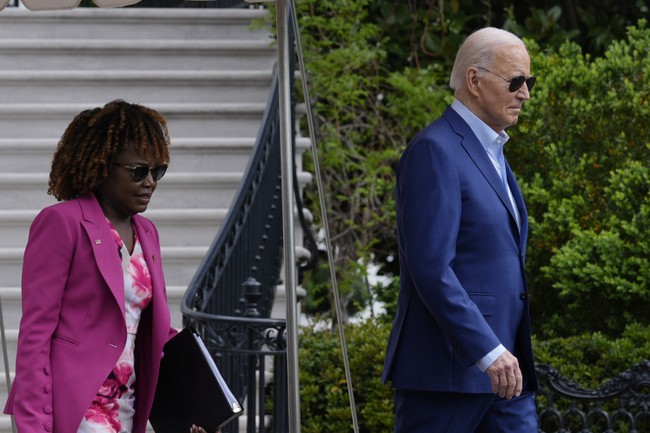
Behind the Scenes, Democrats Are Freaking Out About Joe Biden
Favicon 
hotair.com

Behind the Scenes, Democrats Are Freaking Out About Joe Biden

Behind the Scenes, Democrats Are Freaking Out About Joe Biden
Like
Comment
Share
Science Explorer
Science Explorer
2 yrs

Supermassive Black Holes Can Fire Powerful Beams – And Drastically Change Their Aim
Favicon 
www.iflscience.com

Supermassive Black Holes Can Fire Powerful Beams – And Drastically Change Their Aim

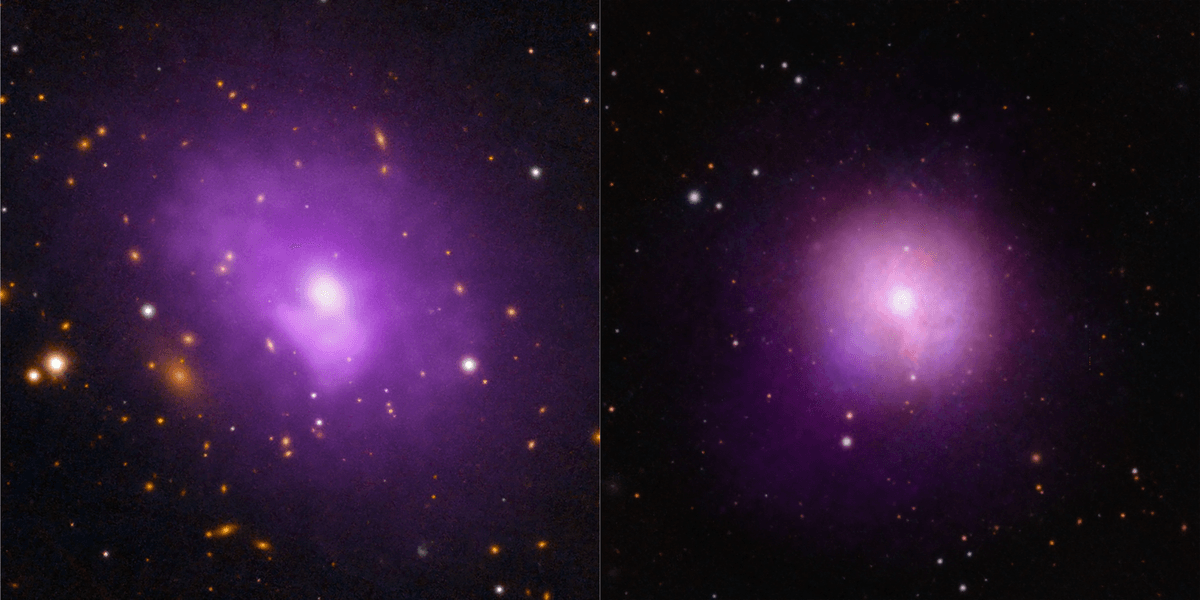
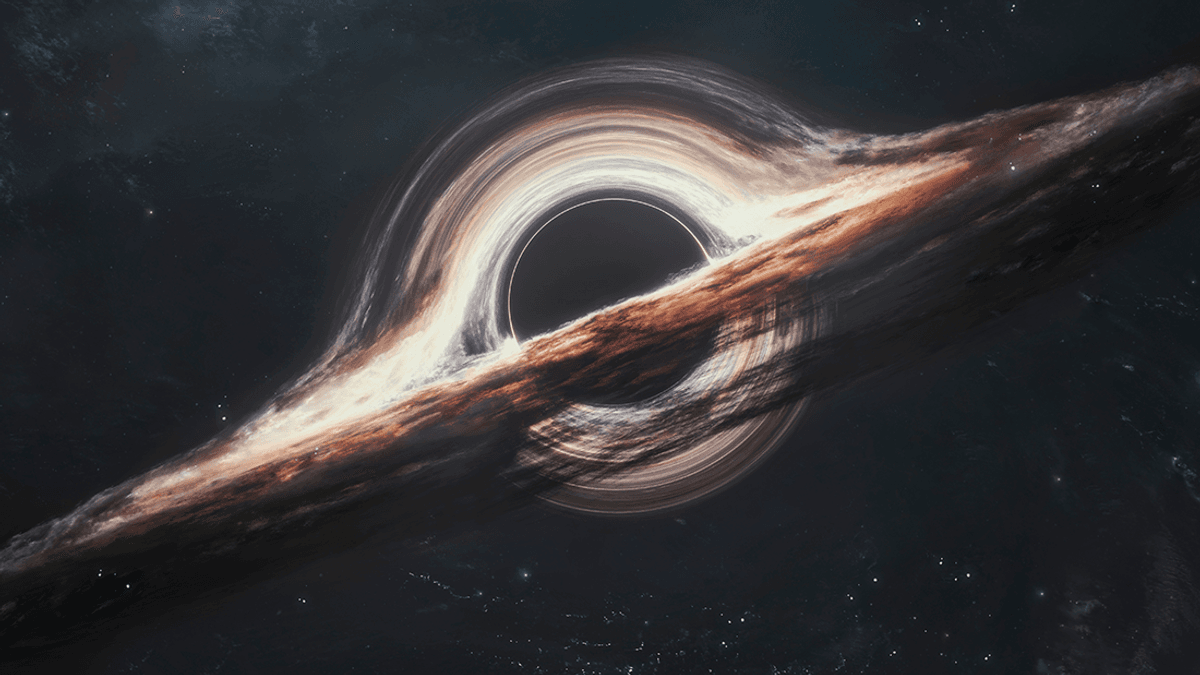
One of the most prominent features of supermassive black holes that are actively feeding is a jet of plasma. The jet can move at almost the speed of light and extend for many millions of light-years in some cases. New research shows that the jets are not stuck in place, but they can in fact change direction, sometimes even wildly.Researchers combined observations in X-rays and radio waves to spot potential changes in the directions of the jets. The fact that a change might happen is not an obvious fact. Once a black hole is accreting, it can release these powerful jets. The material falling into a black hole will arrange itself into a disk around it. The jets are influenced by the black hole's spin and direction, but not always.The spin itself is difficult to estimate – a brand new approach used a destroyed star – but depending on the size of the disk, the direction of the jet might not align itself with the rotation of the black hole, meaning it can change significantly. In the 16 cases observed by the team, there was significant variation.The old cavities and the current jets int his x-ray and radio images.Image credit: X-ray: NASA/CXC/Univ. of Bologna/F. Ubertosi; Insets Radio: NSF/NRAO/VLBA; Wide field Image: Optical/IR: Univ. of Hawaii/Pan-STARRS; Image Processing: NASA/CXC/SAO/N. WolkThe radio observations are more detailed and can be used to work out the current direction of the jet. The X-ray observations are not as detailed, focusing on an area about 30 times wider, but they are crucial because they look at hot gas extending hundreds of light-years around the galaxy hosting the supermassive black hole. Researchers can see cavities in that gas that the jets carved millions of years ago. If the cavities are in a different direction, the jet must have moved.And some have moved significantly. The comparison between the X-ray observations from NASA’s Chandra and the radio images from the Very Large Baseline Array (VLBA) show that the beams of galaxy Abell 478 changed direction by about 35 degrees. The ones of galaxy NGC 5044 changed direction by about 70 degrees.“We found that about a third of the beams are now pointing in completely different directions than before,” lead author Francesco Ubertosi of the University of Bologna, said in a statement. “These Death Star black holes are swiveling around and pointing at new targets, like the fictional space station in Star Wars.”There are some that changed direction by almost 90 degrees, and they did so in between one to 10 million years. Given that these objects are 10 billion years old (10,000 million years), this is a very quick change.“These galaxies are too distant to tell if the beams from the Death Star black holes are damaging stars and their planets, but we are confident they are preventing many stars and planets from forming in the first place,” said co-author Ewan O’Sullivan, of the Center for Astrophysics, Harvard & Smithsonian.The study is published in The Astrophysical Journal.
Like
Comment
Share
Science Explorer
Science Explorer
2 yrs

Human And Chimp DNA Is 98.8 Percent Identical – So How Are We So Different?
Favicon 
www.iflscience.com

Human And Chimp DNA Is 98.8 Percent Identical – So How Are We So Different?

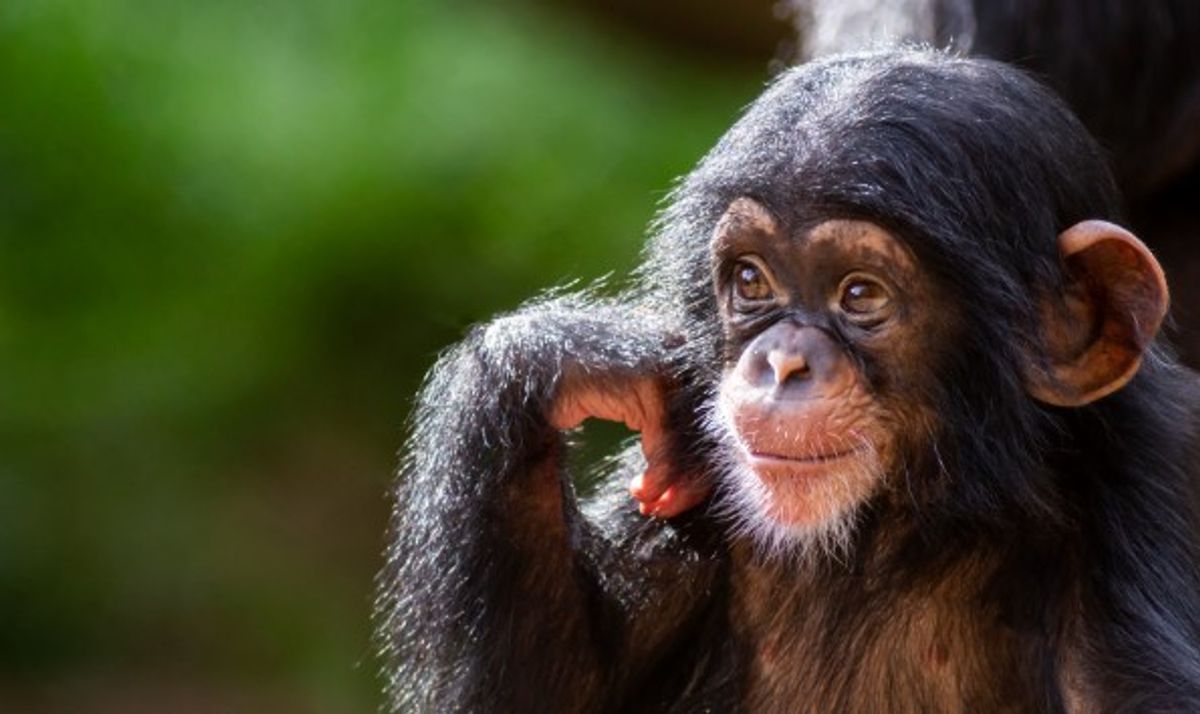
Along with bonobos, chimpanzees are humanity’s closest living relatives, with a genome that is strikingly similar to our own. Yet chimps don’t drive cars, speak Danish, or play the clarinet, so if we’re so genetically alike, how can we be so different in our appearance and behavior?How similar are we really?Humans and chimpanzees are thought to have split from a common ancestor around six million years ago, which is pretty recent in evolutionary terms. In the mid-noughties, scientists succeeded in sequencing the genome of a chimp named Clint, revealing that, in absolute terms, the species’ genetic code is 96 percent identical to ours.However, much of this difference is accounted for by duplication, whereby sections of the genome are simply repeated in one species but not the other. In terms of actual genes, though, we’re 98.8 percent alike, meaning only 1.2 percent of our genetic code is not found in chimpanzees.That doesn’t sound like much, but when you consider that the human genome consists of around three billion base pairs – or bits of genetic information – then this small percentage adds up to around 35 million discrepancies between the two species.Where are the differences?Many of the differences between the human and chimp genomes can be found in regions that account for transcription factors, which act like genetic switches that tell different genes when to become activated and when to remain dormant. In other words, much of our human-ness has nothing to do with genes that are specific to our species, but is attributable to the fact that the genes we share with chimps are expressed in a unique way.For instance, the genes that code for the neurons in each of our brain regions are pretty much the same as those that are found in chimpanzees, but their pattern of activation ensures we develop more of these cells – and therefore larger brains – than other primates. All that separates us is a small section of the genome that controls the degree of cell division within the nervous system, rather than the actual genes that code for the creation of different neurons.In this way, genomes that appear almost identical can produce wildly different phenotypic characteristics. The genes can be the same, but subtle differences within the parts of the genome that control gene expression can totally transform the end product.Human genesScientists are still sifting through the data to try and figure out exactly how the 1.2 percent of our genome that is uniquely human actually works. So far, they’ve managed to identify certain sections that appear to code for particular characteristics.For example, a gene called ASPM is likely to be related to neurogenesis and brain size in humans, while another called FOXP2 may be associated with speech development. Yet another, called KRTHAP1, influences the pattern of keratin expression in the human hair follicle and may therefore account for differences between our hair and that of our more hirsute apelike relatives.Many of the genes we don’t share with chimpanzees are related to immune function and result in significant differences in disease susceptibility. For instance, chimps are resistant to malaria and certain flu viruses that we humans struggle with, although we’re better at dealing with tuberculosis.Looking at the bigger picture, the minor differences between the human and chimpanzee genomes are a perfect demonstration of the wonderful economy of DNA: rather than requiring a complete re-draft of the code to create a new species, all it takes is a few minor tweaks and you’ve transformed a chimp into a person.
Like
Comment
Share
Science Explorer
Science Explorer
2 yrs

NASA Astronaut Reveals You Have To Pass The Pee And Poop Test If You Want To Go To Space
Favicon 
www.iflscience.com

NASA Astronaut Reveals You Have To Pass The Pee And Poop Test If You Want To Go To Space

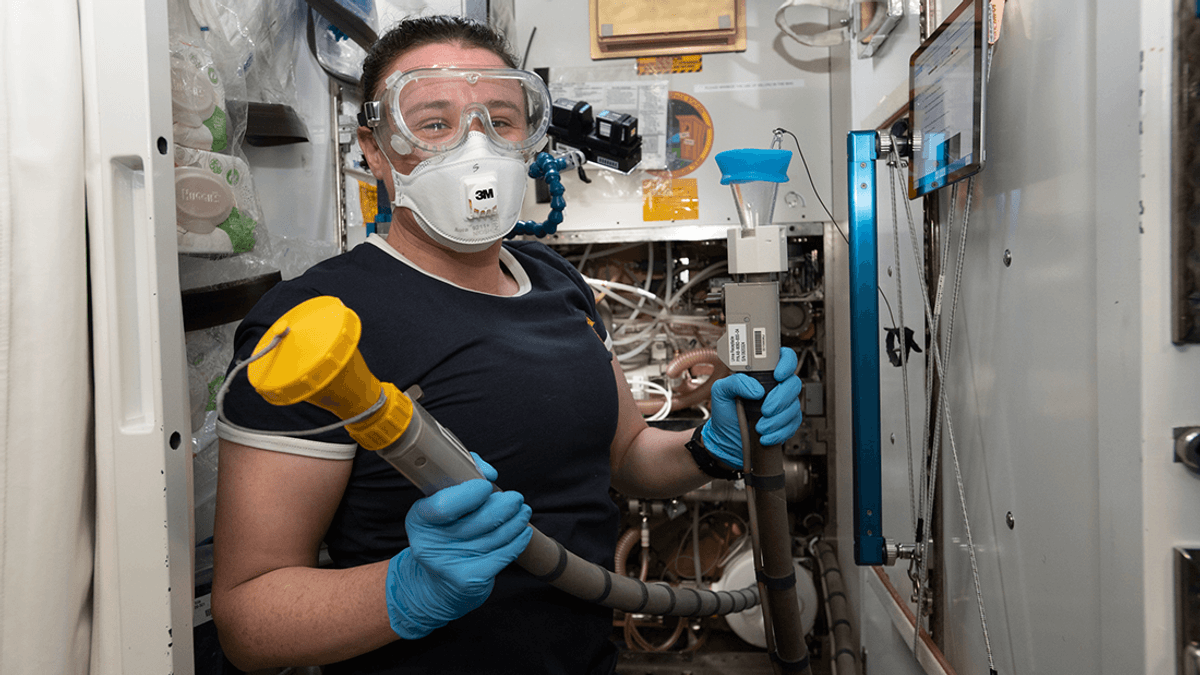
Astronaut training is pretty rigorous, involving trips to neutral buoyancy labs to simulate to simulate microgravity environments, and learning how to operate and maintain space station modules. But, according to former NASA astronaut José Moreno Hernández, there is another, less talked about training session: the pee and poop module – and it comes with its own fairly disgusting exam.During the early days of the Apollo missions, NASA didn't think about peeing and pooping too much. When the first American man went into space, they made no plans at all for if he needed the bathroom. The trip was only supposed to be short, so they figured he'd be able to hold it. However, due to delays prior to launch, he ended up having to wait on the launchpad for hours and ended up having to pee himself.For longer space trips, NASA had to figure out a better system. Before Apollo 12, the main way astronauts went to the toilet was into collection bags. For peeing, this involved inserting your penis into a tube with a rubber, condom-like end. This had its own problems in that the sheaths would often fly off in space, largely due to a sizing problem.For pooping, astronauts would take a fecal bag and use a "finger cot" to position it over the anus.For excursions outside of the spacecraft, astronauts would have to use the fecal containment system (FCS), which is a "pair of underpants of absorbent material worn under the liquid cooling garment." This is a fancy way of saying that when man first walked on the Moon he was wearing a diaper. Thankfully, the toilet situation has moved on somewhat since the early days – at least inside spacecraft – not least because they had to adapt to accommodate female astronauts, for whom a sheath would be somewhat impractical. Now they have an advanced bathroom facility on the ISS. The latest space toilet technology costs a whopping $23 million, in fact.The problem is that in the microgravity environment on the ISS, liquids and solids tend to float where they are without another external force acting upon them. This is a particularly annoying problem when those solids are poop and pee. Gravity on Earth directs pee and poo into the toilet, where it rests until we send it on its final journey. In space, that doesn't happen, so pee and poo need to be guided by air flow.In short, you get a vacuum hose for your pee – but for your poop, you only have a small area to aim into, as creating a normal-sized toilet opening would require too-large of a motor in order to power the airflow. Commander Chris Cassidy explains in the below video how the systems work. "You better have good aim," astronaut José Moreno Hernández told Metro of the toilets. They take some getting used to, with the astronauts required to practice before they go to space."And I kid you not, there’s a class – we take potty 101," Hernández added. "You take a class on going to the restroom and they won’t check you off until you can do a number one and number two."To get to the ISS, there are many requirements. But all must pass the poop test.
Like
Comment
Share
Science Explorer
Science Explorer
2 yrs

Are Those Eerie Oversized Black Holes In The Early Universe The Result Of Direct Collapse?
Favicon 
www.iflscience.com

Are Those Eerie Oversized Black Holes In The Early Universe The Result Of Direct Collapse?

The JWST has looked further into the universe than we have ever seen before, discovering a galaxy as it appeared just 330 million years after the Big Bang.Looking this far back into the universe has yielded a few surprises, including those eerily big black holes that keep appearing, confounding our theories about how black holes form. Supermassive black holes we see in the nearer (more recent) universe are, as the name would suggest, pretty big. Cosmologists would like to know how these supermassive black holes, which are found at the center of most (but not all) galaxies, came to be such a large size.     There have been a number of theories, including mergers of black holes, and that the black holes grew through feeding. These early black holes appear to be too large to be explained by these ideas, and much larger than cosmologists had been expecting in comparison to the galaxies surrounding them."Overall, we see that black holes in the young galaxies observed by JWST are about 10 to 100 times more massive than the scaling relation in the local universe predicts," Xiaohui Fan, a professor at the University of Arizona and co-author of a study on these oversized black holes, said in a statement. "The ratio of stellar mass to black hole mass in early galaxies was much lower back then, more than a dozen billion years ago, compared to now. This result has important implications for the study of the first population of black holes."Another idea, which is perhaps becoming more likely to be true in light of recent observations, is "direct collapse" or "heavy seed" black holes. Usually, to get a stellar mass black hole (in the current age of the universe), a star undergoes collapse."A stellar-mass black hole forms when a star with more than 20 solar masses exhausts the nuclear fuel in its core and collapses under its own weight," NASA explains. "The collapse triggers a supernova explosion that blows off the star’s outer layers. But if the crushed core contains more than about three times the Sun’s mass, no known force can stop its collapse to a black hole."With heavy seed black holes the idea is that supermassive black holes would have started out at around 10,000 to 100,000 solar masses, through the direct gravitational collapse of gigantic gas clouds, without an intermediate stellar phase. There are a few things that could make this scenario unlikely too. The gas cloud would need to collapse without fragmenting and forming clumps as it does so, though astronomers have suggested that this could be prevented if the cloud is heated by nearby young stars in pre-galactic gas disks, or if the gas cloud was moving at supersonic speeds in "flows" in the early universe, allowing them to grow for longer, until the gravity is sufficient to start the cloud's collapse into a seed black hole.One team has already claimed to have seen some evidence for a direct collapse hole in observations on galaxy UHZ1, showing that the black hole is too oversized for the galaxy surrounding it, and too early for the black hole to have formed by stellar collapse and mergers – but, it is still far too early to confirm direct collapse black holes. Hopefully further observations will help clear up the mystery of how our current supermassive black holes formed, and whether they formed from light or heavy seeds. 
Like
Comment
Share
Science Explorer
Science Explorer
2 yrs

This Ridiculous Reptile's Hockey-Themed Decor Might Change What We Know About Feather Evolution
Favicon 
www.iflscience.com

This Ridiculous Reptile's Hockey-Themed Decor Might Change What We Know About Feather Evolution

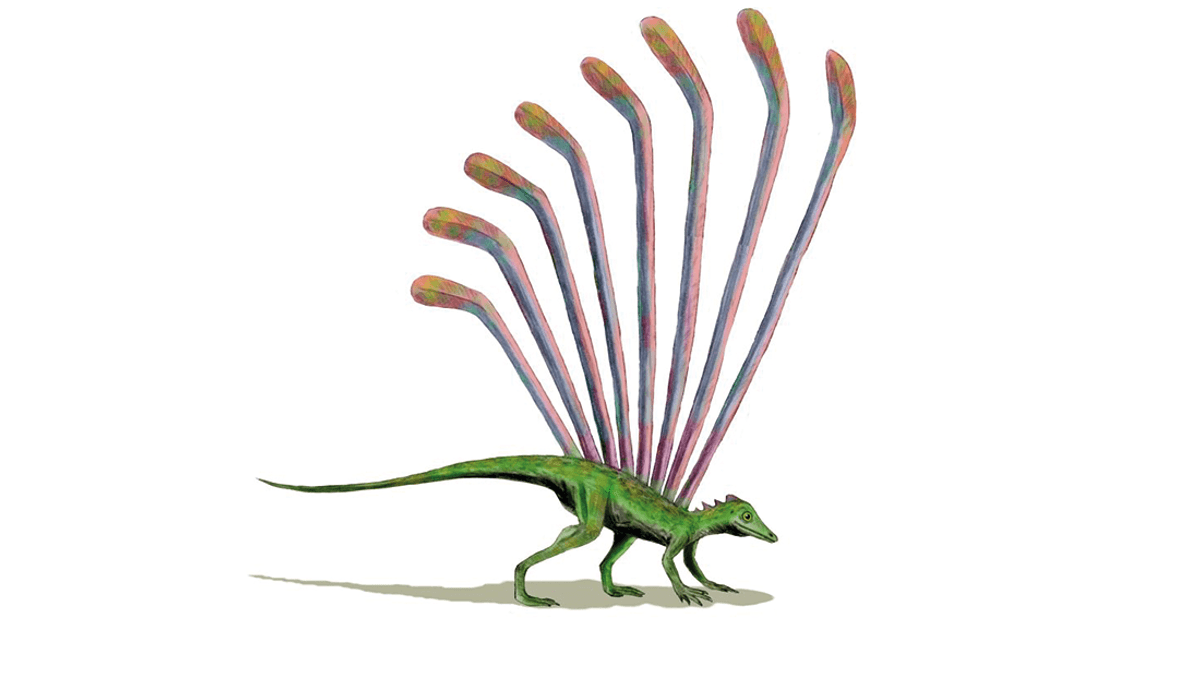
If you’re looking for an example of when nature well and truly said “let’s fuck around and find out”, look no further than the extinct reptile Longisquama, potentially one of the most ridiculous-looking animals to have ever lived.This peculiar creature was discovered in the Madygen Formation, a geological formation found in the south of Kyrgyzstan and home to a vast array of fossils from the Triassic period.There, a team of palaeontologists led by Aleksandr G. Sharov found an incomplete skeleton and imprints of soft tissue belonging to what they dubbed Longisquama insignis, the only member of a genus of reptiles believed to have lived in the Early Triassic just before the appearance of dinosaurs.While the skeleton and imprints showed that Longisquama was only about 5 centimeters (2 inches) long, it also revealed that what the little guy lacked in length, it more than made up for in decoration. Stretching up from along its back could be found a series of comically long, hockey stick-shaped appendages.The imprints of Longisquama's unusual appendages.Image credit: Oregon State University via Flickr (CC BY-SA 2.0)But surprisingly, it’s not what Longisquama looked like that makes it controversial in the scientific community – it’s what those big ol’ hockey sticks were actually made of and the potential consequences of that.It’s a common belief among palaeontologists that the first appearance of feathers was in the dinosaurs; the presence of feathered dinosaurs in the fossil record and modern-day birds is evidence of that. In that case, one of the best candidates for the origin of feathers is Archaeopteryx.But some researchers think that Longisquama’s bizarre appendages were feather-like structures. In a study from 2000, Terry D. Jones and colleagues concluded that the appendages were not avian but “resembled avian feathers in many details” and were likely homologous – to have shared ancestry – to them.Seeing as Longisquama was estimated to be kicking about before the dinosaurs, that could throw something of a spanner in the working theory – though the study authors were careful to say that the relationship between the extinct reptile and birds is “uncertain”. In other words, while some birds might look pretty odd, they’re not necessarily descended from Longisquama rather than dinosaurs.Other scientists hit back at the suggestion. “The dorsal scales of Longisquama are not feathers, […] they are in fact strikingly different from avian feathers. We conclude that Archaeopteryx remains the oldest known feathered tetrapod,” wrote palaeontologists Robert R. Reisz and Hans-Dieter Sues in a later article.And then there are those who found a middle ground, with a 2012 study proposing that Longisquama didn’t necessarily have feathers as we might know them, but there were some structural similarities. Some of the genes involved in the development of these structures may have been the same ones that later gave rise to feathers.Despite the back and forth, unless scientists manage to bring Longisquama back from the dead, we’re probably never going to know the true nature of its extravagant appendages, or exactly what their purpose was.They’re not exactly the most inconspicuous, so we can’t imagine they’d be particularly handy when it comes to staying out of predators’ sight – but hey, if you’re gonna go extinct, it might as well be because you looked fabulous.
Like
Comment
Share
Science Explorer
Science Explorer
2 yrs

First English Settlers In North America Had To Eat Dogs To Stay Alive
Favicon 
www.iflscience.com

First English Settlers In North America Had To Eat Dogs To Stay Alive

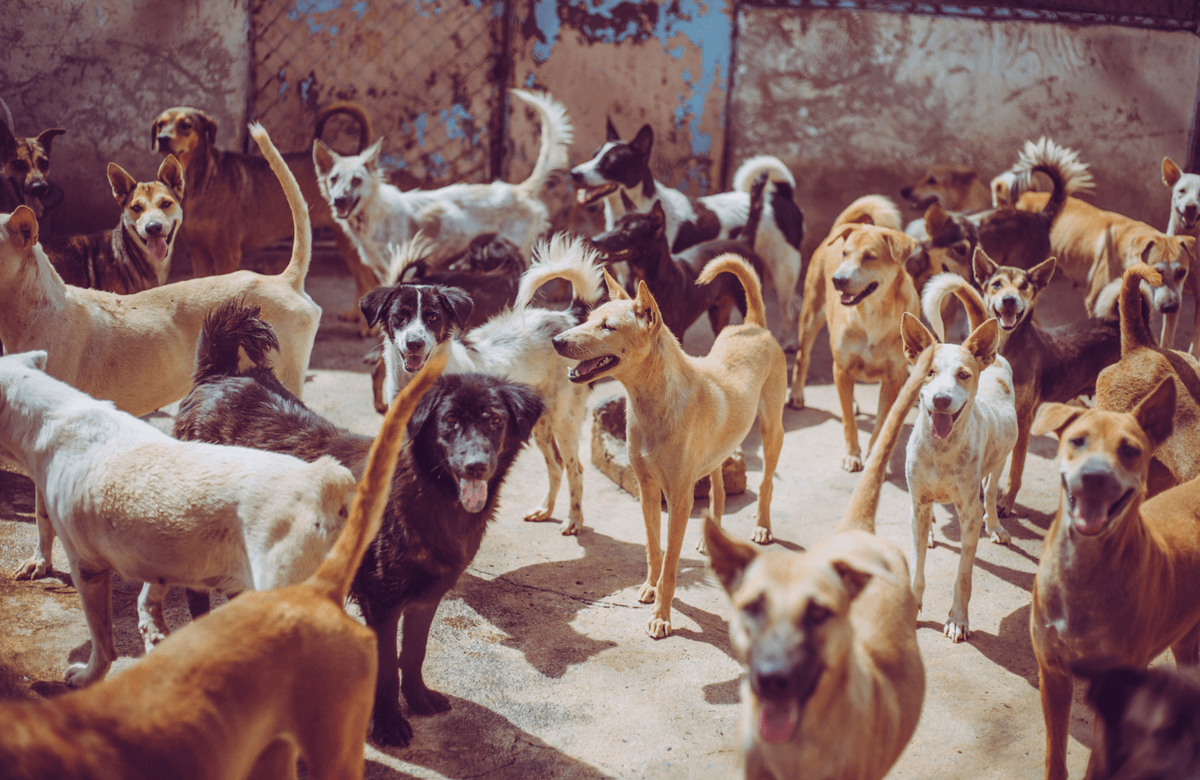
The first English colonizers to settle in North America were forced to eat dogs during an intense period of hardship, as shown by new archaeological discoveries. The grisly remains of this mini-famine also show how canine companions provide a unique insight into the power dynamics between European settlers and Indigenous peoples.In a new study, researchers looked at the genetic ancestry of dogs in the Jamestown colony during the early 17th century to reveal new insights into early colonial America. They found skeletal evidence of six dogs that had been butchered and consumed by the settlers of Jamestown. However, it’s safe to say this culinary choice was made out of necessity. The research highlights a period known as the Starving Time, around the winter of 1609-1610. Wracked by harsh weather, violence with neighboring tribes, poor harvests, and lack of supplies, the Jamestown colony came very close to collapse due to severe starvation. The dogs, it seems, were consumed simply because there was nothing else to eat. “Although the consumption of dog flesh in modern Western societies is considered taboo, there is a long history of eating dogs during periods of stress in England and other parts of Europe. This behavior meant that the occupants of Jamestown acted like other early Spanish, English, and French colonists who consumed dog flesh in times of need,” the study authors write. Genetic analysis of the bones suggests that European settlers were consuming dogs with strong Indigenous North American ancestry. The six butchered dogs found at Jamestown had genetic similarities with Hopewellian, Mississippian, and Late Woodland period dogs from eastern North America.This raises some interesting questions. It’s known that Europeans brought dogs to the Americas for a variety of tasks, like catching pests, herding animals, and physical protection. It's also assumed they were deeply invested in the purity of their dog breeds and maintained the different breeds for separate tasks. However, these results suggest that the European dogs and Indigenous dogs were rampantly interbreeding with each other. Perhaps this was the result of trade between Jamestown colonists and local Native Virginian groups, or maybe it suggests Native people resided within James Fort in the early occupation of the colony (before the relationship turned sour). Either way, the findings show "the colonists and Tsenacomocoans likely had little concern for possible interbreeding between these dogs and English dogs," the researchers suggest. “The ancestry of the Jamestown dogs provides insight into European and Indigenous management of their dogs. Dogs with ancestry predominantly from Europe suggests that either British, Powhatan, or both groups kept their dogs from interacting with each other to maintain specific behaviours or observable phenotypes important to that group,” Ariane E. Thomas, lead researcher and a PhD candidate at the University of Iowa’s Department of Anthropology, said in a statement.“However, a high proportion of Indigenous dog ancestry suggests a more complex engagement between the British and Powhatan peoples at Jamestown and less emphasis on maintaining the separation between dogs and their association with settlers. Identifying Indigenous dogs at Jamestown suggests this second, more complex dynamic is more representative of history,” explained Thomas.Ultimately though, the Indigenous American dogs were outbred by the European dogs. Other genetic research has shown the “near-complete replacement” of maternal Indigenous dog ancestry by European dog lineages during the colonial period of America. “Like other archaeological research that ignores the multifaceted nature of Indigenous presence and persistence within the ongoing context of colonialism, the loss of Indigenous dogs is an under-explored issue of colonial impacts in the Americas,” the authors write.The study is published in the journal American Antiquity.
Like
Comment
Share
Showing 26595 out of 56670
  • 26591
  • 26592
  • 26593
  • 26594
  • 26595
  • 26596
  • 26597
  • 26598
  • 26599
  • 26600
  • 26601
  • 26602
  • 26603
  • 26604
  • 26605
  • 26606
  • 26607
  • 26608
  • 26609
  • 26610

Edit Offer

Add tier


Select an image
Delete your tier
Are you sure you want to delete this tier?

Reviews

In order to sell your content and posts, start by creating a few packages. Monetization

Pay By Wallet

Payment Alert

You are about to purchase the items, do you want to proceed?

Request a Refund