YubNub Social YubNub Social
    Advanced Search
  • Login

  • Night mode
  • © 2026 YubNub Social
    About • Directory • Contact Us • Privacy Policy • Terms of Use • Android • Apple iOS • Get Our App

    Select Language

  • English
Install our *FREE* WEB APP! (PWA)
Night mode
Community
News Feed (Home) Popular Posts Events Blog Market Forum
Media
Headline News VidWatch Game Zone Top PodCasts
Explore
Explore Jobs Offers
© 2026 YubNub Social
  • English
About • Directory • Contact Us • Privacy Policy • Terms of Use • Android • Apple iOS • Get Our App

Discover posts

Posts

Users

Pages

Group

Blog

Market

Events

Games

Forum

Jobs

SciFi and Fantasy
SciFi and Fantasy  
2 yrs

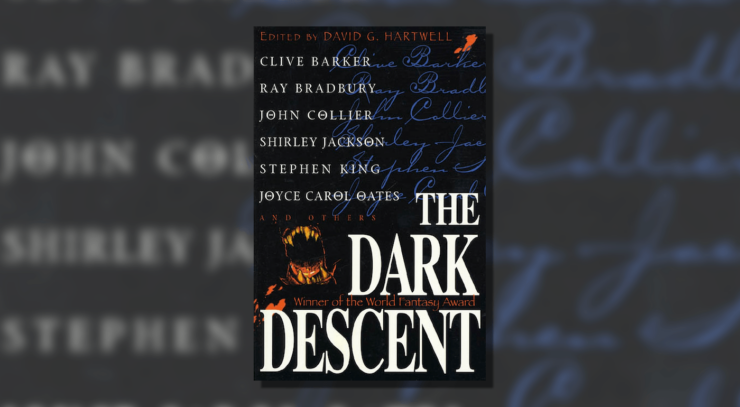
The Rot Goes Deep: “The Fall of the House of Usher” by Edgar Allan Poe
Favicon 
reactormag.com

The Rot Goes Deep: “The Fall of the House of Usher” by Edgar Allan Poe

Books Dissecting the Dark Descent The Rot Goes Deep: “The Fall of the House of Usher” by Edgar Allan Poe A terrifying portrait of a nobleman driven insane by inbreeding, generational trauma, and his own refusal to leave his ancestral home… By Sam Reader | Published on May 21, 2024 Comment 0 Share New Share Welcome back to Dissecting The Dark Descent, where we lovingly delve into the guts of David Hartwell’s seminal 1987 anthology story by story, and in the process, explore the underpinnings of a genre we all love. For a more in-depth introduction, here’s the intro post. There aren’t many names in American gothic literature that carry the weight of Edgar Allan Poe. A journalist and writer by trade, Poe melded an early form of pulp fiction and the preoccupations of (for his time) modern American with a deconstructive eye of his literary counterparts across the Atlantic. From this fertile imagination grew classic horror stories like “The System of Doctor Tarr and Professor Feather,” and “The Tell-Tale Heart,” works that incorporated (in a rudimentary way) both the focus on his characters’ psychology that characterized Poe’s own unique approach to gothic fiction, and issues like insufficient mental healthcare, class violence, and other social concerns. “The Fall of the House of Usher,” a gothic work published in Grotesques and Arabesques, is a terrifying portrait of a nobleman driven insane by inbreeding, generational trauma, and his own refusal to leave his ancestral home. Within the traditional gothic framework of the story, Poe also takes jabs at aristocracy, the idea of families as institution, and various conventions of gothic literature itself. On a gloomy fall day, the unnamed narrator rides to the House of Usher, the ancestral manor of his former best friend Roderick Usher and his family. The house is in disarray, a ruin afflicted by fungal rot and disrepair only matched by the mental and physical decay of its sole surviving inhabitants, Madeleine and Roderick Usher. While the narrator helps Roderick in every way possible to shake off his gloom and find his way back to health, it’s clear that the rot goes much deeper than the House itself. As the House of Usher’s darkness threatens to envelop the three of them, the narrator must escape before both the family and the house drag him down with them. The sickly environment of the Usher siblings’ home provides a feedback loop for Roderick. By the time the narrator arrives at the titular house, it’s in disturbing disarray, with the narrator even mentioning multiple times that there’s a horrifying malaise to the air. Gothic fiction relies heavily on visual cues to help cultivate its atmosphere of unease, and the environment feeding off Roderick’s advancing mental illness (and clear environmental illness, given that his sensitivities are signs of an advancing case of mold toxicity from all the fungus) exemplifies this. It’s clear that between the loss of his family, his clinging to the moldering ruin as the last vestige of his family’s memory, and the deeply toxic relationship between himself and his sister, he’s not doing well either mentally or physically. The longer he stays in that depressive loop without any kind of change, the worse things get. Eventually, it leads to him accidentally burying his sister alive, and the two of them dying as the house crumbles and falls apart around them. Within that gothic tragedy, Poe finds an unusual note of grim and deadpan humor about the situation. While there’s a supernatural air about the House and the Ushers within, everything in “The Fall of the House of Usher” has a reasonable explanation. The unnatural glow at night is swamp gas, Madeleine’s ghostly appearance is due to the fact that she’s been locked in a vault underneath the house, and the constant descriptions of the House (itself a sideswipe at the need to detail every inch of the architecture frequently found in older gothic works) foreshadow it eventually falling apart completely. The story isn’t sympathetic to Roderick, with the narrator consistently more unnerved and terrified by his former friend than anything else. The Usher family line, fallen far from whatever nobility they held in the past, is portrayed as so inbred their family tree is basically a trunk. Roderick even becomes one of the earliest depictions of the dreaded Guy Breaking Out an Acoustic Guitar as he holds the narrator hostage in order to perform his original compositions, which the narrator describes as “unnerving.” The combined effect of the empathic environment, Roderick’s numerous failings, and the deadpan way Poe pokes fun at the traditional conventions of gothic literature center the blame mainly on Roderick for being idle, privileged, and doing nothing to change his situation. He’s intellectual and clearly has a great taste for art, music, and literature but lives isolated and alienated from everyone in a moldering gothic ruin infested by fungi. In the end, it’s that stubborn refusal to change, and the narrator’s own realization that Roderick has destroyed not only himself but his sister Madeleine (and is possibly on the way to destroying the narrator), that proves to be the undoing for two-thirds of the cast, as the vengeful Madeleine dies strangling Roderick to death only for the house to collapse upon them, ending the line of Usher. Roderick, in perfect adherence to the genre conventions, ends the story in a state of terror as he realizes that Madeleine’s clawed her way out of the vault and is probably not particularly happy that her brother and sole companion buried her alive. There’s not much nobility and romance to the story, just a grotesque man forcing the narrator to paint horrid landscapes with him, listen to his bad poetry, and read depictions of historical atrocity, none of which seems to help improve his mental or physical health. “The Fall of the House of Usher” functions as a send-up of both gothic tradition and the more right-leaning conventions of genre—the doomed family cannot be saved, the dead woman who haunts the estate isn’t dead, the misogynist subtext of gothic literature is made distinctly text as Roderick would rather lock his sister away (much like the classic tropes of the madwoman in the attic and the mysteriously ill waif) than deal with her problems, the stately manor is a crumbling wreck that collapses in on itself, and the noble yet doomed scion of the cursed family is the maniac result of centuries of incest who holds his good friend emotionally hostage in a damp moldy ruin. In the end, there’s no cruel whims of fate or supernatural curses, just the narcissistic and literally toxic influence of a self-destructive noble unable to (literally) see beyond his own front door. Institution in “Fall of the House of Usher” is not upheld. It is a poisonous and ultimately fatal thing, clung to by someone for whom family name and generational property are all they have left. And now to turn it over to you. Did “The Fall of the House of Usher” successfully criticize the decadence of the upper classes through the medium of gothic literature? What story first got you started reading Poe? What’s your favorite depiction of an annoying guy forcing everybody to listen to him jam on an acoustic guitar in all of literature? Also, please join us next time for an exploration of Stephen King’s own dalliances with gothic fiction.[end-mark] The post The Rot Goes Deep: “The Fall of the House of Usher” by Edgar Allan Poe appeared first on Reactor.
Like
Comment
Share
Gamers Realm
Gamers Realm
2 yrs

How to claim pre-register rewards in Wuthering Waves
Favicon 
www.pcinvasion.com

How to claim pre-register rewards in Wuthering Waves

Wuthering Waves has many people excited, so much so that over 30 million have pre-registered for it. With pre-registration comes rewards, however, for all those who have shown their support. How to pre-register for Wuthering Waves To earn these pre-registration rewards in Wuthering Waves, you must first pre-register. The game is set to release on the 22nd of May, so you’ll have until then to do so. Thankfully, it’s super easy. Wuthering Waves is to release of the following platforms: App Store Google Play Epic Games Store No matter what platform you wish to play on, the pre-registration steps will be the same. Screenshot: PC Invasion Head over to the Wuthering Waves official site to begin. Click the “Pre-Register” button just below the pre-registration count, and you’ll have to sign in to your Kuro Games account, or make a new account. Before you do any of that, however, you must accept (and read!) the Terms of Service. You ...
Like
Comment
Share
Gamers Realm
Gamers Realm
2 yrs

All Phantom “Shiny” Echoes in Wuthering Waves
Favicon 
www.pcinvasion.com

All Phantom “Shiny” Echoes in Wuthering Waves

Echoes are equipped and used by characters in Wuthering Waves during combat, but what exactly are Phantom Echoes? We’ll uncover all Phantom Echoes in Wuthering Waves and explain how these “Shiny Echoes work. Wuthering Waves: What are Phantom Echoes? While there are plenty of different types of normal Echoes in Wuthering Waves, Phantom Echoes are “Shiny” and rare versions of normal Echoes that your characters can use. These Phantom Echoes aren’t any stronger than normal Echoes, but they’re a lot tougher to find and look a little different than their common version. At this moment, there are six Phantom Echoes available to find. Once Wuthering Waves is available to all players, we’ll have a better sense of how and where you can acquire Phantom Echoes. Think of Phantom Echoes as cosmetic skins, absorbing a Phantom Echo of a certain type of Echo allows that normal Echo to change its appearance to look like the “Shiny” version....
Like
Comment
Share
Daily Signal Feed
Daily Signal Feed
2 yrs

Let’s Put Suspension or Expulsion Back on Table for Violent College Students
Favicon 
www.dailysignal.com

Let’s Put Suspension or Expulsion Back on Table for Violent College Students

Colleges are considering suspensions and expulsions for students who vandalized campuses and committed violence over the past month. These consequences are entirely appropriate—and overdue. School officials in North Carolina are even reallocating more funds to campus safety. What took so long? The answer may help prevent violent riots on campuses in the future. MIT officials recently announced they were suspending “dozens” of students who forced their way back into the area of campus where students had set up encampments. School personnel had warned those encamped, then cleared the tents and set up fencing around the area, telling students not to reenter. Students proceeded to break through the fences—ignoring the warnings and destroying property. Now, school administrators have announced sanctions are coming. Events such as these have happened at schools nationwide. The incidents at MIT, UCLA, Columbia University, and elsewhere were not examples of free speech. These were violent acts showing disregard for law and campus rules. School officials should not have waited as long as they did to call law enforcement, and the rioters who were not students, faculty, or college staff should face charges. But administrators should be considering suspensions and expulsions for students involved. College personnel are partly to blame for the disruptions that universities faced over the past month. Campus riots have a long history, but in the most recent iterations of campus unrest dating back at least as far as 2015, colleges were slow to respond to students and rioters who deplatformed or shouted down professors and invited lecturers. Middlebury College in Vermont and Evergreen State College were just a few of the sites of violent shout-downs over the past decade. Students regurgitated the Marxist slogans from critical race theory and diversity, equity, and inclusion as they deplatformed speakers—and in some cases, college administrators did not punish students. Predictably, surveys over the past decade have found that students are afraid to speak their minds on campus for fear of being canceled, shouted down—or worse. Blocking someone else’s expressive rights is not a protected form of speech. Yet surveys found that some on campus approved of violence in the face of ideas with which they disagree. In response to the shout-downs at Middlebury and the like, state lawmakers around the country—Alabama, Colorado, North Carolina, Tennessee, and more—adopted provisions to reinforce the U.S. Constitution and protect free-speech rights. But with few notable exceptions, lawmakers did not include provisions that required school administrators to consider suspension or expulsion when students deplatformed a speaker or otherwise engaged in violence. The message to students was clear: You can be disruptive with minimal or no consequences. Today, however, students have pushed the bounds even further, creating so much disturbance that some schools were forced to cancel classes and graduation ceremonies because campuses were not physically safe for anyone. Lawmakers in North Carolina and Arizona were among the few who included disciplinary sanctions in provisions adopted after the outbreak of shout-downs between 2015 and the school closures caused by COVID-19. School officials should copy the University of North Carolina Board of Trustees’ latest decision to close its “diversity, equity, and inclusion” office and reallocate spending to campus safety. DEI offices promote censorship by supporting “bias response teams,” which courts have found to “chill” speech. The offices also promote racial bias in college admissions and other school functions—none of which improves school safety or the free exchange of ideas. Had school personnel acted decisively during riots over the past 10 years, consistently suspending or expelling violent students, perhaps disrupters would have had second thoughts. State lawmakers should revisit their conduct codes and require public college administrators to involve law enforcement and consider suspension or expulsion when students destroy school property, injure others, violate free-speech protections, or otherwise commit violence. Considering suspension or expulsion to counter—and perhaps prevent—violence is not new. Yale University officials recommended these consequences in the Woodward Report issued in 1974, a seminal document protecting campus speech. College educators must teach students the difference between free speech and violence. The former deserves protection. The latter should be met with consequences. Originally published by Tribune News Service. The post Let’s Put Suspension or Expulsion Back on Table for Violent College Students appeared first on The Daily Signal.
Like
Comment
Share
Reclaim The Net Feed
2 yrs

EU Commission VP: “We Believe Our Fact-Checking Is Already Influencing User Behavior”
Favicon 
reclaimthenet.org

EU Commission VP: “We Believe Our Fact-Checking Is Already Influencing User Behavior”

If you're tired of censorship and dystopian threats against civil liberties, subscribe to Reclaim The Net. The European Parliament (EP) elections are taking place next month and, considering that the president of the European Commission (effectively, “the EU government”) and all its commissioners are confirmed by the EP, no wonder many of them are currently on a campaign trail. One is European Commission Vice President for Values and Transparency Vera Jourova, and she is toeing the line the EU has taken ahead of this election: fear mongering about misinformation, AI, and Russia. This is then used to make sure current, contested, and controversial policies remain at a minimum unchanged, and best-case scenario, from the EU bureaucrats’ point of view – ramped up. What those policies amount to is succinctly demonstrated in just one recent statement by Jourova: not only is the bloc embracing “fact-checking”, and not only is this supposed to take car2 of “misinformation” – the intent seems far more profound, and threatening to democracy : fact-checking is already influencing user behavior, bragged Jourova. “We believe our fact-checking is already influencing user behavior. We see that when people realize something is wrong with the material, they often refrain from sharing it with friends on social media,” she said. She chose to take her “Democracy Tour” to a number of EU countries that are likely believed to be the most susceptible to her message of an impending “misinformation” doom around the election (the message framed around by and large unproven allegations of misinformation campaigns). https://video.reclaimthenet.org/articles/Jourova-9.mp4 To promote current EU leadership policies, Jourova talks up all those things that have put the EU and its understanding of democracy and freedom of expression under so much scrutiny over the last years: various new regulations that allow for mass censorship and/or surveillance, and continued reliance on “fact-checkers.” So far, so good, as far as Jourova is concerned – she shared that fact-checking is managing to steer public opinion in the desired direction. “Reeducation of the population” would be another way of putting it. EU studies are quoted which reveal as many as 70 to 80 percent of people in the EU are “are aware of the problem (of misinformation.)” And it doesn’t stop there: “We believe our fact-checking is already influencing user behavior. We see that when people realize something is wrong with the material, they often refrain from sharing it with friends on social media,” the EU commissioner said, regarding what concrete effect that “awareness” is producing. But even so, Jourova and those like her are unwilling to declare victory in the “war on misinformation” – unless it actually produces their victory in the polls. “Only after the election will we be able to assess whether our measures have been effective,” said Jourova. If you're tired of censorship and dystopian threats against civil liberties, subscribe to Reclaim The Net. The post EU Commission VP: “We Believe Our Fact-Checking Is Already Influencing User Behavior” appeared first on Reclaim The Net.
Like
Comment
Share
Hot Air Feed
Hot Air Feed
2 yrs

Biden Campaign Falls Behind in Fundraising For the First Time
Favicon 
hotair.com

Biden Campaign Falls Behind in Fundraising For the First Time

Biden Campaign Falls Behind in Fundraising For the First Time
Like
Comment
Share
Science Explorer
Science Explorer
2 yrs

People Appear To (Incorrectly) Believe The Pyramids Were Eroded By A Great Flood
Favicon 
www.iflscience.com

People Appear To (Incorrectly) Believe The Pyramids Were Eroded By A Great Flood

The pyramids in Egypt attract a lot of conspiracy theories. We sort of get it – they are ancient structures covered in hieroglyphics, containing the mummified bodies of pharaohs, as well as various long-lost chambers that are only just now being discovered thanks to new imaging techniques.It is perhaps not surprising that there are conspiracy theories that the pyramids were built by aliens (they weren't) or that they were somehow made to align with coordinates expressing the speed of light centuries before that coordinate system was invented (long story short, coincidences happen, of which this is).One such conspiracy theory we hadn't stumbled across before is currently circulating on X (Twitter); the idea that the pyramids show signs of erosion from a great flood, and that they were created as a time capsule to survive them.                 IFLScience is not responsible for content shared from external sites.                 IFLScience is not responsible for content shared from external sites."To all the science pretenders and PhDogmatists out there, you cannot dismiss this observation by induction, hearsay, or equivocation," the poster continues. "Your standing hypothesis MUST definitively explain this feature - not simply accommodate it - or you are pushing pseudo science."Of course, this is not how science works. The burden of proof is on them to prove this hypothesis – and with extraordinary claims, you'd better be packing extraordinary evidence. Archaeologists already have perfectly plausible explanations (based on evidence found by studying them, textual accounts, and so forth) for how the pyramids ended up looking the way they do, without invoking a great flood. The pyramids as we see them today are not how they appeared when they were built. The huge blocks you see at the pyramid were once concealed underneath "casing stones" made of limestone, giving a smooth, shiny appearance. These were gradually taken away over the centuries and used for other building work, exposing the blocks underneath. Some are still there at the base of the pyramid, having been protected from being removed by the sand covering them, and the easier access to non-buried stones.For fans of the outlier hypothesis (a great flood eroded the pyramids up to the top), the burden is on them to explain a lot of things. For a start, it would be helpful to explain why a great flood submerged the world, but we don't see evidence of this event in the geological record.The claim that the pyramids are far older also needs to be backed up with a lot more than an "I reckon". The pyramids have been dated through several methods. First, the pyramids were dated through years of painstaking archaeological work."Primarily we date the pyramids by their position in the development of Egyptian architecture and material culture over the broad sweep of 3,000 years. So we're not dealing with any one foothold of factual knowledge at Giza itself. We're dealing with basically the entirety of Egyptology and Egyptian archaeology," Mark Lehner, Archaeologist, Oriental Institute of the University of Chicago, and Harvard Semitic Museum explained to PBS."The pottery, for example. All the pottery you find at Giza looks like the pottery of the time of Khufu, Khafre, and Menkaure, the kings who built these pyramids in what we call the Fourth Dynasty, the Old Kingdom. We study the pottery and how it changes over the broad sweep, some 3,000 years. There are people who are experts in all these different periods of pottery or Egyptian ceramics."Then, when radiocarbon dating was developed, these ages were confirmed to be accurate by analyzing various materials found at the pyramids."For example, we used seeds and plant material from Tutankhamun's tomb, which is very precisely dated," Thomas Higham of the School of Archaeology at the University of Oxford told the BBC. "We also used seeds from a room underneath the Saqqara step pyramid dated to a specific year of the reign of King Djoser."For those disappointed that the pyramids are overwhelmingly likely not to be an ancient time capsule from ten thousand years ago, take solace in the fact that the Great Sphinx may have actually begun forming thousands of years ago (and not through human involvement). In 2023, a team looked at how features known as "yardangs" can be formed through wind erosion (no, not all erosion comes from flooding), taking on the rough shape and proportion to that seen in the Sphinx, much later carved into its current form.“These results show what ancient peoples may have encountered in the deserts of Egypt," the authors concluded, "and why they envisioned a fantastic creature.”
Like
Comment
Share
Science Explorer
Science Explorer
2 yrs

The Core Of A Super-Fluffy Planet, Exposed By JWST
Favicon 
www.iflscience.com

The Core Of A Super-Fluffy Planet, Exposed By JWST

A major planetary mystery appears to have a solution. The so-called "cotton candy planets" are worlds with such an extremely low density that they were challenging our theories of planet formation. Now astronomers seem to have worked out how they came to be, and it was made possible by observing what goes on inside one of them – an incredible achievement.The planet in question is WASP-107b. It has a volume of more than 75 percent of Jupiter's but less than one-tenth of its mass, giving it one of the lowest known densities among planets. So, this world has a large atmosphere – but original models to explain more about the planet created different puzzling pictures.One scenario suggested the world has a small core and a large atmosphere. It would certainly explain the current observations, although it was not clear how such a small rocky structure would accumulate such a big gassy envelope.The other option was a much larger core. And that too had a problem. The planet is much closer to its star than Mercury is to the Sun, but the star is significantly dimmer. Unlike other cotton candy worlds, WASP-107b doesn’t get enough light to heat up (and then expand the atmosphere). A larger core should mean a smaller world.It was information gathered with JWST that solved the mystery. The planet passes through the line of sight between us and its star, and in doing so some starlight is filtered through the atmosphere. By observing the filtered light, JWST was able to determine some of the components of the atmosphere. And surprisingly, there is one thousand times less methane than expected.Methane is believed to be a common element in such worlds, but on WASP-107b it is scarce. Yet, there are a lot of carbon-based molecules. So, researchers believe that methane used to be there, but has transformed into other molecules – and that transformation requires heat. Internal heat, to be precise.The team believes that the elliptical orbit of the planet is creating tidal heating in its interior. Its core is large, about 12 times the mass of the Earth and twice as large as originally estimated. The core is also hot, hot enough to be changing the chemistry of the planet and puffing out the atmosphere."Looking into the interior of a planet hundreds of light-years away sounds almost impossible, but when you know the mass, radius, atmospheric composition, and hotness of its interior, you've got all the pieces you need to get an idea of what's inside and how heavy that core is," lead author Professor David Sing, from Johns Hopkins University, said in a statement. "This is now something we can do for lots of different gas planets in various systems."The team is now investigating just how strong these possible tidal forces are on the planet, and if they can justify the heating that is consistent with the observations. WASP-107b might not be fully understood yet, but it is no longer the puzzle it used to be.The new study is published in two papers in the journal Nature: here and here. 
Like
Comment
Share
Science Explorer
Science Explorer
2 yrs

NASA Wants To Use The Sun As A Giant Telescope To View The Surface Of Alien Planets
Favicon 
www.iflscience.com

NASA Wants To Use The Sun As A Giant Telescope To View The Surface Of Alien Planets

In 1936, Albert Einstein published what he described as a "little calculation", showing how the Sun could one day be used as a gigantic telescope. Incredible as it may sound, the concept is not so far out of our reach, and one idea for how to practically achieve it is at phase III of NASA's Institute for Advanced Concepts."Some time ago, R. W. Mandl paid me a visit and asked me to publish the results of a little calculation, which I had made at his request," Einstein wrote in the journal Science. "This note complies with his wish."As implied by Einstein's general theory of relativity, giant objects in the universe bend space-time, altering the path of light. This isn't some abstract idea, but something we can do fairly regularly using telescopes such as JWST, essentially extending the telescope's range by viewing light which has been bent by massive objects on its path to Earth.Einstein realized – though clearly only calculated it under duress from Mandl – that this meant there is a region of our Solar System where light from behind the Sun is focused, having been bent by our star's gravity. How gravitational lensing works.Image credit: NASA,ESA, and Goddard Space Flight Center/K. JacksonThe region where this effect takes place is around 550 Astronomical Units (AU) from the Sun, with one AU being the distance between the Earth and the Sun. Place a telescope in that region, and we could use it to view the surfaces of exoplanets, without the need for engineering mind-bogglingly huge space telescopes (or telescope arrays) that would otherwise entail."The gravitational field of the Sun acts as a spherical lens to magnify the intensity of radiation from a distant source along a semi-infinite focal line," Von Russel Eshleman, who first proposed a mission to make such a telescope, wrote in a paper. "A spacecraft anywhere on that line in principle could observe, eavesdrop, and communicate over interstellar distances, using equipment comparable in size and power with what is now used for interplanetary distances. If one neglects coronal effects, the maximum magnification factor for coherent radiation is inversely proportional to the wavelength, being 100 million at 1 millimeter."Right now we can use gravitational lensing to see incredibly distant objects, but we are limited by the location of these objects, and objects which happen to be behind them. Using spacecraft, we could place our telescope on the opposite side of the Sun to the distant object we want to view, dramatically upping our viewing distance. It has been proposed in a project in phase III of NASA's Institute for Advanced Concepts that using this method, we could image the surface of exoplanets in our stellar neighborhood."Even in the presence of the solar corona, the [signal-to-noise ratio] is high enough that in six months of integration time one can reconstruct the exoplanet image with ~25 km [15.5 mile]-scale surface resolution," NASA explains, "enough to see surface features and signs of habitability.""Of course, there is no hope of observing this phenomenon directly," Einstein added. "We shall scarcely ever approach closely enough to such a central line."While that is still a huge distance – Voyager I has reached a little over 160 AU since its launch in 1977 – it is looking a lot more achievable than it was when Einstein ruled such a mission out. The NASA project proposes using a "swarm architecture" of smallsats using solar sails to propel them to the required position in under 25 years.                               Though there are still astronomical challenges ahead for such a mission (including significant distortion introduced by gravitational lensing, and moving spacecraft vast distances to observe the object behind it that you are interested in), it is possible we could  build up images of the actual surfaces of alien exoplanets within our lifetimes. Which is pretty cool, even if Einstein thought of it as a distracting chore to note down and publish.
Like
Comment
Share
NewsBusters Feed
NewsBusters Feed
2 yrs

CBS’s O’Donnell Abets Pope Francis’s Leftist Takes On Migration, Climate
Favicon 
www.newsbusters.org

CBS’s O’Donnell Abets Pope Francis’s Leftist Takes On Migration, Climate

At long last, CBS aired its special featuring anchor Norah O’Donnell’s interview of Pope Francis which, as predicted, ran through the entire leftwing media policy pupu platter. A substantial portion of this interview was devoted, predictably, to the propagation of leftwing talking points on migration and climate change. Watch as O’Donnell leads Francis into advocating for an open border (click "expand" for transcript): NORAH O’DONNELL: In St. Peter's Square sits this monument to migrants. On top of a boat, a young boy fleeing the Irish famine. A Jewish man escaping Nazi Germany. A woman departing the Syrian Civil War. Unveiled by the Pope in 2019, calling on the faithful to "welcome, protect, promote and integrate."  This is a big story in the United States, because there have been so many migrants this year. I've been to the border and many times it is mothers with children who are fleeing violence. And they walk thousands of miles with their families for a better life. And yet, there is a discussion about closing the border, limiting migration. POPE FRANCIS (VIA INTERPRETER): The solution is migration, to open the doors to migration. For an immigration policy to be good, it must have four things. For the migrant to be received, assisted, promoted, and integrated. This is what is most important, to integrate them into the new life. O’DONNELL: I grew up in the state of Texas, which is right on the border with Mexico. The state of Texas is attempting to shut down a Catholic charity on the border with Mexico that offers undocumented migrants humanitarian assistance. What do you think of that? POPE FRANCIS: That is madness. Sheer madness. Over there in Texas, there is a great bishop, Bishop Seitz. He’s right there at the border. That man does the impossible to help the migrants, right? O’DONNELL: We met Bishop Mark Seitz at Annunciation House, a Catholic charity in El Paso Texas, where they are challenging the state's attempt to shut them down for allegedly shielding undocumented migrants from law enforcement. BISHOP MARK SEITZ: This type of accusation puts fear into the hearts of anyone who generously gives of their time because of the Christian concern for people who are truly the poorest of the poor among us, people who have no place to go, nothing to eat, no clothes. The media generally tend to treat faith like a combo menu, picking and choosing the parts they elect to propagate while denigrating those who believe those aspects thereof that the media don’t like. As Exhibit A, I give you the still-ongoing Harrison Butker kerfuffle.  The media had no choice but to cover Butker’s comments because they quickly went viral, as opposed to simply ignoring Francis when he says similar things on family, life, and marriage. Inasmuch as Francis’ stance on migration (open borders) is aligned with the Regime, Francis gets maximum exposure. This is why the interview, which encompassed such matters as… Gaza/Ukraine College campus protests Migration Climate Change Ordination of women Surrogacy/IVF Transgender/LGBTQ issues Blessing LGBTQ individuals versus same-sex couples Sex abuse scandal Francis’ health, intent to retire …featured ZERO questions on abortion. O’Donnell broached the issue of Life by coming at it from the surrogacy and IVF angle, wherein Francis’ harshest denunciation was reserved for the for-profit surrogacy industry. Abortion never made it on the air. On this issue, Pope Francis is not convenient to the Regime. Which leads us back to migration. Here again, O’Donnell frames the issue in a light most likely to tug on Francis’ heartstrings. Hence, the evocation of mothers and children arriving at the border as opposed to hordes of military-aged men from hostile countries.  There is also the verbal sleight of hand related to the Catholic charity currently being sued by the Texas AG. O’Donnell complains to Francis about the Texas AG trying to shut down the charity “that offers humanitarian assistance”. When introducing the bishop in charge of Annunciation House, she then clarifies that it’s “for allegedly shielding undocumented migrants from law enforcement”. But Annunciation House is accused of failing to comply with Texas law regarding access to facilities and production of documents, in addition to the charges of (at minimum) abetting human trafficking.  The interview trudges on before doing a hard segue from migration to climate change, that other issue where the media gleefully echo Francis (click "expand"): CBS's Norah O'Donnell segues into Pope Francis' obligatory climate homily by linking climate to migration. We pollute, therefore we must open the border pic.twitter.com/pKjAoJYa90 — Jorge Bonilla (@BonillaJL) May 21, 2024 O’DONNELL: One factor driving an increase in migration is global warming. How worried are you about climate change? FRANCIS: Unfortunately, we have gotten to a point of no return. It's sad, but that's what it is. Global warming is a serious problem. Climate change at this moment is a road to death. A road to death, eh? And it is an artificial climate change, no? Something provoked, not the normal climate change, right? O’DONNELL: You have placed blame on wealthy countries. POPE FRANCIS: In great measure, yes, because they are the ones that have more of an economy and an energy based on fossil fuels that are creating this situation, right? They are the countries that can make the most difference, given their industry and all, aren't they? But it is very difficult to create an awareness of this. They hold a conference, everybody's in agreement, they all sign, and then bye-bye. But we have to be very clear. Global warming is alarming. O’DONNELL: So alarmed, he put the imagery of the climate crisis on full display and is the first Pope to issue official Vatican documents warning in his words that the world in which we live may be, quote, "nearing the breaking point."  What do you say to the deniers of climate change? POPE FRANCIS: There are foolish people, and even if you show them the statistics, still the fool will not believe. Why? Generally, it is either because they don't understand the situation or out of a vested interest. But climate change is real. The warming of the Earth has already increased by two degrees. That is a lot. O’DONNELL: You've talked about what St. Francis called "Sister Mother Earth." That protecting our planet is the most pressing issue today? POPE FRANCIS: Yes, because it is the future, it is life. We say, at the most, "Stepsister Earth," not "Sister." Protecting the planet. How many young people today will not get to see so many things? It is a lack of conscience to use a plastic bottle and then throw it to the sea. This makes the sea unhealthy. We have to be conscientious about repurifying nature. Here, again, is an issue where Francis’ stances align with those of the Regime, unlike abortion and same-sex marriage (individual non-couple benedictions notwithstanding). More curious minds would have presented Francis with the idea of climate advocacy as a Malthusian enterprise, and asked him to square that with his pro-life positions and teachings.  But the Regime can’t have that. Nor can its Media. Which is how we end up with this interview.  
Like
Comment
Share
Showing 27503 out of 56670
  • 27499
  • 27500
  • 27501
  • 27502
  • 27503
  • 27504
  • 27505
  • 27506
  • 27507
  • 27508
  • 27509
  • 27510
  • 27511
  • 27512
  • 27513
  • 27514
  • 27515
  • 27516
  • 27517
  • 27518

Edit Offer

Add tier


Select an image
Delete your tier
Are you sure you want to delete this tier?

Reviews

In order to sell your content and posts, start by creating a few packages. Monetization

Pay By Wallet

Payment Alert

You are about to purchase the items, do you want to proceed?

Request a Refund