YubNub Social YubNub Social
    Advanced Search
  • Login

  • Day mode
  • © 2026 YubNub Social
    About • Directory • Contact Us • Privacy Policy • Terms of Use • Android • Apple iOS • Get Our App

    Select Language

  • English
Install our *FREE* WEB APP! (PWA)
Night mode
Community
News Feed (Home) Popular Posts Events Blog Market Forum
Media
Headline News VidWatch Game Zone Top PodCasts
Explore
Explore Jobs Offers
© 2026 YubNub Social
  • English
About • Directory • Contact Us • Privacy Policy • Terms of Use • Android • Apple iOS • Get Our App

Discover posts

Posts

Users

Pages

Group

Blog

Market

Events

Games

Forum

Jobs

Daily Caller Feed
Daily Caller Feed
2 yrs

Creed Frontman Scott Stapp Divorcing After 18 Years Of Marriage
Favicon 
dailycaller.com

Creed Frontman Scott Stapp Divorcing After 18 Years Of Marriage

'Scott intends to navigate this difficult time privately'
Like
Comment
Share
Science Explorer
Science Explorer
2 yrs

Sourdough Under The Microscope Reveals Microbes Cultivated Over Generations
Favicon 
www.iflscience.com

Sourdough Under The Microscope Reveals Microbes Cultivated Over Generations

Sourdough is the oldest kind of leavened bread in recorded history, and people have been eating it for thousands of years. The components of creating a sourdough starter are very simple – flour and water. Mixing them produces a live culture where yeast and bacteria ferment the sugars in flour, making byproducts that give sourdough its characteristic taste and smell. They are also what make it rise in the absence of other leavening agents.My sourdough starter, affectionately deemed the “Fosters” starter, was passed down to me by my grandparents, who received it from my grandmother’s college roommate. It has followed me throughout my academic career across the country, from undergrad in New Mexico to graduate school in Pennsylvania to postdoctoral work in Washington.Currently, it resides in the Midwest, where I work at The Ohio State University as a senior research associate, collaborating with researchers to characterize samples in a wide variety of fields ranging from food science to material science.As part of one of the microscopy courses I instruct at the university, I decided to take a closer look at the microbial community in my family’s sourdough starter with the microscope I use in my day-to-day research.Each sourdough starter has a unique mix of microbes. Daniel Veghte, CC BY-SAScanning electron microscopesScanning electron microscopy, or SEM, is a powerful tool that can image the surface of samples at the nanometer scale. For comparison, a human hair is between 10 to 150 micrometers, and SEM can observe features that are 10,000 times smaller.Since SEM uses electrons instead of light for imaging, there are limitations to what can be imaged in the microscope. Samples must be electrically conductive and able to withstand the very low pressures in a vacuum. Low-pressure environments are generally unfavorable for microbes, since these conditions will cause the water in cells to evaporate, deforming their structure.To prepare samples for SEM analysis, researchers use a method called critical point drying that carefully dries the sample to reduce unwanted artifacts and preserve fine details. The sample is then coated with a thin layer of iridium metal to make it conductive.Scanning electron microscopes can image samples at the nanoscale level. Daniel Veghte, CC BY-SAExploring a sourdough starterSince sourdough starters are created from wild yeast and bacteria in the flour, it creates a favorable environment for many types of microbes to flourish. There can be more than 20 different species of yeast and 50 different species of bacteria in a sourdough starter. The most robust become the dominant species.You can visually observe the microbial complexity of sourdough starter by imaging the different components that vary in size and morphology, including yeast and bacteria. However, a full understanding of all the diversity present in the starter would require a complete gene sequencing.The main component that gives the starter texture are starch grains from the flour. These grains, colored green in the image, are identifiable as relatively large globular structures approximately 8 micrometers in diameter.A false-colored scanning electron microscope image of a sourdough starter shows starch grains (green), yeast (red) and bacteria (blue). Daniel Veghte, CC BY-SAGiving rise to the starter is the yeast, colored red. As the yeast grows, it ferments sugars from the starch grains and releases carbon dioxide bubbles and alcohol as byproducts that make the dough rise. Yeast generally falls in the range of 2 to 10 micrometers in size and are round to elongated in shape. There are two distinct yeast types visible in this image, one that is nearly round, at the bottom left, and another that is elongated, at the top right.Bacteria, colored blue, metabolize sugars and release byproducts such as lactic acid and acetic acid. These byproducts act as a preservative and are what give the starter its distinctive sour smell and taste. In this image, bacteria have pill-like shapes that are approximately 2 micrometers in size.Now, the next time you eat sourdough bread or sourdough waffles – try them, they’re delicious! – you can visualize the rich array of microorganisms that give each piece its distinctive flavor.Daniel Veghte, Senior Research Associate Engineer, The Ohio State UniversityThis article is republished from The Conversation under a Creative Commons license. Read the original article.
Like
Comment
Share
Science Explorer
Science Explorer
2 yrs

How To Tell If A Conspiracy Theory Is Probably False
Favicon 
www.iflscience.com

How To Tell If A Conspiracy Theory Is Probably False

Conspiracy theories are everywhere, and they can involve just about anything.People believe false conspiracy theories for a wide range of reasons – including the fact that there are real conspiracies, like efforts by the Sackler family to profit by concealing the addictiveness of oxycontin at the cost of countless American lives.The extreme consequences of unfounded conspiratorial beliefs could be seen on the staircases of the U.S. Capitol on Jan. 6, 2021, and in the self-immolation of a protestor outside the courthouse holding the latest Trump trial.But if hidden forces really are at work in the world, how is someone to know what’s really going on?That’s where my research comes in; I’m a social psychologist who studies misleading narratives. Here are some ways to vet a claim you’ve seen or heard.Step 1: Seek out the evidenceReal conspiracies have been confirmed because there was evidence. For instance, in the allegations dating back to the 1990s that tobacco companies knew cigarettes were dangerous and kept that information secret to make money, scientific studies showed problematic links between tobacco and cancer. Court cases unearthed corporate documents with internal memos showing what executives knew and when. Investigative journalists revealed efforts to hide that information. Doctors explained the effects on their patients. Internal whistleblowers sounded the alarm.But unfounded conspiracy theories reveal their lack of evidence and substitute instead several elements that should be red flags for skeptics:Dismissing traditional sources of evidence, claiming they are in on the plot.Claiming that missing information is because someone is hiding it, even though it’s common that not all facts are known completely for some time after an event.Attacking apparent inconsistencies as evidence of lies.Overinterpreting ambiguity as evidence: A flying object may be unidentified – but that’s different from identifying it as an alien spaceship.Using anecdotes – especially vaguely attributed ones – in place of evidence, such as “people are saying” such-and-such or “my cousin’s friend experienced” something.Attributing knowledge to secret messages that only a select few can grasp – rather than evidence that’s plain and clear to all.Step 2: Test the allegationOften, a conspiracy theorist presents only evidence that confirms their idea. Rarely do they put their idea to the tests of logic, reasoning and critical thinking.While they may say they do research, they typically do not apply the scientific method. Specifically, they don’t actually try to prove themselves wrong.So a skeptic can follow the method scientists use when they do research: Think about what evidence would contradict the explanation – and then go looking for that evidence.Sometimes that effort will yield confirmation that the explanation is correct. And sometimes not. Like a scientist, ask yourself: What would it take for you to believe your perception was wrong?Step 3: Watch out for tangled websWhen theories claim large groups of people are perpetrating wide-ranging activities over a long period of time, that’s another red flag.Confirmed conspiracies typically involve small, isolated groups, like the top echelon of a company or a single terrorist cell. Even the alliance among tobacco companies to hide their products’ danger was confined to those at the top, who made decisions and enlisted paid scientists and ad agencies to spread their messages.False conspiracies tend to implicate wide swaths of people, such as world leaders, mainstream media outlets, the global scientific community, the Hollywood entertainment industry and interconnected government agencies.The online manifesto of Max Azzarello – the man who self-immolated on the steps of a New York courthouse in April 2024– railed against a conspiracy allegedly including every president since Bill Clinton, sex offender Jeffrey Epstein, even the writers of “The Simpsons.”Remember that the more people who supposedly know a secret, the harder it is to keep.Step 4: Look for a motiveConfirmed conspiracies tell stories about why a group of people acted as they did and what they hoped to gain. Dubious conspiracies involve a lot of accusations or just questions without examining what real benefit the conspiracy nets the conspirators, especially when factoring in the costs.For instance, what purpose would NASA have to lie about the existence of Finland?Be particularly suspicious when conspiracies allege an “agenda” being perpetrated by an entire sociodemographic, which is often a marginalized group, such as a “gay agenda” or “Muslim agenda.”Also look to see whether those spreading the conspiracy theories have something to gain. For example, scholarly research has identified the 12 people who are the primary sources of false claims about vaccinations. The researchers also found that those people profit from making those claims.Step 5: Seek the source of the allegationsIf you can’t figure out who is at the root of a conspiracy allegation and thus how they came to know what they claim, that is another red flag. Some people say they have to remain anonymous because the conspiracists will take revenge for revealing information. But even so, a conspiracy can usually be tracked back to its source – maybe a social media account, even an anonymous one.Over time, anonymous sources either come forward or are revealed. For instance, years after the Watergate scandal took down Richard Nixon’s presidency, a key inside source known as “Deep Throat” was revealed to be Mark Felt, who had been a high-level FBI official in the early 1970s.Even the notorious “Q” at the heart of the QAnon conspiracy cult has been identified, and not by government investigators chasing leaks of national secrets. Surprise! Q is not the high-level official some people believed.Reliable sources are transparent.Step 6: Beware the supernaturalSome conspiracy theories – though none that have been proven – involve paranormal, alien, demonic or other supernatural forces. People alive in the 1980s and 1990s might remember the public fear that satanic cults were abusing and sacrificing children. That idea never disappeared entirely.And around the same time, perhaps inspired by the TV series “V,” some Americans began to believe in lizard people. It may seem harmless to keep hoping for evidence of Bigfoot, but the person who detonated a bomb in downtown Nashville on Dec. 25, 2020, apparently believed lizard people ran the Earth.The closer the conspiracy is to science fiction, the closer it is to just being fiction.Step 7: Look for other warning signsThere are other red flags too, like the use of prejudicial tropes about the group allegedly behind the conspiracy, particularly antisemitic allegations.But rather than doing the work to really examine their conspiratorial beliefs, believers often choose to write off the skeptics as fools or as also being in on it – whatever “it” may be.Ultimately, that’s part of the allure of conspiracy theories. It is easier to dismiss criticism than to admit you might be wrong.H. Colleen Sinclair, Associate Research Professor of Social Psychology, Louisiana State UniversityThis article is republished from The Conversation under a Creative Commons license. Read the original article.
Like
Comment
Share
Science Explorer
Science Explorer
2 yrs

Oregon's Infamous Exploding Whale Incident Of 1970
Favicon 
www.iflscience.com

Oregon's Infamous Exploding Whale Incident Of 1970

It's been 54 years since the infamous Exploding Whale of Oregon incident of 1970. Back in 2020, the Oregon Historical Society released footage of the frankly baffling event, in which the highway patrol, under the guidance of the Navy, turned a beached whale into a meaty rainshower.The video puts the incident into glorious 4K, having been restored by AV Geeks in Raleigh, North Carolina, on behalf of the Oregon Historical Society. For those of you who don't yet know the tale, a recap:In November 1970, an 8-ton sperm whale managed to beach itself just off the Oregon coast. As far as send-offs go, bobbing your way onto the beach isn't the most dignified of affairs. For instance, you'd never suggest it for your nan. However, things were about to get a lot worse for the whale, and about a thousand tonnes more dynamite-y. At the time, for some reason, the whale fell under the jurisdiction of the highway division. If you ever come across a whale carcass, I'm sure you'll note how similar the problem of getting rid of it is to telling a driver to fix their tail lights, please.In their wisdom, and following a call with the Navy (who are world-renowned for solving their problems by blowing them up), they decided to solve the whale problem by, yep, blowing it up. The plan was to get some dynamite and obliterate part of the whale, firing the rest of it out to sea. The theory was that the dynamite would propel most of the carcass far enough out that it would drift into the ocean, leaving the smaller, more digestible (and let's face it, cooked) bits of delicious whale corpse for the smaller animals like seagulls to eat.So far, so grim, but hardly something to name a park for.Now, you'd think if you were going to blast a whale to smithereens you'd sit down and have a bit of a think about how much dynamite was necessary, rather than just put 20 crates underneath it and "see what happens". Or maybe you'd at least listen to somebody with explosives training when they tell you, "I think you've overdone the old dynamite if I'm honest." Well, you'd be wrong.Enter businessman Walt Umenhofer. He was on a drive around Florence, Oregon in a brand new car bought a few days earlier from a car dealership offering a "whale of a deal" promotion (this will become relevant later, for fans of whale corpse-based serendipity) when he happened upon the scene. Umenhofer had received explosives training during World War II and was not convinced the highway division had got their calculations right. He told them they either needed much fewer explosives to push the whale out to sea – he suggested 20 sticks, where they were using 20 crates – or a hell of a lot more, in order to completely obliterate the carcass into tiny chewable whale nuggets. The head of the project dismissed him, so Umenhofer retreated as far as he could to watch the inevitable disaster, behind his shiny new whale-free car. Joining him were local journalists documenting the whole thing and citizens who just fancied a bit of a gawp. (Look, I'm not saying I'm proud of myself but if someone said "There's a bunch of people at the beach who have never blown up a whale before about to try and blow up a whale," I'm not not pushing my way to the front.)All that was left to do was for highway engineer and project manager George Thornton to tell reporters – and this is a direct quote, as you'll see in the video below – "I'm confident that it'll work, the only thing is we're not sure how much explosives it'll take to disintegrate this thing."At this point, I'm going to insist that you watch the newly-restored footage because it is the best thing available on the Internet, cats included.The explosion caused massive pieces of blubber to get blown quite some distance onto buildings, cars in parking lots, and people who had previously been minding their own business and enjoying how whale blubber wasn't currently raining down from the sky.“Explosions in the movies usually look like a blast of fire and smoke," journalist Paul Linnman said later, describing the incident in a book. "This one more resembled a mighty burst of tomato juice.”The whale debris rained down such a distance some hit the shiny new car belonging to Walt Umenhofer, completely caving in the roof, which you'll remember from a few paragraphs prior, he bought in a whaley good deal. "My insurance company's never going to believe this," Umenhofer reportedly said as a highway worker removed some blubber from his car with a shovel. After all this, Thornton told reporters that "it went just exactly right," except for the blast creating a hole underneath the whale, thereby causing the whale to be blasted towards the onlookers rather than the ocean, creating the meaty downpour of partially cooked whale soup. Luckily, the people of Oregon have decided to embrace their heritage and celebrate the unusual event, even naming a memorial park after it. An earlier version of this article was published in November 2020.
Like
Comment
Share
Gamers Realm
Gamers Realm
2 yrs

Ghost Of Tsushima's PC Port Is Being Blocked In Certain Countries After Helldivers 2 Controversy
Favicon 
www.dualshockers.com

Ghost Of Tsushima's PC Port Is Being Blocked In Certain Countries After Helldivers 2 Controversy

PlayStation has begun removing Ghost of Tsushima's upcoming PC port from purchase in select countries. This comes after the publishing studio was forced to walk back a PSN account-linking requirement for Helldivers 2 on PC.
Like
Comment
Share
Gamers Realm
Gamers Realm
2 yrs

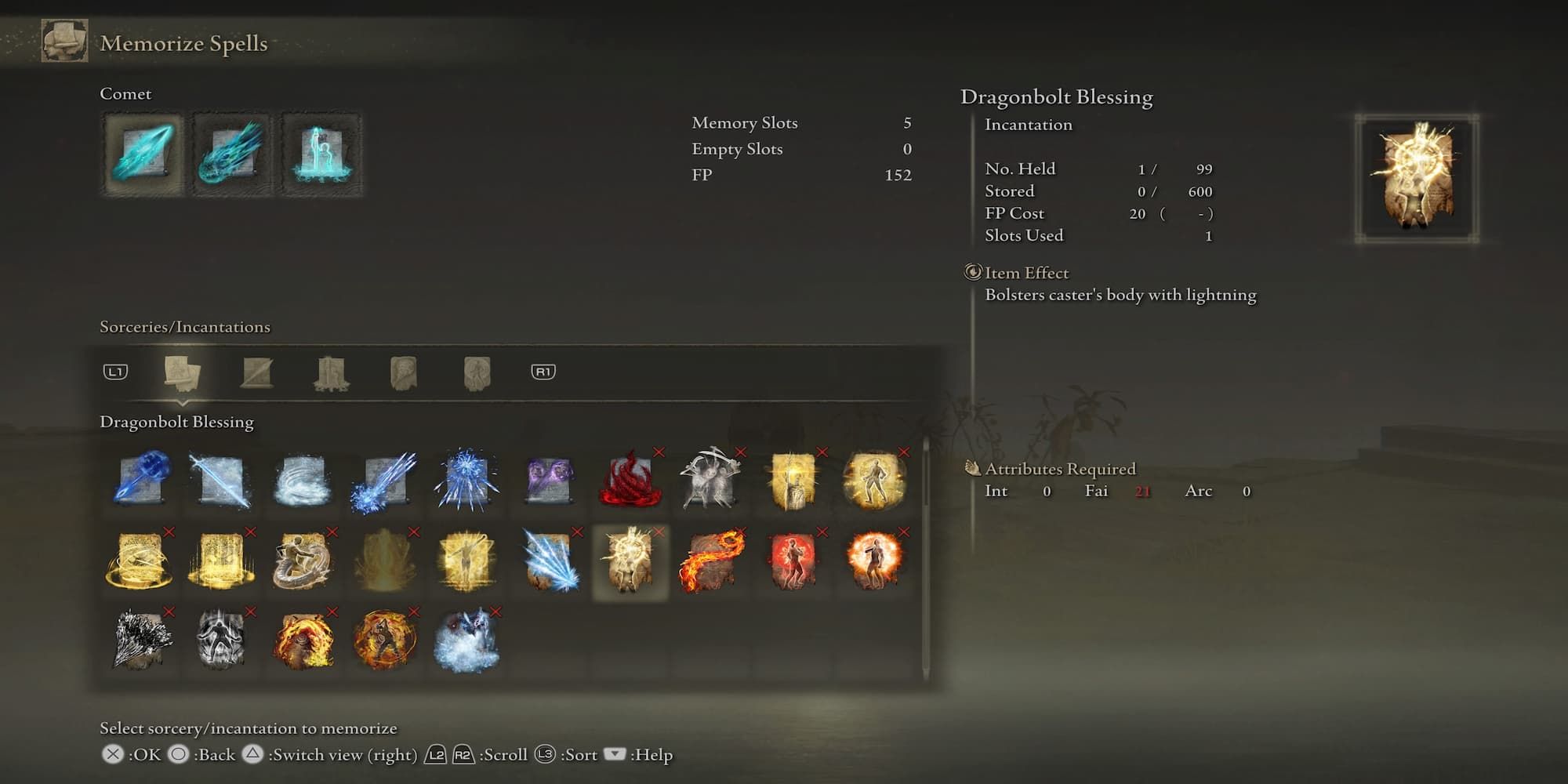
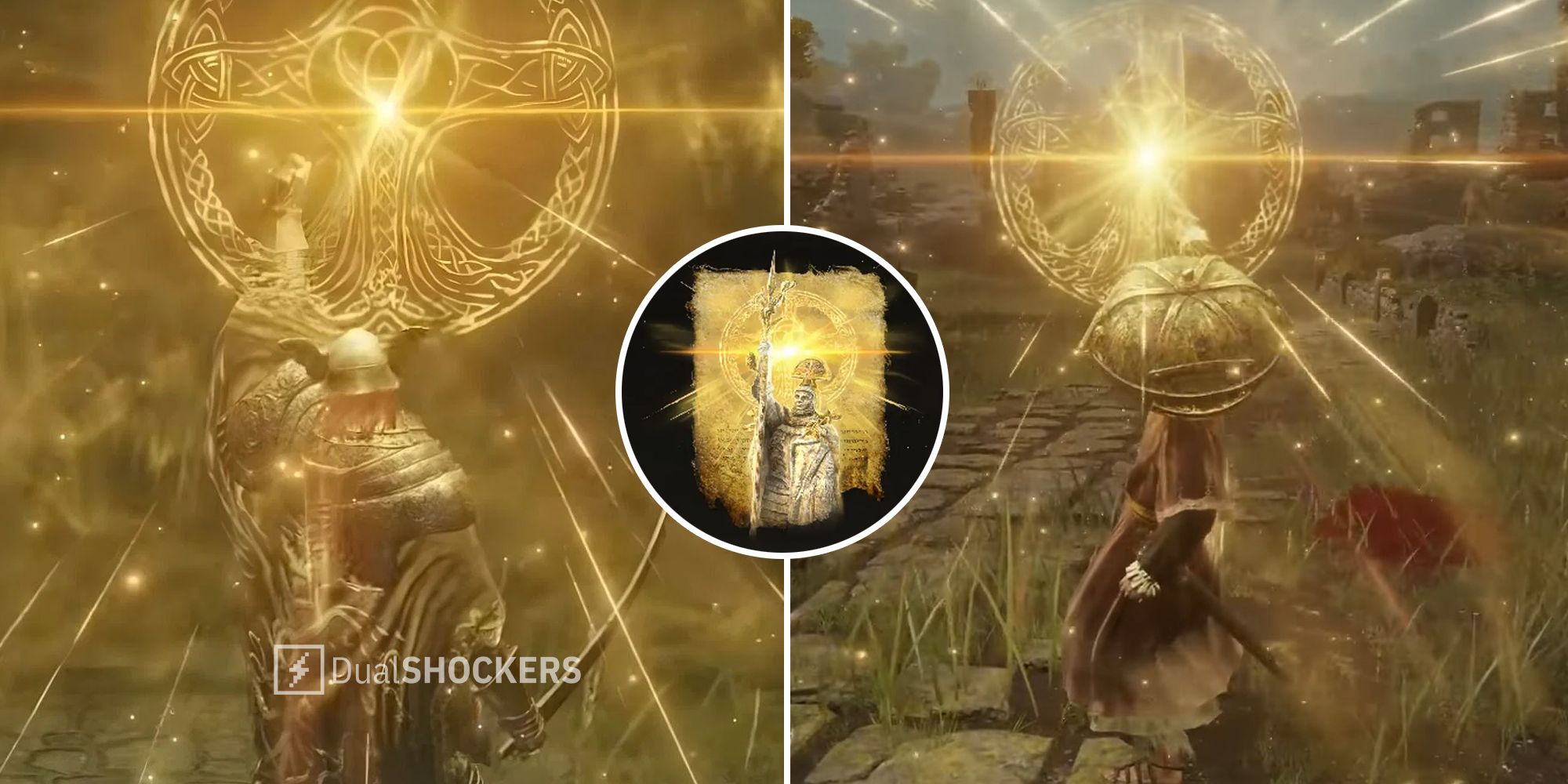
Elden Ring: Where To Find Dragonbolt Blessing
Favicon 
www.dualshockers.com

Elden Ring: Where To Find Dragonbolt Blessing

Incantations in Elden Ring are great for dealing damage, but they excel in healing and buffing your character. Learning about an enemy's damage characteristics and attacks can help you prepare buffs to counter the elements directly they will be attacking you with. At the same time, many bosses will have different elements; it's rare to find a buff that will be effective against almost any boss, despite their elemental affinity.
Like
Comment
Share
Gamers Realm
Gamers Realm
2 yrs

Elden Ring: Where To Find Fires Deadly Sin Incantation
Favicon 
www.dualshockers.com

Elden Ring: Where To Find Fires Deadly Sin Incantation

The presence of magic in Elden Ring is probably more than any previous FromSoftware games in the same genre. No matter who your base character is, you can always level up your Faith and Intelligence to use sorcery and magic against your enemies.
Like
Comment
Share
Gamers Realm
Gamers Realm
2 yrs

Elden Ring: Where To Find The Golden Vow Incantation
Favicon 
www.dualshockers.com

Elden Ring: Where To Find The Golden Vow Incantation

There are a great number of incantations that you can find across the Lands Between. The ones you collect may vary depending on your build, so you may want to allocate your time collecting some over others. But the Golden Vow Incantation is one you can utilize no matter what build you use, and it only requires 25 Faith!
Like
Comment
Share
History Traveler
History Traveler
2 yrs

Grifter hermit’s treasure found in Poland
Favicon 
www.thehistoryblog.com

Grifter hermit’s treasure found in Poland

A treasure in coins associated with the notorious conman hermit Anthony Jaczewicz have been discovered in the Jeleniowskie mountain range of south-central Poland. The Świętokrzyska Exploration Group (ŚGE), a group of local metal detectorists searching by consent of the Świętokrzyskie Provincial Monument Conservator, set out seeking traces of the legendary hermit’s treasure in June 2022. They found several deposits of silver and gold coins which are now being recorded and conserved. They’ve kept their discovery quiet for two years to protect the site. Antoni Jaczewski was one of many adventurers and grifters who suckered people in the late 17th and early 18th century when Poland was struck by another wave of plague. As happened when the Black Death first devastated Europe in the middle of the 14th century and in subsequent pandemic outbreaks, desperate people turned to religious figures and practices for healing. Jaczewski built a hermitage in the Swiętokrzyskie Mountains in May of 1708. He claimed to have received the power to heal the sick from the Virgin Mary who was living there in the hermitage with him. The fraud was incredibly effective. Donations poured in and soon the hermitage was so flush with cash that Jaczewski needed to hire armed guards. That launched another lucrative sideline for the fake holy man: robbing pilgrims and raiding neighboring estates. The local nobility finally arrested him and he was imprisoned by the Bishop of Krakow, but he soon escaped and went right back to his mountain hermitage flogging phony healing. He was by no means in hiding, and it seems he had at least tacit approval from papal authorities. Eventually he made too much trouble for the wrong people again, and in 1712 he was arrested and put on trial at the Krakow episcopal court. He was convicted and sentenced to life imprisonment in the fortress of Częstochowa. ŚGE managed to locate a large collection of coins from the first half of the 17th century and the beginning of the 18th century, including orts, sixes, krajcars, kopecks (so-called teardrops). and other. The Hamburg ducat from 1648 looks particularly interesting, with an image of Madonna and Child pierced at the edge of the coin, which suggests that it could have served as a medallion. It seems, therefore, that the coins may be part of the fees collected by the self-proclaimed hermit, donations or votive offerings, or perhaps also goods stolen from the local nobility. The deposit of coins, secured by the conservation services and members of ŚGE, was transferred to the Historical and Archaeological Museum in Ostrowiec Świętokrzyski. “Its conservation and detailed numismatic and historical analysis are planned this year, which we hope will provide more answers about the past of this deposit.” – said Wojciech Siudowski, from WUOZ in Kielce
Like
Comment
Share
Science Explorer
Science Explorer
2 yrs

Can mirrors facing each other create infinite reflections?
Favicon 
www.livescience.com

Can mirrors facing each other create infinite reflections?

Infinite mirrors are a fun party trick, but the physics behind this phenomenon explains why it may not be true.
Like
Comment
Share
Showing 28809 out of 56670
  • 28805
  • 28806
  • 28807
  • 28808
  • 28809
  • 28810
  • 28811
  • 28812
  • 28813
  • 28814
  • 28815
  • 28816
  • 28817
  • 28818
  • 28819
  • 28820
  • 28821
  • 28822
  • 28823
  • 28824

Edit Offer

Add tier


Select an image
Delete your tier
Are you sure you want to delete this tier?

Reviews

In order to sell your content and posts, start by creating a few packages. Monetization

Pay By Wallet

Payment Alert

You are about to purchase the items, do you want to proceed?

Request a Refund