YubNub Social YubNub Social
    Advanced Search
  • Login

  • Night mode
  • © 2026 YubNub Social
    About • Directory • Contact Us • Privacy Policy • Terms of Use • Android • Apple iOS • Get Our App

    Select Language

  • English
Install our *FREE* WEB APP! (PWA)
Night mode
Community
News Feed (Home) Popular Posts Events Blog Market Forum
Media
Headline News VidWatch Game Zone Top PodCasts
Explore
Explore Jobs Offers
© 2026 YubNub Social
  • English
About • Directory • Contact Us • Privacy Policy • Terms of Use • Android • Apple iOS • Get Our App

Discover posts

Posts

Users

Pages

Group

Blog

Market

Events

Games

Forum

Jobs

Science Explorer
Science Explorer
2 yrs

Where Did Venus’s Water All Go? We Might Have An Idea
Favicon 
www.iflscience.com

Where Did Venus’s Water All Go? We Might Have An Idea

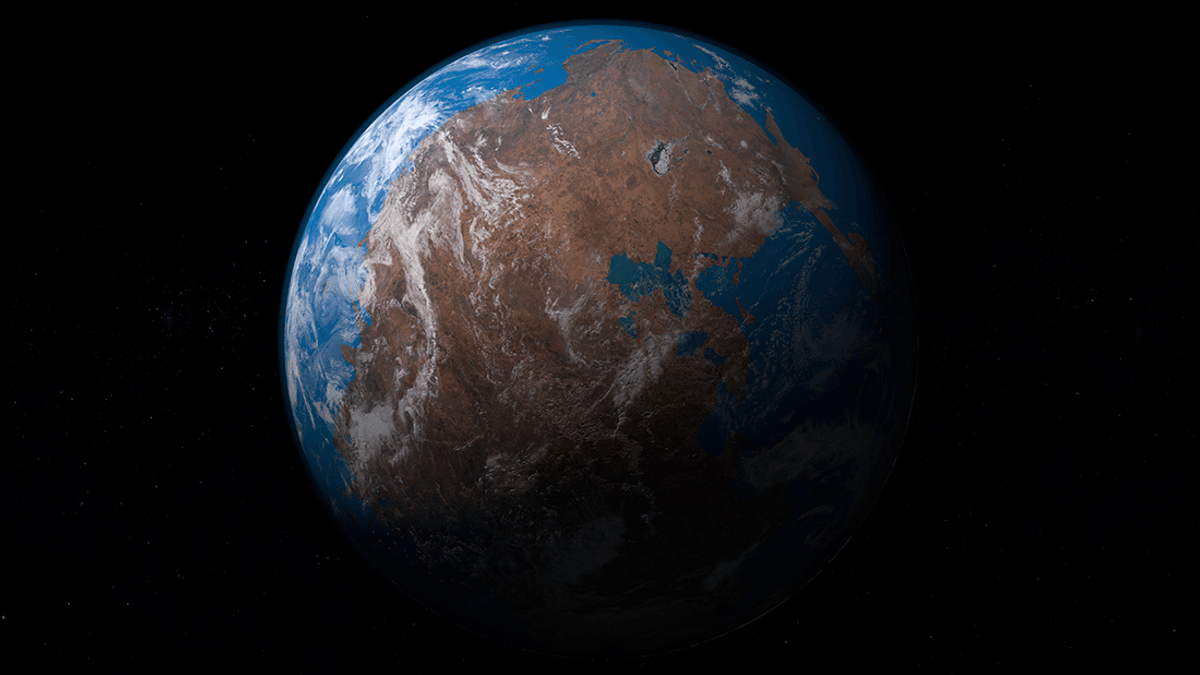
Among its other hellish conditions, Venus is bone dry, despite having once had plenty of water. Where did it all go? A new analysis attributes it to “dissociative recombination”, which caused a loss of hydrogen atoms at twice the rate of previous estimates.Science fiction writers once set their works in the oceans of Venus, which they imagined sat beneath those endless clouds. Once spacecraft checked our neighbor out, the horrifying heat made clear there’d be no liquid water – but where was all the water vapor? Scientists have continued to ponder why Venus is hot and dry, rather than hot and wet, and what the implications might be for planets with more hospitable temperatures.Venus probably started out with a fairly similar amount of water to Earth. Yet it has a hundred-thousandth as much left, all of it in the atmosphere, rather than being distributed between ice, ocean, and air like Earth’s.Once Venus had similar amounts of water to Earth. It must have gone somewhere.Image Credit: NASAThe turbocharged Greenhouse Effect on Venus would have boiled off its water, leading to the steam escaping. However, if steam loss was the whole story, water equivalent to a global layer 10-100 meters (33-330 feet) deep should have been left behind.“As an analogy, say I dumped out the water in my water bottle. There would still be a few droplets left,” said Dr Michael Chaffin of the University of Colorado, Boulder in a statement. Chaffin is part of a team blaming the molecule HCO+, which they have already identified as a major culprit in Mars losing most of its water.There’s evidence to support the confidence Venus once had Earth-like quantities of water. Deuterium (hydrogen’s isotope with one neutron) is less likely to escape than ordinary hydrogen, and the ratio of hydrogen to deuterium reveals how much was once present.Whether there is a little H2O in Venus’s atmosphere or a lot, some of it combines with carbon dioxide at altitudes to produce HCO+. However, the upper atmosphere also has plenty of free electrons, which recombine with the HCO+, leaving carbon monoxide and hydrogen atoms.As the lightest element, hydrogen escapes easily from small planets’ gravity when it doesn’t have a heavier partner to anchor it. Unlike helium, hydrogen bonds easily to other atoms, so in the normal course of events it stays home. HCO+ provides a stepping stone to hydrogen becoming free long enough to escape. In Venus’s case, Chaffin and co-authors think, so much escaped that there’s not enough left to make water, and the oxygen has to go bond with something else.In order to explain Venus’s desiccated state, the team thinks there must have been a lot more HCO+ in its atmosphere than previously anticipated.Once all the hydrogen is lost, the HCO+ will be gone, but the authors don’t think we’re there yet. They think it should still be possible to identify small amounts of the molecule to confirm their hypothesis. “One of the surprising conclusions of this work is that HCO+ should actually be among the most abundant ions in the Venus atmosphere,” Chaffin said.Once HCO+ was included in the models, Chaffin and co-authors found the anticipated amount of water roughly matches what we see today, and the hydrogen/deuterium ratio is in the right ballpark as well.None of the spacecraft we have sent to Venus have detected any HCO+. However, the team thought that is because the instruments they carried were not suited to finding it.The forthcoming Deep Atmosphere Venus Investigation of Noble gases, Chemistry, and Imaging (DAVINCI) won’t change that, but if this explanation is judged plausible future missions might. Much more than our understanding of Venus rests on this.“There haven’t been many missions to Venus,” study co-author Dr Eryn Cangi said. “But newly planned missions will leverage decades of collective experience and a flourishing interest in Venus to explore the extremes of planetary atmospheres, evolution and habitability.”“Water is really important for life,” Cangi added. “We need to understand the conditions that support liquid water in the universe, and that may have produced the very dry state of Venus today.”The study is published in the journal Nature.
Like
Comment
Share
Science Explorer
Science Explorer
2 yrs

Your Enemy’s Enemy Really Is Your Friend – According To Physics!
Favicon 
www.iflscience.com

Your Enemy’s Enemy Really Is Your Friend – According To Physics!

Humans are social animals whose web of relationships is convoluted and often changing. Understanding these social networks and their changes has been the remit of different sciences and various theories. One of them was proposed in the 1940s, called social balance theory. Now, researchers have been able to corroborate it using statistical physics.The idea at the center of social balance theory is, as the name suggests, balance. Individuals want and try to keep balanced relationships within their networks. Positive relationships are balanced, while negative or mixed relationships are not, and you need rules to keep the system balanced. The classical model has four simple rules, based on the simplistic idea that positive relationships are "friends" and negative relationships are "enemies".The first rule is that a friend of a friend is a friend. Now, this is an idealized case – do not immediately jump to thinking about that friend of your friend whom you hate. Another rule is a friend of an enemy is an enemy, and obviously the enemy of a friend is an enemy – we've got to defend our pals. The final rule is more subtle: an enemy of an enemy is a friend. The new analysis tends to agree with this requirement, but the scientists had to bring in significant complexity before they were able to model it.“We can finally conclude that social networks align with expectations that were formed 80 years ago,” first author Bingjie Hao, from Northwestern University, said in a statement. “Our findings also have broad applications for future use. Our mathematics allows us to incorporate constraints on the connections and the preference of different entities in the system. That will be useful for modeling other systems beyond social networks.”Crucial to the new model were two factors: not everyone knows everyone else in real life, and some people are more positive than others. Using both constraints actually reproduces a social network just like the one predicted by Fritz Heider 80 years ago.“We have always thought this social intuition works, but we didn’t know why it worked,” added István Kovács, the study’s senior author. “All we needed was to figure out the math. If you look through the literature, there are many studies on the theory, but there’s no agreement among them. For decades, we kept getting it wrong. The reason is because real life is complicated. We realized that we needed to take into account both constraints simultaneously: who knows whom and that some people are just friendlier than others.”The study is published in the journal Science Advances.
Like
Comment
Share
Science Explorer
Science Explorer
2 yrs

Incredibly Rare Tornado Spinning In “Wrong” Direction Hit Oklahoma, Surprising Meteorologists
Favicon 
www.iflscience.com

Incredibly Rare Tornado Spinning In “Wrong” Direction Hit Oklahoma, Surprising Meteorologists

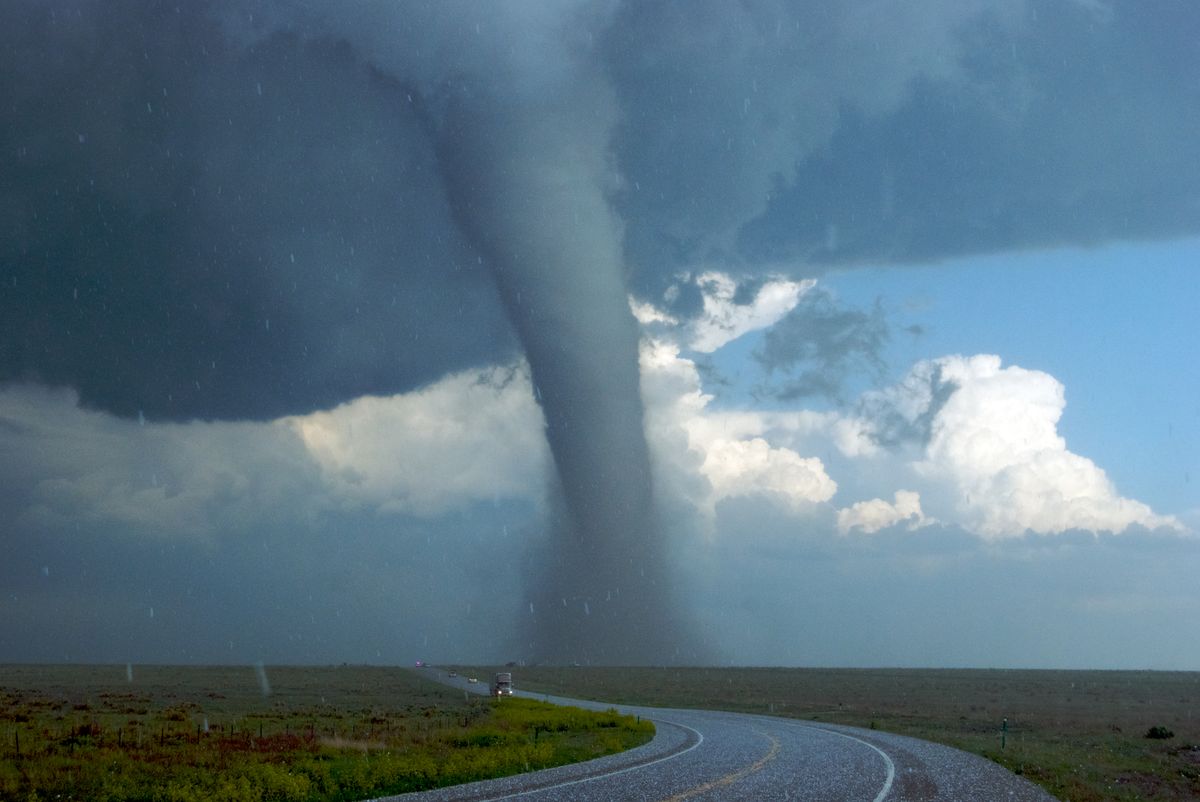
The southern Plains of the US are now in the midst of “tornado season”, but this year’s peak of violent storms has already brought with it one of the most unusual types of twister – one that spins clockwise.On the evening of April 30, a powerful thunderstorm known as a supercell made its way east across Oklahoma. Not only do supercells often bring strong winds and large hailstones, but they can also spawn tornadoes, and this one birthed multiple.That’s not exactly an odd occurrence given that tornadoes produced by supercells are the most common kind, but around 10:26 pm CDT, near the town of Loveland, the storm gave rise to a super-rare anticyclonic tornado.Tornadoes that occur in the Northern Hemisphere normally rotate anticlockwise, but in an estimated 1 percent of cases, they instead spin clockwise. Such anticyclonic tornadoes are normally fairly weak, tornado analyst Paul Robinson told the Washington Post in 2013.    IFLScience is not responsible for content shared from external sites.On this occasion, however, the unusual tornado continued to go against convention as it remained powerful, with the National Weather Service (NWS) putting out a statement deeming the twister as “large and extremely dangerous”. Luckily, it occurred mostly over farmland, with no reported casualties – just a lot of uprooted trees.The statement also revealed that at one point, the tornado achieved something else out of the ordinary: it was “nearly stationary”, or at the very least moving extremely slowly.“It’s not common to see (tornadoes) be nearly stationary,” NWS meteorologist Rick Smith explained to CNN. “Tornadoes are almost always going to just go wherever the supercell thunderstorm goes.”This atypical tornado was far from the only one getting things a bit backward that day. Normally, tornadoes in the US travel from west to east, but the mother supercell popped out another irregular offspring that ended up looping back over the path it just took.According to Smith, it’s possible that the two unusual tornadoes were even active at the same time. “You certainly don’t see this every day,” said the meteorologist.   IFLScience is not responsible for content shared from external sites.Though tornadoes can happen at any time, the spring months usually see an uptick in storms in the US, with the peak “tornado season” for states such as Oklahoma occurring from May to early June and through to July further north. The lead up to this year’s season has been pretty busy, with the NWS Storm Prediction Center reporting a preliminary figure of 300 tornadoes in the US during April, the second highest figure for the month on record.
Like
Comment
Share
Science Explorer
Science Explorer
2 yrs

Meet The Most Venomous Fish In The World
Favicon 
www.iflscience.com

Meet The Most Venomous Fish In The World

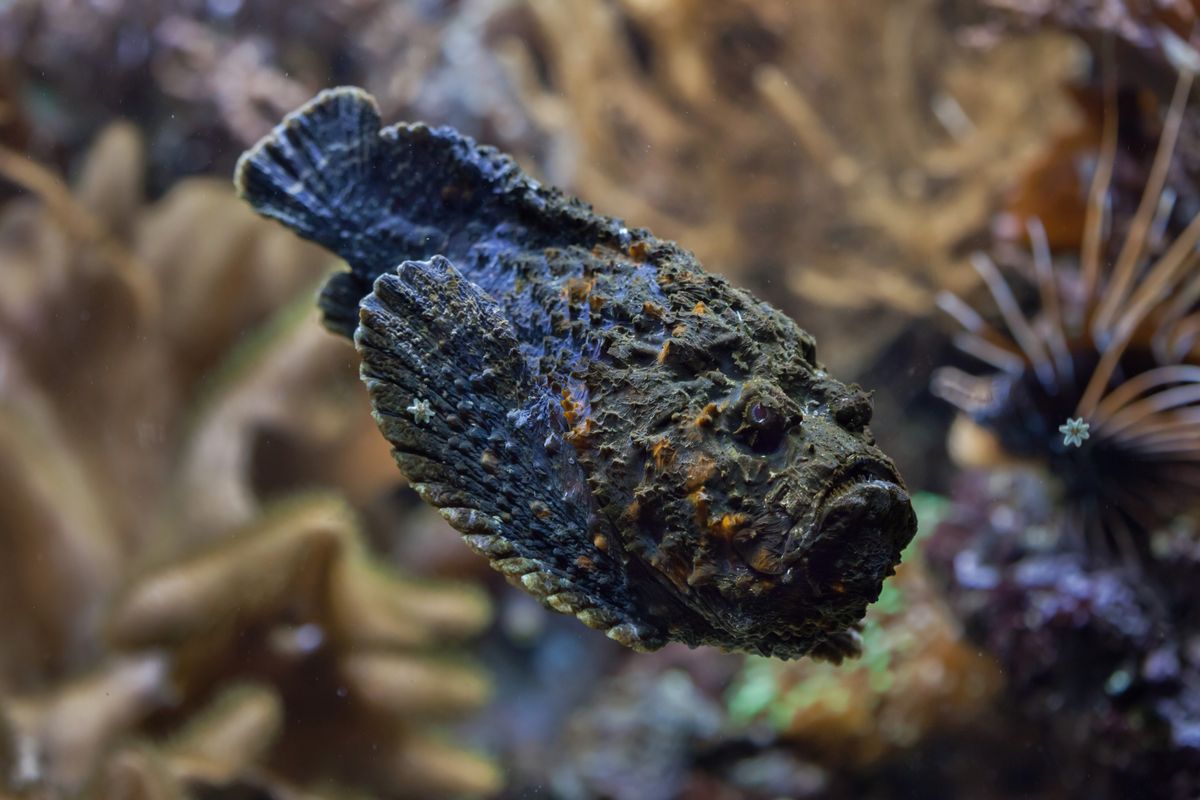
There are plenty of venomous and poisonous species across the different habitats of Earth. Some slither, some crawl, and some fly through the sky – but one group takes the title as the most venomous species to swim in the planet's seas. Meet the stonefish.The name “stonefish” refers to five species in the genus Synanceia, including the reef stonefish (Synanceia verrucosa) and the estuarine stonefish (Synanceia horrida). Stonefish are masters of camouflage blending in perfectly with the coral or rocks of the muddy seabed in the Indo-Pacific. According to the Australian Museum, reef stonefish typically eat fish and crustaceans, lying in wait and then striking their prey super fast.The venomous aspect of a reef stonefish comes from the dorsal fin spines that run along the back of the fish. These spines contain a highly toxic venom that can cause intense pain and even death. The Guinness World Records writes that the estuarine stonefish has the largest venom gland of any known fish.          The spines are grooved like a hypodermic needle and are used purely for defense. As such, they are erected by the fish when they feel threatened. Each spine has two venom glands surrounding it. The seriousness of the reaction is largely due to how many spines are involved and the depth at which the spines enter the victim. While the pain is said to be excruciating and incredibly intense, some suggest that hot water therapy is the best pain management tool to inactivate the venom while waiting for medical attention. “When you step on it, that presses on the gland, the gland ruptures and the venom squirts up along the spine,” Bryan Fry, an associate professor at the University of Queensland, told The Guardian. The result is a painful sting that has been described as “worse than childbirth”.Fortunately, an antivenom was developed in 1959, which reduces the likelihood of serious complications.
Like
Comment
Share
Science Explorer
Science Explorer
2 yrs

One Of The World’s Rarest Fish Has Best Breeding Season For 25 Years
Favicon 
www.iflscience.com

One Of The World’s Rarest Fish Has Best Breeding Season For 25 Years

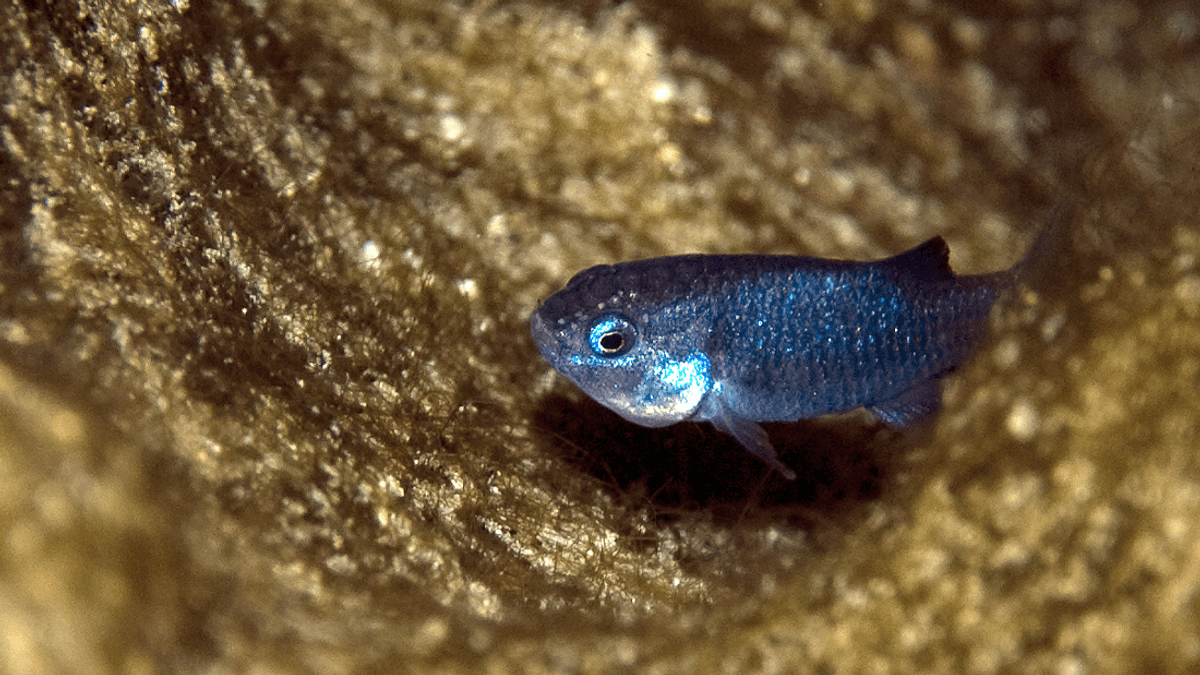
Hooray! We bring good conservation news from the world of fish biology. Devils Hole pupfish (Cyprinodon diabolis) are one of the world's most endangered fish species, living in Death Valley National Park. Biologists have recently completed their annual spring season count and recorded the most fish seen in 25 years.Devils Hole pupfish live in just one small cavern near Ash Meadows National Wildlife Refuge in Nye County, Nevada. The pupfish are small, only measuring around 35 millimeters long, and while the males are bright blue the females are a paler teal color. The cavern is filled with water at a balmy 33°C (91°F), and the fish live in the upper 24 meters (80 feet) of the cave. They rely on a small sunlit shelf for algae to eat and are thought to have the smallest habitat of any vertebrate species on Earth. The shelf is essential but precarious; seismic activity can cause the rest of the water to slosh, affecting the shelf, and the cavern is so deep that the bottom has never been reached. The population of Devils Hole pupfish has undergone rapid changes. In the early 1990s there used to be around 200-250 pupfish counted each spring. However, for the last 20 years the population has usually been around 90, with a worryingly low year of just 35 fish counted in 2013. This spring, however, biologists counted 191 Devils Hole pupfish, the highest number since March 1999. The fish are counted twice a year both via scuba diving and on the shelf, with the next count due in the fall of 2024. “It’s exciting to see an increasing trend, especially in this highly variable population. Increasing numbers allow the managing agencies to consider research that may not have been possible in the past, when even slight perturbations of habitat or fish had to be completely avoided. We’re excited about the future directions with respect [to] managing this species,” said Michael Schwemm, Senior Fish Biologist for the US Fish and Wildlife Service, in a statement. 
Like
Comment
Share
Science Explorer
Science Explorer
2 yrs

Animation Shows The Possible Formation Of Our Next Supercontinent
Favicon 
www.iflscience.com

Animation Shows The Possible Formation Of Our Next Supercontinent

Around 200 million years ago, Earth's last supercontinent Pangea began to break apart, with plate tectonics slowly moving the continents into the world we recognize today. Plate tectonics is by no means done, and there are several suggested models as to how our future world will look like.Plate tectonics were only discovered relatively recently. Though German meteorologist Alfred Wegner first proposed continental drift in 1912 – and hypothesized that the continents were once joined in a supercontinent he named Pangea – it took until the 1960s and new tech such as echo sounders and magnetometers before scientists studying ocean ridges could explain the processes behind the movement of the crust.Since then, scientists have put together models of plate tectonics, incorporating new data (and the occasional new continent), and even attempted to model what the Earth may look like in our geological future. One such team – looking at how tides are affected by the movement of tectonic plates – produced such a model showing a possible supercontinent in Earth's future.            The simulation is by no means the last word on the matter, with other teams creating their own models of how the continents will move based on new data, and/or better understanding of processes as we learn more.         These models are generally not about finding the shape of Earth's future continents, as interesting as it is to see, but telling us about Earth now.“It probably doesn’t mean anything to humans now in our lifetime,” oceanographer Mattias Green from Bangor University’s School of Ocean Sciences in Menai Bridge, UK, and lead author of the study explained in a statement in 2016. “But it does enhance our understanding of interactions between plate tectonics, Earth’s climate system, its oceans, and even how the evolution of life is, at least to some extent, driven by this tidal process.”For their part, the model provided evidence that Earth is currently going through a period of particularly strong tidal energy, which will last for about 20 million years. As the next supercontinent forms, the ocean basins will form one massive body of water. This body of water will have low tidal energy, leading to smaller waves and less nutrient mixing. As a result, the ocean floor will likely become oxygen-deprived, and devoid of life, which sucks the fun out of the cool animation somewhat.
Like
Comment
Share
Science Explorer
Science Explorer
2 yrs

Even Quantum Entanglement Has Its Own Entropy, It Turns Out
Favicon 
www.iflscience.com

Even Quantum Entanglement Has Its Own Entropy, It Turns Out

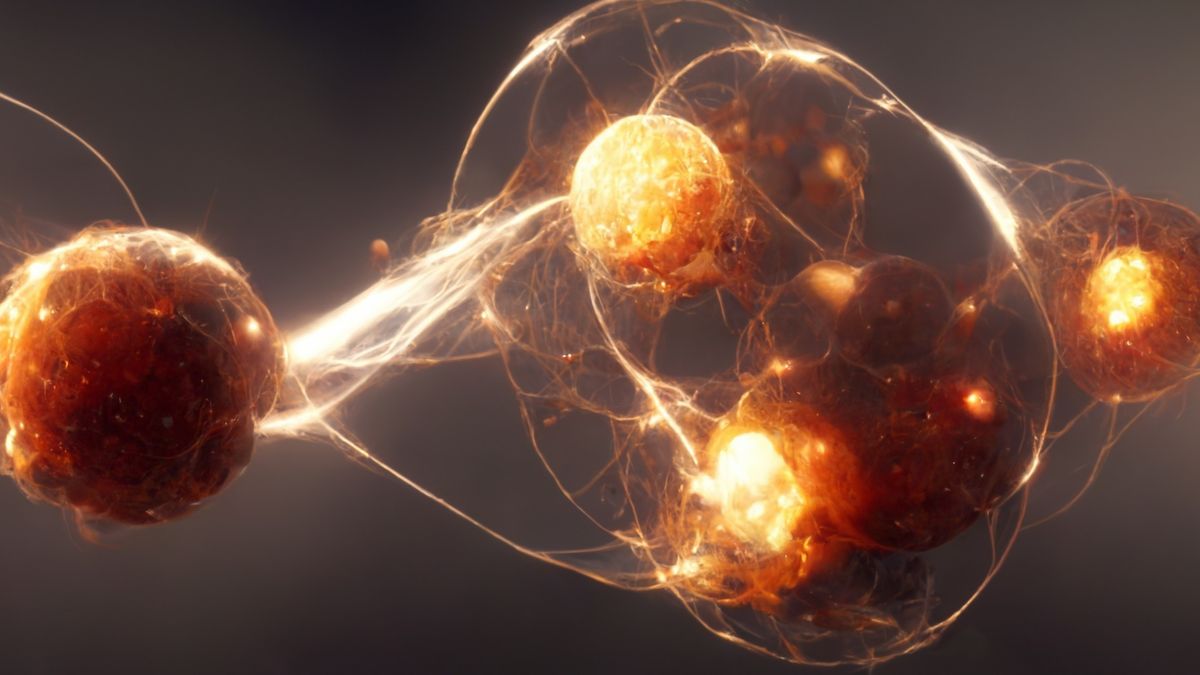
You do not bet against the universe. In any isolated system, entropy – the order of the system – can never decrease. In classical systems, this is as firm a law of reality as it is possible to be. It’s the second law of thermodynamics. But when it comes to quantum mechanics, things are not as firmly established. However, new work has shown that there is an entropy to a crucial quantum phenomenon: entanglement.When a measurement is taken on a particle in quantum mechanics, it is said that the wavefunction collapses. Properties in quantum mechanics are probabilistic. If two particles are entangled, they are part of the same quantum state, and a measurement on one will also collapse the wavefunction of the other instantaneously, even if the two particles are the opposite ends of the universe.This might seem counterintuitive or a violation of this law or that law of physics but it describes a way we can measure the world accurately. Quantum entanglement is extremely useful in cutting-edge quantum technology – but scientists weren’t sure how such a phenomenon plays ball with entropy.To square quantum entanglement with the second law of thermodynamics, scientists needed to show that entanglement transformations are reversible. Work and heat are shown to be reversible in thermodynamical systems, but this is not straightforward for quantum entanglement.The team used "probabilistic" entanglement transformations. They do not work every time, but this framework allows physicists to create the reversible transformations needed for the entropy calculations. And they were able to calculate the entropy of this entanglement.“Our findings mark significant progress in understanding the basic properties of entanglement, revealing fundamental connections between entanglement and thermodynamics, and crucially, providing a major simplification in the understanding of entanglement conversion processes. This not only has immediate and direct applications in the foundations of quantum theory, but it will also help with understanding the ultimate limitations on our ability to efficiently manipulate entanglement in practice,” study author Bartosz Regula, from the RIKEN Center for Quantum Computing, said in a statement.More work is needed – this is very much the first solid word on the entropy of quantum entanglement. The current solution and future expansion might provide novel insights into other problems that still limit our understanding of quantum physics.“Our work serves as the very first evidence that reversibility is an achievable phenomenon in entanglement theory. However, even stronger forms of reversibility have been conjectured, and there is hope that entanglement can be made reversible even under weaker assumptions than we have made in our work — notably, without having to rely on probabilistic transformations. The issue is that answering these questions appears significantly more difficult, requiring the solution of mathematical and information-theoretic problems that have evaded all attempts at solving them thus far. Understanding the precise requirements for reversibility to hold thus remains a fascinating open problem,” Regula added.This new work is published in the journal Nature Communications.
Like
Comment
Share
Science Explorer
Science Explorer
2 yrs

Jump Into A Black Hole With NASA’s Incredible New Visualization
Favicon 
www.iflscience.com

Jump Into A Black Hole With NASA’s Incredible New Visualization

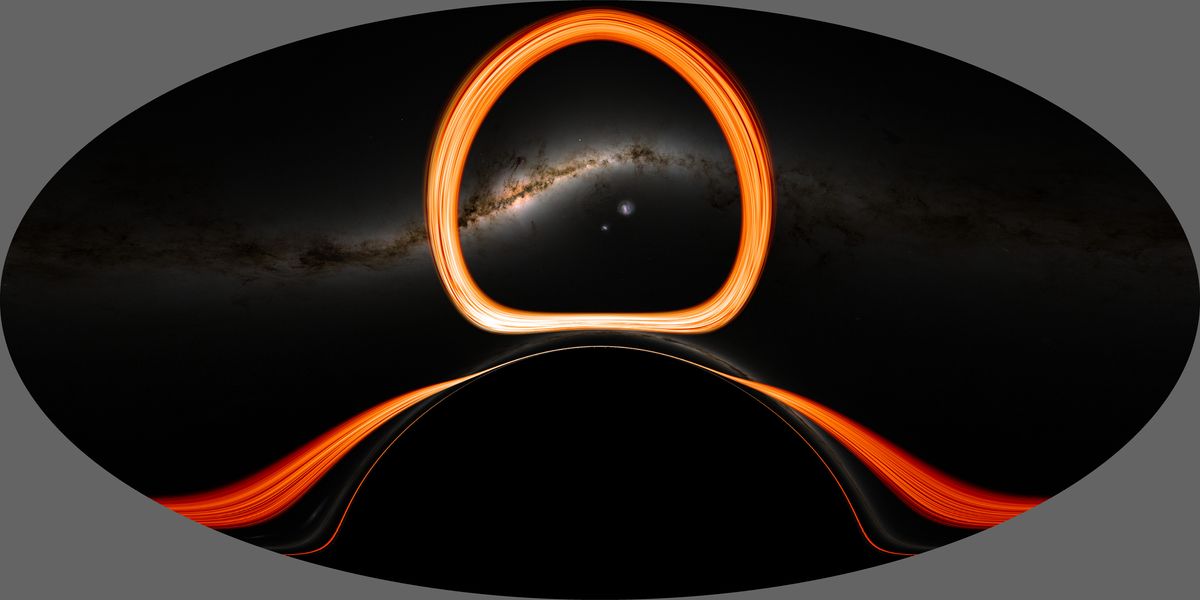
If you have ever dreamed of flying into a black hole, but the idea of your body getting spaghettified (yes, this is a real scientific term) into plasma is not appealing, NASA has a solution. Dive into an incredible new 360° visualization of what it would be like going around a black hole before plunging into the event horizon instead.A black hole's event horizon is the point of no return. Well, the surface of no return. The region separates the black hole from the rest of the universe. Once something crosses that threshold, nothing – not even light – can escape the gravitational pull of the black hole. Using a NASA supercomputer, it's now possible to see what it would be like to fly around or even fall into a black hole.“People often ask about this, and simulating these difficult-to-imagine processes helps me connect the mathematics of relativity to actual consequences in the real universe,” astrophysicist Jeremy Schnittman at NASA’s Goddard Space Flight Center, who created the visualizations, said in a statement.“So I simulated two different scenarios, one where a camera — a stand-in for a daring astronaut — just misses the event horizon and slingshots back out, and one where it crosses the boundary, sealing its fate.”        The black hole in question is similar to Sagittarius A*, the supermassive black hole at the center of the Milky Way. It weighs 4.3 million times the mass of our Sun and has an event horizon of 25 million kilometers (16 million miles) across. In the visualization, you are moving faster than light, starting from 640 million kilometers (400 million miles) before approaching the black hole. And it’s a good thing this is a supermassive one.“If you have the choice, you want to fall into a supermassive black hole,” Schnittman explained. “Stellar-mass black holes, which contain up to about 30 solar masses,  possess much smaller event horizons and stronger tidal forces, which can rip apart approaching objects before they get to the horizon.”In this second simulation, the camera approaches and falls towards the supermassive black hole before managing to escape.        If you were to actually fly around the black hole, your experience of time would also change. Such an object would keep you younger as time would slow down due to your speed and its gravity. From a distant observer, you would never appear to cross the horizon, even though you did. If you were on the orbiting-only trip, you would come back younger. In this visualization, you would be 36 minutes younger than someone who stayed at your starting position.“This situation can be even more extreme,” Schnittman noted. “If the black hole were rapidly rotating, like the one shown in the 2014 movie Interstellar, she would return many years younger than her shipmates.”Black holes are fascinating and very complex objects, so visualizations such as these help bring some of their peculiarities to life.
Like
Comment
Share
Science Explorer
Science Explorer
2 yrs

If You’re Not An Introvert Or Extrovert, You Could Be An Ambivert
Favicon 
www.iflscience.com

If You’re Not An Introvert Or Extrovert, You Could Be An Ambivert

Are you an introvert or an extrovert? Some people will be able to answer this question immediately, but for others, it’s a little trickier to know which group they fit into best. If that’s you, then you might resonate with the term “ambivert” – basically, a little bit introvert and a little bit extrovert.Introverts vs. extrovertsDetermining someone’s personality type is a complex business. Whether you’re an introvert, extrovert, or ambivert is just one small part of the blend of innate traits and life experiences that make you uniquely you. But it can still be helpful to understand where you might fall on this spectrum, and how it might impact your relationships with others.Let’s start by busting a few myths. Many people take the word “introvert” to be a synonym for “shy” or “antisocial”, and that’s simply not the case. There are highly sociable introverts, just as there are socially anxious extroverts. The difference really comes down to how much social stimulation you can handle before you need some time to recharge.You might immediately recognize yourself as an introvert if you find yourself scheduling in pockets of alone time between social events. You could be the life and soul of the party one day, but you won’t be ready to go again until you’ve had some time to decompress. It’s not that you don’t enjoy spending time with friends and loved ones – you just run out of steam before other people do. (Of course, if you are an introvert who prefers to avoid company most of the time, that’s valid too!).By contrast, extroverts tend to feel that their “social battery” is charged, and not drained, by being around other people. You may almost find that you “feed off” other people’s energy, and you may actively dislike being alone. One oft-cited theory that seeks to explain this is the “dopamine hypothesis”. Dopamine is often – incompletely and simplistically – called the “pleasure chemical”, and among its many functions in the brain is its role in the reward pathway. Some research has suggested that people who score more highly for extroversion are more sensitive to dopamine-mediated rewards, although a 2015 review of data on the topic up to that point called the evidence “mixed at best”. As with other personality traits, it’s likely that extroversion arises from a complex interplay between genetic and environmental factors. Deliberately emulating the opposite personality type might also be easier than you think, according to a piece in The Conversation by Dr Andrew Spark and Professor Peter O’Connor from Queensland University of Technology.But when it comes to the broad dichotomy between extroversion and introversion, a lot of people actually fall somewhere in the middle of these two extremes. Enter the ambiverts.“The ambivert advantage”In a 2013 paper, psychologist Adam Grant offered a perspective on the advantages of an ambivert personality type as it applies to people working in sales. At first glance, sales jobs sound like an extrovert’s dream, but Grant’s research led to a different conclusion. A study of 340 call center employees found those who fell towards the middle of the extroversion-introversion scale had the highest sales performance, due to greater flexibility in dealing with different customer interactions. This is characteristic of what the term “ambivert” means to most people – you can be more extroverted when the occasion arises, and then flip to being more introverted at other times.Still unsure whether this applies to you? Following Grant’s research, Forbes published a handy list of nine signs that you too might be an ambivert, including things like, “Being the center of attention is fun for me, but I don’t like it to last.” Author Daniel H. Pink, who writes about human behavior in the world of work, also has an online quiz you can take that claims to assess your levels of extroversion (author’s note: after strongly identifying as an introvert all my adult life, my result came through as “ambivert”, so excuse me while I go rethink some stuff.)There are advantages and disadvantages to wherever you fall within the introvert-ambivert-extrovert range – no one personality is “better” than another, it’s more about learning to play to your strengths. But if you really, really want to make changes, some research suggests it is possible (a little bit, anyway).
Like
Comment
Share
Science Explorer
Science Explorer
2 yrs

How A Human-Neanderthal Hybrid Child Rewrote Human History
Favicon 
www.iflscience.com

How A Human-Neanderthal Hybrid Child Rewrote Human History

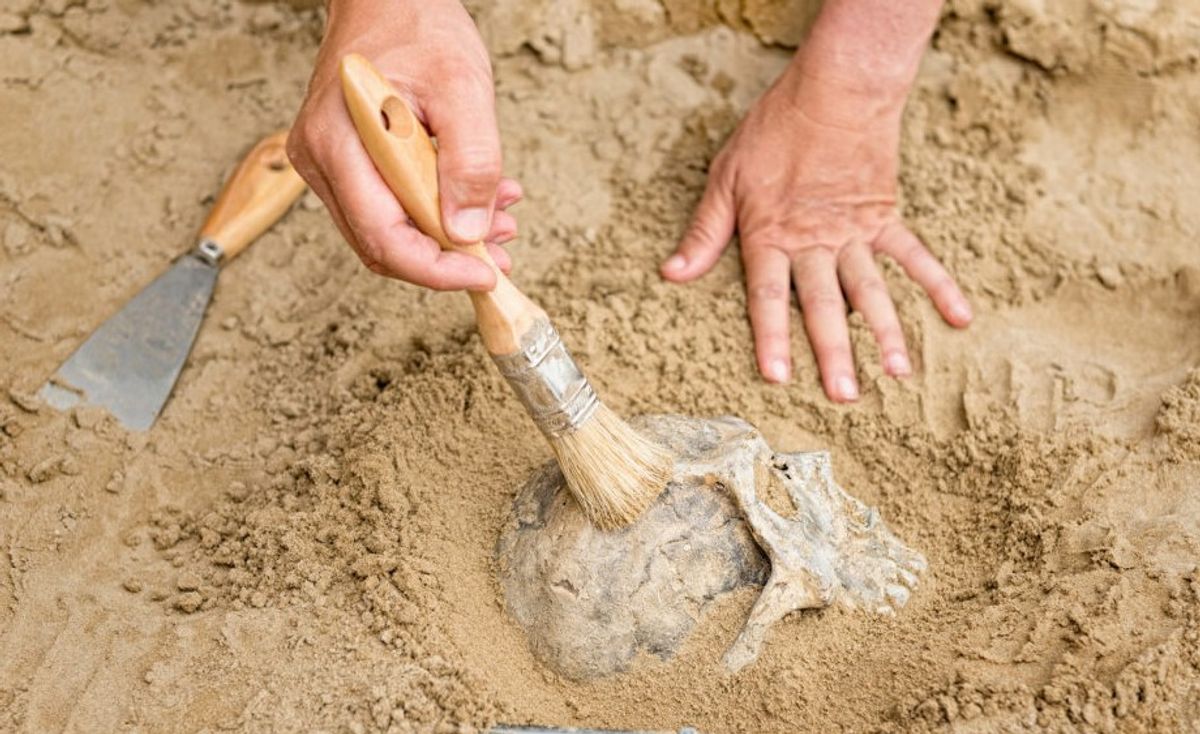
Around 24,500 years ago, the body of a 4-year-old child was wrapped in an ochre-dyed shroud and lowered into a burial pit in the Lapedo Valley of central Portugal. Unlike any whippersnapper alive today, however, this extraordinary child exhibited a unique blend of modern human and Neanderthal features, disproving everything we thought we knew about the history of our species.Known as the Lapedo Child, the youngster’s complete skeleton was discovered in 1998. Until then, anthropologists had assumed that modern humans evolved in East Africa before spreading across Eurasia and replacing the more archaic hominids that lived there – including Neanderthals.This narrative supposed that we and our ancient relatives were completely separate species that could not interbreed, and that our expansion resulted in the extinction of our more primitive cousins. The Lapedo Child ripped up this script, prompting the discoverers to propose that modern humans did mate with Neanderthals, and that the genetic code of this extinct species persisted within the hybrid lineage that flowed from the loins of our cross-pollinating ancestors.Thought to have been a male, the child himself possessed the chin and inner ear of an anatomically modern human, along with the stocky frame and limbs of a Neanderthal. Such a finding initially sent shockwaves through the anthropological world, sparking fierce debate as to what this all meant for human history.In their original study on the skeleton, the authors note that the child lived several thousand years after Neanderthals had supposedly disappeared, suggesting that these ancestral traits must have been deeply ingrained within the human genome and that the young boy was therefore “the descendant of extensively admixed populations.” In other words, interbreeding between humans and Neanderthals didn’t just happen once or twice, but occurred on a population level, resulting in significant hybridization.This, in turn, implies that Neanderthals didn’t simply die out when modern humans came along, but repeatedly hooked up with their new neighbours to the extent that they partially merged with them.At the time of the discovery, this idea was seen as pretty radical and somewhat shocking, prompting some scholars to refute the original findings. One analysis, for instance, concluded that the Lapedo Child was not a hybrid after all but, was just an oddly-shaped modern human sprog.However, the admixture theory was finally proven in 2010 when researchers sequenced the Neanderthal genome. In doing so, they revealed that all modern non-African populations contain between 1 and 4 percent Neanderthal DNA, thus confirming that our ancient ancestors did interbreed with these extinct hominids.Thankfully, our phenotypes have straightened out somewhat over the millennia and we no longer possess the Neanderthal physique. However, like the Lapedo Child, those of us who hail from outside of Africa are all modern human-Neanderthal hybrids.
Like
Comment
Share
Showing 29294 out of 56670
  • 29290
  • 29291
  • 29292
  • 29293
  • 29294
  • 29295
  • 29296
  • 29297
  • 29298
  • 29299
  • 29300
  • 29301
  • 29302
  • 29303
  • 29304
  • 29305
  • 29306
  • 29307
  • 29308
  • 29309

Edit Offer

Add tier


Select an image
Delete your tier
Are you sure you want to delete this tier?

Reviews

In order to sell your content and posts, start by creating a few packages. Monetization

Pay By Wallet

Payment Alert

You are about to purchase the items, do you want to proceed?

Request a Refund