YubNub Social YubNub Social
    Advanced Search
  • Login

  • Day mode
  • © 2026 YubNub Social
    About • Directory • Contact Us • Privacy Policy • Terms of Use • Android • Apple iOS • Get Our App

    Select Language

  • English
Install our *FREE* WEB APP! (PWA)
Night mode
Community
News Feed (Home) Popular Posts Events Blog Market Forum
Media
Headline News VidWatch Game Zone Top PodCasts
Explore
Explore Jobs Offers
© 2026 YubNub Social
  • English
About • Directory • Contact Us • Privacy Policy • Terms of Use • Android • Apple iOS • Get Our App

Discover posts

Posts

Users

Pages

Group

Blog

Market

Events

Games

Forum

Jobs

Survival Prepper
Survival Prepper  
2 yrs

PrepperNow! JANKSTREAM: Authoritarianism Creep
Favicon 
prepping.com

PrepperNow! JANKSTREAM: Authoritarianism Creep

Join Me Here As A Member here on YouTube https://www.youtube.com/channel/UCdnplvvQqMShs9UUNaLel3A?sub_confirmation=1 ————————————————— TOPICS: economy, collapse, recession, prices, inflation, middle class, decline, ISRAEL, war, Palestine, Gaza, hostages ————————————————— The Modern Prepper book: https://www.amazon.com/Modern-Prepper-J-H-Zarate/dp/1617045535/ref=mp_s_a_1_1?crid=1RDPD3FGY4OWP&keywords=the+modern+prepper&qid=1689569407&s=books&sprefix=the+modern+prepper%2Caps%2C120&sr=1-1 https://m.youtube.com/sponsor_channel/UCBcyBXNCsbx8clN2KSqZlaw?noapp=1 Thank you for supporting me! TRANSCRIPT ON SUBSTACK http://www.preppernow.substack.com https://www.buymeacoffee.com/Preppernow1 JOIN ME ON LOCALS FOR $3 A MONTH https://preppernow.locals.com JOIN ME ON SUBSCRIBESTAR FOR $3 A MONTH https://www.subscribestar.com/preppernow (TIPS/Donations) Cash App: cash.app/$PrepperNow ————————————————— SPONSORS: JASE MEDICAL JASE CASE! Follow The Link! https://www.jasemedical.com/?rfsn=6390154.fa795e4 PREPPER NERD OFFLINE ASSET SYSTEM This is my affiliate link: https://signup.prepper-nerd.com/referral/home/Wz1AWj2DlhRsMbko There are other links available at https://prepper-nerd.com/affiliate-asset-center/ OFFLINE version launch and $20 discount ends Wed 8/3/22 ————————————————— Learn canning with Voodoo Queen cindisevy@gmail.com ————————————————— TELEGRAM Channel https://t.me/crisisreport ————————————————— PrepperNow is an educator, prepper, father, husband and patriot. Working in academia, I have a B.A. in political science and an M.Ed. in education. I use the PrepperNow sites to posit my thoughts and post trustworthy material. www.preppernow.net ————————————————— L. I. N. K. S. ————————————————— (ODYSEE) https://odysee.com/@preppernow:61 ————————————————- (Truth Social): @preppernow ———————————————— (Twitter): https://www.Twitter.com/prepper_ now ———————————————— (GAB) https://gab.com/preppernow ————————————————— (RUMBLE) https://rumble.com/user/PrepperNow ————————————————— (MINDS) https://minds.com/preppernow ————————————————— (CRISIS REPORT ON ODYSEE): https://odysee.com/@preparednessnow:9 ————————————————— (CRISIS REPORT) https://YouTube.com/@crisisreport ————————————————— (EMAIL/INTEL) preppernow@protonmail.com ———————————————— (PREPPERNOW YT) https://youtube.com/channel/preppernow ————————————————— (Legal) FAIR USE NOTICE This video may contain copyrighted material; the use of which has not been specifically authorized by the copyright owner. We are making such material available for the purposes of criticism, comment, review and news reporting which constitute the fair use of any such copyrighted material as provided for in section 107 of the US Copyright Law. Not withstanding the provisions of sections 106 and 106A, the fair use of a copyrighted work for purposes such as criticism, comment, review and news reporting is not an infringement of copywright. #preppernow #prepping #news
Like
Comment
Share
Survival Prepper
Survival Prepper  
2 yrs

⚠️ WARNING!! ⚠️ This is a VERY BAD SIGN..... PREPARE NOW for the BIG ONE!!
Favicon 
prepping.com

⚠️ WARNING!! ⚠️ This is a VERY BAD SIGN..... PREPARE NOW for the BIG ONE!!

Email Signup Just in Case https://www.sustainableseasons.com/ Follow me on Twitter X Just in Case https://twitter.com/PatrickHumphre Breaking news a rare strange cloud formation has been spotted in Desert Springs California right near Palm Springs. Start prepping for a potential earthquake like we have seen before when similar clouds happened. A megaquake could hit the San Andreas Fault. Prepare now for shtf 2024. Watch Patrick Humphrey prepper news updates. Be prepared and keep up with weather news updates. “Stand firm, and you will win life.” Luke 21:19
Like
Comment
Share
Survival Prepper
Survival Prepper  
2 yrs

CRISIS REPORT 5/8/24 BIDEN STOPS ISRAEL AID
Favicon 
prepping.com

CRISIS REPORT 5/8/24 BIDEN STOPS ISRAEL AID

Join Me Here As A Member here on YouTube ————————————————— TOPICS: economy, collapse, recession, prices, inflation, middle class, decline, ISRAEL, war, Palestine, Gaza, hostages ————————————————— The Modern Prepper book: https://www.amazon.com/Modern-Prepper-J-H-Zarate/dp/1617045535/ref=mp_s_a_1_1?crid=1RDPD3FGY4OWP&keywords=the+modern+prepper&qid=1689569407&s=books&sprefix=the+modern+prepper%2Caps%2C120&sr=1-1 https://m.youtube.com/sponsor_channel/UCBcyBXNCsbx8clN2KSqZlaw?noapp=1 Thank you for supporting me! TRANSCRIPT ON SUBSTACK http://www.preppernow.substack.com https://www.buymeacoffee.com/Preppernow1 JOIN ME ON LOCALS FOR $3 A MONTH https://preppernow.locals.com JOIN ME ON SUBSCRIBESTAR FOR $3 A MONTH https://www.subscribestar.com/preppernow (TIPS/Donations) Cash App: cash.app/$PrepperNow ————————————————— SPONSORS: JASE MEDICAL JASE CASE! Follow The Link! https://www.jasemedical.com/?rfsn=6390154.fa795e4 PREPPER NERD OFFLINE ASSET SYSTEM This is my affiliate link: https://signup.prepper-nerd.com/referral/home/Wz1AWj2DlhRsMbko There are other links available at https://prepper-nerd.com/affiliate-asset-center/ OFFLINE version launch and $20 discount ends Wed 8/3/22 ————————————————— Learn canning with Voodoo Queen cindisevy@gmail.com ————————————————— TELEGRAM Channel https://t.me/crisisreport ————————————————— PrepperNow is an educator, prepper, father, husband and patriot. Working in academia, I have a B.A. in political science and an M.Ed. in education. I use the PrepperNow sites to posit my thoughts and post trustworthy material. www.preppernow.net ————————————————— L. I. N. K. S. ————————————————— (ODYSEE) https://odysee.com/@preppernow:61 ————————————————- (Truth Social): @preppernow ———————————————— (Twitter): https://www.Twitter.com/prepper_ now ———————————————— (GAB) https://gab.com/preppernow ————————————————— (RUMBLE) https://rumble.com/user/PrepperNow ————————————————— (MINDS) https://minds.com/preppernow ————————————————— (CRISIS REPORT ON ODYSEE): https://odysee.com/@preparednessnow:9 ————————————————— (CRISIS REPORT) https://YouTube.com/@crisisreport ————————————————— (EMAIL/INTEL) preppernow@protonmail.com ———————————————— (PREPPERNOW YT) https://youtube.com/channel/preppernow ————————————————— (Legal) FAIR USE NOTICE This video may contain copyrighted material; the use of which has not been specifically authorized by the copyright owner. We are making such material available for the purposes of criticism, comment, review and news reporting which constitute the fair use of any such copyrighted material as provided for in section 107 of the US Copyright Law. Not withstanding the provisions of sections 106 and 106A, the fair use of a copyrighted work for purposes such as criticism, comment, review and news reporting is not an infringement of copywright. #prepping #WAR #NEWS
Like
Comment
Share
Survival Prepper
Survival Prepper  
2 yrs

⚠️NEW DETAILS! SHERIFF SHOOTS SPECIAL OPS AIRMEN
Favicon 
prepping.com

⚠️NEW DETAILS! SHERIFF SHOOTS SPECIAL OPS AIRMEN

Join OUR TRIBE: https://www.youtube.com/channel/UC4YOBmzRey4X3lLCjhw3UaQ/join GAS Mask: https://parcilsafety.com/?rfsn=7244284.e8af67 25% Code: Black_Scout MIRA Safety GAS MASK: https://alnk.to/4BE5unD BLACKSCOUT10 for 10% off Buy OUR GEAR: http://www.blackscoutsurvival.com Brands WE TRUST: Turkesterone (Muscle Builder): (Code BLACKSCOUT 5% OFF) https://blackforestsupplements.com/?sca_ref=2031590.7J8c42Pvb2 MAKE A YOUTUBE STREAM JUST LIKE THIS: https://streamyard.com/pal/c/4521604491771904 SURVIVAL FOOD-NUTRIENT SURVIVAL (CODE BLACKSCOUT10) FOR 10%OFF https://nutrientsurvival.com/products/black-scout-survival-nre-emergency-food-supply-bucket BSS V5 Tactical Light: https://amzn.to/3M5p06Q ANTIBIOTICS-Here is the link to Jase Medical: https://www.jasemedical.com/blackscoutsurvival My Bracelets I wear: (proceeds support Homeless Veterans) https://chibuntu.com/products/black-scout-survival-bracelets 15% OFF with discount code BLACKSCOUTSURVIVAL Twitter: @Black_Scout Facebook: https://www.facebook.com/pages/Black-Scout-Survival/664083850312780?ref=br_tf Instagram: http://instagram.com/blackscoutsurvival
Like
Comment
Share
Survival Prepper
Survival Prepper  
2 yrs

EMERGENCY ALERT!! NATO CARGO PLANES GO TO ESTONIA!! BIDEN CONFIRMS HE WITHHELD WEAPONS FOR ISRAEL!!
Favicon 
prepping.com

EMERGENCY ALERT!! NATO CARGO PLANES GO TO ESTONIA!! BIDEN CONFIRMS HE WITHHELD WEAPONS FOR ISRAEL!!

#nyprepper #WW3 #breakingnews GET 25% OFF THE THREE MONTH EMERGENCY FOOD SUPPLY FROM MY PATRIOT SUPPLY HERE: http://preparewithnyprepper.com ATTENTION HANDLOADERS: Get 20% off of Cutting Edge Bullets, use my promo code: "NYPREPPER" https://cuttingedgebullets.com GET 70% OFF Virtual Shield VPN use my link: https://virtualshield.com/deals/nyprepper TO GET STARTED WITH PRECIOUS METALS TEXT: "NYPrepper" to 232425 For first access to breaking news updates check out my Patreon $3/month and direct messaging to me: https://www.patreon.com/NYPrepper Rumble: https://rumble.com/NYPrepper Twitter: @nyprepper1 --------------------------------------------------------------------------------------------------------------------------------------------------------- FOR GREAT DEALS ON VARIOUS PREPPING PRODUCTS CHECK MY SPONSORS BELOW!! --------------------------------------------------------------------------------------------------------------------------------------------------------- Leave a tip if you feel compelled: https://paypal.me/NYPrepper?locale.x=en_US --------------------------------------------------------------------------------------------------------------------------------------------------- MY WEBSITE - http://www.newyorkprepper.com for a FREE DISCUSSION FORUM, blog, and articles. SIGN UP FOR E-MAIL ALERTS AT THE BOTTOM OF MY WEBPAGE FOR CRITICAL & BREAKING UPDATES TO YOUR E-MAIL!! (I DO NOT SEND SPAM) ----------------------------------------------------------------------------------------------------------------------------------------------------- MY MERCHANDISE (T-shirts, mugs, towels, bags): https://teespring.com/stores/nyprepper-merchandise ------------------------------------------------------------------------------------------------------------------------------------------------------- Contact me at nyprepper85@gmail.com to speak anonymously and share any information you feel would be good to share with my audience. All sources will remain confidential! ------------------------------------------------------------------------------------------------------------------------------------------------------ MASON LEATHER - leather products made in Texas, VETERAN OWNED: http://www.masonleather.com USE PROMO CODE "NY10" for 10% OFF CRAFT HOLSTERS - fine hand-made european holsters http://www.craftholsters.com/holsters USE PROMO CODE "NYPrepper5" for 5% OFF!! OLIGHT - high quality flashlights at a good price USE PROMO CODE "NYPrepper10" for 10% OFF!! Use my affiliate link: https://www.olightstore.com?streamerId=1434870235842121731&channel=default -----------------------------------------------------------------------------------------------------------------------------------------------------
Like
Comment
Share
Science Explorer
Science Explorer
2 yrs

What Can Early Earth Teach Us About the Search for Life?
Favicon 
www.universetoday.com

What Can Early Earth Teach Us About the Search for Life?

Earth is the only life-supporting planet we know of, so it’s tempting to use it as a standard in the search for life elsewhere. But the modern Earth can’t serve as a basis for evaluating exoplanets and their potential to support life. Earth’s atmosphere has changed radically over its 4.5 billion years. A better way is to determine what biomarkers were present in Earth’s atmosphere at different stages in its evolution and judge other planets on that basis. That’s what a group of researchers from the UK and the USA did. Their research is titled “The early Earth as an analogue for exoplanetary biogeochemistry,” and it appears in Reviews in Mineralogy. The lead author is Eva E. Stüeken, a PhD student at the School of Earth & Environmental Sciences, University of St Andrews, UK. When Earth formed about 4.5 billion years ago, its atmosphere was nothing like it is today. At that time, the atmosphere and oceans were anoxic. About 2.4 billion years ago, free oxygen began to accumulate in the atmosphere during the Great Oxygenation Event, one of the defining periods in Earth’s history. But the oxygen came from life itself, meaning life was present when the Earth’s atmosphere was much different. This isn’t the only example of how Earth’s atmosphere has changed over geological time. But it’s an instructive one and shows why searching for life means more than just searching for an atmosphere like modern Earth’s. If that’s the way we conducted the search, we’d miss worlds where photosynthesis hadn’t yet appeared. In their research, the authors point out how Earth hosted a rich and evolving population of microbes under different atmospheric conditions for billions of years. “For most of this time, Earth has been inhabited by a purely microbial biosphere albeit with seemingly increasing complexity over time,” the authors write. “A rich record of this geobiological evolution over most of Earth’s history thus provides insights into the remote detectability of microbial life under a variety of planetary conditions.” It’s not just life that’s changed over time. Plate tectonics have changed and may have been ‘stagnant lid’ tectonics for a long time. In stagnant lid tectonics, plates don’t move horizontally. That can have consequences for atmospheric chemistry. The main point is that Earth’s atmosphere does not reflect the solar nebula the planet formed in. Multiple intertwined processes have changed the atmosphere over time. The search for life involves not only a better understanding of these processes, but how to identify what stage exoplanets might be in. This figure from the research shows how the abundance of major gases in Earth’s atmosphere has changed over time due to various factors. Image Credit: Stüeken et al. 2024. It’s axiomatic that biological processes can have a dramatic effect on planetary atmospheres. “On the modern Earth, the atmospheric composition is very strongly controlled by life,” the researchers write. “However, any potential atmospheric biosignature must be disentangled from a backdrop of abiotic (geological and astrophysical) processes that also contribute to planetary atmospheres and would be dominating on lifeless worlds and on planets with a very small biosphere.” The authors outline what they say are the most important lessons that the early Earth can teach us about the search for life. The first is that the Earth has actually had three different atmospheres throughout its long history. The first one came from the solar nebula and was lost soon after the planet formed. That’s the primary atmosphere. The second one formed from outgassing from the planet’s interior. The third one, Earth’s modern atmosphere, is complex. It’s a balancing act involving life, plate tectonics, volcanism, and even atmospheric escape. A better understanding of how Earth’s atmosphere has changed over time gives researchers a better understanding of what they see in exoplanet atmospheres. Earth’s Hadean Eon is a bit of a mystery to us because geologic evidence from that time is scarce. During the Hadean, Earth had its primary atmosphere from the solar nebula. But it soon lost it and accumulated another one via outgassing as the planet cooled. Credit: NASA The second is that the further we look back in time, the more the rock record of Earth’s early life is altered or destroyed. Our best evidence suggests life was present by 3.5 billion years ago, maybe even by 3.7 billion years ago. If that’s the case, the first life may have existed on a world covered in oceans, with no continental land masses and only volcanic islands. If there had been abundant volcanic and geological activity between 3.5 and 3.7 billion years ago, there would’ve been large fluxes of CO2 and H2. Since these are substrates for methanogenesis, then methane may have been abundant in the atmosphere and detectable. The third lesson the authors outline is that a planet can host oxygen-producing life for a long time before oxygen can be detected in an atmosphere. Scientists think that oxygenic photosynthesis appeared on Earth in the mid-Archean eon. The Archean spanned from 4 billion to 2.5 billion years ago, so mid-Archean is sometime around 3.25 billion years ago. But oxygen couldn’t accumulate in the atmosphere until the Great Oxygenation Event about 2.4 billion years ago. Oxygen is a powerful biomarker, and if we find it in an exoplanet’s atmosphere, it would be cause for excitement. But life on Earth was around for a long time before atmospheric oxygen would’ve been detectable. Earth’s history is written in chemical reactions. This figure from the research shows the percentage of sulphur isotope fractionation in sediments. The sulphur signature disappeared after the GOE because the oxygen in the atmosphere formed an ozone shield. That blocked UV radiation, which stopped sulphur dioxide photolysis. “Anoxic planets where O2 production never occurs are more likely to resemble the early Earth prior to the GOE,” the authors explain. Image Credit: Stüeken et al. 2024. The fourth lesson involves the appearance of horizontal plate tectonics and its effect on chemistry. “From the GOE onwards, the Earth looked tectonically similar to today,” the authors write. The oceans were likely stratified into an anoxic layer and an oxygenated surface layer. However, hydrothermal activity constantly introduced ferrous iron into the oceans. That increased the sulphate levels in the seawater which reduced the methane in the atmosphere. Without that methane, Earth’s biosphere would’ve been much less detectable. Complicated, huh? “Planet Earth has evolved over the past 4.5 billion years from an entirely anoxic planetwith possibly a different tectonic regime to the oxygenated world with horizontal platetectonics that we know today,” the authors explain. All that complex evolution allowed life to appear and to thrive, but it also makes detecting earlier biospheres on exoplanets more complicated. We’re at a huge disadvantage in the search for life on exoplanets. We can literally dig into Earth’s ancient rock to try to untangle the long history of life on Earth and how the atmosphere evolved over billions of years. When it comes to exoplanets, all we have is telescopes. Increasingly powerful telescopes, but telescopes nonetheless. While we are beginning to explore our own Solar System, especially Mars and the tantalizing ocean moons orbiting the gas giants, other solar systems are beyond our physical reach. “We must instead remotely recognize the presence of alien biospheres and characterize their biogeochemical cycles in planetary spectra obtained with large ground- and space-based telescopes,” the authors write. “These telescopes can probe atmospheric composition by detecting absorption features associated with specific gases.” Probing atmospheric gases is our most powerful approach right now, as the JWST shows. The JWST has made headlines for examining exoplanet atmospheres and identifying chemicals. A transmission spectrum of the hot gas giant exoplanet WASP-39 b, captured by Webb’s Near-Infrared Spectrograph (NIRSpec) on July 10, 2022, revealed the first definitive evidence for carbon dioxide in the atmosphere of a planet outside the Solar System. Credit: NASA, ESA, CSA, and L. Hustak (STScI). Science: The JWST Transiting Exoplanet Community Early Release Science Team But as scientists get better tools, they’ll start to go beyond atmospheric chemistry. “We might also be able to recognize global-scale surface features, including light interaction with photosynthetic pigments and ‘glint’ arising from specular reflection of light by a liquid ocean.” Understanding what we’re seeing in exoplanet atmospheres parallels our understanding of Earth’s long history. Earth could be the key to our broadening and accelerating search for life. “Unravelling the details of Earth’s complex biogeochemical history and its relationship with remotely observable spectral signals is an important consideration for instrument design and our own search for life in the Universe,” the authors write. The post What Can Early Earth Teach Us About the Search for Life? appeared first on Universe Today.
Like
Comment
Share
Science Explorer
Science Explorer
2 yrs

China is Going Back to the Moon Again With Chang'e-6
Favicon 
www.universetoday.com

China is Going Back to the Moon Again With Chang'e-6

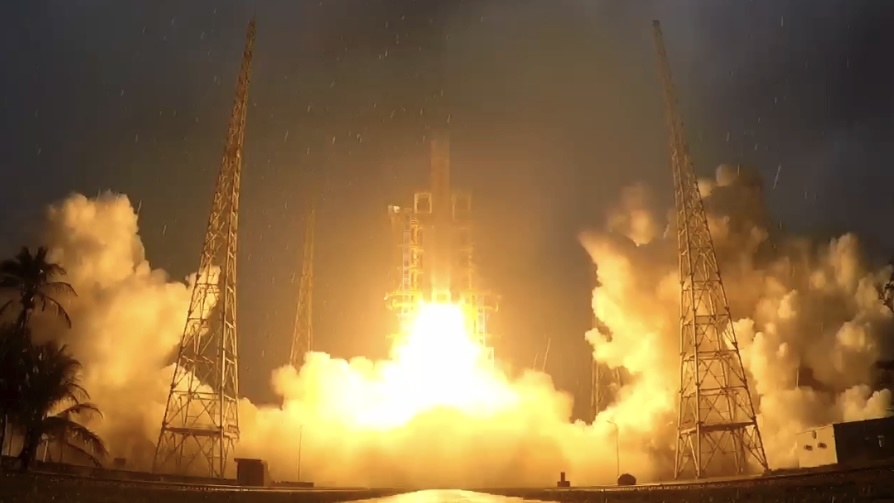
On Friday, May 3rd, the sixth mission in the Chinese Lunar Exploration Program (Chang’e-6) launched from the Wenchang Spacecraft Launch Site in southern China. Shortly after, China announced that the spacecraft separated successfully from its Long March 5 Y8 rocket. The mission, consisting of an orbiter and lander element, is now on its way to the Moon and will arrive there in a few weeks. By June, the lander element will touch down on the far side of the Moon, where it will gather about 2 kg (4.4 lbs) of rock and soil samples for return to Earth. The mission launched four years after its predecessor, Chang’e-5, became China’s first sample-return mission to reach the Moon. It was also the first lunar sample return mission since the Soviet Luna 24 mission landed in Mare Crisium (the Sea of Crisis) in 1976. Compared to its predecessor, the Chang’e-6 mission weighs an additional 100 kg (220 lbs), making it the heaviest probe launched by the Chinese space program. The surface elements also face lesser-known terrain on the far side of the Moon and require a relay satellite for communications. Speaking of surface elements, the China Academy of Space Technology (CAST) has since released images showing how the mission also carries a rover element. This payload was not part of mission data disclosed by China before the flight. But as SpaceNews’ Andrew Jones pointed out, the rover can be seen in the CAST images (see above) integrated onto the side of the lander. Yeah, okay. That looks like a previously undisclosed mini rover on the side of the Chang'e-6 lander lol. Via CAST: https://t.co/gS0Jy5L9hw pic.twitter.com/9vvTnribpl— Andrew Jones (@AJ_FI) May 3, 2024 “Little is known about the rover, but a mention of a Chang’e-6 rover is made in a post from the Shanghai Institute of Ceramics (SIC) under the Chinese Academy of Sciences (CAS),” he wrote. “It suggests the small vehicle carries an infrared imaging spectrometer.” This rover is no doubt intended to assist the lander with investigating resources on the far side of the Moon. This is consistent with China’s long-term plans for building the International Lunar Research Station (ILRS) around the southern polar region in collaboration with Roscosmos and other international patterns. Similar to NASA’s plans for the Lunar Gateway and Artemis Base Camp, this requires that building sites be selected near sources of water ice and building materials (silica and other minerals). Ge Ping, the deputy director of the Center of Lunar Exploration and Space Engineering (CLESE) with the China National Space Administration (CNSA), related the importance of the sample-return mission to CGTN (a state-owned media company) before the launch: “The Aitken Basin is one of the three major terrains on the Moon and has significant scientific value. Finding and collecting samples from different regions and ages of the Moon is crucial for our understanding of it. These would further study of the moon’s origin and its evolutionary history.” In addition, the Chang’e-6 orbiter carries four international payloads and satellites including a French radon detector contributed by the ESA. Known as the Detection of Outgassing Radon (DORN), this payload will study how lunar dust and other volatiles (especially water) are transferred between the lunar regolith and the lunar exosphere. Then there’s the Italian INstrument for landing-Roving laser Retroreflector Investigations (INRRI), similar to those used by the Schiaparelli EDM module and InSight lander, that precisely measures distances from the lander to orbit. The Chang’e-6 spacecraft stack shows a lunar rover attached to the mission lander. Credit: CAST There’s also the Swedish Negative Ions on Lunar Surface (NILS), an instrument that will detect and measure negative ions reflected by the lunar surface. Lastly, there’s the Pakistani ICUBE-Q CubeSat developed by the Institute of Space Technology (IST) and Shanghai Jiao Tong University (SJTU), which will take images of the lunar surface using two optical cameras and measure the Moon’s magnetic field. The data these instruments provide will reveal new information about the lunar environment that will inform plans for long-duration missions on the surface. By 2026, the Chang’e-6 mission will be joined by Chang’e-7, including an orbiter, lander, rover, and a mini-hopping probe. The data provided by the program will assist China’s plans to land taikonauts around the lunar south pole by 2030, followed by the completion of the ILRS by 2035. Further Reading: CGTN The post China is Going Back to the Moon Again With Chang'e-6 appeared first on Universe Today.
Like
Comment
Share
Science Explorer
Science Explorer
2 yrs

NASA Takes Six Advanced Tech Concepts to Phase II
Favicon 
www.universetoday.com

NASA Takes Six Advanced Tech Concepts to Phase II

It’s that time again. NIAC (NASA Innovative Advanced Concepts) has announced six concepts that will receive funding and proceed to the second phase of development. This is always an interesting look at the technologies and missions that could come to fruition in the future. The six chosen ones will each receive $600,000 in funding to pursue the ideas for the next two years. NASA expects each team to use the two years to address both technical and budgetary hurdles for their concepts. When this second phase comes to an end, some of the concepts could advance to the third stage. “These diverse, science fiction-like concepts represent a fantastic class of Phase II studies,” said John Nelson, NIAC program executive at NASA Headquarters in Washington. “Our NIAC fellows never cease to amaze and inspire, and this class definitely gives NASA a lot to think about in terms of what’s possible in the future.” Here they are. Fluidic Telescope (FLUTE): Enabling the Next Generation of Large Space Observatories Telescopes are built around mirrors and lenses, whether they’re ground-based or space-based. The JWST’s large mirror is 6.5 meters in diameter but had to be folded up to fit inside the rocket that launched it and then unfolded in space. That’s a tricky engineering feat. Engineers are building larger and larger ground-based telescopes, too, and they’re equally tricky to design and build. Could FLUTE change this? FLUTE envisions lenses made of fluid, and the FLUTE team’s concept describes a space telescope with a primary mirror 50 meters (164 ft.) in diameter. Creating glass lenses for a telescope this large isn’t realistic. “Using current technologies, scaling up space telescopes to apertures larger than approximately 33 feet (10 meters) in diameter does not appear economically viable,” the FLUTE website states. But in the microgravity of space, fluids behave in an intriguing way. Surface tension holds liquids together at their surfaces. We can see this on Earth, where some insects use surface tension to glide along the surfaces of ponds and other bodies of water. Also, on Earth, surface tension holds small drops of water together. But in space, away from Earth’s dominating gravity, surface tension is much more effective. There, water maintains the most energy efficient shape there is: a sphere. Another force governs water: adhesion. Adhesion causes liquids to cling to surfaces. In the microgravity of space, adhesion can bind liquid to a circular, ring-like frame. Then, due to surface tension, the liquid will naturally adopt a spherical shape. If the liquid can be made to bulge inward rather than outward, and if the liquid is reflective enough, it creates a telescope mirror. The FLUTE team would like to make optical components in space. The liquid would stay in the liquid state and form an extremely smooth light-collecting surface. As a bonus, FLUTE would also self-repair after any micrometeorite strike. The FLUTE study is led by Edward Balaban from NASA’s Ames Research Center in California’s Silicon Valley. The FLUTE team has already done some tests on the ISS and on zero-g flights. FLUTE researchers experience microgravity aboard Zero Gravity Corporation’s G-FORCE ONE aircraft while operating an experiment payload during a series of parabolic flights. Image Credits: Zero Gravity Corporation/Steve Boxall Pulsed Plasma Rocket (PPR): Shielded, Fast Transits for Humans to Mars It takes too long to get to Mars. It’s a six-month journey each way, plus time spent on the surface. All that time in microgravity, exposure to radiation, and other challenges make the trip very difficult for astronauts. PPR aims to fix that. PPR isn’t a launch vehicle for escaping Earth’s gravity well. It would be launched on a heavy lift vehicle like SLS and then sent on its way. PPR was originally derived from the Pulsed Fission Fusion concept. But it’s more affordable, and also smaller and simpler. PPR might generate 100,000 N of thrust with a specific impulse (Isp) of 5,000 seconds. Those are good numbers. PPR could reduce the travel time to Mars to two months. It has other benefits as well. It could propel larger spacecraft to Mars on trips longer than two months, carrying more cargo and also provide heavier shielding against cosmic rays. “The PPR enables a whole new era in space exploration,” the team writes. PPR is basically a fusion system ignited by fission. It’s similar to a thermonuclear weapon. But rather than a run-away explosion, the combined energy is directed through a magnetic nozzle to produce thrust. In phase two, the PPR team intends to optimize the engine design to produce more specific impulse, perform proof-of-concept experiments for major components, and design a shielded ship for human missions to Mars. This study is led by Brianna Clements with Howe Industries in Scottsdale, Arizona. The Great Observatory for Long Wavelengths (GO-LoW) One of modern astronomy’s last frontiers is the low-frequency radio sky. Earth’s ionosphere blocks our ground-based telescopes from seeing it. And space-based telescopes can’t see it either. It’s because the wavelengths are so long, in the meter to the kilometre scale. Only extremely massive telescopes could see these waves clearly. GO-LoW is a potential solution. It’s a space-based array of thousands of identical Small-Sats arranged as an interferometer. It would sit at an Earth-Sun Lagrange point and observe exoplanet and stellar magnetic fields. Exoplanet magnetic fields emit radio waves between 100 kHz and 15 MHz. The GO-LoW team says their interferometer could perform the first survey of exoplanetary magnetic fields within 5 parsecs (16 light years.) Magnetic fields tell scientists a lot about an exoplanet, its evolution, and its processes. GO-LoW is a Great Observatory concept to open the last unexplored window of the electromagnetic (EM) spectrum. The Earth’s ionosphere becomes opaque at approximately 10m wavelengths, so GO-LoW will join Great Observatories like HST and JWST in space to access this spectral window. Image Credits: NASA/GO-LoW While there’s no doubt that large telescopes like the JWST are powerful and effective, they’re extremely complex and expensive. And if something goes wrong with a critical component, the mission could end. GO-LoW takes a different approach. By using thousands of individual satellites, the system is more resilient. GO-LoW would have a hybrid constellation. Some of the satellites would be smaller and simpler satellites called “listener nodes” (LN,) while a smaller number of them would be “communication and computation” nodes (CCNs). They would collect data from the LNs, process it, and beam it back to Earth. The GO-LoW says it would only take a few heavy launches to place an entire 100,000 satellite constellation in space. The technology for the SmallSats already exists. The challenge the GO-LoW team will address with their phase two funding is developing a system that will harness everything together effectively. “The coordination of all these physical elements, data products, and communications systems is novel and challenging, especially at scale,” they write. GO-LoW is led by Mary Knapp with MIT in Cambridge, Massachusetts. Radioisotope Thermoradiative Cell Power Generator It’s sort of like solar power in reverse. The RTCPG is a power source for spacecraft visiting the outer planets. They promise smaller, more efficient power generation for smaller science and exploration missions that can’t carry a solar power system or nuclear power system. Both those systems are bulky, and solar power is limited the further away from the sun a spacecraft goes. The thermoradiative cell (TRC) uses radioisotopes to create heat as an MMRTG does. But the TRC uses the heat to generate infrared light which generates electricity. In initial testing, the system generated 4.5 times more power from the same amount of PU-238. Much of phase two’s work will involve materials. “Metal-semiconductor contacts capable of surviving the required elevated temperatures will be investigated,” the team explains. The team developed a special cryostat testing apparatus in phase one. “Building on our results from Phase I, we believe there is much more potential to unlock here,” the team writes. This power generation concept study is from Stephen Polly at the Rochester Institute of Technology in New York. FLOAT: Flexible Levitation on a Track What if Artemis is enormously successful? How will astronauts move their equipment around the lunar surface efficiently? If the team behind FLOAT has their way, they’ll build the Moon’s first railway. Sort of. This artist’s concept shows a possible future mission depicting the lunar surface with planet Earth on the horizon. Image Credit: Ethan Schaler FLOAT would provide autonomous transportation for payloads on the Moon. “A durable, long-life robotic transport system will be critical to the daily operations of a sustainable lunar base in the 2030’s,” the FLOAT team writes. The heart of FLOAT is a three-layer flexible track that’s unrolled into position without major construction. It consists of three layers: a graphite layer, a flex-circuit layer, and a solar panel layer. The graphite layer allows robots to use diamagnetic levitation to float over the track. The flex-circuit layer supplies the thrust that moves them, and the thin-film solar panel layer generates electricity for a lunar base when it’s in sunlight. The system can be used to move regolith around for in-situ resource utilization and to transport payloads around a lunar base, for example, from landing zones to habitats. “Individual FLOAT robots will be able to transport payloads of varying shape/size (>30 kg/m^2) at useful speeds (>0.5m/s), and a large-scale FLOAT system will be capable of moving up to 100,000s kg of regolith/payload multiple kilometres per day,” the FLOAT team explains. With their phase two funding, the FLOAT team intends to design, build, and test scaled-down versions of FLOAT robots and track. Then, they’ll test their system in a lunar analog testbed. They’ll also test environmental effects on the system and how they alter the system’s performance and longevity. Ethan Schaler leads FLOAT at NASA’s Jet Propulsion Laboratory in Southern California. SCOPE: ScienceCraft for Outer Planet Exploration Some of the most intriguing planets and moons in the Solar System are well beyond Jupiter. But exploring them is challenging. Extremely long travel times, restrictive mission windows, and large expenses limit our exploration. But SCOPE aims to address these limitations. Typically, a spacecraft carries a propulsion and power system along with its instruments and communication systems. NASA’s Juno mission to Jupiter, for example, carries a chemical rocket engine for propulsion, 50 square meters of solar panels, and 10 science instruments. The solar panels alone weigh 340 kg (750 lbs.) Juno is powerful, produces a wide variety of quality science data, and is expensive. ScienceCraft takes a different approach. It combines a single science instrument and spacecraft into one monolithic structure. It’s basically a solar sail with a built-in spectrometer. They’re aiming their design at the Neptune-Triton system. This artist’s depiction shows ScienceCraft, which integrates the science instrument with the spacecraft by printing a quantum dot spectrometer directly on the solar sail to form a monolithic, lightweight structure.Image Credit: Mahmooda Sultana “By printing an ultra-lightweight quantum dot-based spectrometer, developed by the PI Sultana, directly on the solar sail, we create a breakthrough spacecraft architecture allowing an unprecedented parallelism and throughput of data collection and rapid travel across the solar system,” the ScienceCraft team writes. Instead of merely providing the propulsion, the sail doubles as the spacecraft’s science instrument. The small mass means that ScienceCraft could be carried into orbit as a secondary payload. The team says they’ll use phase two to identify and develop key technologies for the spacecraft and to further mature the mission concept. They say that because of the low cost and simplicity, they could be ready by 2045. “By leveraging these benefits, we propose a mission concept to Triton, a unique planetary body in our solar system, within the short window that closes around 2045 to answer compelling science questions about Triton’s atmosphere, ionosphere, plumes and internal structure,” the ScienceCraft team explains. ScienceCraft is led by NASA’s Mahmooda Sultana at the agency’s Goddard Space Flight Center in Greenbelt, Maryland. The post NASA Takes Six Advanced Tech Concepts to Phase II appeared first on Universe Today.
Like
Comment
Share
Science Explorer
Science Explorer
2 yrs

New Evidence for Our Solar System’s Ghost: Planet Nine
Favicon 
www.universetoday.com

New Evidence for Our Solar System’s Ghost: Planet Nine

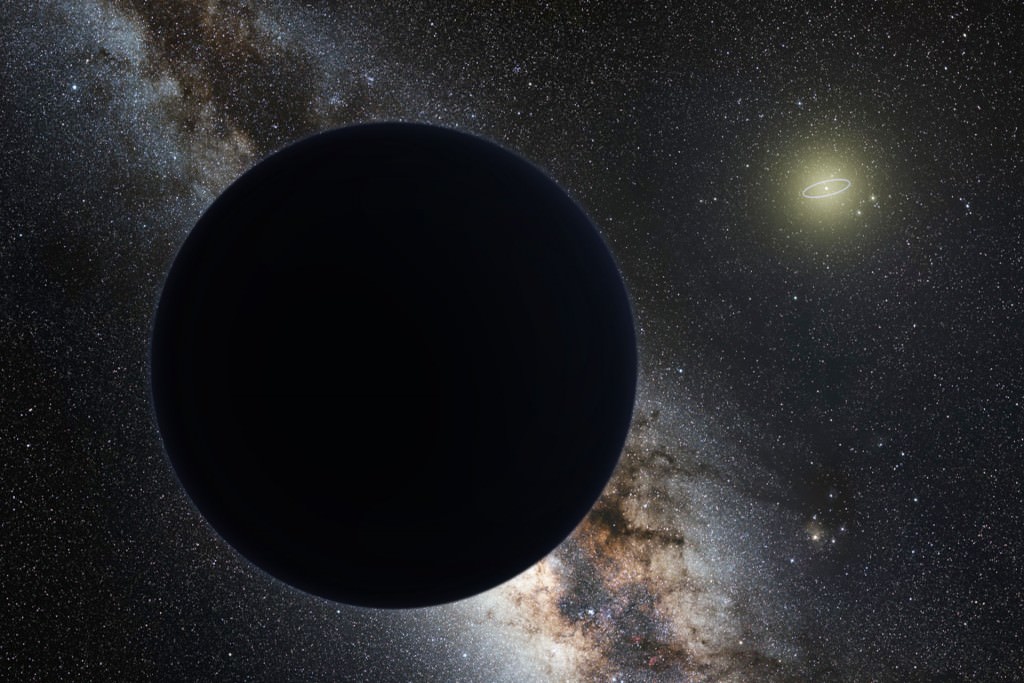
Does another undetected planet languish in our Solar System’s distant reaches? Does it follow a distant orbit around the Sun in the murky realm of comets and other icy objects? For some researchers, the answer is “almost certainly.” The case for Planet Nine (P9) goes back at least as far as 2016. In that year, astronomers Mike Brown and Konstantin Batygin published evidence pointing to its existence. Along with colleagues, they’ve published other work supporting P9 since then. There’s lots of evidence for the existence of P9, but none of it has reached the threshold of definitive proof. The main evidence concerns the orbits of Extreme Trans-Neptunian Objects (ETNOs). They exhibit a peculiar clustering that indicates a massive object. P9 might be shepherding these objects along on their orbits. This orbital diagram shows Planet Nine (lime green colour, labelled “P9”) and several extreme trans-Neptunian objects. Each background square is 100 AU across. Image Credit: By Tomruen – Own work, CC BY-SA 4.0, https://commons.wikimedia.org/w/index.php?curid=68955415 The names Brown and Batygin, both Caltech astronomers, come up often in regard to P9. Now, they’ve published another paper along with colleagues Alessandro Morbidelli and David Nesvorny, presenting more evidence supporting P9. It’s titled “Generation of Low-Inclination, Neptune-Crossing TNOs by Planet Nine.” It’s published in The Astrophysical Journal Letters. “The solar system’s distant reaches exhibit a wealth of anomalous dynamical structure, hinting at the presence of a yet-undetected, massive trans-Neptunian body—Planet Nine (P9),” the authors write. “Previous analyses have shown how orbital evolution induced by this object can explain the origins of a broad assortment of exotic orbits.” To dig deeper into the issue, Batygin, Brown, Morbidelli, and Nesvorny examined Trans-Neptunian Objects (TNOs) with more conventional orbits. They carried out N-body simulations of these objects that included everything from the tug of giant planets and the Galactic Tide to passing stars. 29 objects in the Minor Planet Database have well-characterized orbits with a > 100 au, inclinations < 40°, and q (perihelia) < 30 au. Of those 29, 17 have well-quantified orbits. The researchers focused their simulations on these 17. This figure from the research shows the 17 planets, their orbits, their perihelions, semi-major axes, and their inclinations. Image Credit: Batygin et al. 2024. The researchers’ goal was to analyze these objects’ origins and determine if they could be used as a probe for P9. To accomplish this, they conducted two separate sets of simulations. One set with P9 in the Solar System and one set without. The simulations began at t=300 million years, meaning 300 million years into the Solar System’s existence. At that time, “intrinsic dynamical evolution in the outer solar system is still in its infancy,” the authors explain, while enough time has passed for the Solar System’s birth cluster of stars to disperse and for the giant planets to have largely concluded their migrations. They ended up with about 2000 objects, or particles, in the simulation with perihelia greater than 30 au and semimajor axes between 100 and 5000 au. This ruled out all Neptune-crossing objects from the simulation’s starting conditions. “Importantly, this choice of initial conditions is inherently linked with the assumed orbit of P9,” they point out. The figure below shows the evolution of some of the 2,000 objects in the simulations. These panels show the evolution of selected particles within the calculations that attain nearly planar (i < 40°) Neptune-crossing orbits within the final 500 Myr of the integration. “Collectively, these examples indicate that P9-facilitated dynamics can naturally produce objects similar to those depicted in Figure 1” (the previous figure), the researchers explain. The top, middle, and bottom panels depict the time series of the semimajor axis, perihelion distance, and inclination, respectively. The rate of chaotic diffusion greatly increases when particles attain Neptune-crossing trajectories. Image Credit: Batygin et al. 2024. These are interesting results, but the researchers point out that they in no way prove the existence of P9. These orbits could be generated by other things like the Galactic Tide. In their next step, they examined their perihelion distribution. This figure from the research shows the perihelion distance for particles in a simulation with P9 (left) and without P9 (right.) The P9-free simulation shows a “rapid decline in perihelion distribution with decreasing q, as Neptune’s orbit forms a veritable dynamical barrier,” the researchers explain. Image Credit: Batygin et al. 2024. “Accounting for observational biases, our results reveal that the orbital architecture of this group of objects aligns closely with the predictions of the P9-inclusive model,” the authors write. “In stark contrast, the P9-free scenario is statistically rejected at a ~5? confidence level.” The authors point out that something other than P9 could be causing the orbital unruliness. The star was born in a cluster, and cluster dynamics could’ve set these objects on their unusual orbits before the cluster dispersed. A number of Earth-mass rogue planets could also be responsible, influencing the outer Solar System’s architecture for a few hundred million years before being removed somehow. However, the authors chose their 17 TNOs for a reason. “Due to their low inclinations and perihelia, these objects experience rapid orbital chaos and have short dynamical lifetimes,” the authors write. That means that whatever is driving these objects into these orbits is ongoing and not a relic from the past. An important result of this work is that it results in falsifiable predictions. And we may not have to wait long for the results to be tested. “Excitingly, the dynamics described here, along with all other lines of evidence for P9, will soon face a rigorous test with the operational commencement of the VRO (Vera Rubin Observatory),” the authors write. A drone’s view of the Rubin Observatory under construction in 2023. The 8.4-meter is getting closer to completion and first light in 2025. The Observatory could provide answers to many outstanding issues, like the existence of Planet Nine. Image Credit: Rubin Observatory/NSF/AURA/A. Pizarro D If P9 is real, what is it? It could be the core of a giant planet ejected during the Solar System’s early days. It could be a rogue planet that drifted through interstellar space until being caught up in our Solar System’s gravitational milieu. Or it could be a planet that formed on a distant orbit, and a passing star shepherded it into its eccentric orbit. If astronomers can confirm P9’s existence, the next question will be, ‘what is it?’ If you’re interested at all in how science operates, the case of P9 is very instructive. Eureka moments are few and far between in modern astronomy. Evidence mounts incrementally, accompanied by discussion and counterpoint. Objections are raised and inconsistencies pointed out, then methods are refined and thinking advances. What began as one over-arching question is broken down into smaller, more easily-answered ones. But the big question dominates for now and likely will for a while longer: Is there a Planet Nine? Stay tuned. The post New Evidence for Our Solar System’s Ghost: Planet Nine appeared first on Universe Today.
Like
Comment
Share
Science Explorer
Science Explorer
2 yrs

Solar Max is Coming. The Sun Just Released Three X-Class Flares
Favicon 
www.universetoday.com

Solar Max is Coming. The Sun Just Released Three X-Class Flares

The Sun is increasing its intensity on schedule, continuing its approach to solar maximum. In just over a 24-hour period on May 5 and May 6, 2024, the Sun released three X-class solar flares measuring at X1.3, X1.2, and X4.5. Solar flares can impact radio communications and electric power grids here on Earth, and they also pose a risk to spacecraft and astronauts in space. NASA released an animation that shows the solar flares blasting off the surface of the rotating Sun, below. NASA’s Solar Dynamics Observatory captured these images of the solar flares — as seen in the bright flashes in the upper right — on May 5 and May 6, 2024. The image shows a subset of extreme ultraviolet light that highlights the extremely hot material in flares and which is colorized in teal. Credit: NASA/SDO Predicting when solar maximum will occur is not easy and the timing of it can only be confirmed after it happens. But NOAA’s Space Weather Prediction Center (SWPC) currently estimates that solar maximum will likely occur between May 2024 and early 2026. The Sun goes through a cycle of high and low activity approximately every 11 years, driven by the Sun’s magnetic field and indicated by the frequency and intensity of sunspots and other activity on the surface. The SWPC has been working hard to have a better handle on predicting solar cycles and activity. Find out more about that here.   Solar flares are explosions on the Sun that release powerful bursts of energy and radiation coming from the magnetic energy associated with the sunspots. The more sunspots, the greater potential for flares. Flares are classified based on a system similar to the Richter scale for earthquakes, which divides solar flares according to their strength. X-class is the most intense category of flares, while the smallest ones are A-class, followed by B, C, M and then X. Each letter represents a 10-fold increase in energy output. So an X is ten times an M and 100 times a C. The number that follows the letter provides more information about its strength. The higher the number, the stronger the flare. Flares are our solar system’s largest explosive events. They are seen as bright areas on the Sun and can last from minutes to hours. We typically see a solar flare by the photons (or light) it releases, occurring in various wavelengths. Sometimes, but not always, solar flares can be accompanied by a coronal mass ejection (CME), where giant clouds of particles from the Sun are hurled out into space.  If we’re lucky, these charged particles will provide a stunning show of auroras here on Earth while not impacting power grids or satellites. Thankfully, missions like the Solar Dynamics Observatory, Solar Orbiter, the Parker Solar Probe are providing amazing views and new details about the Sun, helping astronomers to learn more about the dynamic ball of gas that powers our entire Solar System. The post Solar Max is Coming. The Sun Just Released Three X-Class Flares appeared first on Universe Today.
Like
Comment
Share
Showing 29334 out of 56670
  • 29330
  • 29331
  • 29332
  • 29333
  • 29334
  • 29335
  • 29336
  • 29337
  • 29338
  • 29339
  • 29340
  • 29341
  • 29342
  • 29343
  • 29344
  • 29345
  • 29346
  • 29347
  • 29348
  • 29349

Edit Offer

Add tier


Select an image
Delete your tier
Are you sure you want to delete this tier?

Reviews

In order to sell your content and posts, start by creating a few packages. Monetization

Pay By Wallet

Payment Alert

You are about to purchase the items, do you want to proceed?

Request a Refund