YubNub Social YubNub Social
    Advanced Search
  • Login

  • Night mode
  • © 2026 YubNub Social
    About • Directory • Contact Us • Privacy Policy • Terms of Use • Android • Apple iOS • Get Our App

    Select Language

  • English
Install our *FREE* WEB APP! (PWA)
Night mode
Community
News Feed (Home) Popular Posts Events Blog Market Forum
Media
Headline News VidWatch Game Zone Top PodCasts
Explore
Explore Jobs Offers
© 2026 YubNub Social
  • English
About • Directory • Contact Us • Privacy Policy • Terms of Use • Android • Apple iOS • Get Our App

Discover posts

Posts

Users

Pages

Group

Blog

Market

Events

Games

Forum

Jobs

Classic Rock Lovers
Classic Rock Lovers  
2 yrs

50 Times Celebrities Made Cameos in Music Videos
Favicon 
ultimateclassicrock.com

50 Times Celebrities Made Cameos in Music Videos

Actors, models and more. Continue reading…
Like
Comment
Share
Classic Rock Lovers
Classic Rock Lovers  
2 yrs

Motley Crue Plays Deep Cut at 2024 Tour Kickoff: Set List, Video
Favicon 
ultimateclassicrock.com

Motley Crue Plays Deep Cut at 2024 Tour Kickoff: Set List, Video

New single "Dogs of War" also received its live debut. Continue reading…
Like
Comment
Share
Classic Rock Lovers
Classic Rock Lovers  
2 yrs

Joe Satriani and Steve Vai Shred Through Austin: Exclusive Photos
Favicon 
ultimateclassicrock.com

Joe Satriani and Steve Vai Shred Through Austin: Exclusive Photos

Teacher and student teamed up for a night of jaw-dropping virtuosity. Continue reading…
Like
Comment
Share
Science Explorer
Science Explorer
2 yrs

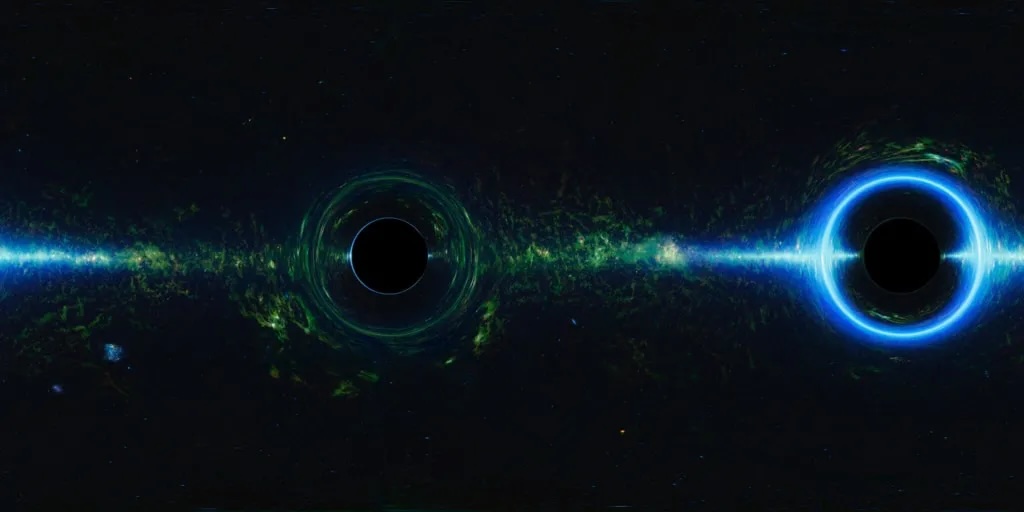
The Universe Could Be Filled With Ultralight Black Holes That Can't Die
Favicon 
www.universetoday.com

The Universe Could Be Filled With Ultralight Black Holes That Can't Die

It’s that time again! Time for another model that will finally solve the mystery of dark matter. Or not, but it’s worth a shot. Until we directly detect dark matter particles, or until some model conclusively removes dark matter from our astrophysical toolkit the best we can do is continue looking for solutions. This new work takes a look at that old theoretical chestnut, primordial black holes, but it has a few interesting twists. Primordial black holes are hypothetical objects formed during the earliest moments of the Universe. According to the models they formed from micro-fluctuations in matter density and spacetime to become sandgrain-sized mountain-massed black holes. Although we’ve never detected primordial black holes, they have all the necessary properties of dark matter, such as not emitting light and the ability to cluster around galaxies. If they exist, they could explain most of dark matter. The downside is that most primordial black hole candidates have been ruled out by observation. For example, to account for dark matter there would have to be so many of these gravitational pipsqueaks that they would often pass in front of a star from our vantage point. This would create a microlensing flare we should regularly observe. Several sky surveys have looked for such an event to no avail, so PBH dark matter is not a popular idea these days. This new work takes a slightly different approach. Rather than looking at typical primordial black holes, it considers ultralight black holes. These are on the small end of possible masses and are so tiny that Hawking radiation would come into play. The rate of Hawking decay is inversely proportional to the size of a black hole, so these ultralight black holes should radiate to their end of life on a short cosmic timescale. Since we don’t have a full model of quantum gravity, we don’t know what would happen to ultralight black holes at the end, which is where this paper comes in. Observational limits for primordial black holes. Credit: S. Profumo As the author notes, basically there are three possible outcomes. The first is that the black hole radiates away completely. The black hole would end as a brief flash of high-energy particles. The second is that some mechanism prevents complete evaporation and the black hole reaches some kind of equilibrium state. The third option is similar to the second, but in this case, the equilibrium state causes the event horizon to disappear, leaving an exposed dense mass known as a naked singularity. The author also notes that for the latter two outcomes, the objects might have a net electric charge. For the evaporating case, the biggest unknown would be the timescale of evaporation. If PBHs are initially tiny they would evaporate quickly and add to the reheating effect of the early cosmos. If they evaporate slowly, we should be able to see their deaths as a flash of gamma rays. Neither of these effects has been observed, but it is possible that detectors such as Fermi’s Large Area Telescope might catch one in the act. For the latter two options, the author argues that equilibrium would be reached around the Planck scale. The remnants would be proton sized but with much higher masses. Unfortunately, if these remnants are electrically neutral they would be impossible to detect. They wouldn’t decay into other particles, nor would they be large enough to detect directly. This would match observation, but isn’t a satisfying result. The model is essentially unprovable. If the particles do have a charge, then we might detect their presence in the next generation of neutrino detectors. The main thing about this work is that primordial black holes aren’t entirely ruled out by current observations. Until we have better data, this model joins the theoretical pile of many other possibilities. Reference: Profumo, S. “Ultralight Primordial Black Holes.” arXiv preprint arXiv:2405.00546 (2024). The post The Universe Could Be Filled With Ultralight Black Holes That Can't Die appeared first on Universe Today.
Like
Comment
Share
Science Explorer
Science Explorer
2 yrs

Dinkinesh's Moonlet is Only 2-3 Million Years Old
Favicon 
www.universetoday.com

Dinkinesh's Moonlet is Only 2-3 Million Years Old

Last November, NASA’s Lucy mission conducted a flyby of the asteroid Dinkinish, one of the Main Belt asteroids it will investigate as it makes its way to Jupiter. In the process, the spacecraft spotted a small moonlet orbiting the larger asteroid, now named Selam (aka. “Lucy’s baby”). The moonlet’s name, an Ethiopian name that means “peace,” pays homage to the ancient human remains dubbed “Lucy” (or Dinkinish) that were unearthed in Ethiopia in 1974. Using novel statistical calculations based on how the two bodies orbit each other, a Cornell-led research team estimates that the moonlet is only 2-3 million years old. The research was led by Colby Merrill, a graduate student from the Department of Mechanical and Aerospace Engineering at Cornell. He was joined by Alexia Kubas, a researcher from the Department of Astronomy at Cornell; Alex J. Meyer, a Ph.D. student at the UC Boulder College of Engineering & Applied Science; and Sabina D. Raducan, a Postdoctoral Researcher at the University of Bern. Their paper, “Age of (152830) Dinkinesh-Selam Constrained by Secular Tidal-BYORP Theory,” recently appeared on April 19th in Astronomy & Astrophysics. Merrill was also part of the NASA Double Asteroid Redirection Test (DART) mission, which collided with the moonlet Dimorphos on September 26th, 2022. As part of the Lucy mission, Merrill was surprised to discover that Dinkinesh was also a binary asteroid when the spacecraft flew past it on November 1st, 2023. They were also fascinated to learn that the small moonlet was a “contact binary,” consisting of two lobes that are piles of rubble that became stuck together long ago. Artist’s Rendering of NASA’s Lucy mission, which will study asteroids within the Main Belt and Jupiter’s Trojan population. Credit: Southwest Research Institute While astronomers have observed contact binaries before – a good example is the KBO Arrokoth that the New Horizons spacecraft flew past on January 1st, 2019 – this is the first time one has been observed orbiting a larger asteroid. Along with Kubas, the two began modeling the system as part of their studies at Cornell to determine the age of the moonlet. Their results agreed with one performed by the Lucy mission based on an analysis of surface craters, the more traditional method for estimating the age of asteroids. As Merrill said in a recent Cornell Chronicle release: “Finding the ages of asteroids is important to understanding them, and this one is remarkably young when compared to the age of the Solar System, meaning it formed somewhat recently. Obtaining the age of this one body can help us to understand the population as a whole.” Binary asteroids are a subject of fascination to astronomers because of the complex dynamics that go into creating them. On the one hand, there are the gravitational forces working on them that cause them to bulge and lose energy. At the same time, binary systems will also experience what is known as the Binary Yarkovsky–O’Keefe–Radzievskii–Paddack (BYORP) effect, where exposure to solar radiation alters the rotation rate of the bodies. Eventually, these forces will balance out and reach a state of equilibrium for the system. For their study, Merril and his team assumed that Selam formed from material ejected from Dinkinesh before the BYORP effect slowed its rotation down. They also assumed that the system had since reached a state of equilibrium and that the density of both objects was comparable. They then integrated asteroid data obtained by the Lucy mission to calculate how long it would take Selam to reach its current state. After performing about 1 million calculations with varying parameters, they obtained a median age estimate of 3 million years old, with 2 million being the most likely result. Artist’s impression of the DART mission impacting the moonlet Dimorphos. Credit: ESA This new method complements the previous age estimates of the Lucy mission and has several advantages. As their paper indicates, this method can yield age estimates based on asteroid dynamics alone and does not require close-up images taken by spacecraft. It could also be more accurate where asteroid surfaces experienced recent changes and can be applied to the moonlets of other known binary systems, which account for 15% of near-Earth asteroids (NEAs). This includes Didymos and Dimorphos, which are even younger. The researchers hope to apply their new method to this and other binary systems where the dynamics are well-characterized, even without close flybys. Said Kubas: “Used in tandem with crater counting, this method could help better constrain a system’s age. If we use two methods and they agree with each other, we can be more confident that we’re getting a meaningful age that describes the current state of the system.” Further Reading: Cornell Chronicle The post Dinkinesh's Moonlet is Only 2-3 Million Years Old appeared first on Universe Today.
Like
Comment
Share
Science Explorer
Science Explorer
2 yrs

A Healthy Lifestyle Could Offset Genetic Risk For Early Death by a Hopeful 62%
Favicon 
www.sciencealert.com

A Healthy Lifestyle Could Offset Genetic Risk For Early Death by a Hopeful 62%

Your genes aren't destiny.
Like
Comment
Share
Science Explorer
Science Explorer
2 yrs

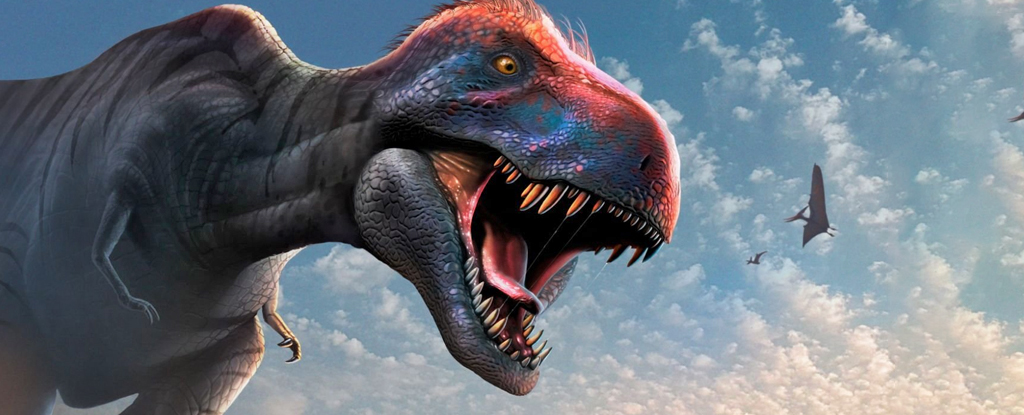
We've Probably Been Wrong About T.Rex Again, New Study Says
Favicon 
www.sciencealert.com

We've Probably Been Wrong About T.Rex Again, New Study Says

Size isn't everything.
Like
Comment
Share
Science Explorer
Science Explorer
2 yrs

There's a Hole Near The Dinosaur-Killer Crater That Has No End
Favicon 
www.sciencealert.com

There's a Hole Near The Dinosaur-Killer Crater That Has No End

Where does it go?
Like
Comment
Share
Science Explorer
Science Explorer
2 yrs

How Do Some People Run So Fast? The Science of Speed Explained
Favicon 
www.sciencealert.com

How Do Some People Run So Fast? The Science of Speed Explained

Nature or nurture?
Like
Comment
Share
Classic Rock Lovers
Classic Rock Lovers  
2 yrs

Why Heart's Biggest Hit 'Never Felt Like a Heart Song'
Favicon 
ultimateclassicrock.com

Why Heart's Biggest Hit 'Never Felt Like a Heart Song'

"It's not a real rock song," Nancy Wilson explains. Continue reading…
Like
Comment
Share
Showing 29493 out of 56670
  • 29489
  • 29490
  • 29491
  • 29492
  • 29493
  • 29494
  • 29495
  • 29496
  • 29497
  • 29498
  • 29499
  • 29500
  • 29501
  • 29502
  • 29503
  • 29504
  • 29505
  • 29506
  • 29507
  • 29508

Edit Offer

Add tier


Select an image
Delete your tier
Are you sure you want to delete this tier?

Reviews

In order to sell your content and posts, start by creating a few packages. Monetization

Pay By Wallet

Payment Alert

You are about to purchase the items, do you want to proceed?

Request a Refund