YubNub Social YubNub Social
    Advanced Search
  • Login

  • Night mode
  • © 2026 YubNub Social
    About • Directory • Contact Us • Privacy Policy • Terms of Use • Android • Apple iOS • Get Our App

    Select Language

  • English
Install our *FREE* WEB APP! (PWA)
Night mode
Community
News Feed (Home) Popular Posts Events Blog Market Forum
Media
Headline News VidWatch Game Zone Top PodCasts
Explore
Explore Jobs Offers
© 2026 YubNub Social
  • English
About • Directory • Contact Us • Privacy Policy • Terms of Use • Android • Apple iOS • Get Our App

Discover posts

Posts

Users

Pages

Group

Blog

Market

Events

Games

Forum

Jobs

Survival Prepper
Survival Prepper  
2 yrs

Here’s Why Weeds Are a Good Prep
Favicon 
preppersdailynews.com

Here’s Why Weeds Are a Good Prep

Here’s Why Weeds Are a Good Prep
Like
Comment
Share
Survival Prepper
Survival Prepper  
2 yrs

What’s The Closest Natural Nuclear Bunker to Your Home&;#63;
Favicon 
preppersdailynews.com

What’s The Closest Natural Nuclear Bunker to Your Home&;#63;

What’s The Closest Natural Nuclear Bunker to Your Home&;#63;
Like
Comment
Share
Survival Prepper
Survival Prepper  
2 yrs

Potassium Iodide: A Nuclear Survival Kit Must Have
Favicon 
preppersdailynews.com

Potassium Iodide: A Nuclear Survival Kit Must Have

Potassium Iodide: A Nuclear Survival Kit Must Have
Like
Comment
Share
Survival Prepper
Survival Prepper  
2 yrs

A VR To Appalachia’s Homestead With Patara: What A Greatest Depression Today Would Look Like.
Favicon 
preppersdailynews.com

A VR To Appalachia’s Homestead With Patara: What A Greatest Depression Today Would Look Like.

A VR To Appalachia’s Homestead With Patara: What A Greatest Depression Today Would Look Like.
Like
Comment
Share
Survival Prepper
Survival Prepper  
2 yrs

15 Native American Herbs &; Recipes
Favicon 
preppersdailynews.com

15 Native American Herbs &; Recipes

15 Native American Herbs &; Recipes
Like
Comment
Share
Hot Air Feed
Hot Air Feed
2 yrs

Joe Biden's Disappearing Act
Favicon 
hotair.com

Joe Biden's Disappearing Act

Joe Biden's Disappearing Act
Like
Comment
Share
Hot Air Feed
Hot Air Feed
2 yrs

AP/NORC Poll: Only 14% of Americans Trust the Media
Favicon 
hotair.com

AP/NORC Poll: Only 14% of Americans Trust the Media

AP/NORC Poll: Only 14% of Americans Trust the Media
Like
Comment
Share
Hot Air Feed
Hot Air Feed
2 yrs

KJP: Biden Doesn't Need to Criticize Protests Because...Charlottesville
Favicon 
hotair.com

KJP: Biden Doesn't Need to Criticize Protests Because...Charlottesville

KJP: Biden Doesn't Need to Criticize Protests Because...Charlottesville
Like
Comment
Share
Science Explorer
Science Explorer
2 yrs

People Are Confused Why Flying Against The Earth's Rotation Doesn't Speed Up Flights
Favicon 
www.iflscience.com

People Are Confused Why Flying Against The Earth's Rotation Doesn't Speed Up Flights

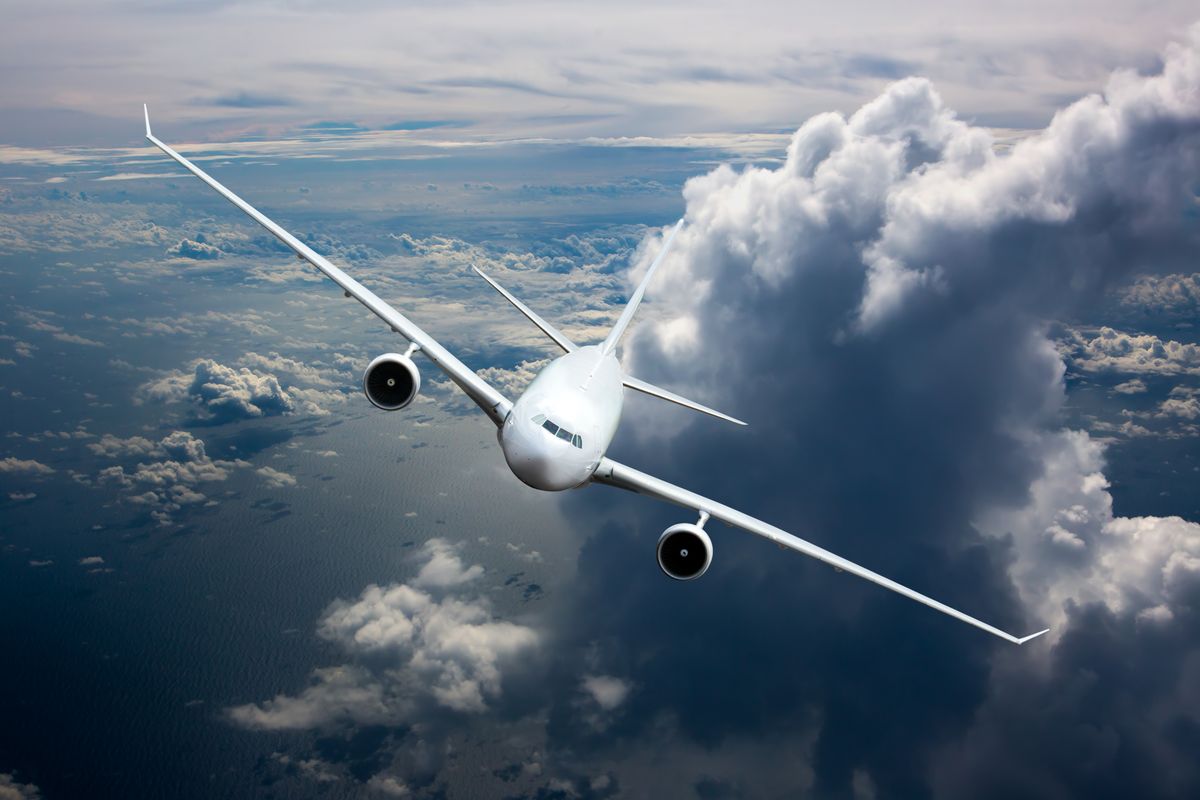
It has come to our attention that a few people out there are a little confused why flying against the rotation of the Earth does not speed up flight times.In a post‚ admittedly by someone who denies that the Earth is spinning‚ a confused person writes:&;quot;Plane flying from east to west at 300 mph... The Earth rotates from west towards east at 1‚400 mph under the plane... How does the plane not reach its destination 1‚400 mph faster&;#63; Nor is the return trip longer or shorter. How&;#63; Answer: The Earth is not spinning.&;quot;This is‚ to be completely fair to the flat Earth group that wrote it‚ a hot mess of a post that assumes a lot of incorrect things about physics. For a start‚ imagine you could take a really big jump up into the air (on a non-windy day‚ for simplicity) at the equator‚ where the Earth's spin is around 1‚670 kilometers per hour (1‚037 miles per hour ). Let's put you on a trampoline‚ and assume you can achieve airtime of around 3 seconds.Where would you expect to land&;#63; If you subscribe to the flat-Earther's understanding of physics‚ then your answer should be 1.39 kilometers (0.86 miles) to the west of your trampoline. In their question‚ airplanes are somehow stationary in the air while the ground wizzes by beneath them at 1‚670 kilometers per hour (1‚037 miles per hour)‚ or 27.83 kilometers per minute (17.29 miles per minute) and 0.46 kilometers per second (0.29 miles per second). By their – for want of a better word – logic‚ if you jumped into the air for a grand total of 3 seconds‚ this would place you 1.39 kilometers (0.86 miles) to the west of where you were before.                                    Now you'll notice that the world isn't filled with children flying off their trampolines and hurtling through the air at speeds faster than commercial airliners. This doesn't happen. But not‚ as they suggest‚ because the Earth isn't spinning.You move with the Earth because of your inertia‚ or the tendency for objects in motion to remain in motion in a straight line at the same velocity unless another force acts upon them. This is why when you leap directly into the air‚ be it directly from the ground or inside a windowless truck‚ you land where you began.                                    Moving in another direction requires a force in that direction (e.g. jumping forwards‚ or an airplane expelling mass). Planes do not have magical properties that excuse them from inertia‚ and so when they take off from the spinning Earth they must expend energy to move you to (e.g.) Hawai'i.Another misunderstanding in the post is assuming that our atmosphere is somehow static while the Earth spins beneath it. This is simply not the case. As the Earth spins‚ it drags most of our atmosphere along with it by frictional forces. If the atmosphere were not dragged with our planet‚ you could utilize the insane relative wind speeds to decrease flight time‚ but you'd probably not be concerned with such problems as &;quot;long flights&;quot; when you are being battered constantly by incredibly high winds every moment of your waking life.In fact‚ flying west (against the rotation of the Earth) takes a little longer than flying east.&;quot;The reason for quicker flights while flying eastwards is jet streams‚&;quot; Simple Flying explains. &;quot;Put simply‚ these are fast-flowing‚ narrow air currents in the atmosphere found at high altitudes.&;quot;This does have a little to do with the Earth's rotation‚ as well as the atmosphere being heated by the Sun. The closer you are to the equator‚ the faster the Earth spins‚ and this affects jet streams.&;quot;The closer you get to the poles‚ the smaller the track a point takes in its daily rotation‚&;quot; NASA explains. &;quot;At 60° North or South latitude‚ the track is only half the distance that it is at the equator‚ and so a point travels only half as fast. Air (or water) moving from high latitudes to low then tends to lag‚ and a person on the surface would feel a wind blowing out of the east. On the other hand‚ air moving from low latitudes to high is deflected westwards. This also means that moving air or water is deflected to the right in the northern hemisphere‚ and to the left in the southern hemisphere.&;quot;So the rotation of the Earth does (indirectly) affect flight times through its effect on wind speed and direction. But you cannot simply take the plane into the air and wait for the Earth to pass beneath you; we are not living in Looney Tunes.All “explainer” articles are confirmed by fact checkers to be correct at time of publishing. Text‚ images‚ and links may be edited‚ removed‚ or added to at a later date to keep information current. 
Like
Comment
Share
Science Explorer
Science Explorer
2 yrs

Orangutan Seen Treating A Wound With A Medicinal Plant In World-First Observation
Favicon 
www.iflscience.com

Orangutan Seen Treating A Wound With A Medicinal Plant In World-First Observation

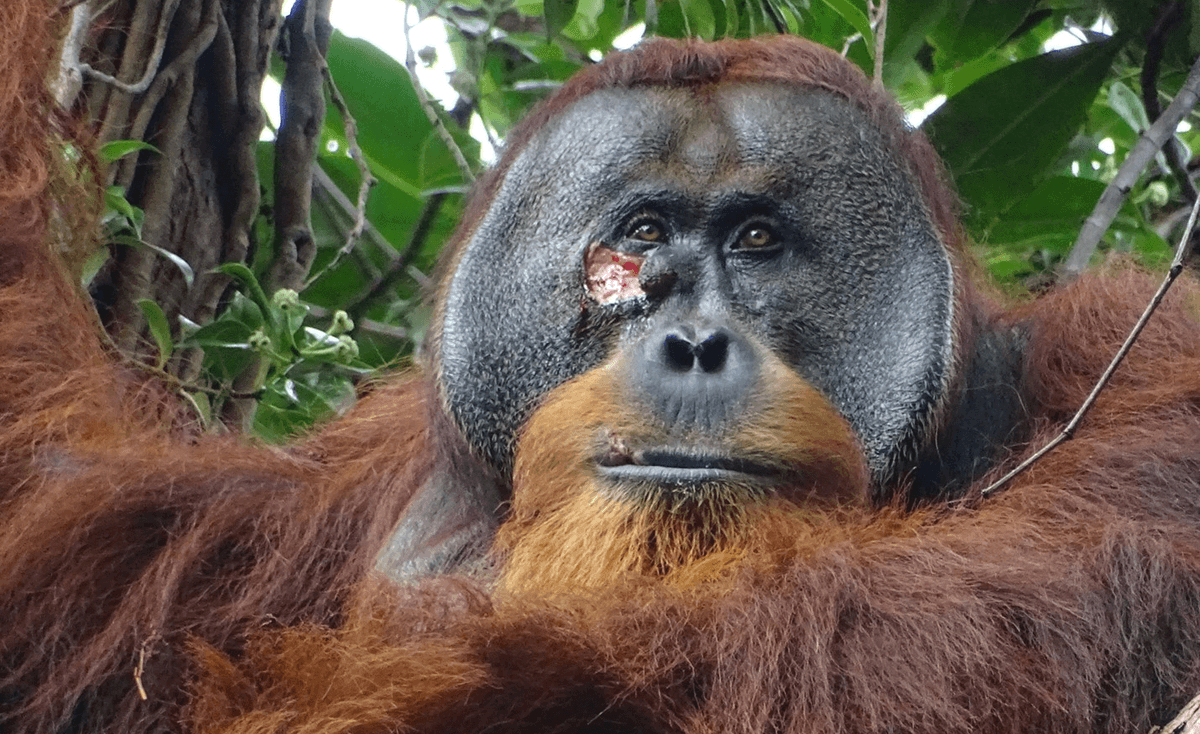
A wild Sumatran orangutan has been seen chewing the leaves of the Akar Kuning plant and applying the juice to a wound on his cheek‚ the first time this has been reported. The process went on for seven minutes‚ until the wound was entirely covered‚ making clear it was deliberate‚ and the orangutan continued to chew on the plant’s leaves for another half an hour. The wound healed fully without infection.Stories of animals seeming to understand the healing power of certain plants are widespread‚ particularly their use against parasites or infections both internal and external. However‚ the report of deliberate application to a wound site made by researchers represents a first for any species other than humans. The closest counterpart is chimpanzees applying an unknown insect to their own wounds‚ or occasionally those of other members of their troop.The medicine ape is a male‚ known as Rakus to researchers who have been watching him and other members of his species in the Gunung Leuser National Park. Dr Isabelle Laumer and colleagues saw Rakus with a wound on his right cheek in June 2022. Three days later‚ they witnessed him chewing on Akur Kuning (Fibraurea tinctoria). He did not apply the chewed leaves anywhere other than the wound.Besides its application in preventing wound infections‚ Sumatrans use Akar Kuning in traditional medicine for malaria‚ dysentery‚ and even diabetes. There are even claims of compounds found in the plant having anti-cancer properties. These uses have attracted the interest of scientists‚ who are testing its activity against some of these conditions. Although preclinical research has produced encouraging results‚ clinical trials do not appear to have been published.Rakus was not seen acquiring the wound‚ but sounds of a fight between adult males were heard in the area on the day it is thought to have happened. Fights among orangutans in the park are rare‚ since food is abundant‚ but the area lacked a dominant male and Rakus appears to have been trying to establish himself.After the wound appeared‚ he was observed to rest more than usual until fully recovered‚ particularly when the wound was fresh. The wound closed four days after the treatment‚ and appeared fully healed within three weeks of applying the plantThanks to his knowledge of medicinal plants‚ Rakus was fully healed three weeks after treatment.Image Credit: SafruddinOrangutans appear to be particularly avid users of medicinal plants. There are accounts of orangutans swallowing leaves of plants directly related to parasite infections‚ a practice common among other apes. More distinctive are reports of (mostly) female Bornean orangutans assiduously chewing leaves of the Dracaena cantleyi plant for several minutes before rubbing the lather on their arms and legs for more than half an hour. The reason is unknown‚ but Indigenous people in the areas where Dracaena cantleyi grows use it to treat sore muscles and bone pain.The authors speculate that Rakus may have been applying the Akar Kuning for pain relief‚ with any anti-bacterial properties merely a happy accident. Alternatively‚ it may have been a way to protect the wound against flies. Alternatively‚ they speculate recognition and use of medicinal plants may stretch back as far as humanity’s last common ancestor with orangutans millions of years ago.Although widely used across Southeast Asia for its supposed medicinal properties‚ Akar Kuning has yet to make the jump to worldwide fame. If anyone does decide to import its extract into Western markets‚ they’ve certainly got the perfect salesape to market it.The study is published open access in the journal Scientific Reports
Like
Comment
Share
Showing 29723 out of 56670
  • 29719
  • 29720
  • 29721
  • 29722
  • 29723
  • 29724
  • 29725
  • 29726
  • 29727
  • 29728
  • 29729
  • 29730
  • 29731
  • 29732
  • 29733
  • 29734
  • 29735
  • 29736
  • 29737
  • 29738

Edit Offer

Add tier


Select an image
Delete your tier
Are you sure you want to delete this tier?

Reviews

In order to sell your content and posts, start by creating a few packages. Monetization

Pay By Wallet

Payment Alert

You are about to purchase the items, do you want to proceed?

Request a Refund