YubNub Social YubNub Social
    Advanced Search
  • Login

  • Night mode
  • © 2026 YubNub Social
    About • Directory • Contact Us • Privacy Policy • Terms of Use • Android • Apple iOS • Get Our App

    Select Language

  • English
Install our *FREE* WEB APP! (PWA)
Night mode
Community
News Feed (Home) Popular Posts Events Blog Market Forum
Media
Headline News VidWatch Game Zone Top PodCasts
Explore
Explore Jobs Offers
© 2026 YubNub Social
  • English
About • Directory • Contact Us • Privacy Policy • Terms of Use • Android • Apple iOS • Get Our App

Discover posts

Posts

Users

Pages

Group

Blog

Market

Events

Games

Forum

Jobs

Classic Rock Lovers
Classic Rock Lovers  
1 y

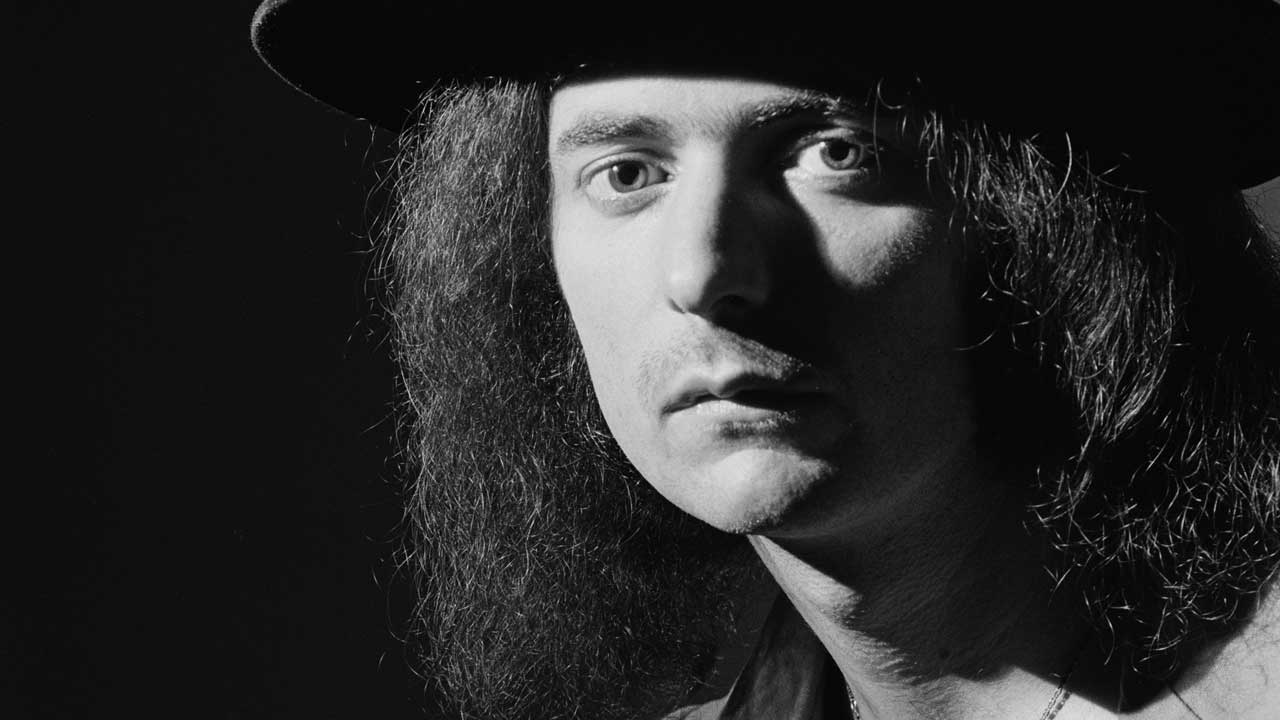
The Ritchie Blackmore albums you should definitely listen to - but none of them are by Deep Purple
Favicon 
www.loudersound.com

The Ritchie Blackmore albums you should definitely listen to - but none of them are by Deep Purple

A guitarist who helped define the sound of a genre, both pre- and post- Deep Purple, Ritchie Blackmore has a formidable back catalogue of classics
Like
Comment
Share
Classic Rock Lovers
Classic Rock Lovers  
1 y

"Don’t look too hard, we will not be there": Foreigner's original drummer backs out of Hall Of Fame induction - and Mick Jones won't be there either
Favicon 
www.loudersound.com

"Don’t look too hard, we will not be there": Foreigner's original drummer backs out of Hall Of Fame induction - and Mick Jones won't be there either

The Hall Of Fame is having another interesting year
Like
Comment
Share
BlabberBuzz Feed
BlabberBuzz Feed
1 y

Fani Willis' Lawyer SNAPS Back At Jim Jordan—When Hypocrisy Smells Worse Than a Skunk
Favicon 
www.blabber.buzz

Fani Willis' Lawyer SNAPS Back At Jim Jordan—When Hypocrisy Smells Worse Than a Skunk

Like
Comment
Share
Living In Faith
Living In Faith
1 y

Why Young Women Are Leaving the Church and How Pastors Can Help
Favicon 
www.thegospelcoalition.org

Why Young Women Are Leaving the Church and How Pastors Can Help

Women are leaving the Christian church, and organized religion altogether, at surprisingly high rates. Historically, women have almost always outnumbered men in religious service attendance, but that tide is shifting with younger millennials and Gen Z. A New York Times opinion piece published earlier this year argued complementarian theology and its supposed inherent sexism are to blame for this exit. I’d argue the reasons are more multifaceted, related to both the church and secular culture. And while pastors who have misused authority may be part of the problem, I’m already seeing that pastors who lead faithfully can be part of the solution. Rejecting Misuses of Complementarianism One might conclude from the New York Times piece that little can be done about young women leaving the church. Complementarianism remains part of God’s good design, after all, so we can’t cast it aside to appease our culture. But not all young women leave the church because they wholly reject complementarian principles. Many women leave in response to gross misuse of it, rather than its actual tenets as presented in Scripture. One scandal after another of abuse and moral failure in high-profile Christian leaders has emerged in recent years, with many men involved in those scandals claiming complementarianism as their justification. Many women have been hurt and dismissed by pastors who should have listened. Is it any wonder that distrust of the church has risen among women, leading some to opt out altogether? Still, I believe it’s ultimately too simplistic to point to even these misuses as the fundamental reason for women’s rapid exit from organized religion. Ensnared by the World’s Goods Christ’s church and the world have always been at odds. But Christianity and the goods it upholds for women—worshiping God, holiness, the local church, hospitality, evangelism, monogamous marriage, and motherhood, among many—present a far sharper contrast to the world’s goods compared to a generation or two ago. Additionally, many young women today are ensnared in the world’s goods because they found them at impressionable times. Consider the modern push for sexual freedom. The internet and social media have made sexual content scarily accessible to teen girls, and online social pressures now lure many into sexual experimentation at young ages. Gen Z women in particular are likely to suffer exposure to sexual perversion earlier than millennials, and many have or currently are experimenting with LGBT+ identities. Young women aren’t rejecting only complementarianism and its misuses; they’re also rejecting the biblical sexual ethic. But egalitarian, LGBT-affirming churches have multiplied across America in recent decades. If women can still supposedly have God without affirming beliefs they find objectionable, why would they leave Christianity altogether? Could it be that women decreasingly see a need for God in their lives? After all, the secular, modern West catechizes women to find fulfillment in self-determination, career climbing, and sexual freedom. Second-wave feminism loudly marketed to women the myth that a career offers fundamental meaning, joy, and status. And since the 1960s, women have become more educated, workforce-centric, and liberal. Particularly in higher education, women have steadily outpaced men for years, and today, nearly 60 percent of bachelor’s degrees are awarded to women. Could it be that women decreasingly see a need for God in their lives? At the same time, women have moved left politically. A recent Axios report found that women ages 18–29 are now 15 percentage points more likely to identify as liberal than men in the same age bracket, often because they prioritize abortion rights. Women have been taught not only that they rule their own bodies and lives but that they have the power to decide who lives and dies. Why would women see a need for God when they’ve functionally become gods? Failed by Empty Promises But as Christians, we know godlessness and self-reliance will never satisfy. We’re already seeing them specifically fail women. Despite great gains for women in recent decades, women are less happy compared to 40 to 60 years ago. The increase in opportunities for women over the last few generations has been monumental and good on many levels. Yet women’s happiness has declined over the same period that their societal prospects have expanded. Many factors have likely contributed to this happiness decline. At a minimum, however, it indicates that worldly promises of success, climbing the corporate ladder, and sexual promiscuity underdeliver. Though many women may have chosen these empty promises over the church, the failure of these promises could lead them back to the church. Coming to Christ Through Complementarianism Pastors can intentionally prepare to welcome and care for women, like my friend Anna, who come to their churches reaping disappointment from the world’s hollow promises. A self-professed atheist in her teens and 20s, Anna bought into feminism’s promises of autonomy. She successfully advanced in a rigorous career and thought rejecting authority led to freedom. By her early 30s, however, she became increasingly disillusioned and unsettled. She began studying Christianity, and several months later, she found her way to my Reformed Baptist, complementarian church. Complementarian theology played an important part in Anna’s conversion. For years, she’d watched abuses of authority bring harm. But through our pastors’ example, she saw how good authority—rather than throwing off all authority—serves as a corrective. Our pastors aren’t perfect, but they strive to serve, they’re quick to repent, and they promote healing as they lead. They offered Anna a new, powerful example of the Good Shepherd’s care—and God used it to save her. Complementarian theology played an important part in Anna’s conversion. Anna represents but one story of a woman who turned to the church when promises of self-actualization failed her. Lord willing, many more such women will walk through church doors in years to come, and pastors have a tremendous opportunity and responsibility to beckon them to King Jesus. Pastors who labor to know, help, and listen to women in their churches can image Christ’s servant leadership to these women, as our pastors have for Anna. The famous failures of a few pastors may push some women away from the church, but God could use the faithful care and leadership of many pastors to draw women back in.
Like
Comment
Share
Living In Faith
Living In Faith
1 y

God’s Love for the Church Is a Beautiful Thing
Favicon 
www.thegospelcoalition.org

God’s Love for the Church Is a Beautiful Thing

Picture three scenes: First, an Israelite living around 1450 BC looks aghast at a priest who stands with a bloody spear and a furious look in his eye after executing a man and a woman for the sin of idolatry (Num. 25:8–13). Second, a first-century young man named Eutychus begins to doze as he sits on a high windowsill while a long-winded apostle preaches after midnight (Acts 20:7–12). Third, in 2024, a 9-year-old sings to Jesus at an international church gathering in Abu Dhabi. What do these three characters have in common? It’s not obvious they share anything noticeable in common—they live in vastly different times, cultures, and situations. They hail from different worlds. But according to Brad East, in his beautiful little book The Church: A Guide to the People of God, these three characters are all part of a single, cosmic people. They’re part of the point of human history: they’re part of the church—the Bride of Christ, the spouse for whom he made and redeemed the entire cosmos. The Church is a far-reaching book that presents the story of God’s people as told by Holy Scripture. Ecclesiology with a Twist East, associate professor of theology at Abilene Christian University, warns that he isn’t writing a typical ecclesiology. “You may be surprised,” he tells us, “by the sparsity of major topics in ecclesiology, which is the name for the doctrine of the Church” (14). If it isn’t a dogmatic consideration of the doctrine, what then is East’s book? It’s a romance. East tells the story of the one true God and his spouse—created in the election and deliverance of Israel and come to her own in the church of Jesus Christ. As he summarizes, “God’s plan from the beginning in electing Abraham was to unite all things to Himself through Jesus, the seed of Abraham; to bless all the families of the earth through the family of Abraham; and this to bring to fulfillment the divine desire from all eternity: to set apart a people for Himself” (129). This is the story all the saints are swept up into—Phinehas, Eutychus, Paul, and my 9-year-old are all part of the same people graced with the unspeakable privilege of saying to Christ, “I am my beloved’s and my beloved is mine” (Song 6:3). Deep Roots and Lovely Fruit The church’s story doesn’t begin at Pentecost but rather all the way back in Genesis. The church’s family history boasts Abraham as one of her patriarchs. In other words, the story of the church and the story of Israel in the Old Testament aren’t two separate stories; they’re one and the same. While it isn’t uncommon for ecclesiologies to acknowledge this, few do so in East’s thorough manner. Rather than asserting the church is the natural telos of Israel’s story in the Old Testament, East shows the reader this connection by tracing out Israel’s story and drawing attention to how the church lives out her identity in Christ—the true Israel. The story of the church and the story of Israel in the Old Testament aren’t two separate stories; they’re one and the same. East doesn’t propose that Old Testament Israel is directly replaced by the church today. Nor does he defend the idea that “Israel is a sort of way station” on the journey to the church (26). He manages to do something that seems fresh without being theologically novel. He maintains the crucial affirmation that God’s elect people are Israel, and this people includes all nations, who are adopted to Abraham’s family through Christ. Gentiles don’t become Jews, but they can become the true seed of Abraham through adoption (see Gal. 3:16). This deep awareness of the church’s Old Testament connections is a welcome emphasis. All the more so because of the undeniably beautiful prose in which East develops this idea. Indeed, The Church can just as easily be labeled a work of art as a work of theology. For example, his reflections on the typological resonances between Eve, Mary, Israel, and the church are nothing less than riveting. Too Much of a Good Thing (and Not Enough of Others) Occasionally, the beautiful writing obscures East’s point. In the lovely discussion of Mary (chapter 2), East draws attention to the convincing typological parallels between Mary and the church. Both are, East explains, “temples” of Christ—he dwelled in Mary, the “God bearer,” and by his Spirit, he dwells in the church today. But then East lets this parallel run wild, reversing referents without compelling warrant. He suggests that since the church is Christ’s Bride, and Mary prefigures the church in a kind of typological way such that we’re warranted to call the church our mother, we can also conclude that “in a sense [Mary] is his bride” (12). He goes on to say that she, like the church, “is the bride of Christ, and thus the new Eve to his new Adam” (13). No biblical justification for this conclusion is given apart from the observation that “no human being ever knew Christ with greater intimacy than Mary” (13). Further, little is made of this parallel between Mary and the church as the Christ’s Bride from a theological point of view. The aesthetic symmetry is clear, but what does it mean that “Mary is a kind of bride of Christ”—an “Eve to his Adam”? This seems like an example of sacrificing clarity for the sake of beautiful language. Gentiles don’t become Jews, but they’re adopted into Abraham’s family through Christ—the true seed of Abraham. Additionally, for all the book’s merits in developing the New Testament’s Old Testament context, it turns out to be less of a book about the church and more of a biblical-theological reflection on the relationship between Christianity and Old Testament Israel. A crucial part of the church’s identity has thereby overwhelmed and consumed every other part. The book is lean on considerations of topics such as the local church, church membership, polity, ecclesial offices, the nature of the sacraments, and church discipline. Readers looking for an introduction to the church should reach elsewhere on the bookshelf for a more straightforward ecclesiology. This is a beautiful book. Taken in such a way, The Church should receive a wide and appreciative readership. Even so, readers would be better served by approaching it not as a work about ecclesiology but rather as a kind of extended essay: a theological reflection on the church’s relationship to the Old Testament in general and Israel’s story in particular.
Like
Comment
Share
Living In Faith
Living In Faith
1 y

I Am the Light of the World (John 8:12–30)
Favicon 
www.thegospelcoalition.org

I Am the Light of the World (John 8:12–30)

At TGCW24, Jen Wilkin shares Jesus’s second I AM statement, “I AM the Light of the World” from John 8:12-30. We all have first-hand experience of the darkness and brokenness that exists in our world. Jesus, the light that shines in the darkness, offers the “light of life” to anyone who follows him. Jesus’s message confronts the darkness in our hearts and in our world and offers us great hope in all of it. Wilkin teaches the following: The symbolism of light in Scripture Jesus’s use of light as a metaphor The Feast of Tabernacles and its significance The manifest presence of God in the Old Testament The role of light in the New Testament The challenge of lesser lights The role of the church in carrying the light The collective impact of believers’ light
Like
Comment
Share
Daily Caller Feed
Daily Caller Feed
1 y

Browns Moving Into New Domed Stadium In Suburbs Of Cleveland
Favicon 
dailycaller.com

Browns Moving Into New Domed Stadium In Suburbs Of Cleveland

The days of snow games in Cleveland are over
Like
Comment
Share
YubNub News
YubNub News
1 y

Trump Jokes Kamala Harris Skipped Al Smith Dinner to Get Communion from Gretchen Whitmer
Favicon 
yubnub.news

Trump Jokes Kamala Harris Skipped Al Smith Dinner to Get Communion from Gretchen Whitmer

Former President Donald Trump flamed Vice President Kamala Harris for snubbing the Al Smith Dinner in New York City on Thursday, joking that she is “receiving communion” from Gov. Gretchen Whitmer…
Like
Comment
Share
YubNub News
YubNub News
1 y

Liberal Terrorism: Election Dirty Tricks Now Include Threatening Letters Sent To Trump Supporters — “Your Family May Be Impacted, Your Cat May Get Shot.”
Favicon 
yubnub.news

Liberal Terrorism: Election Dirty Tricks Now Include Threatening Letters Sent To Trump Supporters — “Your Family May Be Impacted, Your Cat May Get Shot.”

[unable to retrieve full-text content]The following article, Liberal Terrorism: Election Dirty Tricks Now Include Threatening Letters Sent To Trump Supporters — “Your Family May Be Impacted, Your…
Like
Comment
Share
YubNub News
YubNub News
1 y

Greatest Hits: Trump Gets Big Laughs at Al Smith Dinner, Roasting Harris, Biden, Media Elite
Favicon 
yubnub.news

Greatest Hits: Trump Gets Big Laughs at Al Smith Dinner, Roasting Harris, Biden, Media Elite

Critics praised former President Donald Trump’s performance at the Al Smith Dinner on Thursday as one of his funniest speeches of all time. Trump spoke for about 30 minutes and roasted several notables…
Like
Comment
Share
Showing 7685 out of 56670
  • 7681
  • 7682
  • 7683
  • 7684
  • 7685
  • 7686
  • 7687
  • 7688
  • 7689
  • 7690
  • 7691
  • 7692
  • 7693
  • 7694
  • 7695
  • 7696
  • 7697
  • 7698
  • 7699
  • 7700

Edit Offer

Add tier


Select an image
Delete your tier
Are you sure you want to delete this tier?

Reviews

In order to sell your content and posts, start by creating a few packages. Monetization

Pay By Wallet

Payment Alert

You are about to purchase the items, do you want to proceed?

Request a Refund