YubNub Social YubNub Social
    Advanced Search
  • Login

  • Night mode
  • © 2026 YubNub Social
    About • Directory • Contact Us • Privacy Policy • Terms of Use • Android • Apple iOS • Get Our App

    Select Language

  • English
Install our *FREE* WEB APP! (PWA)
Night mode
Community
News Feed (Home) Popular Posts Events Blog Market Forum
Media
Headline News VidWatch Game Zone Top PodCasts
Explore
Explore Jobs Offers
© 2026 YubNub Social
  • English
About • Directory • Contact Us • Privacy Policy • Terms of Use • Android • Apple iOS • Get Our App

Discover posts

Posts

Users

Pages

Group

Blog

Market

Events

Games

Forum

Jobs

Conservative Voices
Conservative Voices
2 yrs ·Youtube Politics

YouTube
"Their Fact Checks Were Full of Sh*t": Megyn Kelly Unloads on ABC's Terrible Debate Moderators
Like
Comment
Share
Classic Rock Lovers
Classic Rock Lovers  
2 yrs

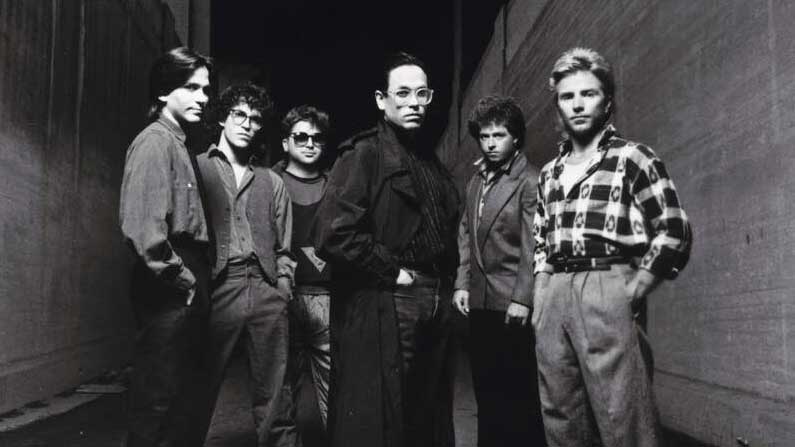
With sales of more than 40 million, these are the Toto albums you should definitely listen to
Favicon 
www.loudersound.com

With sales of more than 40 million, these are the Toto albums you should definitely listen to

A group of talented musicians with a bunch of tracks among the top of the AOR pops, Toto are among the genre’s big boys - and these are their best albums
Like
Comment
Share
NEWSMAX Feed
NEWSMAX Feed
2 yrs ·Youtube News & Oppinion

YouTube
Trump to Harris: She's going to my philosophy, I was going to send her a MAGA hat
Like
Comment
Share
NEWSMAX Feed
NEWSMAX Feed
2 yrs ·Youtube News & Oppinion

YouTube
Trump: They are destroying the fabric of our country on the border
Like
Comment
Share
Jihad & Terror Watch
2 yrs

Will the next 9/11-style Islamic terrorist attack take place in Europe?
Favicon 
barenakedislam.com

Will the next 9/11-style Islamic terrorist attack take place in Europe?

Islamic terror, with ISIS (Islamic State) behind several attacks and averted terror plots, have returned to Europe. But in truth, it never really went away. A suspected ISIS member has stabbed three people to death in Solingen, Germany, shortly after a mass-casualty plot at a Taylor Swift concert was foiled in Vienna, Austria. In October, […]
Like
Comment
Share
BlabberBuzz Feed
BlabberBuzz Feed
2 yrs

WATCH: Tucker Carlson And Glenn Beck Reveal The Spiritual POLITICAL War We're In!
Favicon 
www.blabber.buzz

WATCH: Tucker Carlson And Glenn Beck Reveal The Spiritual POLITICAL War We're In!

Like
Comment
Share
Living In Faith
Living In Faith
2 yrs

How to Walk through Worry Well - Crosswalk Couples Devotional - September 11
Favicon 
www.christianity.com

How to Walk through Worry Well - Crosswalk Couples Devotional - September 11

As part of my embracing the season, I want to delve into this affliction of worry. How do we walk it out well?
Like
Comment
Share
Living In Faith
Living In Faith
2 yrs

15 Reasons Your Church Needs a Single Moms Ministry
Favicon 
www.ibelieve.com

15 Reasons Your Church Needs a Single Moms Ministry

Are you a church leader or even just a church goer? Here are reasons why your church could use a single moms group.
Like
Comment
Share
Living In Faith
Living In Faith
2 yrs

Pray with the Trinity
Favicon 
www.thegospelcoalition.org

Pray with the Trinity

Most of us have experienced being out of sync. From jumping into a moving jump rope at the wrong time, to getting on a treadmill at the wrong pace, to pushing on a swing against its momentum. Similar asynchronies can be experienced in the life of prayer. Prayer will often feel like travail unless we learn how to be in sync with a movement that’s already happening in God. Understanding what Romans 8 says about the relationship of the members of the Trinity can help us pray in concert with God himself. Out of Sync with God Deep, authentic prayer is difficult. Not the surface kind of prayer with rote verbal recital of hackneyed phrases. I mean the kind of prayer that’s according to God’s will in both content and affection, where we pray for the right things and genuinely desire them (1 John 5:14). We often try to get God’s attention, to meet some imagined condition so he’ll hear our prayer. Such performance is only followed by its hollow echo in an empty room, bouncing off an impenetrable ceiling. In good faith, we speak our opening lines, but the interest appears unrequited. And so we try harder, with more gusto. The assumption behind this is that God is like a finite agent, or, as C. S. Lewis’s Screwtape puts it, “Located—up and to the left at the corner of the bedroom ceiling, or inside his own head, or in a crucifix on the wall.” He both acts and is acted on. Prayer becomes an attempt to control God, either by having him do our bidding or by imagining him as a finite conversation partner. Prayer with a controlling, cajoling attitude is out of sync with God, for it pushes when it should pause, much like pushing on a swing when it’s on its descending arc. Prayer with a controlling, cajoling attitude is out of sync with God. Paul addresses this asynchrony with terms such as “weakness” (Rom. 8:26) or “the law of sin that dwells in my members” (7.23), which indicate discord between the Spirit’s presence and our flesh. This incongruity with the Spirit often manifests itself in prayer, which is precisely what makes it labored and sometimes awkward. Triune ‘Prayer’ Romans 8 reframes our understanding of prayer, speaking of a kind of prayer in which the person praying is carried along by another “prayer” that goes on in the heart of the Trinity. Before the Christian even considers praying, there’s already a twofold intercession occurring. Let’s consider it in inverse textual order. Paul mentions the Son’s intercession in verse 34. In the incarnation, the Son is sent by the Father and intercedes before the Father (John 17:25–6), revealing both his distinction from the Father and his origin from him. He both intercedes for the saints and concretely reveals the Father’s will to them, teaching them what to pray for. Paul also mentions a second intercession, that of the Holy Spirit, who “intercedes for us with groanings too deep for words” (Rom. 8:26). How are we to understand the Spirit’s intercession and groans, given he hasn’t assumed a human nature and thus cannot properly be said to pray? The traditional consensus is aptly expressed by Calvin: “Not that he actually prays or groans, but he excites in us sighs, and wishes, and confidence, which our natural powers are not at all able to conceive.” The Spirit’s aid is different than the Son’s, in accord with their personal properties. The Son intercedes as the Word who has revealed the Father—his intercession is, as it were, verbal. The Spirit intercedes as the bond of love (Rom. 5:5; 1 John 4) between the Father and the Son—his intercession is affective, guttural. As the breath of God, he accompanies the Word, keeping it tethered to the Father. In context, Paul indicates this groaning is a form of longing for something that hasn’t been given yet, perhaps even something we don’t understand. Like an unnamed, unidentified longing, a desire not yet understood—as when your body needs some substance like iron or calcium, a precognitive need. The Spirit’s sigh is like a baby’s deep, visceral attachment to the mother. It’s not accidental that it’s by the Spirit we cry “Abba” (Gal. 4:6; Rom. 8:15), for he’s the “Spirit of adoption” (Rom. 8:15) and of sonship. In the processions of the Son and the Spirit and through their missions to us in incarnation and indwelling, we can speak, circumspectly, of something like a “natural frequency” of the Trinity, the movement from the Father to the Son and from the Son to the Father in the love of the Spirit. This is the very life, the natural movement, of the triune God. We feel this movement in our bones when the Spirit, the breath of God, imprints this heavenly murmur on our hearts. Then, as sons, we understand what the will of the Father is, and as breathers of the Spirit, we also love it. Entering into Resonance with the Trinity Prayer, then, isn’t an autonomous human action, seeking to have an effect on a God who’s “up and to the left.” We enter into resonance with a prayer that’s already going on in the Trinity itself, where the Son intercedes for us. The Spirit’s work is to bring us into resonance with that prayer. He aligns the rhythm of our desire with God’s will. We feel this movement in our bones when the Spirit, who is the breath of God, imprints this heavenly murmur on our hearts. Apart from that work of the Spirit, we’re out of sync with God, as two dancers stepping on each other’s toes. This is one reason our prayers are so labored—until we find that cadence, the worries of our soul dictate the pace and thus we fail to pray “as we ought” (Rom. 8:26). The Spirit’s peculiar work modulates according to our natural frequency and with our will to bring us in sync with God’s will. A certain approach to the doctrine of the Trinity emerges through prayer. Having abandoned all attempts to seize God conceptually, to solve the logical puzzle of the three-in-one, we instead discover the Trinity as a new rhythm that grace has taught our hearts. There’s a new law, the law of the Spirit, working against the law of the flesh, gently bringing us into resonance with the Father’s will. Prayer to a transcendent sovereign God only makes sense if “communication about the welfare of God’s children is characteristic of the communion among the persons of the Trinity,” as Michael J. Gorman so adequately put it. In prayer, we discover grace’s Trinitarian cadence.

Like
Comment
Share
Living In Faith
Living In Faith
2 yrs

Let the Bible Fix Your Idiocy
Favicon 
www.thegospelcoalition.org

Let the Bible Fix Your Idiocy

You’re an idiot and God is not. That’s the shocking thesis of Revering God: How to Marvel at Your Maker by Thaddeus J. Williams, associate professor of systematic theology at Biola University. We’re all theologians, even the most irreligious of us. Everyone wrestles with questions of the divine, but only some do it well. A good theologian, Williams argues, “realizes what a total idiot he or she is about the deepest things of God, yet seeks to mitigate his or her idiocy as much as possible by bringing it often to the Sacred Scriptures” (xvi). Good theologians are also fanatical about God’s glory, nerdy about knowing him, violent in their fight against sin, and enthralled by the Creator. Amid a cultural pandemic of expressive individualism, Williams offers an antidote. He reminds us that despite all our best qualities and achievements, we’re “nowhere near as interesting, awesome, or worthy of worship as the Creator of the universe” (xiii). He calls us to reorient our hearts away from our culture and tear our eyes from our screens to behold God’s glory. He wants to teach us to be good theologians. Countercultural Theology Consistent with the theme of Williams’s Don’t Follow Your Heart, this book calls readers to resist cultural pressures as they think theologically. “We need an entire generation of [cultural] heretics, iconoclasts, renegades, mavericks, and rebels who refuse to march like good little cows, mooing in unison with the herd,” he writes (56). This generation of revolutionaries will confess the one true God, living in ways that rebel against the culture’s evolving norms. Being countercultural in our day means believing that God is the author, source, and standard of reason. Williams shows that mere human inquiry leaves any person aimlessly dependent on authority sources that aren’t eternally reliable. The modern age assumes the autonomous discovery of knowledge; the Creator begs to differ. True wisdom is only found in confessing the true omniscient Being. Being countercultural in our day means believing that God is the author, source, and standard of reason. Furthermore, real satisfaction is only found in God. This is a radical claim in an age that looks for satisfaction in all kinds of outlets. For those plagued by feelings of shame, doubt, and anxiety, the goodness of God offers hope. God alone—not iPhones, Taylor Swift, or Double Stuf Oreos—satisfies the soul. However, sometimes God feels distant. Yet this is how God draws his people toward himself. “God hides for our happiness,” Williams writes (55). Our world is filled with idols that autoplay, pop up, and send us unwanted alerts. In comparison, God seems remote. So we need to sit down, slow down, and ruminate on his character. That’s where true enjoyment is found. Practical Theology There’s “something utterly unique about the God we meet in the Bible,” Williams asserts (113). He’s not like the gods of the Mormons, Muslims, Hindus, or Jehovah’s Witnesses. We see his attributes in Scripture: God is victorious, transcendent, sovereign, and loving. There’s no god like him. And to really know God, we have to think theologically. Therefore, the study of the triune God is immensely practical. It helps us live out apparent paradoxes in the teeth of cultural headwinds. For example, our loving God calls his people to love, yet he doesn’t endure sin. That’s hard to acknowledge in a culture that argues “sin is calling anything sin” (134). Yet our hope isn’t in increasing human wisdom. Only in God do we find the redemption of our souls. Good theology puts on display the goodness and beauty of the divine life. The complexity of the truths about God is staggering. Yet God is simple. And so, appealing to divine simplicity, Williams challenges God’s people to be “integrated selves centered on Christ” (194). Every act of Christ was “simultaneously an expression of faith, virtue, knowledge, self-control, steadfastness, godliness, brotherly affection, love, discernment, purity, blamelessness, righteousness, joy, peace, patience, kindness, goodness, faithfulness, gentleness, and self-control” (195). May we all strive to live this kind of life that’s light-years away from expressive individualism. Electric Theology Williams’s rhetorical energy jars the stodgy theologian’s sensitivities. Yet the punchiness has a purpose: to keep the interest of a generation distracted by their phones. It electrifies the content to make it incandescent. Each chapter explores an attribute of God, interlacing eclectic sources to make sound theological points. Williams talks about Batman, Star Wars, Elon Musk, and Joaquin Phoenix. He juxtaposes these references with traditional theological sources like Martin Luther, Herman Bavinck, Charles Taylor, Albert Camus, and the Westminster Shorter Catechism. He includes excerpts from influential contemporary theologians to point readers toward further study. The combination of Scripture, historical thinkers, modern theologians, personal experiences, and pop culture works well. It’s a fun but bumpy ride. The study of the triune God is immensely practical. It helps us live out apparent paradoxes in the teeth of cultural headwinds. Though it’s bouncy, this isn’t a beach book. Readers can’t simply sit back and let the words float by. Feeding the longing of younger Christians for thick spiritual formation practices, Williams calls readers to meditate, pray, and reflect on God’s nature. He offers meaty passages to meditate on like Numbers 23:19: “God is not man, that he should lie, or a son of man, that he should change his mind.” His suggested prayers and exercises call for deep reflection and heartfelt repentance. Their purpose is always to turn attention to the one true God. There’s so much to learn and enjoy in Revering God. It’s an accessible introduction to the doctrine of God, but one that doesn’t sacrifice substance for style. It helped me become a better theologian. It left me marveling at my Maker, dazzled once again by the light of our glorious God, even as it reminded me I am, in fact, an idiot.
Like
Comment
Share
Showing 12697 out of 56670
  • 12693
  • 12694
  • 12695
  • 12696
  • 12697
  • 12698
  • 12699
  • 12700
  • 12701
  • 12702
  • 12703
  • 12704
  • 12705
  • 12706
  • 12707
  • 12708
  • 12709
  • 12710
  • 12711
  • 12712

Edit Offer

Add tier


Select an image
Delete your tier
Are you sure you want to delete this tier?

Reviews

In order to sell your content and posts, start by creating a few packages. Monetization

Pay By Wallet

Payment Alert

You are about to purchase the items, do you want to proceed?

Request a Refund