YubNub Social YubNub Social
    Advanced Search
  • Login

  • Night mode
  • © 2026 YubNub Social
    About • Directory • Contact Us • Privacy Policy • Terms of Use • Android • Apple iOS • Get Our App

    Select Language

  • English
Install our *FREE* WEB APP! (PWA)
Night mode
Community
News Feed (Home) Popular Posts Events Blog Market Forum
Media
Headline News VidWatch Game Zone Top PodCasts
Explore
Explore Jobs Offers
© 2026 YubNub Social
  • English
About • Directory • Contact Us • Privacy Policy • Terms of Use • Android • Apple iOS • Get Our App

Discover posts

Posts

Users

Pages

Group

Blog

Market

Events

Games

Forum

Jobs

Conservative Voices
Conservative Voices
2 yrs

Robin DiAngelo’s Plagiarism Exposes the Fraud Behind ‘Anti-Racism’
Favicon 
spectator.org

Robin DiAngelo’s Plagiarism Exposes the Fraud Behind ‘Anti-Racism’

Robin DiAngelo now joins a growing list of prominent racial agitators, festooned with advanced degrees, who have been exposed as plagiarists. Aaron Sibarium of the Washington Free Beacon has published side-by-side comparisons of segments of DiAngelo’s doctoral dissertation with writings by various scholars. It is apparent at a glance that DiAngelo lifted whole sentences and paragraphs from other authors without attribution. In some places, she made single-word substitutions. Occasionally, she deleted a sentence or two from the original or inserted mid-paragraph a sentence of her own. These are the tricks of a practiced plagiarist who wants to cover her tracks. I know something about this. I am not exactly the Van Helsing of plagiarist hunters, but I’ve been doing such work for decades. I worked on uncovering the plagiarism in Dr. Martin Luther King Jr.’s doctoral dissertation and later on Bill Cosby’s contributions to the genre of stolen scholarship. Aaron Sibarium invited me to examine the writings of Claudine Gay, whose serial plagiarism cost her the presidency of Harvard in January. And he invited me to examine the evidence in DiAngelo’s case as well. DiAngelo’s case comes with the rich irony that she had strongly inveighed on the importance of scrupulously citing not just the words but also the ideas of minority scholars. But in her dissertation, she robustly plundered both. Her hypocrisy adds a rich broth to this dish, but it isn’t the most important reason to pay attention to this story. What we are seeing is the crumbling of a deceit that has played a significant part in American social and political life for the last five years. Robin DiAngelo, Ph.D., is far and away the most prominent white promoter of the social hysteria known as “anti-racism.” With the 2018 publication of her book, White Fragility: Why It’s So Hard for White People to Talk About Racism, DiAngelo muscled her way to leadership in the movement that seeks to convince Americans that our society is profoundly racist. That idea had been in circulation long before DiAngelo scratched out her version of it. But her timing was perfect. In 2016, the young historian Ibram X. Kendi had enunciated the view that the only acceptable response to racism against blacks is a permanent state of psychological war against whites that he called — without irony — anti-racism. Kendian anti-racism demanded the surrender of whites (and everyone else) who upheld the ideal of America as a nonracist society built on legal equality and personal integrity. Kendi’s barbed-wire prescriptions for reordering America were launched a few years after the Ferguson riots and the emergence of the Marxist–inspired Black Lives Matter movement. White liberals and radicals had played supporting roles in these protests. Melissa Click, a white professor of communications at Missouri State University, famously tried to expel a student journalist from a black protest in November 2015. She was caught on camera declaring, “I need some muscle over here!” That phrase along with others, such as “Hands up. Don’t shoot!” “I can’t breathe!” “Say their names,” and “White silence is violence,” became part the chorus of racial grievance played on a continuous loop in the ensuing years. While there was plenty of eager white guilt for Kendi and other black writers such Ta-Nehisi Coates and Nikole Hannah-Jones to exploit, something was missing. Let’s call it the need for a simplistic paraphrase aimed specifically at white Americans. DiAngelo hit on the perfect formulation by baiting the paraphrase with a bit of psychobabble. “White fragility” sounds like a diagnosis. In the opening pages of her book, DiAngelo cites the discomfort white people feel when forced to talk about race: Socialized into a deeply internalized sense of superiority that we either are unaware of or can never admit to ourselves, we become highly fragile in conversations about race. We consider a challenge to our racial worldviews as a challenge to our very identities as good, moral people. Thus, we perceive any attempt to connect us to the system of racism as an unsettling and unfair moral offense…. I conceptualize this process as white fragility. This is written in the tone of intellectual authority. It takes as self-evident several ideas that deserve skeptical scrutiny. Are white people really “socialized into a deeply internalized sense of superiority”? What are “racial worldviews,” as opposed, say, to the mix of doubts, intuitions, and fragmentary half-knowledge that most Americans live with? Are conversations about race perceived by white people as “a challenge to their very identities as good, moral people”? Are there such things as “the system of racism”? Robin DiAngelo would never have registered at all in the American conversation about race except that she supplied such glib formulations of key elements in the great racial hysteria that broke out in full force after the death of George Floyd in police custody in May 2020. At that point, the demand for public excuses for riots and extortion exceeded the plausible supply. The general public had to be persuaded that it was a good idea to defund the police, decriminalize shoplifting and other urban sports, use prosecutorial discretion to let predators go free, and generally authorize a wide range of other assaults against justice and public order. That “general public” was not necessarily “white,” but it suited the narrative to describe it that way. And that made DiAngelo’s book the gold standard of rationalization for racial violence and predation. To raise objections to the new disorder was to display “white fragility,” and therefore racism. Who believed this nonsense? Apart from the leftist agitators themselves, there were two categories who did so: the college students who were assigned White Fragility as a textbook of unquestionable authority and the white suburban women who supplied DiAngelo her core audience. It remains to be seen how quickly DiAngelo’s standing will fade. Bogus books can have a long afterlife. I think of Nobel Peace Prize laureate Rigoberta Menchú’s memoir, long exposed as fraudulent, but still appearing on college syllabi as part of the indictment of American imperialism in Central America. The concept of “white fragility” will no doubt remain standard on the playlist of the “anti-racist” Left for many years to come. But DiAngelo’s credibility with the broader public is at the beginning of the end. It is not that plagiarism itself is seen as an unforgivable sin. It is exactly that in academic circles, but the general public is largely indifferent to the matter. What will stick to DiAngelo, however, is her shameless exploitation of minority writers and black grievance for her own personal gain. The whole “anti-racism” project was a grift from the start. It enriched the founders of BLM; made Kendi rich; and propelled Hannah-Jones to fame and fortune. But what DiAngelo will be remembered for is creating a grift on top of that grift. It was a fragile proposition all along. READ MORE: The Fatal Assumptions of Robin DiAngelo’s White Fragility The post Robin DiAngelo’s Plagiarism Exposes the Fraud Behind ‘Anti-Racism’ appeared first on The American Spectator | USA News and Politics.
Like
Comment
Share
Conservative Voices
Conservative Voices
2 yrs

Government Won’t Save Local Newsrooms
Favicon 
spectator.org

Government Won’t Save Local Newsrooms

SACRAMENTO, Calif. — During a visit last week to British Columbia, I was scanning Facebook and tried to link to a news article. Instead of accessing the story, I received an advisory informing me that Facebook no longer allowed access to any content from a news source. It was the result of Canadian legislation, the Online News Act, which forced tech companies to pay news publishers for the use of their content. Instead of paying, Meta has simply limited readers’ access to such content. I can’t blame the company, despite the pearl-clutching from Canadian officials. “The fact that these internet giants would rather cut off Canadians’ access to local news than pay their fair share is a real problem, and now they’re resorting to bullying tactics to try and get their way. It’s not going to work,” said Prime Minister Justin Trudeau after Facebook announced its decision last year. But even though our northern neighbors already are experiencing the predictable results of this misguided law, California officials have tried to follow suit. Two similar Democratic measures had been moving their way through the Legislature this year. Senate Bill 1327 would have imposed a tax of 7.25 percent on the gross receipts of online advertising revenue to fund journalism fellowships and grants for nonprofit local news operations. Assembly Bill 886, fancifully referred to as the California Journalism Preservation Act, “would create a journalism usage fee from digital advertising giants like Google/Alphabet and Meta/Facebook to ensure news outlets can pay fair, livable wages to journalists in California,” as explained by the News Guild, a union representing media workers. With the writing on the wall, Google agreed to a settlement that avoids the type of tax proposed by those bills, but which voluntarily earmarks money toward local journalism. As CalMatters reported, “Instead of Google and Meta being forced to negotiate usage fees with news outlets directly, Google would deposit $55 million over five years into a new fund administered by UC Berkeley to be distributed to local newsrooms – and the state would provide $70 million over five years. Google would also continue paying $10 million each year in existing grants to newsrooms.”  The overall deal would direct $250 million to local journalism. The deal also would have Google spend $62.5 million over five years “to provide organizations across industries and communities — from journalism, to the environment, to racial equity and beyond — with financial resources and other support to experiment with AI to assist them in their work,” according to a statement from AB 886’s author, Assemblymember Buffy Wicks, D-Oakland. Gov. Gavin Newsom celebrated the deal as something that will save the state’s newsrooms, although some Democratic critics called it disastrous — arguing that the AI portion will undermine journalism jobs and that the fund isn’t sufficient to save local reporting. Google’s press statements were positive. It’s hard to see this as a serious win for journalism, but the company certainly dodged a bullet. The deal certainly is better than imposing a tax and further regulations on the company. “Every news organization chooses whether they want to be in Google Search and Google News,” explains Google on its blog. “Most do because it results in valuable free traffic. Each month, Google Search and Google news link people to publishers’ websites more than 24 billion times. The traffic we send to news sites helps publishers increase their readership, build trust with readers and earn money.” That’s correct — and the Canadian situation shows the futility of punishing tech companies for providing such a service. Despite the deal, we can certainly expect continuing efforts to push for even more money and more restrictions on the social media firms, with AI regulatory efforts coming into the forefront as journalism groups fear it will replace reporting. Reason’s Elizabeth Nolan Brown reported in June on a letter from the News/Media Alliance to the U.S. Department of Justice calling on it and the Federal Trade Commission “to stop the existential threat Google poses to original content creators.”  In particular, the trade group wants the feds to use antitrust laws to quash the expansion of AI-generated summaries known as AI Overviews. Says Brown: “It’s always amazing to me how an industry so supportive of civil liberties that benefit them (such as freedom of the press) can be so indifferent to freedom in other realms. Here we have a journalism industry trade group asking the federal government simply to shut down a tech tool that might make publishing less profitable.” Exactly. I’m dismayed by all of these attempts by my industry (journalism) to try to clamp down on new technologies or shake down technology companies simply because the latest innovations pose a threat to the old way of doing business. I’m a fan of the economic concept known as creative destruction — “a theory that describes how new innovations replace existing ones that have become obsolete over time.” (Yes, that quotation comes from AI Overview!) New ideas necessarily muscle out older business models, just as automobiles pushed out horse-drawn carriages and electricity replaced coal-fired stoves. Efforts by the government to protect industries as they currently exist will not ensure the continuation of those industries. It might slow the change, but not by very long. Tech companies have, as Google explained, helped spread the reach of local journalism — but newspapers and other local reporting entities need to find a way to fund a voluntary, market-based means to gain revenue. That’s the problem. Newspapers have yet to figure out how to replace ad revenues that were lost by the internet, which changed the platform (online rather than news print) and obliterated classified advertising. Local journalism is indeed vital to a democracy. Some new models are working, such as nonprofit-funded news sites — but the media should have adapted to the changing environment 20 years ago rather than expecting tech firms or the government to bail them out today. And there’s always a danger when government is the guiding force for funding journalism operations. Will journalists be willing to investigate a government that ultimately funds it? Can we expect UC Berkeley professors to direct grants to news organizations that hold the California government to account? Doubtful. If journalists want to earn a living wage, they need to provide a product that consumers are willing to pay for. These deals and legislation only delay that realization. As I learned in British Columbia, they also usually backfire. Steven Greenhut is Western region director for the R Street Institute. Write to him at sgreenhut@rtreet.org. READ MORE: Chevron Joins the California Exodus Online Readers Wallow in Misinformation The post Government Won’t Save Local Newsrooms appeared first on The American Spectator | USA News and Politics.
Like
Comment
Share
Conservative Voices
Conservative Voices
2 yrs

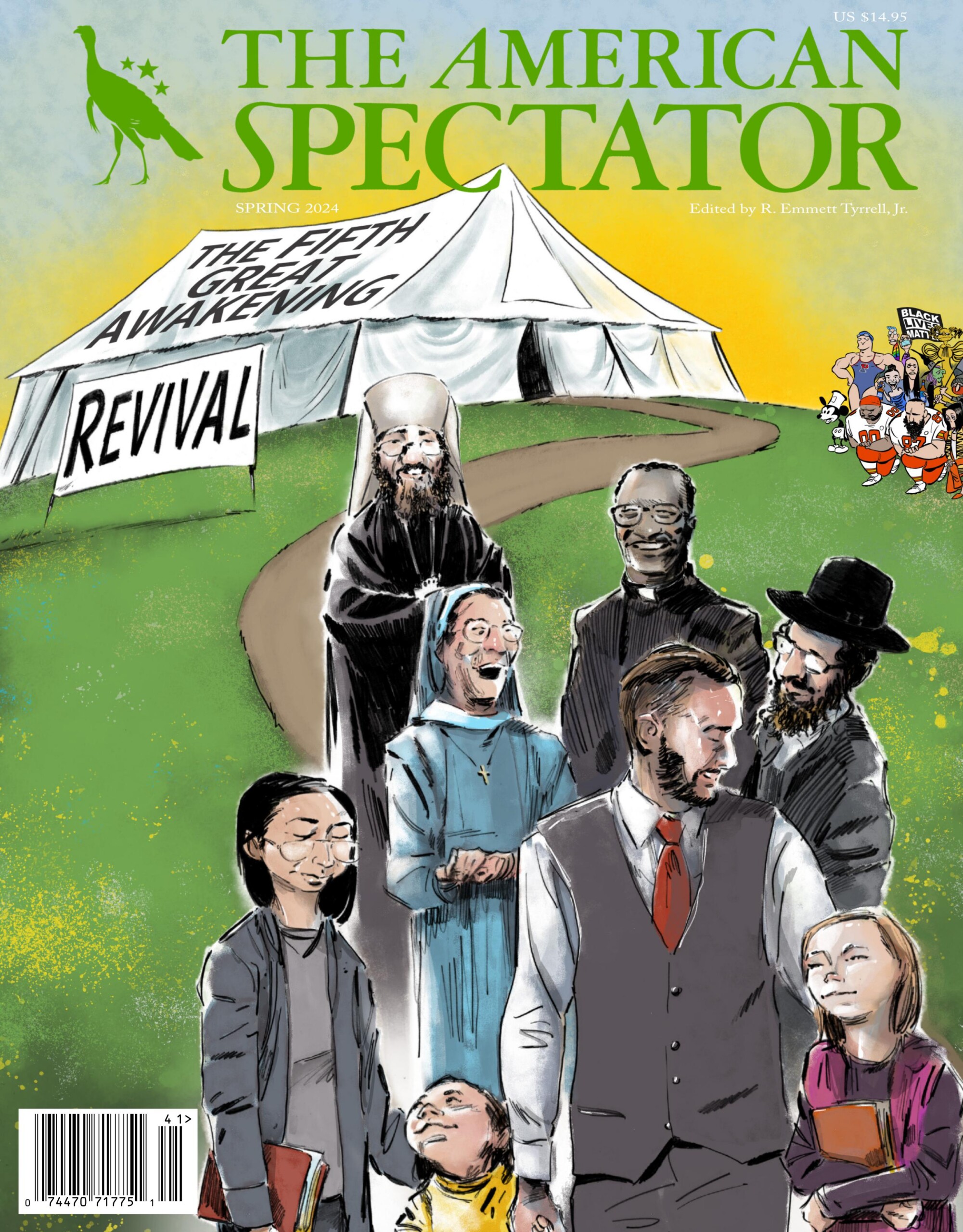
The Affirmative Action Roots of Campus Antisemitism
Favicon 
spectator.org

The Affirmative Action Roots of Campus Antisemitism

Of all the anti-Israel protests heard around the world since the Hamas attack on Israel last October 7, none have been as profoundly disorienting for American Jews as the eruption of protests and antisemitic sentiment on American college campuses. The Anti-Defamation League reports 505 antisemitic incidents on college campuses within the first three months following the attacks. This deluge represents a direct strike at the liberal civic identity of secular Jews, and it has left critics pondering the fate of Jewish political affiliation, power, and cultural status. When three elite university presidents, sitting before Congress last December, could not confirm that mobs calling for the genocide of Jews were violating their universities’ codes of conduct, one writer for the Jewish journal Sapir responded with emblematic indignity: “We need to demand a wholesale change. And if we can’t find it in the places we used to love, then we need to walk away.” This article is taken from The American Spectator’s latest print magazine. Subscribe to receive the entire magazine. Reforming higher education will be difficult, yet, for Jews, disengaging from the universities might prove even harder. Among the values that attracted Jews to twentieth-century liberalism — such as the separation of church and state, civic and racial equality, and free speech — none are as closely linked to Jewish welfare as the values of universal education and merit-based advancement. American Jews, particularly those who descend from immigrants from Eastern Europe, where severe occupational restrictions were the rule, have been especially enamored of living in a country where rewards and penalties are distributed based on demonstrations of character and competence. In America, Jews readily embraced the liberal view that education is the great equalizer among people born to different circumstances — especially regarding higher education, which is seen as meritocracy’s gatekeeper. Jews utilized both public schools and higher education to catapult themselves into the professional middle class and, eventually, a seat at the table of America’s most vaunted institutions. As sociologist Stephen Steinberg has written, “While the Jewish passion for education is easily romanticized, the fact is that Jewish immigrants did place high value on education and sent their children to college in disproportionate numbers.” Subscribe to The American Spectator to receive our latest print magazine, which includes this article and others like it. Most Jews from Eastern Europe lacked a formal education when they arrived in the United States by the millions between 1880 and 1925. But by 1950, when only 10 percent of adult males in the US had a college degree, more than 25 percent of Jewish men had completed four or more years of college. By 2000, 75 percent of Jewish men and 62 percent of Jewish women were college graduates — roughly double the rate of their non-Jewish counterparts. As Charles Silberman documented in his 1985 book A Certain People, the vast expansion of American higher education after World War II was driven not only by a flood of federal funding but also by Jewish students and faculty. By the 1950s and ’60s, Jews, who never accounted for more than 3 percent of the US population, constituted about one-third of Ivy League enrollments. By 1975, they made up 10 percent of all college faculty and 20 percent of faculty members at elite universities. At elite law schools, Jews made up 38 percent of faculty. Even as larger numbers of Jews intermarry with the non-Jewish population and fall away from their ethnic mores, the Jewish veneration of higher education seems to persist. Political scientist Samuel J. Abrams found in 2022 that fully 80 percent of Jewish adults reported growing up in households where they “were expected to pursue a degree at a four-year school.” This is roughly twice the national average. Given the centrality of education to Jewish life, it is not surprising that some of their most significant political conflicts have involved educational institutions. One notable example occurred in New York in 1968 when the longest teachers strike on record was precipitated by a clash between blacks in the Ocean Hill–Brownsville school district — who were attempting to wrest control over hiring and curriculum — and the predominantly Jewish United Federation of Teachers. In higher education, Jews were at the forefront of the battle over admissions. In the 1920s, as second-generation Jews sought access to prestigious universities, Harvard University and other Ivy League schools infamously imposed restrictive quotas and capped Jewish enrollment at around 10 percent of their student bodies. The immediate result of Ivy League quotas was that public colleges and universities, which previously attracted large numbers of poor Jews, became even more Jewish, with enrollments at City College and Hunter College in New York becoming 80 and 90 percent Jewish, respectively, in the 1920s. This set the stage for yet another crisis, one that would presage today’s difficulties. In 1969, black and Puerto Rican students commandeered classrooms across the City University of New York (CUNY) system and demanded “open admissions” and the establishment of black studies programs. Riots and beatings ensued. CUNY then capitulated to the radicals’ demands and effectively eliminated academic screening from the university system’s four-year campuses. Consequently, the Jewish presence at CUNY rapidly dissipated, falling from an absolute majority to 37 percent by 1971. The demand for open admissions, which later morphed into broader demands for affirmative action in college admissions, should have given Jews a clue that American higher education was heading in a direction hostile to the equal opportunity liberalism upon which Jewish social mobility was secured. Postwar liberalism peaked with the passage of the Civil Rights Act of 1964. Then, however, a significant shift occurred. President Lyndon B. Johnson delivered a speech indicating that it was not enough to liberate blacks through “equality of opportunity.” Instead, Johnson stated, the ultimate goal must be “equality as a result.” With these words, liberalism changed its focus from equal treatment to “affirmative action.” It thus staked its claim to power on what would later be called the “woke” assumption of universal black disadvantage and white privilege. This ideology posits that all whites unjustly benefit from racial advantage and that standards should be reduced for blacks due to their shared experience of oppression. “The liberal community became willing to violate liberal principles to maintain solidarity and meaning,” political scientist Eric Kaufmann wrote, “while “retaining the ‘liberal’ label.” Jewish organizations fought valiantly, and ultimately successfully, against Ivy League quotas in the 1920s. However, they followed the Democratic Party over the affirmative action cliff by choosing to forsake the principle of equal treatment in order to remain part of what was still calling itself the postwar “liberal” coalition. Jews then continued to vote at an overwhelming rate of 75 percent for Democratic presidential candidates. Before the Supreme Court ruled in the 2023 case Students for Fair Admissions v. Harvard University — and found racial preferences in college admissions to be unconstitutional — the leading Jewish defense agency, the Anti-Defamation League, filed an amicus brief in defense of Harvard’s racial discrimination. A more blatant dereliction of duty in the annals of ethnic group advocacy would be hard to find. Nevertheless, the most serious danger for Jews is not the academic or occupational displacement that the racial preferences regime brings about, though this is considerable. Rather, the greatest threat lies in the ideology that arose to justify this betrayal of basic American notions of fairness. After a critical threshold of affirmative action–selected students, faculty members, and administrators took their places in university departments and newly spawned bureaucracies, ideologies that viewed traditional notions of merit, such as SAT scores, as symbols of white supremacy took hold. The presupposition of critical race theory (CRT) and diversity, equity, and inclusion (DEI) — that racial discrimination is the only reason whites prosper more than nonwhites — has profound implications for Jews. With CRT and DEI, the educational and occupational achievements of Jews were suddenly no longer the just rewards of hard work. Instead, they were the result of a system of status and resource allocation that is deeply rigged to favor whites. In the woke mind, if white success is the result of racism and Jews are the most prosperous whites, then Jews must be the worst oppressors who are guilty of the most severe acts of racial prejudice. In the Left’s desperation to square this reductive worldview with reality, the woke deconstruct Jewish history so that Jews are seen not as a persecuted minority but, rather, as the most privileged and powerful of all whites. Thus, we get the common tropes: Jews didn’t just own slaves; they ran the slave trade. Jews didn’t just contribute to white racism; they invented black stereotypes in Hollywood movies. Jews aren’t victims of Nazi genocide; they’re perpetrators of genocide against nonwhite Arabs.  A small, yet distinct minority, Jews are a practical stand-in for such abstractions as “patriarchy,” “whites,” and “the West.” As Mark Winston Griffith, the executive director of the Black Movement Center in Crown Heights, told the Jewish news site Forward, Jewishness is seen as “a form of almost hyper-whiteness.” If the woke racial binary is to be sustained, then the Jewish experience with persecution — and the lives Jews live today — must be extinguished and delegitimized. Israel’s necessary military response to the unprecedented Hamas attacks on October 7 provided the perfect opportunity for the Left to portray Jews as powerful oppressors. Even before Israel began military operations, woke campuses exploded with calls for a worldwide “intifada” and chants of “From the river to the sea, Palestine will be free.” The eliminationist antisemitism inherent in these slogans is a reflection not only of how corrupt and unworthy the woke believe the West to be, but also of how angry they are at Jews for thriving in it. Liberalism and civil rights activism was, in effect, an accommodation secular Jews made within American life. It provided a way for Jews to shed their ethnicity and, without reverting to religious orthodoxy, signify they were culturally different from the American mainstream. But is it too much to ask for liberal Jews to finally acknowledge that this mode of cultural identity vanished the instant when civil rights became mainstream and liberalism moved from focusing on the individual citizen alone to seeing only powerful or powerless groups? At that moment, American liberalism ceased being a guarantor of Jewish acceptance and difference, of Jewish safety and advance. “American liberalism, our civic religion, has turned on us,” Jacob Savage asserted in Tablet magazine. “This … should tell you just how much power Jews in America still have.” The harshest truth is that the anguish many Jews now feel is, in part, a consequence of having recklessly joined Jewish meaning to the precarious uncertainty of political ideology in the first place. Subscribe to The American Spectator to receive our latest print magazine on the future of religion in America. The post The Affirmative Action Roots of Campus Antisemitism appeared first on The American Spectator | USA News and Politics.
Like
Comment
Share
Conservative Voices
Conservative Voices
2 yrs

The Spectacle Ep. 141: RFK Jr. Joins Team Trump
Favicon 
spectator.org

The Spectacle Ep. 141: RFK Jr. Joins Team Trump

Robert F. Kennedy Jr. suspended his presidential campaign and endorsed presidential nominee Donald Trump last week. In today’s episode of The Spectacle podcast, host Scott McKay and American Spectator writer Nate Hochman discuss RFK Jr.’s influence and what his endorsement of Trump means for this election. Scott and Nate discuss how RFK Jr.’s platform brought awareness to the health crisis in America. (READ MORE: RFK Jr. Grants Liberals Their Death Wish) Tune in to hear their discussion! READ Scott and Nate’s writing here and here. Listen to The Spectacle with Melissa Mackenzie and Scott McKay on Spotify. Watch The Spectacle with Melissa Mackenzie and Scott McKay on Rumble.    The post <i>The Spectacle</i> Ep. 141: RFK Jr. Joins Team Trump appeared first on The American Spectator | USA News and Politics.
Like
Comment
Share
Intel Uncensored
Intel Uncensored
2 yrs

Zuckerberg Is Sorry for Censoring Facebook for the Biden/Harris Administration
Favicon 
www.sgtreport.com

Zuckerberg Is Sorry for Censoring Facebook for the Biden/Harris Administration

by Daisy Luther, The Organic Prepper: Mark Zuckerberg sent a bombshell letter to Congress proving yet another of our silly little conspiracy theories right. He admitted that the Biden/Harris administration had asked his company to censor posts about the Hunter Biden laptop and Covid-19. In a letter addressed to House Judiciary Committee Chairman Jim Jordan, […]
Like
Comment
Share
Intel Uncensored
Intel Uncensored
2 yrs

Another Plandemic? Deadly Mosquito Virus Detected In Massachusetts
Favicon 
www.sgtreport.com

Another Plandemic? Deadly Mosquito Virus Detected In Massachusetts

by Mac Slavo, SHTF Plan: With bird flu still circulating, but not being transmitted between humans (yet), the monkeypox virus staying in Africa and Asia (for now), and the public losing any kind of fear over the continuing COVID-19 headlines, those at the top appear to be trying something different. There’s now a deadly mosquito […]
Like
Comment
Share
History Traveler
History Traveler
2 yrs

Finland in World War II: A Non-Fascist Axis Power?
Favicon 
www.thecollector.com

Finland in World War II: A Non-Fascist Axis Power?

  The Axis is generally thought of as a collection of fascist-style dictatorships vehemently opposed to communism and democracy, yet one member of the Axis was actually a presidential democracy.   On the surface, Finland seems to be an unlikely candidate for an alliance with Nazi Germany, but when the strategic and political considerations are taken into account, it becomes apparent why Finland allied itself with Hitler.   Before Germany invaded the Soviet Union, the Soviets invaded Finland, and seeing the potential to harm the Soviets and win an ally in the north, Germany cultivated a friendship with Finland, which was in a strategically very poor position to expect help from democracies in Western Europe.   Finland’s only option was assistance from Germany and an alliance to save itself from Soviet Imperialism.   This is the story of Finland’s role in the Second World War.   The Winter War Finnish landscape, 1940. The landscape in Finland is full of forests, making it a deathtrap for invading armies. The Soviet casualty rate was unusually high as a result. Source: Flygvapenmuseum Archive Collection   Of importance in the relation between the Soviets and the Finns was the demarcation of where the borders between the two countries actually lay. Of prime concern was the Karelian Isthmus, which led from Finland in the north directly to Leningrad. Half this piece of land was under Soviet control, and the Soviets were already concerned that it was too small a piece of land to be a buffer between the two nations. Many nationalist elements in Finland, however, considered it part of Finland and were not happy that the Soviets controlled territory that they believed rightly belonged to the Finns. This was in addition to other disputed areas, including several islands in the Gulf of Finland.   Both countries sought expansion into the other’s territory, but it would be the Soviets who struck first. Diplomatic attempts to resolve the disagreements came to naught, and the Soviets, seeking a pretext to break a non-aggression pact between the two countries, bombed the Soviet small town of Mainila on the border in what would be a false-flag attack.   Finnish territory ceded to the Soviet Union at the end of the Winter War. Source: Jniemenmaa / National WW2 Museum, New Orleans   Finland was heavily outnumbered but put up stiff resistance. Ultimately, on March 12, 1940, the war came to an end with an agreement to cede small portions of territory to the Soviets, as well as allowing the Soviets to construct a naval base on the Hanko Peninsula.   When Germany invaded the Soviet Union on June 22, 1941, the Finns saw their opportunity to expand into Soviet territory, regain what was lost, and capture other claimed territories. Three days later, Finland officially declared war on the Soviet Union and joined Germany’s Operation Barbarossa.   The Continuation War Commander-in-Chief of the Finnish Armed Forces, Carl Mannerheim. Source: public domain, Store Norske Leksikon   For Finland, the conflict against the Soviets as part of World War II was known as the Continuation War. Plans were drawn up to expand Finnish territory, and the Finnish armed forces pushed eastwards, achieving massive success with the aid of their Nazi allies.   Under the overall command of General Carl Gustaf Emil Mannerheim, on July 10, Finnish troops began Operation Silver Fox with their German allies, launching offensives along the Karelian front line. Within six days, they reached the northern shore of Lake Ladoga and continued their advance. The success of the German armies in the south shattered the Soviet defenses. Soviet troops along the Karelian front were pulled from combat against the Finns to reinforce the beleaguered Soviet troops facing the seemingly unstoppable advance.   By September 2, the Finns had captured all the area of Karelia that was lost to the Soviets a year earlier. The Soviets were dogged by poor communications, and orders for withdrawal came too late for many of the Soviet defenders. Several divisions found themselves encircled, and tens of thousands of soldiers were captured, along with huge amounts of material.   Finnish soldiers in WWII. Source: public domain / GetArchive   What remained of the Soviet armies fell back to new defensive positions, while the Germans and the Finns came perilously close to Leningrad. After defeating the Soviets at Porlampi, the Finns decided they had reached their territorial goals northwest of Leningrad for the time being and declined the request to join the Germans in attacking the Soviet stronghold.   Meanwhile, the Finns continued their offensive to the north. In the Karelian region between Lake Ladoga and Lake Onega, the Finns pushed eastwards while the Germans swung around the south of Leningrad and attacked the Soviets from the rear. The Finns made headway, capturing significant amounts of territory, and the Soviets made costly counterattacks that failed. Ultimately, however, the Finns and the Germans were unable to dislodge the Soviets from their final lines of defense. By December 6, the advance had run out of steam, and the Karelian campaign came to an end.   Finnish troops with a Bofors gun in 1943. Source: public domain via Picryl.com via sa-kuva.fi   The fighting was bitter and unforgiving, and the Finns and Germans suffered 75,000 casualties, of which a third were killed, while the Soviets suffered 230,000 casualties, 50,000 of which were taken prisoner by the Axis forces. It is unknown how many Soviets were killed in the fighting.   While the Karelian campaign was happening, to the north, more fighting was being waged with the objective of capturing the port city of Murmansk in the Arctic Circle. The German and Finnish offensive was unsuccessful as the rugged Soviet defense kept the invaders in check.   For Lend-Lease, Murmansk was an important corridor through which the Soviets received Western aid, including food, supplies, and material. This Arctic front line would remain relatively stable until late 1944 when the Soviets were on the offensive.   Initial Success Street fighting in Medvezhyegorsk in Russia, which was occupied by Finnish troops for three years. Source: SA-Kuva via The Atlantic   The initial successes of Operation Barbarossa convinced the Finns that the war would be short. President Risto Ryti and the Commander-in-Chief, Gustaf Mannerheim, were popular figures in Finland, and their successes spurred the Finnish people on. There were, of course, detractors to expansionist ideas, but it was envisioned that Finland would annex the entire Kola Peninsula and create a very short, easily defensible border with the Soviet Union or whatever remained of it. Mannerheim used the slogan, “Short border, long peace.”   When Finnish troops went beyond their 1939 borders and started conquering Soviet territory, there were major elements that questioned the intentions of their government, and there were soldiers who questioned their orders. Some saw their democratic government as moving closer towards their fascist ally, which had been stressed to be a “co-belligerent” rather than an actual ally.   Britain declared war on Finland on December 5, and British commonwealth countries followed with their own declarations soon after. Aside from a few small military actions, this declaration was mainly for show. Britain neither wanted to be at war with Finland nor did it see the Finnish government as being a particular threat. Finland was a democracy in a difficult strategic position, and the British understood the difficulty of the Finnish predicament. For the British, however, their own alliance with the Soviet Union was of prime importance to defeating the Nazis.   The War Continues The Battle of Kursk was a nail in the coffin of the German plans for the Soviet Union and served as a signal for Finland to find a way out of the war. Source: Ivan Shagin / Sputnik via Russia Beyond   From 1942 onwards, a prime focus for the Finnish army was the siege of Leningrad, although the extent of Finnish involvement has been a topic of debate. While some historians claim the Finnish supported the German policies of starvation, others have lessened the impact of the Finnish contribution by stating the Finns simply dug in and held their lines while letting the Germans commit to the unpleasant work of warring against civilians.   In June 1942, Hitler requested that Finnish troops aid the Germans in assaulting Leningrad, but Mannerheim flatly refused, stating that the Finns had reached their own objectives and had no need to provoke the Soviets further. This action supports the claim that the alliance was one of convenience rather than that of common ideology.   Over the next few months, the military situation turned from victory to one of major concern for the Finns as the Soviets began to operate with more confidence, securing victories. Finnish and German attempts to cut supplies into Leningrad began to be successfully challenged.   The situation became critical in 1943 as the Soviets completely halted the German advance and began to launch counter-offensives of their own, achieving significant success. The Battle of Stalingrad was a major turning point in the war, and the Battle of Kursk in mid-1943 solidified the inevitable German defeat. From that point on, it was only a matter of time before the Soviets would take the initiative against Finland too. Finland thus began to search for a way out of the war, and peace talks were held between Finland, the Western Allies, and the Soviet Union.   A German sign proclaiming, “As thanks for not demonstrating brotherhood in arms!” after the Finnish declaration of war against the Germans. Source: Military Museum, Helsinki   These attempts at peace, however, proved difficult to negotiate, and Stalin decided it was better to continue the war to force Finland to surrender. The Soviets intensified the bombing of Helsinki and advanced up the Karelian Isthmus towards the 1940 Finnish border in an operation that coincided with the D-Day Landings in Normandy.   In August 1944, President Ryti resigned and was replaced by Gustaf Mannerheim. The Moscow Peace Treaty was signed on September 19, 1944, with Finland agreeing to return to the 1940 borders as well as the ceding of the city of Petsamo and the payment of the equivalent of $300,000.   Of critical importance to this treaty was Finland’s acceptance of breaking diplomatic ties with Germany and expelling German troops from the country. The Germans attempted to withdraw from the north of Finland into Norway, but the withdrawal was taking longer than expected, and the Finns, under pressure from Moscow, reluctantly attacked the Germans over the course of the next few months in a series of minor battles. The Finns regarded this conflict as the “Lapland War,” and it claimed the lives of around 1,000 Germans and 700 Finns.   Democracy & Nationalism Finnish air ace Risto Olli Puhakka. Source: Military Museum, Helsinki   Despite the Finns’ reluctance to ally themselves ideologically with the Germans, they did have a sense of nationalism that turned particularly ugly after the Finnish capture of the Karelian Isthmus.   The Finnish wanted to expel the remaining Soviet citizens, mainly older women and children. Concentration camps were set up, and these people were subjected to harsh treatment in the form of starvation. Despite the conditions, it was not wholly the wish of the Finnish people to be so barbaric. Poor harvests in Finland had made the situation difficult for everybody, but the situation in the camps was far worse. After hearing of the disproportionate loss of life in the camps compared with the rest of the country, the Finnish government addressed the imbalance and improved the situation in the camps. Mannerheim then called on the Red Cross to inspect the camps.   Emblem of the Finnish Air Force. Source: Wikimedia Commons   Finland’s participation in the Second World War was a result of a desperate and unfortunate situation of national survival. It was subject to Soviet aggression, German pressure, and a complete lack of the capability to gain support from the Western Allies because of its geographical position.   Finland’s alliance with Germany is generally seen as being done with reluctance. Not powerful enough to stand on its own, Finland fought for recognition while being used as a pawn by far more powerful entities.

Like
Comment
Share
Conservative Voices
Conservative Voices
2 yrs ·Youtube Politics

YouTube
Mark Levin Audio Rewind - 8/28/24
Like
Comment
Share
Conservative Voices
Conservative Voices
2 yrs ·Youtube Politics

YouTube
I'm a better poet than her
Like
Comment
Share
Bikers Den
Bikers Den
2 yrs ·Youtube General Interest

YouTube
Hubless Wheels | Harley-Davidson
Like
Comment
Share
Showing 14421 out of 56670
  • 14417
  • 14418
  • 14419
  • 14420
  • 14421
  • 14422
  • 14423
  • 14424
  • 14425
  • 14426
  • 14427
  • 14428
  • 14429
  • 14430
  • 14431
  • 14432
  • 14433
  • 14434
  • 14435
  • 14436

Edit Offer

Add tier


Select an image
Delete your tier
Are you sure you want to delete this tier?

Reviews

In order to sell your content and posts, start by creating a few packages. Monetization

Pay By Wallet

Payment Alert

You are about to purchase the items, do you want to proceed?

Request a Refund