YubNub Social YubNub Social
    Advanced Search
  • Login

  • Day mode
  • © 2026 YubNub Social
    About • Directory • Contact Us • Privacy Policy • Terms of Use • Android • Apple iOS • Get Our App

    Select Language

  • English
Install our *FREE* WEB APP! (PWA)
Night mode
Community
News Feed (Home) Popular Posts Events Blog Market Forum
Media
Headline News VidWatch Game Zone Top PodCasts
Explore
Explore Jobs Offers
© 2026 YubNub Social
  • English
About • Directory • Contact Us • Privacy Policy • Terms of Use • Android • Apple iOS • Get Our App

Discover posts

Posts

Users

Pages

Group

Blog

Market

Events

Games

Forum

Jobs

SciFi and Fantasy
SciFi and Fantasy  
2 yrs

Why Compassion Is a Common Theme in Space Opera
Favicon 
reactormag.com

Why Compassion Is a Common Theme in Space Opera

Books cozy science fiction Why Compassion Is a Common Theme in Space Opera In the cold vastness of space, we paradoxically find cozy stories of found family, empathy, and hope that reason and love will win the day. By Yume Kitasei | Published on August 28, 2024 “Earthrise” (NASA/Bill Anders, 1968) Comment 0 Share New Share “Earthrise” (NASA/Bill Anders, 1968) We’re in a new golden age of “compassionate” science fiction—stories that are hopeful, cozy, or just feel-good about finding your people, overcoming terrible things, and bridging differences. These books are not utopian, but rather understand that while the universe can be a struggle, you don’t have to do it alone. Which is incredibly comforting to remember when you’re stricken with anxiety: these stories are a balm when we live in a dumpster fire. We all want more of whatever Becky Chambers is serving, and the comps used for newly released books (including mine) reference her books fervently for a reason. But compassionate science fiction isn’t a passing fad. The elements that seem “new” are natural and traditional themes in space opera: found family, empathy, and hope that reason and love will win the day. There are a few things about the context of space itself that are conducive to nurturing these ideas. Space is vast, and on that scale there’s little difference between you and an atom of carbon. But when you’re traveling through space, your scale of reference is a spaceship, and those are relatively small. Because of that, space stories are inherently intimate. In close quarters, you have to actually talk to the people you’re in that small space with—cue Martha Wells’ Murderbot complaining bitterly about having to interact with humans (and ship computer bestie, ART, turned BFF) instead of binge-watching dramas. You may get on each other’s nerves, but you’re stuck, so you’ll have to work through that, because often it could be weeks or months or even years to get where you’re going. This theme is usually amplified by the fact that the main characters are usually a group of disparate people who are forced to travel in the same direction on a journey of shared wonder or a mission of high stakes. In stories where Earth is involved, the cast is usually as multi-national as the International Space Station. In the Victories Greater Than Death trilogy by Charlie Jane Anders, a rambunctious and joyous, thrill-ride, ax motley crew of young people from all over the world reminiscent of one of my favorite childhood TV shows, Captain Planet (except they wield STEM genius rather than super powers) are recruited from Earth to take on an evil, mass murdering force called “The Compassion,” (which gets the prize for best name for a villainous group), who are waging a xenocidal campaign. There’s Tina Mains, the clone of a famous alien general; her best friend Rachel, an artist; Elza, a hacker; Yiwei, a robotics engineer; Keziah, a physics whizz; and Damini, a mathematician turned pilot. Each character has different flaws and desires, but only together can they overcome the great threat to life in the galaxy. On the other end of the science fiction spectrum, you can read the deliciously complex and cerebral Red Mars trilogy by Kim Stanley Robinson, which features a carefully selected group of a hundred multi-national colonists (in 2026, by the way) who set out to transform the red planet into another Earth. The stories are very different, but in both cases, the  the drama plays out on both an intimate and international or galactic scale, and the characters overcome diverse backgrounds to come together to achieve something huge. These themes stay true when characters originate from multiple planets, with crew who originate from different parts of the system that don’t get along, as with the crew of The Rocinante in The Expanse by S. A. Corey. In this story, the reluctant Captain and former UN officer from Earth, “Belter” ship engineers and mechanics from the asteroid belts, and an ex-Martian Navy pilot. Through the mounting political tension between their places of origin, the crew debates and finds common cause—the survival of the human race. The ship makes an effective stage for the broader system’s disagreements—and offers a glimmer of hope even as the broader system goes to war—that peace and collaboration is possible. In other cases, the characters are from even farther afield from each other, as in Chilling Effect by Valerie Valdes, made up of human, enhanced human, telepathic feline, and otherwise alien crew of the La Sirena Negra, who would die for each other even when they’re clearly working through communication problems that are bound to undermine trust.  Across these stories, the crews work together at first because they have too: each member comes with skills that the others need for the mission. Sometimes the skills are less immediately obvious in their application, as in in Adrian Tchaikovsky’s Shards of Earth, whose Vulture crew includes characters with such exotic skills as accountant and lawyer. Other times, the crew roles are more traditional space opera, as in, yes, the Long Way to a Small Angry Planet by Becky Chambers: captain, pilot, mechanic, computer technician, doctor, cook, and clerk. Ultimately, it’s this need that generally becomes the foundation each time for overcoming their differences and achieving what would have been impossible alone. This common theme is born in the sense that once you get beyond the Earth, the lines we’ve drawn between us are impossible to see. Nationalism may have propelled us into space, but when astronauts turned around and photographed the planet from the moon, the picture they captured (seen above), “Earthrise” spurred an environmental movement: a singular, small blue-green ball that we all have to share for better or worse. There’s even a term for a cognitive shift that happens when people go to space: the overview effect, a certain state of awe that can alter the way people fundamentally perceive themselves, their connection to others, and the larger world. Space opera is imbued with this spirit. Which is why found family abounds. The thing is, maybe you don’t matter in the grand context of the universe, but you matter to other people, and you’re not alone. You’re not one atom, you’re you and everyone who occupies the small Firefly you’re flying through space with. It’s one of the things I love about Star Wars: everyone has different reasons for being there, but in the end, they will risk their lives to save one another, even if they would not have been friends in another context. This is one of the reasons I’m drawn to the genre: my parents were born halfway around the world from each other, and even as a child, I was aware of how my own existence was predicated on the very large historical events (many of them ugly) that needed to happen in a particular way for these two people from different backgrounds to meet. In space opera, the characters travel to distant places and are exposed to different cultures and perspectives. They are forced to reevaluate their own deeply held views in the process and grow as people. Star Trek is, of course, the classic example of this. In each iteration, a Starfleet crew voyages out into the dark with the explicit goal of finding new people, and what they most often find are strange reflections of themselves that expand their understanding of life in the universe. Even in space operas where learning is not the explicit goal, it’s still always a possibility. In Project Hail Mary by Andy Weir, an alien threat forces humanity to journey to a distant star for salvation – and let’s just say, it’s not just the destination but the friends you make along the way. In Kemi Ashing-Giwa’s The Splinter in the Sky, the main character is forced to travel to another planet – she meets some pretty terrible people but finds a friend and ally too in a place she least expects.  These themes are what make space opera feel attractive and even ‘cozy’ during the tumult of current times. We’re trapped in the horrors of history, and many of us have spent so much of recent years cooped up in our pandemic-induced bubbles trying to navigate the uncertain world from claustrophobic confines. So while none of these elements are new in space opera, it’s exactly what we need right now. We read these stories with the hope that some other destination beyond our present, dark trajectory is possible. And for a few hours, we find it.[end-mark] Buy the Book The Stardust Grail Yume Kitasei Buy Book The Stardust Grail Yume Kitasei Buy this book from: AmazonBarnes and NobleiBooksIndieBoundTarget The post Why Compassion Is a Common Theme in Space Opera appeared first on Reactor.
Like
Comment
Share
Daily Signal Feed
Daily Signal Feed
2 yrs

Almost Half of NYC Bus Riders Don’t Pay. Blame Progressivism.
Favicon 
www.dailysignal.com

Almost Half of NYC Bus Riders Don’t Pay. Blame Progressivism.

This is the headline of an article published Aug. 26 in The New York Times: “Fare Evasion Surges on N.Y.C. Buses, Where 48% of Riders Fail to Pay.” The article begins: “Every weekday in New York City, close to 1 million bus riders—roughly one out of every two passengers—board without paying. “Fare evasion has led to startling financial losses for the M.T.A. (Metropolitan Transit Authority), the state agency that runs the city transit system. In 2022, the authority lost $315 million because of bus fare evasion and $285 million as a result of subway fare beaters, according to a 2023 report commissioned by the M.T.A.” This report encapsulates the foolishness—and therefore, the destructiveness—of progressive ideas. To understand why, let’s go back five years. On April 13, 2019, the Times ran this headline: “1 in 5 Bus Riders in New York City Evades the Fare, Far Worse Than Elsewhere.” In just five years, the percentage of New Yorkers who avoid paying their bus fare—in other words, steal—increased from 20% to 50%, a two-and-a-half times increase. And why might that be? The answer is the same answer that explains virtually every other lawful development in American cities: moronic progressive ideas and the Democratic Party, the party that governs all our big cities. As reported in the 2019 article, “Fare evasion was widespread and the reasons varied. Riders did not have exact change. They knew they would not get in trouble … .” Let’s deal with these reasons. “Riders did not have exact change.” Are we to believe that two and a half times more New Yorkers lacked exact change in 2024 than in 2019? The “no exact change” excuse is typical of people who break laws. They don’t blame themselves; in fact, they regard themselves as perfectly innocent. This is precisely what almost all people who engage in criminal behavior—from fare evasion to murder—do: justify their behavior to themselves. “They knew they would not get in trouble.” That’s the real reason. And as we shall see, progressives ensure that fare evaders will not get in trouble. If people believe they will get away with it, many—maybe even most—people will do bad things. There are three reasons people desist from doing bad things:  Reason 1: They will be punished. Progressives have done away with this crime-prevention tool. In California, for example, progressives decided to make theft of up to $950 a misdemeanor. As a result, there is more theft of retail stores than at any time in modern California history. The threat of punishment is why there is less fare evasion in London or Paris than in New York. As the 2019 Times article reported, “In London, where riders face fines as high as $1,300, the fare-evasion rate on buses is only 1.5 percent.” And in Paris, “the fare evasion rate for buses is 11 percent. … The Paris transit system has 1,200 staff members dedicated to the problem and hands out about 1 million fines each year.” In December 2018, The Washington Post reported: “The D.C. Council gave final approval this week to a measure decriminalizing Metro fare evasion. … Council members and activists (said) decriminalization was an important step toward addressing disproportionate policing of African Americans who use the transit system. … “Proponents of the bill, the Metro Fare Evasion Decriminalization Amendment Act of 2018, pointed to a recent report from the Washington Lawyers’ Committee for Civil Rights and Urban Affairs that found between January 2016 and February 2018, 91 percent of Metro Transit Police citations and summons for fare evasion were issued to African Americans.” Thanks to progressives and D.C. Democrats, the amount of fare evasion increased exponentially in the nation’s capital. And so, a few months ago, D.C. did what New York City is now doing. As reported earlier this year by NBC News in D.C.: “Enhanced enforcement against Metro fare evasion began in D.C. on Monday, March 18. The new policies are part of the anti-crime legislation approved by the D.C. Council and signed by Mayor Muriel Bowser earlier this month.” Reason 2: People’s conscience prevents them from doing something bad. This is true among a minority of people. But for a vast number of people, the conscience is largely useless. The fact that Stalin, Hitler, Mao and the many people who killed and tortured on their behalf slept well at night should prove how utterly malleable the conscience is. In most people, the conscience is as strong as putty. Reason 3: People believe God commands them not to engage in certain immoral behaviors. People who believe in the Ten Commandments—and, importantly, that God is their author—are less likely to steal. This is the case either because they believe they must not steal just because God commands them not to or because they believe God will punish them. But, of course, progressives have gotten rid of the Ten Commandments. Simply requiring school classrooms to display the Ten Commandments—as Oklahoma and Kentucky are attempting to do—has set off a left-wing panic. In a nutshell, the Times headline encapsulates one other aspect of modern life: The civil war in America and in the West is not just between the Left and the Right. It is between the Left and civilization. COPYRIGHT 2024 CREATORS.COM We publish a variety of perspectives. Nothing written here is to be construed as representing the views of The Daily Signal. The post Almost Half of NYC Bus Riders Don’t Pay. Blame Progressivism. appeared first on The Daily Signal.
Like
Comment
Share
Daily Signal Feed
Daily Signal Feed
2 yrs

Massive Void Emerges in Pacific as US Shuffles Warships to Middle East
Favicon 
www.dailysignal.com

Massive Void Emerges in Pacific as US Shuffles Warships to Middle East

DAILY CALLER NEWS FOUNDATION—The recent departure of U.S. warships from the Pacific leaves a strategic void in the crucial region as forces turn their attention to the Middle East. The USS Lincoln Strike Group, which consists of a fleet of warships and fighter jets led by an aircraft carrier, arrived last week at the U.S. Central Command, or CENTCOM, area of operation after departing from U.S. Indo-Pacific Command earlier in August. The USS Abraham Lincoln was the last remaining aircraft carrier in the Indo-Pacific—a flashpoint for hostilities between China and several U.S. allies—and there won’t be a replacement in the region anytime soon, according to Naval News. USS Abraham Lincoln (CVN 72), equipped with F-35C and F/A-18 Block III fighters, entered the U.S. Central Command (USCENTCOM) area of responsibility.The USS Abraham Lincoln (CVN 72), the flagship of Carrier Strike Group 3, is accompanied by Destroyer Squadron (DESRON) 21 and… pic.twitter.com/RKoJQshigR— U.S. Central Command (@CENTCOM) August 21, 2024 Several ships from the U.S. naval armada have repositioned to the Middle East in anticipation of a flash conflict between Israel and other U.S. adversaries in the region, chiefly Iran, the world’s largest state sponsor of terrorism. Israel and the terrorist group Hezbollah, based in Lebanon, exchanged hundreds of hundreds of missiles, rockets, and drones Sunday in one of the largest cross-fire incidents between the two adversaries in months. Following the strikes Sunday, Israel and Hezbollah signaled that they are ready to de-escalate tensions in an effort to avoid a broader regional war, according to The Wall Street Journal. The Lincoln joined the USS Theodore Roosevelt in the CENTCOM theater to provide enhanced defense capabilities to Israel, according to the Pentagon. Other U.S. carriers that typically operate in the Indo-Pacific are either in port or in a maintenance period, according to Naval News. There will not be any aircraft carriers in the Pacific until at least mid-September, even as China continues to pose a threat to other U.S. allies in the region, Naval News reported. China acts increasingly aggressively toward the Philippines and Taiwan, mostly over territorial disputes in the South China Sea. Chinese coast guard ships fired water cannons and rammed Philippine fishing vessels Sunday in the South China Sea, an occurrence that has become frequent in recent months, according to The Associated Press. Elsewhere in the region, Japan accused a Chinese warplane of violating its airspace Monday for the first time in years, according to The Japan Times. China’s poor relationship with Taiwan is long documented and seemingly getting worse, with China routinely performing military blockades around the island or violating its airspace. Chinese officials planned to voice their “serious demands” about Taiwan to U.S. President Joe Biden’s national security adviser, Jake Sullivan, during his visit this week to Beijing, Chinese state media reported Sunday. The Pentagon did not immediately respond to a request for comment. Originally published by the Daily Caller News Foundation. The post Massive Void Emerges in Pacific as US Shuffles Warships to Middle East appeared first on The Daily Signal.
Like
Comment
Share
Reclaim The Net Feed
2 yrs

Taxpayer-Funded AI Targets Vaccine Skeptics in Social Media Surveillance
Favicon 
reclaimthenet.org

Taxpayer-Funded AI Targets Vaccine Skeptics in Social Media Surveillance

If you're tired of censorship and dystopian threats against civil liberties, subscribe to Reclaim The Net. Preferred information about actual medical inoculation is now being protected by – more “inoculation.” This latter form is proliferated via an “AI” (machine learning) tool against “misinformation” about vaccines. It is the US Department of Health and Human Services (HHS) – or rather, US taxpayers – that is funding this effort. The University of Pennsylvania is the recipient of the $4 million covering the period from April 2022 until March 2027, used to conduct a randomized trial called “Inoculate for HPV Vaccine” and produce the said tool. This information came to light thanks to the Children’s Health Defense (CHD) freedom of information request to gain access to grant documents. Associate professor of nursing at the University of Pennsylvania Melanie L. Kornides heads the team behind the study. Kornides “specializes” in researching vaccine uptake and anti-misinformation strategies, while others taking part in this project are software developers, machine learning and communication experts, and social media analysts, reports say. Their task is to scour YouTube, Twitter, Facebook, and Instagram for user data, and create an “inoculation tool” to pinpoint “HPV vaccine misinformation” as well as content expressing vaccine skepticism – “whether or not the information in the post is true or false.” What these researchers themselves have said about how the tool can be used is of particular interest – HPV vaccines aside, it can allegedly be repurposed to identify “misinformation” about a range of issues, such as Covid and cancer treatment. And this can be done “swiftly and efficiently.” Meanwhile, the “AI tool” will be developed through trials involving one control and two test groups that will be “inoculated” against criticism of the HPV vaccine, or with messages that criticize those opposed to vaccines. To make sure the subjects are adopting the desired way of thinking, the experiment will involve exposure to “booster messages” at several intervals. HHS is funding other similar research efforts, again with the HPV vaccine in mind, and focused on promoting messaging in favor of broader uptake on social media – but as this project shows, the “tools” created for this purpose can be used in other scenarios. If you're tired of censorship and dystopian threats against civil liberties, subscribe to Reclaim The Net. The post Taxpayer-Funded AI Targets Vaccine Skeptics in Social Media Surveillance appeared first on Reclaim The Net.
Like
Comment
Share
Reclaim The Net Feed
2 yrs

Free Speech Stakes: BitChute Wagers $10K on No Shadow Bans
Favicon 
reclaimthenet.org

Free Speech Stakes: BitChute Wagers $10K on No Shadow Bans

If you're tired of censorship and dystopian threats against civil liberties, subscribe to Reclaim The Net. BitChute, a champion of free speech, has launched a pioneering initiative: a $10,000 no-shadow-banning guarantee, underscoring their commitment to not suppressing voices. Unlike many mainstream platforms where censorship such as shadow banning is almost routine, BitChute asserts its dedication to ensuring that every piece of legal content receives the visibility it deserves. BitChute’s policy is straightforward: the platform vows it will never shadow-ban its users. This stance is a response to the widespread content censorship seen elsewhere, where controversial or offensive ideas often face suppression. The platform is so committed to its promise not to shadowban that if any users can find any evidence to suggest they shadowban users, they get a payout of $10,000. “We firmly believe that the only proper way to address controversial or offensive ideas is through open dialogue, not suppression and digital assassination,” states the platform. This new guarantee is not merely a statement but a financially backed commitment, putting $10,000 on the line to show they mean business. If you're tired of censorship and dystopian threats against civil liberties, subscribe to Reclaim The Net. The post Free Speech Stakes: BitChute Wagers $10K on No Shadow Bans appeared first on Reclaim The Net.
Like
Comment
Share
Hot Air Feed
Hot Air Feed
2 yrs

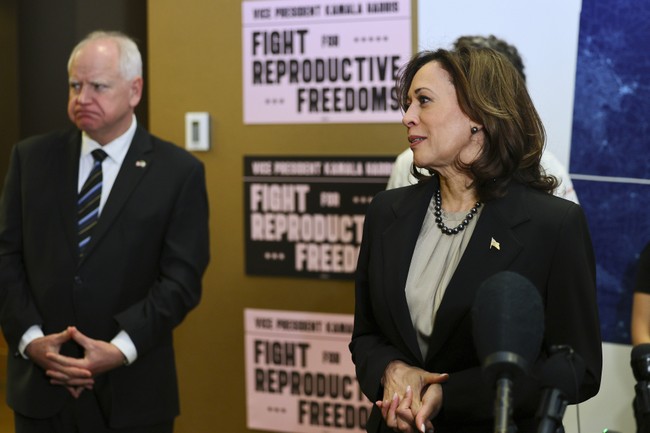
CNN Analyst Agrees: Kamala 'Incredibly Weak' to Bring Chaperone to CNN Interview
Favicon 
hotair.com

CNN Analyst Agrees: Kamala 'Incredibly Weak' to Bring Chaperone to CNN Interview

CNN Analyst Agrees: Kamala 'Incredibly Weak' to Bring Chaperone to CNN Interview
Like
Comment
Share
Science Explorer
Science Explorer
2 yrs

Vegetarian Dinosaurs Were Constantly Losing And Replacing Teeth To Tackle Prehistoric Plants
Favicon 
www.iflscience.com

Vegetarian Dinosaurs Were Constantly Losing And Replacing Teeth To Tackle Prehistoric Plants

If a Cretaceous tooth fairy existed, they were very busy.
Like
Comment
Share
Science Explorer
Science Explorer
2 yrs

These Mysterious Monitor Lizards Don't Need Ears To Look Badass
Favicon 
www.iflscience.com

These Mysterious Monitor Lizards Don't Need Ears To Look Badass

Found in the wild only in Borneo, these earless monitor lizards are said to be the "Holy Grail" of herpetology.
Like
Comment
Share
NewsBusters Feed
NewsBusters Feed
2 yrs

Robby Starbuck on Fox Biz: How He Made Corporate DEI Programs 'Fall Like Dominoes'
Favicon 
www.newsbusters.org

Robby Starbuck on Fox Biz: How He Made Corporate DEI Programs 'Fall Like Dominoes'

Political commentator and podcast host Robby Starbuck let Fox Business viewers in on how he has successfully pushed company after company to abandon diversity, equity and inclusion initiatives (DEI). Starbuck appeared on Fox Business’s Varney and Co with host Stuart Varney the day after Lowe’s became the latest company to surrender its DEI initiatives. “We looked at this from a new vantage point. We looked at all the companies across the American landscape and said 'Which companies depend on the conservative consumer and let’s hold them accountable for what their values are,'” Starbuck said on Tuesday. “If they're proud of [their values], they'll stand by them and if they’re not, they'll prove to be exactly what we thought they were, which is a house of cards.” He added,  “You just need somebody to push the cards and soon the companies will fall like dominoes.” Starbuck told Varney that he reached out to Lowe’s executives last week informing them that he was going to go after them, but that they capitulated within days. Starbuck explained in detail in an Aug. 26 X post that Lowe’s had committed to serious changes in its response email. According to the email, Lowe’s committed to stop providing data to the radical LGBTQ+ pressure group the Human Rights Campaign (HRC), cease funding pride events and to combine its segregated employee resource groups. Starbuck had previously accused Lowe’s of segregating employee groups by race and sexual orientation. This follows several recent successful anti-DEI campaigns against Tractor Supply, John Deere, Harley-Davidson and Jack Daniels's parent company Brown-Furman, also led by Starbuck. Big news: I messaged @Lowes executives last week to let them know that I planned to expose their woke policies. This morning I woke up to an email where they preemptively made big changes. Here are the changes: • Ending participation in the @HRC’s woke Corporate Equality Index… pic.twitter.com/qOUr2JLGV7 — Robby Starbuck (@robbystarbuck) August 26, 2024 During his interview with Varney, Starbuck blasted the HRC’s rating system for corporations called the Corporate Equality Index (CEI). He described The CEI, as a “[S]ocial credit scoring system, which essentially is a far-left Trojan horse.” The rating system scores companies according to a set of radical demands including fully embracing transgenderism, allowing men in women’s bathrooms and offering “healthcare coverage for medically necessary transition-related care.” Starbuck did not mince words in his sharp condemnation of DEI. He referenced his family fleeing Communism in Cuba suggesting that allowing DEI initiatives to infect every corporation would ultimately bring about similar leftist domination.  “Ideological capture is the point of DEI programs. Its a Trojan horse for left-wing policy. Equity in itself was a Marxist concept,” Starbuck explained. He later added that “if you can ideologically control these companies, it's just as good as being able to control them in total for the state. So politicians can control it without the PR hit of coming out and outright saying we're communist. They would much rather do that.”  Conservatives are under attack! Contact ABC News (818) 460-7477, CBS News (212) 975-3247 and NBC News (212) 664-6192 and demand they report on the dangers of leftist DEI ideology infecting corporate America. 
Like
Comment
Share
The Blaze Media Feed
2 yrs

All-male illegal immigrant shelter opens near Christian school, prompting concerns about children's safety
Favicon 
www.theblaze.com

All-male illegal immigrant shelter opens near Christian school, prompting concerns about children's safety

In April, New York City opened an all-male illegal immigrant shelter approximately 800 feet away from a private Christian school in Brooklyn, sparking concerns from local residents about the children's safety.The Independent Women's Forum spoke with Jeffrey Reed, the principal of City Life Academy, and Irina Edelstein, a mother of three children who attend the school.'Anytime somebody makes a decision like that in the dark, it's rarely the correct decision to make.'Reed and Edelstein explained that the city failed to provide them with adequate notice that the 400-bed illegal immigrant shelter would be opening just steps away from the K-12 school. Both expressed concerns about the safety of the children attending the classical Christian school and the secretive way city officials forged ahead with the plan without seeking much input from locals.Edelstein, a legal immigrant from the former Soviet Union, told IW Features that she learned about the soon-to-be shelter when a resident handed her an informational flyer while she was picking up her children from City Life Academy. Reed noted that he did not discover the city's plans for the shelter until it was already nearly a year in the making. Edelstein said the city opened the shelter "without notifying the school at all.""We came back from spring break, the shelter was fully operated," she explained."Many of these people who are here legally, they will make a life for themselves, they will be positive, good contributors for this country," Edelstein stated. "However, there is a difference between immigration and invasion." Reed said the city did not seek community input because officials "knew there would be pushback.""They knew if they had gone through the correct channels or the proper channels that [it] probably never would've opened," he added. "Anytime somebody makes a decision like that in the dark, it's rarely the correct decision to make."The school has implemented several safety measures to protect students, including video surveillance and a "system of dads" or "Dad Days," Reed told IW Features. "I've asked them [parents], 'Can you just come out here while school's going on and just keep an eye down the street?' And what happens is if we do see somebody, just the dad standing there causes the other people to just cross the street and avoid us," Reed said, referring to Dad Days.Andrea Mew, IWF features manager, told the Daily Caller News Foundation, "Brooklyn sits thousands of miles away from the southern border, and yet, mothers like Irina have been blindsided by an unprecedented border crisis in their own backyards.""After Irina showed us the fallout of migrant shelters opening within a thousand feet of her children's elementary school and explained the utter lack of transparency from city leaders, we knew it was of utmost importance to document the adverse impacts on her community," Mew added.The New York City Mayor's Office of Migrant Affairs did not respond to a request for comment from the DCNF.Like Blaze News? Bypass the censors, sign up for our newsletters, and get stories like this direct to your inbox. Sign up here!
Like
Comment
Share
Showing 14516 out of 56670
  • 14512
  • 14513
  • 14514
  • 14515
  • 14516
  • 14517
  • 14518
  • 14519
  • 14520
  • 14521
  • 14522
  • 14523
  • 14524
  • 14525
  • 14526
  • 14527
  • 14528
  • 14529
  • 14530
  • 14531

Edit Offer

Add tier


Select an image
Delete your tier
Are you sure you want to delete this tier?

Reviews

In order to sell your content and posts, start by creating a few packages. Monetization

Pay By Wallet

Payment Alert

You are about to purchase the items, do you want to proceed?

Request a Refund