YubNub Social YubNub Social
    Advanced Search
  • Login

  • Night mode
  • © 2026 YubNub Social
    About • Directory • Contact Us • Privacy Policy • Terms of Use • Android • Apple iOS • Get Our App

    Select Language

  • English
Install our *FREE* WEB APP! (PWA)
Night mode
Community
News Feed (Home) Popular Posts Events Blog Market Forum
Media
Headline News VidWatch Game Zone Top PodCasts
Explore
Explore Jobs Offers
© 2026 YubNub Social
  • English
About • Directory • Contact Us • Privacy Policy • Terms of Use • Android • Apple iOS • Get Our App

Discover posts

Posts

Users

Pages

Group

Blog

Market

Events

Games

Forum

Jobs

Daily Caller Feed
Daily Caller Feed
2 yrs

‘Drumbeat Is Growing’: CNN Panel Warns Longer Harris, Walz Duck Interviews, ‘The More Scared They Look’
Favicon 
dailycaller.com

‘Drumbeat Is Growing’: CNN Panel Warns Longer Harris, Walz Duck Interviews, ‘The More Scared They Look’

'A drumbeat is growing'
Like
Comment
Share
SciFi and Fantasy
SciFi and Fantasy  
2 yrs

The Uglies Movie Is Real, and There’s a Trailer to Prove It
Favicon 
reactormag.com

The Uglies Movie Is Real, and There’s a Trailer to Prove It

News Uglies The Uglies Movie Is Real, and There’s a Trailer to Prove It Pretty is as pretty does By Molly Templeton | Published on August 8, 2024 Screenshot: Netflix Comment 0 Share New Share Screenshot: Netflix Four years ago, news broke that Netflix planned to release a film adaptation of Uglies, Scott Westerfeld’s 2005 (!) novel about a weird future in which kids are given surgery to become flawlessly beautiful when they turn 16. Naturally—this was early in the 2000s YA dystopia boom!—there is more to this perfection-obsessed situation, and most of it isn’t good. Uglies predates The Hunger Games, The Maze Runner, and many other novels and series that became, to some degree, household names. It always seemed a little weird that it didn’t get a big splashy adaptation, too. And now it has one—an adaptation, anyway. Big and splashy are not necessarily words that come to mind while watching the first trailer, which spells out far too much about the story. We are no longer in the 2000s, but this trailer unfortunately looks like we are. The effects used to create the Pretties’ drastically “perfect” faces make them look like weird dolls. The special effects overall are unconvincing (though it is fun to finally see these hoverboards on screen). And why is Laverne Cox talking like that? Uglies has a good story and lot of pointed things to say about appearances and realities, and different ways to live, and freedom. Whether this adaptation can live up to any of that remains to be seen. (Also, using an Animal Collective song here is so random.) Netflix offers only a very brief synopsis: “In a futuristic world that imposes a cosmetic surgery at 16, Tally is eager for her turn to join the rest of society. But when a friend runs away, Tally embarks on a journey to save her that upends everything she thought she wanted.” Along with Joey King, who executive produced the film and stars as Tally, Uglies stars Brianne Tju, Keith Powers, and Chase Stokes. Uglies comes from writer-director McG (The Babysitter, Charlie’s Angels). It has the lightly ominous premiere date of Friday, September 13th.[end-mark] The post The <i>Uglies</i> Movie Is Real, and There’s a Trailer to Prove It appeared first on Reactor.
Like
Comment
Share
SciFi and Fantasy
SciFi and Fantasy  
2 yrs

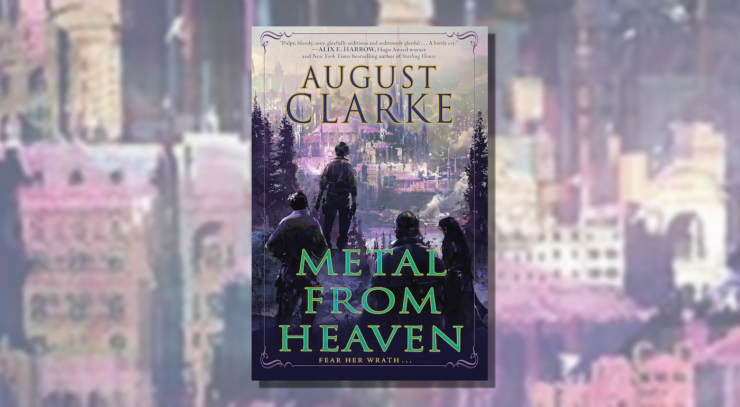
Read an Excerpt From august clarke’s Metal from Heaven
Favicon 
reactormag.com

Read an Excerpt From august clarke’s Metal from Heaven

Excerpts Fantasy Read an Excerpt From august clarke’s Metal from Heaven A bloody lesbian revenge tale and political fantasy set in a glittering world transformed by industrial change—and simmering class warfare. By august clarke | Published on August 8, 2024 Comment 0 Share New Share We’re thrilled to share an excerpt from august clarke’s Metal from Heaven, a caustic, dizzying eco-fantasy that addresses labor politics, corporate greed, and the relentless grind of capitalism, while also embodying a visceral lesbian revenge quest against the people and institutions who control and oppress the helpless—publishing with Erewhon Books on October 22nd. He who controls ichorite controls the world. A malleable metal more durable than steel, ichorite is a toxic natural resource fueling national growth, and ambitious industrialist Yann Chauncey helms production of this miraculous ore. Working his foundry is an underclass of destitute workers, struggling to get better wages and proper medical treatment for those exposed to ichorite’s debilitating effects since birth.One of those luster-touched victims, the child worker Marney Honeycutt, is picketing with her family and best friend when a bloody tragedy unfolds. Chauncey’s strikebreakers open fire.Only Marney survives.A decade later, as Yann Chauncey searches for a suitable political marriage for his ward, Marney sees the perfect opportunity for revenge. With the help of radical bandits and their stolen wealth, she must masquerade as an aristocrat to win over the calculating Gossamer Chauncey and kill the man who slaughtered her family and friends. But she is not the only suitor after Lady Gossamer’s hand, leading her to play twisted elitist games of intrigue. And Marney’s luster-touched connection to the mysterious resource and its foundry might put her in grave danger—or save her from it. An introduction to the excerpt from author august clarke: Marney Honeycutt’s whole family has just died outside the walls of the ichorite factory they worked themselves to the bone for, day in and day out. Demanding better conditions, the owner of this factory, Yann Industry, ordered strikebreakers to kill everyone and make an example. Only Marney, young, lost, and lustertouched, able to melt and shape the magical metal ichorite, has survived. As chapter two begins, she has been on the run, trying to survive within the confines of Ignavia City, but thinks it may be time to get out of town. Making her way to Flipcross Station, she’s looking to hop a train bound for anywhere but here… One thousand years ago, Flipcross Station was an imperial Bellonan forum. Presently it was a slab of marble and sleet. Few people milling about this hour. Trash dusted the gilded palm-creased floors, and the air was sourcelessly breezy, lit by gas lamps that flickered like revenants. Knuckled columns dangled lacquered blackboards where departure times were marked in chalk. I could read numbers, but phrases are harder. I picked the platform that’d leave soonest with little care to its promised end. It was at the crown of a flight of stairs. I climbed them. The stairs had iridescent ichorite handrails that I could not suffer to touch. I walked in the middle and I kept my hands to myself. I chewed my tongue. At the top of the stairs, the floor stretched to a trench that held the waiting train. It was huge and wheezing. It looked like rhinoceros beetles. I saw faces in the windows and felt a lunging horror that the train would leave without me. All of my bones chattered. I stumbled through the stragglers and up the little steps, and the warmth hit me, and I collapsed. I hit the floor. The amber light was thick with pine resin and varnish. Molded mahogany ceilings and lush brocade curtains and brass hooks affixed with ichorite studs, from which dangled satchels, rolled over me, and the backs of leather booths, the edges of skirts, a red rug that scraped my jaw as somebody lugged me upright. My arm was in a fist. I thought, enforcer. I sought my knife in my waistband before I blinked and saw properly the conductor, a broad and young Veltuni boy. His lip ring glinted. “Nasty spill,” he said. “Are you alright?” On my breath’s edge I said, “Yessir.” “Do you have a ticket?” Lying came so quick to you. You would’ve told him a story and saved me. “I don’t,” I said. He adjusted his grip. With dripping kindness, he told me, “If you don’t have a ticket, you cannot ride this train.” Buy the Book Metal from Heaven august clarke Buy Book Metal from Heaven august clarke Buy this book from: AmazonBarnes and NobleiBooksIndieBoundTarget I saw every vein and sun fleck on this boy’s face and divined in them that he was serious, that with ease he would guide me down the stairs and abandon me on the platform to wither. Futures unfurled in my head. I saw myself starve on the platform. I saw myself caught and killed. He was already forgetting my face. I could thrash and cut at him, but he would hail guards, and I had no saving charm nor rhetoric. I held my tongue. “Young ma’am,” he prompted. He took a step toward the door and gave my arm a tug, like he’d leashed me. I dug in my heel. “Fare,” said a stranger. Molasses voice. A hand emerged from behind a leather booth and pinched between two long sharp nails was a crisp and gleaming bill. “For the girl.” The conductor let out a sound. He released me, and with a bashful glance used that hand to collect the offered cash. He flinched as he took it, but thanked the stranger curtly, and turned back to me looking wan. “Enjoy your trip,” he said. Then he whisked himself down the carriage and was gone through a latched metal door. There was an open booth diagonal to the one that housed my savior. I got myself there. The leather felt hot to the touch. There must be some heating apparatus beneath the cushion, and when I put my hands down the heat seeped up between my bones and revived the blood there, made it flow again. I thawed and regained needles of feeling. A sob bubbled but I mashed it. I could not risk making a fuss. Dawn spilled through the window, red and vital, and I mouthed the words to the bleed. In my mind, I arranged wheat spikes on a square table. On either side of me, my sisters daubed their eyelids with morning paint and understood what I said; they were adults and had studied Tull scripts, they understood the necessity of our work and dutifully refused to let me in on the secret. Still, we knelt together. We folded our hands over the table’s edge and wriggled our fingertips. The idol of the Torn Child remained motionless, placated by our rigor and precision. I drifted in and out. Outside, Ignavia City fell away from me. Dense conifers blurred into a shivering whirr of color, unbroken by streets or tall buildings. Executed criminals dangled shirtless from their ankles occasionally, tattoos sprawling, but they thinned out and vanished the further we got. I felt the numbness where my horror at the sight of them should be. I had no idea where we were going. I imagined some snowcapped lodge in Montrose Barony or a stone fruit orchard in Glitslough. Another country, maybe. Hallowed Cisra or chalky hungry Royston. The swamps of ancient Tasmudan, where everyone was rich, and nobody was allowed to leave. The Drustlands. You’d told me once you’d never go back. I felt a shock of anger that you’d been robbed the chance to change your mind. The train sound was good on my nerves. I liked the engine’s grind and purr. It occurred to me that this was the longest I’d gone since I could recall without a shift at the foundry. I’d never been left idle. Too much room for wandering thought. The mechanized constancy felt like home and I sank into the vibration, imagined the fast-churning marriage of gears that propelled the train forward, the slag burning in the furnace, the exhaust fumes twirling toward the sky. I had some vague sense that the rails beneath this train were cast ichorite, as with the bolts that held the windows and the doors in frame, but I pushed that away. I had to plan. When I left this train, I needed to find a Tull Shrine and plead sanctuary long enough to scrub myself clean and orient myself to the new air. Then I’d find work and throw myself into it. Of course, I could commit myself to a mill, I’d done factory work all my life, but there were other options that might take me. I could become a miner. I could serve some farmer, a proper Tullian vocation, pick fruit or drive livestock, or I could apprentice myself to a cart driver, join a company of sailors. I could learn some trade. I’m good with my hands. I thought to myself, I have survived every fit I’ve suffered. I should have endured life at Yann Chauncey Ichorite Foundry without complaint. It would have spared my family the sympathy that’d spurred their deaths if I had just shut up. The magnitude of what I’d done dangled over me. I felt its breath on my neck. I stared out the window. I let my eyes go soft. A warm sweet smell brought me back. A fruit tart had appeared on the cushion beside me. Hot dark cherries and azurine marmalade glimmering in a golden crust. My attention snapped toward the aisle but whomever had given it was gone. My gut twisted. I’m meticulous except where feeling good is concerned. I gathered the tart in my hands and drank in the smell and wolfed it in one swallow, sucked my fingers clean. Rich and bright and soursweet. It thawed something in me. Heat bloomed in my diaphragm and at once I was crying and I couldn’t do anything about it. Tears dripped off my chin. I blinked until my eyes weren’t blurry and I looked at my hands, shimmery with butter, then at the cushion where the tart had been left. There was a note scrawled on a ticket stub. I picked it up, dully sorry for how my thumbs smeared on the paper. It’d been written with a quick, light hand. I could scarcely read it. I held it to my nose and sounded the letters aloud. Chewed over sounds for longer than it should’ve took, strung them together, tried to make words from the pieces. I stumbled with a vowel, made it too small and properly round, then gave up and let it hang low in my mouth and then understanding struck me. I read the whole note to myself with dire certainty: KEEP TO THE WINDOW. YOU WILL BE JUST FINE. Gunshots blasted across from me. I dropped the note and skittered back, flattened myself against the narrow plate windowsill. I seized my knife from my waistband and clutched it beside my thigh. My heart beat my breastbone, my pulse banged my teeth. The train screamed down the rails with impossible speed, there was nowhere to go, surely if I jumped, I’d splatter. My knife squirmed against my palm. I squeezed it harder. The edges of my vision smeared pinkish. I glanced around without moving my head. A woman stood diagonally from me. Big frame in black suede, brimmed hat tipped low so that just her red mouth showed. She held a rifle in her bejeweled magician’s hands. I remembered her hands. She’d given the fare that saved me. She was not standing alone. A short slim bald woman stood at the car’s far end, revolver in one hand, open satchel in the other. She walked down the aisle toward my savior and me. As she passed, she whistled, and stricken well-to-dos in seersucker suits dropped their wallets and their watches in the bag. It was quick, compulsive, like their valuables were hot to the touch. I saw a man shiver as he surrendered his golden rings and prayer pearls, but he didn’t protest, didn’t so much as blink. Nobody breathed. Hands floated beside stretched faces, palms empty, helplessness fully displayed. They acted like this woman was a revenant. Surely, she would suffer no lip. My savior grinned. Her teeth were long and yellow. Another gunshot sounded, distant, the carriage behind ours. I wondered if it was another warning shot. The big woman plucked a slug from thin air, rolled her wrist, made a show of loading her gun. She curved her mouth. “Good morning! What educated stock we’ve got. Good little pigeons give and live to see tomorrow.” Her molasses voice echoed off the walls. She could’ve been an opera diva with those lungs. Slowly, with fluid ease, she dipped her rifle over the booth before her and kissed its muzzle to a weeping woman’s head. The metal glinted in the woman’s ringlets. I felt a phantom chill on my scalp. The short slim bald woman whistled past me. I didn’t dare move but watched her, tried to memorize her. Furrowed brow over hooded eyes, gaunt cheeks, thin pierced mouth pinched around her ringing note. She didn’t look at me, stopped beside my savior. They stood side by side. The weeping woman covered her face with one gloved hand. She was Stellarine, wore a dozen pearl bracelets that clacked when her shoulders heaved. Then she went still. I feared for her mortality. My savior flicked her tongue between her teeth. Her big red grin flipped. Something was wrong. The latched metal door swung wide, and snow gusted shrilly inwards as an enforcer jumped the gap. His shoulders filled the threshold. He snapped his weapon shut and took aim at the bandits, barked an order that nobody heard. I tore my eyes off the enforcer to watch my savior die, but caught the weeping woman, whose fingers had suddenly splayed. Between her knuckles her eyes were dry and burning. A gunshot smacked and my ears whined, and I saw the pistol hooked in the weeping woman’s free hand, saw smoke drift from its barrel. She brought it to her lips and blew. The enforcer howled as he fell. The spell broke. Passengers screamed and lurched and hurled themselves against the windows or dove for the thrumming floor. A man scrambled from his booth and threw himself across the gap, but the train lurched, his ankle twisted, he slipped and was caught just before gravity stole him by a second enforcer, who tossed him down in the second car, strode across him as she advanced on the bandits, but she’d lowered her weapon to catch him and had no time to ready it again. The shot cracked. Her shoulder opened, her maroon jacket soaked black, she collapsed against the wall and panted. It was like the shot had nailed her in place. She writhed without falling and her good arm dangled limply. Her fingers loosed and her gun clattered to the floor. She spat blood at the bandits. She said, “There are more of us coming, Rancid. You aren’t getting off this train.” The short slim bald woman went rigid. She stopped whistling. Her eyes fixed. “Tita,” she said. The far latched metal door swung. It banged against its frame, then rattled inwards, knocked the wood paneled wall where the shot enforcer leaned. The next carriage’s door had been propped open. I could see inside it. There was a woman on the ground. Edna. She could not have been Edna but she was Edna, the dead woman was Edna. I saw her yellow hair. My bones vibrated under my skin. I squeezed my knife and the ichorite warmed and swelled between my fingers, that citric zing coated my tongue. It cloyed down my throat. My gums and lips felt puffy. I put my boots on the booth and crouched, fighting some impossible animal desire to scurry up the wall. Blood foamed in my temples. I was going to bust out of my skin. The three bandits sprang apart from each other. The short slim bald woman sprinted across the carriage, cleared the first enforcer’s body with one stride, and booked over the gap into the second carriage. The weeping woman sprang after her. The big woman spat something in a language I didn’t recognize and whirled around, seized the near door’s painted latch. She heaved and the metal squealed but didn’t budge. She snarled, harsh and dripping sweet, “Open up, Etule! Open this door or widow your wife! Don’t cross the Choir! We’ve taken care of you!” The weeping woman shouted, “That’s the fork, the bridge’s nearing—Uthste, she’s dead, you have to get up—” Uthste gathered dead Tita to her chest. She cradled her neck like a baby’s.  The big woman slammed her fist against the slim frosted window. She called, “Etule zel Alchumena! Open the fucking door!” The bleeding enforcer laughed. The weeping woman took her hands off Uthste’s shoulders. She faced the second carriage’s far door. Aimed from her hip as it opened. I crawled to the booth’s edge and slipped into the aisle. Quick little steps. I trod so lightly that even the train couldn’t feel me as I crossed it, and I made for the woman who’d saved me, no thoughts in my whirring rattling head. I put my twitching knife back in my waistband and held up my empty hands. My blood was froth and brine and spun sugar. My tongue was dry, it hurt when I spoke. Soft I said, “Pardon, ma’am.” She paid me no mind. She pounded harder. Her great shoulders worked under her black suede coat. Louder I said, “Pardon me, ma’am.” She slammed her fist against the door and held it still, like she’d pinned a fly. She turned her head. She glowered down at me. It felt like sunlight through a curved lens on paper. If there was anything left in me to burn it would’ve caught. I averted my eyes and bowed my head and made my movements as obvious as I could muster. I tucked myself beside the metal door and I flattened my hands over the ichorite bolts in the hinges. I mouthed, prayed, loose loose loose loose loose. My eyes buzzed beneath the lids. I saw iridescent double. My gums were throbbing and I wondered vaguely if they’d surrender my teeth. The cast ichorite got pinker. It yielded to my touch. The hinges sloughed off the wall that’d held them and oozed between my fingers, dripped thickly like honey or tar, and the metal puddles on the floor stiffened into awful little drizzle coins. In my head I huffed furnace fumes and felt my hammer hand go raw. I heard the hammer slam. I felt it pull in my back. The hingeless door went slack in its frame. With a scrape, it fell. It clattered into the bright cold and crunched under the train’s wheels. The vibration felt sick in my shins. My savior stared at me in a new way. Hatred melted down to bewilderment. Gunshot in the second carriage. She snapped out of it. The big woman crossed the gap, kicked open the opposing door in that same stride. The carriage we’d opened was the engine room. The engine driver, young Etule, looked back at us with dread. Us! The bandit stood over him. She took him by his lapels and shook him hard, then shoved him aside, took up the steering levers herself. I looked over my shoulder and moved before I comprehended. I saw the weeping woman holding the second carriage’s far door shut with the strength of her back; I saw it buck against her. I had wet ichorite in my hands. I crossed the carriage and didn’t look at the panicking passengers, I stepped over the enforcer and shouldered open the flapping door, swallowed a sour lump of uncertainty about the gap and jumped it. Ache flowered up my calves as I landed. It was a grounding sting. I dashed past limp Edna in the bandit’s arms and I sidled up to the weeping woman, who watched me coming and did nothing to stop me, and I smeared my gooey hand down the seam of the door and the frame. I felt delirious. My mouth itched. I squeezed my eyes shut so tightly and I thought, solder solder solder solder solder, and opened to see the ichorite slime drip off my fingers and slither into place. It glued the door in crazy strings, and the heaving subdued, rendered useless. My hand tingled. It was going numb. The weeping woman said, “What are you doing?” I swayed in my boots. I suddenly felt extremely unwell. I shouldn’t be upright. I scrubbed my hand on my thigh, but the ichorite feeling wouldn’t come off. I imagined the enforcer still battering the door was Baird and that he was here to bottle my blood. I imagined him with a monstrous face, a bestial face. I imagined him with a snout and horns. I tried to look the weeping woman in the eye, but her face swam, her features blurred, the whole of her shimmered lusterlike. Her prayer beads sizzled. “Take me with you,” I said. “I’ll be useful. Please.” The train lurched. I fell, the weeping woman caught me. She held my shoulders in her hands. The sides of her pistols pressed against the meat of my upper arms. Steel felt like nothing at all. The train was slowing down, I think. My blood rushed like it wasn’t, but I was aware of the pine trees individuating outside the frosty windows. Needles came into focus. It was so cold. I saw my breath. I rolled with sour sweat. “She’ll ride with me,” said the big woman, who emerged in the second carriage with us to the passengers’ chagrin. Someone cried nearby, someone grown. Someone whispered, Rancid, Rancid. I wanted to retch. The big woman ghosted her talons over Uthste’s scalp, and Uthste stood, held Edna in her arms like a bride. My savior then reached toward me. She smiled again, red and wide. I took her hand. I couldn’t breathe. The weeping woman holstered her weapons and slung the loot satchel over her shoulder. She stood before the sliding passenger doors and pried them apart with her hands, prayer beads clicking, held them wide to reveal ancient conifers rolling slow. Without a backwards glance at us, she stepped into the morning. Uthste followed wordlessly, Edna nodding in her arms, and then my savior brought me to the carriage’s edge. The wind scraped my face. She pushed me square in the back. My boots touched nothing and briefly, I flew. Excerpted from Metal from Heaven, copyright © 2024 by august clarke. The post Read an Excerpt From august clarke’s <i>Metal from Heaven</i> appeared first on Reactor.
Like
Comment
Share
Hot Air Feed
Hot Air Feed
2 yrs

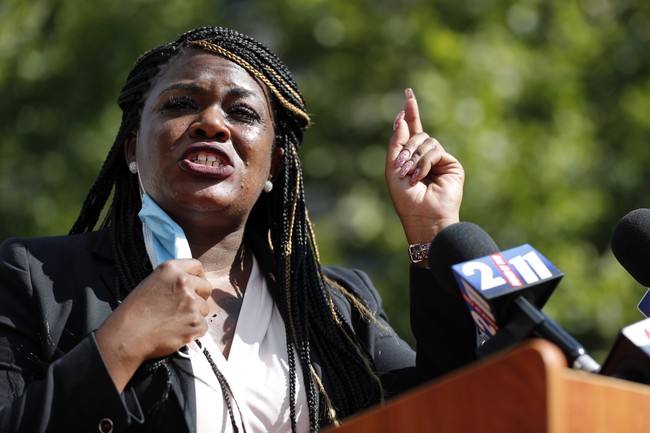
Cori Bush Vows Revenge Against AIPAC
Favicon 
hotair.com

Cori Bush Vows Revenge Against AIPAC

Cori Bush Vows Revenge Against AIPAC
Like
Comment
Share
Hot Air Feed
Hot Air Feed
2 yrs

The Silence of the Kams, or Where's the Beef -- And the Press?
Favicon 
hotair.com

The Silence of the Kams, or Where's the Beef -- And the Press?

The Silence of the Kams, or Where's the Beef -- And the Press?
Like
Comment
Share
NewsBusters Feed
NewsBusters Feed
2 yrs

Former Trump Advisor Schools Acosta Over Walz Military Embellishments
Favicon 
www.newsbusters.org

Former Trump Advisor Schools Acosta Over Walz Military Embellishments

On Thursday, CNN Newsroom with Jim Acosta hosted former Special Assistant to President Trump Marc Lotter. During the interview, Acosta attacked Republicans for scrutinizing Walz’s military embellishments and wondering “why you would even want to have this conversation.” Acosta began the segment by mentioning that J.D. Vance has been “going after” Walz’s military record. He wondered if that was a “good idea” for Vance since “Donald Trump avoided the draft in Vietnam.” Acosta also added that Trump claimed to have had “bone spurs,” which was why he didn’t go to Vietnam.     Lotter responded by making Acosta aware that nobody was “questioning Tim Walz’s service to our country,” but rather is something that “we thank him for.” He stated that the real question is whether or not Walz has “embellished his record” since leaving the military: I think the question is, has he embellished his record, whether it's whether he actually carried a weapon in an area of war, whether he was a command master sergeant or retired as a master sergeant or as even a release that came out prior to his retiring, who admitted. He said, “I want to go to Iraq with my team if it's called up” and then he quit when those men and women needed him most when they got called to service in Iraq, he retired. Of course, Acosta jumped in to defend Walz, insisting, “You know that he made it clear he was going to run for Congress that year and he started the process of getting out of the National Guard.” Further on in the interview, Lotter reiterated to Acosta that nobody is questioning whether or not Walz served, but it’s rather a “question of did you inflate your record or did you inflate your accomplishments after the fact for political gain.” He professed that this is a “legitimate line of questioning for people to ask themselves.” Unsurprisingly, Acosta wanted to bash Trump a little more as he said “There's also the issue, Marc, as you know, I mean, Donald Trump once described the veterans and soldiers who had died in combat as suckers and losers,” a theory that he claimed has “been reported and established.” Lotter responded to Acosta, who was still unsure of “why you would even want to have this conversation,” by reminding him that “there have been dozens of people, I think at least 18 people who have debunked that theory. They've said that never happened.” Click "Expand" to view the transcript: CNN Newsroom with Jim Acosta 8/8/2024 10:12 PM ET JIM ACOSTA: Yesterday, we heard JD Vance going after Tim Walz's military record. I mean, you worked in politics for a long time, worked in communications, worked as a press secretary for a long time. Is that a good idea for JD Vance to go after Tim Walz's military record when Donald Trump avoided the draft in Vietnam, he claimed to have bone spurs, the daughter of the doctor who said that Donald Trump had bone spurs, told the New York Times, once that he gave that he gave diagnosis to help Donald Trump avoid service in Vietnam. I mean, is this a fight that you really want to have? MARC LOTTER: Well, I think there's two things that-- two different things here. Number one, I don't think anyone is questioning Tim Walz’s service to our country. He served 24 years and we thank him for doing that. I think the question is, has he embellished his record whether it's whether he actually carried a weapon in an area of war, whether he was a command master sergeant or retired as a master sergeant or as even a release that came out prior to his retiring, who admitted. He said, “I want to go to Iraq with my team if it's called up” and then he quit when those men and women needed him most when they got called to service in Iraq, he retired and so— ACOSTA: But Marc, you know that but you know that he made it clear he was going to run for Congress that year and he started the process of getting out of the National Guard. … LOTTER: But this isn't about whether you served or not because no one questions whether they're Tim Walz served. It's a question of did you inflate your record or did you inflate your accomplishments after the fact for political gain? And I think that's a very legitimate line of questioning for people to ask themselves. ACOSTA: There's also the issue, Marc, as you know, I mean, Donald Trump once described the veterans and soldiers who had died in combat as suckers and losers. That's been reported and established. Again, I— it just escapes me why you would even want to have this conversation. LOTTER: Well, everyone else, there have been dozens of people I think at least 18 people who have debunked that theory. They've said that never happened.
Like
Comment
Share
The Blaze Media Feed
2 yrs

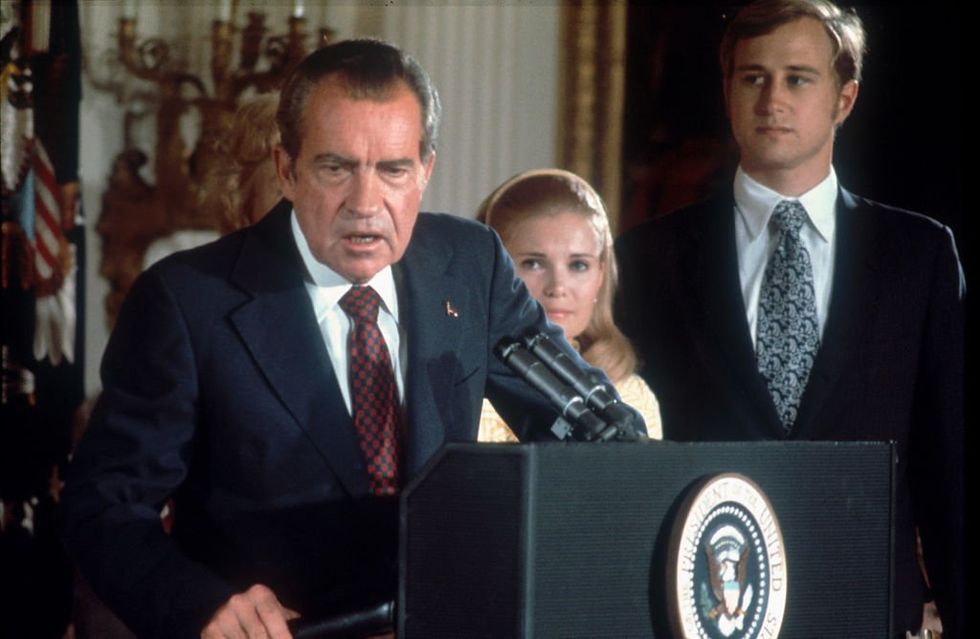
50 years of fraudulent political journalism
Favicon 
www.theblaze.com

50 years of fraudulent political journalism

On August 8, 1974, Richard Nixon announced his resignation as our president, the only such event in American history. While the Watergate scandal is widely recognized as journalistically impelled, few realize that the sensational reporting was not only partisan but also fraudulent. After the arrest of five burglars on the morning of June 17, 1972, the Washington Post quickly learned the true target of the burglary, which had nothing to do with the 1972 election, contrary to what the Post has claimed for over 50 years. Fifty years after Nixon’s departure from office, it’s obvious that our divided country is the bitter harvest of fraudulent Watergate journalism. The Post consistently withheld its knowledge of two concurrent causes of the burglary. It knew about the strong likelihood of CIA involvement in pursuing its program of monitoring prostitutes and johns of interest. Young Nixon aides, using resources from the cash-rich Committee to Re-elect the President, were seeking dirt for their own blindly ambitious dossiers without oversight from the Oval Office, which remained clueless. If the Post had reported the truth, however, it would have hurt its political ally, the Democratic National Committee, where one affiliated secretary was referring out-of-town visitors to a neighboring bordello. Publishing this would have hurt Democrats and helped the hated Nixon. That morning as the burglars prepared to go to court, a Metropolitan Police Officer, Garey Bittenbender, spoke with his friend, James McCord, the CRP’s director of security and former (likely undercover) CIA agent. McCord told Bittenbender that this had been a CIA operation, which he later amplified for Bittenbender in a long interview in McCord’s jail cell. Later, McCord realized that the CIA would not admit involvement, and he thereafter denied he had made any such admission. Unknown to all the burglars except McCord, McCord's secret contractor, Lou Russell, had been lurking in the building, likely planning to enter the Watergate premises later and curate the "take" before handing it over to CRP aides. His presence explains why McCord kept tape on the locks after all the burglars had entered, even though the tape was not needed for their entrance. The Post soon learned about Russell but did not report his curious involvement. Burglary supervisor Howard Hunt was preparing that fall for what his lawyers had termed his “CIA defense.” Hunt planned to argue that this was a CIA operation, legal domestically because presidential aides approved it. His CIA diary recorded this authorization, which he claimed included White House Counsel John Dean and, seemingly by hearsay, former Attorney General John Mitchell. So this diary was key to Hunt’s CIA defense. As the January 1973 trial approached and the prosecution frantically prepared to combat Hunt’s CIA defense, two unfortunate developments torpedoed his plans. First, his diaries, which he had kept in his White House safe, were missing from the evidence the prosecution turned over to him. It was later revealed that John Dean had withheld and destroyed them. Hunt’s wife, Dorothy, to whom Hunt was greatly devoted and for whom he wished to avoid prison, also appears to have been an undercover CIA agent and thus a potential defense witness. However, as the case neared trial, Dorothy Hunt died in a plane crash over Chicago’s Midway Airport in December 1972, with $10,000 in cash on her person, mostly meant for a bug supplier, the pseudonymous Michael Stevens. Consequently, at Dean’s urging, Hunt pled guilty. In May 1973, Lou Russell, a drunkard, was telling his friends that he would write a tell-all on Watergate. “Michael Stevens” had been receiving death threats. Stevens had sold McCord bugs used in the burglary, with some still on order that would link to a CIA satellite. McCord had told Stevens the bugs were for a CIA operation, which Stevens verified with the agency. Fearing for his life due to the death threats, Stevens fled to the FBI. An unnamed FBI official, likely Mark Felt, reported this situation to Chicago Today, which published sensational pieces on May 12 and 14, 1973, ignored by the Washington Post. On the night of May 16-17, 1973, “Deep Throat,” now known to be the FBI’s No. 2, Mark Felt, met with reporter Bob Woodward. Agitated, Felt told Woodward, “Everyone’s life is in danger!” He named the CIA as being worried that if its participation in Watergate were uncovered, its broader program would be exposed, with serious consequences. A day after this frenetic tableau, Russell suffered a serious heart attack and soon died, claiming someone had put a poison pill in his heart medication. The CIA had long practiced “aspirin roulette” to exterminate targets. Two months later, RNC Chairman George H.W. Bush announced that he would hold a press conference to reveal a long history of CIA domestic wiretapping, through a longtime associate of Russell’s, John Leon. Shortly before the conference, Leon died of an unexpected heart attack, and Bush canceled the press conference. After a tardy production to the Senate of CIA documents, long after the conclusion of public hearings, shocked Senator Howard Baker (R-Tenn.) issued a scathing 49-page report on the CIA’s involvement in the Watergate affair, which included a CIA contractor visiting McCord’s home immediately after the burglary to burn documents connecting McCord to the agency. Another burglar, Eugenio Maritnez, was a CIA agent then on payroll. When Trump was elected, a prominent journalism school dean confidently told his students, “Don’t worry; we’ll Watergate him.” The Post’s summary and analysis of the Baker Report, which was otherwise buried in the Congressional Record in those pre-internet days, deceptively covered up the findings, essentially saying "nothing to see here." Nixon soon resigned due to a crime revealed on White House tapes. John Dean informed the White House shortly after the burglary that Mark Felt's analysis suggested the burglary was likely a CIA operation. To protect the identity of his large donor, industrialist Democrat Dwayne Andreas, Nixon called the FBI off the Mexican money trail, claiming it would interfere with a CIA operation. Although Nixon believed this was a misleading overreach, it turned out to be truthful. The money washer was Mexico City lawyer Manuel Ogarrio, a CIA asset who often laundered money for the agency. With Nixon’s resignation, the Post learned not only that journalism had the power to make or break a president but also that it could do so fraudulently. In the 50 years since it sold its honesty dishonestly, the Post’s journalism has never been challenged by the dull-normal lemmings in the partisan press. This dishonest reportage has only been amplified over the last five decades. For example, when Trump was elected, a prominent journalism school dean confidently told his students, “Don’t worry; we’ll Watergate him.” In 2016, Bob Woodward proudly told adoring pundits that he was putting 20 Post reporters on the Trump beat. When the journalism intelligentsia scratch their heads over the origins of today’s tribal divisions, they answer their own question. By asking it, they ignore that they are the cause, through inflammatory, fraudulent journalism. Donald Trump calls it, crudely but accurately, “fake news,” and millions roar their approval. Now, 50 years after Nixon’s departure from office, it’s obvious that our divided country is the bitter harvest of fraudulent Watergate journalism. The only way to begin the cure is for the offending parties to admit their wrongdoing. But we should not hold our breath.
Like
Comment
Share
The Blaze Media Feed
2 yrs

Elon Musk’s WARNING for America: ‘Tragic situation’ if things don’t change
Favicon 
www.theblaze.com

Elon Musk’s WARNING for America: ‘Tragic situation’ if things don’t change

Elon Musk may be a tech billionaire who’s trying to colonize Mars, but his political views are reminiscent of the common, hardworking American on Earth. He made that clear in a recent podcast interview with Lex Fridman, where Fridman asked Musk what the philosophy behind his endorsement of former president Donald Trump is. “People tend to take an endorsement as ‘Well, I agree with everything that person has ever done in their entire life, 100% wholeheartedly,’” Musk began. “That's not going to be true of anyone.” It’s not the only reason Musk has endorsed Trump, but he was thoroughly impressed by Trump’s immediate reaction to the attempt on his life. “Trump displayed courage under fire,” Musk told Fridman. “He’s just got shot, he’s got blood streaming down his face, and he’s fist-pumping, saying ‘Fight.’ You know, that’s impressive. You can’t feign bravery in a situation like that. Most people would have been ducking.” Musk has noticed that while Trump is “strong and courageous,” Biden “has trouble climbing a flight of stairs.” “I mean, who do you want dealing with some of the toughest people, you know, other world leaders who are pretty tough themselves?” he explained. The billionaire is also in support of Trump’s policies, telling Fridman that “we want a secure border,” “safe and clean cities,” and to “at least slow down the spending.” “We’re currently spending at a rate that is bankrupting the country. The interest payments on U.S. debt this year exceeded the entire Defense Department spending. If this continues, all of the federal government taxes will simply be paying the interest, and then you keep going down that road and you end up in the tragic situation that Argentina had back in the day,” he explained. “I think we should not take American prosperity for granted,” he continued. “We’ve got to reduce the size of government, we’ve got to reduce the spending, and we’ve got to live within our means.” Dave Rubin of “The Rubin Report” is aligned with Musk’s sentiment. “Elon Musk is still fighting the good fight, as usual,” Rubin comments. Want more from Dave Rubin?To enjoy more honest conversations, free speech, and big ideas with Dave Rubin, subscribe to BlazeTV — the largest multi-platform network of voices who love America, defend the Constitution, and live the American dream.
Like
Comment
Share
The Blaze Media Feed
2 yrs

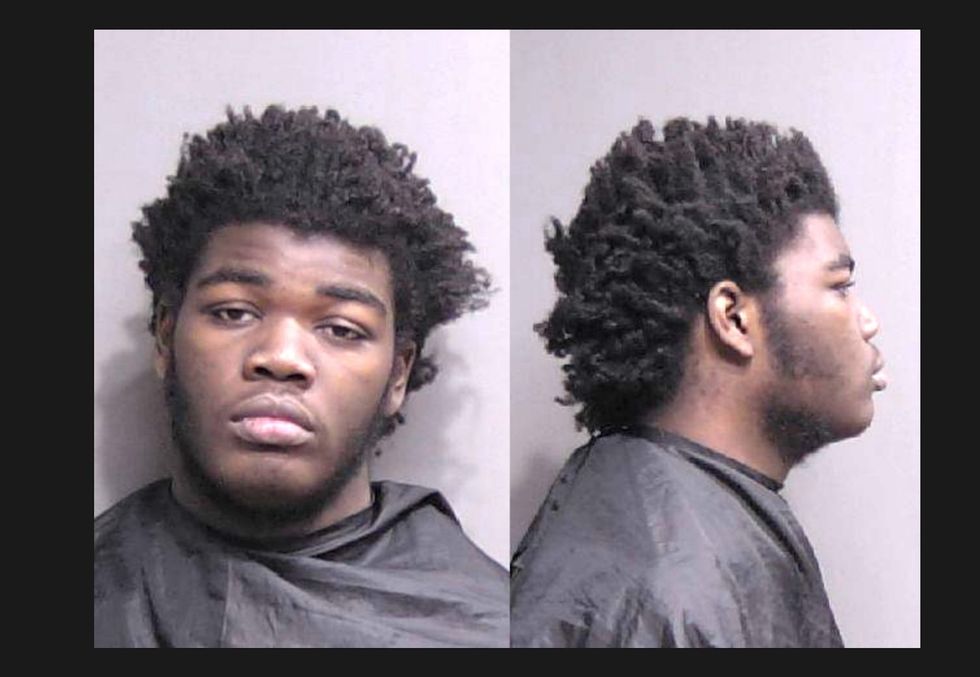
Florida teen caught on video brutally beating teacher's aide sentenced to 5 years in prison despite adoptive mother's pleas
Favicon 
www.theblaze.com

Florida teen caught on video brutally beating teacher's aide sentenced to 5 years in prison despite adoptive mother's pleas

The Florida teenager who made national headlines in 2023 for brutally beating a teacher's aide has been sentenced to five years in state prison. Brendan Depa was caught on surveillance video Feb. 21 knocking down his 57-year-old victim before brutally pummeling her on the floor as bystanders watched at Matanzas High School in Palm Coast. He was 17 years old at the time.'I beg you to let him come home with me.' Depa was sentenced Tuesday to prison despite the pleas from his adoptive mother. The victim, Joan Naydich, testified in support of Depa facing a steep sentence. “Brendan Depa’s actions that day has caused me to lose a job that I had for almost 19 years, lose my financial security, lose my health insurance,” Naydich said. The arrest report said the 270-pound, 6'6'' student punched Naydich 15 times. She suffered five broken ribs, a concussion, vision and hearing loss, and has been diagnosed with PTSD. Depa reportedly beat the woman after his Nintendo Switch was taken away, leading many online to blame the victim and excuse his actions based on his autism diagnosis. Naydich later said she never took away the teen's video game. “For all you keyboard warriors, I just want to set the record straight. I never took the Nintendo Switch from him. From anyone that's read or heard differently, I've been told this was unfortunately misinformation,” Naydich wrote. Leanne Depa, the student’s mother, argued in court that the school had disregarded her warnings about his triggers, which included noise, being told no, and being corrected in front of other people. “I knew Brendan, and I knew his triggers, and I knew his needs and his strengths, and I beg you to let him come home with me,” the mother said.Depa also will undergo 15 years of supervised probation after serving his prison term. He could have faced up to 30 years in prison for the charge. A GoFundMe campaign has raised over $140,000 for Naydich.Like Blaze News? Bypass the censors, sign up for our newsletters, and get stories like this direct to your inbox. Sign up here!
Like
Comment
Share
Gamers Realm
Gamers Realm
2 yrs

Brand new spaceship shoot ‘em up Cygni is free on Epic this week
Favicon 
www.pcgamesn.com

Brand new spaceship shoot ‘em up Cygni is free on Epic this week

Another week, another generous helping of freebies over on the Epic Games Store. It’s impossible not to appreciate some free games, and the folks at Epic keep you topped up with complimentary new titles very regularly. Right now, it’s giving out a brand new release in the form of chaotic spaceship shooter Cygni: All Guns Blazing alongside anime fighting game DNF Duel. Continue reading Brand new spaceship shoot ‘em up Cygni is free on Epic this week MORE FROM PCGAMESN: Best space games, Best single-player games, Best PC games
Like
Comment
Share
Showing 17229 out of 56670
  • 17225
  • 17226
  • 17227
  • 17228
  • 17229
  • 17230
  • 17231
  • 17232
  • 17233
  • 17234
  • 17235
  • 17236
  • 17237
  • 17238
  • 17239
  • 17240
  • 17241
  • 17242
  • 17243
  • 17244

Edit Offer

Add tier


Select an image
Delete your tier
Are you sure you want to delete this tier?

Reviews

In order to sell your content and posts, start by creating a few packages. Monetization

Pay By Wallet

Payment Alert

You are about to purchase the items, do you want to proceed?

Request a Refund