YubNub Social YubNub Social
    Advanced Search
  • Login

  • Night mode
  • © 2026 YubNub Social
    About • Directory • Contact Us • Privacy Policy • Terms of Use • Android • Apple iOS • Get Our App

    Select Language

  • English
Install our *FREE* WEB APP! (PWA)
Night mode
Community
News Feed (Home) Popular Posts Events Blog Market Forum
Media
Headline News VidWatch Game Zone Top PodCasts
Explore
Explore Jobs Offers
© 2026 YubNub Social
  • English
About • Directory • Contact Us • Privacy Policy • Terms of Use • Android • Apple iOS • Get Our App

Discover posts

Posts

Users

Pages

Group

Blog

Market

Events

Games

Forum

Jobs

Daily Caller Feed
Daily Caller Feed
2 yrs

Tom Hanks Is The Latest Celebrity To Have His Los Angeles Home Burglarized: REPORT
Favicon 
dailycaller.com

Tom Hanks Is The Latest Celebrity To Have His Los Angeles Home Burglarized: REPORT

Suspect information has not yet been released
Like
Comment
Share
Daily Caller Feed
Daily Caller Feed
2 yrs

‘KAMALA CRASH’: Trump Blames ‘Radical Left Lunatic’ Harris For ‘Massive Market Downturn’
Favicon 
dailycaller.com

‘KAMALA CRASH’: Trump Blames ‘Radical Left Lunatic’ Harris For ‘Massive Market Downturn’

'Kamala is even worse than Crooked Joe'
Like
Comment
Share
Daily Caller Feed
Daily Caller Feed
2 yrs

‘Squad’ Dem Fighting For Survival Wants To ‘Be Careful’ About Labeling Hamas As Terrorists
Favicon 
dailycaller.com

‘Squad’ Dem Fighting For Survival Wants To ‘Be Careful’ About Labeling Hamas As Terrorists

'I don’t know'
Like
Comment
Share
Daily Caller Feed
Daily Caller Feed
2 yrs

Trump, Harris Sit On Razor’s Edge With Voters In Battleground States, Poll Reveals
Favicon 
dailycaller.com

Trump, Harris Sit On Razor’s Edge With Voters In Battleground States, Poll Reveals

'Additional edges with the wider electorate'
Like
Comment
Share
Daily Caller Feed
Daily Caller Feed
2 yrs

FACT CHECK: Threads Post Falsely Claims Kamala Harris Was Born In Canada
Favicon 
checkyourfact.com

FACT CHECK: Threads Post Falsely Claims Kamala Harris Was Born In Canada

A post shared on Threads claims Vice President Kamala Harris was born in Canada.   Post by @jdkaze View on Threads   Verdict: False The claim is false. According to an August 2020 article from Politico titled “55 Things You Need To Know About Kamala Harris,” Harris was born in Oakland, California. Fact Check: Harris […]
Like
Comment
Share
Daily Caller Feed
Daily Caller Feed
2 yrs

Allegedly ‘Nonpartisan’ Climate Group Called ‘Science Moms’ Looks Like A Dem Dark Money Operation
Favicon 
dailycaller.com

Allegedly ‘Nonpartisan’ Climate Group Called ‘Science Moms’ Looks Like A Dem Dark Money Operation

'Any group with ties to Arabella Advisors is no grassroots organization'
Like
Comment
Share
The Lighter Side
The Lighter Side
2 yrs

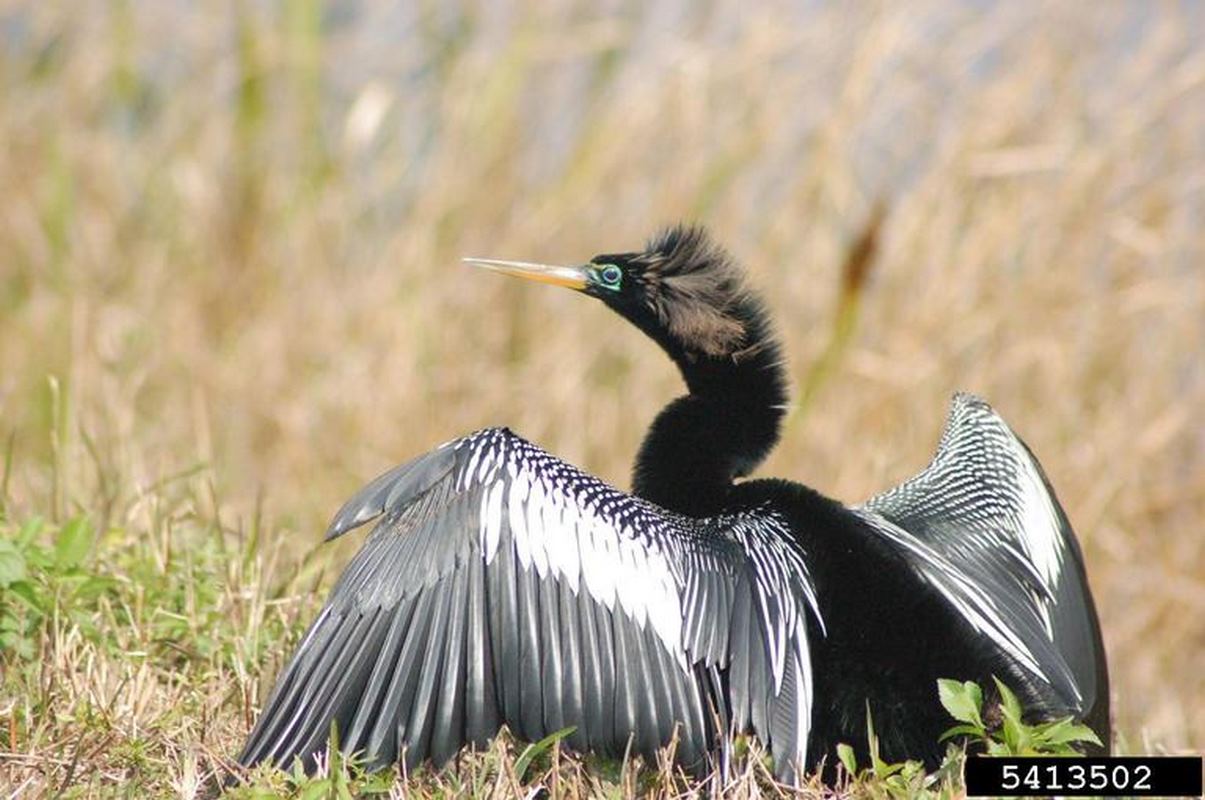
Out-of-Place ‘Devil Bird’ Wows Spectators in Maine, the First Anhinga Ever Seen in the State
Favicon 
www.goodnewsnetwork.org

Out-of-Place ‘Devil Bird’ Wows Spectators in Maine, the First Anhinga Ever Seen in the State

In winter of 2022, Maine was accorded the honor of a visit from a Stellar’s sea eagle, a truly incredible raptor with an 8-foot-wingspan that may have been diverted from its migratory path as far away as Russia. Now, it’s the turn of this strange, long-necked “devil bird,” to send the state’s birdwatching community into […] The post Out-of-Place ‘Devil Bird’ Wows Spectators in Maine, the First Anhinga Ever Seen in the State appeared first on Good News Network.
Like
Comment
Share
SciFi and Fantasy
SciFi and Fantasy  
2 yrs

Defining Our Terms: What Do We Mean by “Hard SF”?
Favicon 
reactormag.com

Defining Our Terms: What Do We Mean by “Hard SF”?

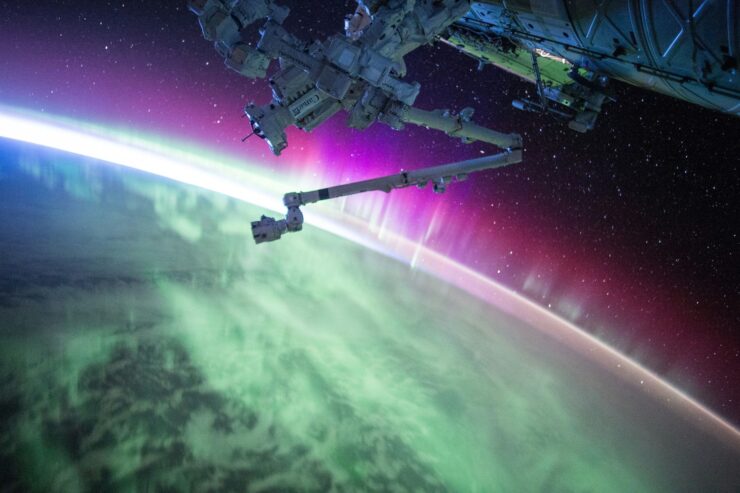
Books Hard Science Fiction Defining Our Terms: What Do We Mean by “Hard SF”? Hard SF has never been a unified subgenre. Here are five overlapping varieties of story to which the label applies… By James Davis Nicoll | Published on August 5, 2024 Credit: NASA Comment 0 Share New Share Credit: NASA One of the essays I have long been considering is a piece on that subgenre known as hard science fiction. But before I could write an essay on hard SF, I had to figure out just what is meant by hard SF. Now it may seem odd that I, someone who thinks of himself as a fan of hard SF, who could point to his shelves of books by Poul Anderson, Robert Forward, and Hal Clement as evidence, cannot, when I come down to it, come up with a canonical definition of hard SF. I recently realized that there is no such thing as a unified subgenre; rather, there are a number of things that are often considered hard SF but that don’t necessarily share all that much in common. Wikipedia puts forth a definition: “Hard science fiction is a category of science fiction characterized by concern for scientific accuracy and logic.” Interesting phrasing, that “concern”. Not “demonstration of,” or “adherence to,” but concern. Concern is nicely fuzzy. There is a lot of wiggle room in “concern.” Enough for at least five overlapping, intermingled, but sometimes separate hard science fictions. The first variety is orthogonal to the other four. It’s pure marketing, and has little to do with actual science content. Hard SF is used to denote the work of science fiction authors in a particular social circle largely but not entirely based on the US West Coast. Their books are usually at least a little bit science-ish, but really what’s being sold here is a set of overlapping conservative and libertarian political and social views. Do you like Larry Niven’s books? Well, you might like Greg Bear’s. Do you fancy Poul Anderson’s later SF novels? Consider Vernor Vinge’s. Purely marketing-based hard SF overlaps with the other varieties but does not fully contain any of them. The other four flavors of hard SF each engage with science and related activity in different ways. There is what one might call phase-diagram hard SF1, in which the well-informed author entertains the reader with stories illustrating little known or counterintuitive aspects of science as it is known at the time of writing2. The author tries their best to play fair with the reader, sticking to the known facts as best they can. Such impossible or dubious elements as are included will likely be present to facilitate getting the protagonist somewhere where they can appreciate phase equilibrium curves up close and personal… but those implausibilities won’t be the focus of the story. Not terribly distant from phase-diagram SF is the “here there be dragons” variety. This type of hard SF plays with possible science—fields lacking consensus and, in some cases, any concrete data. The stories explore what might happen if some as-yet-unsupported theory turned out to be true (or at least true as far as we know at the moment). The author is still playing fair, but the foundation of their story is conjectural and may later be shown to be impossible. Either of the above may also exemplify the sort of hard SF founded in the author’s confident misapprehension of science as known at the time of writing3. The author is trying very hard to write phase-diagram or here-there-be-dragons SF, but alas, their reach has exceeded their grasp. I have a certain fondness for this variety, partly because it facilitates snarky potshots at certain authors’ grasp of planetology, biology, or basic thermodynamics, but also because it’s possible to be educationally wrong. Understanding how and where someone erred often helps one avoid mistakes of one’s own4. Finally, there’s the sort of hard SF that embraces the superficial forms of either the phase-diagram or here-there-be-dragons type, but in which the author deliberately fudges the science. There are any number of reasons why this might seem the logical thing to do. This is my least favorite flavor, as it seems a bit dishonest, and also because authors are sometimes excessively convincing in their whimsy. It is left to others to explain why, for example, one cannot shed heat by radiating it away with a laser. Did I miss anything that gets lumped under the umbrella of hard SF5? Is there a coherent, unified taxonomy that makes sense of it all? Let me know in comments below.[end-mark] In his introduction to the 1965 Ace reprint of Hamilton’s Crashing Suns, Donald Wollheim fulminated that “today’s slide rule writers are too brainwashed to attempt” stories with “color, excitement and adventure.”To this day, I have no idea whether D.A.W. was vexed by a few specific authors or the state of the field in general. 1965 is the era of New Wave SF, hardly slide rule friendly. The lesson is that there is no lawn so large as to lack at least one person demanding other people get off it. ︎Strictly speaking, phase-diagram SF could include every mundane novel without egregious science errors that has ever been written. In practice, only weirdos try to claim that Singin’ in the Rain, The Count of Monte Cristo, or Hec Ramsey are SF. ︎We will leave aside for the moment the problem posed by Science Marching On. It renders unconvincing once plausible tales of Mercury’s eternal nightside and a 2020 discovery of a twelfth Saturnian moon. ︎Sometimes I think of all the people who, having read my true-life anecdotes, have learned not to strike a match while standing in a giant cloud of gasoline vapor, have never rudely mocked a home invader, and have not attempted to hand-feed a vicious dog. Although to be fair, mocking a home invader did accomplish its intended purpose, albeit through unforeseen means. My third instructive experience (vicious dog) vastly exceeded its goals. I recommend it to anyone who has at least one superfluous hand. Again: It’s important to learn what NOT to do. ︎“What is hard fantasy?” is a different essay. ︎The post Defining Our Terms: What Do We Mean by “Hard SF”? appeared first on Reactor.
Like
Comment
Share
Hot Air Feed
Hot Air Feed
2 yrs

But He Has an 'F' on His Passport!
Favicon 
hotair.com

But He Has an 'F' on His Passport!

But He Has an 'F' on His Passport!
Like
Comment
Share
Science Explorer
Science Explorer
2 yrs

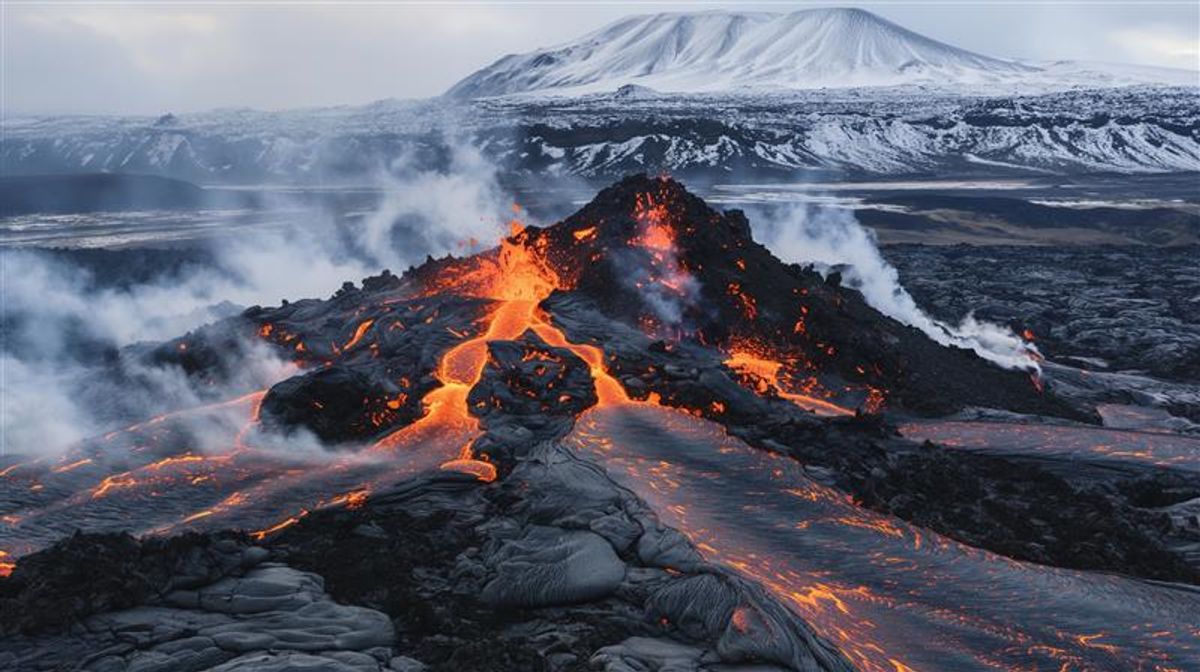
Can So-Called “Crystal Clocks” Help Predict Volcanic Eruptions?
Favicon 
www.iflscience.com

Can So-Called “Crystal Clocks” Help Predict Volcanic Eruptions?

Few natural phenomena catch our attention like volcanic eruptions. There is something staggeringly awe-inspiring about this primordial geological event. However, there is still much we do not know about them, especially when it comes to the behavior of magma before it emerges from the Earth.In recent years, scientists have turned to so-called “crystal clocks” to understand how long magma is stored underground before an eruption and how long it can take to travel to the surface. However, as a new explanation article by PNAS explains, they are a controversial topic.Quick boom or stalled storage?How do volcanoes work? Many of us probably think of volcanoes like some sort of geological pimple – liquid magma builds up deep underground until the pressure forces it to spurt from the top of a mountain. But the reality is more complicated.As magma rises through the Earth’s crust, it can cause earthquakes, release fumes, and provide other indications that it may be about to erupt. But scientists are uncertain about how the magma rises. One possibility is that it is a direct ascent, much like the magma-pimple concept above, which occurs over a matter of days. The other possibility is that magma rises towards the surface and then pauses, forming pools deep underground. This stalled magma may stay in place for thousands of years before it eventually revives and continues to rise.In this second case, the magma stalls because enough of it has cooled to temperatures below roughly 720°C (1,328°F), causing it to harden and become effectively stuck. Then, if there is an injection of new hot magma from below, the solidified rock melts and pushes upwards to erupt.If the first explanation is correct, then a grumble from a sleeping mountain may indicate an imminent eruption. But if the second explanation is correct, then the same grumble may be less concerning.The tick-tock of the crystal clocksSo how can we clear this up? Well one possible area of research has turned to analyzing crystals that form in volcanic rock from past eruptions.In 2014 a seminal paper was published that looked at these crystals to infer how magma behaved before it reached the surface. Authors Kari Cooper, University of California, and Adam Kent, Oregon State University, crushed volcanic rocks taken from recent eruptions of Oregon’s Mount Hood. They sifted out crystals, including plagioclase, that formed in the rock as the magma made its way to the surface.Plagioclase can be used in radiometric dating by measuring how much of the mineral’s uranium has decayed. As plagioclase is tough and cannot remelt, it offers a useful way to measure when magma started to form.Another type of crystal was also examined that can be used to estimate how long magma has been in a liquid state, the state that erupts more easily. This form of crystal clock includes plagioclase, as well as pyroxene, olivine, and quartz. An examination of the extent of diffusion between the layers of these crystals can provide insights into how long the minerals experienced eruption-level temperatures.As a result, Cooper and Kent found that the oldest plagioclase crystals in the 2014 samples were at least 20,000 years old, and that they had probably been at high temperatures for hundreds of years. They concluded that the crystals could only have remained at the highest temperatures for around 12 percent of the magma’s whole lifetime, suggesting the magma had been stalled in reservoirs under the volcanoes for 20,000 years.Cooper and Kent’s work marked a significant breakthrough for volcanologists and has inspired various other studies since then.Controversy among the clocksBut while it is hoped crystal clocks offer us a way to understand how magma behaves before it erupts, there are those who are more cautious. This resistance comes from the fact that it is extremely difficult to reproduce the types of conditions present deep below the Earth’s surface.Magma crystals are made up of many microscopic layers that are formed when each new injection of hot magma rises from below to heat the stalled rock. Each layer, so the theory goes, should be chemically unique as it is made from different magmas. Like the rings of a tree, a cross-section of a crystal should have nice distinct lines that demarcate each layer. But this is not the case in reality because, over time, atoms migrate between the layers, making their chemical composition more homogeneous. It also seems that the older crystals have more of this blurring effect.Researchers can recreate this process in laboratories using a method that measures the rate of atomic diffusion inside crystals while also examining the concentration and depth of uptake. This approach has produced a standardized way to date the speed at which crystals took to form. However, when examining crystal clocks, researchers have reported inconsistent diffusion rates when replicating original studies.This does not suggest the whole idea of crystal clocks should be thrown away, but it does indicate a need for caution. In particular, they should not be relied on alone, but rather seen as another tool in the broader toolkit.[H/T: PNAS]
Like
Comment
Share
Showing 17725 out of 56670
  • 17721
  • 17722
  • 17723
  • 17724
  • 17725
  • 17726
  • 17727
  • 17728
  • 17729
  • 17730
  • 17731
  • 17732
  • 17733
  • 17734
  • 17735
  • 17736
  • 17737
  • 17738
  • 17739
  • 17740

Edit Offer

Add tier


Select an image
Delete your tier
Are you sure you want to delete this tier?

Reviews

In order to sell your content and posts, start by creating a few packages. Monetization

Pay By Wallet

Payment Alert

You are about to purchase the items, do you want to proceed?

Request a Refund