YubNub Social YubNub Social
    Advanced Search
  • Login

  • Night mode
  • © 2026 YubNub Social
    About • Directory • Contact Us • Privacy Policy • Terms of Use • Android • Apple iOS • Get Our App

    Select Language

  • English
Install our *FREE* WEB APP! (PWA)
Night mode
Community
News Feed (Home) Popular Posts Events Blog Market Forum
Media
Headline News VidWatch Game Zone Top PodCasts
Explore
Explore Jobs Offers
© 2026 YubNub Social
  • English
About • Directory • Contact Us • Privacy Policy • Terms of Use • Android • Apple iOS • Get Our App

Discover posts

Posts

Users

Pages

Group

Blog

Market

Events

Games

Forum

Jobs

NewsBusters Feed
NewsBusters Feed
2 yrs

HAMAS MEDIA: CBS’s Patta Mourns Death of Top Hamas Boss
Favicon 
www.newsbusters.org

HAMAS MEDIA: CBS’s Patta Mourns Death of Top Hamas Boss

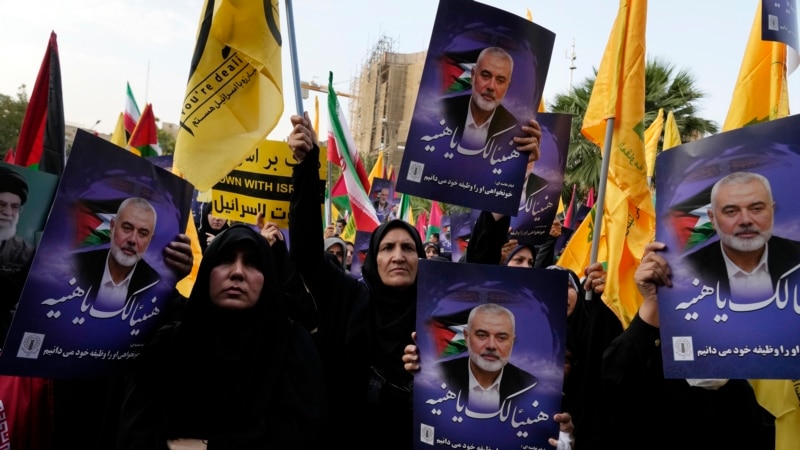
CBS News has a problem when it comes to reporting on the Middle East, specifically, on the war between Israel and Iran’s various proxies. This is one of the extremely rare times when a media outlet insists on telling both sides of a story. The problem is, that the other side in this case is adjacent to terrorism. Watch as correspondent Debora Patta closes out her report on the aftermath of the assassination of Hamas leader Ismail Haniyeh with pro-Hamas reactions: CBS EVENING NEWS 7/31/24 6:37 PM DEBORA PATTA: In the israeli-occupied West Bank, the assassination was met with shock and disbelief. There is also anger. People have been chanting "West Bank for Hamas." They want revenge. Their grief, shared with Palestinians in Gaza. "I've been crying all day," said Fatima al-Saati. "We've lost one of our very own." Haniyeh was the political face of Hamas. He was the man who sat in the same room as the Israelis, trying to hammer out that much-demanded hostage deal. Palestinian activist Mustafa Barghouti believes that deal is now dead. MUSTAFA BARGHOUTI: When you kill your negot- the person you negotiate with, what is the intention? The intention is to kill any possibility for peace. PATTA: For a region that was already on the verge of escalating into all out war, this latest assassination brings it that much closer. Norah. NORAH O’DONNELL: Debora Patta. Thank you very much. It isn’t clear why Patta’s on the beat today. Perhaps Imtiaz Tyab was given a breather after enduring the hardship of reporting the death of two terrorist commanders. Patta’s reporting took her, as it often does, to the West Bank. And then to an anti-Israel protest. And, ultimately, to a video package that includes shouted chants which I couldn’t make out except for “Yahud”, which means “Jew”.  Ultimately, the report was less about the ongoing tensions in the middle east than as an abridged requiem for Haniyeh. CBS just can’t quit its pro-Hamas bias. Click “expand” to view the full transcript of the aforementioned report as aired on CBS Evening News on Wednesday, July 31st, 2024: NORAH O’DONNELL: Well, the Middle East and the world are on edge tonight following the assassination of a senior Hamas leader inside Iran, and Iran's supreme leader saying today “our duty is to take revenge”. Now this comes just hours after an Israeli airstrike killed a top Hezbollah commander in Lebanon. CBS's Debora Patta is in east Jerusalem with more on the escalating tensions. DEBORA PATTA: These are the last images of Ismail Haniyeh alive, attending the Iranian president's inauguration. Since the October 7th attack, he’s had a target on his back. Israel warned Hamas leaders were marked for death. Haniyeh was killed in a brazen strike in the Iranian capital of Tehran, where today people protested the assassination. Hamas is blaming Israel, claiming a missile struck the house he was staying in. Haniyeh's death came just hours after Israel announced it had killed Hezbollah commander Fuad Shukr in Beirut. Now also confirmed by Hezbollah. But tonight, Prime Minister Benjamin Netanyahu made no mention of the attack in Tehran. "We are prepared for any scenario," he said. "We will exact a very heavy price for any aggression." In the israeli-occupied West Bank, the assassination was met with shock and disbelief. There is also anger. People have been chanting "West Bank for Hamas." They want revenge. Their grief, shared with Palestinians in Gaza. "I've been crying all day," said Fatima al-Saati. "We've lost one of our very own." Haniyeh was the political face of Hamas. He was the man who sat in the same room as the Israelis, trying to hammer out that much-demanded hostage deal. Palestinian activist Mustafa Barghouti believes that deal is now dead. MUSTAFA BARGHOUTI: When you kill your negot- the person you negotiate with, what is the intention? The intention is to kill any possibility for peace. PATTA: For a region that was already on the verge of escalating into all out war, this latest assassination brings it that much closer. Norah. O’DONNELL: Debora Patta. Thank you very much.  
Like
Comment
Share
History Traveler
History Traveler
2 yrs

Plant fiber ties found in Bronze Age hoard
Favicon 
www.thehistoryblog.com

Plant fiber ties found in Bronze Age hoard

The excavation and analysis of a Bronze Age hoard discovered in Rosemarkie, a coastal town near Inverness in the Scottish Highlands, has revealed rare organic plant remains entwined among the bronze bracelets and necklaces. The hoard dates to around 1000 B.C. The hoard was discovered during a preventative archaeology excavation that took place at the site of a future housing development between August 2020 and July 2021. The excavation revealed remains of a Bronze Age settlement with six roundhouses, a timber palisade fence, drying kilns, plough marks from agricultural work, a cist grave and, close to one of the postholes from a roundhouse, a small circular pit containing a hoard of bronze objects. They were likely originally enclosed in a woven basket or bag that was buried whole. The container has decomposed and there are no visible remnants of it, but hoard was removed in a soil block to preserve any organic remains and trace material of the original context. The hoard is now being excavated in laboratory conditions and archaeologists have so far recovered one complete neck ring, one partial neck ring, six penannular bracelets and one cup-ended penannular bracelet. Fibrous plant cords were found tying some of the bangles together. Archaeologists believe they survived because of the anti-microbial effect of the copper in the bronze. The corrosion products of the copper adhered to the cords and prevented decay. “The recovery of the artefacts was successfully carried out under the controlled conditions necessary to preserve these highly significant objects, particularly the very delicate organic cords that tether some of the objects together,” said Rachel Buckley, who led the laboratory excavation. “Where bracelets were held together with organic material, these were recovered as a group to allow further detailed study. While there are other examples of hoards where it has been postulated that items were bound together due to their positioning, the vegetation in the Rosemarkie hoard has survived for approximately 3000 years, proving that these artefacts were held together.” […] “That the hoard was buried under a single homogenous fill within a shallow pit with little extra room for anything other than what was found within, indicates that this was no accidental loss,” said Iraia Arabaolaza, who is managing GUARD Archaeology’s analyses. “It would seem that the shallow pit was dug to the required length and depth to accommodate the items, before then being quickly backfilled. It may be that it was intended as temporary storage with the intention of recovering the hoard at some stage. The evidence from the surrounding settlement may reveal whether it was not just the hoard that was abandoned but the settlement as well.”
Like
Comment
Share
YubNub News
YubNub News
2 yrs

Iran vows revenge
Favicon 
yubnub.news

Iran vows revenge

Iran has vowed “harsh punishment” against Israel for its suspected assassination of Hamas political chief Ismail Haniyeh in Tehran Wednesday. We talk to Alex Vatanka, founding director of the Iran…
Like
Comment
Share
YubNub News
YubNub News
2 yrs

Trump Is Right About McKinley
Favicon 
yubnub.news

Trump Is Right About McKinley

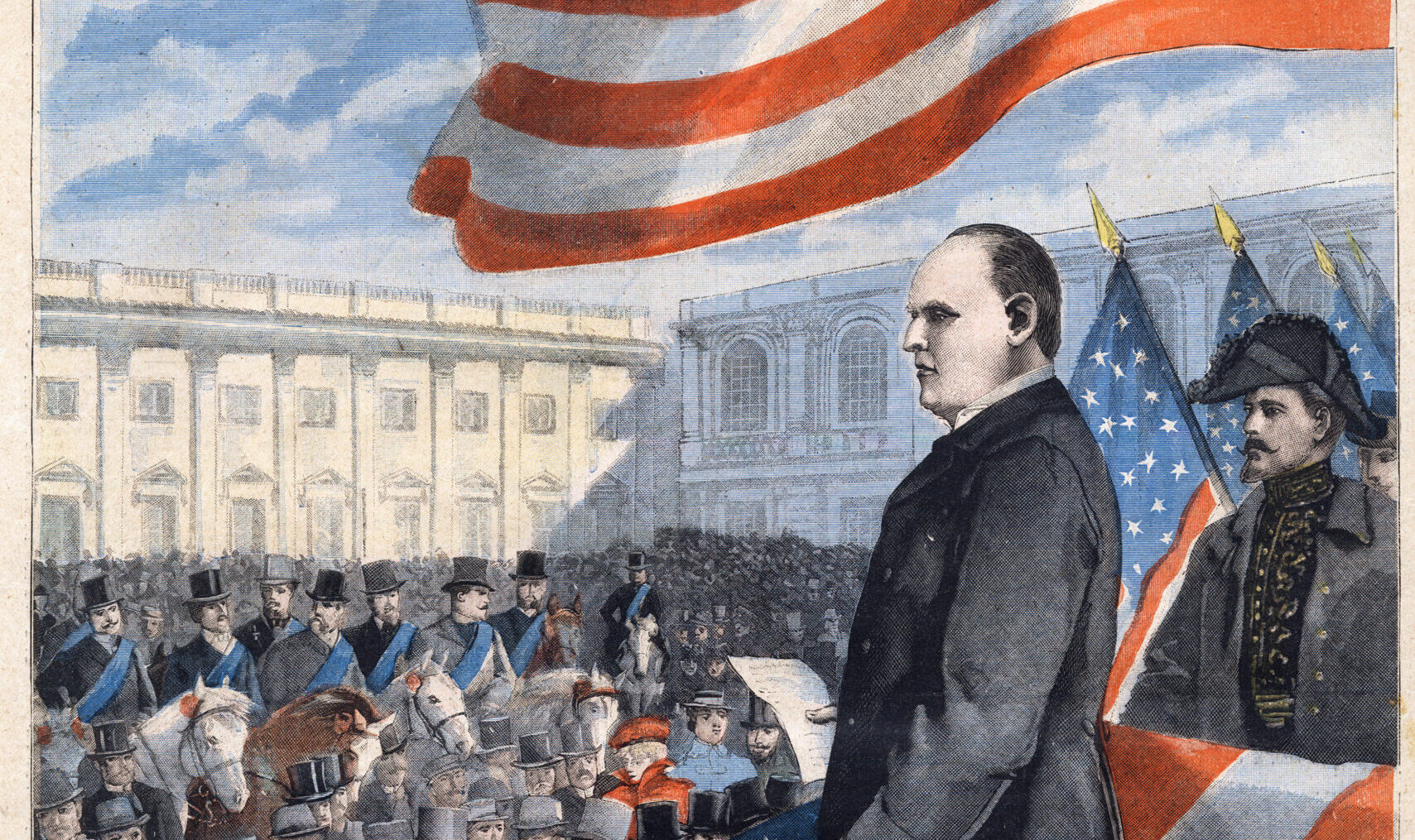
Donald Trump has weighed in on a presidential legacy, albeit not his own. In a wide-ranging July 16, 2024 interview with Bloomberg, Trump proclaimed William McKinley “the most underrated president.” …
Like
Comment
Share
YubNub News
YubNub News
2 yrs

The Ukrainian War Effort Is Going Nowhere Fast
Favicon 
yubnub.news

The Ukrainian War Effort Is Going Nowhere Fast

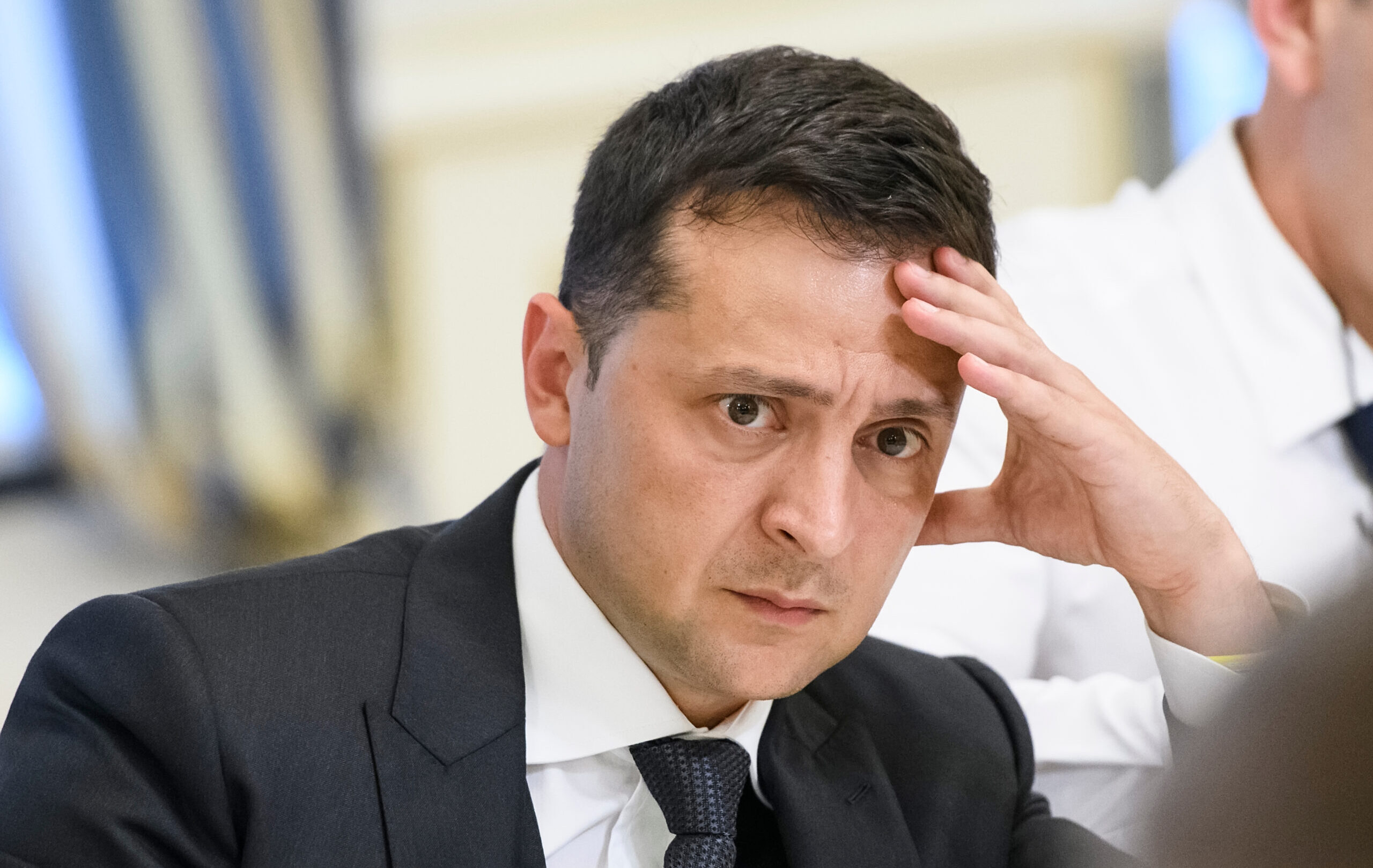
As the United States and its European allies continue to provide Ukraine with the wherewithal to kill Russian soldiers and strike ever deeper in Russian territory, the potential for retaliatory escalation…
Like
Comment
Share
YubNub News
YubNub News
2 yrs

Respect Parents’ Childcare Choices
Favicon 
yubnub.news

Respect Parents’ Childcare Choices

“One of the most urgent things that parents and families need is affordable childcare,” Vice President Kamala Harris declared earlier this year. If this sounds like Obamacare for childcare, you’re…
Like
Comment
Share
YubNub News
YubNub News
2 yrs

Escalation in Middle East: Netanyahu’s High-Stakes Gamble Risks Regional Escalation
Favicon 
yubnub.news

Escalation in Middle East: Netanyahu’s High-Stakes Gamble Risks Regional Escalation

The recent assassination of Hamas political leader Ismail Haniyeh in Tehran has sent shockwaves through the Middle East, potentially derailing ceasefire negotiations and risking a wider regional conflict.…
Like
Comment
Share
YubNub News
YubNub News
2 yrs

Escalation in Middle East: Netanyahu’s High-Stakes Gamble Risks Regional Escalation
Favicon 
yubnub.news

Escalation in Middle East: Netanyahu’s High-Stakes Gamble Risks Regional Escalation

The recent assassination of Hamas political leader Ismail Haniyeh in Tehran has sent shockwaves through the Middle East, potentially derailing ceasefire negotiations and risking a wider regional conflict.…
Like
Comment
Share
Conservative Voices
Conservative Voices
2 yrs

Trump Is Right About McKinley
Favicon 
www.theamericanconservative.com

Trump Is Right About McKinley

Politics Trump Is Right About McKinley “The most underrated president” was a model of successful governance in a world in flux. Donald Trump has weighed in on a presidential legacy, albeit not his own. In a wide-ranging July 16, 2024 interview with Bloomberg, Trump proclaimed William McKinley “the most underrated president.”  Trump is right. McKinley, who guided the ship of state at the dawn of the 20th century, is the most underrated chief executive in our nation’s history. And in many respects his presidency can serve as a model for a United States that is once again undergoing seismic changes. McKinley is largely forgotten today. Presidential historians often rank him in the middle of the pack. Such rankings are colored by a deep liberal bias—a February 2024 survey put FDR first and Trump dead last—but they do illustrate that McKinley is neither hailed for his greatness nor lamented for his failures. Rather, he’s just overlooked.  Part of this is due to the man himself; even in his own lifetime McKinley was regarded as somewhat bland. McKinley’s lack of personal papers and, as one biographer noted, his “tendency to listen as much as talk” also contributed to his obscurity. But it is also the result of his premature death. McKinley was murdered by an anarchist, Leon Czolgosz, on September 6, 1901, a mere six months into his second term. Some presidential assassinations grant their victims a level of immortality. Lincoln and John F. Kennedy come to mind. But others consign the dead to oblivion.  Indeed, for more than a century, McKinley has been overshadowed by his larger-than-life successor, Teddy Roosevelt. TR was young, dynamic, and image-conscious. He knew how to court the press and provide good copy for reporters. Roosevelt was 42 when he took office and seemed to embody the youthful nation that he led. He was also famously hyperactive and, at times, erratic.  The stolid McKinley was Roosevelt’s opposite. He was unknowable. The wife of one of his rivals in Ohio politics, Joseph Foraker, once charged that McKinley was a man of “masks,” his inner thoughts and emotions well concealed. Roosevelt’s own daughter, Alice Roosevelt Longworth, famously said that her father wanted to be the “the corpse at every funeral, the bride at every wedding, and the baby at every christening.” By contrast, the unassuming McKinley exuded the air of a man just happy to be invited.  Roosevelt took the helm right as America became a world power. He was the perfect president for the new media age. TR’s exploits, from hunting exotic creatures to brokering peace between Russia and Japan, served as perfect fodder for press barons like William Randolph Hearst. But McKinley was popular in his lifetime, and he built the edifice that TR stood on. His death prompted widespread mourning. McKinley was the only president between Ulysses Grant and Woodrow Wilson—a span of nearly forty years—to be elected to two terms. And his electoral victories over his Democratic opponent, the perennial candidate, William Jennings Bryan, were resounding. In fact, they reshaped the American landscape.  McKinley’s 1896 victory over Bryan is widely regarded as one of a handful of political realignments in U.S. history. Modern Republican strategists like Kevin Phillips, who advised Richard Nixon, to Karl Rove, George W. Bush’s guru, have cited the 1896 realignment as a model—and for good reason. From 1896 until Franklin D. Roosevelt’s election in 1932, Republicans occupied the executive branch for all but eight years. The sole Democratic occupant, Woodrow Wilson, only took office thanks to a split in the Republican party created by TR in 1912. McKinley, Phillips noted, was the “political architect who ended the two-decade national stalemate” that had existed since 1876, “turning a weakened Civil War coalition to a new full-fledged industrial GOP majority,” thereby making him “the most important nineteenth-century Republican after Lincoln.” McKinley remade the GOP, and “he did so by beating, rather than submitting to, the Eastern machine forces.” And, as Phillips observes, McKinley did so by expanding the GOP to include a broader working-class constituency. “Not since Lincoln, who publicly upheld unions…had a Republican nominee so embraced labor.”  McKinley famously embraced tariffs, but he also focused on jobs and employment—“the full dinner pail,” as it was called. By fighting for a conservative working-class party, McKinley was doing what Benjamin Disraeli had done three decades before in the United Kingdom. But while Disraeli is regarded as a seminal figure, McKinley is depicted as an unsophisticated Midwestern rube, his triumphs the fruit of the labor of others. Indeed, historians have often presented McKinley as incidental to the realignment that he helped forge. They portray wealthy industrialists and key advisers like Mark Hanna as being more responsible for McKinley’s electoral accomplishments. The notion that McKinley was weak and the tool of greater men was pushed by his contemporary enemies and has endured for years afterward. McKinley, of course, wasn’t around to dispute the portrayal. Indeed, one later historian, noting that events always seemed to go McKinley’s way despite his lack of a heavy hand, referred to the 25th president as a “tantalizing enigma.” McKinley, the former editor of The American Conservative Robert Merry observed, “never moved in a straight line, seldom declared where he wanted to take the country, [but] somehow moved people and events from the shadows. He rarely twisted arms in efforts at political persuasion, never raised his voice in political cajolery [and] didn’t visibly seek revenge.” Nonetheless, “he always seemed to outmaneuver his rivals and get his way.” McKinley, Merry pointed out, was the “architect of the American century.” As the historian Lewis Gould has observed, McKinley should be regarded as the first modern president. He significantly expanded, and reorganized, the White House staff, bringing it into the modern era. Dwight Eisenhower, a career military officer, was the first president to formally create the office of Chief of Staff. But the office has its origins in the McKinley administration, when the former Ohio governor chose George Cortelyou to be his private secretary. Prior presidents had secretaries, of course. But Cortelyou’s flair for organization and expansive powers were noteworthy. A man who was working as a post office clerk a mere decade before McKinley elevated him would eventually go on to become the U.S. Secretary of Commerce and Labor, the Secretary of Treasury, and the head of the Republican National Committee. As Phillips noted in his 2003 biography, McKinley was the first president to extensively use the telephone, develop systematized press operations, to have a news summary, and to make the White House a news center. The Spanish–American War would be the first conflict to be managed from a White House war room connected to military headquarters in Washington and the field by telephone and telegraph. Both in the 1896 campaign and afterward, McKinley used new media’s power in innovative ways. McKinley also traveled broadly. Prior to his assassination, he was planning trips that would have made him the first president to travel abroad—trips that he thought reflected America’s newfound power and status. McKinley was unique in another respect. He was one of the few occupants of the Oval Office to be a successful wartime president. Despite later portrayals, McKinley wasn’t an avowed imperialist; he had qualms about the annexation of Hawaii and was hardly pushing for U.S. involvement in the conflict with Spain. Yet once he had decided on the use of force, he wanted it to be overwhelming.  In foreign affairs, McKinley wasn’t a bully, as Bryan and other critics alleged, but he wasn’t a man for half-measures either. As he said in his inaugural address: “We want no wars of conquest; we must avoid the temptation of territorial aggression. War should never be entered upon until every agency of peace has failed; peace is preferable to war in almost every contingency.” McKinley, the last veteran of the U.S. Civil War to occupy the White House, once told the White House physician: “I have been through one war; I have seen the dead piled up; and I do not want to see another.” The 25th president not only reshaped American domestic politics, but he also reoriented U.S. foreign policy. As Phillips notes, “he helped to shape and preview America’s early-twentieth-century alliances and hostilities: on one hand, entente with Britain and an off-and-on commitment to the territorial integrity of China, and on the other, mounting Caribbean and Pacific tensions with Germany and Japan.” In shoring up relations with Britain, McKinley helped set the stage for what would become the fabled and long-enduring “special relationship.” McKinley took office when the international system was in flux. Old empires, like Spain, the Qing dynasty in China, and the Ottoman Empire, were on their way out, while new powers, notably Germany and Japan, were rising. He presciently recognized the growing importance of what today is called the Indo-Pacific. McKinley helped reshape American foreign policy for a new era. Given his deserved reputation as a fierce proponent of tariffs—Trump lauded him as the “tariff king”—it is unsurprising that McKinley viewed foreign affairs through the prism of markets and trade. McKinley pushed for trade reciprocity, prioritizing access for U.S. exports. McKinley was an advocate for both American manufacturing and the working man, viewing both as key to the nation’s health. For McKinley, military power was inseparable from economic power—a truism that American leaders today would do well to remember. John Hay, a one time secretary to Abraham Lincoln who served as McKinley’s ambassador to Great Britain before becoming his, and then TR’s, secretary of state, had this to say: “In dealing with foreign powers he will rank with the greatest of our diplomatists. It was a world of which he had little special knowledge before coming to the presidency. But his marvelous adaptability was in nothing more remarkable than in the firm grasp he immediately displayed in international relations. In preparing for war and in the restoration of peace he was alike adroit, courteous and far-sighted.” High praise from someone who served, and intimately knew, both Abraham Lincoln and Theodore Roosevelt. Sometimes the man makes the moment, and sometimes the moment makes the man. McKinley can’t fairly be said to have done either. But the man was right for the moment. He changed both America itself, as well as America’s place in the world. And his presidency, with all its enduring successes, should serve as a model for his successors. The post Trump Is Right About McKinley appeared first on The American Conservative.
Like
Comment
Share
Conservative Voices
Conservative Voices
2 yrs

The Ukrainian War Effort Is Going Nowhere Fast
Favicon 
www.theamericanconservative.com

The Ukrainian War Effort Is Going Nowhere Fast

Foreign Affairs The Ukrainian War Effort Is Going Nowhere Fast The U.S. and Europe must wrap up their dangerous proxy war as soon as possible.  (paparazzza/Shutterstock) As the United States and its European allies continue to provide Ukraine with the wherewithal to kill Russian soldiers and strike ever deeper in Russian territory, the potential for retaliatory escalation creeps higher. Kiev is of course entitled to respond harshly to Moscow’s invasion. As it is doing so with Western weapons, however, Russia has increasing reason to treat NATO countries as formal belligerents, with potentially catastrophic results. The New York Times reported that Russia’s Defense Minister Andrei Belousov recently called Defense Secretary Lloyd Austin “to relay a warning, according to two U.S. officials and another official briefed on the call: The Russians had detected a Ukrainian covert operation in the works against Russia that they believed had the Americans’ blessing. Was the Pentagon aware of the plot, Mr. Belousov asked Mr. Austin, and its potential to ratchet up tensions between Moscow and Washington?” Austin apparently denied U.S. responsibility, but he would do so whatever the truth. Belousov’s question demonstrated the increasing risk of Washington’s proxy war. Unfortunately, the Biden administration’s assurances carry little weight given its outsize role in the conflict. America’s presence in Ukraine was great at the start and has grown along with the conflict. Public claims of responsibility for killing Russian generals and sinking Russian ships confirmed Washington’s participation. Moscow’s failure to retaliate led some observers to view Russia’s President Vladimir Putin as a paper tiger, though Austin reportedly “warned his Russian counterpart not to threaten U.S. troops in Europe amid rising tensions in Ukraine.” However, with its forces on the advance Moscow would be foolish to risk triggering full-scale allied intervention. Better to take a slower, more expensive win than gamble everything on a U.S. climbdown. In contrast, had Kiev come close to achieving the expansive objectives growing out of its early success—ousting the Russian leader, overthrowing the Russian regime, and even breaking up the Russian federation—it is doubtful Putin would have been so reticent in using his nation’s superior firepower. Those who assure us that he would never do so are the same people who were certain he would never invade Ukraine. In the meantime, Kiev is suffering badly. Its manpower losses have been much greater than reported. A Ukrainian legislator admitted that his government “vastly downplayed the war’s true toll.” American estimates are more than double the number stated by President Volodymyr Zelensky, and they also are probably too low. Moreover, Kiev’s recruiting travails have been much noted, with even the medically unfit being conscripted, and the government facing increasing draft resistance. Also notable is Russia’s artillery and air superiority. And there is more.  Writing of Ukrainian commander-in-chief Oleksandr Syrskyi, the Guardian’s Luke Harding reports:  Two and half years into Vladimir Putin’s full-scale onslaught, he acknowledges the Russians are much better resourced. They have more of everything: tanks, infantry fighting vehicles, soldiers. Their original 100,000-strong invasion force has grown to 520,000, he said, with a goal by the end of 2024 of 690,000 men. The figures for Ukraine have not been made public. “When it comes to equipment, there is a ratio of 1:2 or 1:3 in their favor,” he said. Since 2022 the number of Russian tanks has “doubled—from 1,700 to 3,500. Artillery systems have tripled, and armored personnel carriers gone up from 4,500 to 8,900. “The enemy has a significant advantage in force and resources.” Even when Ukraine has been notably innovative, such as in drone warfare, Moscow has gained some significant advantages, admitted Ukraine’s Col. Vadym Sukharevsky, who heads his nation’s Unmanned Systems Forces. Reported the Economist,  Initially it was Ukraine that got ahead, developing an army of cheap, small drones to counter Russia’s overwhelming artillery and missile advantage. That has since changed. Now, enemy drones outnumber Ukrainian ones six to one. But superior tactics and innovation still keep Ukraine competitive. Ukraine tends to be first in developing and adopting new technologies, driven by a policy of diversification. Russia’s advantage in mass production means it can adapt and scale up much faster. Although none of this means Kiev cannot win, it continues to lose ground and its notable successes, such as against the Russian Black Sea fleet, do not retrieve land losses. Deeper strikes into Russia and increased attempts to isolate Crimea are likely to spark more aggressive retaliatory attacks rather than strategic retreats. With the failure of Western sanctions to break the Russian economy, Moscow remains better able to absorb the costs of continuing war. Absent direct allied entry into the war, Ukrainian victory remains a long shot. Yet proposals for Washington and Brussels to adopt a peace strategy trigger frenzied wailing and gnashing of teeth in both capitals. President Joe Biden and congressional leaders continue to pledge their support for the war. In mid-July the administration announced the multilateral “Ukraine Compact,” through which it would “Support Ukraine’s immediate defense and security needs, including through the continued provision of security assistance and training, modern military equipment, and defense industrial and necessary economic support,” and more. Before that the president called Zelensky “to underscore the United States’ lasting commitment to supporting Ukraine.”  In Europe assorted European Union and national governments sharply criticized Hungarian Prime Minister Viktor Orban, whose nation holds the rotating 6-month presidency, for traveling to Moscow to talk peace. Reuters reported that Orban’s efforts “sparked fury among many EU governments and officials.” The European Parliament passed a resolution criticizing Orban for his “uncoordinated and surprising visit” and reaffirmed the “unwavering commitment of the EU to providing political, financial, economic, humanitarian, military and diplomatic support for as long as it takes to secure Ukraine’s victory.” Unfortunately for Kiev, the legislators provided more verbiage than artillery shells. In contrast, broader public opinion is becoming more skeptical of a potentially endless war. A new report from the European Council on Foreign Relations found an important divergence between Ukrainian and European attitudes toward the conflict: “Ukrainians want weapons in order to win, while most Europeans send weapons hoping this will help lead to an acceptable eventual settlement.” Continental skepticism toward the war is likely to continue rising as politics shifts rightward. Moreover, almost half of Ukrainians back peace negotiations with Moscow. While most still expect victory, the number prepared to make concessions for peace is increasing. According to the Times of London, “One in three people, or 32 per cent, now say that they would agree to cede territory to Moscow to bring about peace, according to the Kiev International Institute of Sociology. The figure this time last year was 10 per cent.” If Russian advances and Ukrainian losses continue, this shift is likely to continue. In principle, enhancing Ukrainian bargaining leverage is a sensible strategy. Nevertheless, since the invasion, Kiev’s position has steadily weakened, except for the relatively brief 2023 counteroffensive. Ukraine’s maximum strength was in early 2022, before Russian tanks rolled. Yet the U.S. would not even consider discussing Kiev’s prospective membership. Ukraine also was well-positioned during the Istanbul negotiations shortly after Moscow’s attack. At that point the former’s main concession for peace would have been a promise of neutrality. Alas, the Western allies, pushing their own objectives, most importantly weakening Russia, encouraged Kiev to reject this apparent opportunity to settle. With every passing day Moscow’s forces are acquiring more territory while Ukraine’s military is weakening and its home front is suffering. No current plans, either aid from Europe or action by Kiev, appear likely to reverse the war’s course. To continue a fight in which Ukraine is the battlefield and Ukrainians are suffering most of the casualties and destruction in hope that allied Wunderwaffe, delivered in sufficient quantities and time, will lead to a miraculous victory, appears delusional. If the allies are not willing to risk World War III and enter the conflict—as they should not!—they should shift their priority to restoring peace. That requires engaging Russia diplomatically and negotiating a new security structure that simultaneously preserves Ukraine’s independence and respects Moscow’s security interests. The U.S. and Europe should offer restoration of Russian assets and elimination of economic sanctions as inducements for an acceptable settlement. Territorial losses by Ukraine—of areas severed in 2014 as well as more recently conquered—look inevitable. Kiev could choose to fight on, of course, but the allies should make clear that it would be on its own.  Russia’s invasion was unjust, though encouraged by reckless allied policy, but funding a perpetual war for the return of Ukraine’s lost lands is not in the West’s interest. Indeed, with the persistent risk of escalation atop the costs of ongoing combat, continued fighting is in no one’s interest, other than America’s and other nations’ major arms-makers. Ukraine’s former military commander, Valery Zaluzhny, inadvertently made the case for peace when he forecast a new world war: “Is humanity ready to calmly accept the next war in terms of the scale of suffering? This time the Third World War? Free and democratic countries and their governments need to wake up and think about how to protect your citizens and their countries.” The Russo–Ukrainian conflict is a humanitarian disaster. It also risks unleashing global nuclear war. Belousov’s phone call should wake up slumbering officials in Washington. The U.S. is engaged in hostilities against the Russian Federation. The combat is indirect, but real, with Americans responsible for thousands of Russian deaths and mass destruction of materiel. The slope toward full-scale war grows ever more slippery. It is imperative to end the Ukraine imbroglio before it spreads. The post The Ukrainian War Effort Is Going Nowhere Fast appeared first on The American Conservative.
Like
Comment
Share
Showing 18233 out of 56670
  • 18229
  • 18230
  • 18231
  • 18232
  • 18233
  • 18234
  • 18235
  • 18236
  • 18237
  • 18238
  • 18239
  • 18240
  • 18241
  • 18242
  • 18243
  • 18244
  • 18245
  • 18246
  • 18247
  • 18248

Edit Offer

Add tier


Select an image
Delete your tier
Are you sure you want to delete this tier?

Reviews

In order to sell your content and posts, start by creating a few packages. Monetization

Pay By Wallet

Payment Alert

You are about to purchase the items, do you want to proceed?

Request a Refund