YubNub Social YubNub Social
    Advanced Search
  • Login

  • Night mode
  • © 2026 YubNub Social
    About • Directory • Contact Us • Privacy Policy • Terms of Use • Android • Apple iOS • Get Our App

    Select Language

  • English
Install our *FREE* WEB APP! (PWA)
Night mode
Community
News Feed (Home) Popular Posts Events Blog Market Forum
Media
Headline News VidWatch Game Zone Top PodCasts
Explore
Explore Jobs Offers
© 2026 YubNub Social
  • English
About • Directory • Contact Us • Privacy Policy • Terms of Use • Android • Apple iOS • Get Our App

Discover posts

Posts

Users

Pages

Group

Blog

Market

Events

Games

Forum

Jobs

SciFi and Fantasy
SciFi and Fantasy  
2 yrs

Look Both Ways, But Don’t Look Down: Stephen King’s Pet Sematary (Part 6)
Favicon 
reactormag.com

Look Both Ways, But Don’t Look Down: Stephen King’s Pet Sematary (Part 6)

Books Reading the Weird Look Both Ways, But Don’t Look Down: Stephen King’s Pet Sematary (Part 6) What’s done is done and what’s dead is dead… By Ruthanna Emrys, Anne M. Pillsworth | Published on July 24, 2024 Comment 0 Share New Share Welcome back to Reading the Weird, in which we get girl cooties all over weird fiction, cosmic horror, and Lovecraftiana—from its historical roots through its most recent branches. This week, we continue Stephen King’s Pet Sematary with Chapter 22. The novel was first published in 1983. Spoilers ahead! With Rachel and the kids visiting her parents, Louis spends Thanksgiving with Jud and Norma. His post-feast nap is interrupted by a phone call from Jud. Jud’s found a dead cat on his lawn, and he’s afraid it’s Church. Louis, having searched for Church in vain, brings a garbage bag across the road: his way of admitting that the magic circle of family has failed to protect their pet. He’s so distracted that only Jud’s warning yell keeps him from walking out in front of a truck. The sun’s setting, and a cold wind’s begun to blow; bundled in his duffle coat and fur-fringed hood, Jud looks as frozen as the landscape. The old man could be anybody. The dead cat is Church. His neck’s broken, the dribble of blood from his snarling mouth the only other sign of trauma. Louis thinks he looks like the old gunslinger again. He has a sudden inspiration to bury Church in the pet sematary and tell Ellie the cat ran away. Better for death-phobic Rachel as well. Jud remarks that Ellie “loves that cat pretty well, doesn’t she?” Then, hearing Louis means to bury Church in the morning, he excuses himself. Alone, Louis “felt unhappy and yet oddly exhilarated and strangely whole.” “Something’s gonna happen here… Something pretty weird,” he thinks. Jud returns with a flashlight, shovel and pick. Louis protests, but Jud insists that if Ellie loves Church and Louis loves Ellie, he’ll do the burial now. Laden with the shovel and Church’s bagged corpse, Louis follows Jud to the sematary. There Louis admits to his unaccountable exhilaration. Jud says this place can have that effect, like an addict’s rush after shooting up. He hopes he’s doing right to bring Louis here—and to the place beyond where real power lies. What follows reminds Louis of his somnambulistic nightmare. “Don’t go beyond,” Pascow said. “The barrier was not made to be broken.” But Jud leads him over the deadfall between the sematary and the path deeper into the woods. Follow without hesitation, without looking down, and they’ll make it fine. They navigate the treacherous tangle of shifting branches as if it were a staircase. They walk another three miles under a star-crowded sky. The next obstacle’s what the Micmacs called Little God Swamp. There’s quicksand, all right, Jud says, maybe St. Elmo’s fire, maybe loon calls deceptively like voices. Again, follow and don’t look down. Not that there’s anything to see but a knee-high fog. Partway through the swamp, they hear something big moving through the brush. Jud halts and shushes Louis’s questions. Is it a moose, a bear? Instead Louis imagines a creature on two legs, rising high enough to blot out the stars. Maniacal laughter breaks the silence, then subsides into “guttural chuckling” and sobs. Jud’s eyes betray his stark terror. But he says it’s “just a loon.” They reach a stairway carved into a rock-walled rise. It ends at a mesa-like summit. Micmacs flattened the hill, Jud explains. In the shadow of ancient firs are rock cairns. Louis must bury Church here, doing the labor by himself. The soil’s thin and stony, but he manages to dig an adequate grave. Jud rewards him with the history of the place, how the Micmacs believed this was magic ground. Other tribes believed that their burial place peopled the woods with ghosts. Eventually the Micmacs themselves abandoned it. Louis finishes burying Church and even finds the strength to build a cairn. It looks right under the starlight. Others have fallen, their stones scattered. As they head home, Louis realizes how dangerous their trek was. He can only attribute making this crazy burial journey to confusion and upset over Church’s death. They arrive at the Creed house around eight-thirty. Louis feels they’ve been gone much longer. He asks Jud what they did just now. They buried Ellie’s cat, nothing more. They did what seemed right in their hearts, as opposed to their heads. There’s little use in talking about what’s in a man’s heart, where the soil is stonier, like the burial ground. “A man grows what he can,” Jud concludes, “and he tends it.” As for how Jud knew about the place, it’s because someone took him there when his childhood dog died of infected barbed wire wounds. Later, Louis remembers an earlier conversation, when Jud said that his dog died of old age and was buried in the pet sematary. He ascribes the opposing stories to age-related forgetfulness. Later still, slipping toward sleep, he hears bare feet mounting the stairs. He tells Pascow’s ghost to leave him alone, “what’s done is done and what’s dead is dead.” The footsteps cease, and Louis is never again troubled by Pascow. The Degenerate Dutch: “Tool-bearing Indians”—as opposed to what? Do you think some Indians predated Homo habilus? Even in the ’80s, I’m pretty sure we knew that Homo sapiens had been using tools for a long, long time. We knew about the mounds in the midwest, and arrowheads everywhere, even if we were still vague on the anthropological source of northeastern food forests. As a bonus, in the ’80s white people were very confused about Mayan pyramids. “Here Lies Ramses II, He Was Obedient” is funny, though. Small mercies: At least we’re not assuming that aliens built any of the relevant structures. (Or maybe we are—there’s that line about a “horrid cold feeling” from imagining the stars inhabited…) Libronomicon: Louis imagines himself as “Heathcliff out on the desolate moors”, and later compares Jud’s “don’t look down” approach to Peter Pan’s happy-thought-dependent flying ability. Weirdbuilding: Somewhere in those woods there might be a wendigo. Anne’s Commentary On Thanksgiving afternoon, with the turkey and pumpkin pie devoured and a well-earned nap just begun, Louis gets a phone call that turns his day into a particularly macabre Dad Joke (God the Father variety.) Why did the castrated tom too lazy to go upstairs decide to cross the road? Why, to get to the other side, only not to the other side of the road but to the other side of existence. Come on, the cat had to die following the operation that was supposed to save him from his natural tendency to roam—it was an irony too delicious for the Almighty to resist, especially after Louis let his daughter mouth off to said Almighty. Thought you could game the system with a few snips of the surgical shears, Doctor Creed? Have a second helping of Thanksgiving dessert. You must have room enough for a sliver of frozen roadkill. Or if you don’t have room, tough rocks. Choke it down anyway. You said it yourself, Doc. You don’t make the rules, of which the overarching rule is: Real is real. Corollary: Dead is dead. But what about Victor Pascow? Never mind Pascow. What about Jud Crandall, who’s become the man who should have been Louis’s father? All those evenings passed on Jud’s porch, surely he knows the man fairly well. Too well to see Jud, as he crosses the road to ID Church, as “a piece of statuary, just another dead thing in this twilight landscape where no bird sang.” Too well to feel that, because Jud’s hood hides his face, Jud “could have been anyone…anyone at all.” When his hood falls back, Jud’s looking not at Louis but at “that fading orange line of light at the horizon,” his face “thoughtful and stern…harsh, even.” Of Ellie, he asks “Loves that cat pretty well, doesn’t she?” A page later, he answers his own question, “Yes, I guess she loves it pretty well,” again using a present tense that makes Louis feel how “the whole setting… with the fading light, the cold, and the wind” is “eerie and gothic.” When Louis first comes out after Church, he’s hit by an amorphous aloneness, “strong and persuasive… faceless,” that leaves him feeling “untouched and untouching.” It’s as if he stands bewildered in a no-man’s land between normality and a Maine where he at last feels “in his place… unhappy and yet oddly exhilarated and strangely whole.” Having crossed more than Route 15, he’s entered the space where Jud too is at home, but where I imagine neither Rachel nor Norma would follow. Conveniently, the one is in Chicago, the other at a church gathering. It’s the two men on their own, with their “stonier” men’s hearts: hearts that can keep secrets, hearts that can be lured to whatever dwells in Little God Swamp and keeps as its altar the ancient Micmac burying ground from which power leaches even as far as Ludlow, with the pet sematary as its outpost and gateway. It’s power that draws, and power that is the reward. Jud seems to believe, or to want to believe, that the magic of the woods beyond the deadfall is neutral. He’s terrified, however, by the “Little God” that stalks among the trees and laughs, screams, chuckles and sobs. It’s just a loon, he tells Louis. Louis knows that to continue to feel exhilarated, alive, fey after hearing such sounds is “an unshakable lunacy.” Jud himself has compared the sematary’s effect to an addict’s drugged rush.  In that, he’s being honest, but several times during the adventure Louis suspects that Jud is lying to him, perhaps to himself. Clear of the zone of unreason, Louis has questions. Too many questions, Jud says. People sometimes have to do what seems right in their hearts, putting aside the head’s doubts. Accept what’s done and follow your heart, Jud insists. Burying Church in the Micmac cemetery was right, he says, though— Though he adds, “at least, I hope to Christ it was right,” which quashes the comfort of his initial statement, doesn’t it? As does his admission that another time it could be “wrong as hell”—wrong, presumably, to bury something other than Church out there. Earlier, Jud said the Micmac burying ground may be a dangerous place, “but not for cats or dogs or pet hamsters.” I take it he means it’s not dangerous for animals in general, with the good Christian’s exception of the human animal. I suspect Jud will have a lot of explaining to do when next he and Louis have a sit-down. Meanwhile Louis accepts enough of Jud’s philosophy to combine it with his own: He dismisses Pascow for the last time with: “Let me alone, what’s done is done and what’s dead is dead.” What’s done is done, okay. Somehow those scattered cairn stones in the burial ground and the conflicting stories Jud has about his dog’s burial make me wonder whether Louis’s second truism will hold in the chapters ahead. Ruthanna’s Commentary Oh. Oh. I knew there were problems behind the deadfall, but I did not guess “secret cemetery behind the sematary”. Here’s the actual Indian Burial Ground, the one so scary that even the Indians are scared of it. Jud would perhaps do better to talk Louis through “how to be honest with your family,” but the soil of this particular man’s heart is stonier and that’s not one of his fatherly skills. But what do I know, I’ve never really seen into any man’s heart. Maybe they’d all rather commit necromancy than have an unpleasant conversation? Or talk someone else through the practicalities of necromancy rather than have the unpleasant conversation about the fact that they’re doing necromancy? The long walk through the woods is genuinely disturbing, made moreso by Louis’s emotional reactions. Bit weird to suddenly feel a strong sense of belonging while taking advantage of someone else’s burial ground, and I don’t know that King meant it as deliberate irony. But the not-a-loon, the deadfall made of Schrodinger’s Bones, the mist and the strangely solid ground, all make for top-notch atmosphere. And the mismatch between Jud’s two stories about his dog’s death make for effective, if not exactly subtle, foreshadowing. Gonna be real awkward if Louis decides to be honest with Rachel and Ellie before the cat comes back (the very next day?) but I’m not betting on it. We just lost a family dog a couple of weeks ago—a sweet little potato-shaped, potato-brained beagle who’d been fighting off cancer for a year. I’m very little like Louis, but the bit that rang true for me was the strange weight of the dead body, the difficulty of carrying a creature that seems differently-massed and shaped than in life. My son helped, both with preparing her body and with comforting her person—he was mourning too, but seems to share with me the need to take reassurance from doing something. My parents always made me part of handling pet deaths, and Louis’s refusal to grant Ellie that respect was honestly the hardest part to read. Sometimes you have to tell people the horrible things, even if you’re scared of how they’ll react. I can’t much respect a masculinity (or any other ideal of adulthood) that doesn’t include that variety of courage. Not that I’m big on gender-binary-based ideals of adulthood. But they’re thick on the ground this week—they’re thick on the ground in this book. Church regains his lost machismo in death, which I must say is a weird-ass bit of symbolism. Then there’s Jud’s insistence that real men don’t talk about things, and that this is right and good. Stony soil and all that. A woman couldn’t understand; couldn’t really see into any man’s heart. Neither can the man himself, apparently, given Louis’s previous failure to realize he loved the cat with whose genitals he so deeply identified. I perhaps shouldn’t make fun. This stuff comes from a real and deep place. Jud’s lived through two world wars, both of which encouraged men to not discuss their traumatic experiences, and the aftermath of which encouraged everyone to not discuss their traumatic experiences. When you look at the emphasis on conformity and normality in the ’50s, there’s terror and denial underneath, something that loosened only slowly and painfully in subsequent decades. Men and women both were given roles to perform, and the price for failure—let alone refusal to pick a role—could be brutal. The effort to fill those roles didn’t leave much room for honest communication. We’re still prone to these patterns, to responding to societal-level horror by burying things deep in stony soil. It all smacks of Lovecraft’s conviction that questioning societal delusion undermines sanity itself. Talk with your wife rather than focusing on the impossible demands of toxic masculinity, and who knows what might happen? But then, trying to fulfil those impossible demands can also be deadly. Or whatever the word is for crossing barriers that should never be crossed and denying the realities of death. Maybe King has reason for strewing gender across the text like confetti. Talk to your beloveds, gentle readers. Talk to the kids in your life gently but honestly about hard truths. And look both ways before crossing whatever boundaries lie in your path. Next week, Greg van Eekhout’s “Across the Street” continues the theme of being careful about crossing barriers.[end-mark] The post Look Both Ways, But Don’t Look Down: Stephen King’s <i>Pet Sematary</i> (Part 6) appeared first on Reactor.
Like
Comment
Share
Daily Signal Feed
Daily Signal Feed
2 yrs

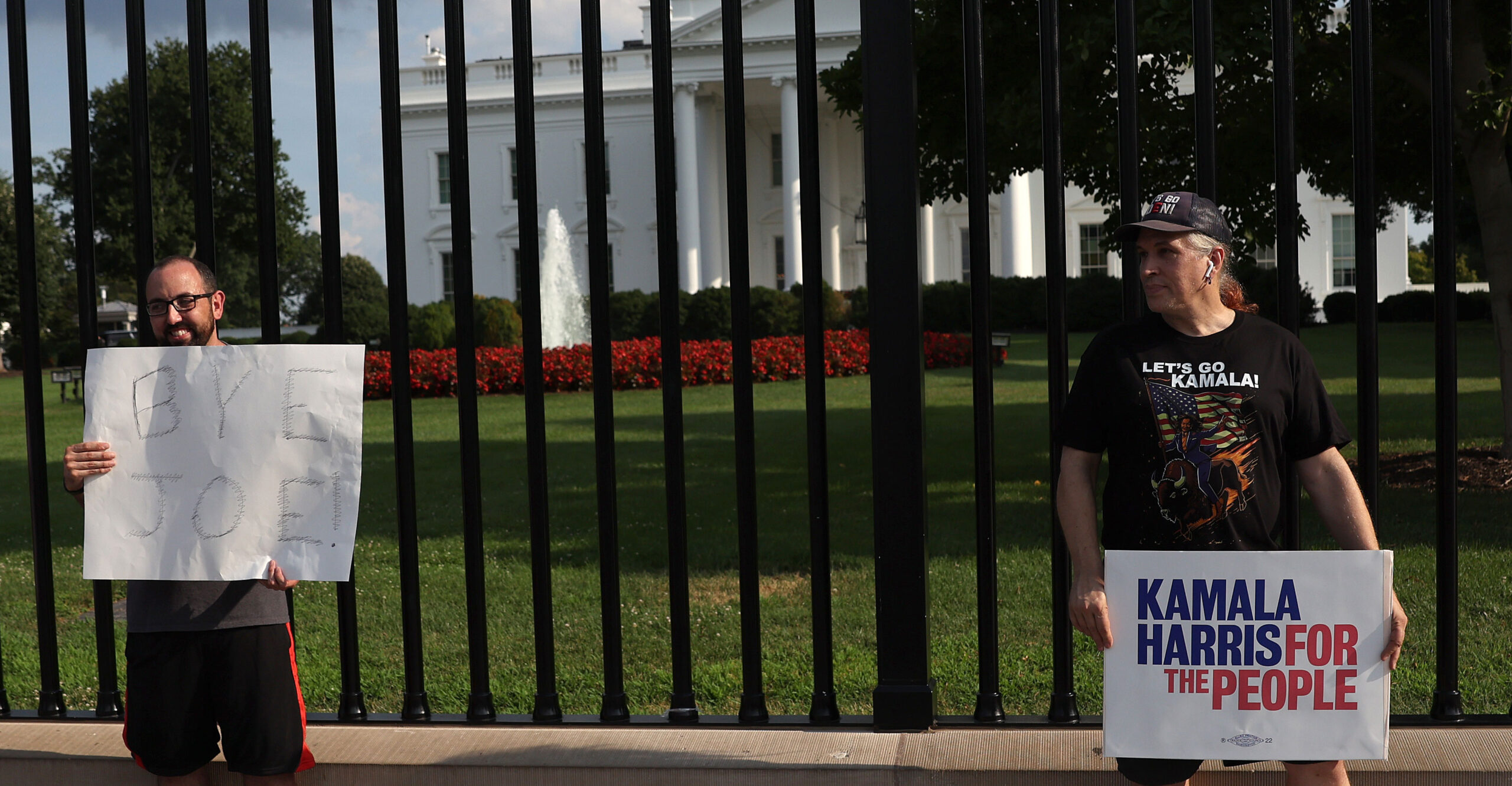
The Real Reason Biden Dropped Out—and What Happens Now
Favicon 
www.dailysignal.com

The Real Reason Biden Dropped Out—and What Happens Now

Joe Biden is no longer the Democratic presidential nominee. After weeks of heartburn from the Democratic political establishment—and the unique spectacle of the media finally holding the Democrats accountable for their dishonesty—Biden announced Sunday that he would be dropping out of the presidential race. That announcement followed his disastrous June 27 debate performance against former President Donald Trump, a performance that demonstrated to a flabbergasted America that the president of the United States is fully addled. Biden tried to deny it for weeks. Some played along; most did not. Eventually, Biden’s abysmal poll numbers, combined with strong-arm tactics from political mafia boss Barack Obama and consigliere Nancy Pelosi, forced Biden from the race. There are a number of lessons to be learned from this extraordinary chain of events. First, as Lincoln apocryphally said, you can fool all the people some of the time, and some of the people all the time, but you cannot fool all the people all the time. For years, we were told that behind closed doors, Joe Biden was cracking the secrets of cold fusion, even as we saw with our own eyes that he was in a state of continuous mental collapse. The power of the media extends only so far. Second, while the political parties have lost much of their former power, they still exist—and they still have teeth. Democratic Party bosses and moneymen tossed out 14 million votes in favor of Biden in the primaries because the polls looked bad. It’s that simple. Biden didn’t drop out because he suddenly discovered that as a patriot, he simply couldn’t lead America forward any longer. He dropped out because it was made clear to him that either his political brains or his signature would be on his resignation papers. Third, the Democratic Party still has a few unbreakable rules, the most important of which is that no black woman can be supplanted, no matter how bad a candidate she is. The newfound Democratic enthusiasm for hideously unpopular Vice President Kamala Harris has odor but no substance. Few Democrats are excited about Harris; they’re more excited that Biden is gone. But Harris herself is a preternaturally flawed candidate—corrupt, radical, and dishonest. She ran an all-time stinker of a presidential campaign in 2020. During that campaign, she somehow achieved the signal political feat of coming out against fracking, guns, and private health insurance—sure winners in swing states like Pennsylvania, Michigan, and Wisconsin. As Biden’s supposed “border czar,” she has presided over the worst border crisis in American history. She is tied at the hip to his awful record. Then there’s the fact that she is a charmless copy of Hillary Rodham Clinton, with the unfortunate addition of a Joker-like involuntary laugh that could break glass. But Democrats can’t get rid of her. To do so would be to crack their intersectional coalition. And since 2012, Democrats have been running on that coalition … over and over and over again. It has only worked once, and that time only because Democrats radically changed every voting rule. But Democrats are wed to the strategy. And they won’t divorce it now. All of which means that Trump still has the electoral advantage in 2024, should he choose to take advantage of it. He’ll have to be more disciplined than he has been against a walking corpse like Biden. He’ll have to focus on Harris’ record rather than her unlikability or lack of qualifications. But anyone who proclaims that Harris’ entrance into the race means that she is now the front-runner simply isn’t living in the world of reality. In the meantime, we bid a not-so-fond farewell to the candidacy of Biden. Now only one question remains: If he’s too senile to run, why isn’t he too senile to remain president for the next six months? COPYRIGHT 2024 CREATORS.COM We publish a variety of perspectives. Nothing written here is to be construed as representing the views of The Daily Signal. The post The Real Reason Biden Dropped Out—and What Happens Now appeared first on The Daily Signal.
Like
Comment
Share
Reclaim The Net Feed
2 yrs

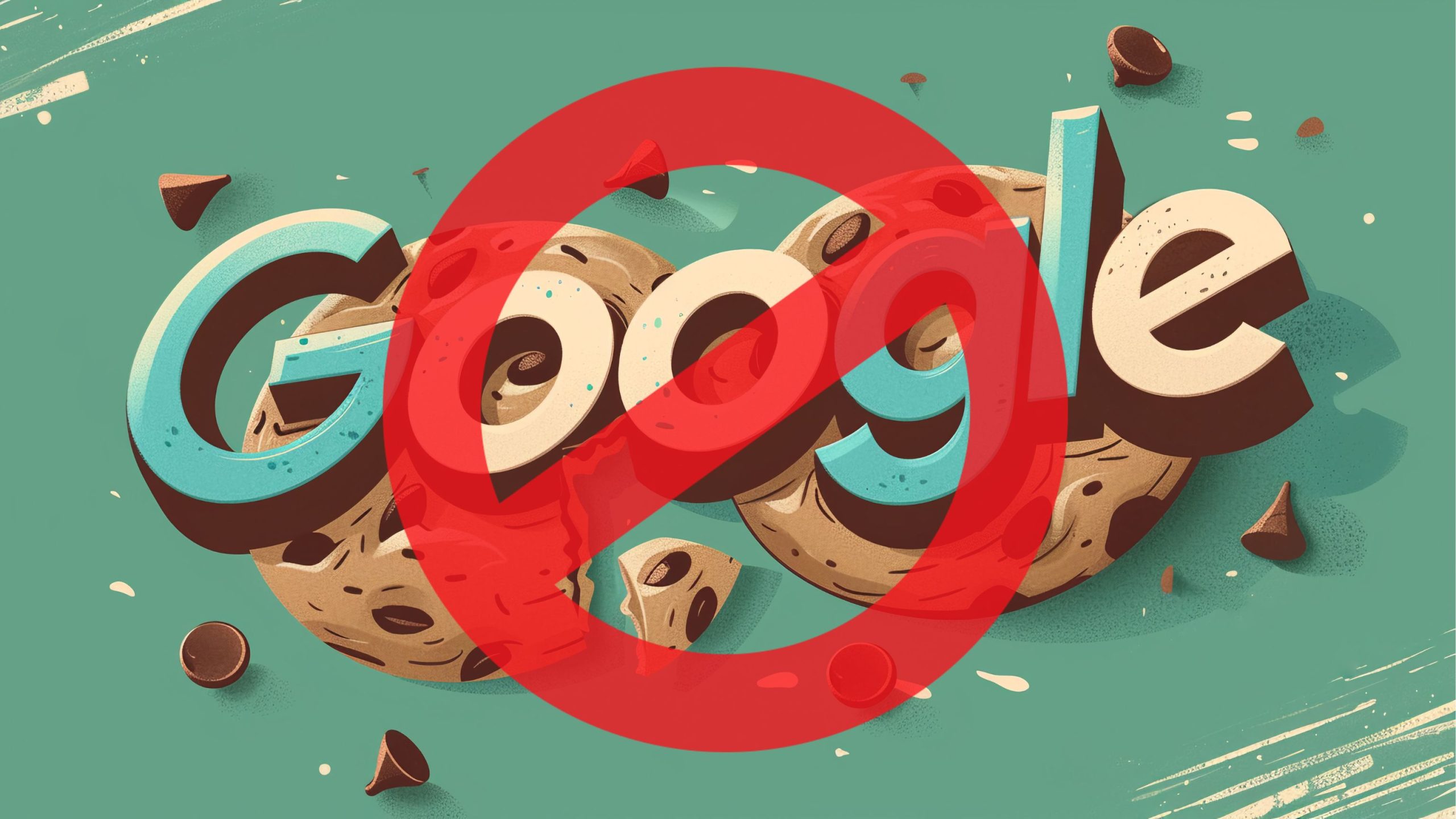
Google’s Cookie Reversal: What It Means for Privacy
Favicon 
reclaimthenet.org

Google’s Cookie Reversal: What It Means for Privacy

If you're tired of censorship and dystopian threats against civil liberties, subscribe to Reclaim The Net. Sign Up To Keep Reading This post is for Reclaim The Net supporters. Gain access to the entire archive of features and supporters-only content. Help protect free speech, freedom from surveillance, and digital civil liberties. Join Already a supporter? Login here If you're tired of censorship and dystopian threats against civil liberties, subscribe to Reclaim The Net. The post Google’s Cookie Reversal: What It Means for Privacy appeared first on Reclaim The Net.
Like
Comment
Share
Hot Air Feed
Hot Air Feed
2 yrs

Unions for Hamas?
Favicon 
hotair.com

Unions for Hamas?

Unions for Hamas?
Like
Comment
Share
Science Explorer
Science Explorer
2 yrs

What Octopus Skin Can Do To Protect Us From The Sun
Favicon 
www.iflscience.com

What Octopus Skin Can Do To Protect Us From The Sun

It’s summer (for half the planet). While we should protect our skin from the Sun all year round (even if you live in Britain), it’s time to lather on sunscreen. Sunscreen products protect us from the UV light of the Sun, but they have come under scrutiny because of their toxic effects on both humans and marine creatures. A new study proposes to use a compound derived from octopus and squid skin to make sunscreen more safe and effective. Xanthommatin is a chromophore found in the skin of cephalopods and some arthropods. Chromophores are colored molecules that give cephalopods their changing colors. They do so by absorbing certain wavelengths of light and emitting others. Their ability to absorb light is what could be potentially harnessed in sunscreen. Most sunscreens work by absorbing the harmful UV light from the Sun. Different sunscreens contain different active compounds: some are organic compounds, some are minerals like zinc oxide. Leila Deravi and colleagues propose to supplement zinc oxide sunscreen with a synthetic version of xanthommatin (we won’t need to harvest this molecule from octopuses!). To understand if this proposed new product is safe and effective, the researchers had a few questions to explore. Is xanthommatin safe for marine life?We put on sunscreen, but when we go for a swim or take a shower the sunscreen washes off and goes into the sea. Combined with the sunscreen compounds from industrial discharge, that adds up to a lot. In the sea they can be taken up by marine life, and at high concentrations can have a whole host of negative effects, like coral bleaching and impaired sea urchin development.  Deravi and colleagues tested the safety of xanthommatin for coral fragments and found no polyp retraction or fragment bleaching even at high dosages. Is xanthommatin safe for humans too?  Deravi said in a statement that some sunscreens “are known to create reactive oxygen species that are not only bad for the environment but can also seep into our skin and cause systemic toxicities”. Her interest in xanthommatin came from her co-author Camille Martin’s work showing that these molecules in the cephalopod skin “have really interesting antioxidant properties”. They showed that xanthommatin does not cause irritation or contact allergy upon repeated exposure. More research is needed to understand if xanthommatin’s antioxidant properties could provide additional benefits. Does it improve the Sun protection of zinc oxide?It appears that on its own xanthommatin does not significantly absorb UV light, but added to zinc oxide it improves the absorption of UVA and visible wavelengths of light. The UV light that can affect human health is divided into two groups: UVA and UVB.  UVB is only able to penetrate the upper layers of your skin where it causes sunburn and increases the risk of skin cancer. UVA (with a longer wavelength) can penetrate more deeply and is associated with photoaging of the skin. Most sunscreens protect predominantly against UVB, with a need for the more broad spectrum protection that the xanthommatin and zinc oxide combination could fulfill. Xanthommatin shows that inspiration from nature could be harnessed to create products that are safer for humans as well as the environment. The study is published in the International Journal of Cosmetic Science.
Like
Comment
Share
Science Explorer
Science Explorer
2 yrs

What Actually Is Muscle Memory?
Favicon 
www.iflscience.com

What Actually Is Muscle Memory?

When we jump on a bike after not riding for years, or somehow manage to pick out a tune on the piano despite not having lessons since we were kids, we might put that down to “muscle memory” – but is that really what we mean? It seems we may be confusing ourselves by using this common expression to refer to two very different biological phenomena, so let’s bring some clarity to proceedings.“It’s like riding a bike”The two scenarios above, as well as a host of other daily actions we barely even stop to think about, are actually examples of motor memory.In the process of learning how to perform an action involving movement, like the classic examples of riding a bike, skating, or swimming, the necessary coordination to do it successfully is encoded within the brain. That means that even after a break, it’s quite easy for us to tap into those saved “files” again and remember how to do the task, even subconsciously. Back in 1967, psychologists Paul Fitts and Michael Posner laid out a theory in which motor learning was divided into three phases: a cognitive phase, an associative phase, and an autonomous phase. As we learn a new skill, we move through the phases – at first we have to think hard about the movements we’re making, but gradually they become automatic.More recently, researchers have used sophisticated imaging to watch the multiple stages of motor learning as they happen in the brain. Different regions of the brain are employed at different times until the skill is fully embedded. The fact that memories acquired in this way seem to persist so well, even in cases where other memories have been irreparably damaged, has sparked a lot of scientific curiosity.“Some studies on Alzheimer's disease include participants who were previously musicians and couldn't remember their own families, but they could still play beautiful music,” said associate professor of neurosurgery and neurology Jun Ding in a Stanford University blog post. “Clearly, there's a huge difference in the way that motor memories are formed.”Ding was part of a team that investigated this difference. In a 2022 study, they found that mice learning to fetch food pellets formed new neural connections simultaneously in two parts of the brain: the motor cortex and the dorsolateral striatum, which is involved in the formation of habitual behaviors. Weeks later, when the mice were tested on what they’d learned, their brains showed a spike in activity in those same neural networks. They speculated that over time, as we repeat an action, we develop redundant neural pathways that can control it – meaning that if one is blocked or damaged, there’s another there to take its place. This could explain why motor memory seems to last as long as it does.Structural changes in the brain can also be seen. As explained in a 2017 post by then University of Oxford DPhil candidate Ainslie Johnstone, we know that representations of different muscle areas in the body change in the brain to reflect repetitive actions – if you're a professional violinist, the part of your cortex dedicated to your left hand, which has to do the majority of the complex and intricate movements, will be bigger than average. All this to say, motor memory is very much a brain-centric process – your muscles have comparatively little to do with it. If that’s not muscle memory, then what is?Is “muscle memory” actually a thing?When fitness professionals talk about muscle memory, they generally mean the capacity of our muscles to “remember” previous training we’ve undertaken.During muscle-building training, the body physically adds new cells to the muscles that are being targeted. It was previously assumed that these cells would be lost if the newly acquired muscle mass was not maintained through continued exercise. However, a 2019 review put paid to this idea.  Lawrence M. Schwartz, a professor at the University of Massachusetts Amherst, took a look at the accumulated data on this topic and concluded that “the apoptotic loss of nuclei with atrophy cannot be supported”. In other words, even when a muscle starts to wither, that doesn’t mean the cells are actually dying. What’s more, trainers have observed that you can regain that lost muscle surprisingly quickly. Nick Mitchell, the founder and CEO of personal training company Ultimate Performance, told CNN that regaining lost muscle mass often happens more speedily than gaining it in the first place. The longer you’ve had the muscle, the slower it is to disappear and the quicker it is to get it back. “Once you’ve got those additional nuclei, they’re in reserve. You’re banking that capacity,” Schwartz told The Washington Post. In a way, then, the muscles remember what it was like to be big and beefy – possibly permanently, according to some research – allowing them to more easily return to that form. You might even say that, for them, it’s just like riding a bike.All “explainer” articles are confirmed by fact checkers to be correct at time of publishing. Text, images, and links may be edited, removed, or added to at a later date to keep information current. 
Like
Comment
Share
Science Explorer
Science Explorer
2 yrs

Rare Brass Trumpets Discovered In 16th Century Shipwreck
Favicon 
www.iflscience.com

Rare Brass Trumpets Discovered In 16th Century Shipwreck

A veritable treasure trove, including exceptionally rare brass trumpets, has been found on board a 16th-century shipwreck by archaeologists with Croatia’s International Centre for Underwater Archaeology (ICUA).The unknown sailing ship, which was armed with English iron cannons, sank off the southern coast of Istria, near Cape Kamenjak, in Croatia. The ship likely experienced trouble during storms, which ultimately led to its demise.At the time, the ship was carrying various goods, including ceramic vessels, colorful glass beads, and red glass bowls. But recent excavations have also found a cargo of brass trumpets on board the sunken vessel. The objects were extremely rare and expensive during the 16th century. Luka Bekić of the ICUA told Croatian Radiotelevision that seems they were likely "more than ten" of these instruments, which were being transported in pieces.The trumpets recovered from the vessel appear to have been transported in pieces.IMAGE CREDIT: INTERNATIONAL CENTRE FOR UNDERWATER ARCHAEOLOGY.The archaeologists have identified inscriptions on trumpets that state where they were created, which include Strasbourg, France, and Leiden, in the Netherlands. The best-preserved example includes the inscription “LVGDVNY BATAVORVM”, which is the Latin name for Leiden.“Until now, no trumpets from those cities were known or have been preserved anywhere in the world,” the ICUA explained in a statement.An examination of the cargo and other details on the vessel has led archaeologists to think the ship was likely Dutch and was trading between Leiden, Venice, and Constantinople (modern Istanbul). However, this is far from being conclusive; the researchers will have to spend several more years investigating the cargo and the ship’s other archives for more conclusive answers.Excavation of the site has also found materials belonging to the ship itself, including wooden structures, pieces of ropes, and wooden pulleys. Archaeologists have also found three cannons that will remain in situ while they consider the best methods to safely remove them from the sea floor.The researchers are using digital methods, including photogrammetric models, to help document the segments of the ship that have already been examined. This technique in particular will help create a fuller picture of the site when the research finishes.The cannons and the ship’s anchor will be preserved for diving tourists to visit in the years to come.
Like
Comment
Share
Science Explorer
Science Explorer
2 yrs

Komodo Dragons' Teeth Are Iron-Tipped For Extra Bite, Raising Questions About T. Rexes
Favicon 
www.iflscience.com

Komodo Dragons' Teeth Are Iron-Tipped For Extra Bite, Raising Questions About T. Rexes

Komodo dragons’ status as possibly the ultimate killing machine has been enhanced with the discovery their teeth are tipped with iron. There’s also reason to suspect predatory dinosaurs may have used the same trick, allowing them to puncture and pull prey apart with extra speed.It’s a curious thing that arguably the closest survivor to a living tyrannosaur in body and behavior – although not genetics – exists on only a few small islands, and bits of a larger one, but there they certainly rule the roost. Komodo dragons (Varanus komodoensis), the largest living lizard, have a kill rate when hunting that puts any other vertebrate to shame. They also have more hidden weapons than a ninja in a Hollywood action film.Already known for serrated, curved teeth, like many theropod dinosaurs, a new study shows the tips and cutting edges are enriched in iron. This explains how their teeth remain capable of pulling prey apart despite an enamel coating much thinner than in mammals.Komodos are not unique in strengthening their teeth with the addition of the metal. Chitons like Cryptochiton stelleri, a type of mollusk nicknamed the “wandering meatloaf”, have also adopted the idea. Curiously, chitons are not terrifying predators (although the image in the previous link may haunt your nightmares). They use the iron to allow themselves to scrape their teeth on rocks to collect algae and bacteria without them wearing down too fast.Iron is a common feature in reptilian teeth, presumably adding strength, but the concentrations are small. Puzzlingly, however, Komodo dragons and their nearest relatives are the only reptiles we’ve yet found that have taken this a stage further by concentrating the iron where it counts. The capacity to sequester iron into a discrete coating in just the right places appears to be a rare adaptation. This innovation keeps the serrated edges of dragon teeth sharper than would otherwise be possible.The iron does make the dragons’ teeth orange, but other dragons probably think that’s sexy.Given that the resemblance between the shape of Komodo dragons’ teeth and that of the larger predatory dinosaurs has been noted for a while, it was natural for researchers to wonder if T. rex teeth were iron-tipped too.“Unfortunately, using the technology we have at the moment, we can’t see whether fossilised dinosaur teeth had high levels of iron or not. We think that the chemical changes which take place during the fossilisation process obscure how much iron was present to start with,” said Dr Aaron LeBlanc of King’s College London in a statement. Nevertheless, the research was not wasted. “What we did find, though, was that larger meat-eating dinosaurs, like tyrannosaurs, did change the structure of the enamel itself on the cutting edges of their teeth. So, while Komodo dragons have altered the chemistry of their teeth, some dinosaurs altered the structure of their dental enamel to maintain a sharp cutting edge,” LeBlanc said.Nor is LeBlanc giving up on learning whether any dinosaur teeth were iron-tipped. “With further analysis of the Komodo teeth we may be able to find other markers in the iron coating that aren’t changed during fossilisation,” he said. Some such markers might survive fossilization, providing an answer to the dinosaur question.The team are also investigating some of Komodo dragons' closest relatives, including some extinct giants.The teeth of megalania, Australia's extinct even larger relative of the Komodo dragon, show similar serrations to Komodos', but there is no sign of the pigmentation that would indicate iron tipping.Image Credit: LeBlanc et al, Nature Ecology and Evolution 2024 (CC BY 4.0)It’s a myth that Komodo dragons’ mouths harbor lethal bacteria that accelerate sepsis in their prey. However, that doesn’t mean their size, speed, and fearsome teeth are their only weaponry. They have also been shown to have a layer of bony armor under their scales that has been compared to chain mail. Then there is their venom, which somewhat ironically could prove a lifesaver for stroke victims, and blood with powerful antibiotic capacities. You’d think with all these powers Komodo dragons would be the global apex predator, at least in the tropics, but apparently they just don’t like moving far from home, and will return there quickly if moved. Having such a limited range means that changes to their environment have put them on the endangered species list. Teeth of iron are no good if there’s nothing to hunt.The study is published open access in Nature Ecology and Evolution.
Like
Comment
Share
NewsBusters Feed
NewsBusters Feed
2 yrs

Biden Told Us to ‘Google Project 2025’ … We Did! Here Are the Results
Favicon 
www.newsbusters.org

Biden Told Us to ‘Google Project 2025’ … We Did! Here Are the Results

FIRST ON MRC: MRC Free Speech America has peered under the sheets to catch Google seemingly cuddling up to President Joe Biden to attack The Heritage Foundation’s Project 2025, just weeks before he exited the 2024 race. As always, the Media Research Center has the receipts to prove it. When Biden directed his 38 million X followers to “Google Project 2025” last week, MRC researchers took him up on his advice. MRC found that Google, the Democrats’ good old friend, exclusively promoted the scandal-plagued president’s website in searches for “Project 2025.” The new findings reinforce previous MRC reports exposing how Google has backed the scandal-plagued president until the days of his humiliating ouster from the Democratic ticket. Despite this, Google appears to have a new pal – the unpopular Vice President Kamala Harris. Backdrop: Over the past several months, the Democratic Party has deceptively labeled Project 2025 as Trump’s plan to upend the federal government and to transform the country just to conservatives’ liking. “Google Project 2025,” Biden wrote in a July 9 X post, reaching over 37 million views. Biden’s call to action followed his now-defunct campaign’s (@BidenHQ) month-long reliance on Google to draw attention to Project 2025. The X page now goes under Harris’s moniker, @KamalaHQ. The Findings, Explained: Conducted on July 10, a clean environment search showed that Google placed Biden’s Project 2025 landing page — https://joebiden.com/project2025/  — at the top of the search results. This website was filled with grossly misconstrued and even demonstrably false information about Heritage’s project. Tellingly, Google omitted Project 2025’s official website in all 106 results reviewed by MRC’s researchers. This means the tech giant barred curious Americans from learning about the initiative’s intent and proposals in its own words, rather than through the partisan lens of the Biden-Harris campaign. Google linked to news articles from the left-leaning BBC and CBS News as the second and third results, respectively, before linking to a PDF copy of Project 2025’s Mandate for Leadership: The Conservative Promise as the fourth result. The tech giant also shared Wikipedia’s Project 2025 page, where it is characterized as an“authoritarian, Christian nationalist plan to steer the U.S. toward autocracy.” Only then did Google show a Heritage Foundation-owned page related to Project 2025 which offered only a brief introduction to the initiative. Again, Google did not show Project 2025’s official website — https://www.project2025.org/ — in any of the results.  In response to these findings, MRC Free Speech America Vice President Dan Schneider suggested Google is making an in-kind contribution to the Biden campaign. “MRC has been sounding the alarm for years that Google is fighting tooth and nail to keep Democrats in the White House. What’s disturbing is that they’re doing it right before our own eyes,” Schneider said. A Google spokesperson did not immediately respond to MRC’s questions about potential coordination with the Biden campaign (now Harris’s) before the president mandated Americans to “Google Project 2025.” The tech giant frequently refuses to answer MRC’s questions. What Exactly Is Project 2025 and Why Biden Attacks It: Launched in response to conservative unpreparedness during the 2016 election, Project 2025 is an initiative led by Heritage promoting pro-freedom and conservative principles in the next administration. The non-partisan initiative is not affiliated with President Donald Trump or his campaign. Trump himself has clarified he is not involved in Project 2025. “I have no idea who is behind it. I disagree with some of the things they're saying and some of the things they’re saying are absolutely ridiculous and abysmal,” the Republican candidate wrote on Truth Social earlier this month. This has not stopped Biden nor Harris from attempting to draw negative attention by suggesting it would mark a Trump-led arrival of the antichrist and the end of so-called democracy. This, of course, is demonstrably false as Biden has grossly misrepresented what the project is about. Fortunately, the attacks have been thus far unsuccessful. Enter Google. Biden’s negative characterization of Project 2025 is evident by the page of his campaign website highlighted by Google. “Project 2025 is the plan by Donald Trump’s MAGA Republican allies to give Trump more power over your daily life, gut democratic checks and balances…,” the site falsely claimed. Google’s Election Meddling Pattern: It isn’t immediately clear why the Harris campaign would appear first in the Google results. However, it adds yet another layer of controversy to the tech giant, as previous MRC studies have revealed that it has buried the campaign websites of Republicans while promoting those of Democrats. On Wednesday, amid the 2024 Republican National Convention, MRC released a study revealing that Google searches for Trump and Biden along with the words “presidential race 2024” resulted in blatant favoritism: Google did not show Trump’s campaign website in the first 100 results but listed the Biden-Harris’s as the very first result. This study followed an earlier MRC report showing Google buried Trump’s campaign ahead of the CNN presidential debate, where millions of Americans witnessed Biden’s cognitive decline, culminating in growing calls for him to step down from the 2024 race.  Following the debate, MRC released a third study that revealed Google News overwhelmingly featured leftist media outlets a day after the “bloodbath” debate.  (Click here for a complete list of MRC studies on censorship and Big Tech bias). Methodology: For this report, MRC Free Speech America analyzed the June 10 Google Search results for “Project 2025.” MRC Free Speech America created an algorithm to automate this process in a clean environment. A “clean environment” allows for an organic search to populate results without the influence of prior search history and tracking cookies. Conservatives are under attack. Contact Google at 650-253-0000 and demand it be held to account to mirror the First Amendment while providing transparency, clarity on so-called hate speech and equal footing for conservatives. If you have been censored, contact us using CensorTrack’s contact form, and help us hold Big Tech accountable.
Like
Comment
Share
The Blaze Media Feed
2 yrs

Wednesday Western: 'El Topo' (1970)
Favicon 
www.theblaze.com

Wednesday Western: 'El Topo' (1970)

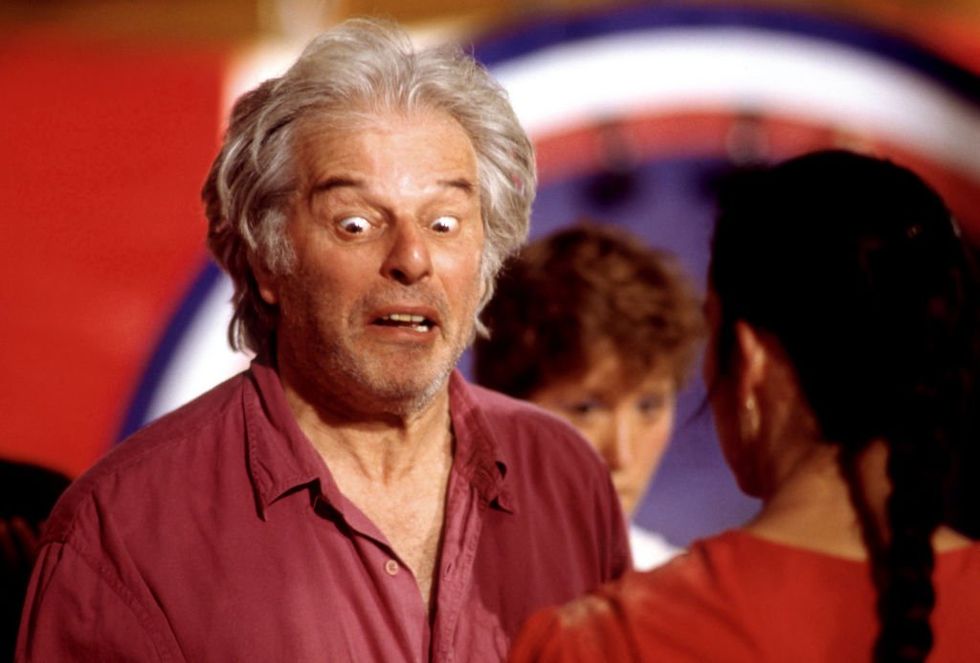
Trying to write about "El Topo" took me by surprise. The short version is: The movies I admired in my 20s look and feel different to me now that I’m married and have kids. I guess I didn’t expect parenthood to change my worldview entirely, including my standards and expectations for art. So this week’s Wednesday Western is not about examining a film we all love. This is instead the story of a grown man looking back at the corduroy bell-bottoms he was famous for in college, back when the world was fundamentally different. Weirder than weird About a decade ago, filmmaker Alejandro Jodorowsky was a hero of mine. His 1973 film “The Holy Mountain” blew my mind. I watched it once a week, then branched into Jodorowsky’s other films, hoping to find another as beautifully strange. I was not disappointed. Soon I stumbled upon “El Topo” (Spanish for “The Mole”), which the BBC deemed “the weirdest Western ever made.” It quickly replaced "The Holy Mountain" as my favorite Jodorowsky film. Not only did the Chilean-born director write the script, he scored the soundtrack and played the starring role. Watching it today, however, I find plenty to be disappointed about. Be warned: This is the weirdest movie we’ve examined so far on Wednesday Western. It will not sit right with many of you. By the end of this article, you’ll be equipped with everything you need in order to make a decision: Should I even watch “El Topo,” which Jodorowsky himself described as “LSD without LSD”? Acid Western In a review of the film, the New Yorker coined the term "acid Western" to describe “El Topo.” The New York Times used the term “psychomagical realism.” Few directors have captured the possibilities of surrealism better than Alejandro Jodorowsky. "El Topo" has served as a license to be weird for many directors, writers, and actors, earning praise from an array of artists, including Frank Ocean, Marilyn Manson, David Lynch, Peter Gabriel, Peter Fonda, John Lennon, The Mighty Boosh, Bob Dylan, George Harrison, and Patton Oswalt, the chubby little guy from the show "King of Queens." During an interview, Jodorowsky said, “I wanted to do an image that a person will never forget in his life, to create mental change. To reach a state of enlightenment.” The shadowy hero of this hallucination is the eponymous El Topo, whom we find wandering the desert on horseback with his naked son, Hijo, which is Spanish for “son.” They encounter a village that has just been ruthlessly gutted, the bodies of its citizens and animals lining the mud — Jodorowsky used actual dead horses. Where you can find it The easiest way to watch is probably via the Internet Archive or Vimeo. Amazon Prime: $4.09 to rent; AppleTV: $19.99 to buy (I do not recommend this). If none of those work, shoot me an email at kryan@blazemedia.com and I’ll get you sorted. Anti-Westerns The “El Topo” ratio is interesting: Most Western aficionados who aren’t as interested in other genres don’t like “El Topo,” if they’ve even heard of it. Meanwhile, “El Topo” is huge among movie snobs and eccentric cinephiles who don’t typically like Westerns. In this, it resembles "Brokeback Mountain," which I will not be covering. Compare this to, say, “The Man Who Shot Liberty Valance,” which is lauded by both groups, or “Heaven’s Gate,” which is largely reviled by both (more on this in an upcoming entry). Which brings us to another reason that "El Topo" may prove divisive for Wednesday Western readers: its status as an “anti-Western." This was a term coined by Robert Altman to describe his iconic "McCabe & Mrs. Miller," which Screen Rant's Ben Sherlock writes “subverts and upends just about every trope of the genre in the bleakest, most cynical way possible.” By now, you can guess where I stand on any movie or director whose goal is to “subvert and upend” a genre that, instead, should be enjoyed and preserved. The terminology strikes me as a bit silly and pretentious. The presupposition is that Westerns didn’t become rebellious — or authentic — until the postmodern geniuses waved their wands and created morally ambiguous movies. Budd Boetticher’s Ranown Cycle alone belies this claim. To make things worse ... As you may have gathered by now, Jodorowsky is a weirdo. In “El Topo,” he slaughtered a few dozen rabbits to use as set dressing. He also killed horses and sheep and at least one frog. He has since claimed that he killed all of the animals himself. If that weren’t enough to polarize us, there’s the rape scene. In his book “El Topo: A Book of the Film” (1972), Jodorowsky wrote: “I really raped her. And she screamed." In 2019, the story emerged, and New York's El Museo del Barrio canceled an exhibit devoted to Jordorowsky’s work. Jodorowsky waved away the controversy: These words: ‘I’ve raped my actress,’ was said fifty years ago by El Topo, a bandit dressed in black leather that nobody knew. They were words, not facts, Surrealist publicity in order to enter the world of cinema from a position of obscurity. I do not condone the act of rape, but exploited the shock value of the statement at the time, following years in the Panic Movement and other iterations of harnessing shock to motivate energetic release. In an interview with the New York Times, Jodorowsky’s wife, Pascale Montandon-Jodorowsky, insisted that her husband is a “respectful, generous, and deeply good man,” that he has “never raped anyone,” and that he’s the victim of “attacks, scandals, intimidations, threats, slanders.” To complicate the matter, Jodorowsky claims that his own mother is the child of a rape. "There are terrible fathers and mothers. I show that already in 'Santa Sangre.' I myself come from a crazy family of raped immigrants in misery. My mother's mother was raped by a Cossack. My mother was born from rape. And I was born in 1929, the year of crisis." Artist as jester of the universe During a 1973 interview, Jodorowsky loosened from talk of the movie he was promoting and, in his elegant yet broken English, defined the artist as the jester of the universe. When traversing Jordorowsky’s surreal and symbol-inundated imagery, this idea is helpful. The weirdness of his work is by nature playful. It is of course philosophical, spiritual, political, religious — all of those. But it functions clearest when appreciated as play. “El Topo” has done a lot not just for Westerns but for film overall. Criterion Collection detailed the four-decade career of Ben Barenholtz, beginning with the French "Les Enfants Terribles," followed by “Night of the Living Dead,” the original, in 1968. That year, he opened Elgin Cinema in New York City, where he began screening experimental movies at midnight. “El Topo” is responsible for making the midnight movie a staple of American cinema. Still, Jodorowsky’s prestige has waned in my little cinematic universe. Knowing the full story of "El Topo" — the animal cruelty, the accusation of rape — I couldn’t re-watch the movie that I once found so compelling. A father now, I have to wonder what kind of man would unearth pure evil and total death with the giddiness of a deranged scientist.
Like
Comment
Share
Showing 19202 out of 56670
  • 19198
  • 19199
  • 19200
  • 19201
  • 19202
  • 19203
  • 19204
  • 19205
  • 19206
  • 19207
  • 19208
  • 19209
  • 19210
  • 19211
  • 19212
  • 19213
  • 19214
  • 19215
  • 19216
  • 19217

Edit Offer

Add tier


Select an image
Delete your tier
Are you sure you want to delete this tier?

Reviews

In order to sell your content and posts, start by creating a few packages. Monetization

Pay By Wallet

Payment Alert

You are about to purchase the items, do you want to proceed?

Request a Refund