YubNub Social YubNub Social
    Advanced Search
  • Login

  • Day mode
  • © 2026 YubNub Social
    About • Directory • Contact Us • Privacy Policy • Terms of Use • Android • Apple iOS • Get Our App

    Select Language

  • English
Install our *FREE* WEB APP! (PWA)
Night mode
Community
News Feed (Home) Popular Posts Events Blog Market Forum
Media
Headline News VidWatch Game Zone Top PodCasts
Explore
Explore Jobs Offers
© 2026 YubNub Social
  • English
About • Directory • Contact Us • Privacy Policy • Terms of Use • Android • Apple iOS • Get Our App

Discover posts

Posts

Users

Pages

Group

Blog

Market

Events

Games

Forum

Jobs

Living In Faith
Living In Faith
2 yrs

What Marilynne Robinson Sees and Misses in Genesis
Favicon 
www.thegospelcoalition.org

What Marilynne Robinson Sees and Misses in Genesis

The characters in Marilynne Robinson’s novels often wrestle with the Bible. Each one’s knowledge of Scripture and theology has a different rhythm shaped by a unique background. For example, in Lila, John Ames sees the world through the logical language of Calvin’s Institutes, but the emotionally difficult parts of Ezekiel and Job shape the interpretive horizon of the titular character, an orphaned young woman who becomes Ames’s bride. When our church book club discussed the book, one participant described it beautifully: “John could speak theologically; Lila could relate to that baby weltering in his own blood” (Ezek. 16:6). Robinson’s ability to convey biblical themes in her fiction arises from her own study of Scripture, which she displays in her nonfiction offering, Reading Genesis. She presents Genesis as a powerful narrative with an intentional trajectory, developed themes, and a clear purpose. Her reflections on the first book of Moses reveal the Pulitzer Prize–winning novelist and writing professor has long wrestled with the Bible’s questions about human dignity, divine sovereignty, and the problem of evil. Robinson masterfully reveals the internal unity and purpose of Genesis even as she neglects its broader, canonical connections. Genesis’s Unity We often encounter the stories in Genesis one by one in Sunday school lessons, our Bible reading plans, or a sermon series. But Robinson refuses to read the text’s narrative sections in isolation from one another. She also rejects the idea that Genesis was stitched together by careless redactors. When discussing the creation and flood narratives, Robinson observes how “oddly important to Old Testament scholarship” the existence of parallel Babylonian accounts has been (32). Like modernist scholars, Robinson suspects Genesis’s editors drew from contemporary literature, but she sees the borrowing as intentionally subversive. For example, other ancient Near Eastern epics, like Gilgamesh, are fantastical and mystical. Genesis, by contrast, is domestic. The other accounts center on appeasing gods infuriated with earth’s “intolerably numerous” people (49). Genesis is parochial and personal, displaying how “God realizes His purposes in and through the lives of human beings” (145). Robinson reads back and forth, interpreting Genesis’s narratives in terms of both what came before and what’s to come. When introducing Joseph’s story, for instance, she writes, Antagonism between or among brothers has recurred in Genesis, beginning with a first statement of the theme in Cain’s murder of Abel. It is assumed Esau really might kill Jacob. The issue in both cases is a yearning for the blessing and approval of the Father or father, and bitterness that another enjoys it. So Joseph, in the coat that never lets his brothers forget he’s favored, wanders into a perilous situation. (181) Robinson’s ability to see Genesis’s uniqueness in its historical context and to highlight unity among the book’s thematic threads is Reading Genesis’s major contribution, especially for evangelical readers. Genesis’s Purpose Reading the book as a whole, Robinson shows how the features of Genesis’s narratives aim the book toward Israel’s enslavement. This trajectory isn’t anticipated only in God’s explicit prediction (Gen. 15:13–14) but in subtle details like the shape of Joseph’s visions. “Joseph has something of the Egyptian about him even before he leaves his father’s house,” she observes. His dreams are “like the dreams of the Egyptians, little fragments of allegory with veiled meaning, rather than Hebrew dreams, in which God is a speaking presence” (194). In Egypt, God uses Joseph to rescue his family and all Egypt. But, as Robinson notes, Joseph’s policies also made the entire Egyptian population into Pharaoh’s slaves (218–19). How do we reconcile both good and evil coming from one act? Does God have a purpose in this complexity? Robinson thinks so. “The Bible is a theodicy,” she writes (3). As such, Genesis is a defense of God’s goodness and omnipotent providence in the face of a world filled with floods, famine, and fratricide. Joseph’s words to his brothers become Genesis’s theme: “You meant evil against me, but God meant it for good” (Gen. 50:20). As Robinson writes, “The character of everything, good fortune and bad, is changed when its ultimate meaning awaits the great unfolding of His intention” (17). Genesis is a defense of God’s goodness and omnipotent providence in the face of a world filled with floods, famine, and fratricide. For Robinson, Genesis’s events occur “over a very long span of time during which an acutely singular providence works itself out through human beings who are fallible in various ways and degrees and who can have no understanding of the part their lives will play in the long course of sacred history” (177). In her view, Genesis’s long arc doesn’t resolve the tension between God’s goodness and the great injustices people enact and suffer in a fallen world. After all, the text records murder, worldwide disaster, barrenness, rape, and sexual exploitation. Yet it offers us hope in God’s guiding hand. Genesis’s Other Horizons When New York Times reviewer Francis Spufford encountered Reading Genesis’s emphasis on God’s sovereign care for his people, he retorted that Robinson “seems to populate the ancient desert with rather anachronistic Calvinists.” I read Spufford’s critique as an endorsement. But though I found Robinson’s confidence in God’s grace and guidance refreshing, I also consider her interpretive vision too narrow. Edmund Clowney said each biblical text has three interpretive horizons—its immediate context, the period of revelation within which each passage falls, and the context of the entirety of revelation. Richard Lints later called these, respectively, the text’s textual, epochal, and canonical horizons. In Reading Genesis, Robinson models careful attention to the text’s epochal horizon and introduces readers to many of its literary features. But her reading often misses the trees for the forest. As Sebastian Milbank observes, Robinson’s “textual analysis . . . is the weakest aspect of the book.” While she pays close attention to Genesis’s broader narrative arc, Robinson regularly confuses the text’s details. For example, she repeatedly says “Cain was the father of saintly Enoch and the ancestor of Noah” (211; cf. 57, 59)—an error that wrongly conflates Cain’s line (Gen. 4:17–24) with Seth’s (Gen. 4:25–5:32). Though I found Robinson’s confidence in God’s grace and guidance refreshing, I also consider her interpretive vision too narrow. Sadly, Robinson also gives scant attention to interpreting Genesis canonically. Because she hesitates before looking to Jesus, her answers to Genesis’s theodicy questions are unsatisfying. Robinson traces how Jacob’s reunion with Esau and Joseph’s reunion with his brothers raise “the prospect of punishment that would be appropriate to transgression . . . then steps away from the execution of it” (216). She shows how the tension between justice and mercy in these stories points to God’s own gracious restraint. But Robinson ignores the mechanics of how justice and mercy relate. Even when she discusses God’s provision of a ram instead of Isaac on Mount Moriah (Gen. 22), she focuses on how Genesis’s account of God’s character differs from the Canaanite religion where child sacrifice was common (116). This is good, but it doesn’t show how Christ’s substitutionary death satisfies God’s holy wrath against sin. Read Genesis in Light of the Whole In these faults and strengths, Reading Genesis demonstrates the importance of reading each biblical passage in light of the whole. Like John Ames, Lila, and the other characters in Robinson’s novels, we inevitably bring our own frames of mind when we approach Scripture. So we must be careful not to stand over the text but to let the whole of God’s Word shape us. As Robinson does so well, we must examine each text’s literary features to understand how it would have been understood by its first hearers. As she fails to do, we must also read each text carefully and in light of how it’s been interpreted canonically, particularly in light of how it testifies to Jesus Christ.
Like
Comment
Share
Living In Faith
Living In Faith
2 yrs

The Gift of Prison Ministry
Favicon 
www.thegospelcoalition.org

The Gift of Prison Ministry

One of the first people I met while visiting Alabama prisons was Robert, a kind man with a wide, easy smile. We bonded over college football and quickly discovered my current home and his family’s home are about two miles apart on Birmingham’s east side. Robert became a Christian while in prison and now serves in the prison church, leading a discipleship group. Robert said with joy that he’d tell his family to attend the church I’ve planted in our shared neighborhood. I thanked him and said I couldn’t wait for him to finish his prison sentence and join us himself. Robert’s smile returned as a shaky grimace. He told me, “I wish, but with two life sentences, I won’t be able to make it home. I am here until the Lord calls me home.” Why We Should Care for the Imprisoned Unless you or a loved one is convicted of a felony, it’s unlikely you’ll ever spend time inside a prison. They’re usually placed away from the public eye and behind high fences for security. Prisoners are removed from our sight and, too often, from our hearts and minds. This isn’t a problem for the world. Society prefers distance from the imprisoned. But Jesus’s way is different. God’s Word gives us several reasons why caring for the imprisoned is a gift. 1. Care for imprisoned believers is care for Jesus. Jesus tells Christians that when we care for prisoners, we’re caring for him. Believing prisoners are part of his one spiritual body. Christians will ask, “‘When did we see you sick or in prison and visit you?’ And the King will answer them, ‘Truly, I say to you, as you did it to one of the least of these my brothers, you did it to me’” (Matt. 25:39–40). Just as Paul’s persecution of the church was an attack on Jesus himself (Acts 9:4), our care for the imprisoned church is care for Jesus himself. Passages like Matthew 25 and Hebrews 13:3 where we’re commanded to “remember those in prison” describe the care of believers. The original recipients of this teaching in the early church would have heard these passages as a call to care for Christians unjustly imprisoned for their faith. But we shouldn’t let these facts limit our compassion. Rather, they should encourage it. How do we know which of those in prison are brothers and sisters if we don’t first visit and come to know of their faith? 2. Care for the imprisoned is part of God’s mission. The prison system is a wide mission field. U.S. prison and jail systems are home to nearly 1 percent of all working-age Americans. Just imagine what that means: For every 20 families of five sitting down for dinner in your neighborhood, one family has an empty chair at the table. Care for the imprisoned can be an opportunity to evangelize lost prisoners, and it can be a way to share the gospel with imprisoned people’s loved ones in your community. God’s love and mission can advance through this web of meaningful relationships. Our care for the imprisoned church is care for Jesus himself. When we care for the imprisoned, we demonstrate no one is disqualified from God’s mercy. Mercy starts in the church then radiates out from it like the warmth of the sun. As Jesus said in Luke 6:35–36, “Love your enemies, and do good . . . and your reward will be great, and you will be sons of the Most High, for he is kind to the ungrateful and the evil. Be merciful, even as your Father is merciful.” 3. Care for the imprisoned reorients our faith toward eternity. When you spend time visiting prisoners, you quickly realize they aren’t TV characters. Listening to their stories, you’ll discover many have become brothers and sisters in Christ while in prison. One day, when Christ returns, we’ll sit side by side with them at the banquet of the Lamb. Concrete walls and barbed wire shouldn’t keep Christians from encouraging one another with this future reality. Our futures are bound up together: “There is one body and one Spirit—just as you were called to the one hope that belongs to your call” (Eph. 4:4). We have one hope and a common future: meeting King Jesus together. Most of the world speeds along unconcerned about imprisoned people. But the relative hopelessness of long imprisonments beckons Christians to encourage their brethren and to look with them toward our final and future redemption. 4. Care for the imprisoned is practice in quiet faithfulness. Most prisons prohibit cameras, cell phones, and other technology. So prisoners can’t update their social media to tell the world about you or your good deeds. In most cases, they also won’t attend your church anytime soon. It’s likely no one will know you do prison ministry unless you tell them. But it’s just this kind of quiet faithfulness the Lord has called us to. When we care for the imprisoned, we demonstrate no one is disqualified from God’s mercy. Jesus urged his disciples not to be like the scribes and Pharisees who paraded their good works for the world to see (Luke 11:43–44; 20:46–47). Prison ministry is an opportunity to practice a healthy, secret life of service to the Lord. (Matt. 6:1–4) Visiting and caring for our society’s weak and lowly—widows, orphans, those in foster care, immigrants, the sick, and the poverty-stricken—is a vital part of Christian formation. Prison ministry allows you to become (and to help your church become) more like Christ and shun the ways of an on-camera world. How to Care for Prisoners So how do we care for the imprisoned? 1. Visit them. Connect with a Prison Fellowship chapter or another local prison ministry. Sign up to join and shadow their team on their next visit. Visiting with an established ministry is ideal; this will ensure you meet the facility’s requirements (e.g., background checks or other qualifying procedures) before you arrive. Veteran visitors and chaplains can also be good resources to help you understand the prison’s rules and how to engage in helpful ways with both the prisoners and the staff. 2. Collect toiletries, snacks, socks, and books. Our church serves a local prison by doing annual drives for socks, toiletries, and snacks (Oreos are a favorite locally). These are provided to prisoners involved in the prison ministry. Such items can be expensive for prisoners with limited purchasing power, and they’re a huge encouragement around Christmas. We’ve also done softcover book drives to fill the prison libraries with good books. I’ve seen fully grown men jump with joy over a mountain of used books sent to bless the entire prison. 3. Advocate for them. Christians are called to advocate for the dignity of all people, whether they’re highly visible in society or relatively hidden. Consider researching and advocating against the many threats to a prisoner’s dignity—issues like overcrowding, unreasonable parole, and racial disparity in sentencing. In many states, felons cannot vote and have limited communication access while incarcerated. Their voices will go unheard unless they’re seen, heard, and advocated for on the basis of biblical justice. Prisoners are usually out of sight, but they don’t have to be out of reach of the church’s care. Don’t let the barriers and inconvenience of prison ministry stop you from loving our brothers and sisters. When we care for prisoners, we bless both the imprisoned and our own souls as we act in obedience to Jesus. What if it was you, or your brother, or your mother? As the Lord has spoken, “In everything, do to others what you would have them do to you” (Matt. 7:12, NIV).
Like
Comment
Share
Living In Faith
Living In Faith
2 yrs

Transformation and Holiness:  1 John 2:28–3:24
Favicon 
www.thegospelcoalition.org

Transformation and Holiness: 1 John 2:28–3:24

Don Carson teaches on 1 John 2:28–3:24, which centers on Christlike love, obedience, and transformation. Carson reflects on the depth of God’s love and the joy of being called a child of God, arguing we must imitate Christ as we live out this new identity. Carson teaches on the nature of sin, the significance of personal holiness, and the hope of Christ’s return, urging Christians to purify themselves as Christ is pure.
Like
Comment
Share
Daily Caller Feed
Daily Caller Feed
2 yrs

American League Takes Out National League To Win 10th MLB All-Star Game In 11 Years, Jarren Duran Named MVP
Favicon 
dailycaller.com

American League Takes Out National League To Win 10th MLB All-Star Game In 11 Years, Jarren Duran Named MVP

The American League beats the National League again ... shocker
Like
Comment
Share
Daily Signal Feed
Daily Signal Feed
2 yrs

Carson: Trump ‘Alive and Well’ Despite Democrat Lawfare, Assassination Attempt
Favicon 
www.dailysignal.com

Carson: Trump ‘Alive and Well’ Despite Democrat Lawfare, Assassination Attempt

Former Housing and Urban Development Secretary Ben Carson referenced the Old Testament book of Isaiah when speaking about both Democratic lawfare and an assassination attempt against former President Donald Trump.  “It says, ‘No weapon formed against you shall prosper,’” Carson, a world-renowned former neurosurgeon, said Tuesday at the Republican National Convention in Milwaukee. “Let me tell you the weapons they tried to use: First, they tried to ruin his reputation, and he’s more popular now than ever,” said Carson, who ran against Trump for the Republican presidential nomination in 2016. Trump subsequently tapped him as HUD secretary. “Then they tried to bankrupt him, and he’s got more money now than he had before,” Carson said to a roar of approval from the crowd. “Then they tried to put him in prison, and he’s freer and has made other people free with him.” After broad references to the legal cases against Trump, Carson referred to the assassination attempt on the former president Saturday at a campaign rally in Butler, Pennsylvania, north of Pittsburgh.  “Then, last weekend they tried to kill him, and there he is, over there, alive and well,” Carson said to the former president in the audience.  Carson had harsh words for the legacy media and for big government.  “The free press, a pillar of any free society, has abused the public trust and resorted to lies, deception, and disinformation,” Carson said, adding: “Our government has been no better, shredding our Constitution and upending the rule of law. We have a wide-open border, a broken education system, and chaos breaking out around the world. ” But he pointed to his own life’s story as evidence about “unlimited opportunity” in America.  “In no other country could a poor inner-city kid, raised by a single mom, make it to an Ivy League school, then to medical school, become a successful neurosurgeon, run for president, and eventually become a member of the president’s Cabinet.” The post Carson: Trump ‘Alive and Well’ Despite Democrat Lawfare, Assassination Attempt appeared first on The Daily Signal.
Like
Comment
Share
Daily Signal Feed
Daily Signal Feed
2 yrs

Lara Trump Shares Personal Family Impact of Assassination Attempt on Father-in-Law
Favicon 
www.dailysignal.com

Lara Trump Shares Personal Family Impact of Assassination Attempt on Father-in-Law

Lara Trump told delegates and others in the audience at the Republican National Convention that she initially had prepared a “very different speech” than the one she delivered Tuesday night. The daughter-in-law of former President Donald Trump and co-chairman of the Republican National Committee shared the shock of the assassination attempt on husband Eric Trump’s father late Saturday afternoon.  “Our family has faced our fair share of death threats,” she said.  “None of that prepares you as a daughter-in-law to watch in real time someone try to kill a person you love,” she said. “None of that prepares you as a mother to quickly reach for the remote and turn your young children away from the screen so that they’re not witness to something that scars the memory of their grandpa for the rest of their lives.” She was thankful for “prayers and well-wishes” in the 72 hours since.  “If Donald Trump has shown us anything, it’s that when it feels impossible to keep going, those are the times we must keep going.” The post Lara Trump Shares Personal Family Impact of Assassination Attempt on Father-in-Law appeared first on The Daily Signal.
Like
Comment
Share
NewsBusters Feed
NewsBusters Feed
2 yrs

MSNBC Pushes Debunked Conspiracy Theory that Trump Wasn’t Shot, Glass
Favicon 
www.newsbusters.org

MSNBC Pushes Debunked Conspiracy Theory that Trump Wasn’t Shot, Glass

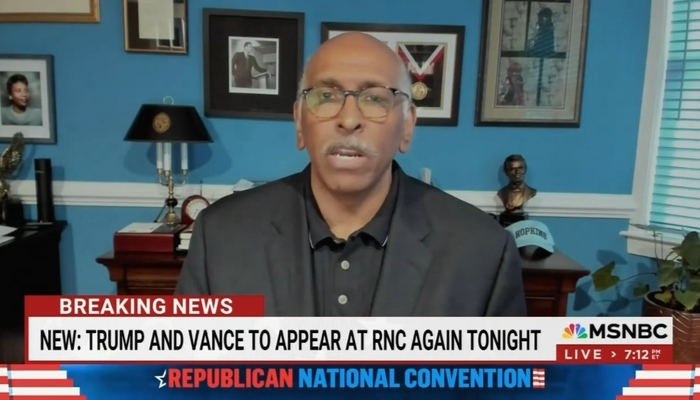
Despite the graphic photographic evidence from different angles showing former President Trump was missing chunks of his right ear after being shot in the head during a failed assassination attempt over the weekend, MSNBC host Michael Steele wasted oxygen during the network’s coverage of Night Two of the Republican National Convention on Tuesday to spew debunked fringe conspiracy theories claiming Trump wasn’t actually hit by a bullet. “Where I am at this point, it's been three days, going on four…and yet, we have not received a medical report from the hospital nor have we received a medical report from the campaign or from the Trump organization about the extent of the damage to his ear,” he decried. Steele, who’s not a ballistics expert nor was he pro-gun rights in any meaningful way, bloviated about how “If he was shot by a high-caliber bullet, there should probably be very little ear there. And so we would like to know that.” The failed former Republican National Committee chairman seemed to be relying on flawed Hollywood movie logic to educate himself on how firearms and ballistics worked. We don’t know what type of ammo was being used. If he was using something with a soft tip, it’s possible that the thinness and flexibility of an ear wouldn’t give enough resistance for a bullet to flatten or cause cavitation. If he was using a full metal jacket, the bullet would likely just pass right through as if it were nothing there, even if other parts of the body were hit. Both would still damage the area it passed through.     He went on to falsely speculate that Trump may not have even been hit by a bullet: “Was it caused by a bullet as opposed to some reports from those on the scene, other reporters, saying that it was actually shards of glass from the teleprompter itself, not the bullet?” One of the liberal media’s favorite fact-checkers, Snopes even debunked the nonsense Steele was peddling. “The assertion that glass, not a bullet, caused the injury is undercut by the fact that photographs show no damage to the teleprompters allegedly hit to produce the broken glass, by a New York Times photograph capturing a bullet passing by Trump's ear,” they wrote. They cited Getty Images used by USA Today to show that both teleprompters were completely intact. Co-host Ari Melber followed up by suggesting that the need to know the medical condition of Trump’s ear somehow matched the need to know President Biden’s cognitive state: While there's a certain amount of time that could be understandable for any medical scenario, the calls around the current president's medical condition, the questions around his capacity, are also the same questions you have in a medical event like this. Certainly the public would want to know as much as possible about both incidents, and the Trump campaign has not been the most transparent. A few minutes later, Steele lashed out at his former party and suggested that they didn’t want the race for the White House to be about ideas, but rather “a narrative around victimhood and martyrdom.” “And that's what Republicans want it to be about, the age of the 81-year-old president, and the martyrdom of the man who wants to be a dictator. So, that's the context for me,” he chided. The transcript is below. Click "expand" to read: MSNBC’s The Reid Out July 16, 2024 7:12:07 p.m. Eastern (…) MICHAEL STEELE: Where I am at this point, it's been three days, going on four since this horrific event occurred, a person lost their live, two have been severely injured. And yet, we have not received a medical report from the hospital nor have we received a medical report from the campaign or from the Trump organization about the extent of the damage to his ear. If he was shot by a high-caliber bullet, there should probably be very little ear there. And so we would like to know that. Is there cosmetic surgery involved? What is the prognosis for recovery? Were there stitches? What is the extent and nature of the damage to his ear? Was it caused by a bullet as opposed to some reports from those on the scene, other reporters, saying that it was actually shards of glass from the teleprompter itself, not the bullet. So, there are a lot of questions around that ear! And yet, there's been no response to that. Instead, just showing the image of the man coming in to the hall with the wounded ear. So, that's the politics. ARI MELBER: Let me jump in on that and then we'll continue. We're looking at that photo. Michael Steele is correct. While there's a certain amount of time that could be understandable for any medical scenario, the calls around the current president's medical condition, the questions around his capacity, are also the same questions you have in a medical event like this. Certainly the public would want to know as much as possible about both incidents, and the Trump campaign has not been the most transparent. So, I think getting medical records and briefing on that at some point would be appropriate. That's what journalists often ask for. (…) 7:15:03 p.m. Eastern STEELE: Well, you know, the reality of it is I don't think Republicans want it to be about a contest between two sets of ideas in the terms of policy. One is a narrative around victimhood and martyrdom, the other is a narrative around the age of an 81-year-old man and his ability to serve. That's what both Democrats seemingly want it to be about because that's all they seem to be talking about, is the age of the 81-year-old president. And that's what Republicans want it to be about, the age of the 81-year-old president, and the martyrdom of the man who wants to be a dictator. So, that's the context for me. (…)
Like
Comment
Share
RedState Feed
RedState Feed
2 yrs

An Emotional Marco Rubio Delivers Profound Tribute to Dad Killed by Would-Be Trump Assassin
Favicon 
redstate.com

An Emotional Marco Rubio Delivers Profound Tribute to Dad Killed by Would-Be Trump Assassin

An Emotional Marco Rubio Delivers Profound Tribute to Dad Killed by Would-Be Trump Assassin
Like
Comment
Share
RedState Feed
RedState Feed
2 yrs

Dr. Ben Carson Preaches, Prophesies, and Invokes Protection Over Trump on Night 2 of the RNC
Favicon 
redstate.com

Dr. Ben Carson Preaches, Prophesies, and Invokes Protection Over Trump on Night 2 of the RNC

Dr. Ben Carson Preaches, Prophesies, and Invokes Protection Over Trump on Night 2 of the RNC
Like
Comment
Share
Science Explorer
Science Explorer
2 yrs

This Molecule Could Make Your Workout More Effective For Weight Loss
Favicon 
www.sciencealert.com

This Molecule Could Make Your Workout More Effective For Weight Loss

Not all sweat is created equal.
Like
Comment
Share
Showing 20183 out of 56670
  • 20179
  • 20180
  • 20181
  • 20182
  • 20183
  • 20184
  • 20185
  • 20186
  • 20187
  • 20188
  • 20189
  • 20190
  • 20191
  • 20192
  • 20193
  • 20194
  • 20195
  • 20196
  • 20197
  • 20198

Edit Offer

Add tier


Select an image
Delete your tier
Are you sure you want to delete this tier?

Reviews

In order to sell your content and posts, start by creating a few packages. Monetization

Pay By Wallet

Payment Alert

You are about to purchase the items, do you want to proceed?

Request a Refund