YubNub Social YubNub Social
    Advanced Search
  • Login

  • Day mode
  • © 2026 YubNub Social
    About • Directory • Contact Us • Privacy Policy • Terms of Use • Android • Apple iOS • Get Our App

    Select Language

  • English
Install our *FREE* WEB APP! (PWA)
Night mode
Community
News Feed (Home) Popular Posts Events Blog Market Forum
Media
Headline News VidWatch Game Zone Top PodCasts
Explore
Explore Jobs Offers
© 2026 YubNub Social
  • English
About • Directory • Contact Us • Privacy Policy • Terms of Use • Android • Apple iOS • Get Our App

Discover posts

Posts

Users

Pages

Group

Blog

Market

Events

Games

Forum

Jobs

Classic Rock Lovers
Classic Rock Lovers  
2 yrs

Favicon 
www.classicrockhistory.com

Complete List Of 5 Seconds Of Summer Band Members

5 Seconds of Summer formed in Sydney in 2011. Comprising members Luke Hemmings, Michael Clifford, Calum Hood, and Ashton Irwin, the band first gained international fame while touring with One Direction on the “Take Me Home” tour. Their self-titled debut album, released in 2014, marked their first foray into the music industry, featuring hits like “She Looks So Perfect” and “Amnesia.” This album catapulted them to global stardom, achieving multiple chart successes and making them the only band (not vocal group) to have their first two full-length albums debut at the top of the US Billboard 200. The band has The post Complete List Of 5 Seconds Of Summer Band Members appeared first on ClassicRockHistory.com.
Like
Comment
Share
SciFi and Fantasy
SciFi and Fantasy  
2 yrs

We’re All Stuck in the Attic: “The Yellow Wallpaper” by Charlotte Perkins Gilman
Favicon 
reactormag.com

We’re All Stuck in the Attic: “The Yellow Wallpaper” by Charlotte Perkins Gilman

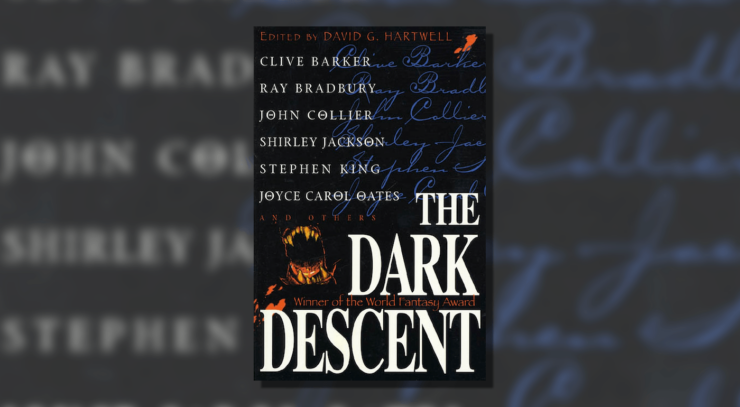
Books Dissecting The Dark Descent We’re All Stuck in the Attic: “The Yellow Wallpaper” by Charlotte Perkins Gilman For a story written 132 years ago, the experience of mental illness depicted in “The Yellow Wallpaper” resonates just as strongly today. By Sam Reader | Published on July 16, 2024 Comment 0 Share New Share Welcome back to Dissecting The Dark Descent, where we lovingly delve into the guts of David Hartwell’s seminal 1987 anthology story by story, and in the process, explore the underpinnings of a genre we all love. For an in-depth introduction, here’s the intro post. Charlotte Perkins Gilman only wrote two works of horror during her career as a feminist writer. The first was the 1892 story “The Yellow Wallpaper.” The second, because the first caused such a stir and she wanted to be absolutely clear, was a companion essay called “Why I Wrote ‘The Yellow Wallpaper’.” As with many stories in The Dark Descent, “The Yellow Wallpaper” takes a familiar gothic theme—the madwoman in the attic—and uses it to examine a more modern context, in this case a downward spiral from minor mental illness into full-blown detachment from reality. In the process, Gilman pioneered the genre of “hysterical fiction,” a subgenre of horror focusing on the intense psychological strain put on women and the (sometimes intentional) cruelty of the hostile patriarchy that puts extra stress on existing mental concerns. The story, drawing on Gilman’s experience of severe postpartum depression, paints a harrowing portrait of the difficult-to-escape cycle of mental illness and helplessness, the way outside pressures can lead to further self-inflicted erosion, and the horrifying fate that awaits those trapped within the cycle. An unnamed narrator (possibly named Jane, based on the end of the story) and her doctor husband James move into an old mansion while she is with child. As both James and his brother have diagnosed the narrator with “hysterical depression,” James prescribes a “rest cure” that sees the narrator moved into the attic and forced to do practically nothing all day. James himself is distant, spending most of the day downstairs or away from the house. With nothing afforded to the narrator but bed rest and her secret journaling, her imagination becomes fertile ground for the oddity of her confined space, spurred on by the curious shapes of faces and a little girl she sees trapped within her attic prison’s horrid yellow wallpaper.   Gilman’s gift in “The Yellow Wallpaper” is treating the outside forces acting on the narrator as ultimately indifferent. There’s no malevolence in the actions of James or Jennie—much like the protagonists in “Schalken the Painter,” they’re merely acting on what they believe to be the general course of action within a broken patriarchal framework. The effect their actions have on the narrator is of course ruinous, but their presence is more felt than seen, as the narrator is isolated from not just the world but indeed the other people in her house, left alone in a nursery-cum-gymnasium with barred windows and a bed nailed to the floor. It’s just as well, the point of the story isn’t the external world’s direct influence, but far more insidious. By removing as many outside influences as possible, Gilman focuses directly on the erosion of her narrator’s mental state as well as the deepening hallucinations she experiences as she’s trapped in her room in the attic, a process compounded by the isolation and lack of work, or anything else to occupy her mind. Between the fungus, the imprisonment, and the utter absence of things to do, the catalyst might have been her husband’s choice to imprison her, but it’s clear her brain is devouring itself. That fact alone makes this one of the more apt depictions of mental illness in horror. The human mind is an adaptive organ—when faced with a situation (no matter how utterly horrifying) it will eventually condition itself to accept it until something changes. When that situation is total isolation, the days blend together (Gilman’s choice to not include dates and leave everything hanging in a semi-nebulous “now” is inspired) and the brain works to fill in the massive blank spaces and lack of input. The toxicity it experiences becomes habit, and then a vicious cycle of its own, internalizing the mental deterioration. As much as what happens to the narrator is driven by outside forces, being trapped without anything stimulating to do causes internal shifts and internal damage. The way the narrator—desperate for stimulating activity—seizes on every small thing about her environment is deeply unnerving. Worse still is how her manic, excited, and agitated state is taken as her improving despite being just as obsessed with the wallpaper and erratic as previously. She is rewarded for her hysteria. Worsening the issue, every possible avenue of escape or relief is cut off from the narrator. Travel is deemed too exciting for her condition despite the obvious effect the room has on her, with the only assurance being that she will leave the manor once their lease is up (though given the repairs James keeps doing, it’s unclear that this is actually the case). Visitors are also deemed too exciting, with only a holiday visit and Jennie to keep the narrator from vanishing completely inside her own head. Even the duties normally designated as “women’s work” by the patriarchy are taken out of her hands—the household is maintained without her influence, and Jennie is hired to watch over the couple’s child while the narrator remains shut up in the attic with its bizarre wallpaper. With no escape, no duties, and no access to any outside information or diversion to puncture her total isolation, the narrator is rendered helpless and trapped within her head. All the narrator has is her thoughts and her writing, which makes it no surprise that she starts hallucinating fungus, bulbous screaming heads, and a “little girl” in the wallpaper. Without input or outside influence, her feedback loop is complete and inescapable. While Gilman, drawing on her own experiences, set out to address patriarchal cruelty and enforced helplessness imposed upon women at the end of the 19th century, the issues that gave rise to “The Yellow Wallpaper” would only become greater in scope, affecting a widening segment of the population. The narrator’s complaints are incredibly familiar to those suffering from chronic mental issues or illnesses, who are often told “just rest and you’ll feel better”—if their concerns and needs aren’t outright dismissed outright as merely symptomatic of their depression and anxiety. The helplessness and mental strain the narrator experiences will also feel familiar to those who spend long periods of time looking for work without success, or stuck in an unending, isolating routine without much positive social interaction or support. In accurately depicting a complete mental breakdown in horrifying detail, Charlotte Perkins Gilman crafted a story that’s only become more relevant to a larger and more diverse number of people since “The Yellow Wallpaper” was written. While our understanding of and attitudes toward mental health have improved, they remain imperfect—perhaps in the end, all we can do is our best to escape the attic and help others do the same. And now we turn it over to you. Did modern isolation put Gilman’s psychological concerns in the mainstream? Post-pandemic, what is the impact of “The Yellow Wallpaper?” And please join us in two weeks as we explore parasocial gothic horror and Southern gossip in Faulkner’s “A Rose for Emily.”[end-mark] The post We’re All Stuck in the Attic: “The Yellow Wallpaper” by Charlotte Perkins Gilman appeared first on Reactor.
Like
Comment
Share
Daily Signal Feed
Daily Signal Feed
2 yrs

‘The President Called Me’: Tuberville Opens Up About Trump Call 37 Hours After Shooting
Favicon 
www.dailysignal.com

‘The President Called Me’: Tuberville Opens Up About Trump Call 37 Hours After Shooting

MILWAUKEE—Former President Donald Trump called Sen. Tommy Tuberville at 7 a.m. Monday, briefing the Alabama Republican about the aftermath of the assassination attempt Saturday evening and his selection of Sen. JD Vance of Ohio as his running mate. “I talked to him this morning, he called me about 7 o’clock, and he said, ‘Well, how are you? I lost part of my ear,'” Tuberville told The Daily Signal in an interview Monday at the Republican National Convention. Trump noted that the shooter managed only to hit his right ear and “said it was divine intervention,” Tuberville recalled. “He never looks around hard right, he never looks at his signs, at the graphs,” the Alabama senator said. “He never does that, and for some reason he did that, and he got his head just right to where [the bullet] did nothing but catch part of his ear.” “We talked a lot about the people who got killed behind him, the fireman,” Tuberville said, referring to Corey Comperatore. Comperatore, a former local fire chief who reportedly dove on family members to protect them. The sniper who failed to kill Trump fatally shot Comperatore, 50. “People don’t realize how compassionate President Trump is,” Tuberville added. “President Trump cares a lot about people. He’s helped people with their loans and done things that people don’t really know.” Tuberville said he has “gotten to know President Trump quite well” and footage of the shooting shook him. The Alabama Republican described the news as “very emotional” to him. “To sit there and watch that, I thought at first he got stung by a bee or something; [he] grabs his ear and then he goes to ground,” the senator said. Tuberville called the incident “devastating to our country and even that much more if it would have been worse.” “We dodged disaster, we wouldn’t be here today if it would have been worse,” Tuberville added. “You just wonder why a 20-year-old kid would do something like that.” The senator also said Trump spoke with him about selecting Ohio’s Vance as his running mate in the Nov. 5 election. “The president this morning called me,” Tuberville said. “He doesn’t know JD as well as I do; I spend every day with him in the Senate.” He called Vance a “great communicator” and a “huge addition” to the Trump ticket. “He came in very early in the Senate and would stand up in our caucus meetings,” the Alabama senator said. “Here’s this rookie taking on [Senate Republican leaders John] Thune and [Mitch] McConnell. I was very impressed.” Tuberville also spoke of Vance’s past, which Trump’s pick for vice president describes in his bestselling memoir “Hillbilly Elegy.” “JD reached the American dream and JD was poor as a church mouse,” the Alabama senator said, noting that Vance just became “the first Marine ever to be a vice presidential candidate.” The post ‘The President Called Me’: Tuberville Opens Up About Trump Call 37 Hours After Shooting appeared first on The Daily Signal.
Like
Comment
Share
Fun Facts And Interesting Bits
2 yrs

These Fun Food Facts Don’t Seem True, But Totally Are!
Favicon 
www.factable.com

These Fun Food Facts Don’t Seem True, But Totally Are!

Everyone needs food to survive. It's something we all think about in our daily lives, but we may not know some of the more peculiar details about our food. There's a lot to discover about ketchup, peanut butter, sardines, and more that isn't taught in school. Continue reading to learn some weird, but true facts about food! With a name such as German chocolate cake, it's expected that this food... Source
Like
Comment
Share
Fun Facts And Interesting Bits
2 yrs

Even Ultimate Cat Lovers Don’t Know These Feline Facts!
Favicon 
www.factable.com

Even Ultimate Cat Lovers Don’t Know These Feline Facts!

Cats have their own kingdom of fans all across the globe and on the Internet. But surprisingly, not very many people have them as pets. Of the 74 million cats in the United States, less than half are actually owned as pets! As it turns out, people don't know much about cats as they think they do, despite how popular they are as animals. These cat facts will make you look at your cat differently... Source
Like
Comment
Share
Fun Facts And Interesting Bits
2 yrs

Doing It Their Way: Behind The Scenes With Laverne & Shirley
Favicon 
www.factable.com

Doing It Their Way: Behind The Scenes With Laverne & Shirley

On January 27, 1976, a Happy Days spinoff called Laverne & Shirley first aired on television. Actresses Penny Marshall and Cindy Williams burst onto the scene in an epic opening sequence as best friends Laverne and Shirley. The two women shared great on-screen chemistry and by its third season, Laverne & Shirley had become the most-watched TV program in America. Let's dive into fun facts about the... Source
Like
Comment
Share
Fun Facts And Interesting Bits
2 yrs

Groovy Austin Powers Facts That Really Bring The Mojo
Favicon 
www.factable.com

Groovy Austin Powers Facts That Really Bring The Mojo

After taking a two-year hiatus from Saturday Night Live, Mike Myers came back full-force in 1997 when he created one of the most iconic comedy movies of all time. The premise of a time-traveling secret agent who is as "randy" as he is cunning might seem a bit too bizarre for mass appeal, but the movie worked. The three Austin Powersmovies in total grossed over $670,000,000 worldwide... Source
Like
Comment
Share
Reclaim The Net Feed
2 yrs

EU Agencies Propose Encryption Backdoors and Cryptocurrency Surveillance
Favicon 
reclaimthenet.org

EU Agencies Propose Encryption Backdoors and Cryptocurrency Surveillance

If you're tired of censorship and dystopian threats against civil liberties, subscribe to Reclaim The Net. The EU is attacking encryption again, this time in a report put together by several agencies, including EU law enforcement Europol, and the European Council’s Counter-Terrorism Coordinator. This EU’s site says that this “first report on encryption” – by what the bloc calls its Innovation Hub for Internal Security, is looking for ways to “uphold citizens’ privacy while enabling criminal investigation and prosecution.” “The main challenge is to design solutions that would allow at the same time a lawful and targeted access to communications and that guarantees that a high level of cybersecurity, data protection and privacy,” says the report. The objective answer to the supposed conundrum of how to achieve both goals is always the same: you can’t. Yet the EU, various governments, and international organizations continue to push to undermine online encryption and keep framing their initiatives the same way – as both their supposed care for privacy (and importantly, security), and making law enforcement’s job much easier (saying that the goal is to “enable” that, suggests there’s no other way to investigate, which is not true.) And, how on Earth the EU intends to “safeguard fundamental rights” (of citizens) while at the same time proposing what it does in this document, is anybody’s guess. But EU bureaucrats are “safe” from being asked these questions – at least not by legacy, corporate media. The report’s proposals include a number of ways to break encryption, mention encryption backdoors (the sneaky euphemism is, “lawful access” to communications and data), as well as password cracking and cryptocurrency and other forms of surveillance. The not-so-subtle abuse of language and tone continues while discrediting encryption, as services like Meta’s Messenger, Apple Private Relay, and Rich Communication Systems (RCS) protocol are dubbed, “warrant-proof encryption technologies.” One idea regards extracting encryption keys via “quantum side-channel attacks” (that exploit information leaked from quantum computers). “Grover’s algorithm could be used in this case to identify relevant data extracted during a side-channel attack in order to deduct the cryptographic key,” reads the report. And if DNS encryption is implemented, then the EU thinks it will be “crucial” to let “law enforcement access and process suspects’ DNS traffic.” The EU pins hopes for its encryption-breaking future powers on AI development, but also, in the present, on the Cybercrime Judicial Monitor (CJM) report stating that some of the bloc’s members at the national level have recently been changing legislation in a way that “might offer additional opportunities to capture and use (encrypted) data.” In fact, the CJM annual report leads the EU to conclude that “the majority of EU member states have direct or indirect capabilities for targeted lawful access to suspect’s device.” Once again, “the issue” of intercepting voice calls made using foreign SIM cards is brought up in the “Lawful interception in 5G networks” section” – similar to Europol’s recent exploration of breaking mobile roaming encryption. If you're tired of censorship and dystopian threats against civil liberties, subscribe to Reclaim The Net. The post EU Agencies Propose Encryption Backdoors and Cryptocurrency Surveillance appeared first on Reclaim The Net.
Like
Comment
Share
Science Explorer
Science Explorer
2 yrs

Climate Change Is Making Days Longer And Could Soon Exceed The Moon’s Influence
Favicon 
www.iflscience.com

Climate Change Is Making Days Longer And Could Soon Exceed The Moon’s Influence

It’s far from the most important effect of a hotter world, but rising temperatures are slowing the Earth’s rotation, making the days longer. The effect is certainly small, but new research predicts that in a high emissions scenario the knock-on consequences of human activity will exert a greater influence over the rate the Earth turns than the tidal effects of the Moon. The same human activities are even moving the location of the North Pole slightly.The rate at which a body spins is affected by the distribution of its mass. Physics teachers have been demonstrating the concept for decades by putting students on swivel chairs and having them control their speed by holding weights out or pulling them to their chests. It’s only recently, however, we have realized we’re doing the same thing the entire planet.It takes more rotational energy to turn mass at the planet’s equator than its poles. The Earth formed with a great deal of rotational energy, a little of which it is losing to the Moon, without gaining much in compensation, so when mass moves from the polar regions to the tropics, it has to translate to slower spin.The icecaps are melting and tropical seas rising, so it is not a surprise that temperature changes are accelerating the rate at which the days are getting longer, something that was identified recently. However, the distribution of water and ice at the Earth’s surface is just one of many factors that influence the speed of the Earth’s rotation. For example, the Sun and Moon have opposing effects through the tides, although usually the Moon’s dominates. There are also changes in the rotation rate of the Earth’s core, which can be partially transferred to the surface.Calculating the strength of these effects is challenging, so the Earth can surprise us slightly in whether the days get longer or shorter, and by how much, over a period of months or years. However, Professor Benedikt Soja of ETH Zurich and colleagues argue a hotter planet is already contributing to lengthening the days, and this effect has accelerated this century. If greenhouse gas emissions continue to increase the strength of this effect will double by 2100, they conclude, in the process overtaking that of the Moon."We humans have a greater impact on our planet than we realize," Soja said in a statement. "And this naturally places great responsibility on us for the future of our planet." Polar ice has melted before, most recently about 10,000 years ago, which would also have led to longer days. However, the process then was a great deal slower than what is occurring today, so the effects were probably smaller than the steady lunar influence.If the melt was occurring symmetrically across both Arctic and Antarctic then that might be the only effect on the Earth’s rotation. However, we know there is a great deal more ice to melt in some directions than others, and the most vulnerable areas are concentrated in specific locations. A related study from the same team explains that as a result, the Earth’s axis of rotation is shifting slightly. The movement is small – a matter of a meter a decade or so in the poles' location. Here again shifts are taking place for other reasons. Continental drift caused by plate tectonics plays a role, as well as thermal movements in the planet’s core and even the slow rebound of crust once pushed down by ancient ice sheets.Geophysicists have been tracking these movements, finding the North Pole has been migrating roughly in the direction of Hudson Bay for a century, although more recently the direction has turned. Including ice melt has allowed the team to produce a model that matches what has been observed."For the first time, we present a complete explanation for the causes of long-period polar motion," said lead author of both studies Mostafa Kiani Shahvandi, one of Soja's doctoral students. "In other words, we now know why and how the Earth's axis of rotation moves relative to the Earth's crust."Melting caused by human-induced climate change is an increasing contributing factor to the movement of the poles.Image credit: Shahyandi et al, Nature Geoscience 2024 (CC BY 4.0)The Gaia hypothesis proposes the Earth is a self-regulating system, and if so it seems this extends deep within the planet. "Climate change is causing the Earth's axis of rotation to move, and it appears that the feedback from the conservation of angular momentum is also changing the dynamics of the Earth's core," Soja said.Soja, Shahvandi and co-authors are not being alarmist about these effects, noting that they are too small and too slow to worry about, unlike many other aspects of human-induced climate change. Nevertheless, such matters do sometimes need to be taken into account. Soja gives the example of the need to know the Earth’s precise speed when launching certain space probes, not the speed as it was decades ago. The work also supply two further ways of checking that the planet is in fact heating up, where the evidence from other sources not already so overwhelming as to make it unnecessary.The research into the slowing day is published in Proceedings of the National Academy of Sciences. The exploration of the wandering pole is published open access in Nature Geoscience. 
Like
Comment
Share
Science Explorer
Science Explorer
2 yrs

This Small Organ Is Very Important, But You Might Not Know Much About It
Favicon 
www.iflscience.com

This Small Organ Is Very Important, But You Might Not Know Much About It

Hidden within your neck, its two lobes sandwiching your trachea, is a gland that’s only a little longer than a paperclip but has an outsized impact on the whole of your body. It’s your thyroid, and chances are you’ve never really stopped to think about it – unless you’ve experienced it going wrong, that is. So, let’s introduce you to this unassuming organ, the two hormones it produces, and how they affect the body.What is the thyroid?The thyroid is a gland, a type of organ that’s responsible for producing a substance – in this case, hormones, making it part of the endocrine system.Situated towards the front of the neck below the larynx, the thyroid is divided into left and right lobes that sit on either side of the trachea or windpipe, linked by a connecting strip of tissue called the isthmus. Ordinarily, you can’t see it or feel it.The thyroid responds to signals from the pituitary gland at the base of the brain. Throughout the day, the pituitary secretes thyroid-stimulating hormone (TSH), which sends a chemical message to the thyroid to ensure that it, in turn, is producing the right levels of two different hormones to meet the body’s changing needs.The hormones produced by the thyroid are thyroxine, often called T4, and triiodothyronine, or T3. As well as these, a small subset of cells within the thyroid produces calcitonin.What do the thyroid hormones do?T4 is the main hormone secreted by the thyroid, but also the least active. It travels to various different tissues within the body where the bulk of it is then converted to T3. About 80 percent of T3 is produced in this way, with the remaining 20 percent being directly secreted from the thyroid into the bloodstream.Both T3 and T4 are essential for the correct functioning of the body’s metabolism, and also play roles in digestion, brain development, bone and muscle health, and the heart.    Calcitonin helps to regulate calcium and phosphate in the blood. It works in two different ways to control calcium levels: by inhibiting the breakdown of bone by osteoclasts, thus preventing extra calcium from being released; and by decreasing the reabsorption of calcium in the kidneys.However, it’s not completely clear how important this function is – people with very high or very low calcitonin don’t seem to show any adverse effects.What happens when the thyroid doesn’t work correctly?Keeping the balance of T3 and T4 just right is essential for lots of bodily systems to work properly. But what happens when things go wrong?HypothyroidismHypothyroidism, or an underactive thyroid, is the most common disorder affecting the organ. It’s not considered preventable – most cases are caused by an autoimmune reaction (Hashimoto’s disease) or are a side effect of treatment for other disorders. Sometimes the condition is inherited, but babies born in many countries (including the US and UK) are screened for this shortly after birth.The symptoms tend to come on slowly, sometimes over a period of years, so it can be tricky to spot the problem. The major signs include:FatigueWeight gainDepressionMuscle achesDry skin and hairIncreased sensitivity to the coldHypothyroidism is more common in women than men. Treatment involves taking a synthetic form of thyroxine hormone to bring levels back up to where they should be. While treatment is generally required to continue for life, bringing the hormone levels back into balance generally relieves the symptoms.HyperthyroidismThe opposite condition is hyperthyroidism, an overactive thyroid. The symptoms typically include:Increased appetiteWeight lossRapid or irregular heartbeatIrritabilitySweatingShaky handsFrequent bowel movementsWith either an under or overactive thyroid, some people also develop a goiter, which is where the thyroid swells and becomes visible in the neck. This doesn't necessarily cause a major problem, but it may interfere with swallowing and breathing. Sometimes, hyperthyroidism can result when too much synthetic thyroxine is prescribed to treat hypothyroidism – it can take a bit of trial and error to get the dosage just right. Other causes include an autoimmune condition called Graves’ disease, inflammation of the thyroid, or consuming excessive iodine in your diet.        A common treatment option for hyperthyroidism is radioiodine therapy. This involves taking a capsule or liquid containing the radioactive isotope iodine-131, which selectively destroys the cells in the thyroid that produce thyroxine. This doesn’t damage other tissues in the body, but in almost everyone, it does have the effect of reducing thyroxine production enough that they later develop hypothyroidism.Since hypothyroidism can be treated with synthetic hormones and doesn’t cause as many long-term health problems, it’s considered preferable to treat hyperthyroidism in this way, even if it goes too far.Another option that’s sometimes used is surgery to remove part or most of the thyroid, which can again result in hypothyroidism afterward.Thyroid cancerVarious types of cancer can arise in the thyroid gland. The most common is papillary thyroid cancer, which usually affects people between the ages of 30 and 50. Most papillary thyroid tumors are small, develop very slowly, and respond well to treatment. Often, surgery will be needed to remove the thyroid. As we’ve seen, that will cause hypothyroidism, which will then need to be treated with medication. Radiotherapy or radioactive iodine treatment may also be used, but chemotherapy is not commonly required unless the cancer recurs. Researchers still aren’t totally sure what causes thyroid cancer. One major risk factor is radiation exposure, which is why cases of this cancer have been observed to increase in populations exposed to nuclear disasters like Chernobyl. Postpartum thyroiditisPostpartum thyroiditis is a complication affecting about 5-10 percent of pregnant people in which the immune system attacks the thyroid shortly after childbirth, causing inflammation. It’s more common in people who already have an autoimmune thyroid condition.The condition starts with a hyperthyroid phase, where excess thyroid hormone leaks into the bloodstream, and then swings to a hypothyroid phase that can persist for several months or even become permanent. Treatment depends on the severity of the symptoms, and whether your hormone levels eventually normalize.The bottom lineKeeping the myriad hormones that the human body produces in just the right delicate balance is a full-time job. Even when things are thrown off just a little, it can have far-reaching consequences. For a small organ, the thyroid has a huge role to play in that – so if you haven’t before, maybe now you’ll spare it a thought once in a while.  
Like
Comment
Share
Showing 20271 out of 56670
  • 20267
  • 20268
  • 20269
  • 20270
  • 20271
  • 20272
  • 20273
  • 20274
  • 20275
  • 20276
  • 20277
  • 20278
  • 20279
  • 20280
  • 20281
  • 20282
  • 20283
  • 20284
  • 20285
  • 20286

Edit Offer

Add tier


Select an image
Delete your tier
Are you sure you want to delete this tier?

Reviews

In order to sell your content and posts, start by creating a few packages. Monetization

Pay By Wallet

Payment Alert

You are about to purchase the items, do you want to proceed?

Request a Refund