YubNub Social YubNub Social
    Advanced Search
  • Login

  • Night mode
  • © 2026 YubNub Social
    About • Directory • Contact Us • Privacy Policy • Terms of Use • Android • Apple iOS • Get Our App

    Select Language

  • English
Install our *FREE* WEB APP! (PWA)
Night mode
Community
News Feed (Home) Popular Posts Events Blog Market Forum
Media
Headline News VidWatch Game Zone Top PodCasts
Explore
Explore Jobs Offers
© 2026 YubNub Social
  • English
About • Directory • Contact Us • Privacy Policy • Terms of Use • Android • Apple iOS • Get Our App

Discover posts

Posts

Users

Pages

Group

Blog

Market

Events

Games

Forum

Jobs

Alexander Rogge
Alexander Rogge  shared a  post
2 yrs

Donte Money to Conservative Voices

.


Amount

$
Search by username or email
Conservative Voices
Conservative Voices
2 yrs

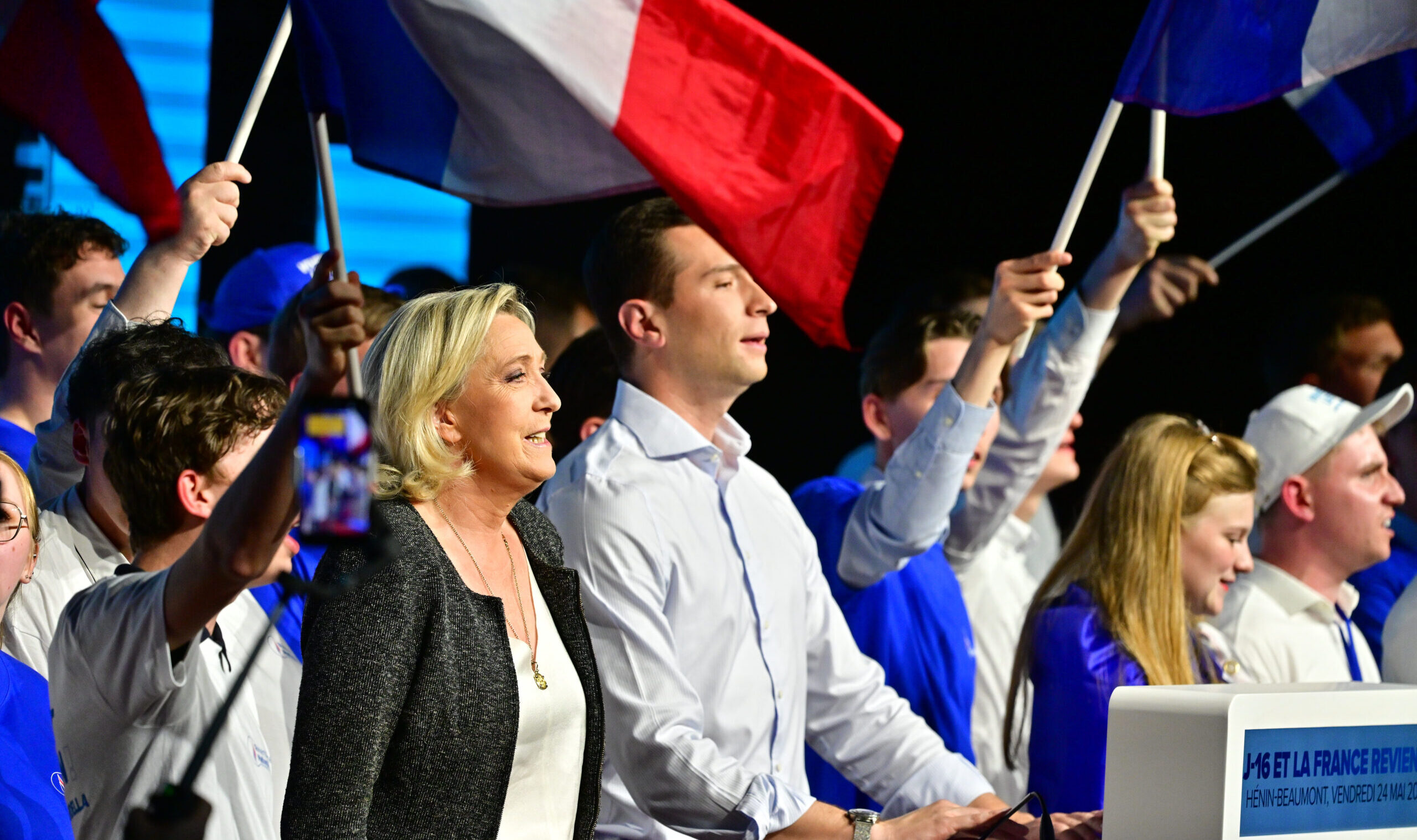
The Future of the Le Pen Wing Remains Auspicious
Favicon 
www.theamericanconservative.com

The Future of the Le Pen Wing Remains Auspicious

Foreign Affairs The Future of the Le Pen Wing Remains Auspicious The party suffered a setback, but now is in a position to professionalize and consolidate. Credit: Christian Liewig – Corbis/Corbis via Getty Images French voters on Sunday night denied the Rassemblent National control of the National Assembly, dealing a severe blow to the RN’s ambitions—and the certitudes of the pundit class. The commentariat (this author included!) had been largely convinced the party’s hour was at hand. I predicted in these pages that the far-right party could have a chance to secure a governing majority in the National Assembly via an alliance with Les Républicains. French voters dashed that thesis to bits a mere two days after press-time. Ah, well. Despite having gained the greatest number of votes in both the first and second rounds of the legislative elections—32 percent in the former and 37 percent in the latter—the RN (143 seats) emerged as the third-largest faction in the French Parliament’s lower house, behind the left’s Nouveau Front Populaire (181 seats) and President Emmanuel Macron’s Ensemble (163 seats). The mainstream parties’ front républicain—in which the NFP and Ensemble made common cause to defeat far-right candidates in the run-off—had once again barred the RN’s route to power. Macron had himself been preparing for a divided government with Jordan Bardella, the RN’s chief, as prime minister. Now, the premiership will probably be offered to a leader of the NFP. France, which in recent decades has trended rightward, might soon have a left-wing government.  For some backers of the populist right, the election results were an occasion for despair. Jordan Bardella himself fumed against “the coalition of dishonor” that had thwarted the popular will through backroom deals.  But the RN’s setback is in reality a victory. The party increased its number of deputies by half (from 89 to 143), consolidated a near-exclusive hold on the regions of Picardie and Provence; and decimated rival parties to its immediate left and right (LR and Eric Zemmour’s Reconquête). Even if the RN cannot govern, it has demonstrated its ability to prevent anyone else from doing so—France is at the moment hurtling toward the political crisis of a generation because neither the center or left bloc has a mandate to run the country.  France’s populist right still has a promising future. The problems fueling the RN’s rise—the cost of living crisis and the mass migration wave—are long-term, structural ailments for the entire Western world. The neoliberal consensus of open markets and open borders has not resolved them and cannot do so. Contrary to the RN’s carping, France’s political class did not violate the rules of the game in forming a republican front—strategic voting and electoral alliances are banal features of democratic politics. The republican front is nonetheless showing its age—the constituent parties have nothing in common aside from treating the RN as anathema. France needs a functional parliament. The republican front—running the gamut from communists to moderate conservatives—will not be able to agree on a budget, let alone a strategy to right the country’s crumbling finances while addressing social unrest. The RN stands to benefit from the frailties of what it derides as “the uniparty.” RN officials have much to learn from the letdown of these elections. The party repeatedly committed unforced errors, the worst being a slapdash process for candidate selection. The RN had a large task cut out for itself in choosing 577 individuals to run for the National Assembly. The time crunch and the party’s lack of professional cadres made this even harder. The predictable chaos ensued; the media began to dig through the histories of RN candidates and swiftly hit pay-dirt. A candidate was forced to withdraw after an image of her in Nazi regalia surfaced on social media. Another was disavowed by the party after the discovery of a Facebook post in which he had written that “the gas had rendered justice to the victims of the Holocaust.”  Others were simply poorly suited for high office. One had served prison time in the ’90s after having taken the mayor of her town hostage. Another was ultimately ineligible for election because he was mentally ill and under a conservatorship. A particularly inept RN nominee melted down on a live television debate and admitted that she had not prepared for the event.  And then there were “the phantom candidates,” who did not bother to run a campaign, refused to appear on local television for the customary debate, and sometimes did not even put their own image on election posters. French voters mostly select candidates on the basis of party affiliation, but even here politics is local: Being a native son or daughter can put someone over the top. The RN’s historical pariah status means that it has been slow to develop local networks in many areas of the country, and thus has had to rely on carpetbaggers with no name identification. The party thus forfeited dozens of races that might have been winnable.  The RN’s brass will need to drastically improve the candidate selection process, recruiting potential office-holders who are rooted and respected in their community. The party will also have to ruthlessly cull the ranks of those who compromise its desire for respectability and normalization. According to a source close to the RN, the party did not even conduct background checks on the candidates it fielded in these parliamentary elections. Bardella and Marine Le Pen have vowed to rid the flock of “black sheep.” Let them start by doing some basic research on their own subordinates.  Part of the RN’s negligence till now might be attributable to its shabby financial state. The party has perpetually careened on the edge of bankruptcy, which no doubt has inhibited attempts at professionalization. French political parties receive most of their funding from public monies doled out on the basis of each faction’s vote share. The RN’s performance in the parliamentary and European elections means that it will now come into tens of millions of extra euros. The RN’s gains in the National Assembly also will grant it access to more cash to hire staff. The party’s potential to accede to power might additionally attract the well-educated and well-heeled staffers who until now have snubbed it.  The RN must embrace this process in order to convince the French public it can be trusted. And now, relieved of the burden of government, the party has three years in the opposition to do so. There is manna in the political desert. The post The Future of the Le Pen Wing Remains Auspicious appeared first on The American Conservative.
Like
Comment
Conservative Voices
Conservative Voices
2 yrs

The Future of the Le Pen Wing Remains Auspicious
Favicon 
www.theamericanconservative.com

The Future of the Le Pen Wing Remains Auspicious

Foreign Affairs The Future of the Le Pen Wing Remains Auspicious The party suffered a setback, but now is in a position to professionalize and consolidate. Credit: Christian Liewig – Corbis/Corbis via Getty Images French voters on Sunday night denied the Rassemblent National control of the National Assembly, dealing a severe blow to the RN’s ambitions—and the certitudes of the pundit class. The commentariat (this author included!) had been largely convinced the party’s hour was at hand. I predicted in these pages that the far-right party could have a chance to secure a governing majority in the National Assembly via an alliance with Les Républicains. French voters dashed that thesis to bits a mere two days after press-time. Ah, well. Despite having gained the greatest number of votes in both the first and second rounds of the legislative elections—32 percent in the former and 37 percent in the latter—the RN (143 seats) emerged as the third-largest faction in the French Parliament’s lower house, behind the left’s Nouveau Front Populaire (181 seats) and President Emmanuel Macron’s Ensemble (163 seats). The mainstream parties’ front républicain—in which the NFP and Ensemble made common cause to defeat far-right candidates in the run-off—had once again barred the RN’s route to power. Macron had himself been preparing for a divided government with Jordan Bardella, the RN’s chief, as prime minister. Now, the premiership will probably be offered to a leader of the NFP. France, which in recent decades has trended rightward, might soon have a left-wing government.  For some backers of the populist right, the election results were an occasion for despair. Jordan Bardella himself fumed against “the coalition of dishonor” that had thwarted the popular will through backroom deals.  But the RN’s setback is in reality a victory. The party increased its number of deputies by half (from 89 to 143), consolidated a near-exclusive hold on the regions of Picardie and Provence; and decimated rival parties to its immediate left and right (LR and Eric Zemmour’s Reconquête). Even if the RN cannot govern, it has demonstrated its ability to prevent anyone else from doing so—France is at the moment hurtling toward the political crisis of a generation because neither the center or left bloc has a mandate to run the country.  France’s populist right still has a promising future. The problems fueling the RN’s rise—the cost of living crisis and the mass migration wave—are long-term, structural ailments for the entire Western world. The neoliberal consensus of open markets and open borders has not resolved them and cannot do so. Contrary to the RN’s carping, France’s political class did not violate the rules of the game in forming a republican front—strategic voting and electoral alliances are banal features of democratic politics. The republican front is nonetheless showing its age—the constituent parties have nothing in common aside from treating the RN as anathema. France needs a functional parliament. The republican front—running the gamut from communists to moderate conservatives—will not be able to agree on a budget, let alone a strategy to right the country’s crumbling finances while addressing social unrest. The RN stands to benefit from the frailties of what it derides as “the uniparty.” RN officials have much to learn from the letdown of these elections. The party repeatedly committed unforced errors, the worst being a slapdash process for candidate selection. The RN had a large task cut out for itself in choosing 577 individuals to run for the National Assembly. The time crunch and the party’s lack of professional cadres made this even harder. The predictable chaos ensued; the media began to dig through the histories of RN candidates and swiftly hit pay-dirt. A candidate was forced to withdraw after an image of her in Nazi regalia surfaced on social media. Another was disavowed by the party after the discovery of a Facebook post in which he had written that “the gas had rendered justice to the victims of the Holocaust.”  Others were simply poorly suited for high office. One had served prison time in the ’90s after having taken the mayor of her town hostage. Another was ultimately ineligible for election because he was mentally ill and under a conservatorship. A particularly inept RN nominee melted down on a live television debate and admitted that she had not prepared for the event.  And then there were “the phantom candidates,” who did not bother to run a campaign, refused to appear on local television for the customary debate, and sometimes did not even put their own image on election posters. French voters mostly select candidates on the basis of party affiliation, but even here politics is local: Being a native son or daughter can put someone over the top. The RN’s historical pariah status means that it has been slow to develop local networks in many areas of the country, and thus has had to rely on carpetbaggers with no name identification. The party thus forfeited dozens of races that might have been winnable.  The RN’s brass will need to drastically improve the candidate selection process, recruiting potential office-holders who are rooted and respected in their community. The party will also have to ruthlessly cull the ranks of those who compromise its desire for respectability and normalization. According to a source close to the RN, the party did not even conduct background checks on the candidates it fielded in these parliamentary elections. Bardella and Marine Le Pen have vowed to rid the flock of “black sheep.” Let them start by doing some basic research on their own subordinates.  Part of the RN’s negligence till now might be attributable to its shabby financial state. The party has perpetually careened on the edge of bankruptcy, which no doubt has inhibited attempts at professionalization. French political parties receive most of their funding from public monies doled out on the basis of each faction’s vote share. The RN’s performance in the parliamentary and European elections means that it will now come into tens of millions of extra euros. The RN’s gains in the National Assembly also will grant it access to more cash to hire staff. The party’s potential to accede to power might additionally attract the well-educated and well-heeled staffers who until now have snubbed it.  The RN must embrace this process in order to convince the French public it can be trusted. And now, relieved of the burden of government, the party has three years in the opposition to do so. There is manna in the political desert. The post The Future of the Le Pen Wing Remains Auspicious appeared first on The American Conservative.
Like
Comment
Share
Conservative Voices
Conservative Voices
2 yrs

The End of the Even Playing Field?
Favicon 
www.theamericanconservative.com

The End of the Even Playing Field?

Politics The End of the Even Playing Field? Counting on civility and fair play from our opponents is an utterly naïve assumption. Credit: Alberto Miguel Fernandez Remarks delivered at the National Conservatism Conference in Washington, DC. Let me begin my remarks by stating that I don’t believe in the concept or reality of “late liberalism.” The “lateness” in this phrase illustrates the habit of characterizing what are often transitional periods as late.  By now this labeling practice has gone viral. Historians and journalists indiscriminately apply the designation “late” to what needs a more accurate contextualization. “Late” as an historical classification often signifies that something new is happening that we can’t fully identify in the form in which it appears. But I’ve another, less academic reason for rejecting the term “late liberalism,” and it is fully explained in my work After Liberalism. Through much of the 20th century, Anglo-American societies have applied “liberal” to describe distinctly illiberal activities, like building administrative states that aimed at reconstructing the family or allowing government bureaucrats to redistribute our earnings. This increasingly elastic use of “liberal” started primarily among social and welfare state democrats more than a century ago, and this practice shows no signs of going away. The same label has been stretched to cover a wide range of projects, like destroying gender identities, degrading white people, and mutilating the bodies of minors through “gender-affirming surgery.” All such perverse initiatives are now described as “liberal” because this operative term, so argues my work After Liberalism, has become “unbounded” as to meaning. “Liberal” is something we’re supposed to applaud; therefore since at least the Progressive Era in the U.S., anything that social reformers have tried to implement is called “liberal” and traced back to Thomas Jefferson, or perhaps now Barack Obama. The prominent early 20th-century educator John Dewey managed to give socialist experiments a catchy label by calling them “liberal.” He thereby distinguished between his liberalism and the older, supposedly outmoded form of a supposedly related body of ideas. Apparently, Dewey’s transmogrified “liberalism” was truly liberal because it was more about equality than the liberalism it replaced. More recently we’ve had other enthusiastic claimants to “liberalism.”  There are “classical liberals,” also known as libertarians, and those who view themselves as liberal because they are demanding more open academic discussion. We also have progressive zealots who insist, as did John Stuart Mill and John Dewey in earlier times, that they are perfecting liberal thought. They are carrying this heirloom to enlightened conclusions that less tolerant and less perfect liberals in the past were hesitant to embrace. Our self-proclaimed liberals, who have colonized our media and universities, are now seeking in the name of “liberalism” to punish white male Christians. What is sometimes called reverse discrimination is supposed to bring forth a society of equals in which liberal ideas can finally be practiced on a supposedly level playing field. Liberalism has a historic context, and it was shaped by social, moral, and material circumstances. It was first of all the idea of the bourgeoisie, which became embodied in concrete institutions and relationships. It was not the imperfect beginning of later leftist experiments or the preferred values of intellectuals who are hoping to fine-tune earlier leftist advances. Liberalism once had a cohesive identity. Liberals, for example, generally favored limited suffrages that excluded women and non-property-holders. But they didn’t take that position because they weren’t fully liberal. They did so because they were seeking what was then a recognized liberal good, accountable government, while trying not to produce an excessively large franchise, which might result in property confiscation and political tyranny. In any case, these authentic liberals believed that only the educated and propertied could muster the necessary discipline to allow constitutional government to function.  Although liberals viewed women as having human dignity and certainly not as chattel, they continued to believe in the value of traditional gender distinctions, a view that led them to hold fast to the idea that women should, save for some exceptions, be homemakers, not politically engaged. One might disagree with these positions, but those who held them did not cease to be liberal because they espoused them. True historical liberals also favored academic freedom and debating political differences but placed limits on how far they would carry their freedom principles. For example, they had a strong sense of social decency and didn’t believe that political discussion should lead to violence or insulting conduct. Liberals carried with them a heritage rooted in the Bible, classical sources, and an ingrained code of social behavior. Mind you, I’m certainly not saying that nothing in the liberal heritage can be meaningfully defended in a postliberal age. What I am suggesting is that this excavation work becomes increasingly difficult as one moves beyond the institutions and world of thought that gave birth to a liberal order.  And we should be on guard against exaggerating the extent of the victories we’ve achieved in trying to uphold liberal ideals in a postliberal society.  A more relevant issue than who can appropriate the “liberal” label at this time is what can be done to protect us from woke totalitarians. This is an urgent question of survival for all decent people in Western societies as we are dealing with a Left that is drunk with power.  Edmund Burke’s “Letter on the Regicide Peace” provides this sober warning about the iconoclastic mindset: In their culture (meaning that of Jacobins) it is a rule always to graft virtues on vices. They think everything unworthy of the name of publick virtue, unless it indicates violence on the private. All their new institutions, (and with them everything is new,) strike at the root of our social nature. Precisely because the contemporary Left, even more than the Jacobins whom Burke excoriated,” strike at the root of our social nature,” it may be necessary to organize effectively against them. But we are not advancing that effort by imagining that we are still in a liberal society and are rebuilding its institutions.  We no longer inhabit that world nor enjoy that option. Counting on civility and fair play from our opponents is an utterly naïve assumption. LGBT enthusiasts, who have both state and media winds at their backs, are delighted to violate the one-time guaranteed rights of those who resist them. And this culturally radical Left couldn’t care less about what a white heterosexual once said in what they regard as the Stone Age about tolerance and reason. Leftist organizers in western countries now call on mercenary mobs to do their bidding, while state administrators turn their backs on the ensuing violence, and the mainstream media blame such “incidents” on religious fanatics and white nationalists. In any case, I see less and less of a liberal aspect, even a vestigial one, in what some might choose to call late liberalism. The post The End of the Even Playing Field? appeared first on The American Conservative.
Like
Comment
Share
Conservative Voices
Conservative Voices
2 yrs

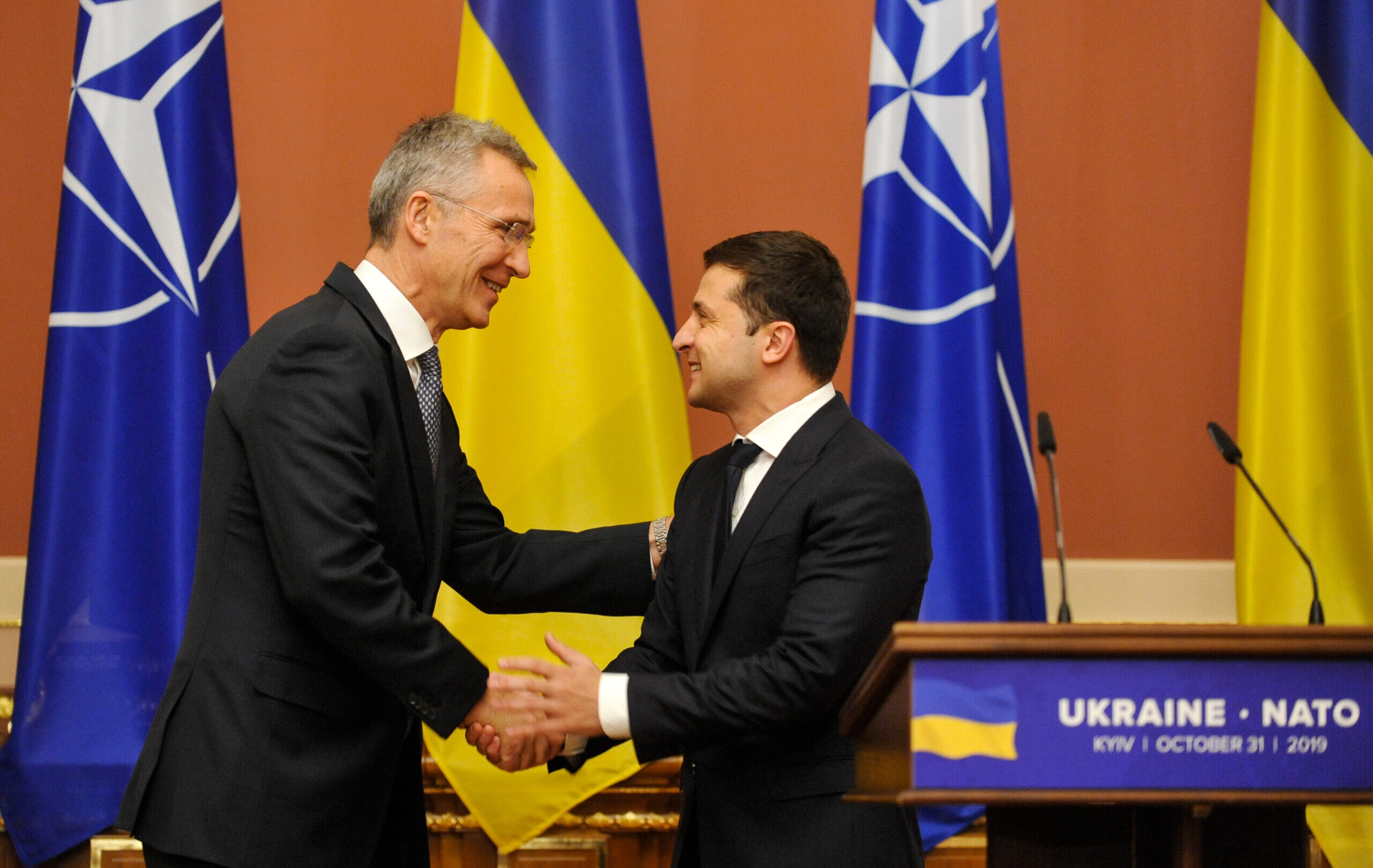
NATO’s Bridge to Nowhere
Favicon 
www.theamericanconservative.com

NATO’s Bridge to Nowhere

Politics NATO’s Bridge to Nowhere Formalizing Ukraine’s NATO-ward trajectory is a recipe for continued disaster. (Sergei Chuzavkov/Shutterstock) If anything positive can be said to have resulted from this week’s NATO summit in Washington, it is that it occasioned a series of thoughtful critiques from the few remaining citadels of dissent within the U.S. foreign policy community.   The Quincy Institute for Responsible Statecraft published a symposium, “to reflect on the past and future of the alliance.” The scholar and author Anatol Lieven who convened the symposium writes,  NATO likes to describe itself as “the most successful alliance in history”…. What is too often forgotten, however, is that war was prevented not just by NATO solidarity, but also by NATO caution. Successive U.S. administrations—fully backed by their European allies—rejected calls for aggressive policies aimed at “rolling back” Soviet power in Eastern Europe. A statement published on Monday by the American Committee for US–Russia Accord (which I co-authored with the editor and publisher Katrina vanden Heuvel) expressed the wish that NATO might use the opportunity of this week’s summit “to take a cold-eyed look at itself; at its record; and at its mission—and begin the hard work of self-evaluation.”   And yet another statement issued by a constellation of foreign policy experts warned against another round of expansion: “Admitting Ukraine would reduce the security of the United States and NATO Allies, at considerable risk to all.”  Yet, as far as NATO was concerned: Message delivered, message ignored. This week’s summit showed that NATO is bound and determined to continue on as though the alliance operates in a world shaped by its successes—manifesting a blind insistence that the alliance is not only necessary but has been right all along.  NATO’s principal institutional prerogative at this point is not the defeat of Russia nor the collective defense of the West—whatever that means. It is its own survival—and as such, in Washington the alliance kept busy inventing ever-more reasons to justify its relevance, and ultimately its very existence. The chief justification revolves, naturally, around the war in Ukraine. And for some months, little by little, American and European officials and government-funded strategists have been laying the groundwork for what has come to be known as Ukraine’s “Bridge to NATO.” In late June, James O’Brien, a protege of the late secretary of state Madeleine Albright now serving as assistant secretary for European and Eurasian Affairs (the office from which Victoria Nuland managed to do so much damage), told reporters that he saw the NATO summit as “an opportunity to note that Ukraine is integrating fully into the Western structures that its government and its people have said they want.” O’Brien went on to say that he expects the U.S. and EU member states to offer “a clear bridge laid out for Ukraine to join NATO. That includes a number of commitments for reforms by Ukraine as well as for continued engagement from the West.” Around the time O’Brien was laying out this roadmap to another round of NATO expansion, RAND Corporation policy researcher Ann Marie Daley said, “Regardless of whether the war ends with Ukraine in control of its 1991 borders or Kyiv settles for something short of that, troops from NATO nations will need to be stationed on Ukrainian soil to provide the time, space, and security necessary to complete the bridge into NATO.”  And indeed, a draft of the communique the alliance plans to release obtained by CNN shows that these plans will be codified in short order. Yet does it not seem as though the people who say and write these sorts of things are whistling past the graveyard? The war is lost, Ukraine is ruined for at least a generation, and Russia and the West are inching closer and closer to direct, possibly nuclear, confrontation—yet the answer, as always with these people, is more NATO. In fact the very opposite is true—peace and stability in eastern Europe will come with the recognition that NATO’s plan to expand to Ukraine lies at the heart of the current crisis. Recall that just shy of a month ago, Russia’s President Vladimir Putin laid out several conditions—including Ukrainian neutrality—that would, in his words, “immediately” bring about a ceasefire and the start of negotiations. An “irreversible” pledge of (or “bridge” to) NATO membership for Ukraine drives a stake through the heart of any peace settlement acceptable to Moscow.  But perhaps that’s the point. The post NATO’s Bridge to Nowhere appeared first on The American Conservative.
Like
Comment
Share
Conservative Voices
Conservative Voices
2 yrs

Surgeon General Murthy: Gun Owners Are A Disease
Favicon 
conservativefiringline.com

Surgeon General Murthy: Gun Owners Are A Disease

The following article, Surgeon General Murthy: Gun Owners Are A Disease, was first published on Conservative Firing Line. (Natural News) Until 1996, one of the primary tactics of anti-liberty/gun cracktivists was to treat criminal misuse of guns, as well as accidents and suicides as public health matters. There was, of course, no disease vector, no virus, bacteria or parasite. There could be no vaccine, no medication, no treatment. None of that was the … Continue reading Surgeon General Murthy: Gun Owners Are A Disease ...
Like
Comment
Share
Intel Uncensored
Intel Uncensored
2 yrs

Gabriel and Mickibben: The Birth of the Fake News. The History of Propaganda
Favicon 
api.bitchute.com

Gabriel and Mickibben: The Birth of the Fake News. The History of Propaganda

Gabriel and Mickibben: The Birth of the Fake News. The History of Propaganda - June 3, 2022 American Intelligence Media - Learn more about propaganda at www.aim4truth.org ********* The British American Pilgrims Society Globalist Cabal Runs the U.S. Government from Inside the Biden Cabinet... - PILGRIMS SOCIETY Ted Kaufman and Doug Emhoff RUN the Biden White House - THIS ARTICLE IS A MUST READ - https://aim4truth.org/2024/07/02/pilgrims-society-doug-emhoff-and-ted-kauffman-run-the-biden-white-house/ ********************** FAIR USE FOR EDUCATIONAL PURPOSES - Mirrored From: https://www.youtube.com/@americanintelligencemedia3024
Like
Comment
Share
Intel Uncensored
Intel Uncensored
2 yrs

Britain is Not a Democracy: How UK Elites Installed PM Keir Starmer by Destroying Jeremy Corbyn
Favicon 
api.bitchute.com

Britain is Not a Democracy: How UK Elites Installed PM Keir Starmer by Destroying Jeremy Corbyn

Britain is Not a Democracy: How UK Elites Installed PM Keir Starmer by Destroying Jeremy Corbyn - CAN YOU SAY: GLOBALIST OLIGARCHY? - 156,460 views July 10, 2024 Geopolitical Economy Report - The UK's new Prime Minister Keir Starmer is a pro-war, neoliberal Blairite who is closely linked to British intelligence and the US government. He was backed by big business interests after the corporate media destroyed popular left-wing, anti-imperialist Labour Party leader Jeremy Corbyn. Ben Norton discusses how Britain is an oligarchy, not a democracy. - Topics: 0:00 UK PM Keir Starmer is Tony Blair 2.0 3:26 Biden & Starmer discuss new cold war on Russia & China 5:00 Keir Starmer's shady US government ties 7:13 CIA-linked Trilateral Commission 11:09 Neoliberalism: a class war 13:13 The coup against Jeremy Corbyn 19:12 Outro - || Geopolitical Economy Report || - Please consider supporting us at https://GeopoliticalEconomy.com/Support Patreon:   / geopoliticaleconomy   Podcast:   / geopoliticaleconomy   Newsletter: https://GeopoliticalEconomy.Substack.com - FAIR USE FOR EDUCATIONAL PURPOSES - Mirrored From: https://www.youtube.com/@GeopoliticalEconomyReport
Like
Comment
Share
Intel Uncensored
Intel Uncensored
2 yrs

AWESOME NEW TRACK!! "IT'S RAINING THEMS"!!
Favicon 
api.bitchute.com

AWESOME NEW TRACK!! "IT'S RAINING THEMS"!!

This is serious and not a joke. It’s raining thems ???‍♂️ The world has seriously gone mentally ill!!!
Like
Comment
Share
Intel Uncensored
Intel Uncensored
2 yrs

??? If Windfarms are built they will destroy the Illawarra Coastline.
Favicon 
api.bitchute.com

??? If Windfarms are built they will destroy the Illawarra Coastline.

Over 200x 268m wind turbines to be built offshore from Woolongong. Could decimate the fishing industry!! UTL COMMENT- What a MASSIVE SCAM!! I propose the windfarms to be built ACROSS CANBERRA!! (See headline image!!). Apparently that image is going viral!! ?? #stopthewindfarms
Like
Comment
Share
The Lighter Side
The Lighter Side
2 yrs

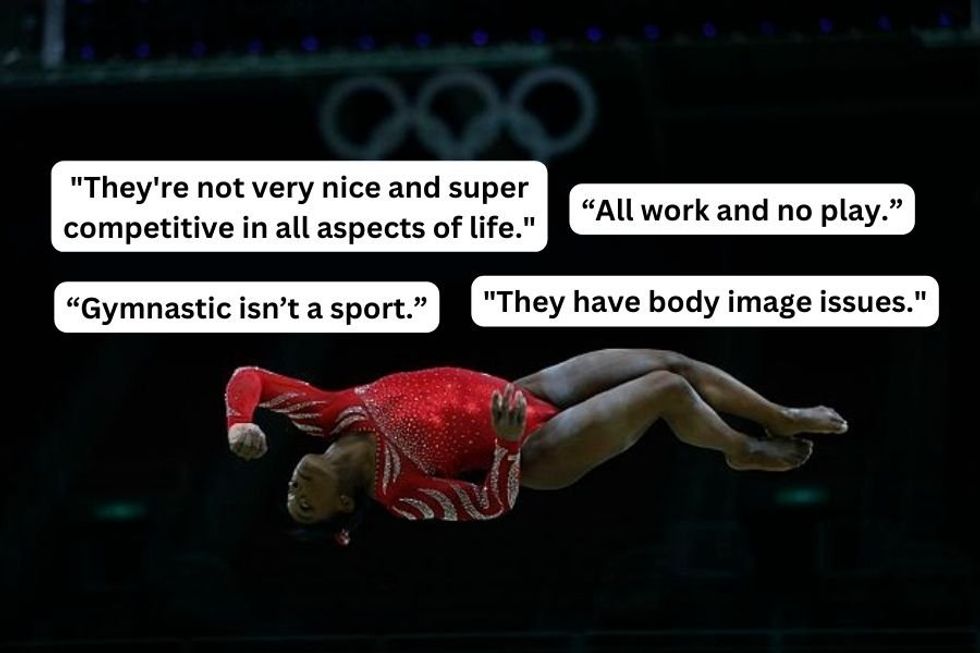
Simone Biles debunks misconceptions and assumptions about elite gymnasts
Favicon 
www.upworthy.com

Simone Biles debunks misconceptions and assumptions about elite gymnasts

Gymnastics is a somewhat unique sport in that the distance between the athletes at the top and the average person is far greater than in many other sports. Most people can run, just not as fast as Usain Bolt. Most people can dribble a ball and make some baskets, just not as well as Steph Curry. Most people can swim, but not nearly as well as Katie Ledecky.But most people can't do a single flip on a balance beam or swing themselves over a bar once or do even the most basic gymnastics tumbling pass on the floor. Forget about the average person trying to fling themselves over a vault, much less do what Simone Biles or other elite gymnasts can do in any of those events.Since few are able to do gymnastics at all and even fewer compete at the Olympic level, elite gymnasts are a curiosity for many. To help satisfy that curiosity, Simone Biles sat down with Glamour in 2021 and responded to some of the misconceptions and assumptions people have about top level gymnasts.Biles, who will be competing with Team USA again in the 2024 Paris Olympic games, broke down the misconceptions into three categories: Sport, Lifestyle and Physique. Here are some highlights from her responses:"Gymnastics is not a sport."Umm, what? Biles said she hears this a lot, but pointed out that "every four years, everybody tunes in to watch gymnastics, so it's gotta be a sport at least."Then she pointed out what makes it not only a sport, but one of the hardest sports in the world. "It's all sports combined in one," she said. "You can't just be fast, you have to have agility, you have to be able to jump, you have to be able to flip, memorize routines—it's kind of all-in-one.""Gymnasts retire at an early age and have a short career."At 27, Biles herself has defied the standard retirement age of elite gymnasts, so she may not be the one to come at with this. She pointed out that a lot of gymnasts get college scholarships and then retire around 22 or 23. "You have to be rich to get into the sport, lessons are expensive."Biles confirmed, "It is actually a very expensive sport. And it's also year-long. We don't have a season and then you can take a break. And you kind of have to train your whole life for it. So yes, it does get to be expensive. "You can't start gymnastics later in life."Biles shared that she started when she was almost 7, which is "late" in the elite gymnastics world. "Usually you start in 'mommy and me' classes or as soon as you can walk," she said. "You can't be afraid of heights as a gymnast.""You actually can," said Biles, 'but it doesn't affect you in the gym when you're flipping because you don't notice how high you are, so I feel like that one's sort of a myth." She added that her fear isn't a fear of falling from high up but a fear that she's going to jump from someplace high up. "I don't want to die, I just want to jump off," she said."They're not very nice and super competitive in all aspects of life.""I'm actually not very competitive at all," Biles said. "In a gym or in a competition, my goal is never to win, it just kind of happens. But I also feel like whenever you're at the top everybody preys on your downfall, which is really strange to me."She shared that her sister did gymnastics until she was around 17. While she was really good, she decided to quit because of the pressure and everyone compared her to her sister. When she would win competitions, people thought it wasn't fair that both sisters would win all the time, and she had enough of it."I feel like people also think gymnasts are really mean because most of the time we're so serious you don't get to see our personality," she added."All work and no play.""Yes and no, I guess we can play after work," she said. "I've learned that I have to fuel myself outside of the gym too, whether that's hanging out with family, friends, going shopping or doing whatever. I still have to be happy at the end of the day without gymnastics.""They have to wake up at 4:00 a.m.""I don't wake up at 4:00 a.m. I wake up at like 6:15 just because we start practice at 7:00," she said, adding, "If I had to wake up at 4:00 I wouldn't go to the gym.""They don't have time to take care of their mental health."Biles shared that she goes to therapy. "I think it should be talked about a lot more, because it's not something to be ashamed or afraid of," she said. "Everybody has something that works for them and that's what I just found works for me.""They have body image issues.""I feel like that's not a misconception about gymnasts, I feel like that's everybody in general. Everybody struggles with body image issues, wanting to look different, thinking you're not skinny. I feel like that's everybody in life.""You have to have a certain body type to do gymnastics.""Back in the day, everybody had a more slim body and was really flexible and skinny," Biles said. "But now, you can be a little bit shorter and more powerful like me. So, I definitely think it's evolved. So I think that's false, as well.""I feel like whatever your body type is you just have to be in shape to do gymnastics," she added. "I think it's different now. Everybody thought bar swingers were a little bit taller, leaner. And then if you're a tumbler, you're a little bit shorter and thicker. But now, it's been proven that you can kind of have both body types and do all of it. So, it's doesn't really make a difference anymore.""They're very flexible.""No, not all gymnast are flexible," said Biles. "Me and Aly Raisman, we're actually not that flexible for gymnasts because our muscles kind of overlap that. But, we're flexible enough to do what we have to do." Watch the full video on Glamour's YouTube channel.
Like
Comment
Share
Showing 20831 out of 56670
  • 20827
  • 20828
  • 20829
  • 20830
  • 20831
  • 20832
  • 20833
  • 20834
  • 20835
  • 20836
  • 20837
  • 20838
  • 20839
  • 20840
  • 20841
  • 20842
  • 20843
  • 20844
  • 20845
  • 20846

Edit Offer

Add tier


Select an image
Delete your tier
Are you sure you want to delete this tier?

Reviews

In order to sell your content and posts, start by creating a few packages. Monetization

Pay By Wallet

Payment Alert

You are about to purchase the items, do you want to proceed?

Request a Refund