YubNub Social YubNub Social
    Advanced Search
  • Login

  • Night mode
  • © 2026 YubNub Social
    About • Directory • Contact Us • Privacy Policy • Terms of Use • Android • Apple iOS • Get Our App

    Select Language

  • English
Install our *FREE* WEB APP! (PWA)
Night mode
Community
News Feed (Home) Popular Posts Events Blog Market Forum
Media
Headline News VidWatch Game Zone Top PodCasts
Explore
Explore Jobs Offers
© 2026 YubNub Social
  • English
About • Directory • Contact Us • Privacy Policy • Terms of Use • Android • Apple iOS • Get Our App

Discover posts

Posts

Users

Pages

Group

Blog

Market

Events

Games

Forum

Jobs

The Lighter Side
The Lighter Side
2 yrs

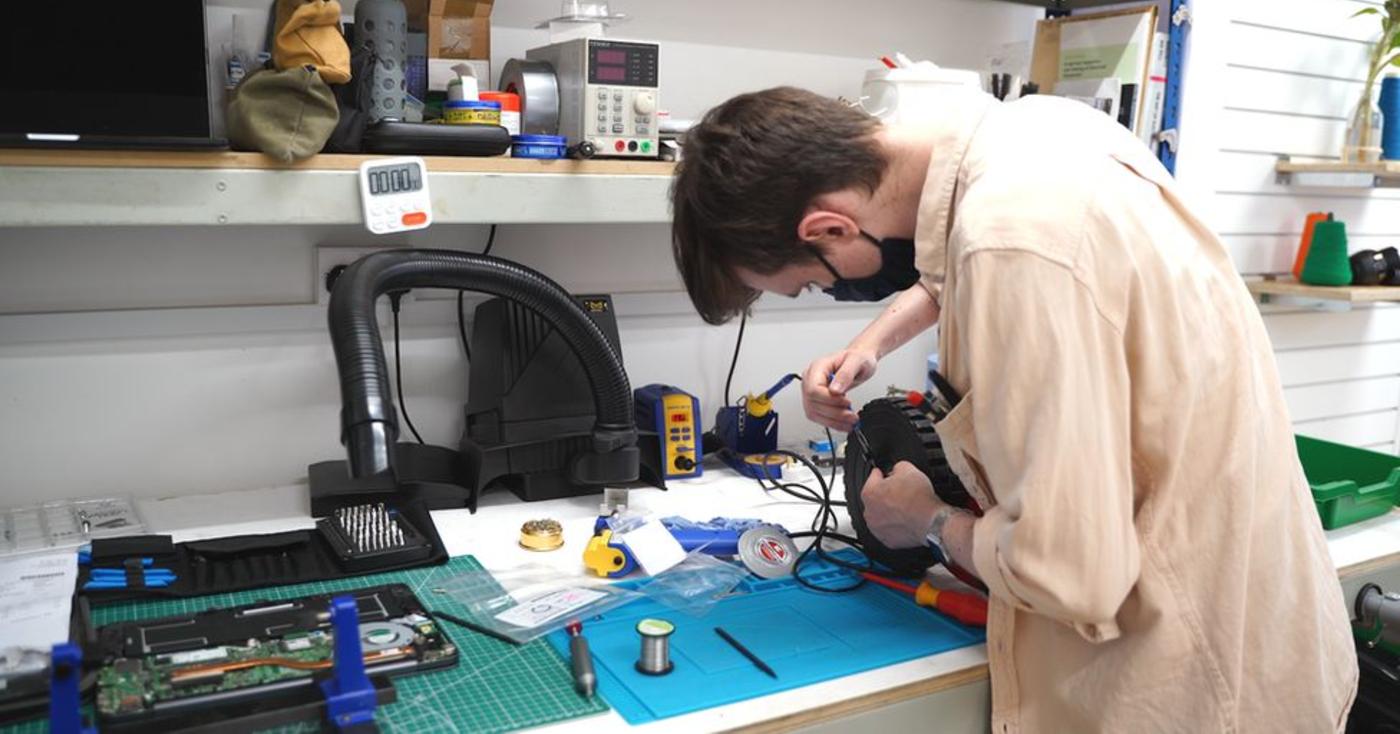
580 Repair Shops Form a Flourishing Subculture Fixing Toasters, Electronics, Coffee Makers and Lamps
Favicon 
www.goodnewsnetwork.org

580 Repair Shops Form a Flourishing Subculture Fixing Toasters, Electronics, Coffee Makers and Lamps

Despite the UK being the world’s second-largest generator of electronic waste per capita, a flourishing sub-culture of ‘Repair Cafes’ and other social groups is helping to balance out the island’s wasteful side. A featured story from the Guardian reports that 580 such repair cafes are hosting regular events where volunteer fixers and tinkerers spend several […] The post 580 Repair Shops Form a Flourishing Subculture Fixing Toasters, Electronics, Coffee Makers and Lamps appeared first on Good News Network.
Like
Comment
Share
Gamers Realm
Gamers Realm
2 yrs

Dungeon RNG codes (June 2024)
Favicon 
www.pcinvasion.com

Dungeon RNG codes (June 2024)

Updated June 24, 2024: We added new codes! In front of you lies a series of dungeons filled with dangerous monsters waiting for their next prey. Should you manage to defeat them, you’ll earn hefty rewards, craft powerful swords, and challenge the toughest beasts in the game. If you need help, Dungeon RNG codes will come in handy! All Dungeon RNG codes list Dungeon RNG codes (Active) Release – SuperLuck Potion (New) update1 — SuperRollSpeed Potion (New) Dungeon RNG codes (Expired) There are currently no expired Dungeon RNG codes. Related: Unknown RNG codes and Monster Ghoul codes How to redeem codes in Dungeon RNG Redeem your Dungeon RNG codes and get your hands on valuable rewards by following our tutorial: Image by PC InvasionImage by PC Invasion Launch Dungeon RNG on Roblox. Click the Shop button (1) to open a new window. Scroll down to Redeem Codes and then click Redeem! (2). Type in your code into the Code text field (...
Like
Comment
Share
Fun Facts And Interesting Bits
2 yrs

84 From ’84: Bachelor Party
Favicon 
theretronetwork.com

84 From ’84: Bachelor Party

A soon-to-be-married man’s friends throw him the ultimate bachelor party. Cast: 1984 memories HBO wins again. They were great for showing these sex comedies. I liked this movie as a kid. For the obvious reasons CONTINUE READING... The post 84 From ’84: Bachelor Party appeared first on The Retro Network.
Like
Comment
Share
History Traveler
History Traveler
2 yrs

The Royal Mint: Oliver Cromwell’s Depiction as a Roman Emperor
Favicon 
www.historyhit.com

The Royal Mint: Oliver Cromwell’s Depiction as a Roman Emperor

In the wake of the tumultuous English Civil War, the ascendancy of Oliver Cromwell marked a seismic shift in the country’s political landscape. Emerging from a period of conflict that saw the execution of King Charles I and the rise of Parliamentary authority, Cromwell swiftly rose to prominence as a key figure in shaping England’s destiny. Cromwell’s astute leadership within the Parliamentarian forces not only secured victory but also paved the way for his governance during the Commonwealth era, with his image gracing English coins made by The Royal Mint – a testament to his stature and the imprint of his rule on the nation’s identity and currency. Here we explore how Cromwell’s portrait became a symbol of authority and change on English coinage post-Civil War, and why these coins developed from a puritan to royalist style, reflecting the transformational era he heralded in English history. The English Civil War The English Civil War had erupted due to escalating tensions between King Charles I and Parliament over issues of power, taxation, and religion. Parliament’s desire for more authority clashed with the king’s absolute rule. The conflict polarised supporters into Royalists (Cavaliers) backing the king and Parliamentarians (Roundheads) supporting Parliament. Battles ensued across England, with Oliver Cromwell emerging as a prominent figure in the Parliamentarian army. The war culminated in the king’s defeat, his execution in 1649, the establishment of the Commonwealth under Cromwell’s rule, and a period of political upheaval and experimentation. Changes to English currency One of the biggest changes to English currency came when there wasn’t actually have a monarch to depict on its coins. Up until Charles I’s reign, coins had all been very regal, but following his execution, England entered into a period called the interregnum where it didn’t have a monarch. In 1649, the coinage of the Commonwealth under the rule of Parliament reflected Parliament’s deeply Puritan beliefs, and were also very heraldic. The wording appeared in English rather than Latin and the monarch’s portraiture was abandoned, resulting in a very heraldic coin, featuring the cross of St George on both sides. Coins from Cromwell’s reignImage Credit: The Royal Mint Cromwell’s depiction as a Roman emperor After Cromwell took direct control in the 1650s, this Commonwealth and Puritan style was abandoned, and towards the end of his time as Lord Protector there was a complete reversion to the more familiar, royalist style of coinage, including coins featuring a portrait of Oliver Cromwell. The portrait depicted Cromwell almost like a Roman emperor, wearing a wreath, robes, and featured Latin inscriptions once more. This reversion to the familiar iconography of royal rule, without referencing Cromwell as king, was part of making the country feel at ease with Cromwell’s rule. Roman emperors ruled as kings, however they actively distanced themselves from the term ‘King’ in order to avoid comparisons to the earlier monarchy of Rome. Julius Caesar even rejected the title when offered it. Rome’s republic was founded on anti-monarchical views so the avoidance of the title of ‘King’ allowed an emperor to keep up a false narrative of non- autocratic rule, despite the emperor very much holding the power. There are many similarities between Britain’s interregnum period and Rome’s transition from a monarchy to republic to empire including the anti-monarchical stance which caused the change. Therefore, it’s incredibly fitting for Cromwell to have depicted himself as a Roman emperor. England had killed Charles I, the last king, and therefore Cromwell had to be very careful not to portray himself as a king.  Cromwell, depicted in the style of a Roman EmperorImage Credit: The Royal Mint Later coins under Cromwell’s rule Cromwell’s coins were developed further throughout his reign to include royal iconography on the reverse of them, including a crown, which perfectly exemplifies his delicate balance of not being stylised as a king but still showing the authority of a true monarch. Coinage after the Restoration After the eventual restoration of the monarchy in 1660 under Charles II, the wearing of a wreath in this Roman emperor style became a general stylistic trend for monarchs over the next few centuries. The first coins of Queen Victoria also follow this style, showing her bareheaded, but in the 1840s a hugely significant moment came where Victoria was shown on coins wearing a crown. This was the first time The Royal Mint had struck British coins showing a monarch wearing a crown since the start of the reign of Charles II. For the rest of her reign Victoria tended to be shown as wearing various different crowns.  However, the kings that followed Victoria’s reign, starting with Edward VII, all went back to being depicted uncrowned on British coins. They wore no royal regalia, not even a wreath like the kings before Victoria had done. Instead, coins depicted just a simple portrait of them. This practice lasted until Queen Elizabeth II, who’s portrait followed a similar trajectory to Victoria’s – wearing a laurel wreath on coins at the start of her reign, with further coins later on all with her wearing a tiara or crown.  The majority of Charles III’s new coins do not feature a crown, however some do, making him the first king to be shown crowned on British coins since Charles II. 

Like
Comment
Share
Pet Life
Pet Life
2 yrs

RECALL ALERT: TDBBS LLC Recalls Their Green Tripe Dog Treats Due To The Potential Presence Of Foreign Metal Objects
Favicon 
www.dogingtonpost.com

RECALL ALERT: TDBBS LLC Recalls Their Green Tripe Dog Treats Due To The Potential Presence Of Foreign Metal Objects

TDBBS LLC voluntarily recalls a total of 3,551 bags of Green Tripe dog treats due to the potential contamination of foreign metal objects in the dog treats on Thursday, June 20.
Like
Comment
Share
Hot Air Feed
Hot Air Feed
2 yrs

Snopes Suddenly Discovered that Biden and the MSM Have Been Lying About Trump for Years
Favicon 
hotair.com

Snopes Suddenly Discovered that Biden and the MSM Have Been Lying About Trump for Years

Snopes Suddenly Discovered that Biden and the MSM Have Been Lying About Trump for Years
Like
Comment
Share
Science Explorer
Science Explorer
2 yrs

Inexplicably Massive Black Hole From The Universe’s Origins Refutes Previous Explanations
Favicon 
www.iflscience.com

Inexplicably Massive Black Hole From The Universe’s Origins Refutes Previous Explanations

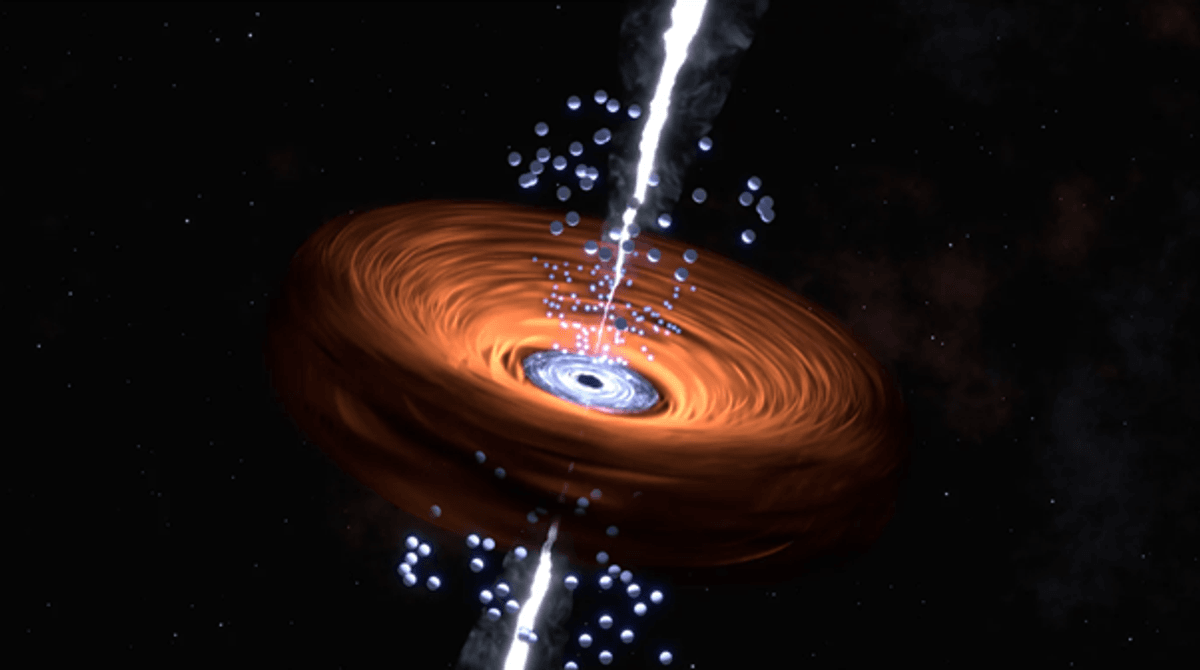
The cosmic puzzle created by evidence of apparently enormous black holes in the very early universe continues to deepen. Observations by the JWST of one such anomaly, known as J1120+0641, indicate that the once favored explanation for how these objects could emit so much light so soon after the Big Bang is unlikely, forcing astronomers to try again.The extraordinary power of the JWST has allowed astronomers to observe galaxies more distant than any we have seen before. The further we look in space, the longer back we are looking in time – and we’re seeing these objects as they were not that long after the universe was formed. The fact that many of these seem larger and more developed than existing models appear to allow needs explanation,Among these oddities at the dawn of time are quasars, enormously bright accretion disks surrounding supermassive black holes. The intense brilliance of those of these early quasars, allowing for the billions of light years the light has had to travel, are indicative of very massive black holes. The dominant model of the universe doesn’t offer a path for black holes to get that big so soon. One explanation is that the objects we are seeing are particularly efficient at feeding, meaning the black holes are smaller than the quasars they have produced would suggest. This would be a very convenient way out of the mess, were it not that no signs of such efficient feeding have been spotted in J1120+0641, suggesting the black hole at its heart contains more than a billion solar masses.That doesn’t make J1120+0641 the heaviest anomalously large black hole - some are up to 10 billion solar masses – but it’s still big enough to be a problem given its age. It’s also the first black hole JWST has examined in a way that can test some explanations that would avoid the need to rethink our models of the universe. J1120+0641 was chosen for the task because in 2019, when time was being booked on the JWST, this was the most distant known quasar.The JWST’s repeated delays mean the observations didn’t occur until January 2023, by which time more distant quasars had been seen, but J1120+0641 was still an appropriate choice. We’re seeing it as it was 770 million years after the Big Bang.Dr Sarah Bosman of the Max-Planck-Institut für Astronomie studied J1120+0641 ‘s spectrum, collected by the JWST, and found it looks indistinguishable from relatively nearby quasars used as benchmarks, other than being surrounded by somewhat hotter dust.The dust may be hotter, but it’s not otherwise different, ruling out the explanation that dust anomalies were leading us to overestimate ancient black hole masses."Overall, the new observations only add to the mystery: Early quasars were shockingly normal. No matter in which wavelengths we observe them, quasars are nearly identical at all epochs of the universe," Bosman said in a statement. We can estimate the mass of a black hole from the light emitted by nearby clumps of gas in what is known as the broad-line region of the spectrum. These clumps are orbiting the black hole at close to the speed of light, and the broad-line radiation tells us how close, which in turn allows us to calculate the black hole’s mass. Using the JWST observations, Bosman and co-authors calculate J1120+0641’s mass at 1.52 billion times that of the Sun.Black holes grow as their immense gravity captures surrounding matter. However, there is a limit on how fast that can occur, known as the Eddington limit, caused by the balance of outward radiation pressure and the inward pull of gravity. There are ways the limit can be exceeded temporarily, but there are doubts about how long this can be sustained. In recent years, many black holes that appear to have reached impossible masses have been found, and the JWST has boosted their number significantly.If these giant early black holes really are the size we think, it requires them to have exceeded the Eddington Limit, or have started off enormous. This is known as the “heavy seed” scenario and requires an explanation of how black holes with masses at least a hundred thousand times that of the Sun could have appeared before there were any stars. By definition, these could not have formed the way black holes do now – through the collapse of very massive stars. Instead, the most likely explanation is that enormous clouds of gas somehow collapsed directly to black holes. How this occurred, however, remains a problem that has yet to be resolved.The study is published open access in the journal Nature Astronomy.
Like
Comment
Share
Strange & Paranormal Files
2 yrs

Luis Elizondo claims that UFO whistleblowers are facing threats
Favicon 
anomalien.com

Luis Elizondo claims that UFO whistleblowers are facing threats

Luis Elizondo’s journey into the public eye began after his resignation from the Advanced Aviation Threat Identification Program (AATIP), a previously covert department of the Pentagon tasked with investigating unidentified aerial phenomena (UAP). His departure in 2017 marked the beginning of a series of revelations that would bring the topic of UAPs into the mainstream discourse. However, this newfound transparency did not come without a cost. Elizondo’s assertions of danger were not made lightly. In a candid interview on The Good Trouble Show, he expressed a chilling sentiment that has resonated with others in his field: the act of revealing what one knows can be a risky endeavor. He emphasized his own stability and well-being, countering any notion that personal misfortune could be self-inflicted or accidental. His message was clear: should anything untoward occur to him or his loved ones, the implications would be far-reaching and ominous. “I would like to make this perfectly clear to the American people,” Elizondo said. “I am not prone to accidents. I am not suicidal. I am not abusing drugs. I am not engaged in any illicit activities.” “If something happens to me or my family members in the future, you will know what happened.” This sentiment is echoed by Congressman Tim Burchett, a vocal advocate for UFO disclosure and a personal acquaintance of Elizondo. Burchett’s stance on the inadequacy of whistleblower protections underscores the gravity of the situation faced by those who choose to come forward. His commitment to seeking answers and ensuring safety for those involved highlights a growing concern within the halls of power. “There is whistleblower protection, but it’s a joke, and we know it’s a joke,” he told Fox News. “Lou is a dear friend of mine, and I take any threat against anybody seriously, especially against friends and somebody that has given so much to this country and to this issue.” “So, I’m very much aware of it, and I’m very much alarmed. I’m pursuing every avenue I can to get to the bottom of it.” The narrative woven by Elizondo and Burchett is not merely a tale of intrigue and conspiracy; it is a call to action for a more transparent and protective environment for those who hold the keys to potentially groundbreaking information. The hope is that with increased awareness and support, the dangers faced by whistleblowers will diminish, paving the way for a new era of openness and discovery. The post Luis Elizondo claims that UFO whistleblowers are facing threats appeared first on Anomalien.com.
Like
Comment
Share
Strange & Paranormal Files
2 yrs

If dragons were real, how might fire-breathing work?
Favicon 
anomalien.com

If dragons were real, how might fire-breathing work?

Mark Lorch: In George R.R. Martin’s fantastical land of Westeros in Game of Thrones and House of the Dragon, the spectacle of dragons breathing fire captivates his audience through a blend of myth and fantasy. For me at least, there’s also scientific curiosity. The images of dragons unleashing torrents of flames on the new series of House of the Dragon got me thinking: if dragons existed, what real-world biological mechanisms and chemical reactions might they use? But first, a chemistry recap. To ignite and sustain a flame, we need three components; a fuel, an oxidising agent – typically the oxygen in the air – and a heat source to initiate and maintain combustion. Let’s start with the fuel. Methane could be a candidate. Animals produce it during digestion. The images on the screen of Westeros show dragons are keen on eating sheep. However, our methane-fuelled dragons would need to have a diet and digestive system more like that of a cow to produce enough gas to burn down a city. There’s also a problem with the storage of sufficient amounts of methane gas. A typical methane cylinder might be rated for 150 atmospheres of pressure, while even a bloated gut can only tolerate a little over one atmosphere. So there’s no biological basis for non-marine animals to store gasses under high pressure. A better option would be a liquid. Ethanol could be an option. Maybe our dragons hold a vat of fermenting yeast in their guts, or they could have a metabolic system similar to Devil’s Hole pupfish, which live in hot springs in Nevada, US. Under low oxygen conditions, these fish switch to a form of respiration which produces ethanol. However, storage is once again an issue. Ethanol quickly passes through biological membranes, so keeping it at high concentrations and ready to deploy on the “dracarys” signal (which translates to “dragonfire” in the fictitious language High Valyrian) would require some otherworldly biology. So, if we are sticking to explanations with at least one foot in real-world biology, then my preferred option is something more oil-based. As anyone who has accidentally set fire to a frying pan knows, this can be a source of roaring flames. There is a biological basis for this in the fulmar gull. They produce energy-rich stomach oil that they regurgitate to feed their chicks. The oil also serves as a deterrent. When threatened, the fulmar vomits the sticky, stinky oil over predators. Thankfully, the gulls have not yet evolved a way to ignite their vomit. Feeding the flames Now that we have a fuel source, let’s turn our attention to the oxidising agent. As with most fires, this will most probably be oxygen. However, it will take more than oxygen in the surrounding air to generate a jet of pressurised flaming oil hot enough to melt an iron throne. And it would have to be well mixed in with the fuel. The better the supply of oxygen, the hotter the flame. A dragon could draw on some chemistry used by the bombardier beetle. This insect has evolved reservoirs adapted to store hydrogen peroxide (the stuff you might use to bleach your hair). When threatened, the beetle pushes hydrogen peroxide into a vestibule containing enzymes that rapidly decompose the hydrogen peroxide into water and oxygen. This is an exothermic reaction, which transfers energy to the surroundings, and in this case raises the temperature of the mixture to almost boiling point. The reaction is so aggressive it is sometimes used to propel rockets. The increase in pressure caused by the rapid production of oxygen and the boiling water forces the noxious mixture out of a vent in the beetle’s abdomen and towards its prey or threat. If employed by a dragon, this reaction has a few nice features. It would create the high pressure needed to drive the jet of oily fuel, the exothermic reaction would heat the oils making them more ready to combust, and most importantly, it would generate oxygen that would drive the combustion reaction. All the dragon would need is some sort of biological equivalent of a petrol engine carburettor to mix the oil with the oxygen and create an explosive mix. As a bonus, the erupting mixture would probably form a fine mist of oil droplets, like an aerosol, which would ignite all the better. The spark Finally, we need a spark to ignite the mix. For this, I’m going to suggest the dragons have evolved an electric organ similar to that found in many fish, particularly electric eels. These can generate short pulses of up to 600 volts, easily enough to create a spark across a short air gap. If these sparks discharged across the ducts at the back of a dragon’s mouth, they could ignite the high-pressure jet of oil and oxygen. While we’ll never see a dragon unleashing torrents of flames outside the realm of fiction, it’s intriguing to ponder the science behind fantasy. So, next time you witness a Targaryen’s command of “dracarys,” think about the biology behind that magical inferno. Mark Lorch, Professor of Science Communication and Chemistry, University of Hull This article is republished from The Conversation under a Creative Commons license. Read the original article. The post If dragons were real, how might fire-breathing work? appeared first on Anomalien.com.
Like
Comment
Share
Classic Rock Lovers
Classic Rock Lovers  
2 yrs ·Youtube Music

YouTube
Classic Rock Music Compilation | Best Of Classic Rock Songs Of Full Album
Like
Comment
Share
Showing 23106 out of 56670
  • 23102
  • 23103
  • 23104
  • 23105
  • 23106
  • 23107
  • 23108
  • 23109
  • 23110
  • 23111
  • 23112
  • 23113
  • 23114
  • 23115
  • 23116
  • 23117
  • 23118
  • 23119
  • 23120
  • 23121

Edit Offer

Add tier


Select an image
Delete your tier
Are you sure you want to delete this tier?

Reviews

In order to sell your content and posts, start by creating a few packages. Monetization

Pay By Wallet

Payment Alert

You are about to purchase the items, do you want to proceed?

Request a Refund