YubNub Social YubNub Social
    Advanced Search
  • Login

  • Night mode
  • © 2026 YubNub Social
    About • Directory • Contact Us • Privacy Policy • Terms of Use • Android • Apple iOS • Get Our App

    Select Language

  • English
Install our *FREE* WEB APP! (PWA)
Night mode
Community
News Feed (Home) Popular Posts Events Blog Market Forum
Media
Headline News VidWatch Game Zone Top PodCasts
Explore
Explore Jobs Offers
© 2026 YubNub Social
  • English
About • Directory • Contact Us • Privacy Policy • Terms of Use • Android • Apple iOS • Get Our App

Discover posts

Posts

Users

Pages

Group

Blog

Market

Events

Games

Forum

Jobs

The Blaze Media Feed
2 yrs

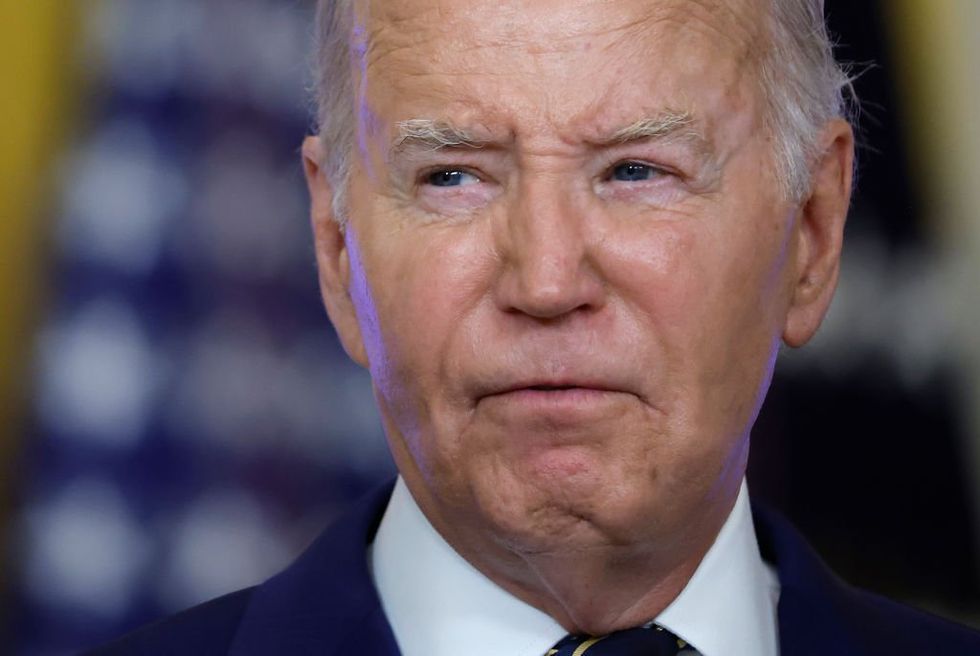
Joe Biden’s problems are the real threats
Favicon 
www.theblaze.com

Joe Biden’s problems are the real threats

Democratic analysts don’t seem to understand why the all-out legal assault on Donald Trump isn’t working. It’s because they keep talking among themselves and not with the American people.Most Americans don’t live and work in the New York-Washington political-media-government bubble. If reporters and analysts listened to Americans, as we do at America’s New Majority Project, they would learn how decisive the choice between Joe Biden and President Trump is. They would also see how difficult, if not impossible, it will be for Biden to get easily re-elected.Americans realize that Biden does not have the knowledge, ability, or wits to defend our nation against our adversaries.The propaganda media is trying to focus the election on what it sees as President Trump’s flaws. The Democrats, including the Biden campaign, are trying to focus the election on what they see as the threat President Trump represents.But the 2024 election is ultimately going to come down to a simple question: Can the American people afford four more years of Biden’s policies and principles?President Trump’s problems all involve his own alleged behavior and activities. Even the totally phony legal attacks remain locked into a Trump-centered issue. No American is hurt by the things Trump has supposedly done. Indeed, few Americans pay any attention to the outlandish, manipulated legal attacks on President Trump.Most Americans see the case against Trump as political lawfare. If anything, they are offended by the left’s assault on the rule of law and the Constitution. This is why the conviction in the so-called hush-money trial led to an enormous surge of contributions to Trump’s campaign. Far from running away from Trump, the American people found themselves running to defend him. They saw him as a champion being persecuted unfairly and took the conviction as a direct warning of what could happen to them.By contrast, Joe Biden’s problems all impact everyday Americans. Bidenflation continues to drive already high prices higher. Child-care costs increased 4.1% in the last year. Young parents are having to take on third and fourth jobs just to break even on costs. Grocery prices are forcing Americans to make tough decisions about how to feed their families. Young people can’t afford to buy houses — which is more than offsetting any goodwill Biden might have generated by (illegally) waiving student loan repayments.Biden’s policies are causing millions of Americans real pain.Biden’s open-border policy allows Venezuelan criminals to go to New York City and murder policemen. Biden’s open-border policy allows fentanyl and other drugs to flood our country and poison our communities. When more than 100,000 Americans a year are dying from drug overdoses, it is hard to worry about how Trump valued his apartment or paid his attorney.The average American can’t afford groceries, gasoline, or the electricity bill thanks to Bidenflation. Democrats want Americans to focus on these legal attacks. But Americans are focused on their own survival in the terrible economy President Biden and Democrats created.For the elite establishment Democrats, this is all still about politics. For the American people, it’s about survival.Economically, Biden’s destructive policies make life more expensive. Culturally, people are sick of radical dictates that denigrate religious liberty and seek to indoctrinate children against the will of their parents. Finally, as a matter of safety, Americans realize that Biden does not have the knowledge, ability, or wits to defend our nation against our adversaries.The 2024 election isn’t about what the establishment media thinks. It’s about America’s survival.Editor’s note: This article was originally published by RealClearPolicy and made available via RealClearWire.
Like
Comment
Share
The Blaze Media Feed
2 yrs

Wednesday Western: 'Don’t Fence Me In'
Favicon 
www.theblaze.com

Wednesday Western: 'Don’t Fence Me In'

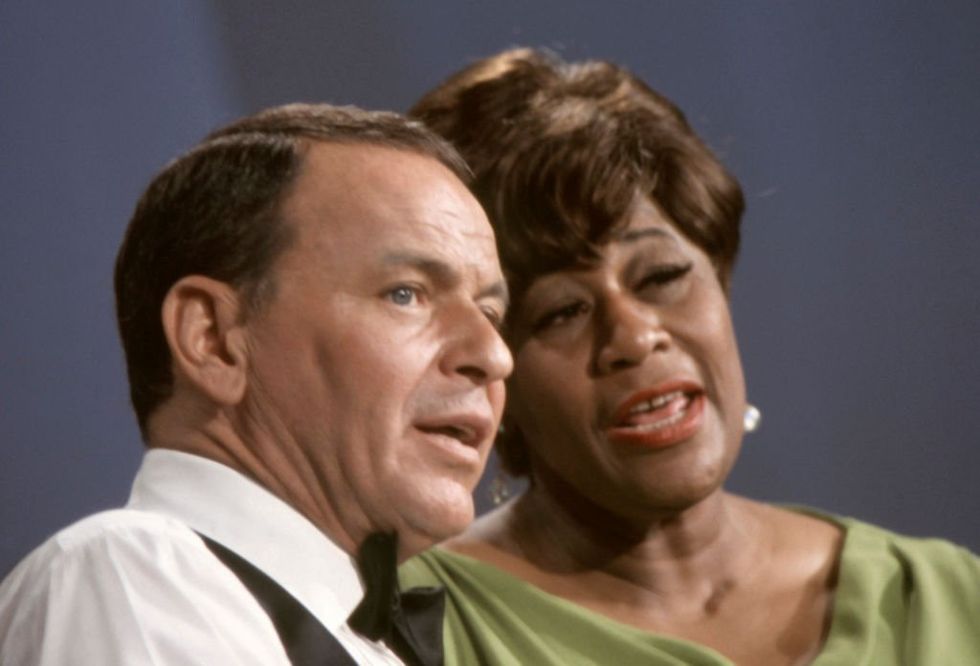
The perfect Western song “Don’t Fence Me In” is the most American song ever written, for a ton of reasons — many of which contradict one another. It’s a magical song. Or I would say a spiritually blessed piece of music, animated by a human ache that only God can heal. In this case, He gave us “Don’t Fence Me In.” If you regularly read the Wednesday Western series, this track should be one of your anthems. In fact, I formally nominate it the theme song of my Wednesday Western series. If you haven’t heard “Don’t Fence Me In,” here’s a link. I urge you to give it a listen. Hold on to how you feel: We’re taking our little Corvette through the automated car wash. “Don’t Fence Me In” isn’t a bloodless song. It’s jolly but protective. And every time you think you have it figured out, it runs off like a lizard that fired its tail into your hand. Ella Fitzgerald added an emotional depth to the song: For starters, there’s the head-spinning list of bands and musicians who have covered “Don’t Fence Me In,” from Gene Autry to Bob Hope and the Muppets to James Brown to the Killers. (There are several Muppet renditions.) Jeff Goldbum has a version, sung by Kelly Clarkson with Goldblum on piano: There’s even a live-action version featuring Goofy, Mickey, and Minnie: Dean Martin has done a few different versions, including this duet with Lorne Green, in which they’re both on horseback on a soundstage. And then there was the time that Dean Martin and John Wayne sang “Don’t Fence Me In” on The Dean Martin Show. Dave Alexander Any time my kids love a song, I immediately love it also, because it brings me closer to the people I love most. I discovered “Don’t Fence Me In” while researching for an interview with Dave Alexander at the Western Heritage Awards, Oklahoma City. His album “From the Saddle to Symphony Hall” won Traditional Western Album of 2024. It's a tidy little album at 34 minutes long. I began reporting on Dave with a certain surgical journalistic coldness. But, man, I very quickly fell in love with his music. I kept his album on repeat. And “Don’t Fence Me In” hooked me deeper every time. It was such a liberating experience. It’s a beautiful American song. It’s lovely. Powerful. It sings everything that an American heart ought to sing. It makes me feel unabashedly American. A frontiersman, ready to dive into the untamed beauty of American wilds. The weekend I was supposed to interview Dave Alexander in Oklahoma City, my entire household came down with some horrible virus or bug. It was brutal — brutal enough to derail my trip to the Western Heritage Awards. We listened to it many times — maybe three dozen. And it was like a cure, because we rose from the dead and began dancing when it came on. But then I played Dave’s cover of “Don’t Fence Me In.” The air felt a bit lighter. And for the next 48 hours, that song was sporadically on repeat. I messaged Dave Alexander to tell him about the experience, that he recorded a hell of a version: "I’ve listened to 'Don’t Fence Me In' about 100 — easily. It has become one of my favorite songs of all time. My kids love it. We were sick all weekend and it's one of the few things that uplifted us. I hear it, and my heart fills with hope. It captures everything I’m trying to accomplish here." I'm still working on Dave's profile; publication date to be determined. Bob Hope is one of the many artists to cover “Don’t Fence Me In,” with a little help from the Muppets. The Killers also have a version. Origins Soon enough, the various algorithms guided me to the realization that this song is almost a century old. And, man, the downfall of musicians who have covered it nearly sank me. I assumed Roy Rogers had written it. The message and the optics are on brand. Here’s a version by my friends Riders in the Sky: It’s been covered by musicians from a significant number of genres and subgenres, and every time it hits the same emotional zone. It radiates the same power in every dialect, pace, and intonation, at every tempo or sequence. The instruments don’t matter. Every time, it evokes a comfort that is surely a gentle kiss from God. Hey. Not so fast. Yes, “Don’t Fence Me In” has tinges of gospel. But it’s also got a confusing origin story. Robert Fletcher, an honest-to-God cowboy, wrote the song, but Cole Porter made it a masterpiece. As Ranger Doug, yodeling singer and guitarist for Riders in the Sky, put it in our recent interview: "Most of it was written by a rancher up in Montana. And how it ever got to Cole Porter, I don't know, but he vastly improved it and took credit for it. So the rancher came back and asked for his half of the royalties and won them. Bing Crosby introduced it." The difference is similar to rural versus metropolitan. Fletcher had the frontier experience, the soul, while Porter had the training and equipment to shape it into the melody it deserves. American water At the same time, “Don’t Fence Me In” is a big fat middle finger. This is a rowdy track. And we like that. The America of today isn’t all that different from the America from 150 years ago. Not emotionally, not with regard to a true national psyche, uncontaminated by millennia-spanning baggage. “Don’t Fence Me In” would not work in either German or French, Irdu or Japanese, not even throughout the variations of Spanish, even though the Spaniards are our closest relatives in westward exploration. But no other continent, no other nation, can belong to that wide-open-sky arrogance, that ego. We’re born with it. People from everywhere else notice. What they see and hear is “Don’t Fence Me In.” It speaks your voice, American. This strange little country-jazz track prefigured the punk ethos, a liberation through defiance. It’s a song for America, about America, designed to fuse anyone who’s listening to the purest, most transformative part of America: artistic honesty. But even this patriotic tone is misguided. “Don’t Fence Me In” speaks with universals and particulars at the same time. It sings to everyone who feels the stir of light in their hearts. But it also details a very specific situation applicable to a single cowboy — “Cayuse” isn’t exactly Ebonics. See the trip wires in this? Pro gamer “Don’t Fence Me In” recently got some attention because it’s featured on the soundtrack of "Fallout," based on the video game series about a post-apocalyptic world trapped in a retrofuturistic version of the 1950s. Giant beasts prowl the radiated earth. Every one of them wants to kill you. So you shoot at them with your bolt-action pipe rifle. And as you plug these satanic monsters, you’re calm, because you hear “Give me land, lots of land, under starry skies above.” Tricky politics It is deeply political. But this gets confusing, because obviously Roy Rogers, James Brown, David Byrne, Frank Sinatra, Clint Eastwood, Willie Nelson, and Ella Fitzgerald would not share the same political worldview. To Roy Rogers, “Don’t Fence Me In” would probably be an expression of the Cowboy Code, which includes notions of tradition and national allegiance, assumptions that didn’t used to be so forbidden. Anyway, out under the roofless expanse, you say, "When I look at your heavens, the work of your fingers, the moon and the stars, which you have set in place, what is man that you are mindful of him, and the son of man that you care for him?” (Psalm 8:3-4). To Clint Eastwood, it would probably be more of a libertarian anthem, an Eastwood sneer at the true oppressor: the hyper-state, 'roided out on political correctness. If I wanted a fence, I would have built one myself. Now leave me alone so I can shop and shoot my handguns and think about how good each moment can be. To James Brown? As a nonviolent leader throughout the history of racial sorrows and tensions, it would probably carry a more embittered tone. But not without lots of “GOOD GAWD YEAY!” A lot of people in this country are born with their heads already spinning, and life demands a stability that you never had. Assassinated leaders and hatred for no reason. Brown had been arrested. He knew the panic of being locked in a jail cell. But this was not an entirely personal experience for him. It indicated something much worse. You can feel his heartache, sprinkled onto the lavish percussion of Allan Schwartzberg. To Sinatra? Vegas, baby. America speaks through the crowd. More stylish than Paris at the edge of daylight. Look at that sky! Does it end? No, no, no, folks. It’s the sway of it. Gliding through waves on a rented yacht, tugging at spiced-up whiskey. Other times, freedom means sitting alone at your dinner table, in a moment of silence, sipping the thoughts along. In his cover of “Don’t Fence Me In,” Sinatra feigns boredom halfway through the song. This only adds to the song’s lore and clout. To my boys Riders in the Sky? Their devotion to “Don’t Fence Me In” is the purest of them all. They’re concerned with uplifting anyone who hears the song. When they sing it, there is no static. As part of their live performances, they create characters for elaborate stories. What they offer is a real-life singing cowboy and the hope that his song will never end. To Willie Nelson? As libertarian as Clint Eastwood but on the left quadrant of the political map, Willie believes in an America that defends and protects, within limits, a place where you can fight the evils of a system that forces us to use gasoline to fuel our cars. This man uses cooking oil. Fencing is whatever infringes on human rights. Liberation must be mapped out by slightly radical politicians willing to risk prestige in service to their national duty. To Louis Armstrong? In his lifetime, the fences were more literal. So maybe Armstrong was inspired by the defiant message hidden in “Don’t Fence Me In” when he criticized President Eisenhower’s handling of segregation. That’s seven radically different definitions of the same song. Happy trails Rogers even starred in a film titled “Don’t Fence Me In,” which tells the full story of Wildcat Kelly. Here’s a wholesome examination of the song in the intro to the movie on "Happy Trails Theater" with Roy Rogers and Dale Evans. Dale Evans called it her favorite film, along with “My Pal Trigger.” The only place I can find it is Tubi, and the video isn't embeddable, so I recommend checking it out. Contraries Every differentiation strengthens the complexity of the song’s message. What is the tone, and what the message, of the phrase “don't fence me in”? Is it the heartbroken cry of a man losing his freedom? The whimper of junkie coming down? The yelp of an innocent? Is it a request? A demand? A threat? A command? In each case, what is it trying to accomplish? Oh boy, this gets us jammed up. At every phase of this examination, we confront a wave of contradictions that become a united mass. Not just harmony in opposites. Unity in friction. More proof that “Don’t Fence Me In” is the song of America. Two hands Yet despite this variety, there are only two versions of the song: One with a story about a man who sings the song because he’s being arrested. One that excludes this story. The first one begins with Wildcat Kelly as he’s being hauled off to jail. He begins crying at the thought of confinement. But it’s deeper than that. If the man can’t stand fences, he’s definitely not going like the bars of a jail cell! I also like the humanity of this version. Here we are being lullabied by a criminal. I often wonder what Wildcat Kelly did to get arrested. How long will he be in jail? How much more is there to his backstory? From a structural musical perspective, I enjoy the mood shift of the song, guided by a clever sweeping key change. This intensifies the difference between a man on his way to jail and a man gliding a horse through a prairie alone at night, listening to the murmur of the cottonwood trees. You dream along. This version is better from a storytelling perspective. As Shakespeare knew, adding quotation marks to an entire text or play or poem transforms it into a much different story. The second version of “Don’t Fence Me In” doesn’t include the story, thereby reorienting the song as a first-person account of a person — you, “sinking into the breeze under cottonwoods.” You’re no longer listening to some convict’s story. With the second version, the singer’s voice is the expression of your thought, of your very being. This version makes sense during tough times, when your empathy levels are too low to extend to convicts named Wildcat Kelly. But you are Wildcat Kelly. Maybe you’re innocent after all. You finally settle down after a day of life’s brutality. Who even remembers what you lost today? Gloom emboldens gloom. Your losses double and double. But then you hear the melody of “Don’t Fence Me In,” and you exhale. It feels like you finally heard a friendly echo. You turn loose and aim for the mountains through the country that you love. Ride to the ridge where the West commences and gaze at the moon until you lose your senses. As Roy Rogers loved to say, “Goodbye, good luck, and may the good Lord take a liking to you. See ya next week.”
Like
Comment
Share
The Blaze Media Feed
2 yrs

Pride over preparedness: How LGBTQ+ activism is weakening our forces
Favicon 
www.theblaze.com

Pride over preparedness: How LGBTQ+ activism is weakening our forces

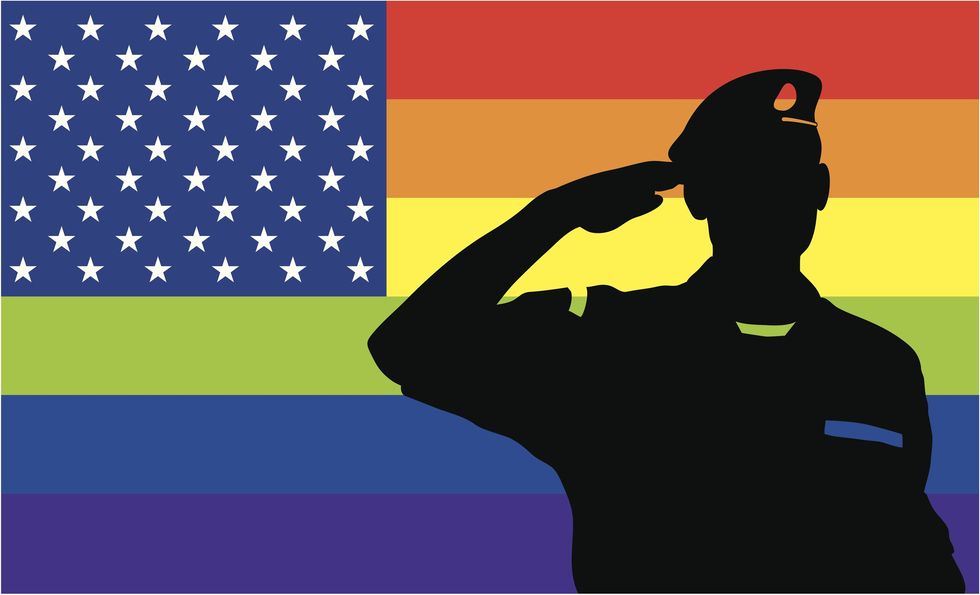
For most of my life, June signified the arrival of summer and opened wedding season. In recent years, a small but boisterous group of activists have claimed it as Pride Month, replacing the traditional focus with honoring an ever-changing flag that represents the worship of a postmodern Baal. As society has surrendered to this iteration of humanistic religious practice, the military complex has followed suit. The American military that could not be defeated by global nuclear powers was conquered by a band of people dedicated to sexual disorder. Since the repeal of Don’t Ask, Don’t Tell in 2010, the Department of Defense capitulated to the revolutionary cause of Pride Month with nearly the speed of Kabul’s fall to the Taliban. In doing so, it usurped the concept of selfless service to others with the celebration of self for the sexually divergent. To openly voice disagreement with the so-called sexual liberation movement puts military members at odds with the regime. The Pentagon, and all branches of the military, publish internal public affairs guidance documents laying out exactly how military leaders from top to bottom are expected to celebrate LGBTQ values in speech and action. This now includes sending honor guards in full military dress to formally kick off pride parades. The American flag and military colors have long shown up in battles throughout American history. Now they wave in cultural battle — on the side of those who want the nation deconstructed. Most U.S. military bases host special Pride events throughout the year courtesy of taxpayers. Defense Secretary Lloyd Austin, a man who became a four-star general in the straight Army, has made kicking off Pride Month part of the liturgical calendar. At this year’s Pentagon Pride celebration, Rear Admiral Mike Brown shared how breaking up his family to follow homosexual desires allows him to better serve the nation. Lost on those attending is that a man who will break a solemn oath taken before God in marriage will not think twice about violating an oath taken to the Constitution. Yet the Defense Department repeatedly touts the generally undefined accomplishments allegedly carried out solely by homosexual, bisexual, and transgender members of the military in keeping America safe from its straight enemies abroad. One thing is clear: The U.S. military’s support for sexual revolution is weakening the force, a reality that no American can afford to accept. It has led to increased stress and anxiety among the troops, decreased team cohesion, and an erosion of trust — outcomes that have played a predominant role in the worst military recruitment crisis since the last peacetime draft ended in 1973. How far the military has bowed to the LGBTQ movement depends on which base you’re on and under whose command you serve. Fort Leavenworth in Kansas, which was my last duty station, is home to the Army’s Combined Arms Center headquarters, which oversees all the schools across the Army. The base is also home to Army University, the Army Staff Management College, the U.S. Army Command and General Staff College, and the School of Advanced Military Studies. As Southern Baptist Theological Seminary President Albert Mohler often says, the closer you get to a university campus, the farther you get from morality. As a base that brands itself the Army’s intellectual center, and one staffed almost entirely by mid-grade and higher officers, it trends culturally to the left of what you’re likely to find at bases that house combat arms units. It was at Fort Leavenworth that a supervisor told me in 2021 (outside Pride Month) that my asking for a pre-emptive conversation about where to draw the ethical line between my Christian faith and expectations of further enabling transgender ideology in the ranks constituted bigotry. My supervisor ultimately backed down, but it was clear that the expectation for officers was to do what we were told without question, especially on matters of sexual progressivism. Another instance of pushing the LGBTQ agenda at Fort Leavenworth occurred during an equal opportunity event on November 14, 2023. During one presentation, attendees were told that speech that was critical of the LGBTQ movement could be punished under the guise of “dignity and respect.” The speaker went on to say that commanders would be held accountable if they failed to enforce this new totalitarianism. The Army’s official motto is “This we’ll defend” — only it seems that sexually progressive ideology has priority in what is to be defended. Here are but a few additional examples that show that celebrating Pride has become a departmental priority across the military. U.S. Army Col. Dan Blackmon advertised a since-closed online store selling 434th Field Artillery Brigade-branded Pride shirts for soldiers under his command to wear during unit-wide physical fitness training sessions. Maryland National Guard Colonel Brian T. Connelly posted photos of himself cavorting sexually with other military men while wearing a fetish pup mask. Though public attention came due to this deranged officer’s posting of his sexual escapades online, it’s been rumored that those who worked in proximity to Connelly were aware of his behavior long before it was made public. Last year, the Pentagon mandated the use of gender-neutral pronouns in writing awards. In a twist of irony, this forced a delay in processing General Mark Milley’s retirement award because it referred to Milley as a man rather than “they.” The DOD reversed itself in response to a deluge of unwanted PR and congressional scrutiny. Both West Point and the Air Force Academy offer gender-neutral bathrooms. Add to that, the Navy has selected a drag queen to be its official digital ambassador. U.S. Space Force Col. Bree Fram is a man masquerading as a woman. He has made a point of using his status as a senior officer on the speaking and writing circuit to advocate further left-wing ideological change across the military. Because Fram’s advocacy work align with the current administration, he has full institutional support to continue this activism while on duty and in uniform. In contrast, military officers who argue for a return to policy that honors traditional values face harassment and punitive inquiries by uniformed political commissars — more commonly known as equal opportunity advisers. The Army publicized a male major who now goes by Rachel Jones as a positive example of “inclusiveness.” The story, published as an official Army public affairs product on army.mil, tells us that “coming out” to live “authentically” literally saved this officer’s life. Even though such fiction has become a normal ploy in military marketing, it was nevertheless a stark departure from the Army’s usual priority of highlighting fitness culture, given that Jones does not meet Army body-weight standards. Army policy mandates that overweight soldiers are not eligible for favorable personnel actions. But claim a transgendered identity and you’re ready for prime-time marketing as the face of the Army. Despite the platitudes about how so-called transgender military members increase America’s defenses, the Pentagon is stonewalling a Freedom of Information Act request on the topic. Apparently, the process to “transition” military members is something that senior defense officials don’t want subjected to public review. Most military members are offered more opportunities to attend Pride-focused events than opportunities to train at a rifle range. To openly voice disagreement with the so-called sexual liberation movement puts military members at odds with the regime. At the 2023 DOD Pride Celebration, former Undersecretary of Defense for Personnel and Readiness Gil Cisneros said that disagreement with the sexual depravity in vogue with our current elite is “hate for hate’s sake.” He was echoed at that event by Space Force Lt. Gen. DeAnna Burt, who used language harkening to conditions of civil war to argue that states enacting policies that respect traditional morality are in a condition of rebellion against the defense complex and its vision of “democracy.” Pride gets more focus across the military than any other topic. There is one Veterans Day and one Memorial Day. In contrast, Pride gets all of June and is celebrated every day in military EO offices. Most military members are offered more opportunities to attend Pride-focused events than opportunities to train at a rifle range. The stock of rainbow-themed swag increases on military installations as supplies of training ammunition remain hard to come by. The DOD claims that celebrating the diversity of sexual behavior is about advocating for basic human rights. But in fact, these are synthetic rights for cultural revolutionaries that trample upon constitutional and natural rights for honorable citizens. The military brass can pretend that its subservience to the Pride movement is routine and benign. But reality begs to differ. In recent dissertation interviews with veterans who left military service within the last decade, I observed a clear theme: Military members who hold traditional views of morality are fearful of sharing their views, even when off base and among friends. They also shared that the increasingly open political posturing of progressive military officials increased suspicion and decreased trust and cohesion in the ranks. In just a decade, the current crop of top defense policymakers has undone centuries of tradition and esprit de corps across the force. Veterans have experienced this change and are in large numbers discouraging their own children from joining. The Army’s recent abandonment of lesbian-themed recruiting pitches for returning to a marketing strategy that highlights teamwork and a warrior mindset betrays the feigned ignorance of political appointees running the Pentagon. There is an obvious gulf between what they say and what they know to be true. Corporate business decisions to go all in on Pride are driven far more by the pursuit of financial profit than actual belief in the righteousness of the sexual revolution. For example, BMW changes its logo each June only in Western countries. A growing number of companies eager to join in are finding that flying that flag is actually a business risk. Bud Light and Target are recent high-profile examples. In contrast, the DOD flashes the virtue-signal beacon loudly for reasons of immediate political subservience to the cultural elite, even as doing so undermines public confidence and recruiting. An organization that specializes in considering the consequences of decisions should know better. Yet the desire for career enhancement overcomes reality in the minds of military officers. The majority of those in the Defense Department who wave the flag are not truly committed to the cause. After all, Defense Secretary Lloyd Austin hasn’t volunteered for gender reassignment surgery. Yet they lack moral courage to stand for truth and are content to be seen as swimming dutifully with the cultural current. Since they surrender to a cultural lie, we must ask what else they would surrender to. The image of the American soldier as a selfless servant to the nation was cemented through aggressive propaganda efforts during the era of world wars. High public trust ratings over the last three decades made the military an institution to be targeted by progressives in their social crusade. By forcing the military to embrace a left-wing policy agenda, progressive politicians can pitch revolutionary policy changes to the public by saying, “Look, the military believes this is a good thing; so should you.” This was a tactic the Obama administration seized upon during its move to normalize the LGBTQ agenda across the nation. If ruling elites are not stopped from misusing the military in this way, it will become the armed enforcers of elite desire, as has been the historical norm for militaries throughout history. If the LGBTQ agenda finds a permanent home in the military, we will have a nuclear armed force that views the traditional doctrine of sexual morality as an enemy of the state. Conservatives have been far too willing to cede cultural territory in an attempt to placate Marxist revolutionaries, as Chamberlain placated the Nazi regime by ceding the Sudetenland in 1938. His declaration of “peace for our time” proved a foolish assertion. War came for Britain, and cultural war over what will become of the West is upon us now. It’s time for the U.S. military to dump the Pride theme in favor of focusing on what matters for military preparedness. Only one flag, the American flag, should be flown and saluted by our military. Editor’s note: A version of this article appeared originally at The American Mind.
Like
Comment
Share
The Blaze Media Feed
2 yrs

A deep state-tied Ukrainian group just put me on a ‘disinformation watch list’
Favicon 
www.theblaze.com

A deep state-tied Ukrainian group just put me on a ‘disinformation watch list’

On Thursday, Texty.org, a so-called independent media outlet with an editor in chief who has ties to the U.S. State Department, placed dozens of American politicians, activists, and media outlets — including Blaze Media and myself — on a list of those who have allegedly shared Russian disinformation and anti-Ukrainian statements. The outlet published an article titled, "Roller Coaster: From Trumpists to Communists. The forces in the U.S. impeding aid to Ukraine and how they do it." There are 75 individuals on the list with the nearly 400 entities that have opposed sending aid to Ukraine in its war against Russia. Blaze Media and I were mentioned on page 34 of a 47-page list. We have a color revolution happening within our own country. The group admits it couldn’t establish direct, proven ties between most of the entities on the list and the Russian government or known Russian propagandists. Instead, it gathered “evidence” that these people and outlets have spread Russian disinformation by echoing key messages of Russian propaganda in their arguments for ending further aid to Ukraine. Who exactly are the people behind Texty.org? Its cofounder Anatoly Bondarenko was involved in the "tech camp," a public diplomacy program established by the Bureau of Educational and Cultural Affairs at the State Department. The tech camp is very much part of the State Department’s efforts to foment “color revolutions” in other countries. They find “tech-savvy people” and show them how to build movements against their governments. That's what our State Department is doing. What a coincidence that the editor in chief and cofounder was trained by the State Department and has ties to USAID. I did a "Glenn TV" special a few weeks ago about regime change. It's been the United States' policy for a very long time. We use covert CIA operations to go into foreign counties and influence policy, manipulate the foreign media, meddle with and topple governments. We never admit that we do these things. When asked, we say, "We didn't do that. What are you talking about?" This strategy started with the Cold War, but nothing the CIA has pulled off comes even close to what its successor began doing: the United States government, including the CIA, NGOs, trade unions, and people like George Soros. They coordinate together to bring about color revolutions. The first one that was really successful was in the Middle East: the Arab Spring. I told my audience years ago that the Arab Spring had its roots in 20th-century communist revolutions. After the “Communist Manifesto” was written, there was the European spring, which was the communists’ attempt to overthrow all of Europe. We've carried out color revolutions in the Middle East, Latin America, and Eastern Europe. Ukraine is one of them. Here’s how they do it. The United States keeps its distance from the “dirty work” by going through NGOs and trade unions. They train and mobilize street movement — like the 2020 Black Lives Matter riots or the current pro-Palestinian protests. These movements are funded by the same people and seem to pop up every four years. Their money and actions usually come at a time of massive civil unrest right before an election. There's some kind of government element at the top — whether it be the CIA, the State Department, or USAID — but ultimately the office of the president calls the shots. It begins with those in the government who want to overthrow a regime, and then the operation is privatized to give it distance from those in the government who are in charge. This is where NGOs like the National Endowment for Democracy come in. The National Endowment for Democracy is composed of four different entities: the National Democratic Institute, the International Republican Institute, the American Center for International Labor Solidarity, and the Center for International Private Enterprise. Do you see what's happening here? It appears that the National Endowment for Democracy is composed of organizations from both sides of the aisle so it looks fair: Republican and Democrat, labor and private enterprise. But this is a bipartisan “cover story.” Next on the food chain are the multibillion-dollar financiers and their organizations that partner in the entire operation. This is where George Soros comes in along with his organizations, the Open Society Foundations, and the Tides Foundation, which spread the message coming from the top: “Demonstrate in the streets!” They influence the media to report what the government wants to communicate to the masses. This is the color revolution blueprint. We've done it many times, and I make the case that these same people are doing it here in America. So, why am I on this list? I believe I'm on this list because I’m telling you exactly what’s happening. We have a color revolution happening within our own country. Our government, NGOs, George Soros, and all the same actors used to initiate color revolutions abroad are now initiating a color revolution within the U.S. This is what they've practiced in foreign nations, tested in 2020, and are doing right now ahead of the November presidential election. They might succeed this time because they can't have Donald Trump as president again. If he wins, you will have the government, the media, and the masses in street movements all saying that the election was illegitimate. This is how we've brought about regime change in foreign nations, and now it is being attempted on our own soil. Want more from Glenn Beck? Get Glenn's FREE email newsletter with his latest insights, top stories, show prep, and more delivered to your inbox.
Like
Comment
Share
Gamers Realm
Gamers Realm
2 yrs

Black Ops 6 dev says MW3 response “helped us focus” on CoD’s best side
Favicon 
www.pcgamesn.com

Black Ops 6 dev says MW3 response “helped us focus” on CoD’s best side

Call of Duty Black Ops 6 is the latest in what is now a very long line of FPS games. From the breakout of the original Modern Warfare - “How’d a muppet like you pass selection?” - to the new-look series and 2023’s MW3, we’ve seen a lot of different takes on the iconic CoD campaign. But as Black Ops 6 drops us in a “mind-bending” ‘90s spy thriller, developer Treyarch tells PCGamesN how it’s focusing on variety and the landmark, memorable moments that the series built its name on. Continue reading Black Ops 6 dev says MW3 response “helped us focus” on CoD’s best side MORE FROM PCGAMESN: Black Ops 6 release date estimate, Best FPS games, New Warzone season
Like
Comment
Share
Gamers Realm
Gamers Realm
2 yrs

AMD just admitted the Ryzen 7800X3D will beat its new CPUs in games
Favicon 
www.pcgamesn.com

AMD just admitted the Ryzen 7800X3D will beat its new CPUs in games

In something of a shocking turn of events, the upcoming Zen 5 AMD CPUs, such as the Ryzen 9 9700X won't actually be faster in games than AMD's existing X3D processors. That's despite AMD claiming that Zen 5 provides a significant 16% improvement in instructions per clock compared to its older Ryzen 7000 series CPUs based on the Zen 4 architecture. The revelation comes only weeks ahead of the expected Ryzen 9000 release date in July 2024, and puts a dampener on our expectations when it comes to the new AMD Zen 5 chips earning a spot on our best gaming CPU guide. They still look likely to be great CPUs, even for gaming PCs, but it looks like we'll have to wait for the first Ryzen 9000 X3D CPUs before gaming performance takes a significant leap. Continue reading AMD just admitted the Ryzen 7800X3D will beat its new CPUs in games MORE FROM PCGAMESN: Ryzen 7 7800X3D review, Best gaming CPU, Radeon RX 7800 XT review
Like
Comment
Share
Gamers Realm
Gamers Realm
2 yrs

New World Steam reviews plummet as Amazon reveals MMO changeup
Favicon 
www.pcgamesn.com

New World Steam reviews plummet as Amazon reveals MMO changeup

Amazon Games is making some big changes to New World, and the current MMO player base doesn’t like it. In light of what looks like a presentation shift towards an ARPG and new console ports, current PC players are calling on Amazon due to a lack of support, and taking their concerns to the Steam user reviews. Continue reading New World Steam reviews plummet as Amazon reveals MMO changeup MORE FROM PCGAMESN: New World system requirements, New World beginner's guide, New World review
Like
Comment
Share
Gamers Realm
Gamers Realm
2 yrs

The most realistic survival game we’ve seen in years is playable now
Favicon 
www.pcgamesn.com

The most realistic survival game we’ve seen in years is playable now

Sonder - the realization that everyone you see has a life just as deep and complicated as yours. While that may be true for people, it certainly isn't the case for NPCs. They follow their own limited rules, while you, the player, have far more going on. Not in City 20, a new survival game where NPCs have jobs, behavioral patterns, motivations, the same hunger and tiredness mechanics as you, the need for money, and a unique, personal memory for all your actions. Continue reading The most realistic survival game we’ve seen in years is playable now MORE FROM PCGAMESN: Best survival games, Best sandbox games, Best life games
Like
Comment
Share
RedState Feed
RedState Feed
2 yrs

Congress: Don’t Blame Shift on Rent Inflation
Favicon 
redstate.com

Congress: Don’t Blame Shift on Rent Inflation

Congress: Don’t Blame Shift on Rent Inflation
Like
Comment
Share
Trending Tech
Trending Tech
2 yrs

The AI upgrade cycle is here
Favicon 
www.theverge.com

The AI upgrade cycle is here

Photo by Vjeran Pavic / The Verge The new Apple Intelligence features coming to iOS 18 could be the most impressive integrations of AI software and consumer hardware to date. Apple’s AI tools will be able to take actions based on what they know about you, manage your notifications, and rewrite text. They’re the kinds of things that could make day-to-day use of your iPhone a lot better. But they won’t be available unless you have one of Apple’s latest and most expensive iPhone models. AI has quickly become the latest entry in the tech industry’s never ending desire to drive an upgrade cycle. A few years ago, every smartphone maker raced to 5G; more than a decade ago, the TV industry pushed for 3D TVs. Right now, every tech company clearly sees an opportunity with AI and... Continue reading…
Like
Comment
Share
Showing 24602 out of 56670
  • 24598
  • 24599
  • 24600
  • 24601
  • 24602
  • 24603
  • 24604
  • 24605
  • 24606
  • 24607
  • 24608
  • 24609
  • 24610
  • 24611
  • 24612
  • 24613
  • 24614
  • 24615
  • 24616
  • 24617

Edit Offer

Add tier


Select an image
Delete your tier
Are you sure you want to delete this tier?

Reviews

In order to sell your content and posts, start by creating a few packages. Monetization

Pay By Wallet

Payment Alert

You are about to purchase the items, do you want to proceed?

Request a Refund