YubNub Social YubNub Social
    Advanced Search
  • Login

  • Night mode
  • © 2026 YubNub Social
    About • Directory • Contact Us • Privacy Policy • Terms of Use • Android • Apple iOS • Get Our App

    Select Language

  • English
Install our *FREE* WEB APP! (PWA)
Night mode
Community
News Feed (Home) Popular Posts Events Blog Market Forum
Media
Headline News VidWatch Game Zone Top PodCasts
Explore
Explore Jobs Offers
© 2026 YubNub Social
  • English
About • Directory • Contact Us • Privacy Policy • Terms of Use • Android • Apple iOS • Get Our App

Discover posts

Posts

Users

Pages

Group

Blog

Market

Events

Games

Forum

Jobs

The Lighter Side
The Lighter Side
2 yrs

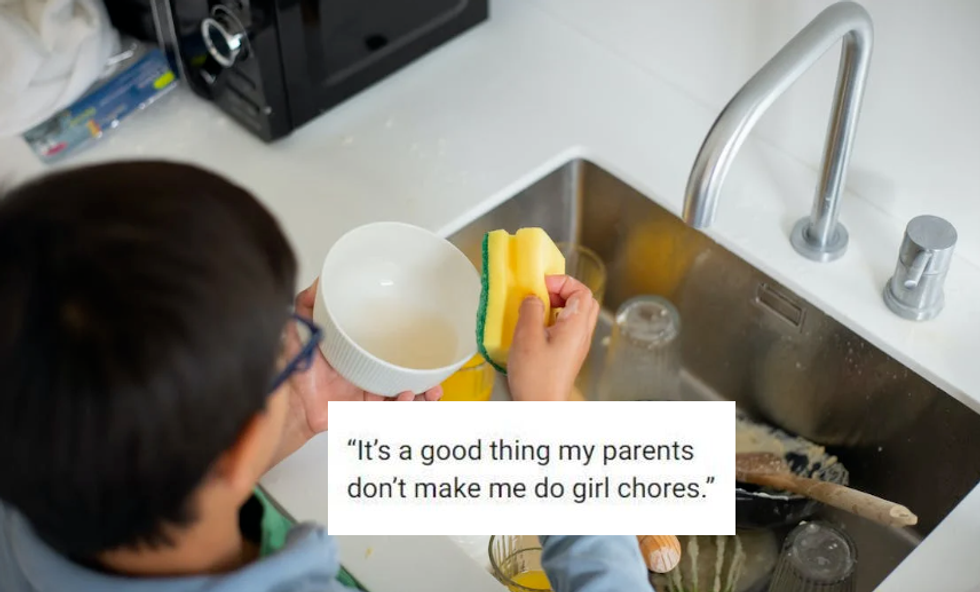
Mom has the perfect response to teen son who refuses to do 'girl' chores
Favicon 
www.upworthy.com

Mom has the perfect response to teen son who refuses to do 'girl' chores

A 41-year-old mom with 3 boys, 12-year-old twins, and a 10-year-old, pays them $10 daily to do their chores. However, their pay is deducted $10 if they miss a day. The boys have to do their tasks 5 days a week, although it doesn’t matter which days they choose to work.“This system has worked swimmingly for us since it started, the boys have always complied with completing their chores,” the mom wrote on Reddit.Her 12-year-old son was getting ready to play Fortnite with a friend and told him he’d be ready in 15 minutes once he finished his chores. When the boys started playing the game, he told the friend he was in charge of dusting and sweeping the stairs, to which the friend responded, “It’s a good thing my parents don’t make me do girl chores.”After learning what the friend said, the mom told her son that chores are genderless.“I spoke with my son and explained to him that knowing how to clean was not specific to any gender, that it was a life skill everyone needed to know. I also told him that I understood that other families functioned differently; however, in our family, everyone did an equal share,” she wrote.Over the next 3 days, the boy refused to do his “girl” chores. So, when allowance day came, the two brothers who did theirs received $50, but the 12-year-old who refused only got $20. The mom and the boy's father are divorced, so the 12-year-old called his dad to complain that he got $30 less, and the dad took his side.“My ex-husband then proceeded to call me and tell me that I’m in the wrong for only giving him $20 and to imagine how it makes him feel that his brothers got more than he did. I explained to him that our other sons actually did their chores for all 5 days, so they were rewarded accordingly,” the mother wrote. “And assured him that if he had decided to start giving the boys an allowance, then he can run allowance however he wanted, but this was ultimately the system I had come up with.”She added that her husband said she is being “insensitive” and “humiliating” their son.The mom asked Reddit’s AITA subforum if she was in the wrong, and the commenters unanimously agreed that she was right. Other commenters noted that she made a smart decision leaving her ex-husband because he took the side of his child, who refused to do work for sexist reasons.The only problem the commenters had was that the mom was being a little too generous by giving them $50 a week. That’s $600 a month for 3 kids."It’s the real world, you don’t do your job, you don’t get paid, and I actually think $10 a day is pretty generous for allowance," Longjumping-Gur-6581 wrote. "$10/day is insane for that age,” fIumpf added.“You’re not taking money out of your son’s allowance, you’re not paying him for services not rendered,” Excitedorca wrote. “The sexist, misogynistic reasons behind not completing the chores need to be corrected and that won’t happen by rewarding it.”This article originally appeared on 9.22.23
Like
Comment
Share
The Lighter Side
The Lighter Side
2 yrs

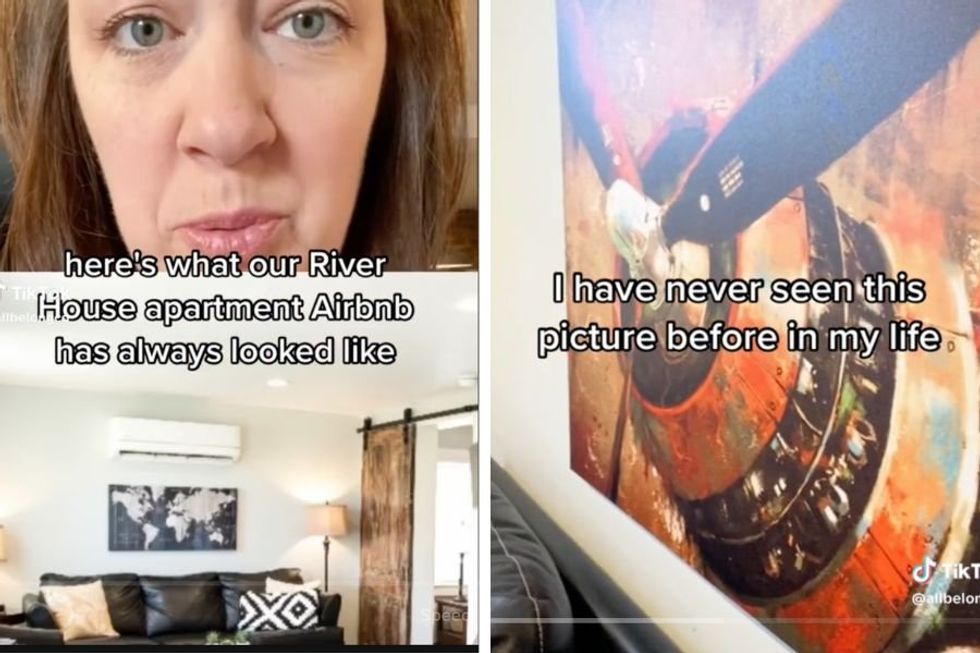
Airbnb host has world riveted over stolen painting that was replaced inside her own home
Favicon 
www.upworthy.com

Airbnb host has world riveted over stolen painting that was replaced inside her own home

It should go without saying that it’s not cool to steal from your Airbnb. But that doesn’t mean it doesn’t still happen. However, when one Airbnb host recently discovered a guest had—for some strange reason—stolen one of her paintings, then replaced it with a completely different painting, she decided to make the best out of a very uncool situation by sharing the story on TikTok. As a result, viewers got to witness an continuously unraveling, truly bizarre modern-day art heist. Okay, let’s get into it."OK the weirdest thing just happened," host Amy Corbett says at the beginning of her video.She then shows what the living room in the listing normally looks like—with a painting of a map hanging on a wall over a couch. But when Corbett shows up to the unit, we see that it is definitely not a painting of a map hanging on a wall over a couch. Instead, there’s a painting of an orange airplane. “I have never seen the picture before in my life!” Corbett exclaims in the video. @allbelongco The weirdest thing a guest has ever done. #airbnb #airbnbstory #airbnbguest #airbnbthief #crazystory #story #fyp ♬ original sound - allbelong.co Creeped out, she looks around the apartment to see if the oil painting is anywhere to be found. Nada. Zilch. Needless to say, commenters had their theories. Several mentioned hearing similar stories involving the same painting, leading them to believe this was all part of some long and involved paint-swapping prank. Others went the more traditional route of assuming this guest was trying to cover up some damage inflicted to avoid fees. Others still thought this person was an artist trying to do some sort of clandestine self-promotion.In a follow-up video, Corbett debunked those theories, saying that not only could that airplane image be found “all over the web,” but the wall it was hanging on was “pristine,” not to mention the fact that the original artwork was next to impossible to accidentally damage. @allbelongco Replying to @exploration_of_love Let’s debunk some theories while we wait to hear from Airbnb… #airbnb #airbnbguest #fyp ♬ original sound - allbelong.co As for whether or not this person had swapped out other paintings, Corbett has reached out to one of the guest’s previous hosts, who confirmed that it had not taken place there. Corbett kept audiences in the loop with several follow-ups, including actual security footage of the guest caught in the act.The video shows a man (now dubbed the Airbnb Bandit) walking from his car carrying the airplane painting. Next, he’s seen in a different-colored hoodie carrying out the map painting, which is bundled up in a blanket. @allbelongco Camera footage doesn’t lie…??‍♀️ #airbnbstory #airbnbguest #fyp #airbnb #airbnbthief #allbelongco #story ♬ original sound - allbelong.co As if things couldn’t get any stranger, when Corbett sent an official claim through Airbnb about the artwork, the Airbnb Bandit did pay, but only a portion of what was asked. Then when she asked when he could pay the rest of it…he asked for a 5-star review.Wow. Just…wow. While the actual identity of this unusual art thief remains a mystery, Corbett is being reimbursed by Airbnb. Plus, she has decidedly made her “negative story into a positive one” by hiring a local artist to create a new painting to hang above her couch, one that features a waterfall view and the Jamestown River visible just outside the listing. Plus, she’s raffling off the airplane painting to raise funds for affordable housing in her area. This might be one of the weirder Airbnb stories out there, but at least it has a pretty happy ending. This article originally appeared on 4.30.23
Like
Comment
Share
The Lighter Side
The Lighter Side
2 yrs

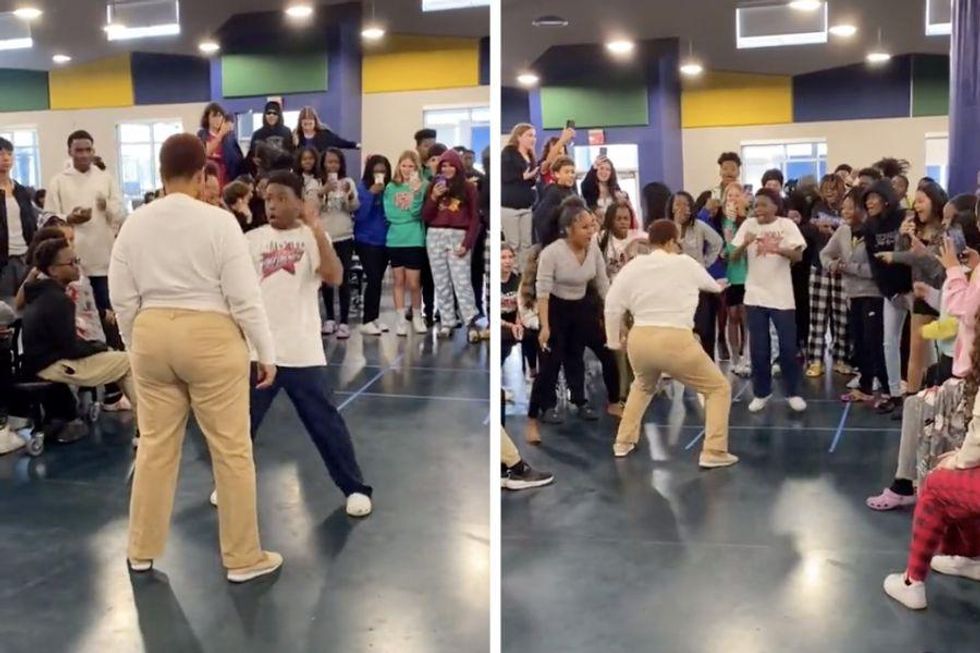
An 8th grader challenged a teacher to a dance-off between exams and she delivered
Favicon 
www.upworthy.com

An 8th grader challenged a teacher to a dance-off between exams and she delivered

We've said it before and we'll say it again: Teachers deserve all the kudos, high fives, raises, accolades, prizes and thanks for everything they do. Even if they just stuck to academics alone, they'd be worth far more than they get, but so many teachers go above and beyond to teach the whole child, from balancing equations to building character qualities. One way dedicated educators do that is by developing relationships and building rapport with their students. And one surefire way to build rapport is to dance with them. A viral video shared by an assistant principal at Sumner High School & Academy in Riverview, Florida shows a group of students gathered around one student as he challenges a teacher to a dance-off. "Our 8th grade Stingrays having a well deserved exam dance break," wrote assistant principal Natalie McClain. "Of course our teachers are ending 2022 with a win." The teacher, Ms. Yolanda Turner, took the challenge—and the students went wild.Watch: \u201cOur 8th grade Stingrays having a well deserved exam dance break. Of course our teachers are ending 2022 with a win. Love my Stingrays \ud83d\udc99\ud83d\udc9a Happy Holidays @HCPS_SumnerHS\u201d — Natalie.McClain (@Natalie.McClain) 1671796331 The student really thought he had her, didn't he? It looked as if his soul left his body when he tapped her shoulders and then realized what he'd done. But to her credit, she took it in stride and took him out with her dance moves."The music was on, all the kids were pumped," Turner told Fox 13. "So it was like, let's have a dance challenge. So I'm like, okay, all right, so everybody's having fun. And I said, 'I'm going to tap in. I'm going to tap into the dance.'""I really try to emphasize for kids to be their authentic selves and to really never be afraid to express who they are no matter who's watching," she told the outlet.This dance-off video is a prime example of how schools can be places of joyful connection in addition to academic achievement. Gaining students' respect doesn't require being a stuffy authoritarian hard nose, and students generally respond better to teachers they genuinely care for. Meeting them where they are is one of the best ways to reach kids and creating experiences that include for silliness and fun is one of the best ways to keep them engaged. Plus, who doesn't need to blow off a little steam in between exams? What a lovely example of striking a balance between academic rigor and modeling healthy stress relief. Well done, Ms. Turner.This article originally appeared on 12.28,22
Like
Comment
Share
The Lighter Side
The Lighter Side
2 yrs

10 common phrases that are actually racist AF
Favicon 
www.upworthy.com

10 common phrases that are actually racist AF

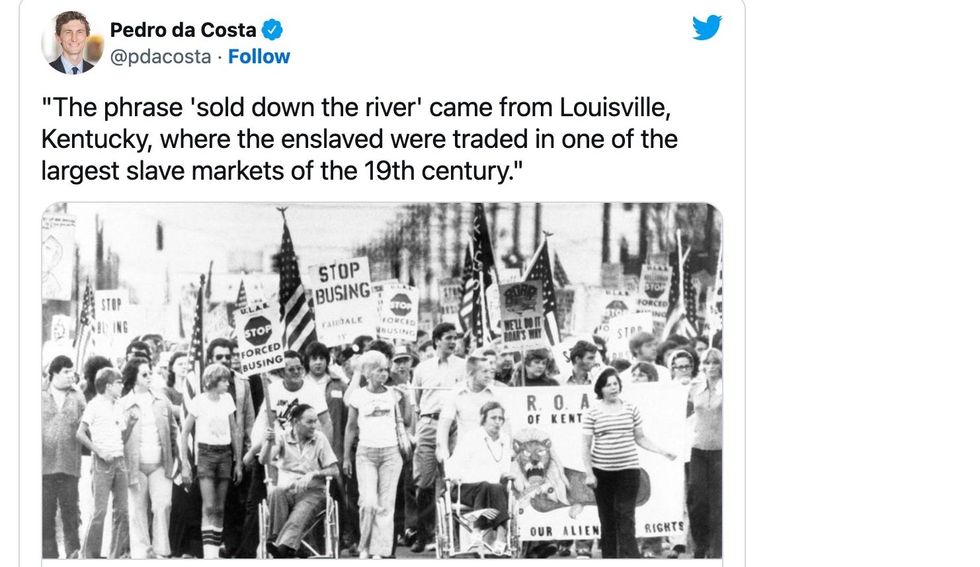
As much as we'd like to pretend every phrase we utter is a lone star suspended in the space of our own genius, all language has a history. Unfortunately, given humanity's aptitude for treating each other like shit, etymology is fraught with reminders of our very racist world.Since I have faith that most of you reading want to navigate the world with intelligence and empathy, I figured it'd be useful to share some of the everyday phrases rooted in racist etymology.Knowledge is power, and the way we use and contextualize our words can make a huge difference in the atmospheres we create.1. ThugAccording to Meriam-Webster's dictionary definition, a thug is "a violent criminal." Obviously, this definition leaves the word open to define people of all ethnicities.However, given the frequent ways this word has been used to describe Black Lives Matter protesters, the 17-year-old murder victim Trayvon Martin, and sadly, almost every black victim of police brutality — there is an undeniable racial charge to the word.When you consider the people who are called thugs — groups of black protesters, victims of racist violence, teenagers minding their own business, and flip the racial element, you'd be hard-pressed to find examples of white people being called thugs in earnest by the media (or really by anyone). let me get this straight. Marshawn Lynch is "thug" because he doesn't talk enough, & Richard Sherman is a "thug" because he talks too much? — Coach Ray Hubbard (@Coach Ray Hubbard) 1422371279 Several prominent activists and black writers have written about the phenomenon of thug replacing the n-word in modern culture. In a popular press conference back in 2014, the Seattle Seahawks player Richard Sherman explained his feelings about the word."The reason it bothers me is because it seems like it's an accepted way of calling somebody the N-word now. It's like everybody else said the N-word and then they say 'thug' and that's fine. It kind of takes me aback and it's kind of disappointing because they know," Sherman said. If a 1400 SAT score and a degree from Stanford makes you a "thug" then I want my kids to be thugs. @RSherman_25pic.twitter.com/MWuWWPNSWh — Bipartisan Sports (@Bipartisan Sports) 1440294552 If you're talking about an actual criminal, there are so many descriptive words to invoke besides "thug." Given its current use as a negative, racially-coded word, avoiding its use seems like an easy and obvious move.2. Grandfather ClauseWhen most of us hear the term "grandfather clause" we just think of the generalized description: a person or entity that is allowed to continue operating over now expired rules. But the literal meaning reveals the "grandfather clause" was a racist post-Reconstruction political strategy.This is the historical definition, according to Encyclopedia Britannica:"Grandfather clause, statutory or constitutional device enacted by seven Southern states between 1895 and 1910 to deny suffrage to African Americans. It provided that those who had enjoyed the right to vote prior to 1866 or 1867, or their lineal descendants, would be exempt from educational, property, or tax requirements for voting. Because the former slaves had not been granted the franchise until the adoption of the Fifteenth Amendment in 1870, those clauses worked effectively to exclude black people from the vote but assured the franchise to many impoverished and illiterate whites."In modern speak, this basically meant the Grandfather Clause let white people off the hook for new voting requirements because their ancestors were already registered voters. Meanwhile, black people were required to fill out impossible literacy tests and pay exorbitant poll taxes to vote. This in turn, meant many black people were unable to vote, while white people weren't held to the same standard.3. Gypsy or "Gyp"The word "Gypsy" was (and is) a racial slur referring to the Roma people. The Roma people are descendants of Northern India who, due to severe marginalization and threats of violence by others, lived a nomadic lifestyle of forced migration for centuries.During a fraught history, Roma people were taken as slaves in Romania and were targeted for genocide by the Nazis.The word "Gypsy" is a slang word perpetuating stereotypes of Roma people as "thieves, rowdies, dirty, immoral, con-men, asocials, and work-shy" according to the Council of Europe.In a similar vein, the term "Gyp" or "getting gypped" means to cheat or get conned, and many connect this meaning as another racist extension of Gypsy.4. No Can Do The saying \u201cno can do\u201d and \u201clong time no see\u201d came from Westerners mocking Chinese immigrants https://twitter.com/trashyewest/status/995768305003610112\u00a0\u2026 — Justin Beauchamp (@Justin Beauchamp) 1526397713 According to the Oxford Dictionary, the very common phrase "no can do" was originally made popular as a way to make fun of Chinese immigrants."The widespread use of the phrase in English today has obscured its origin: what might seem like folksy, abbreviated version of I can’t do it is actually an imitation of Chinese Pidgin English. The phrase dates from the mid-19th to early-20th centuries, an era when Western attitudes towards the Chinese were markedly racist."5. Sold Down The River "The phrase 'sold down the river' came from Louisville, Kentucky, where the enslaved were traded in one of the largest slave markets of the 19th century."https://www.citylab.com/equity/2017/02/louisville-confronts-its-redlining-past-and-present/517125/?utm_source=twb\u00a0\u2026 — Pedro da Costa (@Pedro da Costa) 1524505436 Upon first hearing, many people associate the phrase "sold down the river" with the notion of being betrayed, lied to, or otherwise screwed over. While these definitions all technically apply to the origin, the root of this phrase is much more bleak.According to a report from NPR, being "sold down the river" was a literal reference to slavery, and the families that were torn apart in the south."River" was a literal reference to the Mississippi or Ohio rivers. For much of the first half of the 19th century, Louisville, Ky., was one of the largest slave-trading marketplaces in the country. Slaves would be taken to Louisville to be "sold down the river" and transported to the cotton plantations in states further south.This heavy connotation sadly makes sense, but also makes casual use of the phrase feel way more cringe-inducing.6. Welfare Queen The GOP argument on Obamacare has more than a whiff of Reagan-era racial "welfare queen" politics ---> https://www.nationaljournal.com/politics/a-brutal-translation-of-the-disincentive-to-work-20140206\u00a0\u2026 — Ron Fournier (@Ron Fournier) 1391695820 The term "welfare queen" was first popularized by Ronald Reagan's 1976 presidential campaign in which he repeatedly painted a picture of a Cadillac-driving welfare queen.This straw woman in Reagan's campaign served as a racially-charged exaggeration of one minor case of real welfare fraud used to pedal his platform for welfare reform.Needless to say, the term has sadly lived on as a racially-charged vehicle used to undermine the importance of welfare programs, while peddling gross stereotypes about black women.On top of all the other offenses, this stereotype is of course ignoring the fact that poor white Americans receive the most welfare out of any economically-disadvantaged demographic.7. Shuck And Jive Obama's Shuck and Jive Ends With Benghazi Lies https://fb.me/1m3q5c2IR — Sarah Palin (@Sarah Palin) 1351093162 The term shuck and jive is both common and very obviously rooted in the language of slavery.According to the Online Etymology Dictionary, the phrase shuck and jive refers to:"The fact that black slaves sang and shouted gleefully during corn-shucking season, and this behavior, along with lying and teasing, became a part of the protective and evasive behavior normally adopted towards white people in ' traditional' race relations."Likewise, the modern usage of this phrase refers to pandering, selling out, or instances in which black people go along with racist white people's wishes. Again, not a phrase to be thrown around lightly.8. Long Time No SeeThe very commonly used greeting "long time no see" first became popular as a way to make fun of Native Americans. The phrase was used as a way to mock a traditional greeting exchanged between Native Americans.This is the official definition, according to the Oxford Dictionary:"Long Time No See was originally meant as a humorous interpretation of a Native American greeting, used after a prolonged separation. The current earliest citation recorded in the Oxford English Dictionary (OED) comes from W.F. Drannan’s book Thirty-one Years on Plains (1901): ‘When we rode up to him [sc. an American Indian] he said: ‘Good mornin. Long time no see you’."The act of committing genocide is not limited to human lives, but also translates to a normalized cultural violence. Deconstructing, mocking, and erasing someone's language contributes to this pattern of colonialism.9. The Peanut Gallery Did you know the phrase 'peanut gallery' has racist origins?\n\nIt was the cheapest and worst part of the theater, and the only option for Black attendees. No one wanted to sit in the peanut gallery and today, no one wants to hear from the peanut gallery. #RewriteBHM #BHMpic.twitter.com/vwHHHWLeVP — Nat'l Urban League (@Nat'l Urban League) 1518542600 Most modern uses of the term "the peanut gallery" is in reference to a group of people who needlessly criticize or mocking another person. However, the historical roots of this term are much more racist and painful.Originally, this term referred to the balconies in segregated theaters where black people were forced to sit. The nickname "peanut" was given due to the fact that peanuts were introduced to America at the same time as the slave trade. Because of this, there was a connection drawn between black people and peanuts.10. Uppity MINORITIES MUST STAND UP TO ABUSE:\nKneeling to protest at games is tasteful yet effective. But white owners and racists think blacks are too uppity. \n"Uppity\nWord used by racist old white Southerners to refer to any black person who looks them in the eye." --URBAN DICTIONARYpic.twitter.com/CrRQJqTyTl — LJ Rochelle (@LJ Rochelle) 1527193180 As of now, the word "uppity" is often used as a synonym for "stuck up" or "pretentious" or "conceited." But the roots of the word are far more specific and racist.The word Uppity was first used by Southerners to refer to slaves who did not fall into line, or acted as if they "didn't know their place."So, basically, any black person who overtly stood up to racism. Given the heaviness of this origin, it seems best to leave this word at home when looking to describe a pretentious acquaintance.Sadly, given our ugly history, there are many more words and phrases I could add to this list. In the meantime, hopefully this list is helpful for navigating the racism innate in our language.The article was originally published by our partners at someecards and was written by Bronwyn Isacc.This article originally appeared on 02.04.19
Like
Comment
Share
The Lighter Side
The Lighter Side
2 yrs

8 changes that were made to a classic Richard Scarry book to keep up with the times. Progress!
Favicon 
www.upworthy.com

8 changes that were made to a classic Richard Scarry book to keep up with the times. Progress!

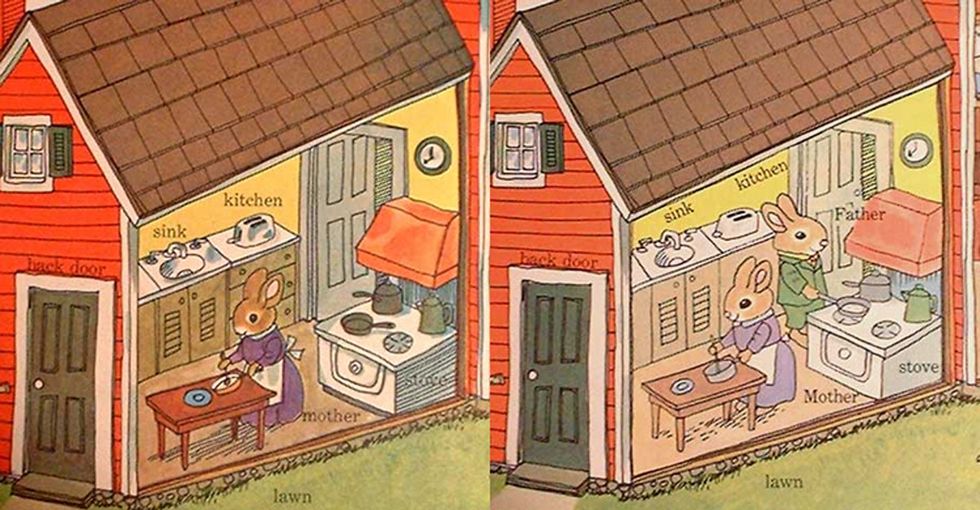
Remember those beloved Richard Scarry books?Books from when you were a kid?Like a lot of people, I grew up reading them.And now, I read them to my kids.If that doesn't ring a bell, perhaps this character from the "Busytown" series will. Classic!Scarry was an incredibly prolific children's author and illustrator. He created over 250 books during his career. His books were loved across the world — over 100 million were sold in many languages.But here's something you may not have known about these classics: They've been slowly changing over the years.Don't panic! They've been changing in a good way.Scarry started publishing books in the 1950s, when times were, well, a little different. So some of the details were quietly updated.Alan Taylor, a senior editor for the photo section of The Atlantic, noticed differences back in 2005 and decided to photograph them. From his Flickr album:"The 1963 edition is my own, bought for me in the late 60's when I was a toddler, and read to tatters. The 1991 edition belongs to my kids today. I was so familiar with the older one that I immediately started noticing a few differences, and so have catalogued 14 of the more interesting differences here in this collection."Taylor found 14 pages with differences between the original and updated versions.Here are eight changes that reflect some of the progress society has made:1. First up: The cover got a makeover. It might seem subtle at first glance, but look closely.The original has a woman (bunny) in the kitchen, while the updated cover has both a man and a woman (still bunnies) in the kitchen. Also: The "policeman" bear changed to a woman, and the label changed to "police officer." The word "mailman" became "letter carrier," and a female farmer was added. Oh, and we went from a cat-mom pushing the stroller to cat-dad! Progress!(The bunny brushing its teeth in the house was changed from a boy to a girl, but I'm not gonna read into that because hopefully all bunny-kids brush their teeth, right? I mean, for the sake of their little bunny teefs!)2. Men can be flight attendants and women can be pilots. And, you know, they don't have to be hot.While the gender of each role remained the same in the newer version (which is, unfortunately, pretty legit, given the glaring lack of female pilots in real life), the stereotyping was eliminated by making the "handsome pilot" more of an everyday "pilot" (raccoon?) and by turning the "pretty stewardess" into a regular flight attendant.3. Christmas isn't the only holiday people celebrate.Shhhh: Don't tell the Starbucks Christmas cup haters this, but there are a lot more winter holidays than just Christmas. The newer version of the book included a menorah in the blank space to recognize those who celebrate Hanukkah.4. Mommy Bears are no longer expected to have breakfast prepared for Daddy Bears......and the subtle change from "called to breakfast" to "goes to the kitchen to eat his breakfast" reflects that.(Side note: Do Daddy Bears realllllly want to be treated like Kid Bears by being called to a meal, where they must promptly appear? I'm thinking not.)5. Because guess what?! Dads can cook, too! (Even Dad Bunnies.)And Richard Scarry's book was updated to reflect the late-20th-century realization that everyone belongs in the kitchen!6. Helping professions aren't just for men.The updated version recognized that fact by changing "policeman" to "police officer" and "fireman" to "fire fighter." The ever-important job of cowboy was eliminated ( sigh ... how many career hopes and dreams were squashed?), replaced with a gardener and a scientist, both of which are filled by female characters. Three cheers for women in STEM! Also: The milkman was replaced by a taxi driver, but I'm pretty sure that was had to do with the fact that milkman (or woman) isn't a growing occupation any longer.7. Regular people need rescuing, too.The newer version did away with the "beautiful screaming lady" (sigh... how many career hopes and dreams ... oh, wait — none) and replaced her with a regular "cat in danger." The "jumping gentleman" label was removed altogether, and the "fireman" became a "fire fighter" again.8. "I" is for "ice cream" — and not stereotypical depictions of Native Americans.We're still waiting for our football teams to get with the times, but the folks behind the Richard Scarry book update eliminated the "Indian" character that was wearing stereotypical clothing.Yay, progress! And before you shrug and say "It's just a book," listen to this:Florida State University recently led "the most comprehensive study of 20th century children's books ever undertaken in the United States." As you can surely guess, they found a gender bias toward male lead characters, even in books about animals — books like those by Richard Scarry.Janice McCabe, the assistant professor of sociology who led the study, wrote:"The widespread pattern of underrepresentation of females that we find supports the belief that female characters are less important and interesting than male characters. This may contribute to a sense of unimportance among girls and privilege among boys. The gender inequalities we found may be particularly powerful because they are reinforced by patterns of male-dominated characters in many other aspects of children's media, including cartoons, G-rated films, video games and even coloring books."It's kind of cool to think these changes were made at least two and a half decades ago! That's something.And we need changes to keep happening! Kids should be able to read books with same-sex couples and characters who have disabilities, for example, because those are everyday occurrences and books are a great intro to the world for kids.Anyone else up for modernizing other classic kids' books so we can feel good about sharing them with our kids?This article was writen by Laura Willard and originally appeared on 11.11.15
Like
Comment
Share
The Lighter Side
The Lighter Side
2 yrs

See what researchers found when they tested a bottle of Fiji Water against a glass of tap water.
Favicon 
www.upworthy.com

See what researchers found when they tested a bottle of Fiji Water against a glass of tap water.

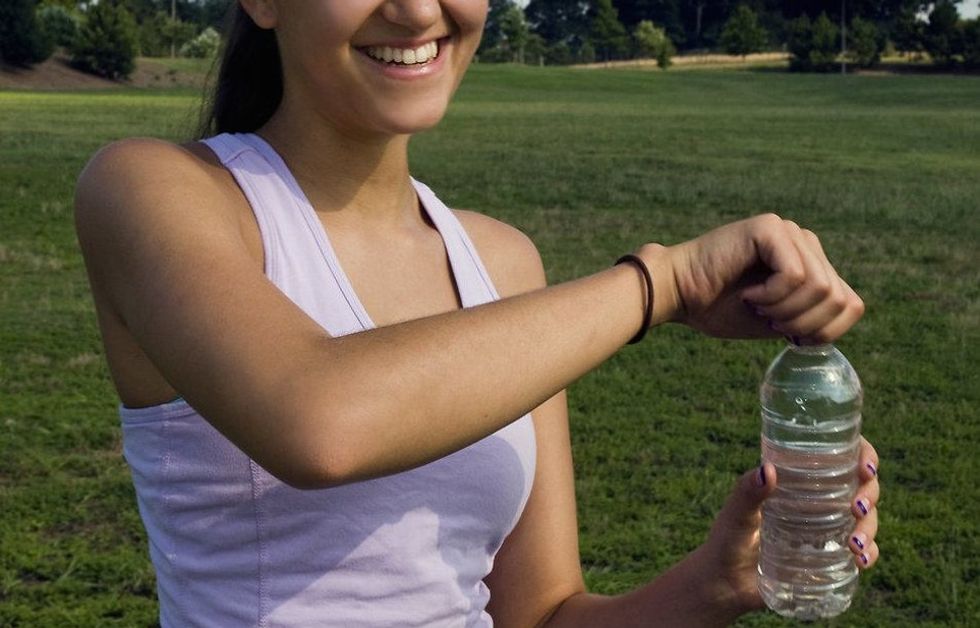
The Story of Bottled Water www.youtube.com Here are six facts from the video above by The Story of Stuff Project that I'll definitely remember next time I'm tempted to buy bottled water. 1. Bottled water is more expensive than tap water (and not just a little). via The Story of Stuff Project/YouTubeA Business Insider column noted that two-thirds of the bottled water sold in the United States is in individual 16.9-ounce bottles, which comes out to roughly $7.50 per gallon. That's about 2,000 times higher than the cost of a gallon of tap water. And in an article in 20 Something Finance, G.E. Miller investigated the cost of bottled versus tap water for himself. He found that he could fill 4,787 20-ounce bottles with tap water for only $2.10! So if he paid $1 for a bottled water, he'd be paying 2,279 times the cost of tap. 2. Bottled water could potentially be of lower quality than tap water. Fiji Water ran an ad campaign that was pretty disparaging about the city of Cleveland. Not a wise move. The city ordered a test of the snooty brand's water and found that Fiji Water contained levels of arsenic that weren't seen in the city's water supply.How was that possible? Sarah Goodman of the New York Times explains:" Bottled water manufacturers are not required to disclose as much information as municipal water utilities because of gaps in federal oversight authority. Bottom line: The Food and Drug Administration oversees bottled water, and U.S. EPA is in charge of tap water. FDA lacks the regulatory authority of EPA."3. The amount of bottled water we buy every week in the U.S. alone could circle the globe five times!That sounded like it just had to be impossible, so we looked into it. Here's what our fact-checkers found:"According to the video, ' People in the U.S. buy more than half a billion bottles of water every week.' National Geographic says for 2011, bottled water sales hit 9.1 billion gallons (roughly 34 billion liters).A 'typical' water bottle is a half-liter, so that's about 68 billion bottles per year. Divided by 52 weeks would be a little over 1 billion bottles of water sold per week in the U.S. Because that's based on a smaller 'typical' bottle size, it seems reasonable that a half billion bottles a week could be accurate.The Earth is about 131.5 million feet around, so yep, half a billion bottles of varying sizes strung end-to-end could circle the Earth five times."4. Paying for bottled water makes us chumps.Beverage companies have turned bottled water into a multibillion-dollar industry through a concept known as manufactured demand. Bottled water advertisements used a combination of scare tactics (Tap water bad!) and seduction (From the purest mountain streams EVER!) to reel us in.Well, we now know their claims about the superior quality of bottled water are mostly bogus. And research shows that anywhere from a quarter to 45% of all bottled water comes from the exact same place as your tap water (which, to reiterate, is so cheap it's almost free).5. Bottled water is FILTHY.It takes oil — lots of it — to make plastic bottles. According to the video, the energy in the amount of oil it takes to make the plastic water bottles sold in the U.S. in one year could fuel a million cars. That's not even counting the oil it takes to ship bottled water around the world.And once we've guzzled our bottled water, up to 80% of the empty bottles end up in landfills or noxious-gas-producing incinerators. The rest is either recycled or shipped to countries like India where poor people without environmental and labor protections have to deal with it.On top of all that, the process of manufacturing plastic bottles is polluting public water supplies, which makes it easier for bottled water companies to sell us their expensive product.6. There are 750 million people around the world who don't have access to clean water.A child dies every minute from a waterborne disease. And for me, that's the core of what makes bottled water so evil.The video wraps by comparing buying bottled water to smoking while pregnant. That may sound extreme, but after learning everything I just did about the bottled water industry, I can't disagree.If you're properly disgusted, here are a few ways you can help destroy the bottled water industry: Don't buy bottled water. Get a reusable water bottle. The savings will add up.Rally your schools, workplaces, and communities to ban bottled water.Demand that your city, state, and federal governments invest in better water infrastructure.This article originally appeared on 5.7.15
Like
Comment
Share
The Lighter Side
The Lighter Side
2 yrs

How this protest image became an instant icon
Favicon 
www.upworthy.com

How this protest image became an instant icon

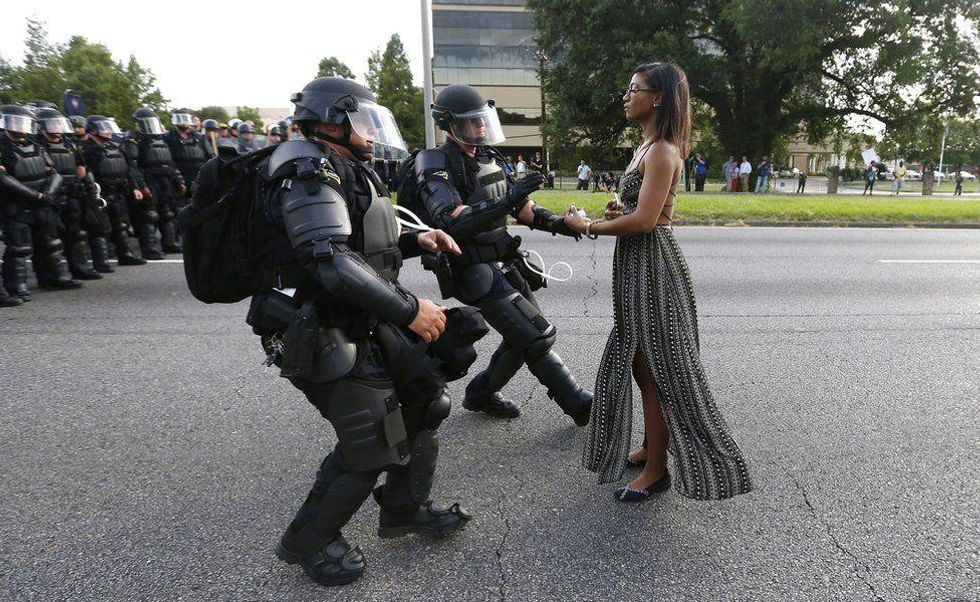
A stunning photo of an African-American woman confronting police at a Black Lives Matter rally blazed across social media this weekend, with some calling it a touchstone image that will stand as a powerful symbol for many years to come.The photo, captured by Jonathan Bachman of Reuters, comes from a Black Lives Matter rally outside Baton Rouge police HQ this weekend. Police in full riot armor are shown descending on a poised, well-dressed woman, apparently about to be cuffed.Her name is Leshia Evans, according to the Daily Mail, a 28-year-old nurse from New York who had not been to a protest rally before this one. The AP says Evans was arrested for blocking a public roadway shortly after the image was taken.DeRay McKesson, one of the most prominent voices of the Black Lives Matter movement, was also arrested at Saturday's rally. McKesson was released after 16 hours in a cell; he told the New York Times that he felt Saturday's mass arrests were unlawful, as the protesters were peacefully assembled on the side of the highway."What we saw in Baton Rouge was a police department that chose to provoke protesters to create, like, a context of conflict they could exploit," said McKesson. Over 100 other protesters were also arrested Saturday.The protests were a direct response to the killing of Alton Sterling in Baton Rouge last week, after two officers shot him repeatedly outside a Baton Rouge convenience store. Shortly after Sterling's death, a school cafeteria worker was shot and killed by police in Falcon Heights, Minnesota. And at a protest rally in Dallas following Falcon Heights, five police officers were killed by snipers.Last week's violence is already proving to be an intensely raw and revealing piece of American history. Bachman's photo will surely be one of the images that lasts. Jonathan Bachman's #BatonRouge protest photo will become as iconic as "woman in red" during 2013 protests in Turkey.pic.twitter.com/igMnWOdL4g — Matt Sandiford (@Matt Sandiford) 1468221527 When you see this image you think thank God America won the Cold War and defeated tyranny\n(JONATHAN BACHMAN/REUTERS)pic.twitter.com/ryVd3lGqIw — Karl Sharro (@Karl Sharro) 1468227689 This article originally appeared on 10.23.17
Like
Comment
Share
The Lighter Side
The Lighter Side
2 yrs

Mom has the coolest response to the 'anti-homeless spikes' in her city.
Favicon 
www.upworthy.com

Mom has the coolest response to the 'anti-homeless spikes' in her city.

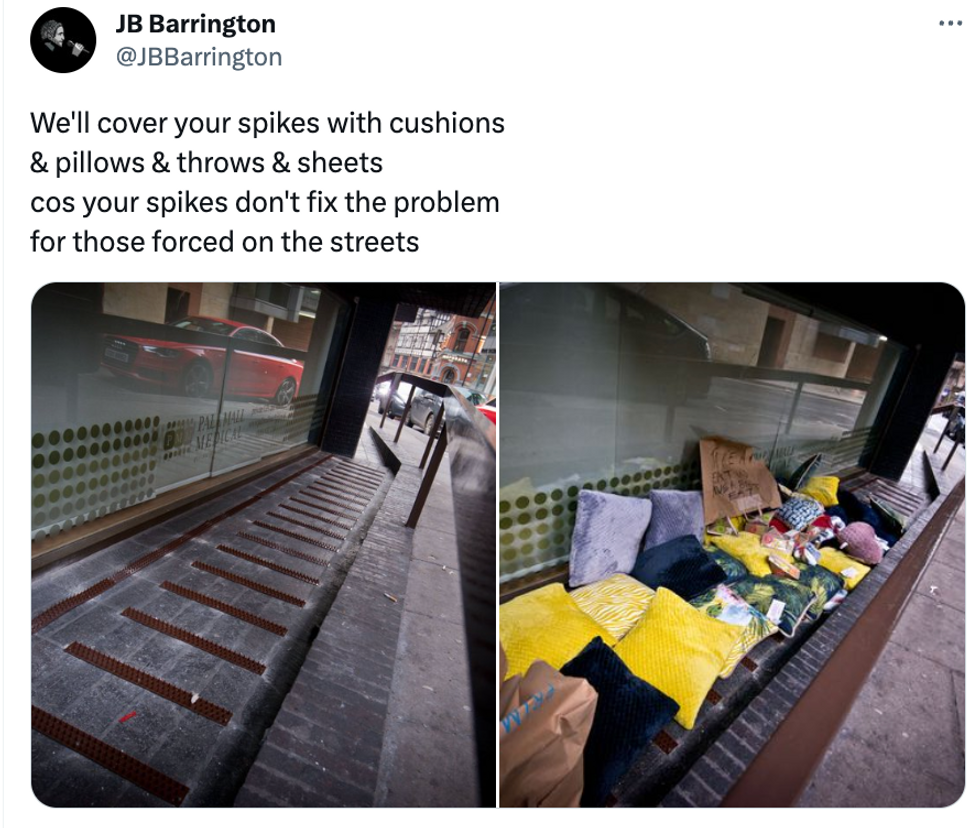
As their name suggests, anti-homeless spikes are intended to keep homeless people away.They'll usually crop up in areas where a homeless person might find some quiet away from the hustle and bustle, or a spot that's relatively well-sheltered from the elements.In January 2017, spikes like these appeared outside the Pall Mall Court in Manchester, England. And many people were not happy about it. \u201cOutrage as metal spikes appear outside Manchester building to \u2018stop homeless people sleeping rough\u2019 https://t.co/bRWlnHazuB\u201d — The Sun (@The Sun) 1485644521 “This is not the answer to rough sleeping," Pat Karney, Manchester council spokesman, told the Manchester Evening News of the spikes. "It’s demeaning in that way."One of those unhappy people was a local woman named Jennie Platt. The Manchester mom — who called the spikes "a Scroogey thing to do" — wasn't about to let the heartless act fly.As Mashable reported, Platt and her kids decided to give the spikes a more comfortable upgrade. Platt — with help from her 10- and 11-year-old sons, along with a few of their rugby teammates — covered the spikes with cushions and pillows.Well done Jennie platt and sedgley park boysPosted by Colette Stevens on Sunday, January 29, 2017"The building owners are treating human beings like pigeons," Platt told the BBC, noting she woke up "with a right bee in [her] bonnet" after learning the news and decided she needed to do something.Link to Twitter where what Platt and her sons did can be seen below: \u201cWe'll cover your spikes with cushions \n& pillows & throws & sheets\ncos your spikes don't fix the problem\nfor those forced on the streets\u201d — JB Barrington (@JB Barrington) 1485727630 Platt also left sandwiches and chocolate bars for anyone who could use a snack, encouraging folks to "take a seat and have a bite to eat."Posted by Colette Stevens on Sunday, January 29, 2017“It’s a spot where people can keep warm and sheltered," explained Platt. "People don’t need to be that mean."The spikes are right outside Pall Mall Medical, a healthcare facility that rents out a space in the court, which said it had nothing to do with their installment. GVA, the company that manages the building, declined to comment to the Manchester Evening News.Update Feb. 7, 2017: The spikes have been removed by the building's owner after public outcry, the Manchester Evening News reported.Unfortunately, the anti-homeless renovation in Manchester is indicative of a larger issue that doesn't stop at spikes.Governments and businesses alike have sneakily built up anti-homeless infrastructure in urban spaces all around the world.If you've been to Tokyo, you may have noticed "dangerously slippery" benches designed specifically to be uncomfortable, warding off anyone who wants to rest more than a few moments. In places like Salt Lake City and Lincoln, Nebraska, you might come across benches with vertical slats between the seats, made to deter anyone from lying down.A man saws at an armrest in Toulouse, France, in 2006 in protest of the mistreatment of homeless people.THIS IMAGE IF YOU'D LIKE TO ADD TO THE STORY CAN BE FOUND ON THE GETTY IMAGES!!!!!!!!!!This type of urban planning pushes the problem of chronic homelessness aside without helping to provide a solution.Shooing away homeless people by building slippery benches, installing excessive armrests, and adding spikes to sidewalks doesn't mean homeless people disappear. It means the most vulnerable among us — many who struggle with mental illness or are living on the street because they can't stay at a shelter — are left unwelcome in larger and larger spaces within our communities. This type of heartless infrastructure only exacerbates the problem.Instead of hoping homeless people disappear, we should focus our attention on ideas that help them in the long run.Beyond supporting your local homeless shelter by volunteering and donating, you can rally your representatives to join the fight. For example, Housing First — a strategy that provides people with a home quickly and unconditionally, then gives them the resources they need to stand on their own (like help with addiction or career services) — is a model that's been proven to work in several cities and states. Make sure the leaders in your area know you care about this issue and want funding for local initiatives, like Housing First, that make a big difference.Platt realizes her efforts may be short-lived. But as more people notice her deed, she hopes it will change hearts and minds."I know [the cushions] won't last and I know they'll get wet," she said. "But the people who manage that building need to know how to treat people."This article originally appeared on 02.06.17
Like
Comment
Share
The Lighter Side
The Lighter Side
2 yrs

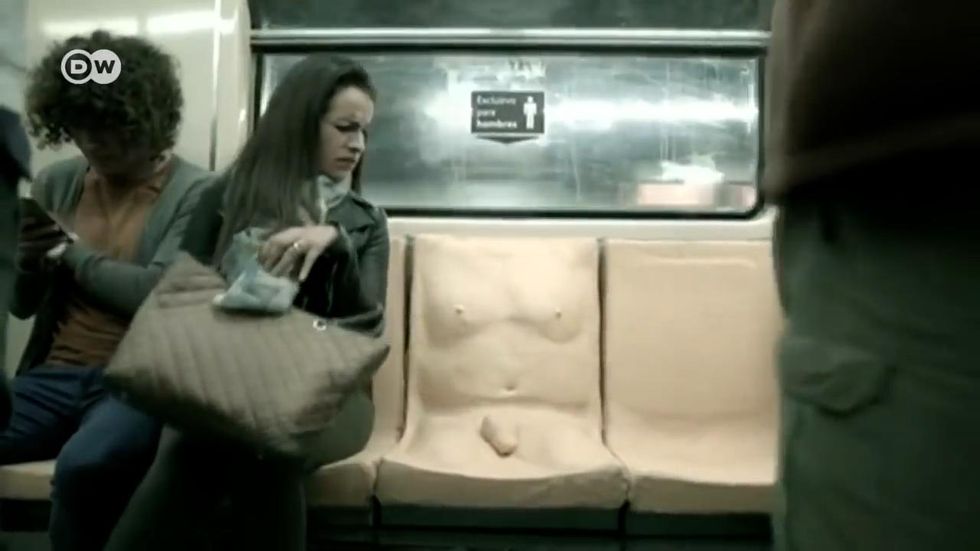
Bus seat shaped like a man's lap was installed to make a point about sexual harassment.
Favicon 
www.upworthy.com

Bus seat shaped like a man's lap was installed to make a point about sexual harassment.

Anyone using the Mexico City Metro recently may have spotted an ... odd seat on the train, a seat quite unlike the rest.Instead of a back, the seat's plastic was molded into a person's protruding torso. And instead of a flat bottom for sitting, the seat took on the form of that person's thighs and penis.Obviously, it wasn't the most comfortable — or preferred — seat on the train for riders.Above the seat was a sign declaring the seat "for men only."Another sign on the floor, legible once a person was sitting in the chair, reads (translated from Spanish): “It’s annoying to sit here, but doesn’t compare to the sexual violence women suffer on their daily trips."Watch a video of confused, amused, and offended passengers experiencing the seat below:The campaign, #NoEsDeHombres, was launched by U.N. Women and authorities in Mexico City to educate men on the seriousness of sexual assault on public transit.Mexico's capital has a bad reputation when it comes to women's safety, the BBC reported. A global 2014 study found Mexico City was the worst in the world in terms of verbal and physical harassment experienced on public transit.But harassment is a problem on virtually every major city transit system — including in the U.S. Last year, a survey of Washington, D.C., transit riders found 1 in 5 users had experienced sexual harassment during their commutes, with 28% of that figure reporting having been inappropriately touched or assaulted. As you could have guessed, women were nearly three times as likely as men to experience harassment, the survey found.Maybe a seat like this for men should be on every city train from here on out.This article originally appeared on 03.31.17
Like
Comment
Share
Classic Rock Lovers
Classic Rock Lovers  
2 yrs

‘Ballad in Plain D’: The song Bob Dylan will never play live
Favicon 
faroutmagazine.co.uk

‘Ballad in Plain D’: The song Bob Dylan will never play live

Another side of Bob Dylan. The post ‘Ballad in Plain D’: The song Bob Dylan will never play live first appeared on Far Out Magazine.
Like
Comment
Share
Showing 24969 out of 56670
  • 24965
  • 24966
  • 24967
  • 24968
  • 24969
  • 24970
  • 24971
  • 24972
  • 24973
  • 24974
  • 24975
  • 24976
  • 24977
  • 24978
  • 24979
  • 24980
  • 24981
  • 24982
  • 24983
  • 24984

Edit Offer

Add tier


Select an image
Delete your tier
Are you sure you want to delete this tier?

Reviews

In order to sell your content and posts, start by creating a few packages. Monetization

Pay By Wallet

Payment Alert

You are about to purchase the items, do you want to proceed?

Request a Refund