YubNub Social YubNub Social
    Advanced Search
  • Login

  • Night mode
  • © 2026 YubNub Social
    About • Directory • Contact Us • Privacy Policy • Terms of Use • Android • Apple iOS • Get Our App

    Select Language

  • English
Install our *FREE* WEB APP! (PWA)
Night mode
Community
News Feed (Home) Popular Posts Events Blog Market Forum
Media
Headline News VidWatch Game Zone Top PodCasts
Explore
Explore Jobs Offers
© 2026 YubNub Social
  • English
About • Directory • Contact Us • Privacy Policy • Terms of Use • Android • Apple iOS • Get Our App

Discover posts

Posts

Users

Pages

Group

Blog

Market

Events

Games

Forum

Jobs

Reclaim The Net Feed
2 yrs

Australia Drops Bid to Censor X Platform After Free Speech Legal Challenge
Favicon 
reclaimthenet.org

Australia Drops Bid to Censor X Platform After Free Speech Legal Challenge

If you're tired of censorship and dystopian threats against civil liberties, subscribe to Reclaim The Net. The Australian eSafety commissioner’s pursuit of legal action to compel Elon Musk’s social media platform, X, to censor posts about a church stabbing in Sydney is being abandoned. Commissioner Julie Inman-Grant announced the decision following several setbacks in court and the expiration of a temporary order to conceal the footage. Inman-Grant emphasized that the choice to drop the case was made after considering multiple factors, including ongoing litigation in other matters. She asserted, “Our sole goal and focus in issuing our removal notice was to prevent this extremely violent footage from going viral, potentially inciting further violence and inflicting more harm on the Australian community and I stand by my investigators and the decisions eSafety made.” The case had been a pivotal moment in Australia’s efforts to impose its censorship not only on users in Australia, but on users around the world. X’s government affairs arm welcomed the news, stating, “This case has raised important questions on how legal powers can be used to threaten global censorship of speech, and we are heartened to see that freedom of speech has prevailed.” Initially, X resisted the eSafety notice to remove the videos, which were later classified as an act of terror. Despite a Federal Court order to hide the footage temporarily, X defied the directive, questioning the validity of the initial takedown order. Last month, a court gave X its first win against the government’s censorship demands, ruling against a temporary block. Musk has openly criticized the controversial commissioner Inman-Grant, branding her as a global “censorship commissar.” If you're tired of censorship and dystopian threats against civil liberties, subscribe to Reclaim The Net. The post Australia Drops Bid to Censor X Platform After Free Speech Legal Challenge appeared first on Reclaim The Net.
Like
Comment
Share
Hot Air Feed
Hot Air Feed
2 yrs

Massachusetts to Send 'CARE' Workers to Some 911 Calls, Not Police
Favicon 
hotair.com

Massachusetts to Send 'CARE' Workers to Some 911 Calls, Not Police

Massachusetts to Send 'CARE' Workers to Some 911 Calls, Not Police
Like
Comment
Share
Science Explorer
Science Explorer
2 yrs

You're Almost Certainly Pronouncing "Mount Everest" Incorrectly
Favicon 
www.iflscience.com

You're Almost Certainly Pronouncing "Mount Everest" Incorrectly

The tallest mountain in the world is named after George Everest, a British geographer of India who has very little direct connection to the mountain. Some doubt whether he had even laid eyes on the towering landmass.Although no doubt honored, even he thought it was a bad idea to name the mountain after his surname because it was difficult to write in Hindi and many native speakers found it difficult to pronounce. However, it wasn’t just locals that struggled with the name. It turns out, that if you’ve ever uttered “Mount Everest,” you’ve probably been saying it incorrectly. George Everest pronounced his surname “EVE-rest,” with the first syllable rhyming with “sleeve” or “breathe,” as opposed to “EVER-est” or “EV-rest,” according to Mental Floss.Why was Mount Everest named after George Everest?The reason why Mount Everest was named after Sir George is a strange one as he had nothing to do with its first official survey in the colonial era, nor the calculation of its height.Sir George Everest was Surveyor General of India from 1830 to 1843 who played an important role in the Great Trigonometrical Survey of India, a mission to map the entire Indian subcontinent with scientific precision. As a vast and diverse land, filled with huge features including parts of the Himalaya mountain range, this is no small feat and the project took almost 70 years to complete.When Everest was at the helm of this survey, the skyscraping mountain was simply known as “Gamma,” then “Peak B” and later “Peak XV” – not exactly iconic. It was Sir George’s successor, Andrew Scott Waugh, who was leading the project when the height of Peak XV was calculated by Radhanath Sikdar, an Indian mathematician, revealing it as the highest mountain in the world (by many metrics). Upon realizing its record-breaking credentials, the powers that be felt it was time for a name change. In 1856, Waugh wrote to Henry Thuillier suggesting the grand mountain should be named after his predecessor and beloved mentor, George Everest.“I was taught by my respected chief and predecessor, Colonel George Everest, to assign to every geographical object its true local or national appellation. But here is a mountain, most probably the highest in the world, without any local name that we can discover, whose native appellation, if it has any, will not very likely be ascertained before we are allowed to penetrate into Nepal, and to approach close to this stupendous snow mass,” the letter reads.“In the meantime, the privilege, as well as the duty, devolves on me to assign this lofty pinnacle a name whereby it may be known among geographers, and become a household word. In testimony of my affectionate respect for a revered chief [...] and to perpetuate the memory of that illustrious master of accurate geographical research – I have determined to name this noble peak… Mount Everest.”The name stuck in some parts of the world and, for unclear reasons, a slight tweak to the pronunciation buried itself into the public consciousness.Renaming Mount EverestIt’s worth pointing out that many places have different names for the mountain. In Nepalese, Everest is known as Sagarmatha, which translates to "Forehead of the Sky," while Tibet calls it Chomolungma or Qomolangma, meaning "Mother Goddess of the Earth."To honor this, there have even been calls to officially rename the mountain, although it looks like those demands have gone mostly unheard. "It is time for the Western world to respect us Tibetans by recognizing the highest peak on Earth by its Tibetan name, Qomolangma,” Gelek, an esteemed Tibetan scholar at the China Tibetology Research Center in Beijing, told Chinese media in 2002.“When Qomolangma becomes the only word for people all over the world to refer to the highest peak on Earth, I, as a Tibetan, will feel very contented," Gelek added.
Like
Comment
Share
Science Explorer
Science Explorer
2 yrs

Mystery Of What Caused This Giant Hole On Mars – And What Lies Inside?
Favicon 
www.iflscience.com

Mystery Of What Caused This Giant Hole On Mars – And What Lies Inside?

While snapping photos of the surface of Mars in 2011, the HiRISE instrument aboard the robotic Mars Reconnaissance Orbiter spotted a very unusual feature.On Pavonis Mons – a large shield volcano in the Tharsis region of volcanic mountains – the camera saw a giant hole, appearing to lead into a large underground cavern. Further analysis showed that the hole's opening is around 35 meters (115 feet) in diameter, with the cavern beneath around 20 meters (66 feet) deep. Prior to the likely collapse and infilling, it was likely around 90 meters (295 feet) deep.             What caused the hole is a bit of a geological mystery. Caverns of this size or higher on Earth, of which there are few, are generally caused by water dissolving through limestone."Sinkholes are most common in what geologists call, 'karst terrain'," the US Geological Survey explains. "These are regions where the types of rock below the land surface can naturally be dissolved by groundwater circulating through them. Soluble rocks include salt beds and domes, gypsum, limestone and other carbonate rock."With the rock underneath dissolved away, underground caverns are left underneath the surface. When the weakened surface collapses into the cavern, it creates a sinkhole.But Mars – puzzlingly – has no sign of carbonate rocks such as limestone, and very little water. A more likely explanation is that the hole leads into a lava tube."Sometimes the tops of lava flows freeze on the surface even while the lava continues to move underground in a lava tube. If these tubes drain, then lava tube caves can be left behind. Sections of the roof may later collapse, creating roof openings, and these openings can be imaged from orbit," Shane Byrne, a Professor at the Lunar and Planetary Laboratory at the University of Arizona, explained in a blog post. "Could this be a view into a lava tube? If so, it would dwarf all lava tubes on the Earth! It's also possible that this collapse is above some more substantial part of the volcano's internal plumbing system and collapses deep with the mountain are allowing voids to open up near the surface."The hole has interest beyond being cool space geology. It's possible that as conditions on the surface of the planet changed, and it lost its protective magnetic field and atmosphere, any life may have shifted underground."Holes such as this are of particular interest because their interior caves are relatively protected from the harsh surface of Mars, making them relatively good candidates to contain Martian life," NASA wrote of the cavern in 2020. "These pits are therefore prime targets for possible future spacecraft, robots, and even human interplanetary explorers."[H/T: Universe Today]
Like
Comment
Share
Science Explorer
Science Explorer
2 yrs

Rare “Teen” T. Rex Fossil Discovered By Three Kids Hiking In North Dakota
Favicon 
www.iflscience.com

Rare “Teen” T. Rex Fossil Discovered By Three Kids Hiking In North Dakota

Going for a family hike might not be everyone's idea of a good time, but for three children in North Dakota, their outing led them to discover a juvenile T. rex skeleton, which is now on display at a museum. Jessin and Liam Fisher, their dad, Sam Fisher, and their cousin, Kaiden Madsen were walking in the North Dakota badlands in 2022 when they discovered the bones. All three children were already fossil enthusiasts who frequently went out looking for them. Coincidentally, Sam Fisher also went to school with Dr Tyler Lyson, the curator of paleontology at the Denver Museum of Nature & Science, who he contacted to identify the fossils. The highlighted blue parts show which parts were discovered; the team hopes more could still be found.Image credit: Scott HarmanThe following summer, the children returned to the site to help excavate the juvenile T. rex with Dr Lyson’s team of paleontologists. This process included wrapping the T. rex fossil in plaster and then using a helicopter to move the specimen onto a nearby trailer.Liam Fisher lies next to the tibia and femur of the T. rex discovery.Image credit: Sam FisherAnalysis revealed that the fossil preserves about 30 percent of the skeleton and has a tibia with a length of 82 centimeters (32 inches). An adult T. rex would have a tibia length of around 112 centimeters (44 inches), leading the paleontologists to believe this was a juvenile.                The discovery is all the more impressive since only a few juvenile T. rex skeletons have ever been found. "By going outside and embracing their passions and the thrill of discovery, these boys have made an incredible dinosaur discovery that advances science and deepens our understanding of the natural world,” said Dr Lyson in a statement. As well as going on display in an experience called "Discovering Teen Rex", a film about the finding will also be shown at the museum on June 21.
Like
Comment
Share
Science Explorer
Science Explorer
2 yrs

Strange Giant Viruses Found Lurking On Greenland Ice Sheet
Favicon 
www.iflscience.com

Strange Giant Viruses Found Lurking On Greenland Ice Sheet

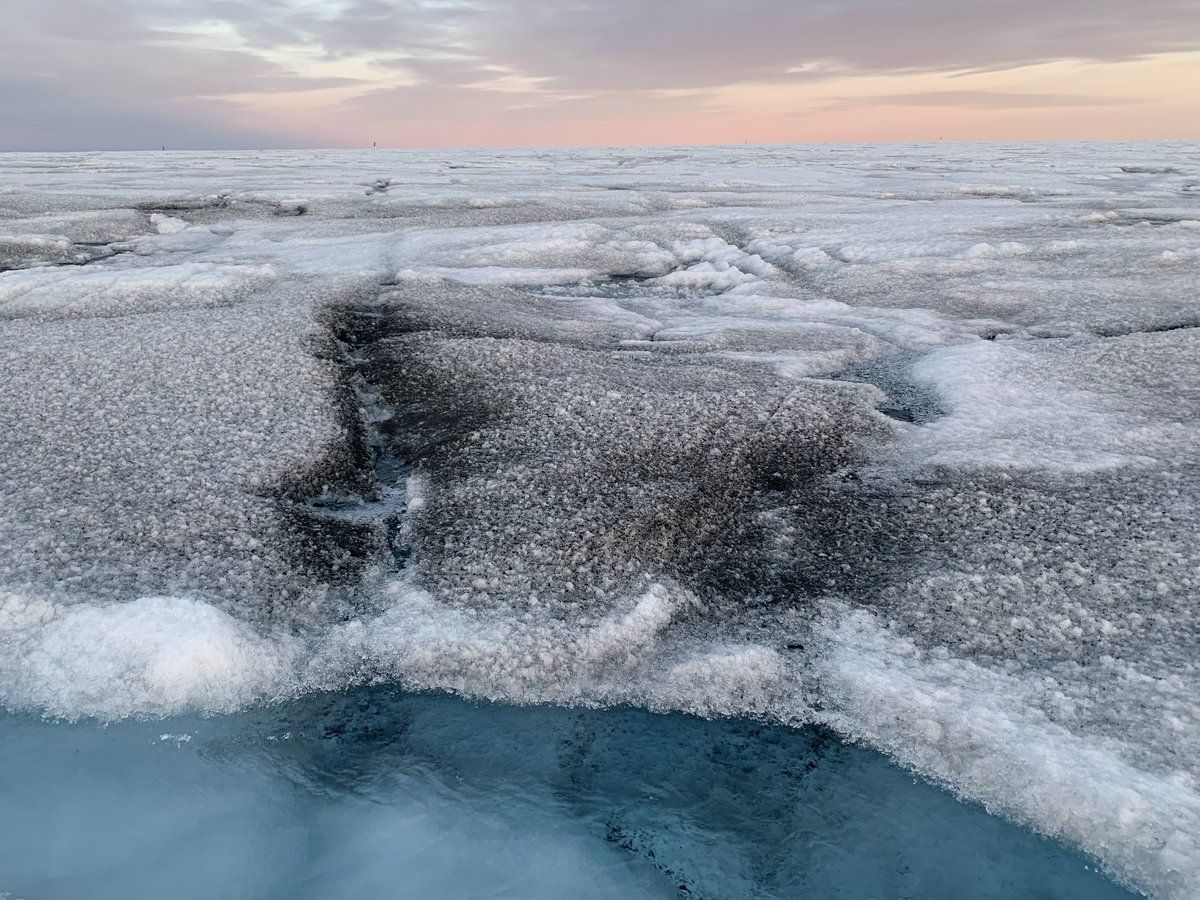
Lurking in the snow and frost of Greenland’s ice sheet, mysterious giant viruses has been discovered. They share the ice with an abundance of algae, which means this is the first time these viruses – about which we know relatively little – have been found in such a habitat. But it’s not bad news (unless you’re an alga): it is thought that by infecting microalgae, the giant viruses may act as some sort of secret weapon in minimizing melt.Just how giant are we talking? The viruses can’t be seen with the naked eye, but next to your regular viruses (which measure 20-200 nanometers) they’re comparatively massive. Giant viruses can grow to 2.5 micrometers – that’s 2,500 nanometers – making them up to 125 times bigger than normal viruses, and larger than most bacteria. They also have humongous genomes, containing around 2.5 million base pairs.Previously, giant viruses have been found lingering in all sorts of environments, including the sea, soil, and even in humans. However, this latest discovery marks the very first time they’ve been found on surface ice and snow that is teeming with microalgae.Here, the team behind the discovery believes, they could have an important role to play in regulating algal blooms and, consequently, in safeguarding the ice from accelerated melting. When Arctic algae flourish in the spring, it darkens large swathes of the ice sheet, limiting its ability to reflect sunlight, in turn heightening the melt. This is bad news for the environment, which is why the freshly discovered giant viruses would be such a boon for protecting the ice if they can act as a natural algae control as the researchers suspect. “We don’t know a lot about the viruses, but I think they could be useful as a way of alleviating ice melting caused by algal blooms,” first author Laura Perini from the Department of Environmental Science at Aarhus University said in a statement. “How specific they are and how efficient it would be, we do not know yet. But by exploring them further, we hope to answer some of those questions.”The team collected samples from a variety of snow and ice habitats in the Greenland ice sheet, including dark ice, ice cores, red and green snow, and melting holes (cryoconite), before analyzing them for DNA and searching for specific giant virus marker genes. In almost all samples, they found sequences matching known giant viruses.That's not dirty water, it's actually a sample teeming with microorganisms, including algae and giant viruses.Image credit: Laura PeriniTo make sure these had come from active viruses and not long-dead microbes, the researchers also extracted messenger RNA, or mRNA – a single-stranded molecule that contains the instructions from DNA that direct cells to make a protein – from the samples. “In the total mRNA sequenced from the samples, we found the same markers as in the total DNA, so we know they have been transcribed,” Perini explained. “It means that the viruses are living and active on the ice.”Your bog-standard viruses are not capable of transcribing double-stranded DNA into single-stranded mRNA. Instead, they have free-floating RNA strands in their cells that are activated when the virus infects its host and makes use of its machinery. But giant viruses are different. They are able to repair, replicate, transcribe, and translate DNA without the help of a host – although why that is, we’re not sure.When it comes to giant viruses, there are plenty of other unknowns. What do these mysterious microbes infect, for example?“Some of them may be infecting protists while others attack the snow algae. We simply can’t be sure yet,” added Perini.But with further research, she hopes, we may better understand these pathogens and their potential role in protecting the ice from algae-accelerated melt.The study is published in the journal Microbiome.
Like
Comment
Share
Strange & Paranormal Files
2 yrs

Why UAP are a national security risk and also an opportunity for progress
Favicon 
anomalien.com

Why UAP are a national security risk and also an opportunity for progress

Luis Elizondo for Medium: A career’s worth of intelligence work for the U.S. Government has taught me one key lesson: national security is a lot like playing a game of chess. You have to anticipate your opponent’s every move in order to remain one step ahead. Disclosing your strategy will be used against you. But if you recognize certain opportunities, you can win the match. When I headed the government’s highly sensitive Advanced Aerospace Threat Identification Program (AATIP), I worked with a team to assess whether a particular chess piece — in this case in the form of an unfamiliar aerial technology — was a threat to our side of the chess board. If it was, we had to know how to counter it. Since the Government views Unidentified Aerial Phenomena (UAP) as a potential national security issue, they’re secretive by necessity. They don’t want to reveal any information to a potential enemy. But there are risks to keeping that information classified. Say the person who first learned how to harness fire never shared it with the next generation, or the person who invented the telescope threw it away when he was done using it. What if the creator of the wheel decided it was too labor intensive for others to build and decided, “Forget it”? The US Pentagon has released video of an orb-shaped UAP flying over Iraq. As a species, we’re meant to evolve. And we needed those advancements to get to where we are today. Reports of strange crafts with seemingly inexplicable properties have been circulating within the U.S. Government for at least 70 years, which suggests it isn’t going away. There is “something out there.” Declassifying certain information about UAP and sharing it with the public could lead to new technological discoveries, new forms of medical research, and a broader view of how humanity understands reality. Here’s why: a government must assume anything is a threat until it has been proven otherwise. When determining whether an unknown entity is friend or foe, the U.S. Government looks at factors including capabilities, intentions, vulnerabilities, and exploitability. A close look at these factors reveals just how little UAPs are understood. Advancements in our understanding of physics at the quantum level have helped shed faint light on the potential science behind UAPs. But these advancements have also shown us that UAPs have superior technical knowledge as well. If these capabilities fell into the hands of a foreign adversary, it would be a decisive game-changer. Likewise, the intentions of UAPs haven’t been made clear to us at this point. There could be a number of reasons for their presence, ranging from peaceful curiosity to a probe for battlespace preparation. The possibilities are numerous. UAP vulnerabilities, however, remain a complete mystery. Some have hypothesized that there’s a correlation between UAPs and our nuclear capabilities, while others have suggested that nuclear-generated electromagnetic pulses are a potential weakness. Luis Elizondo Credit: To the Stars Regardless, we still don’t really know what vulnerabilities UAPs might have short of speculation. Right now, it’s anyone’s guess. From a national security perspective, exploitation is the holy grail of endeavors. It’s critical to determine whether UAP technology could be reverse-engineered and used to our benefit, but we can’t exploit such technology unless we first understand it. When it comes to UAPs, the U.S. knows less than it should, and perhaps much less than our adversaries. The potential rewards outweigh the risks There is always a risk involved when it comes to communicating national security issues to the public. But it’s subjective. The significance of that risk depends on who you ask. If you ask a military leader, for example, they would say government secrecy about advanced aerospace phenomena is crucial because you want to avoid broadcasting your capabilities and intentions to your potential enemy. A politician would view UAPs completely differently. They may ask, “Is this something potential voters need to know, or will concealing it cause my constituents to lose faith in me? How does this discussion affect the voters and my ability to represent them?” A religious figure, on the other hand, would likely be more concerned with the religious and philosophical implications UAPs might have on his or her faith. There are countless examples throughout history of individuals challenging the prevailing systems of power with radical scientific ideas. When Galileo told the church hundreds of years ago that Earth was not the center of the solar system, for example, they nearly killed him for it. As someone without a political or religious agenda, I’m free to say the rewards outweigh the risks in this situation. For example, in December 2017 our team at To The Stars Academy of Arts & Science helped release U.S. military footage of UAPs. No government imploded, no religion dissolved. Like Galileo, our mission is simple. Collect and disseminate the truth about the unknown. As long as the risks don’t compromise national security, the rewards can benefit all. Scientific truths help push society forward At this point, there’s no question about whether UAPs are out there — they are. People can choose to either continue to live with their heads buried in the sand, or they can take a proactive approach to the phenomenon. Centuries ago, when mankind first stood on the shores of a beach and contemplated sailing across the horizon, the chorus shouted, “You’re crazy! You’re going to fall off the Earth! There are sea monsters!” But now, in the 21st century, people travel across oceans every day. What our ancestors thought were sea monsters are great white sharks, blue whales, and giant squid. It turns out that they’re just another part of our natural environment. Once people committed to discovering the truth for themselves, it was no longer mystical, it was just nature. But because government processes demand secrecy when it comes to classified information, false knowledge about UAPs spreads rapidly. Secrecy empowers people selling their snake oil and YouTubers profit from peddling their ill-informed narratives about UFOs. Soon people start believing Elvis lives on the mothership — just as they once believed you could fall off the edge of the Earth. The more knowledge people have, the better they will be able to master their own destinies, and not be held hostage to the monsters of their imaginations. Author: Luis Elizondo, former U.S. Army Counterintelligence Special Agent, source Medium The post Why UAP are a national security risk and also an opportunity for progress appeared first on Anomalien.com.
Like
Comment
Share
NewsBusters Feed
NewsBusters Feed
2 yrs

Regime Media Help Push Biden’s Border EO, Fake ‘Shut Down’ Narrative
Favicon 
www.newsbusters.org

Regime Media Help Push Biden’s Border EO, Fake ‘Shut Down’ Narrative

When looking at how the Regime Media report on any of the given issues of the day, you can be certain that the truest, purest victim of any of the calamities of the day is always going to be the electoral prospects of one Joseph Robinette Biden, Junior. There is no other rationale that could underlie the ridiculous and servile coverage accorded to President Biden’s executive order on the border, three years into the border crisis. And among the network evening newscasts, there is none more servile than ABC Whirled News Tonight. Here’s how they opened their newscast- by making certain that viewers heard the term “shut down” as often as possible:  DAVID MUIR: But we do begin tonight with President Biden taking drastic action on immigration and on the U.S./Mexico border. Strictly limiting the asylum process set to close the border to migrants crossing illegally when asylum numbers hit more than 2,500 along the border in between legal ports of entry. The president saying he had no choice but to take executive action, because he says Republicans in Congress rejected the bipartisan bill they negotiated themselves in the Senate, containing many of the very reforms Republicans had been demanding. They rejected it at the urging of Donald Trump. Of course, immigration and crossings at the border, a key issue in this presidential election. So, the question tonight, how soon could the border be shut down? ABC's Rachel Scott leading us off at The White House tonight. RACHEL SCOTT: President Biden taking sweeping executive action to address the crisis at the border, announcing plans to strictly limit the asylum process in a move that will temporarily close the border to migrants crossing illegally, at midnight tonight. JOE BIDEN: I've come here today to do what the Republicans in Congress refuse to do -- take the necessary steps to secure our border. SCOTT: It comes after Republicans in Congress rejected a tough bipartisan border deal at the urging of Donald Trump, who wants to run on the issue. Under today's new executive action, when migrant apprehensions average 2,500 a day over the course of a week, the asylum process for people crossing illegally would automatically shut down. ABC made sure that the term “shut down” got into the report three times, in addition to other similar terms such as “close the border” and “strictly limit”. Of course, the executive order does no such thing inasmuch as it codifies a daily average of 2,499 illegal crossings before the alleged “shut down” takes effect. And then there is the loophole for women and unaccompanied minors, through which a fleet of trucks can be driven. But the Precious must be protected, so “shut down” it is. CBS Evening News had the decency of abstaining from using this particular bit of hyperbole during their team coverage, headed by Nancy Cordes who focused on the politics side. A common theme throughout was the blaming of Republicans for Biden having to sign an executive order, without also noting that Biden ripped the border open via executive orders. There was also plenty of mention across the dial of the failed Senate border bill that would’ve codified a daily average of 4,999 illegal crossings before requiring border action, plus express asylum and a backdoor pathway to citizenship. But no mention at all of the House-passed H.R. 2. Republicans did pass a bill, just not the one Biden or his media wanted.  While CBS avoided the term “shut down”, there was other, more unfortunate hyperbole. LILIA LUCIANO: What is the consequence of deterrence policies from where you stand? JOANNA WILLIAMS: Different policies have been sort of in effect for over 20 years here at the border, and what they lead to is an increase in deaths. Their other option is to try to go out into the desert and avoid finding Border Patrol, and this is two days before our first heat wave of the summer. That’s right. People will DIE as a result of Biden’s executive order if CBS is to be believed.  NBC Nightly News, at least, offers their viewers a modicum of intellectual honesty along with their Biden apologia. LESTER HOLT: Good evening and welcome. President Biden tonight sidestepping Congress and taking his own action to sharply tighten controls at the southern border. With his signature alone, the president using his executive authority to shut down asylum requests when the average daily number of illegal crossings between ports of entry exceeds 2500. Tonight that average number tops 4,000, putting the new directive into immediate effect. The president looking to turn the tables on Republicans on an issue that has left him politically vulnerable.  At the end of the day, it’s always about the politics.  Click “expand” to view the full transcripts of the aforementioned reports as aired on their respective evening network newscasts on Tuesday, June 4th, 2024: ABC WORLD NEWS TONIGHT: ABC WORLD NEWS TONIGHT 6/4/24 6:32:33 DAVID MUIR: But we do begin tonight with President Biden taking drastic action on immigration and on the U.S./Mexico border. Strictly limiting the asylum process set to close the border to migrants crossing illegally when asylum numbers hit more than 2,500 along the border in between legal ports of entry. The president saying he had no choice but to take executive action, because he says Republicans in Congress rejected the bipartisan bill they negotiated themselves in the Senate, containing many of the very reforms Republicans had been demanding. They rejected it at the urging of Donald Trump. Of course, immigration and crossings at the border, a key issue in this presidential election. So, the question tonight, how soon could the border be shut down? ABC's Rachel Scott leading us off at The White House tonight. RACHEL SCOTT: President Biden taking sweeping executive action to address the crisis at the border, announcing plans to strictly limit the asylum process in a move that will temporarily close the border to migrants crossing illegally, at midnight tonight. JOE BIDEN: I've come here today to do what the Republicans in Congress refuse to do -- take the necessary steps to secure our border. SCOTT: It comes after Republicans in Congress rejected a tough bipartisan border deal at the urging of Donald Trump, who wants to run on the issue. Under today's new executive action, when migrant apprehensions average 2,500 a day over the course of a week, the asylum process for people crossing illegally would automatically shut down. They would no longer be allowed to stay in the United States while their claims are being processed. BIDEN: Doing nothing is not an option. We have to act. We must act consistent with both our law and our values, our values as Americans. SCOTT: The restrictions would only be lifted when apprehensions drop to 1,500 a day or less for two weeks. We haven't seen numbers that low in years. The president says there would be limited exceptions for unaccompanied children and victims of human trafficking. And he insists his position on immigration is far different than Donald Trump. BIDEN: I will never demonize immigrants. I will never refer to immigrants as poisoning the blood of a country. And further, I'll never separate children from their families at the border. SCOTT: Today, Trump says Biden is only doing this because he's desperate. TRUMP: Crooked Joe Biden is pretending to finally do something about the border, but in fact, it's all about show, because he knows we have a debate coming up in three weeks. The truth is that Joe Biden's executive order won't stop the invasion. It's weak and it's pathetic. SCOTT: Progressive Democrats warn Biden's move could backfire. PRAMILA JAYAPAL: They think it's going to bring Republicans over or some independents. I don't think it does. And I think in the end, we ended up hurting the very people that we're fighting for. SCOTT: But the mayor of Laredo, who stood with Biden today at the White House, tells me the president had no choice.  What type of impact is this going to have where you live? VICTOR TREVINO: Well, first of all, we don't have all the resources to deal with the migrants coming to our border, especially medical services, who are medically underserved as it is. And we don't have a lot of infrastructure. And being able to deal with poverty and people that are homeless would be another situation that we don't want to have that happen in our community. SCOTT: David, this new policy will be triggered when the daily average of migrant apprehensions exceeds 2,500 for the week. Tonight, administration officials tell us we have already passed that threshold, which means starting tonight at midnight, the border will temporarily be shut down for migrants trying to enter the United States illegally, and claim asylum. David? MUIR: So this starts in just hours. Rachel Scott at The White House. Rachel, thank you. CBS EVENING NEWS: CBS EVENING NEWS 6/3/24 6:30 PM JAMES BROWN: In just hours at 12:01 A.M. Eastern time, President Biden's aggressive new border restrictions take effect. I'm James Brown in for Norah O'Donnell. The impact of this executive action will be immediate. Soon, U.S. Immigration officials will be authorized to deport large numbers of migrants without processing their asylum claims. The restrictions will stay in effect until illegal crossings dipped below 1500 migrants a day, and they will be triggered again if crossings spike. We have team coverage from the border to The White House, and that's where we start, with CBS's Nancy Cordes. Nancy, this is a dramatic election-year move. What does this mean? NANCY CORDES: J.B., what this means is that starting tomorrow, most migrants who cross the border illegally will not be allowed to seek U.S. asylum or remain in the U.S. They will be sent back to Mexico or their home country, and this will continue until illegal crossings drop to a level we have not seen in years. JOE BIDEN: The Republicans have left me no choice. CORDES: Flanked by border officials and Democratic governors, President Biden announced sweeping restrictions to the decades-old asylum system. BIDEN: This ban will remain in place until the number of people trying to enter illegally is reduced to a level that our system can effectively manage. CORDES: The rate of illegal crossings has fallen from its peak last winter, but remains historically high. And polls show immigration is a top issue for voters, who consistently give Donald Trump higher marks. DONALD TRUMP: On day one, we will seal the border. CORDES: But progressives in Congress argued that today's move by Biden undermined American values, and abandoned people fleeing violence and unstable conditions. While Republicans, who have urged Biden to take executive action, slammed him today for doing just that. TED CRUZ: Why didn't you do this in 2021? Why didn't you do this in 2022? MIKE JOHNSON: If he was concerned about the border he would have done this a long time ago. CORDES: The restrictions are sure to face legal challenges. The ACLU telling CBS News today, "We intend to sue. A ban on asylum is illegal, just as it was when Trump unsuccessfully tried it." Biden insisted his approach is more humane than Trump's. BIDEN: I'll never separate children from their families at the border. I will not ban people from this country because of their religious beliefs. CORDES: My colleague, Lilia Luciano, is at the border near Tucson, Arizona, one of the busiest sectors for migrant crossings this year. LILIA LUCIANO: We’ve just crossed into to Nogales, Mexico, to hear about what this executive order means for folks on this side of the border. JOANNA WILLIAMS: I think it’s devastating. LUCIANO: Joanna Williams runs the Kino Border Initiative, serving migrants in Nogales, Mexico. WILLIAMS Wwll, what's been interesting in the last several months is- it actually hasn't been that busy here and in this sector the numbers have been going down. The timing of this order is, therefore, purely political. LUCIANO: You've been here since October of last year? People like Pedro Solis wait as long as eight months for an appointment to ask for asylum using a U.S. government app, with no luck, many giving up. WILLIAMS: So the problem right now isn't that people don't want to use the CBP One app, they are applying for an appointment every single day. But there aren't enough appointments available. And again, this order doesn't increase that number of appointment availability at all. LUCIANO: What is the consequence of deterrence policies from where you stand? WILLIAMS: Different policies have been sort of in effect for over 20 years here at the border, and what they lead to is an increase in deaths. Their other option is to try to go out into the desert and avoid finding Border Patrol, and this is two days before our first heat wave of the summer. LUCIANO: And today, Arizona lawmakers passed a proposal to ask voters in November whether to make crossing unlawfully from Mexico into the state a state crime. JB. BROWN: Lilia Luciano and Nancy Cordes, thank you so much. NBC NIGHTLY NEWS: NBC NIGHTLY NEWS 6/4/24 6:31 PM LESTER HOLT: Good evening and welcome. President Biden tonight sidestepping Congress and taking his own action to sharply tighten controls at the southern border. With his signature alone, the president using his executive authority to shut down asylum requests when the average daily number of illegal crossings between ports of entry exceeds 2500. Tonight that average number tops 4,000, putting the new directive into immediate effect. The president looking to turn the tables on Republicans on an issue that has left him politically vulnerable. In his remarks announcing the new order, President Biden saying “doing nothing is not an option”, and that he would have preferred to address this issue through bipartisan legislation. But many Republicans in Congress tonight dismissing the president's actions as too little, too late. Our Julia Ainsley is at the border in Texas with more. JULIA AINSLEY: Facing fierce criticism of his handling of the border crisis, President Biden tonight unveiling new executive action. JOE BIDEN: This action will help us gain control of our border. AINSLEY: The executive order will bar many migrants who cross the border illegally from requesting asylum when illegal crossings are over 2500 per day, like they have been for the past three years. The restrictions last until they dip below 1500 per day. BIDEN: They choose to come without permission and against the law, they'll be restricted from receiving asylum and staying in the United States. . AINSLEY: It's 3:30 P.M. in Hidalgo, Texas, and this bus is transporting migrants who just came through the border wall. They'll be able to claim asylum, but those who cross after midnight will not. But there are exceptions to the restrictions, including unaccompanied children. Plus, migrants can still request asylum at ports of entry. Today's move comes after a record nearly 10 million migrants have crossed into the U.S. since President Biden took office. Our recent poll shows just 28% of Americans approve of President Biden's handling of the border. Today, the president blaming Republicans for blocking a bipartisan border security bill. BIDEN: I've come here today to do what the Republicans in Congress refuse to do, take the necessary steps to secure our border. AISLEY: But Republicans say Biden sparked the crisis by reversing Trump border policies, blasting today's movie as an election year stunt. MIKE JOHNSON: He can close the border down entirely. He is not going to do that. He has no interest in doing that. They want it wide open. So this weak measure here, don't be fooled. AINSLEY: While some Democrats also slamming the president's action. NANNETTE BARRAGAN: It's not a time for us to turn to Trump-era policies. It's not time to go and use the tools that Trump used. AINSLEY: Today we met a Venezuelan family who entered at a port of entry this morning. Using the CBP One app created by the Biden administration to book appointments for asylum screenings. They said they slept on the streets in Mexico while waiting. (SPANISH: How long were you waiting?) How long were you waiting? "Seven months and six days" he tells us, saying he came to the U.S. to work to feed his young family. HOLT: And Julia, we're already expecting legal challenges to this executive order. AINSLEY: Yes, Lester. The ACLU is threatening to sue, saying this order prevents migrants from exercising their right to claim asylum. Meanwhile, Border Patrol agents I’ve talked to say they're worried about a logjam- when migrants who can not claim asylum can not be deported fast enough. Lester. HOLT: Julia Ainsley starting us off, thank you.  
Like
Comment
Share
NewsBusters Feed
NewsBusters Feed
2 yrs

PBS Airs Latest Stephanopoulos Rant Against Trump: ‘Shameful and Unconstitutional'
Favicon 
www.newsbusters.org

PBS Airs Latest Stephanopoulos Rant Against Trump: ‘Shameful and Unconstitutional'

On Monday’s edition of Amanpour & Co., which airs on PBS and CNN International, journalist Walter Isaacson talked to George Stephanopoulos, the former Democratic operative in President Bill Clinton’s White House and now the cohost of ABC’s Good Morning America and the Sunday political roundtable This Week, about his new book The Situation Room -- The Inside Story of Presidents in Crisis. The weirdest plug for the book was ABC's Jeopardy! Masters having George narrate a category on presidential crises.  After hailing President Barack Obama for making the call that took out Osama Bin Laden for 9/11, the discussion predictably turned to Stephanopoulos’s ongoing pretentious fretting about the possible reelection of Donald Trump. Isaacson set the Democratic operative turned media up to spread his fear-mongering about a second Trump term to a tax-funded media outlet. After Isaacson noted Trump barely used the Situation Room, Stephanopoulos pounced: George Stephanopoulos: He hardly ever went there. And his reason was not unlike that of Richard Nixon. In some ways, this was not his place and he was actually very suspicious of those who worked in the Situation Room. He famously called those people the Deep State, and he was a little paranoid about it. So, he didn't use it that much at all and didn't draw that much on the information from the Situation Room…. And I think that’s one of the most chilling conclusions about the Trump experience in the Situation Room: Those who had the highest, most sensitive national security positions, from his first secretary of state, Rex Tillerson, to his defense secretary, James Mattis, to his White House chief of staff, John Kelly, to his national security adviser, John Bolton, are the ones who have the most damning critiques of his competence and character. Isaacson prodded his guest to mention “the unsung heroes of the Situation Room,” i.e. the permanent bureaucracy, i.e. the “deep state.” Stephanopoulos praised the dedication patriotism of the so-called “deep state,” (this after years of the media denying its existence) while basking in reflected glory. Stephanopoulos readily obliged. Stephanpoulos: ….their sense of duty, their sense of patriotism, their rigorous ethic of being apolitical, serving the presidency, not the president, was so impressive to me at a time when, so many are deriding the so-called deep state. I was talking to people from the Deep State every single day, and the biggest thing I learned is that they are the most patriotic people in the government, out there serving their country every single day to the best of their ability, and making it work in the highest-pressure situation, in the White House. Isaacson didn’t challenge Stephanopoulos or even suggest he was overstating things a bit, instead egging him on to suggest the media needs to keep its Trump coverage focused on how dangerous Trump is for refusing to accept the results of a presidential election that hasn’t yet taken place. Isaacson: You've been very eloquent about what's at stake in this election, and you've talked about the concept of the peaceful transfer of power being at the total core of what a democracy is about. What are you worried about and what do you think journalists should be doing in covering this? Stephanopoulos: I'm most worried about how, what is shameful and unconstitutional becoming normalized. I mean, for me, I think it's very possible to just say that the beginning and end of the conversation should be looking back at what happened on January 6th. You know, never before in American history has a former president incited an insurrection instead of handing over the reins of power. Never before in American history has a president continued to lie about that election after being both indicted and impeached. And also never before has a candidate for president refused going in to say, I'm not going to accept the results basically if I lose. The peaceful transfer of power is what's -- you know, is fundamental to our democracy. And what I'm concerned about as we all try to figure out how to cover this race every single day, is how that just becomes one more issue to be discussed, on a par with tax policy or environmental regulations when it's wholly another character. It's very difficult to keep that in context. And I think to keep the focus on how dangerous that is. A transcript is available, click “Expand.” PBS's Amanpour & Co. 6/4/24 2:19:29 a.m. (ET)   ISAACSON: The odd scenes in the situation room, a lot of them, are during the Trump presidency. And he doesn't seem to either care about the place, as you call it, the situation room, or the people, or the process. And he barely goes in and lets it work, especially during COVID, when the room was used to coordinate the response to the coronavirus epidemic. STEPHANOPOULOS: He hardly ever went there. And his reason was not unlike that of Richard Nixon. In some ways, this was not his place and he was actually very suspicious of those who worked in the situation room. He famously called those people the deep state, and he was a little paranoid about it. So, he didn't use it that much at all and didn't draw that much on the information from the situation room. One of the odd things he had, situation room duty officers collect were the banners from news programs, not even the recordings of what was being said in the news programs, just the banners of what was going on below the screen. I end up titling that chapter "Postcards from the Edge." It's really just a series of oral histories from the people who served in top national security positions in the Trump White House. And I think that's one of the most chilling conclusions about the Trump experience in the situation room. Those who had the highest, most sensitive national security positions from his first secretary of state, Rex Tillerson, to his defense secretary, James Mattis, to his White House chief of staff, John Kelly, to his national security adviser, John Bolton, are the ones who have the most damning critiques of his competence and character.   ISAACSON: When we talk about the situation room and you write about it, you talk about the unsung heroes of the situation room, which are actually sort of the permanent -- the bureaucrats and the people we don't know that well. STEPHANOPOULOS: You know, for me, the best part of doing this book was every afternoon, having the chance to talk to these duty officers. I spoke with more than a hundred of them who served across administrations, who come from every part of the government to serve one to three years in the situation room, tracking information, synthesizing intelligence, setting up communications for the White House. These are the best of the best from the government. And their sense of duty, their sense of patriotism, their rigorous ethic of being a political, serving the presidency, not the president, was so impressive to me at a time when, you know, so many are deriding the so- called deep state. You know, I was talking to people from the deep state every single day, and the biggest thing I learned is that they are the most patriotic people in the government, out there serving their country every single day to the best of their ability, and making it work in the highest-pressure situation in the White House. ISAACSON: You talk about people deriding the deep state, of course the person doing that the most, or most prominently, is Donald Trump, as he's running for re-election. And he says he'll get rid of the civil service protections. He'll try to just root out this entire group of people who serve different presidents. How dangerous do you think that is? STEPHANOPOULOS: Huge, huge. And we came close. I talked to one duty officer, Mike Stigler (ph), who was actually serving inside the situation room on January 6th. When he was in contact with the Secret Service on Capitol Hill, worried that they were losing the vice president and explaining to me that most people don't know how close we came to losing the vice president that day. He and his fellow duty officers that day did worry that our institutions were crumbling. And, you know, they even started to implement these continuity of government procedures, which were designed to ensure that the government survived an attack like a nuclear war was being implemented on January 6th. Thank goodness. The republic did stand that day, the institutions didn't crumble. But Mike Stigler (ph), and he's talked to several of his colleagues, is deeply worried to see -- knowing what he had seen inside the situation room and inside the national security decision-making process during those years, that if -- in a second term, we wouldn't have that kind of guarantee. ISAACSON: You've been very eloquent about what's at stake in this election, and you've talked about the concept of the peaceful transfer of power being at the total core of what a democracy is about. What are you worried about and what do you think journalists should be doing in covering this? STEPHANOPOULOS: I'm most worried about how, what is shameful and unconstitutional becoming normalized. I mean, for me, I think it's very possible to just say that the beginning and end of the conversation should be looking back at what happened on January 6th. You know, never before in American history has a former president incited an insurrection instead of handing over the reins of power. Never before in American history has a president continued to lie about that election after being both indicted and impeached. And also, never before has a candidate for president refused going in to say, I'm not going to accept the results basically if I lose. The peaceful transfer of power is what's -- you know, is fundamental to our democracy. And what I'm concerned about as we all try to figure out how to cover this race every single day is how that just becomes one more issue to be discussed, you know, on a par with tax policy or environmental regulations when it's a wholly another character. It's very difficult to keep that in context. And I think to keep the focus on how dangerous that is. ISAACSON: George Stephanopoulos, thank you so much for joining the show. STEPHANOPOULOS: Thank you, Walter.
Like
Comment
Share
The Blaze Media Feed
2 yrs

7 GOP senators continue to back White House lawfare even after Trump conviction
Favicon 
www.theblaze.com

7 GOP senators continue to back White House lawfare even after Trump conviction

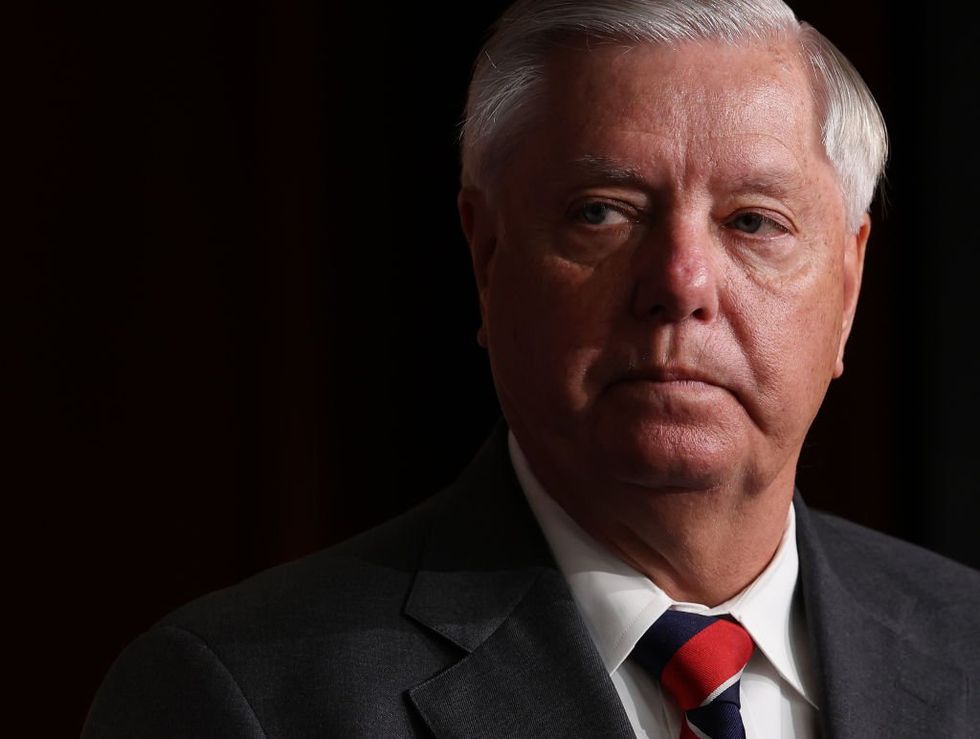
Seven Republican senators voted Tuesday to confirm the latest Democratic judge to a 15-year term on the D.C. Superior Court. That might not be surprising on a normal day, but this judicial nomination was the first chance Republicans had to show even a limp semblance of resistance to Democratic lawfare after the country was plunged into a constitutional crisis by Donald Trump’s kangaroo court conviction. Some of the seven Republicans who lent a hand to the Biden administration are the usual suspects, like Sens. Susan Collins (R-Maine), Lisa Murkowski (R-Alaska), and Mitt Romney (R-Utah). Another, Lindsey Graham (R-S.C.), plays a conservative on TV but is a reliable vote for President Joe Biden’s judicial agenda. The final three — Tom Tillis (R-N.C.), James Lankford (R-Okla.), and Mike Rounds (R-S.D.) — have no excuse. Republicans continue to support their own prosecution. It would be shocking, were it not so believable. Here’s the crazy part: Amid the former president’s persecution, these seven Republicans gave a stamp of approval to the Democrats’ judicial agenda because they wanted to. Democrats didn’t even need the votes to confirm. Since Trump’s conviction last week, Republicans have been paralyzed on what to do (if anything). Even those committed to action worry their power is limited and are afraid of overpromising and under-delivering, and thus far, no Republican senators have shown an appetite for the kind of parliamentary procedures necessary to grind day-to-day business to a halt. In the action club, Sen. Joni Ernst (R-Iowa) became the 11th Republican to sign a letter committing to voting against non-defense nominees and blocking increases in spending, but they’ll need broader conference support to impact the spending agenda and truly wreak havoc on business as usual. To add to the frustration, it’s been fair game for more than half a century for the opposition party to try to block the White House’s judicial nominees during a presidential election year. Nicknamed the Thurmond Rule, the practice goes back to 1968. Even the low, low bar of not cooperating on judicial nominations and blocking spending increases is too high for Republican leadership, however, with Minority Leader Mitch McConnell (R-Ky.) signaling his opposition. Meanwhile, the Democrats march on. On Tuesday, Wisconsin Attorney General Josh Kaul indicted former Republican lawyers Kenneth Chesebro and Jim Troupis, along with Republican political operative Mike Roman, for “forgery” over their efforts to contest the 2020 election. Reading the corporate media, you might be tempted to think the three men donned fake mustaches, dark sunglasses, and black fedoras to try to trick Congress into picking Trump as the winner. The reality is they worked on putting together a different slate of electors to vote should their lawsuit contesting the Wisconsin election succeed. Democrats have accused them of organizing “fake electors” — and the phrase is plastered all over corporate media stories. The term, however, is made up. Before Democrats started prosecuting Republicans, the preferred phrase was “alternate slate of electors.” John F. Kennedy used the legal tactic successfully in 1960 by to contest Hawaii. Supreme Court Justice John Paul Stevens referenced it in his 2000 dissent in Bush v. Gore. More recently, Democratic commentator Van Jones and Harvard Law professor Larry Lessig discussed it in their CNN op-ed, explaining how Democrats could legally contest the 2020 election results in Pennsylvania. That doesn’t mean the strategy was the best; it simply means it wasn’t remotely beyond the pale. Now, it’s a crime, and just as the ridiculous phrase “pre-planned” saturated media coverage as Democratic reporters sought to explain away the Benghazi attack, “fake electors” is the it-phrase to describe anyone who worked to contest the 2020 election. And questions are the new red line. “Donald Trump is threatening our democracy,” Biden tweeted last week. “First, he questioned our election system. Then, he questioned our judicial system.” While some Democratic state officials continue to try to kick Trump off the ballot and other Democratic state officials continue to prosecute Republican operatives, D.C. Republicans continue to support their own prosecution. It would be shocking, were it not so believable. Blaze Media's Steve Deace: We’ve got a big problem in Wisconsin Sign up for the Christopher Bedford newsletter Sign up to get Blaze Media senior politics editor Christopher Bedford's newsletter. IN OTHER NEWS White House attempts to sabotage bipartisan ICC sanctions The House of Representatives on Tuesday passed sanctions on the International Criminal Court, 247-155, with 42 Democrats bucking Biden’s attempt to squash it. Party leaders spent the weekend negotiating the sanctions, brought in response to the ICC’s arrest warrant for Israeli Prime Minister Benjamin Netanyahu, with Democratic Majority Leader Hakeem Jeffries (D-N.Y.) and House Foreign Affairs Ranking Member Gregory Meeks (D-N.Y.) taking the lead for Democrats. Democratic leaders withdrew from talks after the White House came out against the sanctions, criticizing them as overly broad, but saw defections from dozens of their members. The fire rises: Blaze News: United Methodist Church loses more than 1 million members in single day when group takes stand for 'God and His word’ Mainline Protestantism is in crisis. For decades, many of its leaders have traded old-fashioned Christianity for popular, left-wing appeal — while congregants have fled. Increasingly, the Global South has taken the lead in fighting back. The United Methodist Church is just the latest to suffer mass defections after embracing the LGBT agenda. Blaze News’ Chris Enloe reports: Weeks after the United Methodist Church voted to allow LGBT-practicing clergy and reverse prohibitions on same-sex marriage, the United Methodist Church of Ivory Coast... voted on May 28 to leave the UMC. The West African Methodists made the decision to leave the UMC “for reasons of conscience, before God and His word, the supreme authority in matters of faith and life.” The decision of the UMC to embrace LGBT culture and same-sex marriages "deviates from the Holy Scriptures," according to the EMUCI. The UMC church is, therefore, "sacrific[ing] its honor and integrity to honor the LGBTQ community." ...Over the last several years, thousands of UMC congregations in the U.S. have disaffiliated from the UMC, joining the Global Methodist Church or remaining independent. They left over the denomination's liberal drift. The Korean Methodist Church — which boasts approximately 1.5 million members — could soon also be on its way out of the UMC.
Like
Comment
Share
Showing 25525 out of 56670
  • 25521
  • 25522
  • 25523
  • 25524
  • 25525
  • 25526
  • 25527
  • 25528
  • 25529
  • 25530
  • 25531
  • 25532
  • 25533
  • 25534
  • 25535
  • 25536
  • 25537
  • 25538
  • 25539
  • 25540

Edit Offer

Add tier


Select an image
Delete your tier
Are you sure you want to delete this tier?

Reviews

In order to sell your content and posts, start by creating a few packages. Monetization

Pay By Wallet

Payment Alert

You are about to purchase the items, do you want to proceed?

Request a Refund