YubNub Social YubNub Social
    Advanced Search
  • Login

  • Day mode
  • © 2026 YubNub Social
    About • Directory • Contact Us • Privacy Policy • Terms of Use • Android • Apple iOS • Get Our App

    Select Language

  • English
Install our *FREE* WEB APP! (PWA)
Night mode
Community
News Feed (Home) Popular Posts Events Blog Market Forum
Media
Headline News VidWatch Game Zone Top PodCasts
Explore
Explore Jobs Offers
© 2026 YubNub Social
  • English
About • Directory • Contact Us • Privacy Policy • Terms of Use • Android • Apple iOS • Get Our App

Discover posts

Posts

Users

Pages

Group

Blog

Market

Events

Games

Forum

Jobs

Science Explorer
Science Explorer
2 yrs

Five Fascinating Facts About Neanderthals That Could Change How You See Them
Favicon 
www.iflscience.com

Five Fascinating Facts About Neanderthals That Could Change How You See Them

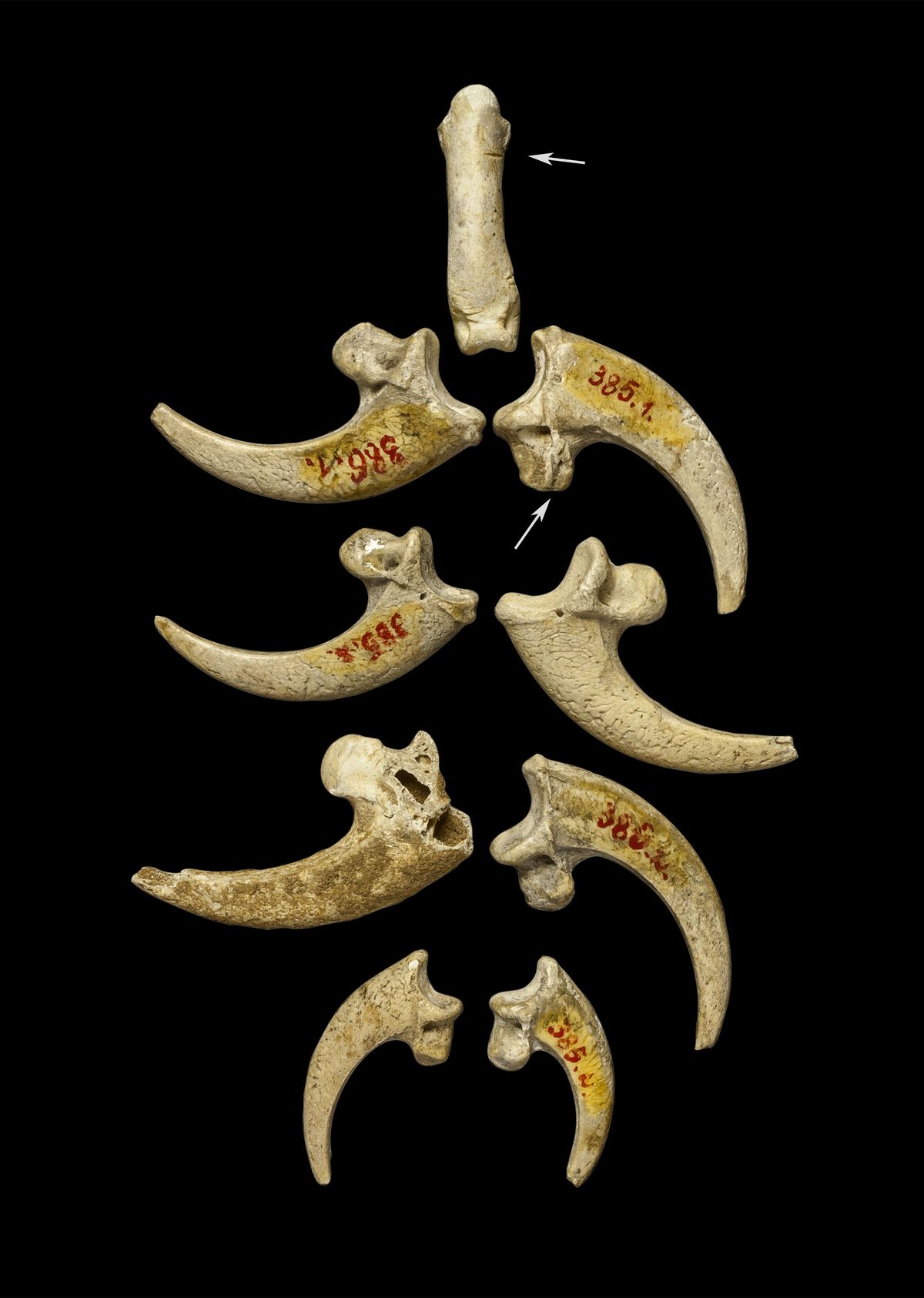
Once upon a time, humans were just one of quite a few hominid species roaming the planet, just trying to eke out a survival with nothing but an overgrown frontal lobe and a stubborn attitude to their name.Today, we’re alone – and those evolutionary cousins are a mystery. But here’s the thing: we know more about them than you might think. And it turns out that most of what you were taught by TV shows and popular culture is complete nonsense.Here are five facts about Neanderthals that you may find surprising.You’re probably part Neanderthal – and that’s a good thingWe like to think of Neanderthals as being a distant, ancient relative – but really, they were still kicking about some 40,000 years ago. In evolutionary terms, that’s not all that long ago, and it’s certainly well after Homo sapiens – that is, us – hit the scene.“We know Neanderthals and humans quite definitively had a large overlap,” Elena Zavala, a paleo and forensic geneticist at the University of California, Berkeley, told NBC News this year. Estimates range from a couple of millennia to as much as ten thousand years, but the idea that humans and Neanderthals met, and mixed, is undeniable. And by “mixed”, we mean… bow chicka wow wow.“It seems that 99.7 percent of Neanderthal and modern human DNA is identical,” wrote Mark Maslin, Professor of Earth System Science at UCL; Trine Kellberg Nielsen, Associate Professor, Department of Archeology and Heritage Studies at Aarhus University; and Peter C. Kjærgaard, Professor of Evolutionary History and Director of the Natural History Museum of Denmark, University of Copenhagen, in a 2022 article for The Conversation. “Many Europeans and Asians have between 1 percent and 4 percent Neanderthal DNA while African people south of the Sahara have almost zero,” they explained. “Ironically, with a current world population of about 8 billion people, this means that there has never been more Neanderthal DNA on Earth.”But if you’re worried about what sort of things you might have inherited from great-grandpa Ug, don’t fret. Not only were Neanderthals not the boneheads you’re probably imagining – we’ll get to that later – but actually, it might be doing you a favor.“There are [DNA] sequences inherited from Neanderthals […] which likely helped humans fend off exposure to new pathogens,” wrote Joshua Akey, a Professor at the Lewis-Sigler Institute for Integrative Genomics at Princeton University, in The Conversation in 2022. “Neanderthal sequences have been shown to influence both susceptibility to and protection against severe COVID-19,” he added. “Archaic hominin sequences have also been shown to influence susceptibility to depression, Type 2 diabetes and celiac disease among others.”Neanderthals didn’t look how you think (and the reason why is pretty ridiculous)Hear the name “Neanderthal”, and it’s likely a very specific picture that comes to mind. Short, stocky, slow; probably saying something like “oog ug” before bashing their bestie in the face with a rock; that kind of thing. That’s entirely wrong. Well, ok – it’s not totally wrong. Neanderthals were shorter and stockier than us – but they were far from slow, either mentally or physically.“Neanderthals were skilled tool makers […] proficient hunters, intelligent and able to communicate,” explains the Natural History Museum. “Healed and unhealed bone damage found on Neanderthals themselves suggest they killed large animals at close range – a risky strategy that would have required considerable skill, strength and bravery.”So why, then, do we associate the species with this image of the shambling brute? It’s actually all thanks to one guy: the French paleontologist and geologist Pierre-Marcellin Boule. It was he who, in 1911, reconstructed the first relatively complete Neanderthal skeleton known to science – now known as the Old Man of La Chapelle – and, guided by the bones and his own preconceptions, he built it with bent knees, forward flexed hips, with the skull jutting forward over a slouched, stooping stance. But was he on the money? Turns out, no. What Boule thought was evidence of a primitive, ape-like physiology was actually evidence of osteoarthritis and advanced age. “While that vision of the Old Man was hugely influential in creating persistent negative perceptions of Neanderthals, it doesn't match modern understanding of their biology,” wrote paleolithic archaeologist Rebecca Wragg Sykes in a 2021 BBC Future article. “In peak condition they were strong, highly athletic and certainly nothing like a missing link to gorillas or chimpanzees,” she explained. “They were fully upright, and while slightly shorter and with a slight difference in gait, biomechanical modeling suggests they walked just as efficiently as living people.”Neanderthals had a sense of blingSo, you live in a cave – yes, some Neanderthals really did live in caves – and spend your life trying not to die from exposure to a sabretooth tiger. You wouldn’t think you’d have time to concentrate on aesthetics – and yet, research has shown that Neanderthals actually did seem to have a sense of style.Not only is that evident from the multiple pieces of jewelry found alongside Neanderthal fossils – delicate necklaces made with tiny beads of animal teeth, shells, and ivory; or punk-rock-looking bracelets made from eagle talons – but it’s also shown in the remnants of pigment that hint at, well, Neanderthal makeup.And boy, were these ancient hominids fabulous. It’s "glitter makeup,” University of Bristol archaeologist Joao Zilhao told NPR in 2010. “Or shimmer makeup […] where you, over a foundation, you add shiny bits of something granular that shines and reflects. When light would shine on you, you'd reflect.”Now, that’s interesting – but it’s also important. As far as anthropologists are concerned, you don’t paint your face and wear glitzy jewelry unless you’re capable of something called “symbolic thinking” – that is, using signs and symbols as abstract representations of ideas. Alison Brooks, an anthropologist at George Washington University, said that “Neanderthals went up a notch in my thinking,” when she saw the ancient bling. “This is certainly the oldest and strongest evidence for Neanderthal symbolic behavior beyond just pigment use.”Neanderthals were caring and compassionateLife for Neanderthals was painful, basically from start to finish. “When you look at adult Neanderthal fossils, particularly the bones of the arms and skull, you see [evidence of] fractures,” Erik Trinkaus, an anthropologist at Washington University in St. Louis, told Smithsonian Magazine back in 2003. “I’ve yet to see an adult Neanderthal skeleton that doesn’t have at least one fracture, and in adults in their 30s, it’s common to see multiple healed fractures.”And yet, despite this constant risk of injury and disease, we know that they were able to survive into old age – or at least, what passed for old age back in 60,000 BCE. The Old Man, for example, isn’t named that ironically: “He was quite old by the time he died, as bone had re-grown along the gums where he had lost several teeth, perhaps decades before,” the Smithsonian Institution’s Human Origins Initiative points out. “In fact, he lacked so many teeth that it’s possible he needed his food ground down before he was able to eat it.”But people don’t just recover from broken bones and survive into old age despite debilitating degenerative illnesses by accident. The only conclusion is that Neanderthals were not just social, but actively cared for each other through disease and injuries. “Neanderthals didn't think in terms of whether others might repay their efforts, they just responded to their feelings about seeing their loved ones suffering,” explained Penny Spikins, senior lecturer in the Archaeology of Human Origin at the University of York and lead author of a 2018 study into Neanderthal society, in a statement.“Interpretations of a limited or calculated response to healthcare have been influenced by preconceptions of Neanderthals as being ‘different’ and even brutish,” she said. “However, a detailed consideration of the evidence in its social and cultural context reveals a different picture […] organized, knowledgeable and caring healthcare is not unique to our species but rather has a long evolutionary history.”People have seriously suggested bringing Neanderthals back from extinction… and that’s totally possible, by the wayScientists are all talking about de-extincting the dodo or the wooly mammoth – so why can’t we do the same with our once-fellow human species? Well, according to George Church, Professor of Genetics at Harvard Medical School, Professor of Health Sciences and Technology at Harvard and the Massachusetts Institute of Technology – plus a whole host of other impressive positions – we totally could. In fact, it would likely be possible sooner than we think. “The reason I would consider it a possibility is that a bunch of technologies are developing faster than ever before,” Church told Der Spiegel in 2013. “In particular, reading and writing DNA is now about a million times faster than seven or eight years ago. Another technology that the de-extinction of a Neanderthal would require is human cloning. We can clone all kinds of mammals, so it's very likely that we could clone a human. Why shouldn't we be able to do so?”Why indeed? The first step, Church said, would be to sequence the Neanderthal genome – something which we actually achieved nearly a decade and a half ago, when paleogeneticist Svante Pääbo did what was at the time thought to be impossible and successfully sequenced the species’ DNA from three skeletons found in Croatia (he would later be awarded a Nobel Prize for this breakthrough).From there, it would be a matter of synthesizing the genome and introducing it to a human stem cell. “If we do that often enough, then we would generate a stem cell line that would get closer and closer to the corresponding sequence of the Neanderthal,” he explained. “We developed the semi-automated procedure required to do that in my lab,” he assured Der Spiegel. “Finally, we assemble all the chunks in a human stem cell, which would enable you to finally create a Neanderthal clone.”So, theoretically possible – but in practice, there are a few stumbling blocks. The biggest one? The need for what Church labels an “extremely adventurous female human” to act as surrogate for the Neanderthal baby. Then there are the ethical and legal implications – human cloning is currently banned by the UN, and that’s unlikely to change just because some scientists want to see what would happen if we brought Neanderthals back from the dead.But if we could – well, who knows what we might learn. “Neanderthals might think differently than we do,” Church said. “We know that they had a larger cranial size. They could even be more intelligent than us.”“When the time comes to deal with an epidemic or getting off the planet or whatever, it's conceivable that their way of thinking could be beneficial,” he suggested.All “explainer” articles are confirmed by fact checkers to be correct at time of publishing. Text, images, and links may be edited, removed, or added to at a later date to keep information current.  
Like
Comment
Share
Science Explorer
Science Explorer
2 yrs

Forest Health Depends On The Personality Of Small Mammals
Favicon 
www.iflscience.com

Forest Health Depends On The Personality Of Small Mammals

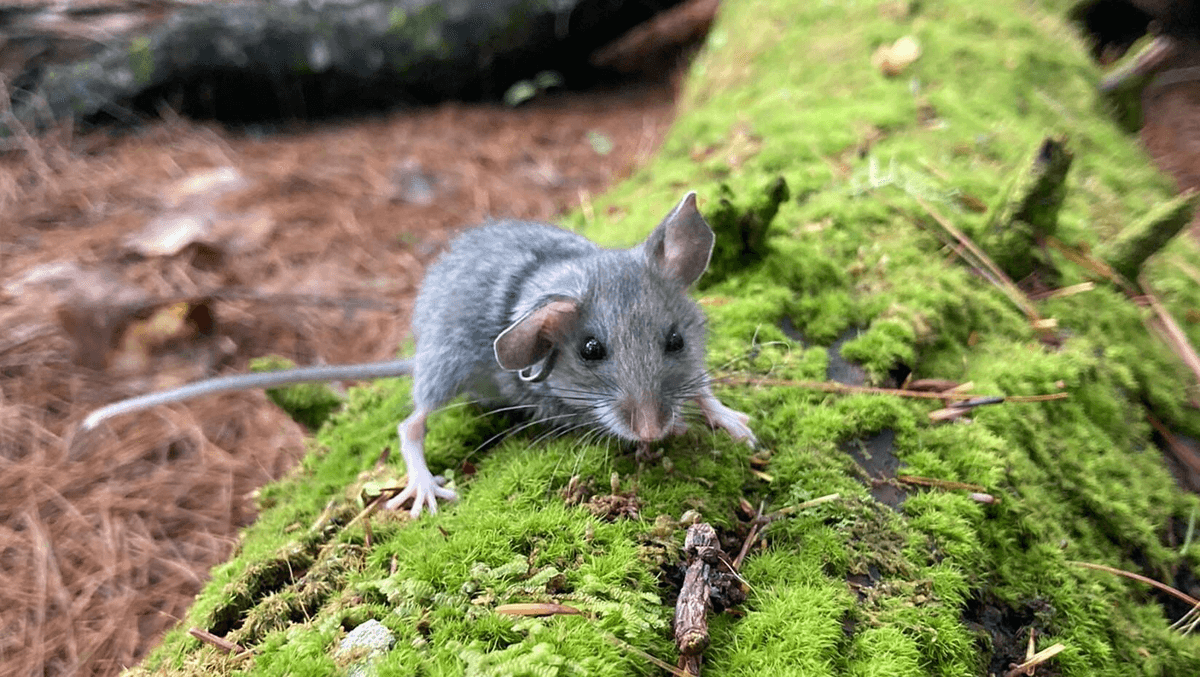
Healthy ecosystems are known to require diversity, but a study from the forests of Maine reveals there’s an aspect of this ecologists have been overlooking: the personality of pollinators and seed dispersers. If the work proves applicable to other environments, it suggests that the richness and sustainability of the planet depends on having some animals that are brave and outgoing, and some that are more cautious. Sometimes this may be supplied by different species, but having a range of approaches among the same animal can work as well.The old saying; “It takes all types to make the world” has received scientific verification. It’s not just a truism that the world we see reflects the range of personalities that exist, but also that the vibrancy and health of the planet depend on that variation. All this has been revealed by hiding pine seeds in caches in Penobscot Experimental Forest (PEF) for cute little critters to find.As the name suggests, the PEF is preserved by the US Forest Service and the University of Maine for researchers to study, including exploring the consequences of interventions, not just pure observation. Graduate student Brigit Humphreys has been hiding caches of eastern white pine seeds to provide opportunities for so-called “pilferers”."The point of the project was to figure out how small mammal personality and animal personality in general influence different ecological processes," Humphreys said in a statement. "We're focused on small mammals because they're a great study system. They're abundant, we get a really good sample size and we can actually conduct experiments on them in the forest.”In the short-term animals depend on trees and fungi for food, but in the longer run the relationship is symbiotic. Without animals to disperse their seeds or spores, most stationary organisms can’t colonize new territory, including taking back areas damaged by storms, fire, or human activity. There’s a reason so many fruits, nuts, and mushrooms tasted so good even before humans started selectively breeding them.Although the importance of seed dispersal for healthy forests is well understood – and one of the reasons to fear the decline of large frugivores like elephants and lemurs  – Humphreys notes work has concentrated on the species, not the individual.Seeking to change this, researchers trapped 3,311 squirrels, chipmunks, voles, shrews, and species of mice in six patches of the PEF and gave them personality tests. Not the small fluffy equivalent of Myers-Briggs, but tests with some actual science behind them, such as the tendency to explore new territory.They then replaced the traps in an area with cameras and equipment to recognize the tags they had attached to their temporary captives. The cameras revealed deer mice should be your first pick if you’re putting together a pine seed cache raiding party, but that variation in personality within some species is at least as important. Every animal has to trade off the chance of finding food against the danger of getting eaten by a predator, and they don’t all find the same balance. Those with more exploratory personalities were more likely to find the caches, but so were those who were thinner for lack of food.Although pilferers eat some of the seeds on the spot, they move and rebury others, usually taking them further from the parental tree and playing an important role in increasing seed dispersal. The recacher may die or forget the location, giving the seeds an opportunity to germinate. Undernourished cache-finders may be less use to the ecosystem, as they’re more likely to eat their discovery straight away, rather than rehide it.Hiding your cache from other furry thieves is a hard task in the forests of Maine – 83.5 percent of the caches the team buried were pilfered within six nights.Sometimes the same seed is recached several times by different creatures, achieving dispersal over a far wider range than would occur if every animal stuck to finding its own. Pilferage is so common that animals will look for less trafficked spots to store their seeds where others will not find them. Consequently, enthusiastic pilferers enhance seed dispersal not just through their own efforts, but by making others go further afield to try to stop them. If predators catch all the bolder pilferers, it can diminish this pressure and lead to a more uniform and less resilient forest."The take-home message of all the research we are doing is that individuals are important," Humphreys said. "There's a big push in the science community to conserve biodiversity, but beyond biodiversity, we have to be conserving behavioral diversity within a species if we truly want to have fully functional ecosystems."Some may wish to extrapolate the conclusion to humans, arguing we need a variety of approaches to create a society that resembles a stable ecosystem, not a vulnerable monoculture - something schools and other institutions may need occasionally reminding of.The study is published open access in the Journal of Animal Ecology 
Like
Comment
Share
Science Explorer
Science Explorer
2 yrs

Ed Dwight, NASA’s First Black Astronaut, Finally Just Reached Space 60 Years Later
Favicon 
www.iflscience.com

Ed Dwight, NASA’s First Black Astronaut, Finally Just Reached Space 60 Years Later

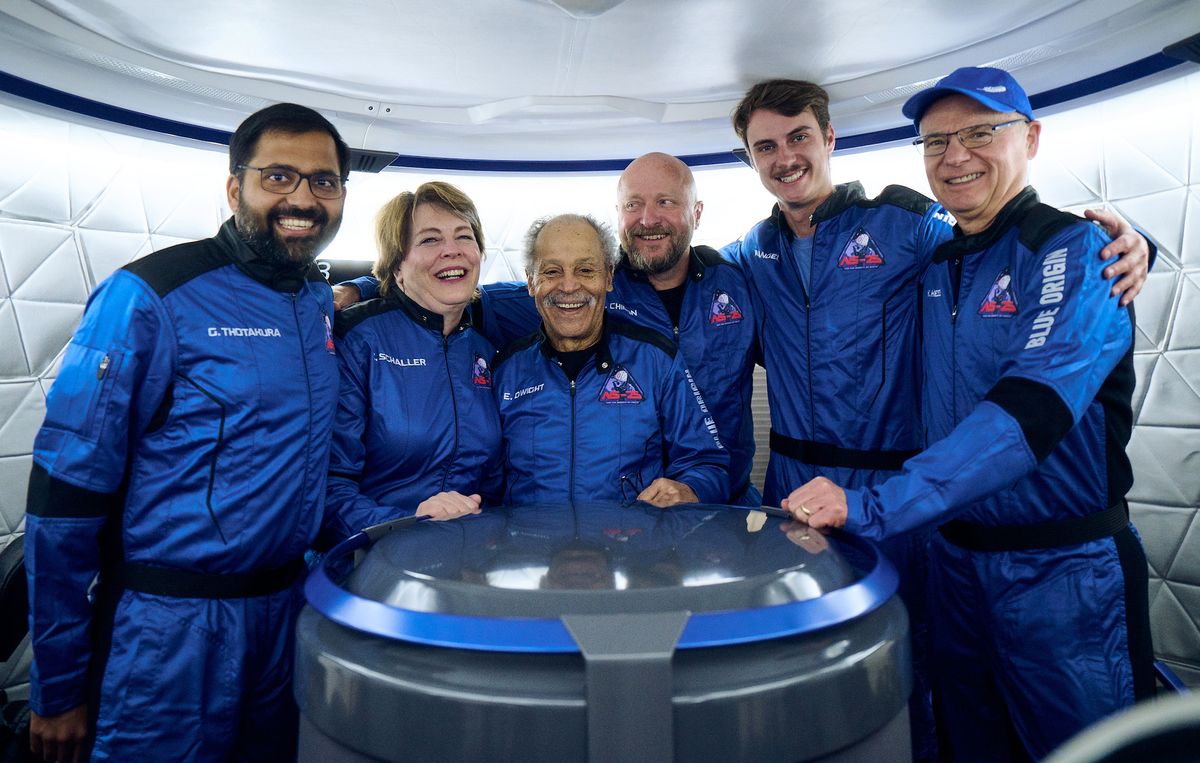
Ed Dwight is truly a modern-day Renaissance man. At the age of 90 years 8 months and 10 days, he was able to add another achievement to his illustrious and varied CV. He got to space, traveling on a suborbital spaceflight, Blue Origin's New Shepard NS-25. He beat actor William Shatner to the record of the oldest person who has ever been to space.Dwight is a talented sculptor – with 129 memorial sculptures and over 18,000 gallery pieces under his belt – as well as an author. He graduated cum laude in aeronautical engineering and has a past as a test pilot which earned him the rank of captain in the US Air Force. And his skills and talent took him one step away from becoming NASA's first Black astronaut.In 1961, he was the first African-American to enter the Aerospace Research Pilot School, the pre-astronaut training school from which NASA picked astronauts. However, he was not selected and he left the Air Force. The Guardian reported that he said that “racial politics forced him out of NASA and back into the regular officer corps.”   His seat on NS-25 was paid for by Space for Humanity, a non-profit that aims to expand human access to space by sending interesting people to space to experience the overview effect. The rest of the crew included Mason Angel, Sylvain Chiron, Kenneth L. Hess, Carol Schaller, and Gopi Thotakura.New Shepard has flown 25 times although not always crewed. To date, 37 people have been brought to beyond the Karman line, the internationally recognized (but truly arbitrary) edge of space located 100 kilometers (61 miles) above sea level. This was the first New Shepard Crewed flight since August 2022.An uncrewed flight in September 2022 experienced an engine failure and then a fire, grounding the fleet. Uncrewed flights resumed last December. This latest flight lasted for almost 10 minutes, and the people on board experienced several minutes of weightlessness in their ascent.Their descent had a little drama as well. Only two of the three parachutes actually deployed. While launch commentators assured that the capsule could land safely with just two, it might have made for a slightly harder landing than if all three functioned.
Like
Comment
Share
Science Explorer
Science Explorer
2 yrs

Rare Fireball Comet Turns Night Into Day Over Spain And Portugal In Spectacular Footage
Favicon 
www.iflscience.com

Rare Fireball Comet Turns Night Into Day Over Spain And Portugal In Spectacular Footage

Shortly before midnight on Saturday night, an enormous blue-green fireball lit up the skies over Portugal, turning night back into day for a few incredible seconds. Also visible across parts of Spain, the light show was the work of a comet that burnt up in the Earth’s atmosphere as its race across the cosmos came to a dramatic end over the Atlantic Ocean.I was at a party in the mountains of central Portugal at the time of the celestial display. The night was a cloudy one, strangely dull for a part of the world that is usually blessed with dazzling starlight after sundown.Yet all that changed when, at approximately 11.45 pm, a greenish hue began to illuminate the scene, revealing the contours of surrounding hills that had been cloaked in darkness. At first, it seemed as though some sort of expensive lighting effect had been put into operation by the party’s organizers, but as the glow intensified over the next few seconds it became clear that something truly amazing was unfolding above us.As the comet passed overhead, its luminosity was so extreme that we found ourselves plunged into broad daylight, with views extending for miles into the distance as though the planet had suddenly rotated a full 180 degrees. And then, as abruptly as it appeared, the comet vanished and the lights went off again.   IFLScience is not responsible for content shared from external sites.Shortly after the event, the European Space Agency (ESA) announced that its “fireball camera” in Cáceres, Spain, had captured footage of a “stunning meteor”, suggesting that the intergalactic visitor was a piece of space rock. However, subsequent analysis by both the ESA and the Calar Alto Observatory in southern Spain revealed that the object was in fact a comet."It seems this was a cometary particle. The entry speed was between 44 and 45 [kilometers per second, 27-28 miles per second]. It overflew Spain and Portugal and then burned up at around 60 kilometers [37 miles] of altitude above the Atlantic," Head of the Planetary Defence Office at ESA, Richard Moissl, told IFLScience. "For sure, not a meteorite."Traveling at 161,000 kilometers per hour (roughly 100,000 miles per hour), the hunk of ice and dust caught fire as it broke apart in the atmosphere at a height of 122 kilometers (76 miles) above the ground before burning out once it reached an altitude of 54 kilometers (36 miles). Initial reports suggested that the projectile touched down in the town of Castro Daire in central Portugal, although the ESA says it’s highly unlikely that any meteorites actually made it to the ground.Fireballs like this are made of the same stuff as the shooting stars that streak across the sky when the Earth passes through the debris field of a comet. Generally, these fragments of cosmic litter are completely obliterated long before they land, and those that do survive their descent typically do so as dust or small particles of rock.The difference between this bolide and other shooting stars was its size. It’s pretty rare for anything this big to collide with our atmosphere, and while the spectacle may have added a touch of magic to Saturday’s party, let’s hope nothing too much larger pays us a visit - or our partying days could be over.
Like
Comment
Share
Strange & Paranormal Files
2 yrs

SOS message to the future: children asked for help from the unborn
Favicon 
anomalien.com

SOS message to the future: children asked for help from the unborn

I withhold a lot of stories from readers, simply because they seem too far-fetched, and this tale is one of them, but I’ve decided to tell it anway. People can dismiss the tale if they wish, or they can open their minds and think about the possibilities this story hints at. In May 1971, a Prescot woman named Maureen was combing her hair back with a brush, ready to tie it into a pigtail when he felt a small hard lump on the nape of her neck. Her husband Mike looked at it and said it looked like a small pearl. Maureen decided to go to the doctor. His diagnosis was that the lump was just a blocked sebaceous gland. Maureen began to feel ill, and a few weeks later she returned to the doctor. He examined her again, then examined the lump on the back of her neck, and he became very anxious. He referred Maureen to specialist at the local hospital. After several tests, the specialist said Maureen had a form of cancer known as Hodgkinson’s disease. The treatment for this condition in 1971 was radiotherapy, and Maureen was soon at Clatterbridge Hospital. Mike travelled from Prescot to the Hospital every day to see his beloved wife. Maureen had two children, Katie, aged seven, and 13-year-old Thomas, and they were naturally hearbroken when their father broke the terrible news about their mum’s condition. That day, as the children wept in their father’s arms, there was a knock at the door. Two tall smartly dressed men in black suits, white shirts and black ties stood there. They said they were Mormons, and asked Mike if he had considered the Mormon religion. Mike yelled at them and told them to beat it. He slammed the door in their faces and then returned to comfort his children. Little Katie said, ‘Can anybody help mummy?’ Her Dad said, ‘Only God now sweetheart. The doctors at the hospital say mummy is very ill.’ He was so choked up he couldn’t say another word. Katie said, ‘Well we’ll have to just keep asking God then.’ Maureen’s condition worsened, and she was allowed home to die. She was put to bed in her room, where Mike kept attending her so loyally. On Monday 7 June 1971, Thomas and Katie sat in front of the television after they’d had their tea, and they watched the children’s programme Blue Peter. The programme’s presenters Peter Purviss, John Noakes and Valerie Singleton were talking about a so-called time capsule. They were about to bury a metal box containing a 1971 Blue Peter Annual, several of the new decimal coins, and photographs of the presenters, plus other items. The box would be buried in the Blue Peter garden and was meant to be unearthed in the year 2000. Thomas was fascinated by the thought of burying something that would be found perhaps a hundred years or more in the future. The year 2000 seemed so far away in time in 1971. Then he had the amazing idea. He told his father but his dad didn’t seem to listen or understand, but his sister Katie understood first time. Thomas said that if he buried a time capsule, or better still, three capsules, with a note in each one, then maybe someone in the future would one day read them. If time travel becomes a reality in the future, then perhaps the people who find the note in his time capsule would visit him. Then Katie had an amazing idea. Perhaps they should ask the people in the future to come back in time and make her mum well. Thomas became excited at Katie’s brainwave, and he said, ‘Yes, we could ask them to cure mum.’ A biscuit tin was found, and a note was put in it, along with Thomas’s map of where his house was, and even his full address. A copy of the note was put in his an empty Golden Virginia tobacco box he’d cadged from his uncle. Then Katie found an old tea caddy, and a copy of the note she’d made was put in it. The two children then left for the wide-open green spaces near Knowsley Hall. Thomas carried the spade and two time capsules, and Katie carried the tea caddy. Three holes were excavated at three locations and the time capsules were buried there. Later that day Thomas was involved in a fight when he discovered that a boy had seen him bury the last time capsule, and he had unearthed it and brought the note it had contained to school. Thomas considered the boy a saboteur, and viciously punched him. The headmaster contacted Thomas’s father, Mike, and showed him the note and described the fisticuffs. Mike didn’t understand who the note was intended for, and the children at school taunted Thomas and said he was an idiot. On the Sunday afternoon of July 4th of that year, Thomas and his father went fishing, and Katie and her grandmother stayed at the house to look after Maureen, who was hardly ever conscious. At three in the afternoon Katie’s grandmother left the house to fetch a box of Quality Street chocolates she’d bought for Katie, and she told her grand-daughter not to open the door to anyone while she was gone. At 3.20pm, that front door opened, and a tall smartly-dressed man in a black suit with a white shirt and a black tie came into the hallway. Katie was very startled, but the man’s kind face and gentle dark eyes allayed her fear. He smiled and then walked up the stairs. Katie followed him, and she saw him enter the room, and then sit on her mother’s bed. He said one word in a soft-spoken voice: ‘Maureen.’ The woman opened her eyes, and the stranger put his hand on her forehead for a few seconds. He then stood up, patted Katie on the head and left the room. When Katie went outside she saw no one there. Her mother was now sitting up in bed and said she was hungry. Katie excitedly rushed away to bring her soup and as she came down the stairs she saw her grandmother come into the house. Katie told her about the man who had just left and how he’d made her mum better. The grandmother had seen no one pass her on the quiet Sunday street outside. Maureen made a full recovery from Hodgkinson’s disease, and the doctors were unable to explain how. Mike was of the opinion that one of the Mormon’s had visited the house that Sunday and had somehow cured Maureen through hands-on healing. Thomas and Katie believed some kind man somewhere in the great unknown future had found one of their time capsules from 1971 and had decided to answer their begging letter from the past. The post SOS message to the future: children asked for help from the unborn appeared first on Anomalien.com.
Like
Comment
Share
The Blaze Media Feed
2 yrs

Julian Assange wins right to appeal US extradition
Favicon 
www.theblaze.com

Julian Assange wins right to appeal US extradition

Two judges in a U.K. court have granted Julian Assange a leave to prepare a fresh appeal against his extradition to the U.S. to face charges after leaking military secrets through Wikileaks. Consequently, Assange will be able to challenge assurances from American officials on how a trial there would be conducted if he is extradited, according to the Guardian.'We say this is a blatantly inadequate assurance.'The report noted that the two U.K. judges, Victoria Sharp and Justice Johnson, had pushed back a final decision in March on whether Assange could take his case to another appeal hearing. Assange is trying to avoid being extradited to the U.S. after publishing thousands of classified documents — some of which the U.S. government believes presented risks to Americans.The whistleblower would have run out of options if the court had ruled the extradition could proceed. His legal team said he could have been put on a plane to the U.S. within 24 hours to face charges. — (@) Edward Fitzgerald, Assange's lawyer, told the judges that they should reject American assurances that his client could seek the protections granted under the First Amendment because a U.S. court would not be bound by this, according to NBC News. "We say this is blatantly inadequate assurance," Fitzgerald told the court. However, it was reported that Fitzgerald did accept a second assurance, which said that Assange would not face the death penalty if he was sent to the U.S. to face charges. He noted that the U.S. had provided an "unambiguous promise not to charge any capital offense."Now, it could be several months before another appeal is heard. Though Assange's wife said she hoped he would be there to hear the verdict, the whistleblower was not in attendance for the court's decision due to health reasons.Assange has been fighting against extradition for 13 years, including seven years when he went into self-exile in the Ecuadorian embassy in London. After he was released from the embassy, he was placed in a high-security prison in London.Assange faces 17 charges of espionage and a single charge of computer misuse in the U.S. Among the classified documents he released on Wikileaks was a 2007 video of an Apache helicopter piloted by Americans in Baghdad that killed 11 people, including two Reuters journalists.Like Blaze News? Bypass the censors, sign up for our newsletters, and get stories like this direct to your inbox. Sign up here!
Like
Comment
Share
The Blaze Media Feed
2 yrs

Bill Maher calls it 'ridiculous' for Steve-O to ask him not to smoke pot, despite not smoking when Sheryl Crow was a guest
Favicon 
www.theblaze.com

Bill Maher calls it 'ridiculous' for Steve-O to ask him not to smoke pot, despite not smoking when Sheryl Crow was a guest

Talk show host Bill Maher said it was ridiculous for stuntman and podcaster Steve-O to request that the host not smoke pot in front of him during a recording, due to Steve-O being a former addict.During a late March 2024 episode of "Steve-O's Wild Ride!" the podcaster told entrepreneur Patrick Bet-David that he had plans to appear on Maher's podcast but was denied when he asked Maher's team if the host would refrain from smoking pot."He said, 'No, that's a deal breaker,'" Steve-O, who is 16 years sober, recalled.Nearly two months later, Maher finally commented on the situation while speaking to skateboarding legend Tony Hawk. Maher said "that Steve-O guy was taking shots at me in the press recently.""It was an unfortunate ... I don't want to start a feud, and I'm sorry that he felt slighted or something, but it is ridiculous that somebody thinks that I should give up pot smoking because they have a problem. Then I'm sorry you can’t be here," he said, according to Variety.Maher added that the show is in his house and therefore "my rules," while adding that he has another show for serious and sober conversations."I already have another show. It’s called 'Real Time.' It’s on HBO and it’s very much not [with] pot. ... This is different. This is just shooting the s***, and this is how I shoot the s***. This is an attempt to get conversation as real as it ever is," he told Hawk. "Just like if we were doing this, and I don't see anything that we've said that I wouldn’t have just said to you if there were no cameras here — and you even know where the cameras are. Okay, so let’s remember that.""I have no feud with any of these 'Jackass' [guys],” Maher added. "I watched all the movies. They are funny." — (@) Shortly after Steve-O's original comments, fans noticed that Maher had actually honored a similar request on an episode of "Club Random" that aired weeks prior.Maher was telling guest Sheryl Crow that college protesters had been driving him nuts, and when he hears some of their opinions, he said, "That's when I need a joint.""But I will never light one up, but can I hold one?" Maher asked Crow."Yes, you can," the singer replied.Crow then revealed that Maher was adhering to her request to help preserve her singing voice for an upcoming performance."If I wasn't singing tomorrow I'd say light that bad boy up right now," she added. Maher then expressed how happy he was to make the adjustment for Crow."For you, first of all, I would do this standing on my head, but it is a little like running a marathon for the first time," the host admitted."I know it's got to be hard. It's difficult. First, you're wearing a suit jacket, and now you're not smoking, and I can't tell you how much I appreciate that. You know I appreciate that," Crow reiterated.Like Blaze News? Bypass the censors, sign up for our newsletters, and get stories like this direct to your inbox. Sign up here!
Like
Comment
Share
Gamers Realm
Gamers Realm
2 yrs

Wuthering Waves codes May 2024
Favicon 
www.pcgamesn.com

Wuthering Waves codes May 2024

What are the new Wuthering Waves codes? Like Genshin Impact and Tower of Fantasy, Wuthering Waves is another free-to-play RPG with open world fantasy elements. This time around, though, there's also a little bit of monster collecting, which will be vital to upgrading your party's gear. To help you get started, Kuro Games might provide Wuthering Waves codes from time to time, allowing you to get free items. While you can get your hands on free Wuthering Waves characters by playing the campaign, most of these "Resonators" will likely only be obtainable via the RPG game's premium currency. As the anime game gets its claws into you, here's everything you should know about redeeming codes. Continue reading Wuthering Waves codes May 2024 MORE FROM PCGAMESN: Best anime games, Free PC games, Best open-world games
Like
Comment
Share
Twitchy Feed
Twitchy Feed
2 yrs

AP Does More Heavy Lifting for the Biden Campaign (This is Basically an In-Kind Donation)
Favicon 
twitchy.com

AP Does More Heavy Lifting for the Biden Campaign (This is Basically an In-Kind Donation)

AP Does More Heavy Lifting for the Biden Campaign (This is Basically an In-Kind Donation)
Like
Comment
Share
Twitchy Feed
Twitchy Feed
2 yrs

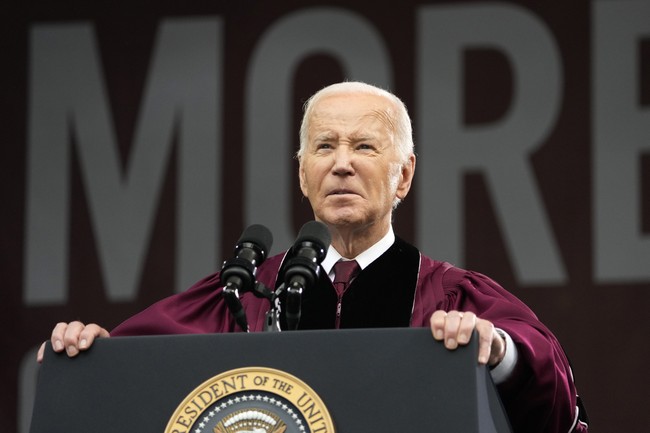
NORMS RESTORED: Biden Brags About Defying SCOTUS on Student Loan Forgiveness
Favicon 
twitchy.com

NORMS RESTORED: Biden Brags About Defying SCOTUS on Student Loan Forgiveness

NORMS RESTORED: Biden Brags About Defying SCOTUS on Student Loan Forgiveness
Like
Comment
Share
Showing 27679 out of 56670
  • 27675
  • 27676
  • 27677
  • 27678
  • 27679
  • 27680
  • 27681
  • 27682
  • 27683
  • 27684
  • 27685
  • 27686
  • 27687
  • 27688
  • 27689
  • 27690
  • 27691
  • 27692
  • 27693
  • 27694

Edit Offer

Add tier


Select an image
Delete your tier
Are you sure you want to delete this tier?

Reviews

In order to sell your content and posts, start by creating a few packages. Monetization

Pay By Wallet

Payment Alert

You are about to purchase the items, do you want to proceed?

Request a Refund