YubNub Social YubNub Social
    Advanced Search
  • Login

  • Night mode
  • © 2026 YubNub Social
    About • Directory • Contact Us • Privacy Policy • Terms of Use • Android • Apple iOS • Get Our App

    Select Language

  • English
Install our *FREE* WEB APP! (PWA)
Night mode
Community
News Feed (Home) Popular Posts Events Blog Market Forum
Media
Headline News VidWatch Game Zone Top PodCasts
Explore
Explore Jobs Offers
© 2026 YubNub Social
  • English
About • Directory • Contact Us • Privacy Policy • Terms of Use • Android • Apple iOS • Get Our App

Discover posts

Posts

Users

Pages

Group

Blog

Market

Events

Games

Forum

Jobs

Science Explorer
Science Explorer
2 yrs

Is Hypnosis Real? Here's What Science Has To Say
Favicon 
www.iflscience.com

Is Hypnosis Real? Here's What Science Has To Say

This article first appeared in Issue 19 of our digital magazine CURIOUS. Nobody on stage has ever been hypnotised in the history of the world.– The Amazing Kreskin, veteran mentalist and showman, 1994It was midnight, in the Palace of Westminster, UK in December 1994, and hypnotism was in trouble.“Stage hypnotism has been a long-standing concern of mine since I was alerted to its dangers by one of my constituents,” announced Colin Pickthall, then British Member of Parliament for West Lancashire, on the floor of the House of Commons. “Some years ago, her daughter[…] was hypnotised at a club,” he told the assembled lawmakers. “At the end of the trance, she was told to come out of it as if she had had a 10,000-volt electric shock. Her husband took her home in a somewhat dazed state, and five hours later she died.”Was this a case of death by hypnosis? The MPs were convinced – enough so to prompt a Home Office investigation into whether laws surrounding the practice should be reformed. But others found the idea laughable: “The whole concept [of hypnosis] is a fantasy,” University of Liverpool psychology professor Graham Wagstaff said at the time. “A cultural invention.”In fact, Wagstaff went even further. Not only was stage hypnosis bunk, but so were the practice’s supposed therapeutic benefits. Hypnosis for pain relief, he said, was probably down to an individual patient’s high pain threshold rather than some psychological brain hack; behavioral changes induced by a hypnotist were the product of wishful thinking and the desire to show off, nothing more.Three decades later, and we’re still not sure who was closer to the truth.You are getting sleepyLet’s be clear: hypnotism, when performed by a trained practitioner who knows their patient, will not kill you. But equally, there’s some pretty good evidence that it’s more than just the result of exhibitionists looking for an easy answer.“Hypnosis remains among the most widely misrepresented practices in psychology and allied disciplines,” wrote experimental psychologists Steven Jay Lynn, Madeline Stein, and Devin Terhune in the journal BJPsych Advances last year. “In particular, there is a pronounced discrepancy between how hypnosis is used in clinical settings and understood within contemporary scientific research and how it is portrayed in popular culture.”So, how is the practice understood in science? Well, to be honest, science isn’t exactly sure.“For over a hundred years, this question has been hotly debated,” wrote therapist Claire Jack in a 2022 article for Psychology Today. “’State’ theorists believe that there is a unique state of hypnosis and that achieving this state is integral to a positive therapeutic outcome. ‘Non-state’ theorists, on the other hand, believe that people ‘take on’ the role of someone who is hypnotised, in much the same way as someone takes on a variety of other roles in their lives.”It's not that anybody is play-acting, Jack stressed; the person being “hypnotized” really does believe it’s happening to them – but non-state theorists would argue that any effects they experience will be due to more prosaic factors than some altered state of consciousness. As Lynn, Stein, and Terhune put it: “[T]here is no robust neurophysiological evidence to demonstrate that hypnosis is a special or unique state […] It is more parsimonious to consider hypnosis as a set of procedures in which verbal suggestions are used to modulate awareness, perception and cognition, rather than to unnecessarily invoke ‘special states’.”When I click my fingersWhatever the truth of the matter, one thing is for sure: hypnotism is more than just a trick. “We identified three brain regions whose activity and functional connectivity change during hypnosis,” wrote a team led by Stanford Professor of Psychiatry and Behavioral Sciences David Spiegel in one 2016 paper. “The findings were evident in the two hypnosis conditions among high but not low hypnotizables, and they were different from the memory and rest conditions.”Hypnosis is the oldest Western form of psychotherapy, but it's been tarred with the brush of dangling watches and purple capes.Under hypnosis, they had discovered, activity in a region known as the dorsal anterior cingulate – part of the network in the brain responsible for noticing things – is decreased. So, too, are connections between the dorsolateral prefrontal cortex and the default mode network – likely representing a disconnect between the hypnotized person’s actions and their awareness of those actions, Spiegel suggested. “In hypnosis, you're so absorbed that you're not worrying about anything else,” he said in a statement at the time. “When you're really engaged in something, you don't really think about doing it – you just do it.”Meanwhile, connections between the dorsolateral prefrontal cortex and the insula – an area of the brain usually linked to more emotional or sensory functions – increased. Altogether, it paints a picture of a brain happy to go along with external suggestions, and not too concerned with spending time or energy being self-conscious about it – and empirically not of somebody merely strutting around for attention.“Hypnosis is the oldest Western form of psychotherapy, but it's been tarred with the brush of dangling watches and purple capes,” Spiegel said. “In fact, it's a very powerful means of changing the way we use our minds to control perception and our bodies.”You will squawk like a chickenIt’s more than just brain scans that hint at the authenticity of hypnotism. While many of us would likely balk at a surgeon who suggested we forgo general anesthetic during surgery in favor of hypnosis, evidence suggests that adding the latter option may be a good option in terms of pain relief and healing time.“It helps patients to reduce anxiety and stress, to alleviate pain and also to promote recovery after the procedure,” said Mareike Holler, a student at Jena University Hospital and part of a team performing a huge meta-analysis into the potential benefits of hypnosis as a surgical intervention.“In the evaluation of the studies, hypnosis proved to be an effective intervention,” she confirmed.Should doctors be faced with a patient whose suggestibility to hypnotism is low, there are even peer-reviewed methods to increase hypnotizability using deep-brain stimulation.Meanwhile, specialist hypnotherapy has been recognized for decades now as one of the most efficacious treatment options available for irritable bowel syndrome, alleviating symptoms in more than half of those with the condition in one meta-analysis. It can be extremely effective for relieving chronic pain, too – and should doctors be faced with a patient whose suggestibility to hypnotism is low, there are even peer-reviewed methods to increase hypnotizability using deep-brain stimulation.“As a clinical psychologist, my personal vision is that, in the future, patients come in, they go into a quick, non-invasive brain stimulation session, then they go in to see their psychologist,” Afik Faerman, a clinical neuropsychology postdoctoral scholar at Stanford University and lead researcher on the latter project, said in a statement. “Their benefit from treatment could be much higher.”And you’re in the roomIt’s undeniable, then, that hypnotism is “real” in the sense that it produces observable, measurable changes in the brain and body. But, the skeptics among us may protest, so do sugar pills. Could this not all simply be a manifestation of the placebo effect?Short answer? Yes, it could. Long answer? It’s… complicated. After all, it's certainly well accepted that hypnotism has much in common with the placebo response – both rely on manipulating a patient’s expectancies in order to provide a therapeutic effect. And despite the popular image of placebos requiring deception to work, so-called “open-label placebos” – in which the patient is outright told they are receiving a sugar pill – have repeatedly been shown to be effective at treating various illnesses. So what, if anything, does separate the two?Potentially not much. With the placebo response, “an ineffective drug or therapeutic treatment is beneficial purely because we believe it will work,” write Terhune and Lynn in The Conversation. “In this light, perhaps hypnosis isn’t so bizarre after all. Seemingly sensational responses to hypnosis may just be striking instances of the powers of suggestion and beliefs to shape our perception and behavior.”“What we think will happen morphs seamlessly into what we ultimately experience.”Click.CURIOUS magazine is a digital magazine from IFLScience featuring interviews, experts, deep dives, fun facts, news, book excerpts, and much more. Issue 22 is out now.

Like
Comment
Share
Science Explorer
Science Explorer
2 yrs

The World’s Largest Salt Flat Is Full Of Mysterious Patterns
Favicon 
www.iflscience.com

The World’s Largest Salt Flat Is Full Of Mysterious Patterns

This article first appeared in Issue 19 of our digital magazine CURIOUS. A photographic playground of a salt flat can be found sprawling across southwest Bolivia. Here, the remains of an ancient lake have created a salty crust that makes for great perspective games in the dry season – and turns into a massive mirror when wet. The world’s largest salt flat is transformed when overflowing lakes nearby flood its surface with a thin layer of water. Salar de Uyuni, as the salt flat (or playa) is known, is completely level and stretches for about 10,582 square kilometers (4,086 square miles), making its reflective surface roughly the same size as the “Big Island” of Hawai'i.From space, it can be observed as the largest of two neighboring salt flats – the second being Salar de Coipasa, which sits to the northwest. The two landscapes appear otherworldly in photos, but they’re largely made up of something you’ll find on most dinner tables.Salar de Uyuni is a sprawling desert of halite – which is your common table salt – and gypsum, which is what some of the biggest crystals on the planet are made of. Its salty surface is often marked with a peculiar honeycomb pattern, which got scientists scratching their heads. Why are the patterns so geometrically perfect? And why are the tiles so large – always between 1 and 2 meters (3 and 6 feet)?In 2023, a team of researchers finally worked it out.“In salt deserts, the first thing you see – almost the only thing you see – is an endless patchwork of hexagons and other ordered shapes,” said study author Dr Lucas Goehring, Associate Professor in Physics at Nottingham Trent University’s School of Science and Technology in a statement.“What we’ve shown is that a simple, plausible explanation is there, but hidden beneath the ground. The surface patterns reflect the slow overturning of salty water within the soil, a phenomenon somewhat like the convection cells that form in a thin layer of simmering water.”Salar de Uyuni sits in the place of the large and ancient Lake Minchin that covered the plateau thousands of years ago. According to NASA Earth Observatory, it shrunk significantly around 15,000 years ago, creating an ever-shrinking briny pool that eventually evaporated, leaving in its wake the vast deposit of halite and gypsum.The salty crust that attracts millions of tourists each year can be as thick as 10 meters (33 feet) in some places and creates a featureless backdrop that allows photographers to play around with perspective. During the short rainy season (usually December to April), the flat only receives a few inches of rain annually – but with nowhere to go, it sits atop the salt, creating a breathtaking mirror image of the sky above.How to get there: Salar de Uyuni sits in the Daniel Campos Province in Potosí in southwest Bolivia and is less than a 10-minute drive from Uyuni airport.CURIOUS magazine is a digital magazine from IFLScience featuring interviews, experts, deep dives, fun facts, news, book excerpts, and much more. Issue 22 is out now. 
Like
Comment
Share
Strange & Paranormal Files
2 yrs

Unanswered question about black holes is: where does everything go?
Favicon 
anomalien.com

Unanswered question about black holes is: where does everything go?

Black holes are among the most mysterious objects in the universe. These cosmic behemoths exert a gravitational pull so strong that not even light can escape their grasp. But what exactly happens to matter when it falls into a black hole? To understand where things go when they fall into a black hole, we first need to grasp the basics of what a black hole is. At its core, a black hole is a region of spacetime where gravity is so intense that it warps space and time itself. This gravitational monster is formed when a massive star collapses under its own gravity at the end of its life cycle. The boundary surrounding a black hole is known as the event horizon. It’s the point beyond which nothing, not even light, can return. Once an object crosses this threshold, it is inevitably drawn toward the singularity, the infinitely dense core of the black hole. As matter approaches the event horizon, it experiences extreme gravitational forces. This process, whimsically dubbed “spaghettification,” occurs because the gravitational pull is much stronger on the part of the object closer to the black hole than on the part farther away. This difference in force stretches the object into a long, thin shape, like a piece of spaghetti. At the center of a black hole lies the singularity, where gravity is thought to be infinitely strong and density infinitely high. Current physical theories cannot adequately describe conditions at the singularity, as our understanding of physics breaks down in these extreme conditions. General relativity predicts the existence of singularities, but the true nature of these points remains one of the greatest mysteries in astrophysics. What Happens Inside a Black Hole? One of the most perplexing questions about black holes is what happens to the information about the matter that falls into them. According to quantum mechanics, information about the state of particles should never be lost. However, once matter passes the event horizon, it seems to disappear from the observable universe, leading to the so-called “information paradox.” In the 1970s, physicist Stephen Hawking proposed that black holes could emit radiation due to quantum effects near the event horizon. This radiation, known as Hawking radiation, suggests that black holes could eventually evaporate over incredibly long timescales. If this radiation indeed carries information, it might resolve the information paradox, but exactly how this works remains an open question. General relativity predicts that the very center of a black hole contains a point where matter is crushed to infinite density. It’s the final destination for anything falling into the event horizon. According to Kip Thorne (a famous physicist, worked on the interstellar), matter is destroyed at the singularity. “The matter of which a star is made, the atoms of which a star is made, are destroyed at the center of a black hole, when the black hole is created. The matter is gone, but the mass, in the sense of mass and energy being equivalent, has gone into the warped space-time of the black hole,” he said. While our current understanding of physics provides some insights into black holes, many aspects remain speculative, leading to several fascinating theories about what happens inside these cosmic bodies. The team that first imaged a black hole, at left, used AI to generate a sharper version of the image, at right, showing the black hole to be larger than originally thought. Medeiros et al 2023, CC BY-ND Fantastic Theories: Beyond the Event Horizon One intriguing possibility is that black holes could be connected to other points in space-time via wormholes. These hypothetical tunnels could, in theory, allow for instant travel across vast cosmic distances or even to other universes. If matter falling into a black hole enters a wormhole, it might emerge somewhere entirely different, escaping the black hole’s grip. Another speculative theory suggests that black holes could be gateways to parallel universes. According to the multiverse hypothesis, our universe might be just one of many. When matter falls into a black hole, it might be transported to a different universe within the multiverse, effectively disappearing from our observable reality but continuing to exist elsewhere. In some advanced theoretical models, such as string theory and M-theory, our universe could be a three-dimensional “brane” floating in a higher-dimensional space. Black holes might represent connections to these higher dimensions. If this is the case, matter falling into a black hole in our universe might be transferred to a different dimension entirely, offering a radical reimagining of the black hole’s nature. While scientific advancements have provided some insights into what happens when matter falls into a black hole, many questions remain unanswered. The post Unanswered question about black holes is: where does everything go? appeared first on Anomalien.com.
Like
Comment
Share
Strange & Paranormal Files
2 yrs

Avril Lavigne addresses conspiracy theory about being replaced
Favicon 
anomalien.com

Avril Lavigne addresses conspiracy theory about being replaced

For years, rumors have circulated suggesting that the singer Avril Lavigne was replaced decades ago by a body double. Today, Avril Lavigne remains a popular and accomplished singer-songwriter who enjoyed a great deal of success, especially back in the early 2000s. She later disappeared from the public eye for a time after contracting and recovering from Lyme disease. However, it was during the height of her success back in 2003 that, according to conspiracy theorists, Lavigne passed away and was replaced by a body double named Melissa Vandella. Every appearance since then, they argue, has been her replacement and not Lavigne herself. The origins of this conspiracy theory are unclear, but reports suggest that it was widely circulated by a Brazilian blog in 2011 and gained increased traction on social media. By 2017, the idea had gone viral and was being heavily debated across the Internet. Despite its widespread circulation, there has never been any concrete evidence to support the idea that Avril Lavigne was ever replaced by someone else. This skepticism is reflected in Lavigne’s own reaction to the theory. Speaking on the Call Her Daddy podcast recently, the 39-year-old singer suggested that she found the entire notion strangely amusing. “I mean, it’s just funny to me,” she said. “On one end, everyone’s like, ‘Oh, my God, you look the exact same. You haven’t aged a day.’ But then, other people are like, there’s a conspiracy theory that I’m not me.” “Honestly, it’s not that bad. It could be worse, right?” she added. “I feel like I got a good one. I don’t feel like it’s negative. It’s nothing creepy.” “Obviously I am me, it’s so dumb,” she concluded, dismissing the conspiracy with a laugh. The persistence of such conspiracy theories, despite a lack of evidence, highlights the enduring fascination with celebrity culture and the often bizarre narratives that can emerge within it. For Avril Lavigne, however, the idea that she was replaced by a body double remains just that: a baseless and somewhat amusing rumor. The post Avril Lavigne addresses conspiracy theory about being replaced appeared first on Anomalien.com.
Like
Comment
Share
Strange & Paranormal Files
2 yrs

New “UAP Transparency Act” aims to ensure full UFO disclosure
Favicon 
anomalien.com

New “UAP Transparency Act” aims to ensure full UFO disclosure

Things could soon get very interesting for UFO disclosure advocates, thanks to a new congressional bill introduced by Rep. Tim Burchett this week. The bill, titled ‘The UAP Transparency Act,’ aims to compel the US government to release all of its files related to unidentified aerial phenomena (UAPs), commonly known as UFOs. At only 1.5 pages in length, the bill is concise but its implications are significant. If passed, it would require the President of the United States to mandate that all government agencies release their UFO-related documents to the public. Rep. Tim Burchett Additionally, the bill stipulates that quarterly reports must be filed to update both the House and Senate on the progress of this disclosure. Rep. Burchett is no stranger to advocating for UFO transparency. He has long pushed for the release of government files pertaining to the phenomenon. “It’s simple. They spend all this time telling us they don’t exist, then release the files, dagnabbit,” he said during an interview with Fox News. “I don’t want some crazy, fancy name for it, I just want them to do exactly what the bill is about.” Burchett’s push for transparency is not necessarily about confirming the existence of extraterrestrial life, but rather about government accountability and spending. “Like I said before, it’s not about little green men or flying saucers,” he told Fox News in April. “It’s about tens of millions of dollars that our federal government is spending on something that at least some of the members of the federal government say does not exist. Yet, they will not release all the files.” In recent years, there have been several high-profile releases of previously classified information, including videos and reports from the Pentagon, which have only fueled further speculation and demand for full disclosure. The post New “UAP Transparency Act” aims to ensure full UFO disclosure appeared first on Anomalien.com.
Like
Comment
Share
Classic Rock Lovers
Classic Rock Lovers  
2 yrs ·Youtube Music

YouTube
Best Of Classic Rock | Aerosmith, Bon Jovi, The Eagles, Queen, The Who, Lynyrd Skynyrd, Def Leppard
Like
Comment
Share
Twitchy Feed
Twitchy Feed
2 yrs

SHOCKER From The Hill: NOAA Predicts Summer Will Be Hot … Not Quite
Favicon 
twitchy.com

SHOCKER From The Hill: NOAA Predicts Summer Will Be Hot … Not Quite

SHOCKER From The Hill: NOAA Predicts Summer Will Be Hot … Not Quite
Like
Comment
Share
Gamers Realm
Gamers Realm
2 yrs

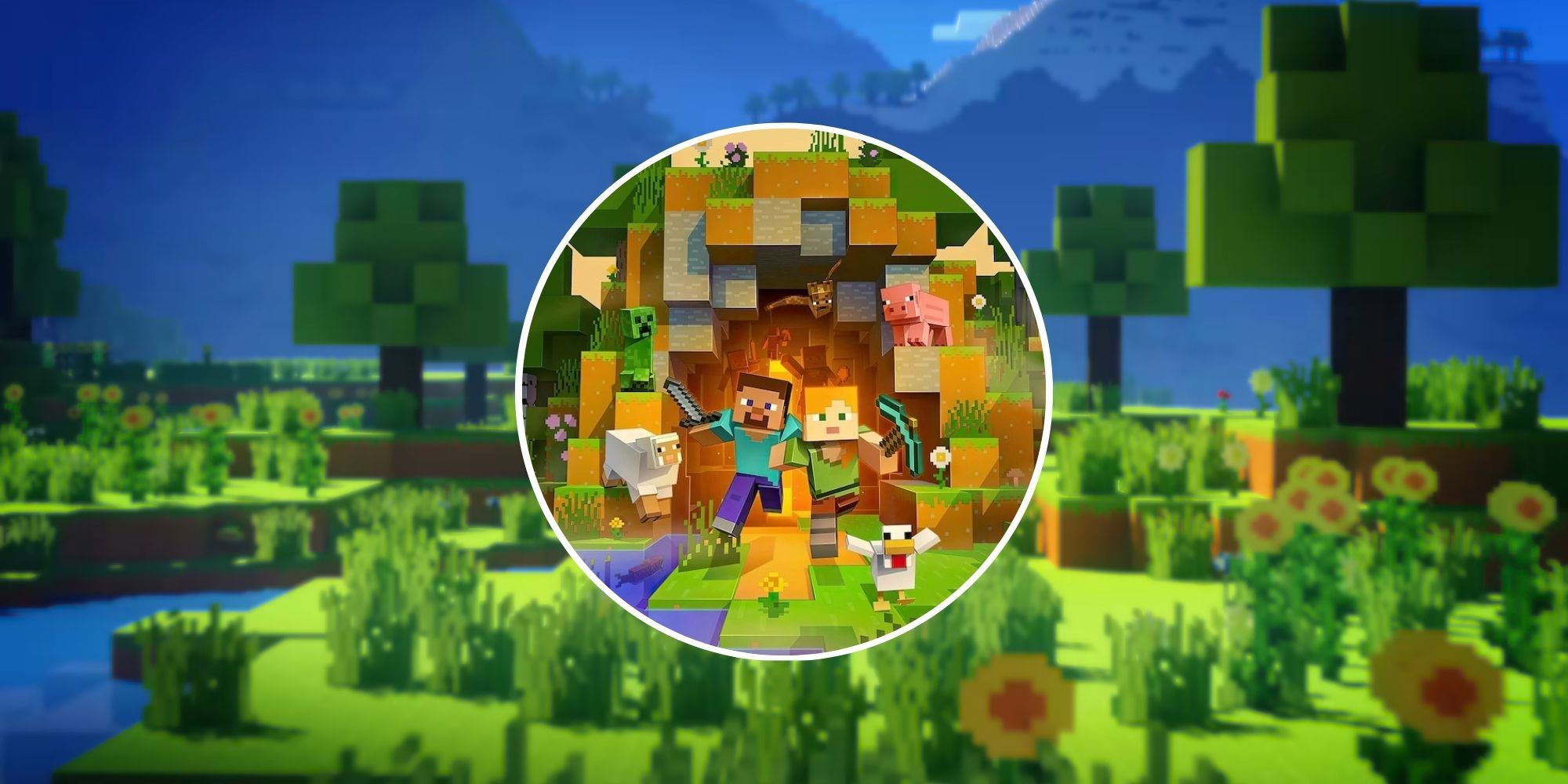
Google Has A Minecraft Easter Egg So Good You'll Forget It's Not The Real Thing
Favicon 
www.dualshockers.com

Google Has A Minecraft Easter Egg So Good You'll Forget It's Not The Real Thing

To celebrate fifteen whole years of Minecraft, Google has incorporated a fun little easter egg into its web browser that (kind of) lets you play Minecraft inside of Google. In fact, it's so detailed, that you'll likely spend longer than you should playing it.
Like
Comment
Share
Trending Tech
Trending Tech
2 yrs

The MSI Claw is an embarrassment
Favicon 
www.theverge.com

The MSI Claw is an embarrassment

Steer clear. Continue reading…
Like
Comment
Share
Science Explorer
Science Explorer
2 yrs

New Research Sheds Light on the Forgotten 11th-Century Muslim Scientist That Fundamentally Transformed the History of Physics
Favicon 
scitechdaily.com

New Research Sheds Light on the Forgotten 11th-Century Muslim Scientist That Fundamentally Transformed the History of Physics

Researchers from the University of Sharjah and the Warburg Institute are diligently studying the works of an 11th-century Arab-Muslim polymath to showcase their influence on...
Like
Comment
Share
Showing 27878 out of 56670
  • 27874
  • 27875
  • 27876
  • 27877
  • 27878
  • 27879
  • 27880
  • 27881
  • 27882
  • 27883
  • 27884
  • 27885
  • 27886
  • 27887
  • 27888
  • 27889
  • 27890
  • 27891
  • 27892
  • 27893

Edit Offer

Add tier


Select an image
Delete your tier
Are you sure you want to delete this tier?

Reviews

In order to sell your content and posts, start by creating a few packages. Monetization

Pay By Wallet

Payment Alert

You are about to purchase the items, do you want to proceed?

Request a Refund