YubNub Social YubNub Social
    Advanced Search
  • Login

  • Night mode
  • © 2026 YubNub Social
    About • Directory • Contact Us • Privacy Policy • Terms of Use • Android • Apple iOS • Get Our App

    Select Language

  • English
Install our *FREE* WEB APP! (PWA)
Night mode
Community
News Feed (Home) Popular Posts Events Blog Market Forum
Media
Headline News VidWatch Game Zone Top PodCasts
Explore
Explore Jobs Offers
© 2026 YubNub Social
  • English
About • Directory • Contact Us • Privacy Policy • Terms of Use • Android • Apple iOS • Get Our App

Discover posts

Posts

Users

Pages

Group

Blog

Market

Events

Games

Forum

Jobs

Daily Caller Feed
Daily Caller Feed
2 yrs

Editor Daily Rundown: Tapes Reveal Behind-The-Scenes Look At Child Mutilation Conference
Favicon 
dailycaller.com

Editor Daily Rundown: Tapes Reveal Behind-The-Scenes Look At Child Mutilation Conference

Calling all Patriots!
Like
Comment
Share
Daily Caller Feed
Daily Caller Feed
2 yrs

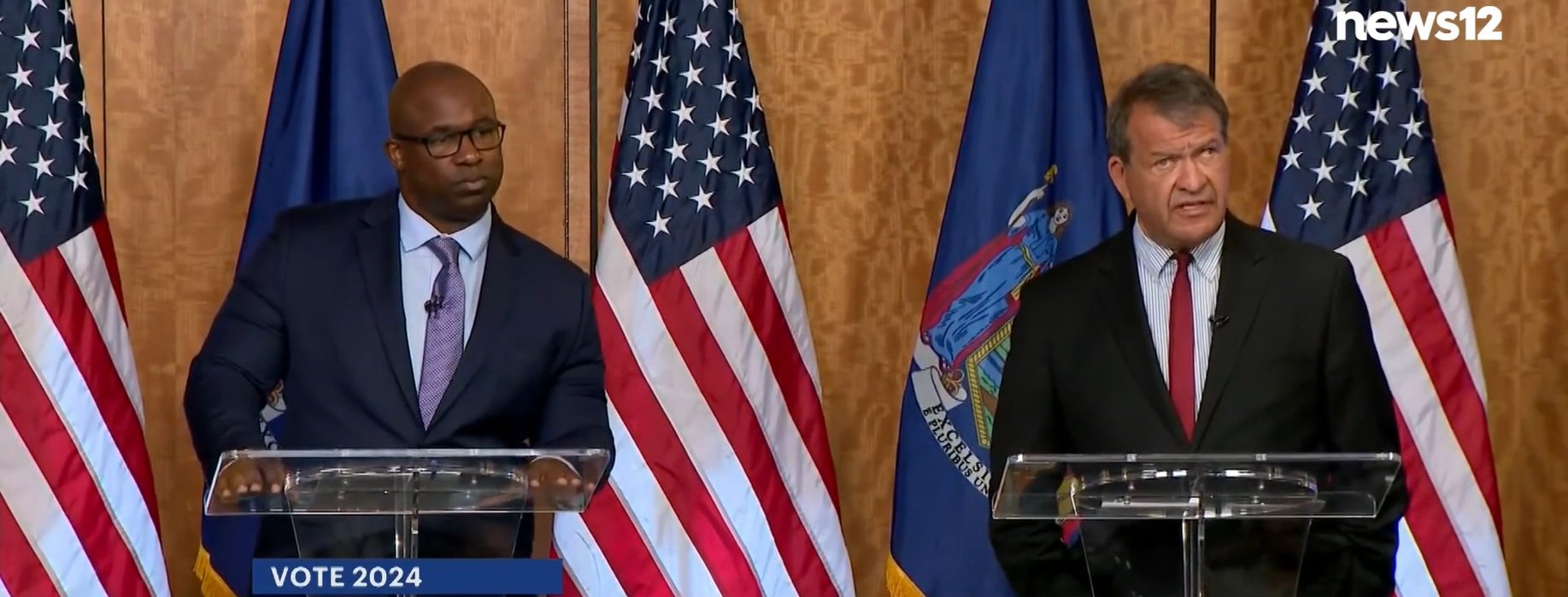
Jamaal Bowman Claims Anti-Israel Phrase Is Not ‘Hate Speech’
Favicon 
dailycaller.com

Jamaal Bowman Claims Anti-Israel Phrase Is Not ‘Hate Speech’

'Some do, others don’t, I do not'
Like
Comment
Share
The Lighter Side
The Lighter Side
2 yrs

Grad Student Trades Piano Performances for Housing at Senior Facility–Melting the Age Divide and Making Friends
Favicon 
www.goodnewsnetwork.org

Grad Student Trades Piano Performances for Housing at Senior Facility–Melting the Age Divide and Making Friends

A university concert pianist has made an unlikely nest for herself while she continues her studies: an old age home. While Beth Christensen studies piano at the University of Missouri-Kansas City Conservatory, she doesn’t have a dorm on campus, and instead lodges at Claridge Court, a senior living facility in the nearby town of Prairie […] The post Grad Student Trades Piano Performances for Housing at Senior Facility–Melting the Age Divide and Making Friends appeared first on Good News Network.
Like
Comment
Share
SciFi and Fantasy
SciFi and Fantasy  
2 yrs

Five SFF Stories Featuring Experiments With Unexpected Outcomes
Favicon 
reactormag.com

Five SFF Stories Featuring Experiments With Unexpected Outcomes

Blog short fiction Five SFF Stories Featuring Experiments With Unexpected Outcomes From time travel to arcane research, experimentation can lead to the most surprising results… By Ratika Deshpande | Published on May 14, 2024 Photo by Colin + Meg [via Unsplash] Comment 0 Share New Share Photo by Colin + Meg [via Unsplash] Science is all about trying to understand what we don’t know, often by tinkering with what we do know. As a student of Applied Psychology, I learned to design experiments and create hypotheses—A does (or doesn’t) cause B, X and Y are (or aren’t) correlated. Either way, certain outcomes were expected. But what happens when the outcome is something you never saw coming? Here are some stories that ask (and try to answer) this question… “How To Break Causality and Write the Perfect Time Travel Story” by Stewart C. Baker Writing is not easy, especially when you want to tell a story about time travel, something countless authors have tackled already in various brilliant ways. How do you get around this problem and create the best and most famous time travel story of all time? By time traveling, of course. Everything goes exactly as you wanted it to. Until it doesn’t. What do you do then? “The Truth About Woopy” by Liviu Surugiu Six-year-old Nabi is not afraid of shadows. He has a lot of questions about them, and Tom answers as many as he can, while trying not to wonder if it was a bad decision to encourage his kid’s interest in such things. He thought Nabi was trying to make shadows of animals, just like they saw a man do at the circus. But Nabi isn’t content with simply knowing stuff about light and shadow, so he sculpts them instead. And maybe, if he gets it right, he can make something that can’t exist. What is play for if not to make the things you imagine real? “White Charles” by Sarah Monette Miss Parrington keeps shipping her curious finds to an amateur historian at the museum. She means well, but most of what she sends doesn’t turn out to be useful, so our narrator ignores her latest parcel. Then a junior curator opens the crate, never getting a good glimpse at whatever it was inside before it flies into his face and escapes—recovering from the shock, he says it looked like a giant white spider. Now the question is, how do you recover something so enigmatic and something not quite…right? Monette has created an incredible atmosphere of dread in this story, while also exploring the results of magic gone wrong, and of the power of compassion. A thoroughly enjoyable read. “Dr. Polingyouma’s Machine” by Emily Devenport When Dr. Polingyouma turned on his time machine, both the creator and the creation vanished. It also caused The Effect, “an astonishing intersection of worlds” requiring regular cleaning of the overlap zone. It’s the kind of work on which the fate of the world depends, and requires not a janitor but a dedicated sanitation engineer like Harris, who risks going insane or dying on the job. After all, it is tempting to look at the people—entities—passing through and to poke around, and difficult to grapple with questions that can’t or won’t be answered. “Remaker Remaker” by Lucas J. W. Johnson Martin Fullius, a PhD in Engineering and Thaumaturgy and a freelance Remaker, is visited by a man from Rome who knows about his skills and his secret projects. He offers to provide Martin with everything he requires to work on his projects, in return for completing a job he needs done. It’s a request that goes beyond anything he has made before—hands and legs made from muscles and clockwork are no big deal for Martin. He needs to work hard, research, stretch his understanding of anatomy, and observe its workings. Both his patron and Martin know what he’s capable of. So when he fails, it comes as a surprise. Maybe he needs further research, a change of location. You can make anything if you try hard enough, right? …Right? [end-mark] The post Five SFF Stories Featuring Experiments With Unexpected Outcomes appeared first on Reactor.
Like
Comment
Share
Gamers Realm
Gamers Realm
2 yrs

Dying Light Definitive vs Enhanced – Differences, Explained
Favicon 
www.pcinvasion.com

Dying Light Definitive vs Enhanced – Differences, Explained

When looking to purchase a game with multiple editions, it’s always good to know you’re getting your money’s worth. That’s why, when faced with both the Definitive and Enhanced editions of Dying Light, it’s helpful to know what you’re in for. Dying Light Definitive and Enhanced Both of these editions of Dying Light are additional packs for the base game and will set you back a little more money. However, they both offer different things and if the game is on discount, you could end up with a whole lot of DLC for very little. Dying Light Enhanced edition This is the cheaper of the two Dying Light DLC packs, but it still comes with some pretty good extras for not too much more than the base game. With the Dying Light Enhanced Edition, you will receive. Dying Light Dying Light – Crash Test Skin Bundle Dying Light – The Bozak Horde Dying Light – Ultimate Survivor Bundle Dying Light Season Pass Dying Lig...
Like
Comment
Share
Nostalgia Machine
Nostalgia Machine
2 yrs

After 75 Years Without Answers, We Finally Know What Happened To The Lost USS Grayback
Favicon 
www.pastfactory.com

After 75 Years Without Answers, We Finally Know What Happened To The Lost USS Grayback

Due to its unprecedented scale, political context, and destructive aftermath, World War II may well be the most significant period in modern history. And any argument making that assertion need only examine how much change it influenced throughout the world, even 70 years after it ended. But while these after-effects are countless, some never even learned what happened to those fallen soldiers and... Source
Like
Comment
Share
Daily Signal Feed
Daily Signal Feed
2 yrs

4 Things to Know About Biden’s Latest Attack on Gun Ownership and Firearms Industry
Favicon 
www.dailysignal.com

4 Things to Know About Biden’s Latest Attack on Gun Ownership and Firearms Industry

It’s an open secret that the Biden administration disdains lawful civilian gun owners almost as much as it does the lawful gun industry. But in case there was any doubt, new gun export regulations published late last month by the Commerce Department’s Bureau of Industry and Security make the administration’s position painfully clear: It doesn’t think ordinary civilians can be trusted with firearms. The interim final rule on gun exports, published April 30, significantly alters licensing policies for U.S. companies seeking to lawfully export guns and ammunition to civilian markets in other countries. And although it doesn’t necessarily affect American gun owners, it does show the Biden administration’s true colors on the natural right of self-defense—but projected into the international arena. Here are four things to know about how the rule attacks the lawful gun industry and civilian gun ownership more broadly. 1. The rule on gun exports has been many months in the making. The Commerce Department’s rule on gun exports appears to be the end result of a much longer plan to attack the lawful gun industry by imposing more stringent processes for gun export licenses. Last fall, Commerce’s Bureau of Industry and Security issued a sudden, largely unexplained 90-day “pause” on issuing new export licenses for guns and ammo meant for foreign civilian markets, while keeping the process unchanged for exports to foreign governments. Despite congressional demands for answers, the bureau extended the pause for several more months even as leaked draft regulations made clear that the Biden administration was in fact looking to make life more complicated for exporters to legal civilian markets. 2. The rule creates a bureaucratic nightmare and expands U.S. world-policing efforts. Among the changes to export licensing rules are some that appear designed to do little more than impose arbitrary burdens on the lawful U.S. gun industry. For example, although U.S. companies currently obtain export licenses that last for four years, under the new rule they will be required to seek a new export license on an annual basis. Additionally, the Bureau of Industry and Security will revoke thousands of currently valid export licenses and require those businesses to reapply under new, more stringent application review processes.  This will inevitably result in licensees being perpetually entangled in bureaucratic red tape, as the Commerce Department agency now will have to process thousands of additional licenses every year without adequate staff, almost ensuring significant backlogs. Other changes found in the rule will increase the federal government’ efforts to police not only civilian gun markets in other countries, but also thousands of individual foreign citizens who legally buy American-made firearms in certain foreign countries. That’s particularly concerning for Israelis who buy U.S. gun exports, as it opens doors for the Biden administration to follow through on threats to their visas if they use firearms in self-defense against terrorists. 3. The rule wrongly blames lawful gun owners for criminal gun trafficking. It creates a list of over 30 countries for which export licenses to civilian end-users will be subjected to a “presumption of denial.” In short, exports to government entities in these countries, such as militaries and police forces, may continue as usual, but the Commerce Department bureau will presumptively deny applications to export guns to civilian markets in those same countries. Many of the countries are located in regions full of instability and notorious for both criminal gun violence and longstanding problems with government corruption, such as Central America, East Africa, and Southeast Asia. The Bureau of Industry and Security defends this change by claiming—erroneously—that firearms lawfully exported to civilians are more likely to be diverted into black markets than firearms lawfully sold to foreign militaries and police agencies. Here, BIS bites hook, line, and sinker into the international gun control narrative that, far from a human right to self-defense, there’s actually a human right to strict gun control. Apparently, the bureau believes even corrupt and inept governments are inherently more trustworthy with American-made guns than are ordinary civilians living under those governments. This is, in a sense, an international projection of the Biden administration’s stance on lawful gun owners in the U.S.—they’re always the ones to blame for criminal violence. In reality, just as studies on gun violence in the United States routinely show that lawful gun owners aren’t the major driving force behind criminal gun violence domestically, studies on crime, violence, and instability in other nations routinely point to government stockpiles and illegal imports—not lawful civilian purchases of legally imported guns—as the primary sources of criminal gun violence. Consider one recent comprehensive analysis of the illicit firearms trade, which asserted that “research in a number of [global] regions has found that military stockpiles are one of the most common sources of weapons” that end up in the hands of criminal actors and terrorists. This seems particularly true in the countries singled out by the new rule for a “presumption of denial” with respect to civilian exports. Contrary to BIS assertions that even corrupt governments are better able than civilians to secure their guns, a 2022 United Nations report on arms trafficking in East Africa concluded that “the diversion of firearms and ammunition from state stockpiles is a significant source of illicit firearms” in the region, “and is often facilitated by corrupt officials with access to weapons stores, including police and military stores, or others under the control of wildlife or custodial services.” Meanwhile, experts in Central American arms trafficking insist that a major part of the problem is “endemic uncertainty” over the inventories and security of state arsenals, and that “[government] weapons are often ‘lost.’” Those “lost” firearms often end up diverted to criminal elements. Other U.N. reports identify the largest sources of illegal firearms in Latin America as being “military and police stockpiles in Honduras, El Salvador, and Guatemala,” all three of which now have been blacklisted for civilian (but not government) exports. 4. The rule relies on half-truths and misrepresentations. Just as concerning as the Bureau of Industry and Security’s misplaced blame on lawful gun owners is its reliance on half-truths and misrepresentations to justify that blame. BIS relies on two government studies, one by the Bureau of Alcohol, Tobacco, Firearms and Explosives and one by the Government Accountability Office, both of which were conducted under a Biden administration that already has shown a propensity for trafficking in bad firearms data. Additionally, the GAO report is essentially an earlier and more time-limited analysis of the same data used in the ATF report, which assessed the origins of crime guns submitted by foreign governments to ATF for tracing. The Bureau of Industry and Security claims that these two reports show that “a substantial number of firearms recovered by foreign law enforcement agencies were lawfully exported from the United States,” including “nearly 20%” of crime-linked guns submitted for tracing in Belize, El Salvador, Guatemala, and Honduras, all four of which the new rule puts on the “presumption of denial” list. But this characterization buries the lede: ATF admits in its report that “in many cases, trace requests are not submitted for firearms recovered in the four countries.” In fact, the government of Guatemala only submitted, at best, only 60% to 70% of all recovered guns used in crimes for tracing; the government of Honduras submitted trace requests for just 10% of recovered guns tied to crimes. In other words, lawful U.S. exports didn’t comprise “nearly 20%” of all crime-linked guns in those countries. Rather, the exports accounted for 19% of the 10% of guns for which Honduras requested a trace, and 19% of the 60% to 70% of guns for which Guatemala requested a trace, and so on. Moreover, the GAO report clarifies that the Bureau of Alcohol, Tobacco, Firearms and Explosives lumps all U.S.-sourced exports into one category, regardless of whether they were exports to government or civilian end-users. So that number of 19% includes all lawful exports, including those exported to foreign governments for use by their military or police forces. Yet, despite the weight of the evidence demonstrating that this is largely a problem with government corruption and ineptitude, Commerce’s Bureau of Industry and Security flippantly places the blame squarely on the shoulders of civilian buyers. The alternative intuitively makes more sense, given how incredibly difficult it is for ordinary civilians to legally obtain firearms in many of these countries in the first place. In Papua New Guinea, for example, gun owners must obtain a license for every firearm, which will be issued only for “substantial cause” and expire after one year. Illegal possession of a firearm carries a sentence of up to 50 years in prison. Meanwhile, in Panama, applicants for a gun license must submit certification from a licensed psychologist verifying their mental and emotional stability, pass a drug test, and complete a government-certified shooting range exam proving proficiency with the specific type of gun for which the permit is sought. Additionally, for nearly a decade between 2011 and 2020, Panama’s  government imposed a complete ban on the importation of firearms for civilian use, causing the price even of used guns on the lawful civilian market to skyrocket to as high as $3,500 in U.S. currency. The civilian market in that country remains incredibly limited and expensive. Realistically, what reason is there to believe that gun exports to civilians in these countries are truly to blame for any illicit arms trafficking? Ordinary, law-abiding civilians who are willing to jump through incredibly expensive and time-consuming hoops just to possess a firearm—and who face lengthy criminal sanctions for minor missteps—typically are invested in acting responsibly and maintaining physical possession of their firearms. Now a bureau of the Commerce Department is willing to draw a conclusion contrary to all rationality and the best available evidence. Why? Because it simply cannot fathom that ordinary civilians are less at fault for international arms trafficking than corrupt and inept governments. Few seriously doubt that there are, at times, circumstances where U.S. security interests might require us to reevaluate and scrutinize gun exports to certain countries. In a sane world, we could have those discussions without fear that they’d devolve into bad-faith attacks on the merits of civilian gun ownership. Instead, we have an administration that believes, fundamentally, that only governments should be trusted with guns. And the administration is willing to push this narrative with as many manipulated half-truths as necessary to undermine civilian owners—apparently both here and abroad. The post 4 Things to Know About Biden’s Latest Attack on Gun Ownership and Firearms Industry appeared first on The Daily Signal.
Like
Comment
Share
Daily Signal Feed
Daily Signal Feed
2 yrs

Is the Spring of Anti-Israel Riots Transforming Into Based Frat Boy Summer?
Favicon 
www.dailysignal.com

Is the Spring of Anti-Israel Riots Transforming Into Based Frat Boy Summer?

As anti-Israel rioters occupy college campuses and harass Jewish students in the name of supporting Palestine, brave young men are standing up to them, rallying around the American flag and the national anthem in counterprotest. This patriotic—or, as conservative Gen Zers might say, “based”—backlash may set a new tone as America moves from a destructive spring into a more hopeful summer. Anti-Israel protesters replaced the American flag on the University of North Carolina at Chapel Hill’s quad with a Palestinian flag on April 30. Police restored the American flag, and then about 30 members of the fraternity Pi Kappa Phi stood around the flag, defending it from anti-Israel protesters as they attempted to take it down again. Videos of the brave frat boys spread online, and Americans cheered the patriotic young men. Leaders from both sides of the aisle celebrated the fraternity brothers. “Protecting the American flag is admirable,” White House press secretary Karine Jean-Pierre said of the young men’s actions. “It is not right to forcefully take down the American flag to replace it with another flag.” Former President Donald Trump released a video celebrating the young men. Trump’s video included footage of other young men holding aloft the American flag and singing the national anthem. The video shows scenes from the University of Alabama, the University of Louisiana, and the University of Mississippi. As anti-Israel protesters chant, “Free, free Palestine!” frat boys line up on the other side, drowning out their chants with patriotic songs. There’s only one word for it: based. Just in: BASED LSU frat boys are establishing dominance over the leftist/Palestine protestors! ?? pic.twitter.com/Bibw3YGgvN— 1776 (@TheWakeninq) May 4, 2024 A crowdfunding campaign to throw a “rager” for the men raised more than $500,000 on GoFundMe. Ultra Right Beer, a conservative brand of “woke-free” beer that launched to rival Bud Light last year, celebrated the trend by promising free beer at an upcoming event called the “Frat Boy Summer Kickoff.” The company has delayed the event “due to mass popularity.” Many Americans fear that 2024 will echo the riots of 2020, where black bloc thugs took over portions of Portland and Seattle and ran rampant through cities, looting and burning. Yet if these “frat boy summer” parties take off, they may inspire more young men to embrace America’s good heritage. These counterprotests capture the spirit of being “based,” Gen Z slang for “true,” “cool,” the opposite of cringe, and increasingly “conservative.” Former Seattle Mayor Jenny Durkan should take note: This would be far closer to a true “Summer of Love” than the destructive riots that featured the “Capitol Hill Autonomous Zone.” Not every counterprotest featuring the American flag has clear fraternity involvement. After anti-Israel protesters removed the American flag at the University of Chicago and flew a Palestinian flag in its place, counterprotesters marched with American flags. These young men may or may not be fraternity brothers, but they still answered what some on social media call the “Frat Signal.” The Frat Signal! https://t.co/eOuuPspdBn pic.twitter.com/hvGATnJVxg— Tim Kennedy (@TimKennedyJr1) May 2, 2024 Sen. Tommy Tuberville, R-Ala., and his colleagues filed a resolution in Congress celebrating the young men. “A group of patriotic fraternity brothers at the University of North Carolina protected the American flag from being desecrated and replaced with a Palestinian flag by violent, anti-American, and anti-Israel individuals,” the resolution states. “The people of the United States celebrate these patriotic fraternity brothers at the University of North Carolina and have sought to recognize and reward their heroic actions against the violent, anti-American, and anti-Israel individuals.” The resolution adds: “Fraternities can serve as institutions that promote patriotism, brotherhood, and overall support for the common good.” Frat-Boy-Summer-ResolutionDownload Fraternities and sororities represent the visceral human need for initiation into a secret tradition as well as the classic American spirit of free association. While “hazing” rituals may seem obnoxious from the outside (and some can go too far), there’s nothing like the thrill of getting inducted into a secret society. My own fraternity, Mu Alpha, fosters music, virtue, and brotherhood in a dry house on Hillsdale College’s campus. We’re not connected to any national organization, but we have our secrets and rituals. If some wrongheaded Hillsdale students—or more likely, outside agitators—removed the American flag on the Quad, Mu Alphans would be the first to take up positions and defend it. Some fraternities push their celebrations too far, but these men want to stand for something—and their brave, stance-taking position around our flag shows their willingness to defend the noble values that built America. They deserve a massive party. Here’s a toast to all the men who follow their example and respond to antisemitic vitriol with patriotism! The post Is the Spring of Anti-Israel Riots Transforming Into Based Frat Boy Summer? appeared first on The Daily Signal.
Like
Comment
Share
Survival Prepper
Survival Prepper  
2 yrs

‘I Could Make It Infectious In Months’: Former CDC Director Sounds Alarm Over Bird Flu Experiments
Favicon 
preppersdailynews.com

‘I Could Make It Infectious In Months’: Former CDC Director Sounds Alarm Over Bird Flu Experiments

‘I Could Make It Infectious In Months’: Former CDC Director Sounds Alarm Over Bird Flu Experiments
Like
Comment
Share
Survival Prepper
Survival Prepper  
2 yrs

Biden Calls Illegals Crossing The Border “Hispanic Voters”
Favicon 
preppersdailynews.com

Biden Calls Illegals Crossing The Border “Hispanic Voters”

Biden Calls Illegals Crossing The Border “Hispanic Voters”
Like
Comment
Share
Showing 28465 out of 56670
  • 28461
  • 28462
  • 28463
  • 28464
  • 28465
  • 28466
  • 28467
  • 28468
  • 28469
  • 28470
  • 28471
  • 28472
  • 28473
  • 28474
  • 28475
  • 28476
  • 28477
  • 28478
  • 28479
  • 28480

Edit Offer

Add tier


Select an image
Delete your tier
Are you sure you want to delete this tier?

Reviews

In order to sell your content and posts, start by creating a few packages. Monetization

Pay By Wallet

Payment Alert

You are about to purchase the items, do you want to proceed?

Request a Refund