YubNub Social YubNub Social
    Advanced Search
  • Login

  • Night mode
  • © 2026 YubNub Social
    About • Directory • Contact Us • Privacy Policy • Terms of Use • Android • Apple iOS • Get Our App

    Select Language

  • English
Install our *FREE* WEB APP! (PWA)
Night mode
Community
News Feed (Home) Popular Posts Events Blog Market Forum
Media
Headline News VidWatch Game Zone Top PodCasts
Explore
Explore Jobs Offers
© 2026 YubNub Social
  • English
About • Directory • Contact Us • Privacy Policy • Terms of Use • Android • Apple iOS • Get Our App

Discover posts

Posts

Users

Pages

Group

Blog

Market

Events

Games

Forum

Jobs

Daily Caller Feed
Daily Caller Feed
2 yrs

People Are Losing Their Minds Over The Rumored $150 Price For EA Sports’ ‘College Football 25’
Favicon 
dailycaller.com

People Are Losing Their Minds Over The Rumored $150 Price For EA Sports’ ‘College Football 25’

Good googly moogly ... and I still need to get a PS5
Like
Comment
Share
The Lighter Side
The Lighter Side
2 yrs

Locals Finally Save ‘the Yosemite of South America’ After Decade Long Battle with Industrialist Who Owned it
Favicon 
www.goodnewsnetwork.org

Locals Finally Save ‘the Yosemite of South America’ After Decade Long Battle with Industrialist Who Owned it

A wonderful story comes to us now from Patagonia where a valley of towering granite cliffs and rare species was saved from development by activists. It’s a story that North America saw many times during the birth of the conservation movement with groups like the Sierra Club in Yosemite, but this story regards Cochamó  Valley, […] The post Locals Finally Save ‘the Yosemite of South America’ After Decade Long Battle with Industrialist Who Owned it appeared first on Good News Network.
Like
Comment
Share
Survival Prepper
Survival Prepper  
2 yrs

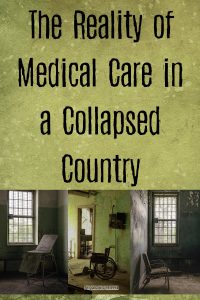
The Reality of Medical Care in a Collapsed Country
Favicon 
www.theorganicprepper.com

The Reality of Medical Care in a Collapsed Country

This is nothing easy, nor pleasant to write about. I won’t sugarcoat anything, because there is no way to do it. I had an accident and lost part of a finger with a wood planner. There will be no images, but in the future, you will have proof of this, so you can verify that indeed happened. For the time being, the wound is too gross to show it. Please indulge me on that one. I had years with that tool, though, and it was an unfortunate distraction. However, it has been a painful lesson and an eye-opener. I don’t want to even think if this would have happened back in 2016 when getting antibiotics was easily 500% more expensive. I needed help. Once the event happened, I didn’t even have the clarity of mind to call 911. I went out of the house, trembling, and called for help from some contractors who were laboring in some neighbors’ homes. Then I went inside to look for my keys, poured some tap water over the wound, got some toilet paper, wrapped my finger with it, grabbed a jar of oxygenated water, and cleaned the wound again. I was sweating incredibly and close to fainting, so I opened the fridge, and poured two glasses of water, drinking them one after another, to supply the lost blood and hydrate myself. One of the neighbors promptly came in, rushing me to get on his truck, which I did. The heat was incredible that day, and it didn’t help. The AC was a blessing, so I could relax a little. My kind neighbor drove me to the nearest ER: the clinic of the oil company employees. They usually attend emergencies for non-employees, so they made me sit on a chair in the waiting room, wrote down my data, and gave me a jab of painkiller. Which was a very pleasant surprise as most of the hospitals in the country lack resources. This is going to be a point of this article, and I hope those working or with ties to the health industry down here can appreciate and value it, and other people can use it to tune up their preps according to what one can expect when you have a severe injury under SHTF conditions. Once in the hospital, they gave me a shot of toxoid, and put in my vein an intravenous needle. A couple of antibiotic vials, and some serum to help it go through. The experience in the ER was awful, though. There was no privacy at all. No curtains dividing the beds, and the place was small, with maybe 15 beds total. I had to sit on a bed where a gentleman was being fixed with a urethral probe, while the serum ended up being inoculated through my vein. It’s not like it was important. The only thing I wanted was to end my procedure and make it home without fainting along the way. In the wound cleaning room, the experience was painful as heck. The painkiller effect had already passed 3,5 hours later, and it was something to remember. I even surprised myself by not fainting at all. How I will improve my medical kit Not having any knowledge of medical supplies, I see how any medicine box supply can improve a lot. Wound cleaning supplies are a MUST. I would seal them in vacuum bags to keep them even safer. Let’s see: Medical Supplies: Wound Care: Chlorhexidine sponges and sterile saline solution by the dozen are essential for treating severe wounds and post-surgical procedures. (Check out this list) Antibiotics, however, are much more difficult to acquire, so I’ll leave that to the specialists. (Daisy recommends this kit with antibiotics from The Wellness Company.) Suture supplies. Needles, staples, thread, whatever Cicatrization creams and ointments Burns ointments Topical anesthetics Hydrogen peroxide. Lots of it. But in the area, more is needed. If the following could be accomplished in a community, it would be far better. Antibiotic Production: Small-Scale Advantage: Following the same logic, a small-scale plant is the most cost-effective way to produce antibiotics. This approach not only proves highly profitable now but also positions you well for the foreseeable future, regardless of unforeseen circumstances. Supply Chain Considerations: Long-Term Sustainability: Setting up a robust supply chain is crucial. While raw materials, machinery maintenance, and spare parts require careful management, a well-defined system could enable even remote homesteads to become significant antibiotic providers. What I learned This awful experience leaving a permanent mark, brings along these hard lessons: You may have an insurance policy, but this is not a guarantee of good healthcare attention. In other countries, I would assume that this could happen if the insurance company suddenly files bankruptcy when 70% of the customers need IUC, for instance. If things are ugly enough, forget about suing, laws, or whatever other processes. Remember 2020. Be very, extremely careful if you work with your hands building stuff. Use all the protective gear you may need, and have spares. Many times what you read in the media is not the truth. I believed the attention and supplies were deficient, and received a lesson. I had to buy myself the meds and medical materials, like gloves, the wound cleaning sponge with Hydroxiclin, compresses, and other stuff, but generally speaking, medical attention was free, and they provided some medications as well on the first day as part of the procedure. I did have to wait a lot, but it is normal in an overwhelmed mid-sized city hospital. The wound, despite its severity, is healing well. I’ve changed and cleaned it four times now, and fortunately, there’s no sign of mobility loss in the finger. No unexpected bleeding. The traumatologist confirmed this as well, indicating no functional impairment. This is a significant development! Pain has been decreasing, also. I don’t have to take any painkillers either. The most important advice I can give you: USE PERSONAL PROTECTIVE EQUIPMENT (PPE)! Whether you’re riding your motorcycle, ATV, bicycle, or even on horseback, a helmet and other protective gear are essential. You might be a responsible and cautious rider, but there are always unexpected situations, both in the workshop, out on the open road, or even in the kitchen. An accident can happen in a split second. A gas accumulation in an oven, a knife slipping a hand, or falling down the counter. Even a fork over a naked foot! I have seen it happening Let me share a personal story. A couple of years ago, I suffered a nasty burn on my leg. The ring holding a roasting pan in the oven came loose, causing the entire pan to fall. Boiling juices and fat spilled all over my leg and ankle. Talk about pain! Luckily, we always have a good supply of aloe vera plants, and my mom quickly applied some aloe gel, along with some cooling crystals she keeps in the fridge for such emergencies. Within 48 hours, the burn was almost completely healed, with no infection or lingering pain. The prompt removal of the juice with cold water from the fridge might have prevented serious damage. This experience certainly bolstered my faith in the healing power of plants. While some commercially available ointments, like those developed for Russian cosmonauts, might work wonders and restore skin in a mere eight hours (kidding here), all we had on hand was aloe vera… For those who work with sharp, powerful tools, Kevlar-lined gloves may be a wise investment. In my case, with my soft, almost baby-like hands, I have no doubt they would have been beneficial. Very likely, the tissue removal would have been less or even non-existent. Only specialists could know better, as the glove could tangle in a moving part and pull your hand, which is bad, indeed. The wiser thing to do is to keep our body parts as far as possible from moving steel stuff. Armor, in general, serves a crucial purpose. Not only does it absorb the impact that could damage your soft tissues, say if you were to fall from a moving vehicle, but it also allows you to slide, dissipating most of the energy through friction with the ground. There are enough examples of this in the race videos. Knee pads, elbow protection, ankle protection, back protection, lower back, spine, and shoulder pads. Let’s fill in a few tips here if you are living alone. It serves as a reminder that if you live far from populated areas or alone, having a pre-defined plan for unexpected events is crucial. Now, by a pre-defined plan, I don’t mean a rigid set of procedures. In the immediate aftermath of an accident, remembering basic details can be “challenging” so to speak. Instead, focus on general guidelines you can follow instinctively. Communication: Consider a one-click solution, like a pre-programmed button on a radio to reach your nearest neighbor’s HAM station or emergency services. Your cell phone should be on a belt sleeve most of the time. Or even better, an arm holder. Pain Management: Always keep a supply of gel packs in the fridge or readily available iced water for pain relief or immediate cleaning before taking out the emergency box. Accessibility: Ensure essential items like a car, motorcycle, ATV, or whatever vehicle keys are always on your person, separate from your other keys for easy access. This is, given the case that nobody else can drive you to some emergency healthcare service. This was not an easy article to write, I can assure you. But if it works to avoid someone getting hurt, it is worth it. Thanks for your reading! Stay safe, and keep tuned. Have you ever had to deal with a serious injury? Have you ever been alone and dealt with a serious injury? Can you tell us about what happened? Have you dealt with subpar medical care in the aftermath? What lessons did you learn? Let’s discuss it in the comments section. About Jose Jose is an upper middle class professional. He is a former worker of the oil state company with a Bachelor’s degree from one of the best national Universities. He has an old but in good shape SUV, a good 150 square meters house in a nice neighborhood, in a small but (formerly) prosperous city with two middle size malls. Jose is a prepper and shares his eyewitness accounts and survival stories from the collapse of his beloved Venezuela. Jose and his younger kid are currently back in Venezuela, after the intention of setting up a new life in another country didn’t  go well. The SARSCOV2 re-shaped the labor market and South American economy so he decided to give it a try to homestead in the mountains, and make a living as best as possible. But this time in his own land, and surrounded by family, friends and acquaintances, with all the gear and equipment collected, as the initial plan was.  Follow Jose on YouTube and gain access to his exclusive content on Patreon. Donations: paypal.me/JoseM151 The post The Reality of Medical Care in a Collapsed Country appeared first on The Organic Prepper.
Like
Comment
Share
Pet Life
Pet Life
2 yrs

Weekly Roundup: Funny Dog Posts From Last Week (May 13)
Favicon 
www.dogingtonpost.com

Weekly Roundup: Funny Dog Posts From Last Week (May 13)

We present you funny dog posts from May 05 to May 11 that will paws-itively make you through the rest of the week!
Like
Comment
Share
Pet Life
Pet Life
2 yrs

‘Try Majorly Depressed’: Dog Abandoned By His Family Yearns For A New Forever Home
Favicon 
www.dogingtonpost.com

‘Try Majorly Depressed’: Dog Abandoned By His Family Yearns For A New Forever Home

A no-kill shelter in Indiana is bringing attention to one of their dogs as the dog's "spunky personality is dimming" after being in the shelter for too long.
Like
Comment
Share
Hot Air Feed
Hot Air Feed
2 yrs

New Criticism of Elon: He Spends Too Much Time With His Son
Favicon 
hotair.com

New Criticism of Elon: He Spends Too Much Time With His Son

New Criticism of Elon: He Spends Too Much Time With His Son
Like
Comment
Share
Science Explorer
Science Explorer
2 yrs

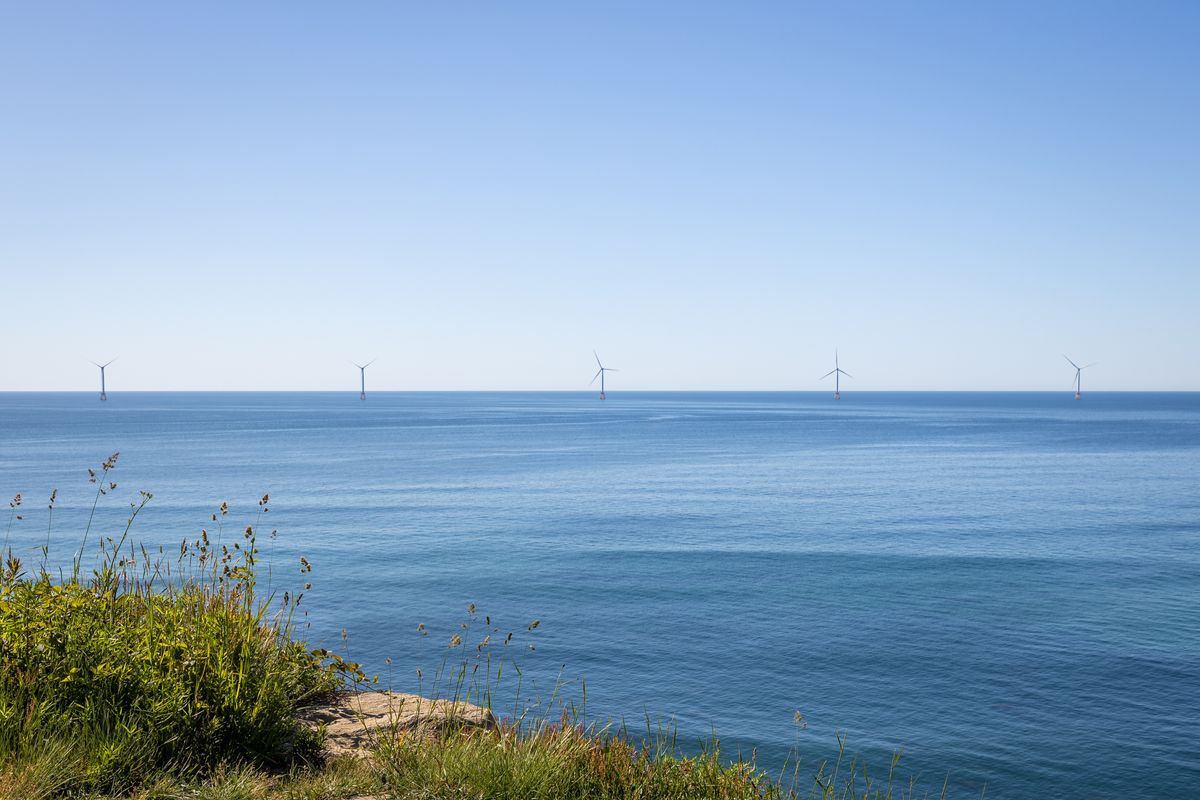
New Seabed Batteries Could Provide Cheaper Energy Storage
Favicon 
www.iflscience.com

New Seabed Batteries Could Provide Cheaper Energy Storage

Energy storage company BaroMar is preparing to test a new kind of grid-level energy storage that relies on water to function. If it works, it will be a cheaper way to stabilize renewable energy over longer periods of time. The world is gradually moving towards zero-carbon energy options, but the road ahead is not a straightforward one. To achieve net-zero emissions by 2050, around 80 percent of the world’s electricity will have to come from options like solar and wind power. For some, the prospect of moving towards zero-carbon grids may seem impossible – but some countries, like Portugal, Denmark, and Namibia are already doing so. However, to be applicable to everyone, new ways of storing and releasing energy produced from these new technologies will need to be improved to keep up with demand. These demands will vary depending on location – some may need almost constant supply, even on overcast days, while others may experience peaks and troughs throughout the day. At the same time, energy will need to be stored for (forgive the pun) the rainy days of winter or other seasonal low points where wind power may not make up for the loss of solar power. This is where BaroMar’s new compressed air energy storage (CAES) alternative may come in handy. The technology for CAES has been around for about 40 years and is known to be quite a good cost-effective way to store energy and to ensure that the grid remains stable. Traditionally, the process involves compressing and storing ambient air under pressure in underground reservoirs, like caves or old salt mines. When energy is needed, it can be released using turbines that drive a generator to recover it.   BaroMar believes their alternative approach can outperform this older method and store energy for long-durations using low-tech equipment.       The answer is water. The company plans to set up plants near coastlines with access to deep water, the pressure from which will replace the high-pressure tanks used in traditional CAES. This approach is much cheaper. So rather than imagining slick sophisticated tanks of pressurized air, imagine large concrete and steel tanks weighed down by cages filled with rocks. These would be submerged at around 200-700 meters (650-2,300 feet). Each tank has water-permeable valves that fill them with seawater, at least to start with. Then, when energy needs to be stored, the nearby compressor and generator (which is on land) feed air down into the tanks through a hose at around 20-70 bar (290-1,015 psi), depending on the depth. As the air enters the tanks, it forces water out. Then, when energy needs to be extracted, the air is allowed to return up the hose where it powers a thermal recovery system and then a turbo expander, driving a generator. Back at the sea floor, the tanks fill back up with water and await further use. This system, especially the tanks, is said to be significantly cheaper to produce because the pressure from the seawater acts as a stabilizer. “The tanks are designed to resist loads imposed by the marine environment as well as the compressed air and hydrostatic water pressure, during both installation and operational conditions,” a spokesperson for Jacobs, who has teamed up with BaroMar, explained to CleanTechnica.Jacobs is preparing a pilot project for the new system to be installed in Cyprus with the target of reaching a round-trip efficiency - the combined loss of energy added to and withdrawn from an energy store – of around 70 percent. If achieved, this would be around the same efficiency as the world’s largest traditional CAES station in China. However, this water-based pilot project will not be able to achieve the level of energy stored at the Chinese plants. It will initially store around 4 MWh (compared to the 100-MW, 400 MW/h capacity in Zhangjiakou, China). Despite its promises, there will be challenges ahead. These relate to anything designed to exist underwater for decades, which require extensive feasibility studies, geophysical research, and geotechnological and bathymetric surveying to make sure the tanks can be built and can operate at great depths. Still, if BaroMar’s claims are correct, this new system would be extremely appealing to many cities across the world and could represent a far cheaper and easily scalable solution. Let’s see how they get on. 
Like
Comment
Share
Science Explorer
Science Explorer
2 yrs

China’s Efforts To Get Kids More Active Appear To Be Working
Favicon 
www.iflscience.com

China’s Efforts To Get Kids More Active Appear To Be Working

Back in 2021, China instituted the world’s first series of national regulations to try and curb sedentary behavior in children. Almost three years on, a team led by scientists at the University of Bristol has taken a close look at the results of the measures. The conclusion? They seem to be working.For a great many of us, our days now revolve around sitting down. Whether it be a desk job, a long drive, or flopping onto the sofa after a tiring day, we don’t do as much standing as we used to 50 or 100 years ago. This trend is just as apparent in our children, with research showing that kids from hunter-gatherer societies get way more exercise than those growing up in the UK or the US. The trouble is that all this sitting can mean we lose some of the health benefits of regular exercise. Although it may be possible to “catch up” on physical activity you miss out on during the week, most health experts still agree that getting our kids into more active habits from a younger age can help stave off potential problems down the line. The problem is, how can that be achieved in a society that has them sitting at school, then sitting to do homework, and then probably sitting to relax in their downtime too?The Chinese government was the first in the world to bring in regulations to try and tackle this issue. In July 2021, a series of measures was brought in that took a multi-pronged approach to sedentary behavior in different settings. The regulations restrict the access that online gaming businesses can have to the youth market; they limit the amount of homework teachers should assign to children according to age group; and they put constraints on when private tutoring companies can offer lessons. Dr Bai Li, from the Centre for Exercise, Nutrition and Health Sciences at the University of Bristol’s School for Policy Studies, explained in a statement that “this type of regulatory intervention across multiple settings has never been tried before.”“Traditionally, children and their parents or carers have been guided with education and encouraged to make behavioural changes themselves, which hasn’t really worked. With these regulatory measures, the onus has shifted to online gaming companies, schools and, private tutoring companies to comply.”Li recently led a study to find out how the intervention is faring, and the results may provide food for thought for other world governments.The team looked at routine surveillance data for over 7,000 school students aged 9 and above living in 31 regions across 14 cities in the Chinese province of Guangxi. The data covered a period between 2020 and 2021, just before and just after the regulations came into effect.Overall, the average daily sedentary time for these students dropped by 46 minutes. The difference was more pronounced in kids from urban areas as opposed to more rural areas. Average daily screen time went down by about 10 minutes (6.4 percent), and students were deemed 20 percent more likely to meet a recommendation of a maximum of two hours of screen time daily after the new regulations had been introduced. The students were also more likely to meet the Chinese government’s recommendations for time spent on homework, although this varied with age – younger pupils were 3.6 times more likely to meet the recommendations, whereas for middle- and high-school-age pupils it was 2.1 times.Commenting on why these measures appear to have worked better at this stage than previous efforts targeting parents and kids themselves, Li said, “This very different approach appears to be more effective, because it is aimed at improving the environment in which children and adolescents live, supporting a healthier lifestyle.” For now, it’s only possible to draw conclusions on this one region of China, so more research is needed to assess how the guidance is having an impact on the rest of the country. It’s also not clear how such an approach might translate to other countries and cultural contexts; nonetheless, it’s an interesting insight into what might be possible.“This is a fascinating study because most interventions to reduce sedentary behaviours have relied on educational approaches rather than the regulatory measures used here,” said Professor Boyd Swinburn, co-director of the World Health Organization Collaborating Center for Obesity Prevention, who was not directly involved in the study.“While achieving similar regulations in countries outside China may be a challenge, the impact of the regulations does show how sensitive sedentary behaviours are to the prevailing environmental conditions and rules.”The study is published in the International Journal of Behavioral Nutrition and Physical Activity.  
Like
Comment
Share
Science Explorer
Science Explorer
2 yrs

Which Animal Can Hold Its Breath The Longest?
Favicon 
www.iflscience.com

Which Animal Can Hold Its Breath The Longest?

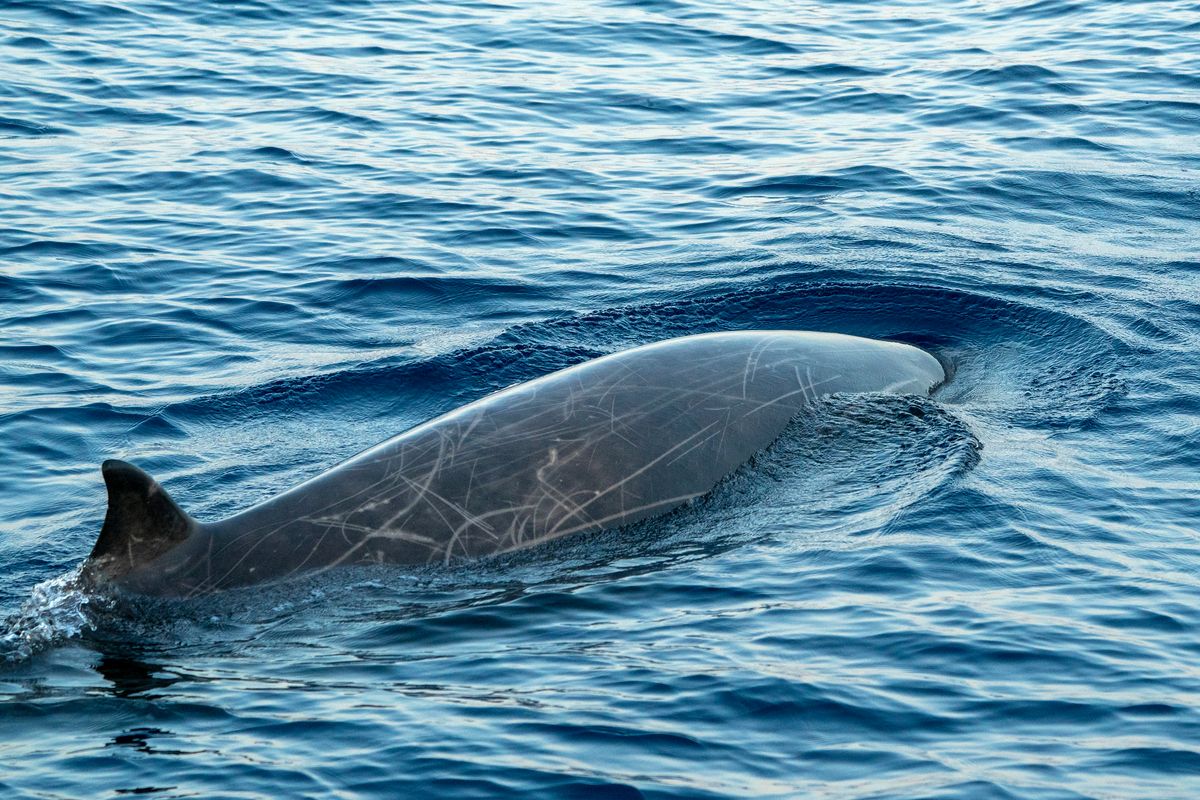
What’s the longest you can hold your breath for? A minute, maybe even a few? That definitely feels like a long time when you’re doing it – but a few minutes has got absolutely nothing on the animal that can hold its breath the longest.Under the seaIf you were guessing in the region of marine mammals when it comes to the breath-holding champion, you’d be correct. But once you’re in that region, things can become a little more contentious.Basing it on the longest dive recorded, the title would go to Cuvier’s beaked whales. During a 5-year study of 23 members of the species, scientists recorded one individual diving – and thus holding its breath – for a whopping 3 hours and 42 minutes. In comparison, the world record for a human is 24 minutes and 37 seconds.That being said, the median dive duration for the beaked whales in the study was 59 minutes. On top of that, only 5 percent of those observed had dives exceeding 1 hour and 17.7 minutes. If we look beyond the individual with the impressively long dives, there are other marine creatures that can hold their breath for longer than those figures on average.Sperm whales, for example, are known to spend around an hour and a half underwater before coming back up for breath. And outside of the cetaceans, elephant seals are the clear winners, holding their breath whilst diving for up to two hours. How can they hold their breath for so long?Part of the reason that deep-diving marine mammals are able to stay under the water for so long is because their muscles are packed with a protein called myoglobin, which stores oxygen and provides a handy supply of it to muscle cells.Humans have myoglobin too, but at far lower concentrations – in us, too many proteins close together could clump up and cause disease. So why don’t whales, seals, and the like have the same problem? According to a 2013 study, mammalian divers’ myoglobin is positively charged."Like the similar poles of a magnet; the proteins repel one another,” study author Dr Michael Berenbrink told BBC News. "In this way we think the animals are able to pack really high concentrations of these proteins into their muscles and avoid them sticking together and clogging up the muscles."Myoglobin may only be one part of the story, however. Researchers also suspect that Cuvier’s beaked whales in particular might have a low metabolic rate, meaning they won’t be using up oxygen as quickly. When they eventually do have to switch to metabolizing without oxygen – anaerobic respiration, a little throwback to high school biology – the whales are thought to have a better tolerance for the lactate that builds up in the muscles. If scientists could now figure out how we can nick these features so we don’t run out of breath during a gym session, that’d be great.All “explainer” articles are confirmed by fact checkers to be correct at time of publishing. Text, images, and links may be edited, removed, or added to at a later date to keep information current.  
Like
Comment
Share
Science Explorer
Science Explorer
2 yrs

Life-Giving Phosphorus May Come From A Rare Type Of Nova
Favicon 
www.iflscience.com

Life-Giving Phosphorus May Come From A Rare Type Of Nova

Phosphorus is one of the few elements that may be essential for life, but its origins are something of a mystery. Core-collapse supernovae are known to form some phosphorus, but this source alone can’t explain its abundance and distribution within the galaxy. If novae, rather than supernovae, are the main source of phosphorus then what we see makes more sense, with important implications for the prospects of finding life elsewhere.Among the components of life, phosphorus is something of an oddity. Other ingredients used by all living things on Earth, such as carbon and hydrogen, are very common, galactically speaking. We expect that whatever limitations there may be on life getting started elsewhere, the lack of these elements would not be among them. Humans need some much rarer elements, such as selenium, but many other life forms don’t, and if Earth had been deficient in these ingredients, evolution might have found another path.Phosphorus is more abundant in Earth’s crust than carbon, but the same may not be true of the galaxy in general – variation in its concentration between stars is considered something of a puzzle. With a higher atomic number than the other essential elements, it is not formed as readily, sparking a search to identify its origins.A new study points to oxygen-neon novae. Like all novae, these involve white dwarves in close orbits with another star, usually a red giant. The white dwarf is so dense, and the companion so diffuse, that the smaller star can pull matter off the other to make an accretion disk. As the material in the disk spirals onto the white dwarf, it sometimes accumulates to the point where it becomes hot enough to ignite nuclear fusion, leading to a sudden brightening. The world is eagerly awaiting the sight of the brightest recurrent novae, T Coronae Borealis, which is expected to have such an outburst quite soon. Novae are sometimes classified by the elements most visible in their spectrum. Oxygen-neon, or oxygen-neon-magnesium novae, also known as ONe novae, have been suspected since the late 1990s of forming phosphorus in abundance by a complex fusion path, where other novae make little or none. With some novae bursting frequently (by galactic standards) over long periods of time, the cumulative phosphorus production can be very large.ONe novae involve white dwarfs with masses at least 25 percent greater than the Sun. Professor Kenji Bekki of the University of Western Australia told IFLScience that to get a white dwarf like that, the progenitor star needs to start off with 7 to 9 solar masses, something which is relatively rare.When Bekki and Dr Takuji Tsujimoto of the National Astronomical Observatory of Japan modeled the expected concentrations of phosphorus in stars if much of it was formed in ONe novae, they got a close match with what is observed. A plot of the ratio of phosphorus to iron in stars compared to the ratio of iron to hydrogen produces a strange pattern. Low iron stars also have little phosphorus, but as iron becomes more abundant, phosphorus rises – not just compared to hydrogen, but compared to iron as well. Then at a certain point, the trend reverses, so that the phosphorus becomes scarcer relative to iron.[Novae have a] wind velocity of 3,000 kilometers a second, much larger than average for the Milky Way.Professor Kenji BekkiIron abundance is an important measure here, because it is used to track how evolved stars are. The first stars were pure hydrogen and helium, but the next generation, formed from their ashes, had more metals, with iron used as the primary measure. Bekki and Tsujimoto propose the ONe novae were most common in our galaxy around 8 billion years ago, providing a phosphorus boost to stars formed thereafter. As their frequency dropped, phosphorus concentrations stalled. “ONe novae become less common as the metallicity [of the progenitor stars] increases,” Bekki explained. Consequently, they had only a brief heyday relatively early in the galaxy’s evolution, but have left a vital legacy.Supernova explosions are so powerful the elements they make are dispersed far and wide. Novae are more restrained, but Bekki told IFLScience they have a “wind velocity of 3,000 kilometers a second [6.7 million miles per hour], much larger than average for the Milky Way.” This can push a fair bit of phosphorus into nearby gas clouds that later become stars.Nevertheless, the question remains how widely the phosphorus is dispersed. It’s possible galactic phosphorus distribution is quite uneven, and many planetary systems may lack the concentration needed for the richness of life we see on Earth. “To answer this question we need more computation,” said Bekki. “We might be quite lucky to have as much phosphorus as we do.”If Bekki and Tsujimoto are right, ONe novae should produce chlorine along with phosphorus. They suggest looking into chlorine distributions to test their theory.The study is published in The Astrophysical Journal Letters.
Like
Comment
Share
Showing 28632 out of 56670
  • 28628
  • 28629
  • 28630
  • 28631
  • 28632
  • 28633
  • 28634
  • 28635
  • 28636
  • 28637
  • 28638
  • 28639
  • 28640
  • 28641
  • 28642
  • 28643
  • 28644
  • 28645
  • 28646
  • 28647

Edit Offer

Add tier


Select an image
Delete your tier
Are you sure you want to delete this tier?

Reviews

In order to sell your content and posts, start by creating a few packages. Monetization

Pay By Wallet

Payment Alert

You are about to purchase the items, do you want to proceed?

Request a Refund