YubNub Social YubNub Social
    Advanced Search
  • Login

  • Night mode
  • © 2026 YubNub Social
    About • Directory • Contact Us • Privacy Policy • Terms of Use • Android • Apple iOS • Get Our App

    Select Language

  • English
Install our *FREE* WEB APP! (PWA)
Night mode
Community
News Feed (Home) Popular Posts Events Blog Market Forum
Media
Headline News VidWatch Game Zone Top PodCasts
Explore
Explore Jobs Offers
© 2026 YubNub Social
  • English
About • Directory • Contact Us • Privacy Policy • Terms of Use • Android • Apple iOS • Get Our App

Discover posts

Posts

Users

Pages

Group

Blog

Market

Events

Games

Forum

Jobs

SciFi and Fantasy
SciFi and Fantasy  
2 yrs

World on a Wire: Smoke and Mirrors in Paranoid Unreality
Favicon 
reactormag.com

World on a Wire: Smoke and Mirrors in Paranoid Unreality

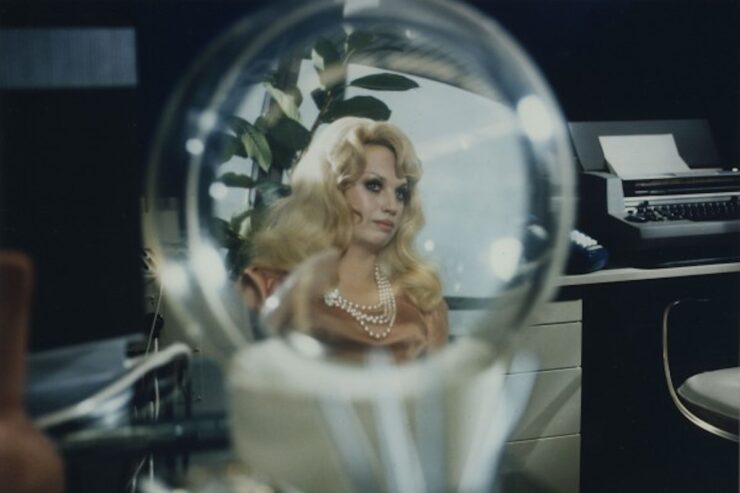
Column Science Fiction Film Club World on a Wire: Smoke and Mirrors in Paranoid Unreality Rescued from obscurity and restored in 2010, Fassbinder’s film is fascinating in its visuals and its philosophical exploration of virtual reality. By Kali Wallace | Published on May 8, 2024 Comment 1 Share New Share World on a Wire (German: Welt am Draht)(1973) Directed by Rainer Werner Fassbinder. Starring Klaus Löwitsch, Barbara Valentin, Mascha Rabben, and Karl-Heinz Vosgerau. Screenplay by Fritz Müller-Scherz and Rainer Werner Fassbinder based on the novel Simulacron-3 by Daniel F. Galouye. One of the things I like to do when I’m researching movies for this film club is to read about how they were received and interpreted at the time of their release. In cinema, an art form that is always self-consciously contemplating itself, and in science fiction, a genre that constantly uses similar premises to talk about very different themes and ideas, I like getting a glimpse at how audiences responded to a movie when it first appeared. I haven’t been able to do that with World on a Wire. There is quite a lot of writing out there about the life and works of Rainer Werner Fassbinder, the provocative, controversial German filmmaker who made forty-some movies over a span of less than fifteen years before dying of a drug overdose at age thirty-seven. But everybody seems to agree that World on a Wire, his only work of science fiction, was always one of his more obscure films. It was first broadcast in two parts on West German television in 1973 and screened theatrically a few times before just sort of fading away, until the Rainer Werner Fassbinder Foundation digitally restored the film in 2010 with the help of its original cinematographer, Michael Ballhaus. These days, critics and audiences are extremely familiar with the ideas and tropes of virtual reality in movies. Everybody watching World on a Wire since the restoration was released in 2010 is doing so in a world that has already seen Tron (1982), The Matrix (1999), and that episode of Star Trek: The Next Generation where Professor Moriarty tries to escape the holodeck to live in the real world. Not to mention The Thirteenth Floor, Josef Rusnak’s 1999 film that is somewhere between a remake of Fassbinder’s film and an adaptation of the same novel. But that wasn’t the case in 1973. Of course, the science fictional concept of virtual reality in general, and the particular version of it that encompasses people unknowingly living in virtual worlds, had been around for some time; World on a Wire is based on the American novel Simulacron-3 by Daniel F. Galouye (also published under the title Counterfeit World). And it was one of the first movies about virtual reality—maybe even the very first, although that’s hard to prove or even define. But the fact that the film languished in obscurity for a few decades makes it difficult to assess whether it was influential on what followed. So we’ll just take the movie as it is—which is completely fine, because it’s great. It’s very long and a bit slow at times, but overall it’s unsettling, tense, oddly touching in parts, and absolutely gorgeous to look at. The film is centered around a man named Fred Stiller (Klaus Löwitsch) who works at the Institute for Cybernetics and Future Sciences (Institut für Kybernetik und Zukunftsforschung, or IKZ for short). Along with Professor Vollmer (Adrian Hoven), Stiller has developed a highly advanced simulation for a supercomputer; they have created an entire simulation world and peopled it with some 9,000 simulated individuals for the purpose of modeling societal changes over time. At the beginning of the film, Vollmer dies under mysterious circumstances, right after confiding to the head of security, Günther Lause (Ivan Desny), that he has discovered something terrible about their project. Lause conveys this to Stiller at a party hosted by their boss, Siskins (Karl-Heinz Vosgerau). The bizarre, uncomfortable party is the film’s first look at what happens when you combine stylized filmmaking with surreal philosophical science fiction with—let’s be honest—basically just what I assume rich people social gatherings were like in the ’70s. After Lause tells Stiller there was something strange about Vollmer’s last days and death, Lause disappears. He doesn’t walk away; he just vanishes. This is, naturally, very alarming to Stiller. He tells Siskins; he calls the police; it’s reported in the press. Then, just as abruptly, everybody begins telling Stiller they have never heard of Lause. Nobody else remembers him. The police have no idea what he’s talking about. As sci fi fans in the 21st century, our minds immediately land on the explanation that Stiller is likely also in a simulation or is being manipulated in some similar way. But even before cinema and television provided an entire canon of virtual reality stories to lead us to that conclusion, I’m pretty sure that’s exactly what Fassbinder intended. The screechy electronic musical cue whenever something is changing around Stiller is not subtle, nor are the many philosophical conversations about perception and reality and wondering if the virtual people know they are just programming. We can easily spot evidence for it, once we start to look. Some of the evidence is subtle and unsettling, such as the way bystanders in many scenes will stare blankly at the characters, creating sensations of both unnatural inaction and constant surveillance. Some of it is very much not subtle, such as the scene in which a woman on the street is crushed by a falling load of concrete and nobody reacts appropriately. But even if we are meant to know, Stiller does not, so the film follows his increasingly paranoid and desperate attempts to find out what’s going on. One of his friends is dead, another is missing, and he knows it has something to do with the simulation he has helped create. He pops into the simulation world himself and meets up with a simulated person called Einstein (Gottfried John), who serves as the research team’s “contact” in the virtual reality. Einstein is the only one of the virtual people who knows they’re virtual, and he tries to escape by taking over another man’s body. When he does so, he tells Stiller that Stiller isn’t in the real world either, but in another layer of a simulated world. Stiller sets out to find out if this is true, his suspicions growing and his sanity unraveling all the while. He wants to find his world’s version of the “contact” person, but his efforts make all the other characters extremely wary of him. There is also a subplot about how Siskins is secretly colluding with a steel company to use the computer for corporate, commercial purposes, rather than the non-commercial social purposes for which it was designed, which is the sort of detail that feels like a glitch in this reality. Gosh, what would the world be like if corporations could use powerful computer simulations for commercial purposes? (Imagine me staring directly into the camera as I type that.) Because it’s been obvious all along, the confirmation that Stiller’s world is a simulation isn’t a surprise—but it also doesn’t help him much. It only puts him in greater danger. Eva Vollmer (Mascha Rabben) reveals to Stiller that he was created as a simulation of the real-world programmer controlling this virtual world; that man, she says, has gone mad with power and delights in tormenting his virtual counterpart. There are hardly any special effects to speak of in World on a Wire; the technology on-screen rarely has a science fictional appearance. But the movie still manages to convey a powerful sense of paranoid unreality by using its actors, setting, and truly brilliant cinematography. I’ve already mentioned the eerie, blank way bystanders act—or fail to react—in several scenes. It’s noticeable when they are in a crowd, such as in a party or at a club, but it’s also very unsettling in scenes with only a few characters. When Einstein escapes his virtual world in the body of Stiller’s friend Fritz (Günter Lamprecht) and Stiller physically attacks him, the cafeteria worker witnessing this stands there the entire time with a bemused expression on her face, barely reacting even when they smash a table. Waiters tend to appear and disappear without warning—which might be how we perceive service staff in real life, but is heightened here to a jarring degree. Furthermore, there is often something just slightly off about how many of the characters are behaving. The nonstop drinking and smoking might just be a relic of the ’70s, sure, but there is also something pointedly self-conscious about the habits, such as when Stiller is messily rolling cigarettes on a conference table at a meeting with his boss and the secretary of state. We know it’s absurd, he knows it’s absurd, but the other characters seem to think they’re having a perfectly normal meeting about the institute fulfilling its governmental obligations. It works because the cast is all very good at coming across as just a bit off. The movie was filmed in Paris, but for the most part the setting is completely interior: inside the offices at IKZ, inside the computer room, inside various homes and bars and clubs. One thing I absolutely love is how dense and rich the décor is. The rooms are filled with art pieces, the furniture is draped with furs, and even the telephones are stylishly shaped and brightly colored. There are several scenes that are a feast for the eyes, and this is highlighted by the way some characters are dressed. The (white) men mostly have suits and sideburns and mile-wide ties, but the women have a glorious array of fashion and hairstyles that add to the ornateness of every scene. The effect is not always a good one—the way women and men of color are literally objectified as part of the scenery might be intentional, but it’s also deeply off-putting—but the impact is still there. There is something designed about this world and these people, and we see it even without the science fictional or technological special effects. But my favorite tactic the film has of keeping us off-balance in this unreal world is in its camerawork. The cinematography by Michael Ballhaus and Ulrich Prinz is stunning. There isn’t much information out there about Prinz; he doesn’t have many credits to his name. Ballhaus, on the other hand, is widely regarded as one of the best cinematographers to have worked in the movie business. He collaborated with Fassbinder on several films before making a move to Hollywood, where he worked with the likes of Martin Scorsese, Robert Redford, and Francis Ford Coppola. You’ve almost certainly seen Ballhaus’ work before, and that includes a particular quirk for which he is especially famous: the long 360-degree tracking shot. Ballhaus and Fassbinder established that technique while working on the film Martha (1974); they filmed World on a Wire at more or less exactly the same time, during the summer of 1973, and it too makes extensive use of different types of dizzying 360-degree shots. My favorite example is in the second part of the film, when Siskins and Holm (Kurt Raab) are in the computer room discussing what to do about Stiller. The room is washed with cool, metallic blue light and completely wrapped in reflective surfaces. Holm is wearing a black suit and seated, while Siskins is wearing a bright plaid jacket and is pacing around constantly. In every single shot, there are multiple versions of both men, reflected from the countless mirrors. And as the camera moves and rotates, including turning in a complete circle, it becomes impossible to tell the men from their reflections. It’s disorienting, discomfiting, and really incredibly cool. It echoes the use of mirrors throughout the film: characters are often shot in reflection, so that they never seem to be looking in quite the right direction. The disruption of visual lines is hugely effective in weaving that sense of wrongness into scenes throughout the film. It’s Eva who finds a way to bring Stiller out of the virtual world at the end, by transferring his consciousness into the body of his creator. We suspect this is possible, because Einstein has done it before. But right up until it happened, I didn’t know if that’s where the film would go. I had absolutely no idea. It is certainly not a movie that carries an obvious promise of a happy ending; it works too hard throughout its running time to keep us unsettled and unsteady. Other characters are callously deleted; there is no reason for us to trust that Stiller won’t be as well. His knowledge that he’s a virtual person in a virtual world does not imbue him with any special powers or advantage. He doesn’t automatically know things he didn’t know before; he doesn’t have any new skills or tricks. He can’t change the rules of his world, nor is he really trying to. The changeable perspective, the untrustworthy perception, the sense of being both a part of the world but also separate from it, all of this works together to create this unreal reality. Because of the other virtual reality stories I’ve read and watched over the years, I went in expecting another story in which the entire point of awareness within the virtual world is to obtain some control over it. But Stiller’s goal is never to wrench power away from the unseen sadist playing god with his virtual world; he doesn’t even know about that man for the vast majority of the film. He only ever wants to know. He’s basically hosting a one-man epistemology seminar that features a lot of whisky, way too many cigarettes, and people constantly trying to shoot him. He wants to know how to define his world. He wants to know he isn’t crazy. He wants to know that the friend he remembers was real, that the things he saw really happened, that his paranoia does not come from nothing. In the end, I’m glad that the film does have a happy ending, more or less, because I found that I very much wanted Stiller’s knowledge of his world to lead to some change. At the same time, I also really like the way the film doesn’t quite embrace what is often the central fantasy of virtual reality stories: the idea that having secret knowledge of your world gives you a superior power to alter it. Stiller has the knowledge, but he doesn’t have the power; that still comes from outside the simulation, from people not subject to the same rules. It’s a fascinatingly bleak examination of the perception of free will, and exactly the sort of story I love to see explored when sci fi plays with virtual reality. What do you think about World on a Wire? Which of the lengthy rotating tracking shots was your favorite? How do you think it fits into the genre of virtual reality sci fi, which is often weird and almost always a bit philosophical? Next week: Let’s get lost in the intersection between illusion and reality with Alejandro Amenábar’s Open Your Eyes. Watch it on Amazon and BFI (UK only).[end-mark] The post <i>World on a Wire</i>: Smoke and Mirrors in Paranoid Unreality appeared first on Reactor.
Like
Comment
Share
SciFi and Fantasy
SciFi and Fantasy  
2 yrs

Cate Blanchett Will Invade Earth in the Zellner Brothers’ Alpha Gang
Favicon 
reactormag.com

Cate Blanchett Will Invade Earth in the Zellner Brothers’ Alpha Gang

News Alpha Gang Cate Blanchett Will Invade Earth in the Zellner Brothers’ Alpha Gang Take over the planet. Please. By Molly Templeton | Published on May 8, 2024 Screenshot: Marvel Studios Comment 0 Share New Share Screenshot: Marvel Studios First sasquatches, then space invaders. David and Nathan Zellner recently released Sasquatch Sunset, a very weird movie in which Jesse Eisenberg and Riley Keogh starred as, yes, sasquatches; now, they’re planning to follow it up with an alien invasion comedy starring Cate Blanchett as… well, I’m going to let Variety explain: Alpha Gang follows alien invaders sent on a mission to conquer Earth. “Disguised in human form as an armed and dangerous 1950’s leather-clad biker gang, they show no mercy… until they catch the most toxic, contagious human disease of all: emotion,” reads the synopsis. Blanchett, apparently, will be playing the leader of said gang. So yes: leather-clad, armed and dangerous Cate Blanchett should be coming to a screen near you. It’s a fun turn for the former Queen Elizabeth, no? And her outfits for this might be almost as good as everything she got to wear in Ocean’s 8. Blanchett has, of course, been nominated for a whole pile of Oscars, and won two: Best Supporting Actress for The Aviator, and Best Actress for Blue Jasmine. She has played too many excellent roles to list here, but it would be silly not to mention her turns as Hela (Thor: Ragnarok, pictured above) and Galadriel (several Lord of the Rings movies, including, alas, those dreadfully long Hobbits). Alpha Gang is expected to begin filming later this year. Further casting announcements will be watched with great curiosity.[end-mark] The post Cate Blanchett Will Invade Earth in the Zellner Brothers’ <i>Alpha Gang</i> appeared first on Reactor.
Like
Comment
Share
SciFi and Fantasy
SciFi and Fantasy  
2 yrs

Twisters Seems to Really Want to Be a Cowboy Movie About Tornadoes
Favicon 
reactormag.com

Twisters Seems to Really Want to Be a Cowboy Movie About Tornadoes

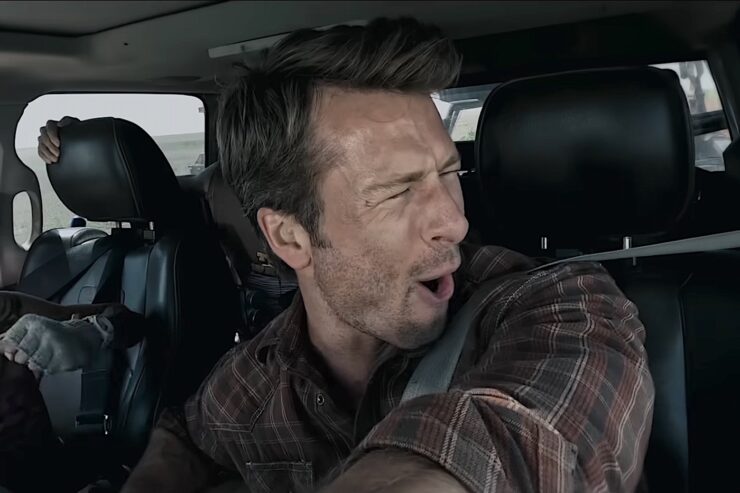
News Twisters Twisters Seems to Really Want to Be a Cowboy Movie About Tornadoes We’re gonna twist again whether we like it or not. By Molly Templeton | Published on May 8, 2024 Screenshot: Universal Pictures Comment 0 Share New Share Screenshot: Universal Pictures Once upon a time, in the 1990s, there was a movie called Twister that was patently absurd, but also weirdly charming. Now, nearing 30 years later, there is a movie called Twisters that is not a sequel, nor a remake, but just another movie about people who really like to chase tornadoes. The film’s tagline seems to be, “You don’t face your fears. You ride ’em.” This tagline makes me tired. We now have our second trailer for Twisters, which is much like the first one, except with more buildup to the tornado that traumatizes Kate (Daisy Edgar-Jones) and more chaotic tornado drama as the trailer (and presumably the film) progresses. Now there’s a fire tornado! I would like to be into this, but every time a character opens their mouth, the film gets less appealing. She’s a smarty-pants city girl! He (Glen Powell as Tyler Owens) is a good ol’ boy with a lot of social media followers and his face on a T-shirt, and he does things the old way, no PhDs required! The most intriguing part is that Kate might have figured out how to “disrupt” a tornado, but she done messed up last time. Who but the good ol’ boy to give her another chance? Twisters is directed by Lee Isaac Chung (Minari) from a screenplay by Mark L. Smith (The Midnight Sky), with a nod to Michael Crichton, who co-wrote the first Twister. It also stars Brandon Perea (Nope), Sasha Lane (American Honey), Daryl McCormack (Peaky Blinders), Kiernan Shipka (Chilling Adventures of Sabrina), Nik Dodani (Atypical) and Maura Tierney (Beautiful Boy). You can ride your fears right into the theater on July 19th.[end-mark] The post <i>Twisters</i> Seems to Really Want to Be a Cowboy Movie About Tornadoes appeared first on Reactor.
Like
Comment
Share
SciFi and Fantasy
SciFi and Fantasy  
2 yrs

Many Worlds and the Queer Imaginary
Favicon 
reactormag.com

Many Worlds and the Queer Imaginary

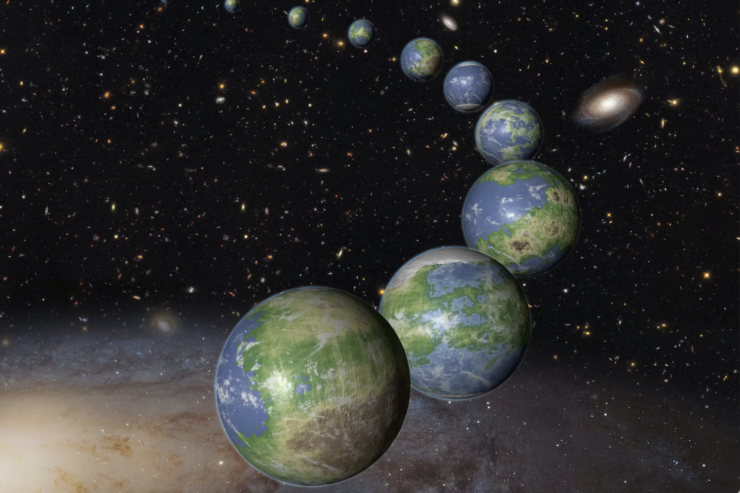
Featured Essays LGBTQ Many Worlds and the Queer Imaginary Imagine three possible futures for yourself. Let your future selves be bold… By Emet North | Published on May 8, 2024 Comment 1 Share New Share Let me begin with a brief thought experiment—a fitting beginning for an essay that is, in part, about theoretical physics. Imagine three possible futures for yourself. Imagine broadly, freely. Let your future selves be bold. Ask yourself where those selves might be in five, ten, fifteen years. How might you change? Who could you become?  There is something strange at the heart of quantum mechanics, the field of physics that focuses on the tiniest parts of the world. The most common distillation of this strangeness is Schrödinger’s cat—a thought experiment once meant to prove that quantum theory must be incomplete or incorrect. Put a cat in a container with a Geiger counter that measures radiation. Inside the Geiger counter is a tiny bit of radioactive material, so tiny that over the course of an hour there’s an equal chance that it decays or doesn’t. If the radioactive material decays, the Geiger counter is triggered and releases a miniature hammer poised above a glass vial of hydrocyanic acid, killing the cat. If the material doesn’t decay, the vial stays intact and the cat stays alive. According to the mathematics of quantum mechanics, until we take a measurement of the radioactive material it exists in a superposition of states. It is both decayed and un-decayed at the same time. Which means that our vial is both shattered and unshattered. Our cat both alive and dead. But upon measurement, this superposition collapses—opening the box, we find that the cat is entirely dead or entirely alive.  To consider an alternate self is to free your imagination from the consequences that weigh on any real decision. It is a way to free your imagination from the vise of plausibility, from the part of the brain that says don’t dream big, don’t get ahead of yourself, don’t, don’t, don’t.   In the hundred or so years since quantum theory was first developed, myriad physicists have attempted to make sense of both what it means for particles to exist simultaneously in mutually exclusive states and why it is that measurement causes these superpositions to collapse. In the 1950s, a PhD student at Princeton, Hugh Everett III, came up with one potential answer in his (somewhat uninspiringly titled) dissertation, Wave Mechanics Without Probability. According to Everett’s formulation, the concept of “collapse” is both unnecessary and misleading. Instead of considering the observer as separate from the quantum system, we ought to consider them as a part of the superposition—which is to say, when we open the box to see whether the cat is alive or dead, we are simultaneously in the state of seeing-alive-cat and seeing-dead-cat. Put another way: we are split into two, mutually exclusive selves. Put yet another way: each time a quantum measurement occurs, the universe branches such that each outcome occurs in a different branch. In the decades that followed, this interpretation would become what is known as the Many-Worlds Interpretation of quantum mechanics. It is an interpretation that suggests an infinite proliferation of universes. (Not a very economical use of universes, a professor of mine once said.) Is it a viable interpretation? The answer to that question has been debated for decades without resolution. But regardless: who among us has never dreamt of an alternate world? A choice made differently? Who hasn’t stayed up at night, contemplating some difficult decision, wishing it were possible to see both scenarios played out, to know definitively which option to choose. “We can never know what to want,” the Czech writer Milan Kundera wrote, “because, living only one life, we can neither compare it with our previous lives nor perfect it in our lives to come.” The unbearable lightness : “if we have only one life to live, we might as well not have lived at all.” The many worlds interpretation saves us from this lightness, gives our lives the weight of infinite repetition and variation. True, the rescue is more theoretical than practical, given that nothing about the interpretation suggests access to the alternate universes. Which brings us back to our thought experiment. This time, instead of imagining future selves, imagine three alternate selves. Versions of you who made different choices or were born into different circumstances or who had better luck. Like the last time, follow these selves into the future, see who they might become. Here is what I want to know: how much distance is there between your imagined futures selves versus your alternate selves? Between what is possible and what is impossible? When I first began writing my novel, In Universes, I was living in Montana with my boyfriend K, working as a snowboard instructor. I’d tried to become a physicist—I wanted so badly to understand quantum mechanics, the multiverse. I wanted to create thought experiments that changed our understanding of how the world worked on the most fundamental level. But I’d bumped up against the limits of my brain—or maybe against sexism and terrible teaching and depression. Without alternate lives to compare, who can say which? Regardless, I’d left academia and fled to the mountains. For the first time in my life, I stopped trying so hard, built a life that didn’t feel crushing. My relationship with my family had always been fraught, but with K, for the first time, I felt secure in the knowledge that I was loved. I was happy, but not entirely content. I imagined different futures for myself: I could work my way up through the snowboard instructor certification program, spend my days teaching in the snow and sun, come home to write and paint in the evenings. I could work with horses, like I did in the summers. Surround myself with non-human animals, rescue horses from abusive situations and rehab them until they could find new homes. I could go to grad school—for writing or art or the philosophy of physics. (Was the dream dead, or merely deferred?) I never imagined leaving K. Why would I? He was my first and truest home. Still, none of these imagined futures fully satisfied me. In the evenings, after getting home from the mountain, I switched from writing non-fiction to fiction. I was tired of mining my personal history, I told K. I wanted to look outwards rather than inwards for a while. I read Kelly Link, Abbey Mei Otis, Helen Oyeyemi, Carmen Maria Machado. In their stories, the line between internal and external world became blurred, porous enough that a character’s desires or fears might shape the world—but never in the ways one might expect. Puppets came to life and manipulated their owners, children had to sacrifice parents to protect their homes, a handbag or a tent might offer a doorway to another world. Much like in Everett’s thesis, person and environment became intimately and confusingly entangled. Looking outwards could, in other words, also be a way of looking inwards. I let the worlds of my writing warp and transform: Aliens in the form of golden water turned animals murderous. Girls metamorphosed into insects on their sixteenth birthdays, a mermaid sliced her own tail apart to be with the woman she loved. This, I found, was the constant: my narrators sought—or were sought by—transformation. That and the fact that none of them were in relationships with men. But that was fine. They weren’t me. We might share biographical details, age, gender, overall personality. Innermost hopes and fears. Birthdays, families. But they were in other universes. My life was safe. What is it that shifts when we move from considering different future selves to alternate selves? Some of it is facts: things become possible that, in our current reality, no longer are. But some of it goes beyond objective difference. To consider an alternate self is to free your imagination from the consequences that weigh on any real decision. It is to avoid the question, yes but at what cost? It is a way to free your imagination from the vise of plausibility, from the part of the brain that says don’t dream big, don’t get ahead of yourself, don’t, don’t, don’t.   Buy the Book In Universes Emet North Buy Book In Universes Emet North Buy this book from: AmazonBarnes and NobleiBooksIndieBoundTarget Maybe you can guess the ending of this small story of mine. Those fictional selves stayed on the page, in their own universes. But gradually, they expanded my imagination, which is to say, my idea of what might be possible. Queerness opened like a door before me. But I was afraid to walk through. Afraid, above all, of losing K, my family in the truest sense of the word. I couldn’t imagine a way to leave the relationship without losing it. I had no models. So I wrote a universe where the narrator and their partner break up and the breaking isn’t a rupture, only a transformation. I wrote the two of them into a platonic love, one that other people might not understand, but that they understood.  I said goodbye to the mountain, to the lesson line-up and my bright red instructor’s jacket. I devoted myself to writing with my full heart, my full self. I talked to K about my fledgling queerness and he cupped his hands around it, made space for it to grow. We built a new sort of relationship together, no less significant for its changes. One final piece of the thought experiment, this one particularly for my queer and trans community. Imagine an alternate version of yourself, one that has received all the acceptance and support the world so often denies us. An alternate self whose parents greeted their queerness or transness with joy rather than anger or fear or disgust. A self that didn’t have to hide, who never held the doors to the closet shut for simple self-preservation. A self whose government hasn’t tried to take away their rights, their access to care. Who hasn’t had their body politicized and made a talking point for self-righteous politicians. Here’s what I want to know now: How would that version of you move through the world? What possibilities are open to them? And finally, can you queer the universe a little? Reach through and borrow whatever it is you need—confidence, safety, love? Those alternate selves, they won’t mind sharing. They have enough to go around.[end-mark] The post Many Worlds and the Queer Imaginary appeared first on Reactor.
Like
Comment
Share
SciFi and Fantasy
SciFi and Fantasy  
2 yrs

Handling the Undead Trailer Gives Us a Quiet Zombie Movie that Rips Your Heart to Pieces
Favicon 
reactormag.com

Handling the Undead Trailer Gives Us a Quiet Zombie Movie that Rips Your Heart to Pieces

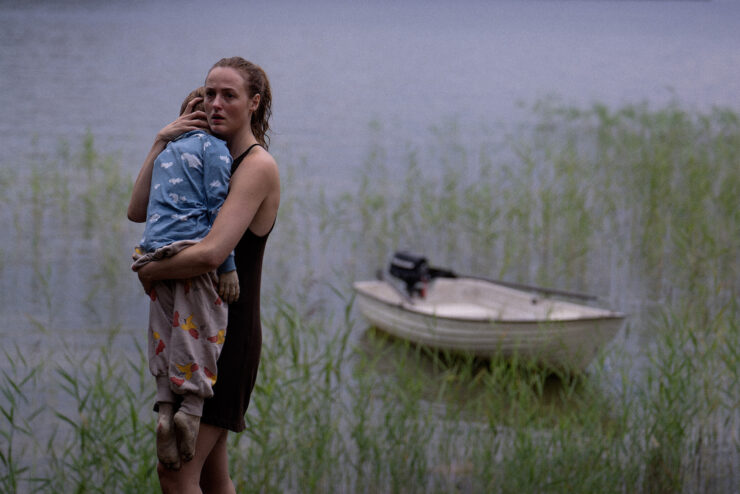
News Handling the Undead Handling the Undead Trailer Gives Us a Quiet Zombie Movie that Rips Your Heart to Pieces By Vanessa Armstrong | Published on May 8, 2024 Credit: Pål Ulvik Rokseth/Sundance Institute Comment 0 Share New Share Credit: Pål Ulvik Rokseth/Sundance Institute There is no lack of zombie movie fare in the world, but if the trailer for the Norwegian film Handling the Undead is any indication, the movie brings an arthouse feel to the genre and has a strong possibility of quietly wrecking you as you watch. The film is based on an eponymous novel by Swedish author John Ajvide Lindqvist, who also penned the script in collaboration with director Thea Hvistendahl. The trailer introduces three people who have inexplicably come back from the dead in the capital of Norway, and the ramifications that has for those who love and grieve them. Here’s the more detailed, official synopsis for Handling the Undead: On a hot summer day in Oslo, the dead mysteriously awaken, and three families are thrown into chaos when their deceased loved ones come back to them. Who are they, and what do they want? A family is faced with the mother’s reawakening before they have even mourned her death after a car accident; an elderly woman gets the love of her life back the same day she has buried her; a grandfather rescues his grandchild from the gravesite in a desperate attempt to get his daughter out of her depression. Handling the Undead is a drama with elements of horror about three families, a story about grief and loss, but also about hope and understanding of what we can’t comprehend or control. Handling the Undead stars Renate Reinsve, Anders Danielsen Lie, Bjørn Sundquis, Bente Børsum, Bahar Pars, and Inesa Dauksta. It premiered at the Sundance Festival this January, after which Neon picked up the U.S. distribution rights. It will premiere here at the IFC Center in New York City on May 31, 2024 and at select theaters after that on June 7, 2024. Check out the trailer below. [end-mark] The post Handling the Undead Trailer Gives Us a Quiet Zombie Movie that Rips Your Heart to Pieces appeared first on Reactor.
Like
Comment
Share
SciFi and Fantasy
SciFi and Fantasy  
2 yrs

Read an Excerpt From India Holton’s The Ornithologist’s Field Guide to Love
Favicon 
reactormag.com

Read an Excerpt From India Holton’s The Ornithologist’s Field Guide to Love

Excerpts Love’s Academic Read an Excerpt From India Holton’s The Ornithologist’s Field Guide to Love Rival ornithologists hunt through England for a rare magical bird in this historical-fantasy rom-com. By India Holton | Published on May 8, 2024 Comment 0 Share New Share We’re thrilled to share an excerpt from The Ornithologist’s Field Guide to Love, a historical fantasy rom-com by India Holton, out from Berkley on July 23rd. Beth Pickering is on the verge of finally capturing the rare deathwhistler bird when Professor Devon Lockley swoops in, capturing both her bird and her imagination like a villain. Albeit a handsome and charming villain, but that’s beside the point. As someone highly educated in the ruthless discipline of ornithology, Beth knows trouble when she sees it, and she is determined to keep her distance from Devon. For his part, Devon has never been more smitten than when he first set eyes on Professor Beth Pickering. She’s so pretty, so polite, so capable of bringing down a fiery, deadly bird using only her wits. In other words, an angel. Devon understands he must not get close to her, however, since they’re professional rivals. When a competition to become Birder of the Year by capturing an endangered caladrius bird is announced, Beth and Devon are forced to team up to have any chance of winning. Now keeping their distance becomes a question of one bed or two. But they must take the risk, because fowl play is afoot, and they can’t trust anyone else—for all may be fair in love and war, but this is ornithology. An ornithologist must be proficient in the three fundamentals of fieldwork: finding a bird, identifying a bird, and getting the hell away from that bird before it eats you.Birds Through a Sherry Glass, H.A. Quirm All along the streets to the museum, Beth met no trouble. Her plain brown coat, accompanied by a small hat, gloves, and air of cultivated intelligence, triggered fear in any man who glanced her way: one catcall, and she might educate them. Slipping past museum staff to enter the archives with the speed and stealthiness of a well-trained ornithologist, she also met no trouble. Wending a narrow path through shelves and cabinets to the back of the chamber, she met no— “Hello.” Beth stopped so abruptly her hat shuddered, and only because of her stiffened posture did it retain its place upon her head. “You!” Devon Lockley gave her a lithe smile. “You,” he replied, his tone more friendly and thus far more dangerous than hers. Worse, he’d removed his dinner jacket and unknotted his tie. The bare, olive-toned skin visible where he’d unfastened his shirt collar took “trouble” and dunked it in a glass of hot, rum-infused devilry. Light from the small, dusty windows slid across his mouth languorously, stroking the smile. Beth looked away, clearing her throat. Shelves of boxes stood to the right of them, and to the left a row of specimen cabinets. A wide, shallow drawer lay open in the cabinet directly beside Devon, revealing assorted birdcalls, bird lures, and bird thingamajigs whose purpose had long since been forgotten. “I haven’t found it yet,” Devon said. “I’m sorry?” Beth replied innocently. “Found what?” His expression tilted with sardonic humor. “I suspect you’re not in the basement of the Museum of Magical Birds for the purpose of an afternoon stroll, Miss Pickering. You’ve come for the caladrius call.” Beth applied to her sense of decorum for a suitable response, but it took one look at the man and turned away, busying itself with dusting its precious antique collection of curtsies. Left to her own devices, she gave him a second, considering look. He was implausibly handsome for a university professor, who in Beth’s experience were a pallid lot, rather musty, with a constant yearning in their eyes for dinner, wine, and their latest lecture to magically write itself. But if there was any yearning done in regard to Devon Lockley, it was almost certainly not by him but toward him. Not that Beth felt any such yearning. Heavens no! She was far too sensible for that. The riotous sensations in her stomach were merely due to French tea. She also suspected him of possessing masculine wiles. He probably kept them up his sleeve or in a trouser pocket—upon which thought, Beth glanced at said pocket, and managed to prevent herself from blushing only by dint of general aggravation. She hauled her vision up by the scruff of its neck and discovered Devon watching her smugly, as if he could guess her thoughts and was considering whether to reach his naked hand into that pocket and bring out something truly scandalous indeed. Her aggravation increased by several notches. “I am here to do some research,” she said, silently reassuring herself that it was the whitest of lies; beige at most. “However, this seems a convenient opportunity to apologize to you for our fracas in Spain.” “No need,” Devon answered easily. In response, Beth’s aggravation forgot about climbing notches and took flight instead. “Absolutely there is a need! I was an ill-mannered scoundrel of the worst kind to assault you with a parasol!” He leaned back slightly. “Er…” Buy the Book The Ornithologist’s Field Guide to Love India Holton Buy Book The Ornithologist's Field Guide to Love India Holton Buy this book from: AmazonBarnes and NobleiBooksIndieBoundTarget “You ought to be stern and judgmental.” She thrust out a gloved hand. “I insist upon apologizing. Kindly frown at me and then shake hands, so we may reestablish a civil rivalry between us.” “All right,” he agreed—then ruined it by adding, “My pleasure.” He gave her a frown that was clearly wearing nothing more than a wicked grin beneath its coat. But before Beth could summon offense, he took her hand. Immediately, she knew she’d made a tactical error. His bare fingers were warm even through the kid leather of her glove. His grip was firm in a way that made the description “firm” seem altogether salacious. An electric sensation rushed through her body, setting off alarms hither and yon. All that saved her was remembering the job she’d come to do. “How do you know about the caladrius call?” she asked. Devon shrugged. “You told me.” “I beg your pardon—?—!” “Well, to be precise, you told my spy, Lady Trimble, who then told me.” “Egad!” Beth gasped. “That’s cheating!” “Come now, Miss Pickering,” he said, laughing. “All may be fair in love and war, but this is ornithology. Cheating is practically one of our scientific principles. Or did they not teach you that at—let me guess, Liverpool University?” He wanted to aggravate her. “Oxford,” she answered in her politest tone. After all, she could climb trees without showing her petticoats and wrangle birds into cages without swearing. No man was going to disturb her equanimity. He smiled. “Villain!” she remonstrated at once, before she even knew what she was doing. And once she’d got going, alas, there seemed no stopping her. “Don’t try that charm on me, if you please. I will not succumb like some—some—liberal arts undergraduate.” “If you say so, Miss Pickering,” he answered, still smiling. “I do beg your pardon. And while I can’t apologize for using Lady Trimble to spy on you, I will point out that at least I chose to run here and find the call before you might, rather than steal it from you outright. Not that such virtue did me any good.” He frowned askance at the open drawer. “This collection looks like a pack of first-year students have held a keg party among it.” The apology, such as it was, mollified her. “Perhaps we aren’t the first to come searching,” she suggested in a calmer tone. “Hippolyta cannot be the only one to know about the call.” “Which also means others might appear at any moment.” Devon glanced over her shoulder as if expecting a sudden influx of ornithologists bearing lockpicks, pistols, and emergency marriage certificates for use upon discovering a bachelor and spinster alone together. Beth’s nerves ruffled all over again. Really, this encounter was going to drive her to drink, and she did not think there was enough tea in all of Paris for the purpose. “I suggest a compromise,” she said. “I will search for the call, and you will stand guard, and once I’ve found it we will leave quietly so as to not draw attention to ourselves. What say you?” “I say you need a better dictionary,” Devon replied, grinning. He looked over her shoulder again; glancing back, Beth thought she saw a darkness move between shelves, but she blinked and it was gone. “I’m being paranoid,” Devon murmured, shaking his head. “How about I look for the call, you do the same, and may the best birder win?” “And when I win?” she asked cautiously. “When I win, we’ll agree to disagree, and depart without further argument.” “Very well.” She turned toward the cabinet—only to discover she and Devon were still holding hands. He realized at the same moment and released her just as she was pulling away. She rubbed her hand against her waist. Devon shoved his through his hair. Stepping apart, they set to opening cabinet drawers. “I admit I’m a little daunted, competing with Britain’s youngest-ever professor,” Devon said as they worked. Beth glanced at him sidelong. Was he mocking her? Or had that been a note of sincerity in his voice? If he’d whistled a birdsong, she’d have been able to interpret it at once, but her ability with human conversation was mediocre at best, and this one certainly had her floundering. She decided to retreat, as usual, behind niceness. “I’m daunted myself,” she said, “competing with an academic wunderkind.” “That’s merely a rumor started by my thesis examination panel because they wanted to get away early for a fishing trip.” Beth stared at him with astonishment. “Really?” He just grinned in reply, his dark eyes glimmering. Instantly, Beth’s aggravation discarded niceness and leaped once more into the breach, swinging its fists wildly and suggesting she close the wall up with a dead professor. Turning away, she rummaged through the birdcalls, not even seeing them. For a while, Devon searched quietly alongside. But all too soon they were elbowing each other… leaning past each other to grab at something that looked like a possibility… humphing and tsking and smacking at hands… completely missing the caladrius call lying among several other antique whistles… then seeing it finally and both snatching at it with such urgency they knocked it clear off the tray. It flew past them, fell to the floor, and rolled through a gap between two shelving units. “Now look what you’ve done!” they said simultaneously. “It wasn’t my fault!” they replied in chorus. And shoving at each other, they squeezed their way through the gap to crouch in the dark narrow space behind, groping around the floor for the little wooden call. Thighs pressed against each other; shoulders rubbed; etiquette rules exploded left, right, and center. Finally, Beth’s fingers stumbled upon the call, and she clutched it in triumph. Unfortunately, Devon did the same. “Let go!” she hissed at him. “You first!” he hissed back. “How dare—” “Shut up.” Beth gasped in genuine shock. “I beg your pardon!” He relinquished the call, but only so as to slap his hand over her mouth. Beth’s heart leaped with what was almost certainly alarm and not delighted excitement. “Shh!” he whispered. “I heard something.” Beth nodded. Devon moved his hand away, and together they shifted apart two boxes on the shelf at eye level so they could peer through to the passageway beyond. Tap-tap. Beth slapped her own hand over her mouth. A bird was tiptoeing delicately over the dusty floor—a dull brown bird, not much bigger than a magpie, with dainty legs and a small black beak. Vanellus carnivorus, her brain automatically recited. Rabid flesh-eating lapwing. It was the most vicious, deadly little bird this side of the Mediterranean. With scant effort it could bring down a grown man and the horse beneath him, and the servants attending him, and their horses too. Almost its entire population had been exterminated, leaving only two specimens in the highest-security aviaries. And one in this basement. Suddenly, Beth could not breathe. This was not due to her hand over her mouth; rather, she simply could not remember the process of inhaling air. The lapwing’s claws tapped gently against the floorboards, providing an eerily calm counterpoint to her crashing heartbeat. She and Devon were sitting ducks, with no easy way of escape. As it passed where they crouched behind the shelf, there came a tiny click of fang against beak, and the warm vanilla scent the bird used to attract prey. Instinct urged Beth to follow that scent, to tuck herself into coziness beneath the lapwing’s soft wing. Intelligence managed to restrain her, however, and the lapwing continued farther down the passageway, its lure diminishing as it went. Beth and Devon glanced at each other, exhaling with relief— The lapwing froze. It cocked its head. “Damn!” Devon swore. Grabbing Beth’s arm, he hauled her up with him and pushed her toward the gap in the shelving. “Run!” Excerpted from The Ornithologist’s Field Guide to Love by India Holton Copyright © 2024 by India Holton. Excerpted by permission of Berkley. All rights reserved.  The post Read an Excerpt From India Holton’s <em>The Ornithologist’s Field Guide to Love</em> appeared first on Reactor.
Like
Comment
Share
Fun Facts And Interesting Bits
2 yrs

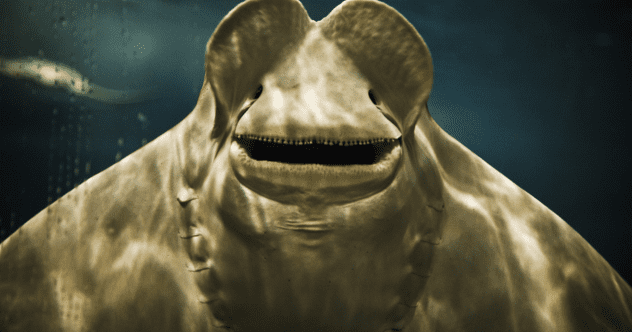
10 Species with the Weirdest Names
Favicon 
listverse.com

10 Species with the Weirdest Names

Prepare to chuckle as we announce some of the wackiest names Mother Nature has given to her creations. From the hilariously named “Wonderpus” to the oddly titled “Go-away Bird,” these critters prove that when it comes to names, truth can indeed be stranger than fiction. Here are ten species with the weirdest names: Related: 10 […] The post 10 Species with the Weirdest Names appeared first on Listverse.
Like
Comment
Share
Fun Facts And Interesting Bits
2 yrs

10 CGI Characters That Pushed Special Effects Teams to the Limit
Favicon 
listverse.com

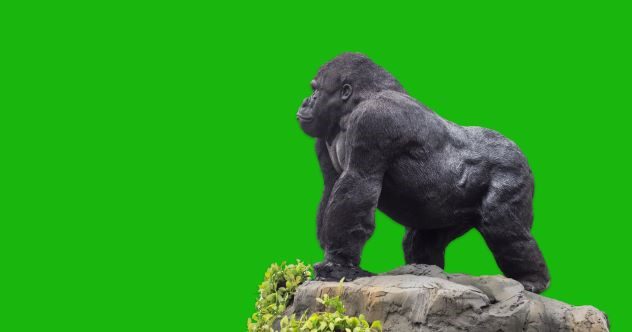
10 CGI Characters That Pushed Special Effects Teams to the Limit

In the mesmerizing world of blockbuster filmmaking, the digital revolution has ushered in an era where the fantastical becomes nearly tangible. As audiences crave more spectacular and immersive experiences, the pressure mounts on special effects teams to create mind-bending visual spectacles. This list highlights ten revolutionary computer-generated characters whose complexity didn’t just push the boundaries […] The post 10 CGI Characters That Pushed Special Effects Teams to the Limit appeared first on Listverse.
Like
Comment
Share
Fun Facts And Interesting Bits
2 yrs

10 Historical Sites Every Traveler Should Visit
Favicon 
listverse.com

10 Historical Sites Every Traveler Should Visit

Ready to follow in the footsteps of history? This tour of ten must-visit historical sites will excite your inner history buff. From ancient wonders to modern marvels, these spots are the real deal. Related: Top 10 UK Locations from Literary Works That You Can Actually Visit 10 Colosseum Four million visitors marvel at the Colosseum’s […] The post 10 Historical Sites Every Traveler Should Visit appeared first on Listverse.
Like
Comment
Share
Fun Facts And Interesting Bits
2 yrs

The 10 Most Useless Inventions in Human History
Favicon 
listverse.com

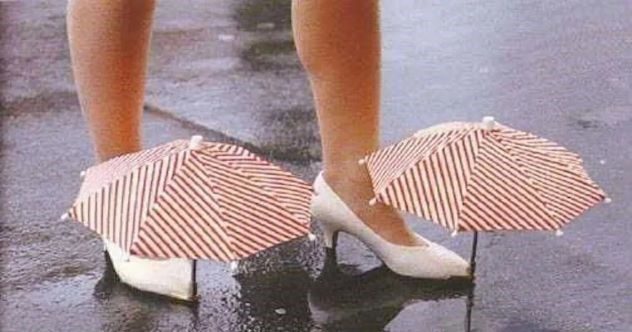
The 10 Most Useless Inventions in Human History

Throughout history, human ingenuity has given birth to inventions that have transformed lives, shaped societies, and propelled civilizations forward. From the wheel to the internet, these innovations have marked significant milestones in human development. However, not every creation has been a hit. In the vast ocean of ingenuity, there are some inventions that, despite their […] The post The 10 Most Useless Inventions in Human History appeared first on Listverse.
Like
Comment
Share
Showing 29280 out of 56670
  • 29276
  • 29277
  • 29278
  • 29279
  • 29280
  • 29281
  • 29282
  • 29283
  • 29284
  • 29285
  • 29286
  • 29287
  • 29288
  • 29289
  • 29290
  • 29291
  • 29292
  • 29293
  • 29294
  • 29295

Edit Offer

Add tier


Select an image
Delete your tier
Are you sure you want to delete this tier?

Reviews

In order to sell your content and posts, start by creating a few packages. Monetization

Pay By Wallet

Payment Alert

You are about to purchase the items, do you want to proceed?

Request a Refund