YubNub Social YubNub Social
    Advanced Search
  • Login

  • Night mode
  • © 2025 YubNub Social
    About • Directory • Contact Us • Privacy Policy • Terms of Use • Android • Apple iOS • Get Our App

    Select Language

  • English
Install our *FREE* WEB APP! (PWA)
Night mode
Community
News Feed (Home) Popular Posts Events Blog Market Forum
Media
Headline News VidWatch Game Zone Top PodCasts
Explore
Explore Jobs Offers
© 2025 YubNub Social
  • English
About • Directory • Contact Us • Privacy Policy • Terms of Use • Android • Apple iOS • Get Our App

Discover posts

Posts

Users

Pages

Group

Blog

Market

Events

Games

Forum

Jobs

Conservative Voices
Conservative Voices
1 y

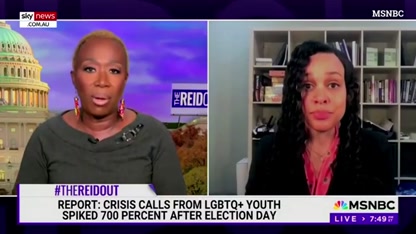
MSNBC guest urges viewers to shun family members who voted for Trump
Favicon 
www.brighteon.com

MSNBC guest urges viewers to shun family members who voted for Trump

Follow NewsClips channel at Brighteon.com for more updatesSubscribe to Brighteon newsletter to get the latest news and more featured videos: https://support.brighteon.com/Subscribe.html
Like
Comment
Share
Conservative Voices
Conservative Voices
1 y

How Gaza Saved America
Favicon 
www.theamericanconservative.com

How Gaza Saved America

Politics How Gaza Saved America Trump’s commitment to peace was part of his broad appeal. Credit: image via Shutterstock The work of my organization, the Vulnerable People Project, is to stand with the vulnerable at their darkest moments. It’s our honor and privilege to bring aid and comfort to these brave people in impossible situations, often when it seems the whole world is eager to move on in the aftermath of some great violation of their dignity and worth. We’re active in advocating for the Uighurs held in concentration camps by the Chinese Communist Party in Chinese-occupied East Turkestan, the Yezidi, Christians, and other minority communities besieged and assaulted by ISIS and other violent factions throughout the Middle East, and American allies and friends abandoned to the Taliban in Afghanistan after the catastrophic U.S. withdrawal.  Most recently, VPP has advocated for Palestinians trapped and slaughtered by Israel’s unpopular and corrupt Benjamin Netanyahu regime in Gaza.  Tens of thousands of women and children—civilians—have lost their lives in Gaza since Hamas’s October 7 attack in Israel last year. And to the horror of a growing number of onlookers, many powerful voices among the political and media classes in the U.S. have not only ignored the carnage, but openly egged it on. Worse, the upper echelons of the Democratic Party’s presidential campaign even vowed to make sure the violence would continue. So it took tremendous courage for President-elect Donald Trump to stand with the suffering people of Gaza during his own campaign. And when he did so, he also showed courage in standing with the American people in their revulsion for what he calls the “forever wars” of the foreign policy establishment. Trump has been rock-solid in his consistent advocacy for peace and his outspokenness against war, from the frenzied and disastrous months following the terrorist attacks of 9/11 under the George W. Bush administration to the reckless and thoughtless actions in Afghanistan and Ukraine under the Biden-Harris administration. Months ago, Trump played a pivotal role in scuttling a bill that fooled more than a few lawmakers on both sides of the aisle. Under the guise of addressing the humanitarian crisis at the U.S. border, the measure would have actually granted huge sums of money to continue (and escalate) the senseless deaths of millions in the Ukraine war.  Trump took his stand without flinching at the risks, and Democrats punished him with months of false rhetoric claiming his party had proved itself cynical—when in fact it had acted with a preference for peace and a respect for American taxpayers’ good-hearted rejection of U.S.-funded violence. And Trump also spoke out boldly on behalf of Middle Eastern minority communities in the U.S. during his campaign, promising to stand against “warhawks” like the Cheney and Bush families. Members of both those families, meanwhile, endorsed the Harris campaign—as did numerous pro-war political military brass and intelligence officials with cushy jobs in D.C. Trump made visits to Muslim- and Arab-majority communities like Dearborn, Michigan, where a young immigrant voter last week called out to him: “Trump, what do you have to say about Gaza?”  “It’s gotta stop,” Trump answered on the spot. “What we want is peace.” As CatholicVote reported this week, Mayor Amer Ghalib, a Democrat, of majority-Muslim Hamtramck, Michigan, endorsed Trump in September, citing the candidate’s commitment to peace. The numbers of Middle-Eastern migrant voters who helped bring about Trump’s victory this week are both historic and a direct result of his advocacy for peace. On Wednesday, the New York Times reported, “Unofficial results released by the city of Dearborn show that Mr. Trump won 42 percent of the vote in Dearborn, compared with 36 percent for Ms. Harris and 18 percent for the Green Party candidate, Jill Stein.” In 2020, the Biden-Harris Democratic ticket carried Dearborn with just under 70 percent of the vote, per the Times. “Ameen Almudhari, a 33-year-old Yemeni-American Dearborn resident, told the Times that he voted for Trump in 2024 after backing Biden-Harris in 2020 due to the foreign policy views of the respective candidates,” CatholicVote’s report continues: The Times reported that Almudhari “faulted” President Joe Biden “for spending American money to support the wars in Gaza and Ukraine.” The voter’s 10-year-old son enthusiastically exclaimed to the Times, “Trump will end the war!” Outside of Trump’s campaign, the picture was much bleaker over the last year. To judge from some talk by network commentators, from speeches by prominent men like former President Bill Clinton as he stumped for the Democratic ticket, and even from the efforts of certain voices on the political right who hoped to steer the Trump campaign, you might have thought the antiwar movement had disappeared completely from American public life. During these long months, that movement of solidarity with the vulnerable needed a Thomas Paine. “These are the times that try men’s souls,” he might have written just before the last year of the presidential election cycle got fully underway. “The summer soldier and the sunshine patriot will, in this crisis, shrink from the service of his vulnerable brothers and sisters in Gaza; but he that stands by them now deserves the love and thanks of man and woman.” On the road to his triumphant return to the White House, Trump became that voice.  Faced with the military-industrial complex and the Washington establishment’s cynical use of Zionism to justify the abject abuse of Palestinians, Trump could have kept quiet. He could have justified ignoring the violence as a political strategy, or dismissed the deaths as a distraction from domestic cultural issues. Instead, he spoke out clearly and definitively for peace.  Not only that, but he did so in the middle of a last-ditch effort to reclaim the presidency and right the American ship—staking his own fortunes and the future of his country on the claim that all are equally endowed with inalienable, incomparable dignity and worth, including the people of Gaza. Because Trump seems to understand intuitively something that I and my team at VPP have had the privilege of learning over the years: there is a consolation and honor in throwing in your lot with the vulnerable, and it’s worth far more than all the comforts and assurances you might gain from the world by abandoning America’s foundational principle of solidarity when it’s put to the test. He understands that America is more itself—and truly made great again—by returning to that principle. And he has said with Paine: “If there must be trouble, let it be in my day, that my child may have peace.” The post How Gaza Saved America appeared first on The American Conservative.
Like
Comment
Share
Conservative Voices
Conservative Voices
1 y

Why Harris Lost
Favicon 
www.theamericanconservative.com

Why Harris Lost

Politics Why Harris Lost “Fascism” gets you only so far. Credit: image via Shutterstock This was an angry election; none of that “which candidate would you rather have a beer with” stuff here. Trump is an angry man representing angry constituents. Harris was angry that things were not going her way and constantly expressed the Hillary-esque idea “How could I possibly be losing to a guy like Trump?” Both sides prioritized personal attacks over policy. At times it felt like elementary-school playground stuff, name-calling, but in the end it was much more serious than that. Harris lost because she tried to make “Trump is a fascist” her closing argument, and no one was listening anymore. The girl had cried wolf for the last time. Now, to be fair, Harris’s fate also rested on the fact that she is wholly unqualified for the toughest job in the world, having distinguished herself as Vice President of Nothing. She was an empty suit and kept showing it. A candidate created whole in the womb by the media with a past that supposedly did not matter and a future as vague as her recollections of that past. She had one job—the border—and made a royal mess out of doing nothing about the many problems there to the point where thousands of migrants (we use the word as a generic term because no one in the Harris house cared whether they were legal, illegal, asylees, protected peoples or whatever witches’ brew our immigration system could cook up) poured in. Harris did nothing of substance as VP; she made matters worse by having no real plans or policies for her presidency besides giving away money. Softball questions from the ever-so compliant mainstream media were met with ever-vaguer answers, bits of biography, and the odd nasty remark about Trump. It was Orange Man Bad all over, and the electorate had had enough. Trump’s shortcomings were baked in after what seems like an eternity of campaigning, never mind four years in the White House itself. The Never Trumpers had had their day four years ago. Most Americans had taken Trump’s measure, for good or ill. By contrast, many Americans remained unsure who Harris was and what she stood for. In the background, Biden’s inflation and the fastest rise in interest rates since the early 1980s nagged. And working people worry much more about payday than they do January 6. January 6 was an embarrassing day for America, but a) it had no chance of making Trump the election winner and b) two weeks later, with not much in between, Biden was inaugurated. It was all about a day of rage, an angry expression of an unfavorable situation not unlike the BLM protests one summer that burned down pharmacies and convenience stores but accomplished little more. The system worked. The riot was put down. Congress, including Republicans, reassembled and certified Biden as the next president. Rage is not insurrection, and while the people seemed to have figured this out by Election Day 2024, Harris and her ilk never did. It made Harris seem uninformed and out of touch, desperate enough to get elected to cry broadly that the sky is falling over and over. It was a tactic that did not work in 2016, was not decisive in 2020, and had little air left in it for 2024, except for the MSM and the Harris campaign, basically one and the same anyway. Still, some of it might have stuck had it not come on the heels of the seemingly endless and seemingly pointless lawfare campaign. Mollie Hemingway of the Federalist wrote,  This lawfare against Donald Trump has been their beginning argument, middle argument, and ending argument. It obviously has backfired completely. The whole goal was to make sure that Donald Trump would be imprisoned, bankrupted, so discouraged, so distracted by being off the campaign trail dealing with these various examples of lawfare from Democrat prosecutors at the federal and state and local level, that he wouldn’t win. Well, he’s about to win, most likely, and it is a stunning rejection by the American people of that lawfare campaign. “Should Trump defy history and return to the White House as a convicted felon, he will send a message to the world that elections don’t matter,” added the Daily Beast, quite unaware of how democracy and elections work. There were other factors. History may regard 2024 as a peak for gender-based politics, wrote the Wall Street Journal: “Mr. Trump’s all-out appeal to a controversial model of masculinity that emphasizes toughness and strength is mobilizing hard-to-reach men, including members of racial and ethnic minorities. This prospect obviously worried the Harris campaign, which rushed out an agenda for black men.” The media has so little credibility left its endless formal and informal endorsement of Harris not only did not matter but was tiresome. So desperate for an October surprise, they beclowned themselves with stories like this. The Atlantic had published a similar Hail Mary story in September 2020 citing anonymous sources claiming Trump canceled a 2018 visit to a French cemetery where American troops are buried, declaring that they were “suckers” and “losers.” The credibility of that story has also been refuted, with former national security adviser John Bolton denying Trump uttered those words and asserting the former president did not visit the cemetery for reasons related to weather and security. So why not try a failed move again? And Liz Cheney—in what alternate universe did it seem like a good idea to bring in the Cheney family to help support a Democrat with progressive followers? Dick is personally responsible for the deaths of millions and Liz does not believe in abortion (or she didn’t used to, anyhow). Where are the Democratic votes in that pile of war-mongering neoconism? But the worst was saved for last, a Harris campaign closing argument based on a coordinated effort to proclaim that Trump is an actual fascist, a real-life Dr. Evil who seeks the presidency so that he can rule as a dictator, destroying the Constitution and the rule of law as he goes about his nefarious tasks. It is the ultimate expression of Trump Derangement Syndrome, the apogee of Orange Man Bad. And it is what the Harris campaign chose to run on in the campaign’s final days. The coordinated fascist line began with Generals Kelly and Milley announcing that Trump is a flat-out fascist who seeks to be a dictator. Kamala Harris called an “emergency” press conference to tell the world that he is the second coming of Adolf Hitler. “Donald Trump is out for unchecked power. He wants a military like Adolf Hitler had, who will be loyal to him, not our Constitution,” she said. “He is unhinged, unstable, and given a second term, there would be no one to stop him from pursuing his worst impulses.”  “‘He’s Talking Like Hitler’,” blared a headline for the Atlantic’s Anne Applebaum, who warned that Trump wants “absolute power” in his second term. She also spoke about the similarities between Trump’s rhetoric and what she found in her research from the archives of East Germany’s secret police, the Stasi. “Trump is Hitler,” claimed James Carville.  “Donald Trump’s got this big rally going at Madison Square Garden. There’s a direct parallel to a big rally that happened in the 1930s at Madison Square Garden,” Tim Walz said during a campaign stop.  Other Democrats such as Hillary Clinton made similar comparisons. Liz Cheney declared with authority either you vote for Harris, or this “may well be the last real vote you ever get to cast.” Whoopi Goldberg even explained how Trump is committed to being a dictator who will “put you people away… take all the journalists… take all the gay folks… move you all around and disappear you.” The October Surprise was the Dems ran out of ideas and could only fling around the f-word. So much for the convention-era Harris’s promise of joy. The public did not buy it. When asked whether Trump or Harris “would do a better job” of “defending against threats to democracy,” 43 percent picked Trump, while 40 percent chose Harris. This was the same result when Biden was the nominee. While over half said that threats to democracy were important to them, the voters trusted Trump (44 percent) more than Biden (33 percent) to protect democracy. Voters, featured on Mark Halperin’s 2WAY platform, commented that Harris’s Hitler remarks were off-putting or unlikely to help her win the November election, while none raised their hands when Halperin asked if the vice president should be campaigning on this issue. Most damning of all, Harris’s Hitler remarks were called out by an actual Holocaust survivor. In a powerful video clip circulating on social media, Jerry Wartski blasted Harris and her fellow Dems for comparing Trump to Hitler and his supporters to Nazis.  “Adolf Hitler invaded Poland when I was nine years old. He murdered my parents and most of our family. I know more about Hitler than Kamala will ever know in a thousand lifetimes,” he said. “For Harris to accuse President Trump of being like Hitler is the worst thing I’ve ever heard in my 75 years living in the United States.” When your campaign is based on insulting the memories of actual Holocaust survivors for political gain, it has run out of gas. Kamala Harris ended up where she did most of all because she had no real connection to the American people. She was a manufactured entity, full of catchphrases at first, paranoid, bitter insults at the last. Her disappearance from public life will not be missed. The post Why Harris Lost appeared first on The American Conservative.
Like
Comment
Share
Intel Uncensored
Intel Uncensored
1 y

"Of Course RFK Jr is Not Gonna Run the HHS" - Trump Transition Team Co-Chair Howard Lutnick. They Li
Favicon 
api.bitchute.com

"Of Course RFK Jr is Not Gonna Run the HHS" - Trump Transition Team Co-Chair Howard Lutnick. They Li

"Of Course RFK Jr is Not Gonna Run the HHS" - Trump Transition Team Co-Chair Howard Lutnick. They Lied to us - November 11th, 2024 Posted by: Silview.media - Also see: Massive Astounding Hypocrisy Alert #MAHA - https://silview.media/2024/11/11/massive-astounding-hypocrisy-alert-maha/ - Check out our original memes site: https://truth-memes.com Buy me a coffee: https://ko-fi.com/silview - FAIR USE FOR EDUCATIONAL PURPOSES Mirrored From: https://old.bitchute.com/channel/silview/
Like
Comment
Share
Classic Rock Lovers
Classic Rock Lovers  
1 y

“Very tense”: How the Marx brothers inspired Pink Floyd’s wild live shows
Favicon 
faroutmagazine.co.uk

“Very tense”: How the Marx brothers inspired Pink Floyd’s wild live shows

"I don't think It had ever been done before." The post “Very tense”: How the Marx brothers inspired Pink Floyd’s wild live shows first appeared on Far Out Magazine.
Like
Comment
Share
Intel Uncensored
Intel Uncensored
1 y

Trump, a product made from the moral bankruptcy of the Democratic Party
Favicon 
www.sgtreport.com

Trump, a product made from the moral bankruptcy of the Democratic Party

by Hugo Dionísio, Strategic Culture: Immigration, abortion, wokism, the Ukrainian war, eternal wars, reindustrialization and protectionism. With the exception of abortion and Wokism (identitarianism), which are matters concerned with each one’s conscience rather than about structural policy, they all represent, in some way, some of the most brutal consequences of neoliberalism in the U.S., and […]
Like
Comment
Share
BlabberBuzz Feed
BlabberBuzz Feed
1 y

ONE More Interesting Election Tidbit That We Can't Let Fall Through The Cracks...
Favicon 
www.blabber.buzz

ONE More Interesting Election Tidbit That We Can't Let Fall Through The Cracks...

Like
Comment
Share
Living In Faith
Living In Faith
1 y

From the Last Lynching to a Multiethnic Merger in Missouri
Favicon 
www.thegospelcoalition.org

From the Last Lynching to a Multiethnic Merger in Missouri

The last lynching of a black man in Missouri happened on a Sunday. During church. In front of a church. The victim was Cleo Wright, who allegedly broke into a house where two white women were staying around 1:00 a.m. on Sunday. During the attack, one of them—Grace Sturgeon—was slashed deeply across the abdomen and three of her fingers were nearly taken off. Soon after, police found Wright spattered with blood and carrying a bloody knife. He said he’d been in a fight with another man but, after a struggle, he was arrested and taken to jail. By late morning, an angry mob had gathered, some joining in when they saw the commotion on their way to church. The mob shoved their way into the jailhouse, grabbed Wright, dragged him behind a car through the African American side of town, then doused him with gasoline and burned his body in front of two black churches. The Smith Chapel building is at the corner of Osage and Young Streets in Sikeston, Missouri / Courtesy of Google Maps One of those churches was Smith Chapel United Methodist. At first, pastor J. B. Ross thought the smoke was a burning car. He ignored it and kept on preaching until someone came in from the street with the news of what was happening. Most of the lynchers who were later named didn’t attend church, though one had been baptized at the 1,000-member First Baptist Church several years earlier. Later, one of the police officers also joined the congregation. About 20 years after Wright’s death, members of First Baptist started Trinity Baptist. Ten years later, the Trinity congregation called a pastor with a heart for racial reconciliation. Thirty years later, they called a pastor and his wife whose adopted African American sons sparked an even deeper desire for a gospel-preaching, multiethnic congregation. Across town, at Smith Chapel, the congregation was also calling a pastor who longed for a biblically faithful, racially diverse church. In 2017, the two pastors connected, and they eventually led their churches through a merger. Today, the congregation worships in the little chapel a few hundred feet from where Wright was killed. Together, they sing, serve, and have broken ground on an ambitious $4.5 million community center for their underresourced neighborhood. “God sees the beginning and the end,” pastor Kenny King said. “This is what he does—more than we can ask or imagine.” Kenny King King was born in Sikeston and grew up going to Smith Chapel. But when he left for college in 1997, he didn’t plan to return to either one. That’s not too hard to understand—with a population of 16,000, Sikeston doesn’t offer a lot of economic opportunities for an ambitious young black man. The poverty rate for black residents is nearly 37 percent, more than three times higher than the national number for all races. On top of that, Sikeston is unusually violent—the rate of murders, rapes, robberies, and assaults regularly soars above the national average. Smith Chapel also wasn’t appealing to King. Kenny and Yolanda King / Courtesy of Kenny King’s Facebook page “When I was in college, I became an anti-theist,” he said. “I hated the idea of God and of religion. It seemed odd to me that bad things happen to good people and good things happen to bad people. I didn’t like that, so I rebelled against it.” But King’s logical mind also knew that evolution couldn’t explain the complicated beauty of the natural world. And if there was a God, it followed that humans should work to be good enough to please him. So after college, he told God he’d go to church just as soon as he got his life together. When a couple years passed and King was no closer to getting his life together, he submitted it to the Lord. He spent the next few years at an Evangelical Free church in the suburbs of St. Louis, reading Francis Chan, Tim Keller, and John Piper and learning how to lead small groups, be an elder, and plant a church. “I didn’t want to go back to Sikeston at all,” King said. “But God, in his sense of humor, gave me a calling to Sikeston.” This became especially clear after Michael Brown was killed in Ferguson, just 15 minutes from where King lived. “Sikeston has a sordid history when it comes to race relations, and I felt like the town needed a diverse church,” King said. One of his favorite things about his St. Louis congregation, besides the solid theology, was the racial diversity. “If the church can’t be together, then how is the world going to be together?” he reasoned. “If we believe Christ is the hope of the world, the church should lead the way in reconciliation.” Got it, King thought. The Lord will use me to plant a diverse church that will give him glory and show people the beauty of Christian unity. But that wasn’t what happened. Smith Chapel UMC King had barely gathered a core church planting team when the pastor at Smith Chapel retired. Never large, the church had shrunk to about 25 weekly attendees. The congregation asked if he’d consider filling it. King, who didn’t want an all-black church and didn’t agree with Methodist theology, said he’d think about it. “I went through the process basically trying to sabotage myself,” he said. “I was really honest and blunt about how I felt about the denomination and the church. I thought there was no way anybody would want me there, and I could go back to church planting.” He told them he believed in the Bible’s inerrancy, in complementarianism, and in believer’s baptism. A few months later, Smith Chapel called him to be their pastor. “At a certain point I realized this is something God wants to happen,” King said. “Maybe I’d have an Isaiah ministry of preaching judgment or something. Maybe I’d close the doors. I didn’t like that idea, but if that’s what God was doing, I’d do it.” He was just as straightforward in the pulpit as he was in the candidate interviews. Smith Chapel congregants volunteering at Feed My Starving Children in May 2017 / Courtesy of Kenny King’s Facebook page “My first series was systematic theology—the basics of the faith, who God is, what the Bible is, how we’re supposed to feel about the Word of God,” King said. After that, he began preaching through Matthew. “We got rid of the extra-curriculum that came from the denomination and studied the Word,” King said. “The people soaked it up.” Next, King knew he was going to have to deal with the mainline United Methodist Church (UMC). The church of John and Charles Wesley was rapidly losing its theology and its members. Trying to figure out what exactly was going on, King joined some regional committees. “I found the problem was more deeply rooted than I could’ve imagined,” he said. “I could preach the Word and uproot some of the falsities my congregation holds to. But while I can probably turn a fishing boat, I can’t turn an aircraft carrier.” Smith Chapel, which had been planted by the UMC in 1923, was going to have to figure out a way out. Trinity Baptist Across town, pastor William Marshall came to Trinity Baptist Church fresh out of seminary. It wasn’t an easy transition—the previous pastor had served for 30 years. William and his wife, Glenna, were from out of town. And the couple was just beginning a struggle with infertility. “I didn’t know what I was doing half the time,” Marshall said. Trinity, which had about 100 members when he arrived, began to shrink, especially when it became clear Marshall was preaching longer sermons than the previous pastor and wanted to have communion every week. About eight years later, when he attempted to slowly move the church toward a plurality of elders, some saw it as a power move. Attendance shrank even more. In 2005, 27-year-old William Marshall and his wife, Glenna, moved to Sikeston / Courtesy of Glenna Marshall’s Instagram page “The first 10 years were really hard,” he said. “I couldn’t go to Walmart without running into ex–church members.” But while his church was contracting, his family was expanding. In 2008, the Marshalls adopted an African American baby boy named Isaiah. Seven years later, they adopted Ian, who is biracial. Marshall started to notice the lingering segregation in Sikeston—the white pastors’ group was separate from the black pastors’ gathering. At the local school, white fans and black fans sat on opposite ends of the bleachers during basketball games. But his biggest worry as a new father wasn’t that his boy wouldn’t know where to sit in the bleachers, or even that he might be unfairly pulled over by the cops or discriminated against at work. “I didn’t want Isaiah to think Christianity was a white man’s religion,” said Marshall, who felt this so deeply it still makes him cry a little. But what could he do? He was the white pastor of a predominately white church. William, Glenna, Isaiah, and Ian Marshall / Courtesy of William Marshall “I began to pray, Lord, I don’t even know how to address this or what to do.” At the same time, Trinity was beginning to hold evangelistic meetings in the parks around Sikeston. On Sunday nights, members would light up a grill, walk around the neighborhood, and invite people for free hot dogs and a church service. “We’d have some food, a brief gospel conversation, and some songs people love,” Marshall said. “When we went to the park on the west end of Sikeston—which is the African American community park—we had such a good response that we decided to go there all the time instead of rotating around.” In fact, the response was so good that one summer Trinity hosted a VBS in that park. But the location wasn’t a natural fit—it was “about as far away from our church building as you could get and still be in Sikeston,” Marshall said. “I began praying for a church in the neighborhood that we could partner with.” Fields of Faith In 2017, the local Fellowship of Christian Athletes asked King if he’d speak at their Fields of Faith youth conference. He preached on Ephesians 2. “I saw the speaker was a black man, and I was like, Oh, man, I’m interested,” said Marshall, who brought some of the Trinity youth group to the event. “He’s quoting Francis Chan, and I’m leaning in. I’m like, What does this guy believe about the gospel? And it was solid.” Marshall wasn’t even in the parking lot before he pulled out his phone. “On my way back to the car, I was looking him up on Facebook,” he said. “I sent him a message—‘Hey, I’m a pastor in town and heard you at Fields of Faith. Let’s get lunch together.’” Kenny said sure. Everything Happens at Lunch At their first lunch, Marshall asked King which church he served. “Smith Chapel United Methodist Church,” King said. Well, that’s the end of that, thought Marshall, surprised and disappointed. Maybe King wouldn’t be the ministry friend he was hoping for. Marshall tried again: “In order for your church to be healthy, what needs to happen?” From left to right: William Marshall, elder Lucas Polk, Tyrone White, Barry Wallace, and Kenny King at T4G in 2022 / Courtesy of Kenny King’s Facebook page King didn’t even hesitate. “We need to leave the denomination.” OK, this guy is who I thought he was, Marshall thought. They started meeting monthly for lunch, talking about theology, ideas for ministry, and preaching. King talked about the process of buying his building from the UMC. Marshall talked about the revitalization process of the Southern Baptist Convention (SBC)—because Trinity was small, they’d offered to be guinea pigs for some new ideas. One of the ideas was merging with another church. Immediately, Marshall had thought of King. When he ran the idea past a church member, expecting him to laugh, the man told him it would be “incredible.” So a few weeks later, again at lunch, he threw the idea at King. “What are you going to do after you leave the UMC?” Marshall asked him. And then, “What would you think about merging with us?” He was nervous to say it. But if King said it was ridiculous, Marshall figured they’d just laugh and keep eating their barbecue. King didn’t say no. Is this God’s way of giving me the diverse church I desired in Sikeston? he thought. Probably not. He was already pushing his people out of their denomination. There was no way they were going to merge with a Southern Baptist congregation. “Let me ask my church,” he said. Tyrone White Tyrone White was born into the Smith Chapel family, but that doesn’t mean he spent all his Sundays in church. “I went to the Marine Corps in 1981, and when I came back I was a street guy,” he said. “I was all about the world.” Though he was drinking a lot of alcohol, doing a lot of drugs, and sleeping with a lot of women, White felt he was a pretty good person. After all, he hadn’t killed anybody. Tyrone White and Glenna Marshall in 2024 / Courtesy of Glenna Marshall He was 51 when he seemed to hear a voice in his head: This is no longer fun for you. “I’m thinking I’m tweaking,” he said. “But it happened again: This is no fun for you.” White knew that wasn’t his idea—he’d always scorned the boring lives of husbands and wives who worked jobs, ate dinner together, and went to church. But the voice was right; his life was no longer fun. “I told myself I’ve got to stop doing cocaine, but I can still drink,” White said. “But God took the taste out of my mouth. To this day I haven’t had a drink or a snort of cocaine.” White began reading the Our Daily Bread devotional, then the Bible. He began sitting in the back—and then the front—of Smith Chapel listening to King preach. “I wasn’t trying to change,” he said. “God changed me.” One thing the new version of White did was walk the track in the YMCA in the mornings. He liked the white guy who checked him in, because he was always singing gospel songs. But at first, he was scared of the other white guy with a beard who walked the track at the same time he did. “I see white men with a beard, and I think biker KKK,” he said. But, White continued, “He spoke kindly to me.” The man’s name was Barry Wallace, and the two struck up an early morning, walking-and-talking friendship. So when King started talking about merging with a white church, White was game. And when the two congregations tried worshiping together, White was ecstatic. “These people come to our church, and there is Barry Wallace,” he said. “And the white guy at reception was William the pastor. My mouth dropped open. I was dumbfounded. I was singing in my heart.” White was probably the most enthusiastic about the merger. But the rest of the people weren’t far behind. Enthusiasm for Change “I was totally shocked by how open the people were,” King said. “I’m always wondering in the back of my mind if they’re saying things because I’m saying them, and they don’t want to come against the pastor. . . . But they were excited about it. We do a prayer meeting every Tuesday morning, and we had the most participation during that time.” He explained to them the history of the SBC, which was formed in 1845 to support slavery but has since publicly repented. His congregation asked if they were bearing fruit in keeping with repentance. He said he thought they were. “There was a church merge in Iowa a little before we merged,” King said. “I printed out that story and gave copies to everybody. It was very encouraging for them. And I’d been preaching from the Word of God about how the church should look, so their hearts were bent towards it.” Meanwhile, in a meeting at Trinity, deacon Brandon Blankenship stood up and chronicled the ways God had been preparing them—from the previous pastor’s love of racial reconciliation to Isaiah and Ian to the outreach in the West End. “It was almost like the whole room had our blinders taken off,” Marshall said. “There was almost an audible sigh, where we went, ‘Yes. That’s what the Lord’s been doing.’” Neither congregation wasted time messing around. The first official conversation about merging was in June, and in mid-September, the two churches launched as Grace Bible Fellowship. For the first six months, everything was great. COVID-19 It made sense for Smith Chapel’s congregation to drive over to Trinity. The larger sanctuary could seat 300, and there was plenty of space for parking and rooms for children’s programming. The merge was unusual enough to make the news, and people were curious. “Community people were coming—people we’d never seen before,” said Grace Bible Fellowship member Christie Rodgers. “They wanted to see what this was all about. Then it was March of 2020, and all of that ended.” Grace Bible Fellowship’s first service together in Trinity’s building / Courtesy of Kenny King For many churches, 2020 was was a hard year for church unity. You might expect the fights to be exponentially worse at a brand-new merger of a black church and a white church, coming from two different denominations, with different feelings about masks and risks and death rates, in a town with an ugly racial history. Instead, “it felt like a congregation who trusted its leadership would work through things and communicate,” Blankenship said. “I don’t think there was really any question—we were going to do whatever our leadership thought was best.” The leaders, for their part, kept preaching through the Bible. “The pastors didn’t make it about social issues,” Rodgers said. “They said ‘Love each other’ and ‘How are we going to love each other?’” Together, they socially distanced, checked on each other, and packed meals to hand out from the church building once a week. “Our people understood the gravity of what we were doing, and we didn’t want to bring disrepute to Christ’s name,” King said. Eerily Similar If the COVID-19 unity was surprising, so was the ease of combining the worship services. In general, black churches and white churches have different preaching and singing styles. But Smith Chapel wasn’t typical. “We didn’t get up and do clapping and stuff,” White said. “We were Methodist. Our music was from the hymnal. We didn’t have that rocking beat like most black Baptists have.” Glenna and William Marshall with Kenny and Yolanda King / Courtesy of Grace Bible Fellowship’s Facebook page When Marshall made a list of the top 25 favorite songs from each congregation, more than half were the same. The pastors’ preaching habits were also oddly similar. “It was really weird,” Marshall said. “We’d even use the same phrases. The very first time Kenny preached at Trinity, everybody’s looking at me like, Did you tell him to say that?” Not only did the two pastors agree on major issues such as biblical inerrancy and the doctrine of God and salvation, but they also agreed on a plurality of elders, the gifts of the Spirit, and church membership. “We had to work hard to find tertiary issues we disagreed on,” Marshall said. So even though you’d never predict it, everything at Grace Bible Fellowship was going smoothly. The brand-new congregation had weathered a global pandemic and national racial unrest with barely a peep. They’d seamlessly joined their worship services. They had more paid-off property than they needed. But something wasn’t quite right. Grace Bible Fellowship Both halves of Grace Bible Fellowship wanted to minister in the West End. But the merger hadn’t actually helped with that. “The last thing I wanted to do was take a good, faithful, Bible-preaching church out of the West End,” Marshall said. “We began to say, ‘What do we do now?’” It was easy to dream: the congregation wanted to build a place in the West End where they could not only worship on Sunday but also host after-school tutoring programs, run a food ministry, and let neighborhood kids play basketball during the week. That was going to cost a lot of money, which Grace Bible Fellowship didn’t have. But they did have property. They had the Trinity building appraised. Then they hired a realtor, who told them it was hard to sell a church building and that it might take more than a year. “Before we got Trinity even listed, another church offered us more than it appraised for,” King said. With the money from the property—plus a sizable grant—Grace Bible Fellowship bought land and broke ground on a new church and community center in the West End. The project should be complete by September 2025. Grace Bible Fellowship’s first meeting in Smith Chapel in June 2024 / Courtesy of Kenny King Until then, the congregation meets in Smith Chapel, which is only three blocks away. “On that first Sunday, we realized we can hear one another singing so much better in the confined space,” King said. “It was so glorious—everybody was blown away from the time that first song rang out. We all looked at one another, or went into full arms-up, looking to heaven.” The singing is so loud that Rodgers wonders if people passing by outside can hear them. “You just feel close—a happy closeness,” she said. She can’t wait to share that with the neighbors. “We’re looking forward to being able to really invite the community in,” Rodgers said. “We’re constantly inviting them to worship with us now, but sometimes you need to be able to draw them in with other things too.” “We want to sit down next to somebody watching their kid playing basketball and ask if they want to come back for church on Sunday—and bring the kids,” Marshall said. Rendering of the completed Grace Community Center / Courtesy of Grace Community Center The neighbors are already looking forward to the possibilities—a gym, laundry facilities, a daycare. It’s a huge accomplishment for a church that has 70 weekly attendees, counting kids. “You want to be where God is moving,” Blankenship said. “You don’t want to ever limit what God can do. You want to be open and receptive, because if you trust in him, he’ll take you places you never even dreamed of. That’s a good lesson for all of us.” “It is all God,” White said. “God is doing a marvelous work in us and through us—and he will do it until the end.”
Like
Comment
Share
Living In Faith
Living In Faith
1 y

4 Pitfalls in Women’s Ministry Leadership
Favicon 
www.thegospelcoalition.org

4 Pitfalls in Women’s Ministry Leadership

My leadership journey began as the firstborn with two younger sisters. I held their hands to cross the street and told them what to do. I can’t remember a time when I didn’t feel responsible for people or for advancing ideas. In college, my friends called me the go-to girl—“If you want something done, go to Karen.” I fed on the verbal affirmation of my external giftedness, but eventually, this revealed a vacuum of internal substance. The years brought many up-front leadership opportunities at school and church, eventually culminating in a vocation in women’s ministry. Along the way, I realized I wasn’t leading anyone when I functioned as the go-to girl. When I tried to do it all, I wasn’t focusing on the primary goal of servant leadership—making disciples. Eventually, my immature leadership made me a desperate leader. I ran to Jesus, praying, “Help me rest in you and place my confidence in your record of righteousness. Forgive me for relying on my own strength and abilities.” Thankfully, God’s power is made perfect in weak, needy, and dependent leaders (2 Cor. 12:9). As I sought to grow as a servant leader, I had to confront my misguided notions of what leadership should look like, and I came to recognize common pitfalls we can stumble into as women’s ministry leaders. Misconceptions and Motivations When I tried to do it all, I wasn’t focusing on the primary goal of servant leadership—making disciples. Most of us have taken our ideas about leadership from culture or the corporate world. But biblical leadership is radically different. It’s not synonymous with authority or decision-making. It has little to do with a title or a role. It’s upside down. It holds within it the potential to be life-giving or life-taking. Biblical leadership is servant leadership, and servant leadership isn’t a popular methodology—it’s a glorious invitation to become more like Jesus. While there’s no formula for servant leadership, I offer four personal pitfalls I’ve had to repent of to the Lord and others over the years. 1. Position-Oriented Position-oriented leadership is shaped by the leader’s title rather than by the group’s purposes. I was young when I started in women’s ministry, and I naively compensated for my lack of experience by finding power in my official position or title. I was rarely team-focused or collaborative in my approach because, in pride, I thought I knew better. Usually, when a hierarchical culture exists, structure trumps leadership development, and the leader lacks outside perspective and accountability. 2. Personality-Driven Personality-driven leadership revolves around the leader’s strengths. I fancied myself an extrovert who loved the sound of my own voice. You don’t know you’ve fostered a territorial spirit about “your ministry” until someone tries to suggest a new person or plan. My insecurity and pride meant others had few opportunities to offer ideas or use their gifts. I didn’t know I’d fostered this type of leadership until I moved to a new church, and I got a phone call from a member of my former church saying, “We’re not sure how we’ll move forward without you; no one is stepping up to lead as you did.” That’s a big leadership red flag. 3. Consumer-Based Consumer-based leadership is fueled by the demands of the people we serve. At first glance, taking a survey at the beginning of a ministry year seems like a good idea. Let’s listen and make plans to give the women what they want. A hard-earned leadership lesson is that you can’t please everyone. Fulfilling this consumeristic approach is exhausting and impossible. We’re tempted to make decisions based on felt needs or the latest, hottest trend, rather than providing the gospel classroom that’ll foster spiritual formation. Ultimately, God’s glory and purposes take a back seat to trying to meet the desires of individuals and special interest groups. 4. Productivity-Motivated Productivity-motivated leadership prioritizes tasks before people. My clipboard and pen are never out of reach. I like to make a list and check every box. People might pat me on the back for getting things done, but efficiency should never trump community and discipleship. I’ve often fallen prey to the hamster-wheel idol of producing bigger and better results. Who has time to delegate when it seems quicker and more effective to do it myself? This leadership posture is fueled by perpetual forward motion, so we often overlook opportunities to witness God’s grace and the Spirit’s work. Leadership That Lasts Leadership has everything to do with where we fix our eyes. Are your eyes fixed on Christ and making disciples, or are other pressing matters and motivations distracting you? Fruitful women’s ministry leadership invests in the only two things in life that last forever: God’s Word and God’s people. A servant leader lifts the eyes of those following her to Christ and sacrificially leads them in light of eternity. Life-giving servant leadership is the sacred, holy privilege of participating with the Spirit’s transformative work in those we get to serve as we walk them home.
Like
Comment
Share
Living In Faith
Living In Faith
1 y

Why Liturgy Matters
Favicon 
www.thegospelcoalition.org

Why Liturgy Matters

Liturgy is all the rage—or it’s not considered at all. In this episode of The Everyday Pastor, Matt Smethurst and Ligon Duncan discuss the importance of a deliberate order of service, or liturgy, for Sunday worship. God summons us into his presence by his Word, and we respond by his grace. But what does this mean practically for what you do—and don’t—include in your Sunday services?
Like
Comment
Share
Showing 4530 out of 56669
  • 4526
  • 4527
  • 4528
  • 4529
  • 4530
  • 4531
  • 4532
  • 4533
  • 4534
  • 4535
  • 4536
  • 4537
  • 4538
  • 4539
  • 4540
  • 4541
  • 4542
  • 4543
  • 4544
  • 4545

Edit Offer

Add tier


Select an image
Delete your tier
Are you sure you want to delete this tier?

Reviews

In order to sell your content and posts, start by creating a few packages. Monetization

Pay By Wallet

Payment Alert

You are about to purchase the items, do you want to proceed?

Request a Refund