YubNub Social YubNub Social
    Advanced Search
  • Login

  • Day mode
  • © 2025 YubNub Social
    About • Directory • Contact Us • Privacy Policy • Terms of Use • Android • Apple iOS • Get Our App

    Select Language

  • English
Install our *FREE* WEB APP! (PWA)
Night mode
Community
News Feed (Home) Popular Posts Events Blog Market Forum
Media
Headline News VidWatch Game Zone Top PodCasts
Explore
Explore Jobs Offers
© 2025 YubNub Social
  • English
About • Directory • Contact Us • Privacy Policy • Terms of Use • Android • Apple iOS • Get Our App

Discover posts

Posts

Users

Pages

Group

Blog

Market

Events

Games

Forum

Jobs

Living In Faith
Living In Faith
1 y

Did the Reformation Alienate Supernaturalism?
Favicon 
www.thegospelcoalition.org

Did the Reformation Alienate Supernaturalism?

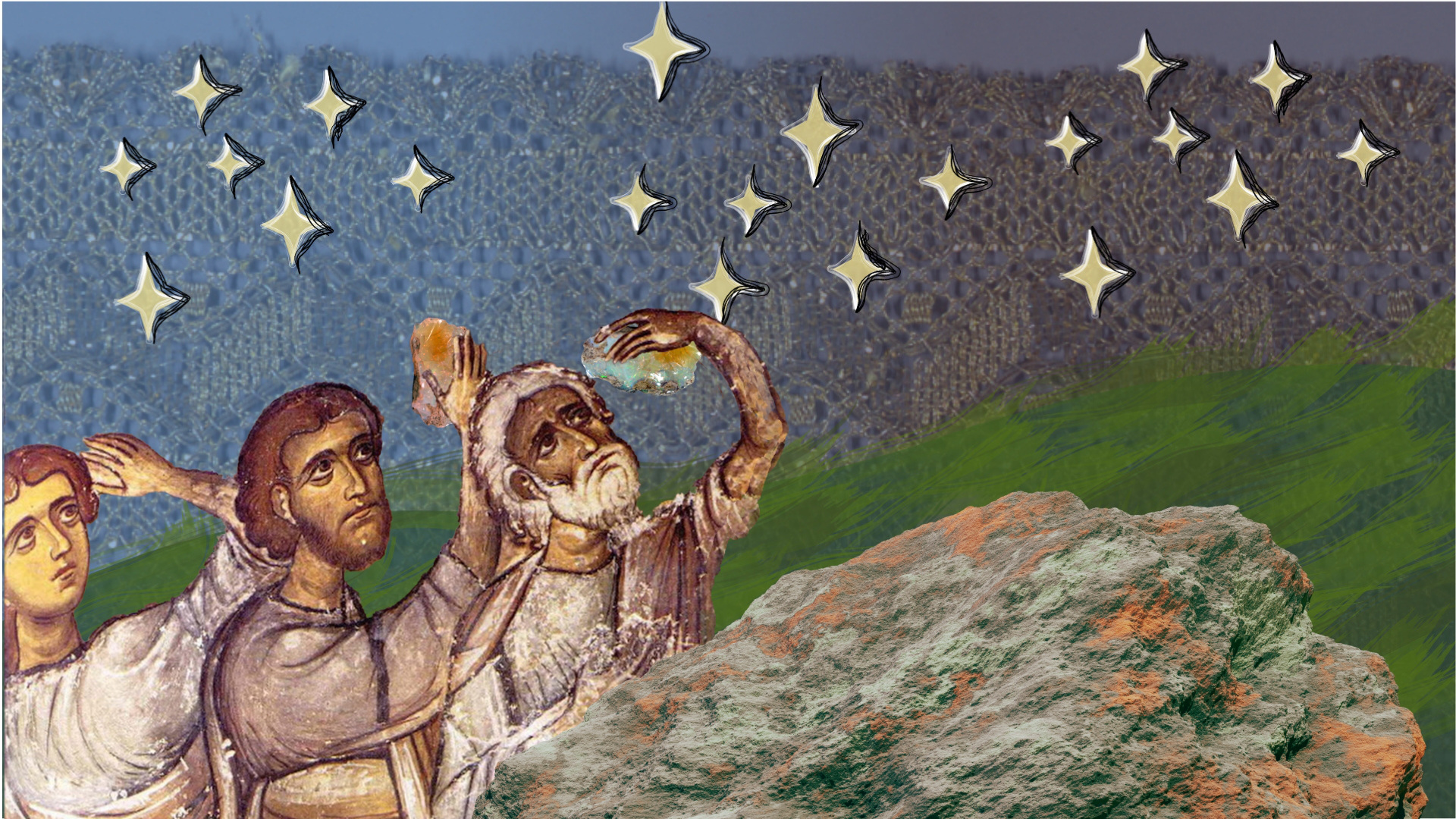
We face a crisis of meaning in the West, a mass confusion over our true identity and purpose. Many feel adrift in the world with no sail, rudder, map, or compass. As a young man confessed to me recently, “I walk out of my house each morning and am overwhelmed with anxiety. I don’t know why I am here.” By jettisoning metanarratives, especially the Christian worldview, our culture has saddled people with the impossible burden of fabricating their own meaning and purpose. As I read Rod Dreher’s Living in Wonder: Finding Mystery and Meaning in a Secular Age, Billie Eilish’s hauntingly beautiful song “What Was I Made For?” reverberated in my mind. The song, written for the film Barbie, taps into the existential ache over the seeming emptiness and cruelty of existence so common in our culture. Humans have an innate desire for meaning and mystery. Dreher, a visiting fellow at the Danube Institute, argues there’s “a loss of a meaningful sense of God’s presence and of the existence of meaning and purpose in the world” (71). His basic explanation for this is the rise of materialistic modernism, which displaced Christianity from the cultural imagination in the West. Dreher’s proposal is to pursue “Christian re-enchantment” (153), mainly through “an infusion of authentic, time-tested mysticism . . . from the Eastern churches” (16). Dark Enchantment Unfortunately, the search for re-enchantment has led many into the arms of the occult and other forms of “dark enchantment” (128). Materialism is giving way to a return of neo-paganism as a dominant worldview, often taking the form of practices like crystals, manifesting, witchcraft, and astrology. Predictably, the result isn’t flourishing and freedom but ruin and spiritual slavery. Not all encounters with the spiritual realm are created equal. In journalistic fashion, Dreher relays several compelling stories illustrating the dangers of spiritual darkness and oppression. The demonic is real. Yet the real solution to disenchantment is Christ. This is good, as far as it goes. The demonic is real. Yet the real solution to disenchantment is Christ. However, Dreher’s analysis of the occult is, at times, conspiratorial and bizarre. He favorably quotes an exorcist who believes that “we are in the middle of a concerted and well-orchestrated war” in which the occult is “supported by the media, big corporations, politicians, and our government” (105). In expressing his concern about the spiritualization of technology, Dreher shares the Google whistleblower’s account that their AI program “had achieved consciousness” and that the engineers had participated in “a ritual committing it to the ancient Egyptian deity Thoth” (125). These accounts are intriguing but anecdotal. Though Dreher doesn’t think there’s a demon under every rock, he thinks there’s probably a demon behind every UFO. By his account, demons appear as aliens because they “are the kind of godlike beings that a secular society—one in which science and technology hold supreme authority—can believe in when they have discarded the God of the Bible” (114). Such ideas—mixed with accounts of generational curses, psychedelic trips, and demon possessions—are his primary supports for the need for Christian re-enchantment. Christian Re-Enchantment According to Dreher, Christian prayer is the primary way to recover a sense of God’s presence and experience enchantment in a secular age. He writes, “It turns out that attention—what we pay attention to, and how we attend—is the most important part of the mindset needed for re-enchantment. And prayer is the most important part of the most important part” (142). However, this solution isn’t as easy as it sounds. Anyone who prays regularly knows that the difficulty isn’t so much knowing what to do as putting down our phones and doing it. To Dreher’s credit, I must say that after reading his book, I’m praying more. Unfortunately, Dreher’s advice relies on caricatures of other Christians. For example, he repeatedly states that Protestant spiritual practices are deficient in providing worshipers with an enchanting encounter with the true and living God. And yet no one can read about Martin Luther’s prayer life and find it devoid of enchantment, for instance. Dreher ignores the incredibly rich resources Protestants have on prayer. The works of John Calvin, John Knox, John Owen, and, more recently, Tim Keller and Paul Miller come to mind. Prayer is certainly a means by which God communicates and through which we experience his grace (149). However, it’s incomplete without the grace that flows to us from God’s Word. Dreher nods toward doctrine “based on Scripture” (263), but he does a poor job of grounding his understanding of the means of grace in Scripture. In fact, Scripture is largely absent from Dreher’s lengthy discussion of spiritual practices—an unfortunate gap in his proposed solution, as one can’t experience the fullness of re-enchantment apart from God’s “living and active” Word (Heb. 4:12). Another Reformation Needed Dreher’s criticisms of other Christians don’t stop at the practice of prayer. He makes it clear that, in his mind, Protestantism simply isn’t enchanting enough. Dreher argues that the Reformation contributed to disenchantment by undermining a sacramental vision of the universe. Nature doesn’t have to be a sacrament to be enchanting. Notably, his account of the supposed disenchantment of Protestantism largely ignores the supernatural claims of charismatics and Pentecostals, not to mention the less extravagant experiences of spiritual reality of many Reformed Christians. Scripture is largely absent from Dreher’s lengthy discussion of spiritual practices—an unfortunate gap in his proposed solution. Instead, his preferred solution is to adopt a version of panentheism in which “all created things bear divine power and participate in the life of God” (24). Thus, despite Dreher’s periodic denials, it’s apparent his argument is for conversion to Byzantine Christianity rather than for a broader focus on Christian re-enchantment. However, as Patrick Collinson argues, the Reformation was “an episode of re-Christianization” that disrupted “a process of secularization with much deeper roots.” It was primarily a movement of Christian re-enchantment, the very thing this book prescribes. Contra Dreher, the West may actually need another Reformation to escape the disenchantment of our age. Reading Dreher is always interesting, though this book is somewhat disjointed compared to his earlier works. Still, it points readers to Christ to find meaning and mystery in an age of darkness, disenchantment, and technological tyranny. Yet as we watch Dreher’s spiritual evolution in real time with each book and new adventure, we should take his latest prescriptions for the faith with a healthy grain of salt.
Like
Comment
Share
Living In Faith
Living In Faith
1 y

Interpret the Scriptures in a Pluralistic Age
Favicon 
www.thegospelcoalition.org

Interpret the Scriptures in a Pluralistic Age

Don Carson addresses the challenge of biblical inerrancy and interpretation, particularly in the context of textual variants and modern pluralism. He emphasizes that while textual variants exist, they don’t compromise major doctrines, and he calls for a deeper understanding of genre, grace, and cultural relevance in Scripture interpretation. He teaches the following: Textual variants don’t undermine inerrancy or key doctrines God’s sovereignty is shown through Scripture’s preservation How Genesis 1–3 combines history and symbolism Common grace shouldn’t be twisted to oppose God’s truth Parables like the Good Samaritan should be modernized carefully Pluralism rejects objective truth, complicating evangelism Biblical interpretation must account for cultural relevance
Like
Comment
Share
Daily Caller Feed
Daily Caller Feed
1 y

Despite How You Feel About ‘The King,’ Seeing LeBron And His Son On An NBA Court Is An Incredible Sight To Witness
Favicon 
dailycaller.com

Despite How You Feel About ‘The King,’ Seeing LeBron And His Son On An NBA Court Is An Incredible Sight To Witness

A history-making moment that made me outright smile
Like
Comment
Share
History Traveler
History Traveler
1 y

Charity acquires largest Norman coin hoard for the nation
Favicon 
www.thehistoryblog.com

Charity acquires largest Norman coin hoard for the nation

The hoard of 2,584 silver pennies from the time of the Norman conquest discovered at Chew Valley in Somerset has been acquired for the nation by the non-profit South West Heritage Trust. Valued at £4.3 million ($5.6 million), it is the highest-value treasure find ever made in England. The organization was able to raise the money thanks to a large grant of £4,420,527 from the National Lottery Heritage Fund and £150,000 from the Art Fund. The sum will be shared 50/50 between the landowner and the seven finders. The coins were discovered by a group of seven metal detectorists in January of 2019. Only two of them, Lisa Grace and Adam Staples, were experienced, and they were teaching the rest how to use their new machines when one of the newbies found a William the Conqueror silver penny. Then they found another, and another. They should have stopped after the first few coins and called archaeologists, of course, but they did not. Instead, five hours of detector alerts and amateur digging later, they had a bucket full of thousands of silver coins. Only then did they report the find to the Portable Antiquities Scheme and a week later they deposited the coins at the British Museum. The coins had been scattered by agricultural work over the centuries, so the hoard was not found as it was buried anyway, but having lost the chance to excavate the archaeological context of the hoard whatever that might be is all the more tragic in this case because the hoard is unique window into the immediate aftermath of the Norman invasion. The Chew Valley hoard consists of 1,343 silver pennies of William the Conqueror (r. 1066-1087), and 1,240 coins from the last Anglo-Saxon king of England Harold II (r. January 1066-October 14 1066), with a one penny of Edward the Confessor (r. 1042- January 1066) and three “mules,” counterfeit combinations of coins by William and Harold that were created by moneyers to dodge taxes. About 100 moneyers from 46 mints are named on the coins; some of the moneyers are the first named people from an English city. All of the coins date to between 1066 and 1068. It is the largest hoard of coins in the hoard from the immediate post-Norman Conquest period ever discovered and the largest Norman treasure of any kind to be found since 1833. The hoard was buried in 1068 on a property that would later be granted to Gisa, chaplain to King Edward the Confessor and the Bishop of Wells. At that time, the Chew Valley was embroiled in a rebellion against Normal rule led by Harold’s sons, so it’s like the coins were buried for safekeeping. The Chew Valley hoard will go on display at the British Museum starting November 26th. It will then go on a brief tour of UK museums, including in Bath near the find site, because settling permanently at the Museum of Somerset in Taunton.
Like
Comment
Share
YubNub News
YubNub News
1 y

E. coli outbreak tied to McDonald's Quarter Pounder kills 1, sickens dozens in US
Favicon 
yubnub.news

E. coli outbreak tied to McDonald's Quarter Pounder kills 1, sickens dozens in US

One person died and dozens fell ill from E. coli infections linked to McDonald's Quarter Pounder hamburgers in 10 states, led by Colorado, where 26 people were sickened, the U.S. Centers for Disease Control…
Like
Comment
Share
YubNub News
YubNub News
1 y

Biden Says The Quiet Part Out Loud in New Hampshire: ‘We Gotta Lock [Trump] Up!’
Favicon 
yubnub.news

Biden Says The Quiet Part Out Loud in New Hampshire: ‘We Gotta Lock [Trump] Up!’

Joe Biden “said the quiet part out loud” Tuesday, when he told a group of Democrats in New Hampshire that former President Trump needs to be thrown in jail. While speaking at the Granite State’s…
Like
Comment
Share
YubNub News
YubNub News
1 y

Fake News Contamination: Newsweek Deletes Dishonest Post Linking Trump to McDonald's E. Coli Outbreak
Favicon 
yubnub.news

Fake News Contamination: Newsweek Deletes Dishonest Post Linking Trump to McDonald's E. Coli Outbreak

In what can only be described as the all-time king of coincidences, the CDC just announced that there has been an E. Coli outbreak at McDonald's restaurants. This, just days after President Donald Trump's…
Like
Comment
Share
YubNub News
YubNub News
1 y

Antony Blinken in Israel
Favicon 
yubnub.news

Antony Blinken in Israel

Secretary of State Antony Blinken is in Israel, trying to capitalize on the optimism following the death of Yahya Sinwar to get a cease-fire deal. The United States charged a general in the Islamic Revolutionary…
Like
Comment
Share
YubNub News
YubNub News
1 y

The Cheneys Had One Issue the Whole Time
Favicon 
yubnub.news

The Cheneys Had One Issue the Whole Time

One of the big political realignments of the Donald Trump era has been the return of many, perhaps most, leading neoconservatives to their ancestral homes in the Democratic Party. The ideological descendants…
Like
Comment
Share
YubNub News
YubNub News
1 y

Why Is the Military–Industrial Complex So Bad at Making Things?
Favicon 
yubnub.news

Why Is the Military–Industrial Complex So Bad at Making Things?

It is beginning to look as if the immortal Trump returns to Olympus for a revival tour and the merely terrestrial Harris descends to the Elysium of yesteryear’s possibilities—the Harvard Kennedy School…
Like
Comment
Share
Showing 7071 out of 56670
  • 7067
  • 7068
  • 7069
  • 7070
  • 7071
  • 7072
  • 7073
  • 7074
  • 7075
  • 7076
  • 7077
  • 7078
  • 7079
  • 7080
  • 7081
  • 7082
  • 7083
  • 7084
  • 7085
  • 7086

Edit Offer

Add tier


Select an image
Delete your tier
Are you sure you want to delete this tier?

Reviews

In order to sell your content and posts, start by creating a few packages. Monetization

Pay By Wallet

Payment Alert

You are about to purchase the items, do you want to proceed?

Request a Refund