YubNub Social YubNub Social
    Advanced Search
  • Login

  • Day mode
  • © 2025 YubNub Social
    About • Directory • Contact Us • Privacy Policy • Terms of Use • Android • Apple iOS • Get Our App

    Select Language

  • English
Install our *FREE* WEB APP! (PWA)
Night mode
Community
News Feed (Home) Popular Posts Events Blog Market Forum
Media
Headline News VidWatch Game Zone Top PodCasts
Explore
Explore Jobs Offers
© 2025 YubNub Social
  • English
About • Directory • Contact Us • Privacy Policy • Terms of Use • Android • Apple iOS • Get Our App

Discover posts

Posts

Users

Pages

Group

Blog

Market

Events

Games

Forum

Jobs

History Traveler
History Traveler
1 y

The Role & Importance of Primaries in the US Election Process
Favicon 
www.thecollector.com

The Role & Importance of Primaries in the US Election Process

  In early November of even-numbered years, millions of Americans head to the polls to vote for federal, state, and local politicians. Typically, they see one candidate listed for each major political party, and many Americans vote based on party affiliation. But why and how do these parties only list one name? Fewer voters know about primary elections, which have been used since World War II to give voters a voice in determining party nominees for office. Primary elections are held Between February and August to determine party nominees for various elections on the ballot in November. How do these primary elections work, and what does it take to become a party nominee?   Before Primaries: The Convention System A photograph of the 1880 Republican National Convention, which nominated a delegate who had not sought the office of president before the convention. Source: American University Radio   Today, voters in America have a lot of say in their elected officials. However, until the Seventeenth Amendment in 1913, US Senators were chosen by state legislatures instead of voters. Voters also did not have a voice in the selection of party nominees for office. Traditionally, political party leaders chose the nominees at conventions, and voters cast their ballots in November. This convention system began after the controversial 1824 presidential election, before which party nominees were chosen by congressional caucuses.   The convention system was supplemented by primary elections beginning in the early 1900s during the Progressive Era. Voters in some states received more of a voice in choosing nominees, though real power remained with state-level conventions. These early primaries were largely a show of support for candidates; party leaders could reject them. Controversially, some nominees would be chosen by party leaders at conventions without having run in primaries.   Local Elections and Independent Candidates: Ballot Access Instead of Primaries Local candidates and minor political parties must submit petition signatures to get on ballots in the general election. Source: Green Party US   It is important to note that not all political candidates have to win primaries and become party nominees to make it on the ballot. At the local level, many elections are nonpartisan, meaning candidates do not formally identify with a political party. To make it on the ballot, these candidates need to be granted ballot access, usually by submitting a certain number of signatures. This limits ballots to manageable sizes; otherwise, scores of candidates may be vying for votes for each elected position.   Independent candidates can also run in partisan elections above the local level, including for president of the United States. They may create their own party and submit it for ballot access in each state. This can be a difficult process and leads to relatively few independent candidates having a chance to win enough electoral votes (270) to become president. Throughout US history, relatively few independent candidates have received electoral votes in presidential elections.   50+ vs. One-and-Done: Presidential Primaries vs. District and Statewide Primaries An image showing multiple Republican candidates seeking the party nomination for Texas House District 19 (bottom left). Source: Travis County Republican Party   When many voters hear the term primary elections, they think about presidential primaries. However, most partisan elections above the local level have primaries. Presidential primaries occur in all US states and territories, while others occur only in the districts or states represented by that office. For example, US House districts hold primaries only in that district, while states hold US Senate primaries across those states.   Although presidential primaries occur within each state over several months, all others occur on a singular date within that district or state. Primary elections typically happen in the spring or early summer. According to state law, some can result in run-off elections if no candidate receives a majority of the popular vote. Whichever candidate wins a majority in the primary automatically becomes the party nominee. Presidential primaries, by contrast, have no run-offs and award delegates to candidates roughly in accordance with popular votes.   Post-WWII: Presidential Primaries Begin Monroe Sweetland’s article detailing the importance of the Oregon presidential primary of 1960, which occurred before presidential primaries were nationwide. Source: Oregon Historical Society   Modern presidential primaries began after World War II but were held at the discretion of individual states. From 1948 to 1968, the primary system expanded but was far from nationwide. Controversially, some nominees were men who did not even run in the primaries, such as Democratic governor Adlai Stevenson in 1952. However, these early primaries did serve the purpose of signaling a politician’s popularity. In 1952, a poor showing in early primaries convinced US President Harry S. Truman not to seek a third term.   By 1960, primaries were increasing in importance and influencing party leaders. US Senator John F. Kennedy (D-MA), for example, received top billing at the Democratic National Convention in 1960 by performing well in the presidential primaries. In 1964, US Senator Barry Goldwater (R-AZ) won the Republican presidential nomination by winning a majority of delegates during the presidential primaries. However, the ultra-conservative Goldwater’s thrashing in the general election at the hands of Democratic US President Lyndon B. Johnson made party leaders question the wisdom of common voters.   1968: Ignoring Primaries Leads to Uproar Vice President Hubert Humphrey (center) received the Democratic presidential nomination in 1968 despite not running in all the primaries. Source: PBS Learning Media   The divide between common voters and party leaders broadened to a nationwide culture and generational clash during the Vietnam War. Although united and easily victorious in 1964, the Democratic Party was in disarray in 1968 after Lyndon B. Johnson unexpectedly announced that he would not seek re-election on March 31. Tragically, new Democratic presidential candidate Robert F. Kennedy, US Senator from Massachusetts, was assassinated on June 5. Vice President Hubert Humphrey was now the Democrats’ most well-known candidate, and he headed to the party’s National Convention in Chicago.   Controversially, Humphrey was nominated on the first ballot and won the nomination despite not winning any primaries. He had not even entered the race until April after Johnson had announced he would not run for re-election. Anger over Humphrey’s nomination influenced the DNC Riots that rocked downtown Chicago during the convention. After the violence-marred convention, both major parties decided to formalize their presidential nomination process by honoring the delegates who won at primaries and caucuses.   1972-Present: Presidential Primaries Strategy A map from the 2010 work of J.T. Putnam detailing the increasingly early presidential primary dates. Source: Semantic Scholar   Once both parties vowed to honor the primaries and caucuses, candidates had to strategize to win them instead of relying on favor with party bosses. Because of the lengthy stretch of primary contests, candidates often could only afford to campaign in early primary states, hoping that victories would win free publicity that would carry them into later states. States would front-load their primaries to attract media attention and the presence of candidates. This would force candidates, one of whom would inevitably become president, to focus on issues of importance to those early primary states.   Critics of front-loading argue that it distorts democracy by amplifying the voices of a small percent of the national electorate—those residing in a handful of early primary states. Traditionally, the states of Iowa, New Hampshire, Nevada, and South Carolina have been the earliest voting in presidential primaries, meaning their issues receive far more candidate and media attention. To win these states, candidates from both major parties have tailored their campaigns to focus heavily on these issues, potentially ignoring issues faced by states with greater populations.   Strategy Continued: Types of Primary Contests A map of states with closed primaries, meaning only registered members of that political party can vote in that party’s primary or caucus. Source: Unite America   In addition to using the presidential primary calendar to know where to focus their time and money, candidates must pay attention to the type of primary contest held in each state. States have open primaries, closed primaries, or caucuses to determine their delegate allocation for presidential nominations. Open primaries are traditional elections where all registered voters can vote; they must pick one party’s ballot. Independent voters, with no pledged party affiliation, may pick either party’s ballot.   An image of a voter casting a ballot in a primary election. Source: United States Embassy & Consulate in Thailand   Closed primaries and caucuses, by contrast, are only open to members of that political party. Non-party members cannot participate, with the rationale being that members of an opposing party could use the primary or caucus to support the most radical or unpopular candidate and saddle the party with an unwinnable nominee. Caucuses are different from primaries in that they are not traditional elections and are instead public meetings. Party members physically line up in support of a candidate and are counted, which places some peer pressure on attendants to line up for the most popular candidate.   Complex: Superdelegates and Winner-Take-All Primaries An image explaining down ballot candidates, who demanded an additional voice in the Democratic Party after the 1980 election and led to the creation of superdelegates. Source: PBS Learning Media   Delegates are awarded in presidential primaries and caucuses roughly in proportion to the popular vote, meaning that a candidate who wins forty percent of the popular vote receives roughly forty percent of the state’s delegates for that party. However, both major parties have some undemocratic elements in their presidential primaries. In 1984, the Democratic Party created the position of unpledged superdelegate to give additional voice to elected office-holders. These hundreds of superdelegates were not attached to any state and could vote for any candidate at the Democratic National Convention.   The Republican Party, although it has far fewer superdelegates, created winner-take-all primaries, similar to the general election’s electoral college, where the candidate who received the most popular votes won all the state’s delegates for that party. Both parties also have minimum thresholds for delegate allocation to prevent minor candidates from bogging down the process. Typically, candidates must receive at least 15 percent of the popular vote in any state to receive delegates. This leads most noncompetitive candidates to drop out of the primaries quickly, lest they burn through all their campaign funds.   What If Nobody Wins a Majority of Delegates? US President Gerald Ford (left) and California Governor Ronald Reagan (right) at the last contested convention in 1976. Source: National Public Radio (NPR)   Usually, a candidate wins the first few primaries and becomes a frontrunner who enjoys a snowball effect of positive media attention. Rival candidates drop out, and the frontrunner wins enough delegates to clinch the nomination by the middle of March. Sometimes, however, no candidate achieves true frontrunner status, and the primaries remain competitive through the late spring. Rarely do the primaries end in June, with no candidate receiving enough delegates to clinch the nomination outright.   If no candidate has enough delegates to clinch the nomination when the National Convention rolls around in late summer, a contested convention, sometimes erroneously called a brokered convention, occurs. A brokered convention occurs if no candidate wins the presidential nomination on the first ballot, forcing party leaders to “broker” a deal to shift delegates. The last brokered convention occurred in 1976 when neither US President Gerald Ford nor California Governor Ronald Reagan arrived at the Republican National Convention with enough pledged delegates.   Last Step: Party (Re)-Unification A photograph of the Democratic Party presidential and vice presidential nominee, along with their respective spouses, ahead of the general campaign, 2024. Source: Brookings Institution   Primary elections can be intense and cause bitter feuds between members of the same political party. When it comes to the presidential election, however, there are typically at least three months between the official nomination and election day in November. To win, both major parties need to be unified behind the nominee. Mending feuds and hurt feelings is one of the goals of each party’s National Convention, during which time candidates from the primaries can speak and receive public congratulations.   Sometimes, the National Convention is where the presidential nominee announces their running mate, or vice presidential nominee. This is often the most highly-anticipated part of the four-day event. If a candidate clinches the nomination early by winning enough delegates, they may announce a running mate in advance of the National Convention. Media outlets cover both parties’ conventions thoroughly to get a sense of voter support and how popular the nominees’ policy positions are. Historically, the intense media coverage of each convention has given that party a temporary bump in the polls at the outset of the lengthy general campaign.
Like
Comment
Share
History Traveler
History Traveler
1 y

What Was ‘The Malleus Maleficarum’, or ‘The Hammer of Witches’?
Favicon 
www.thecollector.com

What Was ‘The Malleus Maleficarum’, or ‘The Hammer of Witches’?

  The Malleus Maleficarum, or The Hammer of Witches, is one of the best-known texts on how to identify a witch and how to punish them. This book was written by Heinrich Kramer and published in 1486. Witchcraft in Western Europe before this time was seen as eccentric, rather than criminal. Perhaps this was because many people believed in magic or superstition, and religion, especially Catholicism, was a large part of their life.   While witches might have been regarded with some degree of suspicion or considered misfits, it was rare for people to be prosecuted for witchcraft in Western Europe before the 14th century. However, Kramer’s text marked a watershed moment when witch trials were beginning to take place, and it emphasizes the cruel and unjust treatment of women who existed on the fringes of society.   Who Were the So-called Witches? The Witches’ Sabbath, by Francisco Goya, 1798. Source: Google Arts and Culture   Many of the so-called witches in Kramer’s guide were ostracized female members of society—widows, elderly, alcoholics, mentally ill, or outspoken. It’s important to understand what Early Modern Europe considered witchcraft to be and what they feared about witches. While the trials convicted a person of witchcraft, the true crime was the heresy they were committing by being witches.    Witches supposedly consorted with the devil, who to Early Modern Europe wasn’t just a figure or impulse that the devil is often considered to be today, but a living flesh manifestation you could physically touch and have carnal relations with. In their minds if you consorted with the devil, you were deliberately turning your back on the church and God, which at that time was a crime.   Kramer & the Hammer of Witches Illumination depicting the two witches on a broomstick and a stick, in Martin Le Franc’s “Ladies’ Champion”, 1451. Source: Wikipedia   Heinrich Kramer was born in the 1400s in Schlettstadt. He was an inquisitor (an official of an inquisition), whose job it was to hunt out heretics. There were several main inquisitions in history, including the Roman Inquisition, the French Inquisition, and German Inquisition. These were mainly put together by the Catholic Church, but occasionally rulers like Queen Isabella would have a hand in them. Kramer was sometimes considered extreme in his own circles, and was even reprimanded for his behavior during some witch trials.   Let’s discuss the actual text of the Hammer of Witches. There were five distinct sections: 1. justification, 2. papal bull, 3. approbation by professors of theology at University of Cologne, 4. table of contests, and 5. the main body. Some descriptions of witches within the text give them a “crone-like” and hobbled appearance, with wrinkles, hair in the wrong places, and scolding tongues.    Witches were also described as having odd behaviors such as talking to themselves, weird rituals, and odd pets. All of which sounds like elderly women who talk back, or women who have diseases of some kind. Kramer discusses the theory behind witchcraft and its connection to heresy, and the theology of witches and their association with the devil. He discusses actual trials that took place and dedicates an entire section on how to conduct a proper witch trial.    Witch Trials Witch Trial Victim Locations Map. Source: Maps on the Web   Unfortunately, the ‘innocent until proven guilty’ maxim didn’t apply to witch trials. Instead, they were reliant on the guilty party proving their innocence, something hampered by the fact that trials could be brought by witnesses claiming witch behavior. Torture was frequently used to press victims to confess. The Hammer of Witches outlined exactly how to go about extracting confessions from the accused using torture.   This general map of victims of witch trials highlights where the majority of witch trial activity occurred. While witch trials took place across Europe, the concentration was in the area that is now Germany and at the time was the Holy Roman Empire. The further you were from the center of the bullseye the better the chances if you were on the outskirts of society.   Despite this, there were some who were outspoken against Kramer’s work. Theologians of the Inquisition at the Faculty of Cologne—a university in Cologne, Germany that was established in 1388, condemned the book for being unethical and containing illegal procedures.   The Salem Witch Trials Lithograph representing a witch on trial in Salem by Joseph E. Baker, 1892. Source: Library of Congress, Washington DC   Hammer of Witches was used primarily in Europe and had nothing to do with the one of the biggest witch hunts in America – the Salem witch trials of 1692, which were drastically different. Rather than a specific hunt for heretics, it started in Salem with some children who had fits, blamed it on residents, and created mass hysteria.    Unlike what many types of media portray, burning witches only took place overseas – witches were not burned in the United States. Most of the Salem so-called-witches were hung for bearing false witness and committing perjury by lying that they weren’t a witch. Such victims were in an impossible situation – if they had stated they were a witch and found to be lying, they would have also been punished. One unfortunate man (one of the few ever accused of witchcraft in America) was pressed to death by rocks after refusing to claim or deny being a witch.   Does the Myth Persist Today? Witch trial scene from Monty Python and the Holy Grail. Source: The Source   While the actual witch trials eventually tapered off, the damage was done. A lack of surviving documents hampers the true numbers, but at least 12,000 executions from witch trials can be positively verified. Scholarly estimates are between 35,000-50,000. Other texts were published about specific trials and accounts of witches, and texts about how to deal with witches, but Kramer’s text remained on the most well-known and widely published.   Following its success, Kramer published several texts through his lifetime and died sometime in the year 1505 in Moravia. Meanwhile his legacy lives on – The Hammer of Witches is used in many college classes to highlight the devastation of the witch trials.   Kramer’s text played a key role in defining what a witch looked and behaved like, and while few would believe in real witches today, his stereotype is still a key part of contemporary culture, appearing in children’s stories, Halloween costumes and television shows. In Monty Python and the Holy Grail, for example, they play up the myth by having the townspeople try to convict a woman for looking like a witch with her dirty appearance and hooked nose (which she states they put on her).
Like
Comment
Share
History Traveler
History Traveler
1 y

Switzerland’s Historic Neutrality: Why Doesn’t the Country Take Sides?
Favicon 
www.thecollector.com

Switzerland’s Historic Neutrality: Why Doesn’t the Country Take Sides?

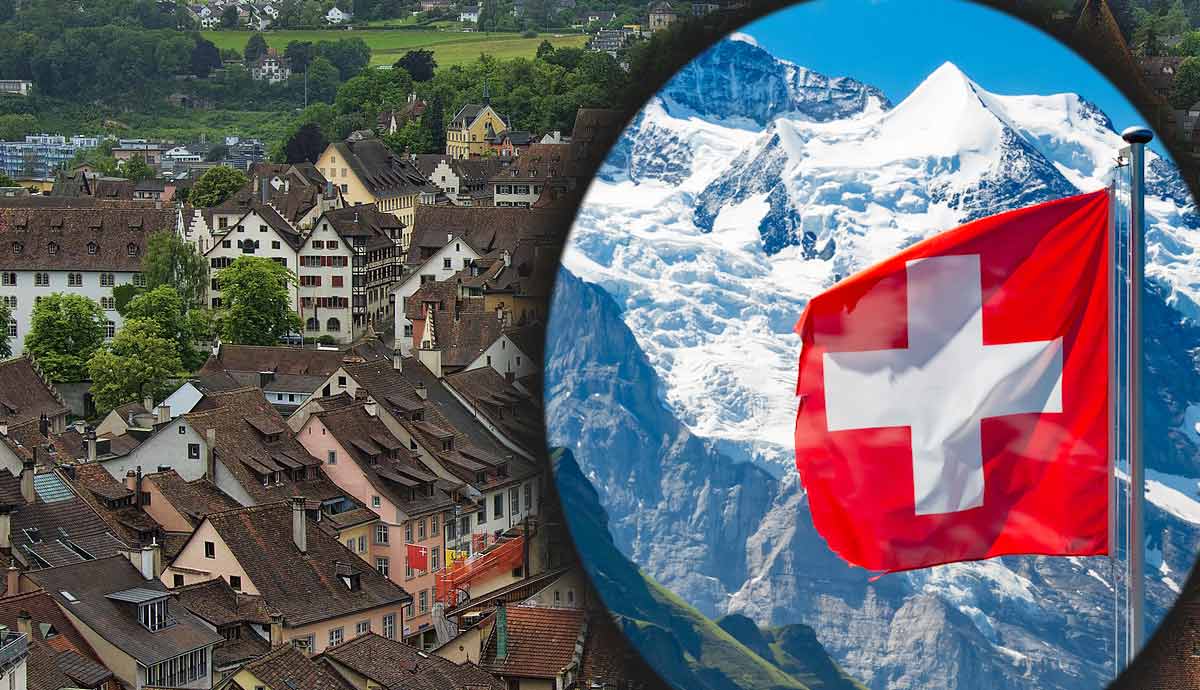
  Switzerland is as famous for its neutral position in international affairs as it is for banking, chocolates, and alpine landscapes. Indeed, within Europe, Switzerland and Sweden stood at the forefront of longest-tenured neutral states. In modern terms, both countries emerged as neutral states after the Napoleonic Wars in 1814-1815.   Sweden, however, gradually joined international organizations and became a member of NATO in March 2024. On the other hand, Switzerland only entered the United Nations in 2002 amid intense debate and has thus far resisted any effort to join institutions like the European Union or NATO. But what is the history behind Switzerland’s enduring neutrality?   Early Swiss Neutrality: From Military Power to Neutral State A Swiss Guard by Hortense Haudebourt-Lescot c. 1810-1812. Source: Wikimedia Commons   The Swiss were not always neutral. In fact, the Old Swiss Confederation or Confederacy was considered one of the most warlike states in early modern Europe. According to Douglas Miller and Gerry Embleton, their military successes had many admirers, including Italian Renaissance philosopher Niccolò Machiavelli, who dubbed the Swiss “the New Romans.”   However, the Swiss were not destined to forge a new Roman Empire. For example, the 1515 Battle of Marignano severely damaged Switzerland’s military mystique.   Until Marignano, the Swiss extended their territory into several areas of northern Italy. However, the bloody battle, which took place outside Milan, ended in a Franco-Venetian victory over the Swiss.   In the battle’s aftermath, the Swiss Confederation embraced neutrality. The 1648 Peace of Westphalia, which marked the end of the devastating Thirty Years War, officially recognized Swiss neutrality.   While the Confederation observed a neutral stance in international conflicts, this did not stop the Swiss from fighting. For instance, many Swiss continued to pursue military careers either individually in foreign armies or as part of mercenary units purchased by foreign rulers.   For example, France’s King Louis XVI’s ill-fated Swiss Guard during the French Revolution and the Vatican’s Swiss Guard are the two most famous examples of Swiss soldiers in the foreign service.   French Revolutionary and Napoleonic Switzerland  Battle of Zurich, 25th September 1799 by François Bouchot, 1835. Source: Wikimedia Commons   Neutrality could not stem the tide of the French Revolution from reaching Switzerland. Indeed, the country became a battlefield as the French Revolutionary Republic’s armies battled Austrian and Russian opponents across Switzerland in the late 1790s.   General Andre Massena’s victory over a combined Russian and Austrian army at Zurich in September 1799 secured French influence in Switzerland.   Revolutionary France also oversaw the creation of a Helvetic Republic in 1798 with enthusiastic Swiss supporters. Yet, this did not guarantee Swiss support for French interests.   In fact, Napoleon believed the Swiss posed a challenge to French interests, especially involving access to Italy. As Andrew Roberts notes, Napoleon wrote in September 1802 that either a new pro-French Swiss government should be formed or there would be “no Switzerland.”   As a result, Napoleon announced the Act of Mediation in 1803. Alexander Grab explains this transformed Switzerland by creating a fragile central government and nineteen cantons. The following month, in October 1803, one of Napoleon’s future marshals, Michel Ney, led an army through Switzerland to impose French authority.   For example, Andrew Roberts says Ney’s army quickly occupied Zurich and crushed a rebellion in Bern. At the same time, Ney oversaw the installation of a pro-French government in the Swiss capital, Bern. Moreover, Ney extracted a hefty sum from the government to pay for this military operation.   While Switzerland remained officially neutral, the country was a French satellite state. For example, Switzerland furnished Napoleon’s army with thousands of troops. Alexander Grab says that 9,000 Swiss troops served in Napoleon’s army alone during the 1812 invasion of Russia. Only about 700 of those soldiers returned from Russia.   Renewed Swiss Neutrality Henry Dunant in 1855, ICRC. Source: Wikimedia Commons   Swiss support for Napoleon ended after the battle of Leipzig in 1813. The following year, Austrian Chancellor Clemens von Metternich was furious that the Swiss decided to embrace neutrality rather than join the fight against Napoleon.   The end of the Napoleonic Wars in 1814-1815 brought sweeping changes to the map of Europe. Switzerland duly underwent considerable territorial and political change after the Napoleonic Wars. This change was set out during the Congress of Vienna, organized by the so-called Great Powers who had defeated Napoleon, namely Austria, Britain, Prussia, and Russia.   The recognition of Swiss neutrality was one of the many developments to emerge from the Congress of Vienna. Europe’s Great Powers, which came to include post-Napoleonic France, recognized Swiss neutrality largely thanks to the diplomatic efforts of Geneva’s Charles Pictet de Rochemont.   A New Switzerland in the Revolutionary 1840s The Battle of Airolo during the Swiss Sonderbund War, 1847 by Jakob Ziegler, 1848. Source: Wikimedia Commons   In the decades following the Napoleonic Wars, Switzerland endured internal turbulence and conflict within the diverse cantons. Indeed, much of Europe experienced economic, social, and political turmoil in the 1830s and 1840s.   Political and religious divisions within Switzerland ultimately led to a brief civil war in 1847. Although Otto von Bismarck dismissed it as nothing more than a “hare shoot,” the short war was significant for Switzerland. Although it lasted less than thirty days, the fighting produced a new constitution in 1848.   The new Swiss government, established in the aftermath of the civil war, was a federal system that retained traditional privileges and authority for the country’s diverse territories known as cantons.   Switzerland became well-known as a neutral state and a major hub for discussions surrounding international humanitarian law. Genevan Henry Dunant’s co-founding in 1863 of what would become the Red Cross would further strengthen Switzerland’s credentials as a neutral power.   Dunant lobbied for international agreements regarding sick and wounded soldiers. This led to the first Geneva Convention in 1864. For his role in organizing the Red Cross and Geneva Conventions, Dunant became a co-recipient of the first Nobel Peace Prize in 1901.   Neutrality Tested Equestrian Statue of General Henri Guisan in Lausanne by Otto Bänninger, 1967. Source: Wikimedia Commons   Switzerland’s geographic position and external events continued to test the country’s neutrality in the twentieth century. For example, the outbreak of the First World War in August 1914 shook Switzerland as it did much of the rest of Europe.   Indeed, many Swiss volunteered to join one of the opposing armies. Today, across Switzerland, one encounters memorials to Swiss soldiers who served and died in the two world wars. The country, however, remained neutral and helped organize Red Cross initiatives. Moreover, at times, Swiss troops became involved in border clashes.   The interwar years (between WWI and WWII) strengthened Switzerland’s neutral and international image. For example, Swiss cities like Lausanne hosted important treaty negotiations, such as the one that ended the Greco-Turkish War in 1923.   Geneva also became the headquarters of the forerunner to the United Nations, the League of Nations, in November 1920.   Switzerland’s neutral status and these interwar international peace initiatives did not prevent the country from being a possible target during the Second World War.   However, the army’s commander, General Henri Guisan, was determined to defend Swiss neutrality. In June 1940, Switzerland’s sovereignty and neutrality appeared in grave danger. For example, Fascist Italy’s entry into the war and Nazi Germany’s conquest of France meant that the country was now virtually surrounded by the Axis Powers.   According to Regula Ludi, in July 1940, Guisan gathered high-ranking Swiss officers in a highly choreographed ceremony at the Rütli meadow in central Switzerland. Rütli is the place in Swiss lore where the first Swiss Confederation was born in the thirteenth century.   At Rütli, Guisan declared his intention to defend the country in the event of an attack. The symbolism was clear: the Swiss commanding officer announced his resolve to save Switzerland from foreign invaders on the same site where the country’s history began.   Controversy Schaffhausen, Switzerland. Source: Wikimedia Commons   Guisan’s declaration made him a national hero. His plan, known as Réduit national, called for concentrating over 400,000 Swiss troops into impregnable positions deep within the Alps.   However, General Guisan’s efforts did not wholly isolate Switzerland from the violence and destruction of the Second World War. For example, several Swiss towns and cities, including Schaffhausen, were bombed. Controversy long swirled around whether bombings of Swiss territory were intentional or accidental.   Moreover, the war gave rise to multiple controversies regarding Switzerland’s neutrality. Indeed, by the war’s end, Swiss neutrality became a massive diplomatic issue for the country. Regula Ludi explains that the Swiss ignored Allied warnings about Nazi looting as early as 1942. Even more damaging, according to Ludi, was the Swiss refusal to cut ties with Nazi Germany even after the latter no longer posed a military threat to Switzerland.   However, the most enduring wartime controversy involved the extent of Swiss cooperation with Nazi Germany. The refusal to sever diplomatic ties with the Nazis only opened additional questions internationally about Switzerland’s role in the Second World War.   Lawsuits against several leading Swiss banks in the 1990s by organizations like the World Jewish Congress brought international attention, renewed scholarly interest, and a historic settlement. As Ludi points out, the outcome damaged both Swiss banks and the country’s image as a neutral power. Scholars found that Swiss banks and Swiss authorities had not followed through on promises to identify heirless assets of Holocaust victims and transfer the funds to Jewish reconstruction organizations as agreed upon in 1946.   Further revelations included the extent to which Swiss authorities during the war suppressed information they deemed would be controversial domestically, including reports of Nazi atrocities. Ultimately, the lawsuit brought by the World Jewish Congress was settled in the summer of 1998.   Legacy United Nations Office, Geneva. Source: Wikimedia Commons   Post-WWII Switzerland retained its neutral and international character. Indeed, it became a hub for international organizations as it had been in prior decades. For instance, one of the United Nations‘ four major offices is in Geneva today. The UN building there is the former headquarters of the League of Nations.   Regula Ludi points out that Switzerland’s history of neutrality and economic prosperity gave rise to the myth of Sonderfall Schweiz, or “Special Case Switzerland.” This view argues that Switzerland and its national history stand apart from the rest of Europe, mainly because of the long history of neutrality and support for humanitarian initiatives.   However, the 1990s scandals concerning Swiss banking and Holocaust victim assets called this story into question. What is more, Ludi says this controversy helped prompt a broader reexamination of different European governments’ relationships with Nazi Germany during the Second World War.   Moreover, the overview above makes it clear that while Switzerland’s experience in many significant events may differ from others, the country’s story remains deeply linked to that of Europe.   In other words, the Swiss have not been on the sidelines of Europe’s history, whether that story involves the French Revolutionary and Napoleonic Wars, the two world wars, and beyond.
Like
Comment
Share
Living In Faith
Living In Faith
1 y

Never Left Out –  Encouragement for Today – October 23, 2024
Favicon 
www.godupdates.com

Never Left Out –  Encouragement for Today – October 23, 2024

October 23, 2024 Never Left OutSHEILA WALSH Lee en español "But to all who believed him and accepted him, he gave the right to become children of God." John 1:12 (NLT) It all started with an innocent pink ticket that my young son, Christian, received to get into a show at an amusement park. The day after we went to the amusement park, I was cleaning our dog Belle's bed when the ticket fell out. "I put it there, Mom," Christian said. "It's so she can get in." "I'm not sure Belle wants to go to the amusement park," I said. "It's not for the park," he said. "It's so she can get into heaven. It's her pink ticket." I explained to him that we don't need a ticket to get into heaven - we go because we trust in Jesus. Exasperated, Christian told me that, yes, he knew that, but the Bible didn't specifically say what your dog might need. "Belle won't be able to say anything to Jesus, Mom. But if she has a pink ticket, she should be good." As the years have passed, we've laughed as a family at Christian's childlike commitment to ensuring his dogs' futures. But the outrageous good news of God's invitation is that there truly is no ticket required for us - just an open invitation to believe and receive Christ. Have you ever scrolled through social media, noticed your friends hanging out together, and wondered, Why wasn't I invited? I know I have. But that will never happen when it comes to our relationship with Jesus. The Bible says, "to all who believed him and accepted him, he gave the right to become children of God" (John 1:12). Responding to God's invitation to salvation is the most important thing that anyone can ever do. It's not enough simply to believe in God in an abstract or general way; we have to receive this amazing gift through personal faith in Jesus Christ. A person can achieve incredible success in life or reach the peak of their profession, but if they don't know where they'll spend eternity, they've missed the greatest invitation of all. The life Jesus offers is all about relationship. Many people faithfully sit in church but have no personal relationship with Jesus. It's not about joining a club; it's about falling in love with our Savior - a love that will impact every area of our lives. Jesus has made the path to heaven as simple and clear as possible: "I am the way" (John 14:6, NLT). Heaven is not the default destination for every human being, but we get to choose it by faith. We are invited to respond to God's invitation to life. We can't even begin to imagine how mind-blowing heaven will be. I want you to be there. God wants you to be there. That's why Jesus came ... and you won't need a pink ticket! Father God, thank You for sending Jesus and for the invitation to receive Him and live with You forever. Thank You that Your love impacts every area of my life. In Jesus' Name, Amen. OUR FAVORITE THINGS Are you longing for heaven, curious about what it will be like, or wondering if it makes any difference here and now? Sheila's new book, The Hope of Heaven: How the Promise of Eternity Changes Everything, unpacks what Scripture says about our eternal home and gives you clear, biblical answers to your biggest questions. It's the perfect book to encourage and inspire you, and there's a separate study guide too! ENGAGE Find out more at SheilaWalsh.com, and be sure to follow Sheila on Facebook and Instagram too! Enter to WIN your very own copy of The Hope of Heaven by Sheila Walsh. To celebrate this book, Sheila's publisher will give away 5 copies! Enter to win by leaving a comment here. {We'll randomly select 5 winners and then notify each one in the comments section by Monday, October 28, 2024.} FOR DEEPER STUDY John 14:6, "Jesus told him, ‘I am the way, the truth, and the life. No one can come to the Father except through me'" (NLT). How can the reality of your future eternal home impact how you live here on earth? How does knowing God will make everything right in heaven change your perspective about the struggles of this life? © 2024 by Sheila Walsh. All rights reserved. Proverbs 31 MinistriesP.O. Box 3189 Matthews, NC 28106 www.Proverbs31.org The post Never Left Out –  Encouragement for Today – October 23, 2024 appeared first on GodUpdates.
Like
Comment
Share
Living In Faith
Living In Faith
1 y

A Prayer to Overcome Procrastination and Laziness – Your Daily Prayer – October 23
Favicon 
www.godupdates.com

A Prayer to Overcome Procrastination and Laziness – Your Daily Prayer – October 23

A Prayer to Overcome Procrastination and LazinessBy Emma Danzey Bible Reading"He who gathers crops in summer is a prudent son, but he who sleeps during harvest is a disgraceful son." – Proverbs 10:5 Listen or Read Below Hard work is hard. There is no doubt about it. Part of Adam's curse from sinning in the beginning is found in Genesis 3:17b-19, which says, "Cursed is the ground because of you; through painful toil you will eat food from it all the days of your life. It will produce thorns and thistles for you, and you will eat the plants of the field. By the sweat of your brow you will eat your food until you return to the ground, since from it you were taken; for dust you are and to dust you will return." The temptation to be lazy is ever-present. Just like any sin, laziness is exchanging long-term benefits for partaking in temporary pleasure. It is a seemingly easy road, but it leads to consequences. When we are supposed to work, we can be flooded with ideas of leisure, rest, and hobbies instead. Although these are not bad things, in fact, God gave us the command to sabbath. However, we were put on this planet for a purpose and part of that purpose includes work, raising children, and caring for the earth. Proverbs 10:5 points to the fact that someone who works hard receives the reward of the harvest, whereas someone who sleeps and ignores the work is disgraceful. Laziness is no small issue to God; it is a genuine sin struggle that can creep into anyone's life. Maybe you are feeling convicted already, or maybe you do not know if this is really that big of a struggle in your life. Perhaps you have the opposite issue of overworking and never resting? Whatever your experience, as we look at God's Word, may we be reminded of the heart behind hard work to glorify God and be faithful to Him. When we are faithful in the little things, he can use us in greater ways. Let’s Pray: Dear Lord,Thank You that You are the God who knows perfect balance of hard work and rest. Forgive us for the times when we fall into procrastination and laziness. We are often tempted to delay and avoid hard things to enjoy temporary pleasure and relaxation. Would you forgive us for ignoring the call to honor You in all things and to do everything for Your glory? We pray against sinful patterns that have developed into our lives that hold us back from moving forward. We ask that you would unravel the original lies that we believed that set us back or prevented us from pressing into your best for us. We pray that you would open our eyes to things that are hindering us from living life to the fullest. Guide us in boundaries with devices, media, and anything else that causes us to binge or become addicted to things that take up too much time if we are not aware and cautious. Remind us of the strength that we find in You even when we are worn. Refresh our hearts with our identity being rooted and established in You, not in what we do. Help us to work from a place of rest and not out of exhaustion. However, when we are in seasons of pushing, would you guide us and help us rely on You? Reveal the fine line between resting and laziness. Open our eyes to laziness in relationships with our spouses, children, relatives, or friends. Show us how we have not been as intentional and convict us into pursuing these relationships in love. Open our eyes to laziness in our careers or education. Show us where we have become apathetic or indifferent about growing as an employee or student. Open our eyes to how we have become lazy in our daily walk with You. Convict our hearts and draw us close to You in Your word and prayer. Open our eyes to how we have become lazy in Christian community. Help us not to go through the motions, quickly reject opportunities to serve, or view church as something to just consume. Help us to be challenged to be more than a congregant, but to really be the body of Christ. Thank You that You tell us that You did not delay Your promise to us and want all to come to repentance in You (2 Peter 3:9). Thank You for the reminder that You never get tired or have to sleep (Psalm 121:4). In our finite or broken humanity, help us to have attitudes of doing everything for You glory and fleeing from the temptation to be lazy or to procrastinate. With You, all things are possible! Amen. Photo credit: ©GettyImages/eggeeggjiew Emma Danzey's mission in life stems from Ephesians 3:20-21, to embrace the extraordinary. One of her greatest joys is to journey with the Lord in His Scriptures. She is wife to Drew and mom to Graham. Emma serves alongside her husband in ministry, she focuses most of her time in the home, but loves to provide articles on the Bible, life questions, and Christian lifestyle. Her article on Interracial Marriage was the number 1 on Crosswalk in 2021. Most recently, Emma released Treasures for Tots, (Scripture memory songs) and multiple books and devotionals for young children. During her ministry career, Emma has released Wildflower: Blooming Through Singleness, two worship EP albums, founded and led Polished Conference Ministries, and ran the Refined Magazine. You can view her articles on her blog at emmadanzey.wordpress.com and check out her Instagram @Emmadanzey. Related Resource: Jesus Calling – Stories of Faith Kerry Washington. Andrea Bocelli. Reba McEntire. Mark Wahlberg. Tony Dungy. Matthew McConaughey, What do all of these people have in common? They are all people of faith who have leaned on God in both the good and challenging times-and they've shown up to tell their story of faith on The Jesus Calling Podcast. The Jesus Calling Podcast provides a place for people from all walks of life to share the heartaches, joys, and divine moments that keep them going.  Inspired by Sarah Young’s classic devotional book, the Jesus Calling podcast has brought encouragement and peace to millions. New episodes drop every Thursday! Listen today on LifeAudio.com or wherever you find your podcasts. Now that you’ve prayed, are you in need of someone to pray for YOU? Click the button below! The post A Prayer to Overcome Procrastination and Laziness – Your Daily Prayer – October 23 appeared first on GodUpdates.
Like
Comment
Share
Living In Faith
Living In Faith
1 y

A Prayer to Overcome Procrastination and Laziness – Your Daily Prayer – October 23
Favicon 
www.godupdates.com

A Prayer to Overcome Procrastination and Laziness – Your Daily Prayer – October 23

A Prayer to Overcome Procrastination and LazinessBy Emma Danzey Bible Reading"He who gathers crops in summer is a prudent son, but he who sleeps during harvest is a disgraceful son." – Proverbs 10:5 Listen or Read Below Hard work is hard. There is no doubt about it. Part of Adam's curse from sinning in the beginning is found in Genesis 3:17b-19, which says, "Cursed is the ground because of you; through painful toil you will eat food from it all the days of your life. It will produce thorns and thistles for you, and you will eat the plants of the field. By the sweat of your brow you will eat your food until you return to the ground, since from it you were taken; for dust you are and to dust you will return." The temptation to be lazy is ever-present. Just like any sin, laziness is exchanging long-term benefits for partaking in temporary pleasure. It is a seemingly easy road, but it leads to consequences. When we are supposed to work, we can be flooded with ideas of leisure, rest, and hobbies instead. Although these are not bad things, in fact, God gave us the command to sabbath. However, we were put on this planet for a purpose and part of that purpose includes work, raising children, and caring for the earth. Proverbs 10:5 points to the fact that someone who works hard receives the reward of the harvest, whereas someone who sleeps and ignores the work is disgraceful. Laziness is no small issue to God; it is a genuine sin struggle that can creep into anyone's life. Maybe you are feeling convicted already, or maybe you do not know if this is really that big of a struggle in your life. Perhaps you have the opposite issue of overworking and never resting? Whatever your experience, as we look at God's Word, may we be reminded of the heart behind hard work to glorify God and be faithful to Him. When we are faithful in the little things, he can use us in greater ways. Let’s Pray: Dear Lord,Thank You that You are the God who knows perfect balance of hard work and rest. Forgive us for the times when we fall into procrastination and laziness. We are often tempted to delay and avoid hard things to enjoy temporary pleasure and relaxation. Would you forgive us for ignoring the call to honor You in all things and to do everything for Your glory? We pray against sinful patterns that have developed into our lives that hold us back from moving forward. We ask that you would unravel the original lies that we believed that set us back or prevented us from pressing into your best for us. We pray that you would open our eyes to things that are hindering us from living life to the fullest. Guide us in boundaries with devices, media, and anything else that causes us to binge or become addicted to things that take up too much time if we are not aware and cautious. Remind us of the strength that we find in You even when we are worn. Refresh our hearts with our identity being rooted and established in You, not in what we do. Help us to work from a place of rest and not out of exhaustion. However, when we are in seasons of pushing, would you guide us and help us rely on You? Reveal the fine line between resting and laziness. Open our eyes to laziness in relationships with our spouses, children, relatives, or friends. Show us how we have not been as intentional and convict us into pursuing these relationships in love. Open our eyes to laziness in our careers or education. Show us where we have become apathetic or indifferent about growing as an employee or student. Open our eyes to how we have become lazy in our daily walk with You. Convict our hearts and draw us close to You in Your word and prayer. Open our eyes to how we have become lazy in Christian community. Help us not to go through the motions, quickly reject opportunities to serve, or view church as something to just consume. Help us to be challenged to be more than a congregant, but to really be the body of Christ. Thank You that You tell us that You did not delay Your promise to us and want all to come to repentance in You (2 Peter 3:9). Thank You for the reminder that You never get tired or have to sleep (Psalm 121:4). In our finite or broken humanity, help us to have attitudes of doing everything for You glory and fleeing from the temptation to be lazy or to procrastinate. With You, all things are possible! Amen. Photo credit: ©GettyImages/eggeeggjiew Emma Danzey's mission in life stems from Ephesians 3:20-21, to embrace the extraordinary. One of her greatest joys is to journey with the Lord in His Scriptures. She is wife to Drew and mom to Graham. Emma serves alongside her husband in ministry, she focuses most of her time in the home, but loves to provide articles on the Bible, life questions, and Christian lifestyle. Her article on Interracial Marriage was the number 1 on Crosswalk in 2021. Most recently, Emma released Treasures for Tots, (Scripture memory songs) and multiple books and devotionals for young children. During her ministry career, Emma has released Wildflower: Blooming Through Singleness, two worship EP albums, founded and led Polished Conference Ministries, and ran the Refined Magazine. You can view her articles on her blog at emmadanzey.wordpress.com and check out her Instagram @Emmadanzey. Related Resource: Jesus Calling – Stories of Faith Kerry Washington. Andrea Bocelli. Reba McEntire. Mark Wahlberg. Tony Dungy. Matthew McConaughey, What do all of these people have in common? They are all people of faith who have leaned on God in both the good and challenging times-and they've shown up to tell their story of faith on The Jesus Calling Podcast. The Jesus Calling Podcast provides a place for people from all walks of life to share the heartaches, joys, and divine moments that keep them going.  Inspired by Sarah Young’s classic devotional book, the Jesus Calling podcast has brought encouragement and peace to millions. New episodes drop every Thursday! Listen today on LifeAudio.com or wherever you find your podcasts. Now that you’ve prayed, are you in need of someone to pray for YOU? Click the button below! The post A Prayer to Overcome Procrastination and Laziness – Your Daily Prayer – October 23 appeared first on GodUpdates.
Like
Comment
Share
Living In Faith
Living In Faith
1 y

Never Left Out –  Encouragement for Today – October 23, 2024
Favicon 
www.godupdates.com

Never Left Out –  Encouragement for Today – October 23, 2024

October 23, 2024 Never Left OutSHEILA WALSH Lee en español "But to all who believed him and accepted him, he gave the right to become children of God." John 1:12 (NLT) It all started with an innocent pink ticket that my young son, Christian, received to get into a show at an amusement park. The day after we went to the amusement park, I was cleaning our dog Belle's bed when the ticket fell out. "I put it there, Mom," Christian said. "It's so she can get in." "I'm not sure Belle wants to go to the amusement park," I said. "It's not for the park," he said. "It's so she can get into heaven. It's her pink ticket." I explained to him that we don't need a ticket to get into heaven - we go because we trust in Jesus. Exasperated, Christian told me that, yes, he knew that, but the Bible didn't specifically say what your dog might need. "Belle won't be able to say anything to Jesus, Mom. But if she has a pink ticket, she should be good." As the years have passed, we've laughed as a family at Christian's childlike commitment to ensuring his dogs' futures. But the outrageous good news of God's invitation is that there truly is no ticket required for us - just an open invitation to believe and receive Christ. Have you ever scrolled through social media, noticed your friends hanging out together, and wondered, Why wasn't I invited? I know I have. But that will never happen when it comes to our relationship with Jesus. The Bible says, "to all who believed him and accepted him, he gave the right to become children of God" (John 1:12). Responding to God's invitation to salvation is the most important thing that anyone can ever do. It's not enough simply to believe in God in an abstract or general way; we have to receive this amazing gift through personal faith in Jesus Christ. A person can achieve incredible success in life or reach the peak of their profession, but if they don't know where they'll spend eternity, they've missed the greatest invitation of all. The life Jesus offers is all about relationship. Many people faithfully sit in church but have no personal relationship with Jesus. It's not about joining a club; it's about falling in love with our Savior - a love that will impact every area of our lives. Jesus has made the path to heaven as simple and clear as possible: "I am the way" (John 14:6, NLT). Heaven is not the default destination for every human being, but we get to choose it by faith. We are invited to respond to God's invitation to life. We can't even begin to imagine how mind-blowing heaven will be. I want you to be there. God wants you to be there. That's why Jesus came ... and you won't need a pink ticket! Father God, thank You for sending Jesus and for the invitation to receive Him and live with You forever. Thank You that Your love impacts every area of my life. In Jesus' Name, Amen. OUR FAVORITE THINGS Are you longing for heaven, curious about what it will be like, or wondering if it makes any difference here and now? Sheila's new book, The Hope of Heaven: How the Promise of Eternity Changes Everything, unpacks what Scripture says about our eternal home and gives you clear, biblical answers to your biggest questions. It's the perfect book to encourage and inspire you, and there's a separate study guide too! ENGAGE Find out more at SheilaWalsh.com, and be sure to follow Sheila on Facebook and Instagram too! Enter to WIN your very own copy of The Hope of Heaven by Sheila Walsh. To celebrate this book, Sheila's publisher will give away 5 copies! Enter to win by leaving a comment here. {We'll randomly select 5 winners and then notify each one in the comments section by Monday, October 28, 2024.} FOR DEEPER STUDY John 14:6, "Jesus told him, ‘I am the way, the truth, and the life. No one can come to the Father except through me'" (NLT). How can the reality of your future eternal home impact how you live here on earth? How does knowing God will make everything right in heaven change your perspective about the struggles of this life? © 2024 by Sheila Walsh. All rights reserved. Proverbs 31 MinistriesP.O. Box 3189 Matthews, NC 28106 www.Proverbs31.org The post Never Left Out –  Encouragement for Today – October 23, 2024 appeared first on GodUpdates.
Like
Comment
Share
Conservative Satire
Conservative Satire
1 y Funny Stuff

rumbleOdysee
Eminem really had the audacity to say THIS with a STRAIGHT FACE...
Like
Comment
Share
Front Page Mag Feed
Front Page Mag Feed
1 y

News Outlets Amplify Gaza Doctor’s Lies About Israel
Favicon 
www.frontpagemag.com

News Outlets Amplify Gaza Doctor’s Lies About Israel

When you don't ask questions - or demand any evidence. The post News Outlets Amplify Gaza Doctor’s Lies About Israel appeared first on Frontpage Mag.
Like
Comment
Share
Front Page Mag Feed
Front Page Mag Feed
1 y

Goodbye Kamala
Favicon 
www.frontpagemag.com

Goodbye Kamala

The one big thing Kamala and Hillary definitely have in common. The post Goodbye Kamala appeared first on Frontpage Mag.
Like
Comment
Share
Showing 7074 out of 56670
  • 7070
  • 7071
  • 7072
  • 7073
  • 7074
  • 7075
  • 7076
  • 7077
  • 7078
  • 7079
  • 7080
  • 7081
  • 7082
  • 7083
  • 7084
  • 7085
  • 7086
  • 7087
  • 7088
  • 7089

Edit Offer

Add tier


Select an image
Delete your tier
Are you sure you want to delete this tier?

Reviews

In order to sell your content and posts, start by creating a few packages. Monetization

Pay By Wallet

Payment Alert

You are about to purchase the items, do you want to proceed?

Request a Refund