YubNub Social YubNub Social
    Advanced Search
  • Login

  • Night mode
  • © 2026 YubNub Social
    About • Directory • Contact Us • Privacy Policy • Terms of Use • Android • Apple iOS • Get Our App

    Select Language

  • English
Install our *FREE* WEB APP! (PWA)
Night mode
Community
News Feed (Home) Popular Posts Events Blog Market Forum
Media
Headline News VidWatch Game Zone Top PodCasts
Explore
Explore Jobs Offers
© 2026 YubNub Social
  • English
About • Directory • Contact Us • Privacy Policy • Terms of Use • Android • Apple iOS • Get Our App

Discover posts

Posts

Users

Pages

Group

Blog

Market

Events

Games

Forum

Jobs

The Blaze Media Feed
2 yrs

Blaze News original: The true cost of cheap surveillance: How Chinese tech puts US safety at risk
Favicon 
www.theblaze.com

Blaze News original: The true cost of cheap surveillance: How Chinese tech puts US safety at risk

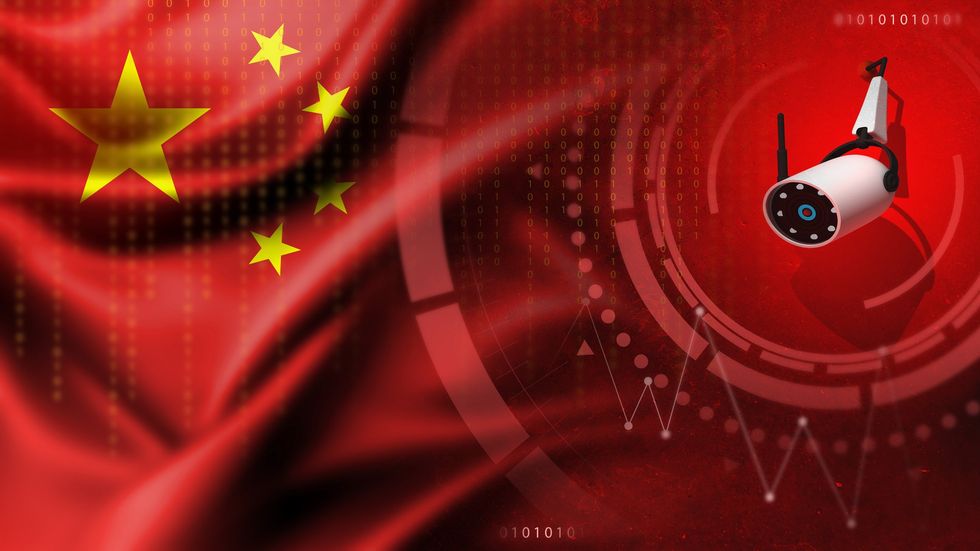
Is the Chinese government spying on you through cameras manufactured by Chinese companies? According to the FCC and several state governments, the answer might well be “yes,” and regulators are attempting to take action to protect Americans’ privacy. Two of the largest surveillance camera manufacturers in the world — Hikvision and Dahua — are based in China and have strong ties to the Chinese Communist Party government. Because of the “unacceptable risk” their equipment allegedly poses to U.S. national security, the FCC banned sales and import of new technology from Hikvision and Dahua in 2022. In recent years, several governments — including Australia, the U.K., and India — have also taken action against the companies. Blaze News wanted to know to what extent the equipment manufactured by Hikvision and Dahua remains available in the U.S. and whether users are at risk of unwittingly sharing their data with China. The answers are in some respects disturbing, but in others encouraging. ‘Related to the Communist Party of China’: Hikvision and Dahua Cameras have become nearly ubiquitous in American culture, and we've embraced them because of their clear benefits. Cameras record precious memories, help secure private property, and even allow governments to identify toll-road users without disrupting traffic flows and nab speeding drivers at low cost. While few Americans, especially those in younger generations, worry about possible privacy concerns associated with these cameras, even fewer concern themselves about the implications of relying on equipment manufactured by a foreign adversary. They should. According to Radio Liberty, a Ukrainian outlet, 20% of all video surveillance cameras in the entire world are manufactured by Hikvision and another 10% by Dahua. The state of Nevada, for example, prohibits Hikvision and Dahua equipment at all state government offices and agencies out of 'security concerns.' What’s more, 37% of Hikvision is owned by CET HikGroup, which answers to other organizations run by the Chinese government. Chinese law reportedly demands that businesses share with the Chinese Communist Party some — if not all — of the critical information they glean through normal operations. “It should be understood that the companies of the People's Republic of China are companies that are closely related to the Communist Party of China. That is, there is no large, completely independent business in the PRC,” said Agia Zagrebelska, head of the Department of Minimization of Corruption Risks at the Ukrainian National Agency on Corruption Prevention, according to Radio Liberty. “This is not my subjective assessment,” Zagrebelska continued. “These are the requirements of their legislation.” Federal and state governments here in the U.S. are likewise highly concerned about Hikvision and Dahua. The Department of Defense included both companies on its list of designated “Chinese military companies operating in the U.S.,” a list released the same year the FCC banned sales and imports of the companies' new equipment. “These new rules are an important part of our ongoing actions to protect the American people from national security threats involving telecommunications,” FCC chair Jessica Rosenworcel said at the time in a statement, according to Tech Crunch. In April, a federal court upheld the inclusion of Hikvision and Dahua on the FCC’s Covered List, though it ruled that the FCC had likewise defined “critical infrastructure” too broadly when issuing the bans. At least 10 U.S. states have also imposed their own restrictions on Hikvision and Dahua equipment, IVPM reported. The state of Nevada, for example, prohibits Hikvision and Dahua equipment at all state government offices and agencies out of “security concerns.” In a statement, Hikvision told Blaze News: Hikvision disagrees with the FCC’s decision to include Hikvision into the “Covered List,” but it is important to note that the Court “vacated” and rejected the scope of the FCC’s “overbroad” and “entirely implausible” restrictions. Hikvision has always been clear that the company and its products present no threat to national security of the U.S. or the security of American consumers. No respected technical institution or assessment has concluded otherwise. Possible threats to American consumers Though federal and state governments have sounded the alarm about Hikvision and Dahua, surveillance cameras manufactured by these companies are still readily available for purchase in the U.S. A quick search of Amazon reveals that surveillance cameras emblazoned with the Hikvision name are available for as little as $50, with an average cost of about $100. The company even has its own Amazon store, offering an array of products, though notably, no surveillance cameras are advertised there, and the webcam tab is empty. With its many options and affordable prices, Hikvision views small- and medium-sized businesses as its target client base, according to the Record. At about $70 per unit, Dahua cameras on Amazon are roughly in the same price range as Hikvision cameras and target the same business market, though Dahua does not have its own Amazon store. Some may be surprised to learn that equipment manufactured by companies red-flagged by the government may still be sold legally in the U.S., but the reason is rather simple: The FCC banned only new technology from Hikvision and Dahua. Older technology is still available, though it could be banned later should regulators determine that such a step is necessary. ‘Physical separation’: Guarding against cyber menaces By all appearances, Hikvision and Dahua cameras look like typical surveillance cameras and in and of themselves do not pose a security risk upon installation. Potential problems arise only when these cameras are connected to the internet. 'You've now just given them the keys to the kingdom.' Many individuals and businesses prefer to connect cameras and servers to the internet to avail themselves of cloud storage and remote-access capabilities. However, users must segment their systems to prevent bad actors — like some foreign companies and governments — from tapping into the devices from the outside. “It's like having a fence in your yard,” Rob Coté, owner of a small cybersecurity company called Security Vitals, explained to Blaze News. “You have a physical separation, and it … thwarts the potential of a remote data grab.” “If the cameras had malicious content or the ability for remote access from an external resource built into them and you connect them to your core network, you've now just given them the keys to the kingdom.” In addition, businesses also ought to position surveillance cameras so as to prevent them from capturing sensitive or proprietary information, knowing that images captured on surveillance could be accessed in the case of a cyberattack. Thus, while the risk of possible data compromise is significant, average American consumers, even those who are not tech-savvy, can take steps to protect themselves and their sensitive data. First, they should take the time to do basic research into equipment before making any purchases and, as they would with other products, remain wary of attractive price tags. Secondly, they should consider purchasing other key cybersecurity equipment such as firewalls from a reputable vendor. Such vendors specialize in securing cyber environments for those without the means or inclination to do so themselves. “Make sure that those cameras are on a separate network that doesn't touch your key corporate assets or your core resources,” Coté further advised. In a statement, Hikvision told Blaze News: Hikvision’s business model in overseas markets generally involves selling products via distribution networks to integrators who then install the equipment at end-user facilities. Hikvision does not install devices at end users’ sites and end users have full control over how the equipment is used, which means that Hikvision, as an equipment manufacturer, has no visibility or access into end users’ video data. Dahua did not respond to Blaze News’ request for comment. ‘Close rapport between Beijing and Moscow’: Other concerns As IPVM noted, governments from around the world have likewise banned or at least restricted the use of Hikvision and Dahua products at and by state agencies. Ukraine in particular became wary of the two camera manufacturers because of the recent political alliance between China and Russia. According to a January report from the Kyiv Independent, Hikvision and Dahua cameras are widely used in Ukraine in both private and public sectors. Should those companies access Ukrainian data and exfiltrate it to China, the data could make its way to Russian military leaders who might exploit it. 'Although the information is sent in encrypted form ... for the manufacturer and developer of these cameras, decoding such information will not pose a problem.' In fact, the outlet indicated that may have already happened: “Russian intelligence services have reportedly managed to access surveillance cameras, including older Hikvision devices, to guide strikes against Ukraine's cities, for example, during a mass missile attack on Jan. 2.” While the outlet could not confirm whether Russia had gained access to sensitive Ukrainian data, it insisted that “the close rapport between Beijing and Moscow makes the data transmission a security risk.” Furthermore, the outlet noted that the older Hikvision and Dahua models — some of which are almost assuredly in use in the U.S. — were easily hacked, creating other security complications. In practice tests conducted at the behest of Radio Liberty, the Ukrainian outlet cited above, skilled experts could hack into an older Hikvision model within 15 minutes. Other tests conducted on older models revealed that some servers in countries like Ireland and Germany were actually owned by American companies, including Amazon Web Services, but rented by Hikvision or Dahua, meaning that these Chinese companies effectively remained in control of servers in foreign countries thousands of miles away. “We see that even when the user wants to turn off the connection to the Dahua cloud service, such a connection still continues and information continues to reach the servers rented by Dahua via the internet,” Serhiy Denysenko, executive director of Laboratories of Computer Forensics, told Radio Liberty about a Dahua unit released in 2019. “And although the information is sent in encrypted form, I believe that for the manufacturer and developer of these cameras, decoding such information will not pose a problem,” Denysenko continued. “And these are precisely the security risks for the user, about which the manufacturer did not inform him.” In a statement, Hikvision told Blaze News: As a publicly traded commercial manufacturer, all of Hikvision offerings are designed for civil use. Hikvision declines to comment about the use of its equipment in specific markets. Separately, Hikvision becomes aware of a hack of any kind, it acts swiftly and takes every possible step to address it. Dahua and Amazon Web Services did not respond to Blaze News’ request for comment. By far, the most secure “older” model camera that Radio Liberty tested was a Hikvision camera released in 2023. Because the unit demanded a more complex password for sign-in purposes and did not automatically transmit data upon connection to a network, Denysenko described it as “much safer.” Without more specific details about the model, it is difficult to determine whether that particular Hikvision model is available for purchase on Amazon. But with the FCC banning new technology from Hikvision and Dahua, the agency may have inadvertently prevented Americans from purchasing newer cameras with more advanced, built-in security protections. 'Always on and watching': Hikvision and Chinese detention camps Bet_Noire/Getty Another serious problem with Hikvision is its apparent history with the detention camps in China. According to one former detainee, Hikvision cameras installed in the camps ostensibly allowed guards to detect the slightest sound or movement and rebuke prisoners angrily for speaking without authorization. Ovalbek Turdakun — an ethnic Kyrgyz and a Christian — spent 10 months in a concentration camp in the Chinese region of Xinjiang in 2018. While incarcerated, Turdakun was subjected to horrific torture as well as onerous surveillance reportedly facilitated through Hikvision cameras. Though prisoners were crowded into cells and shut in for months at a time, they kept almost entirely silent because surveillance cameras installed there were “always on and watching,” Turdakun — who has since defected to the U.S. with his wife and son — told Tech Crunch through a translator. Prisoners even raised their hand and asked permission when they had to use the latrine hole “because of the cameras watching, always,” Turdakun reiterated. The slightest attempt at conversation incited angry censure transmitted through surveillance cameras. When shown the Hikvision logo, Turdakun claimed he saw it on all the cameras in the detention camp and in the surrounding Chinese city. While on house arrest, Hikvision cameras positioned in the city would alert authorities to Turdakun’s movements, prompting further harassment, he said. “The cameras are about [6 feet] in height — also Hikvision — and they’re on every sidewalk,” Turdakun explained to Tech Crunch. “There are so many of them, they don’t need to change the directions of the cameras. It doesn’t matter how long the road is, even the shortest road will have cameras. The whole entire city has cameras watching.” Tech Crunch admitted that it could not independently verify Turdakun’s reports but claimed they aligned with other reports given by survivors of Chinese detention camps. In a statement, Hikvision did not deny its previous association with Chinese detention camps, telling Blaze News: Hikvision takes all reports regarding human rights very seriously. As a market leader, we recognize our responsibility for protecting people and firmly oppose all forms of forced labor, child labor, and modern slavery. … Hikvision’s products and technologies serve vital roles in protecting people and society in more than 150 countries. Since entering global markets, Hikvision has and will continue to strictly comply with applicable laws and regulations in the countries where we operate and follow internationally accepted business ethics and business standards. We also continuously review and refine our personal data protection practices and policies to prevent misuse of our products. Like Blaze News? Bypass the censors, sign up for our newsletters, and get stories like this direct to your inbox. Sign up here!
Like
Comment
Share
The Blaze Media Feed
2 yrs

Harris’ risk-averse strategy risks it all
Favicon 
www.theblaze.com

Harris’ risk-averse strategy risks it all

Vice President Kamala Harris’ refusal to sit down for a single solo interview since her coronation has reached farcical levels in Washington. Outside D.C., however, she’s playing a game with increasingly serious consequences. But first, the show in town. Will she or won’t she? And if she does, who will she be taking? Tuesday morning’s Playbook newsletter was titled “Inside Harris’ big interview decision” and devoted over 1,000 words to the question, with literally not a sentence dedicated to how bizarre it is to receive the Democratic nomination without ever so much as entering a primary, then refusing to take any questions. The longer the silence lasts, the more consequential any slip of the mask will be. What, then, could Playbook have devoted 1,009 words to if not this glaring facet of the 2024 race? The answer: Which one of their friends will get the interview, who's been calling whom to talk about it, and what Harris wants to get out of it all. No joke. If this reminds you of high school girls giggling about whom the quarterback will take to the dance, it’s because that’s what much of D.C. journalism these days is — and that’s how the media approach the Democratic nominee. They even wondered whether Harris would try to buck the pressure by offering one of the gang a “dual interview,” where she’d sit down alongside Gov. Tim Walz (D-Minn.). Later on Tuesday, the campaign did just that — to CNN’s Dana Bash on Thursday. Dual interviews, they wrote, “tend to be softer and focus more on the relationship between the two candidates.” They’re right. It’s important to hold them to that. Outside Washington, there are fewer tee-hees and whispers. The vice president’s refusal to sit for questions is such an open joke that California governor and top Democrat Gavin Newsom can’t keep a straight face on the subject in public. But it’s also deadly serious — and with each passing day, it draws further attention to her deficits. When she finally cracks, the result will be a heavily promoted and widely covered media event. If she performs poorly, the country will notice. If she performs well, her campaign will say she’s proven her qualifications for the job and any further scrutiny is racist or conspiratorial. The danger to Harris is that even those voters with normal, happy lives generally begin to tune in to the election after the long Labor Day weekend is over. That weekend, in case you missed it, is this weekend. So the stakes for the campaign are high. We saw what happened when Democrats hid President Joe Biden from scrutiny for too long. His singularly awful debate performance sucked the oxygen from the room, dominated the news cycle for longer than the attempted assassination of former President Donald Trump, and led to Biden’s painful abdication. It seems the longer you wait, the harder you fall. Of course, if Biden had done better, he’d still be in the race. This is the wager. Then again, maybe she can make it over the finish line. Pennsylvania early voting begins in less than three weeks, on Sept. 16. Virginians can start casting their ballots four days later. The big thing standing in her way is the Sept. 10 debate the two camps argued over until Tuesday. The Democrats are actively working to shore up her many weak spots in the lead-up to the event, most recently endorsing a border wall. In the days leading up to the showdown, however, we’re largely left guessing where she stands and on what. The concern runs so high in her campaign that staffers haven’t even deployed Walz, for fear he’ll try to explain a “policy” he does not understand. The United States might well be on its way to electing a president it does not know. Team Harris would prefer it that way. But the longer the silence lasts, the more consequential any slip of the mask will be. It’s a bold strategy. If it succeeds, it will earn a whole lot of praise. If it fails, we’ll wonder how anyone could be so arrogant as to try it. Blaze News: Trump says agreement with Harris on upcoming debate rules has been reached Blaze News: Zuckerberg 'comes clean' in damning letter about election interference and pandemic censorship Blaze News: Kamala Harris wants to have a border wall after opposing one for years Blaze News: Special Counsel Jack Smith files revised indictment against Donald Trump to satisfy Supreme Court ruling on immunity Sign up for Bedford’s newsletter Sign up to get Blaze Media senior politics editor Christopher Bedford's newsletter. IN OTHER NEWS Mitch McConnell really doesn’t want to fight Dems over illegal alien voters The Republican Senate minority leader is incensed. The House of Representatives and a few of his colleagues in the Senate are itching for a fight over citizen-only voting, but Mitch McConnell (R-Ky.) isn’t game. It’s too risky, his aides told Axios this week. And this close to an election? That’s ridiculous, of course, when the fight is over election integrity, the American people back it, and the Republican nominee is up for a battle. Still, McConnell thinks he has a plan for shutting down the resistance. Republican leaders are generally shutdown-averse. They are quick to note that between corporate media dominance and a Machiavelli-level willingness to inflict pain, modern Democrats generally emerge the winners. And they’ve got a point. But the predictions of doom can go a bit far. They've blamed electoral losses in Virginia on past shutdown fights, though the Old Dominion was long turning blue. One blogger I used to work with even blamed a mentally ill man ramming his car into the White House barriers on the Republican shutdown. Clear-eyed analysis isn’t for everyone. But analysis aside, a win or a loss is often in the messaging. “We only want citizens to vote” is a message Republicans win on. It’s not like Obamacare or budget caps. Americans get it, and they support it. What McConnell really wants is a big-spending omnibus package that funds his Ukraine hobby long after he’s gone, but his starting offer to shut down conservative opposition to dropping the SAVE Act is “a clean CR,” which would fund the state without expanding any Democratic prerogatives or locking a potential Trump administration into next year’s policy. That’s a kind offer. But if Republicans are serious about election integrity (and they should be), they’ll take Democratic opposition to the SAVE Act at its word and assume the election is at risk if it does not pass. In this light, it’s hard to take Republican leaders’ word that the fight carries risk in the November election. Axios: McConnell’s big fear on the next budget fight Blaze News Tonight: Mike Lee details how to pass the SAVE Act Blaze News: Texas removes 1 million ineligible voters from voter rolls — finds 30% of noncitizens previously cast ballots Blaze News: Dems try and fail to keep Cornel West off ballot in Michigan, Jill Stein in Wisconsin The fire rises: UnHerd: How capitalism stole London’s skyline Poor London, beset by both the left wing's love of importing humans and the right’s love of money. Between the bankers and globalists and the lifestyle liberals, English values have few defenders. The working and middle classes have suffered a great deal from this reality. So, too, has the skyline. Jonathan Glancey reports: Before the coronation muted him, Charles, then Prince of Wales, launched several memorable broadsides against modern architects and planners. Addressing the annual dinner of the Corporation of London’s Planning and Communications Committee at the Mansion House in December 1987, he said: “You have, ladies and gentlemen, to give this much to the Luftwaffe: when it knocked down our buildings, it didn’t replace them with anything more offensive than rubble. We did that… Your predecessors, as the planners, architects and developers of the City, wrecked the London skyline and desecrated the dome of St Paul’s.”With dyspepsia gurgling through the room, the Prince recharged his guns. “Not only did they wreck the London skyline in general. They also did their best to lose the great dome in a jostling scrum of office buildings, so mediocre that the only way you ever remember them is by the frustration they induce — like a basketball team standing shoulder-to-shoulder between you and the Mona Lisa.” The French and Italians would never dishonour their finest buildings in this manner. Can you imagine office blocks imprisoning Paris’s cherished Notre Dame or Venice’s shimmering St Mark’s?
Like
Comment
Share
Gamers Realm
Gamers Realm
2 yrs

New tactical RPG Menace is like XCOM in space, but with more drama
Favicon 
www.pcgamesn.com

New tactical RPG Menace is like XCOM in space, but with more drama

If you're craving XCOM 3, then new tactical RPG Menace might be just the meal you're looking for. Coming from Overhype Studios (formerly of Battle Brothers) and Manor Lords publisher Hooded Horse, Menace sees you teaming up with the very troublemakers you were sent to handle as a terrifying, Terminator-style threat puts the very existence of humanity into question. At Gamescom 2024, I sat down for a special preview behind closed doors with managing director Jan Taaks and creative director Paul Taaks. Continue reading New tactical RPG Menace is like XCOM in space, but with more drama MORE FROM PCGAMESN: Best space games, Best turn-based RPG games, Best horror games
Like
Comment
Share
Gamers Realm
Gamers Realm
2 yrs

Expedition 33 is a stunning surrealist RPG with a sublime parry system
Favicon 
www.pcgamesn.com

Expedition 33 is a stunning surrealist RPG with a sublime parry system

If you love turn-based RPGs but also crave a little real-time action, Clair Obscur: Expedition 33 is shaping up to be perfect for you. The surrealist adventure takes active combat prompts to their logical extreme, and in doing so opens up the potential for you to tackle its threats at levels far beyond what might ordinarily be possible - if you're good enough. I sat down to preview the upcoming RPG at Gamescom 2024, and I'm pleased to report that it's certainly bringing the style. Continue reading Expedition 33 is a stunning surrealist RPG with a sublime parry system MORE FROM PCGAMESN: Best RPGs, Best turn-based RPGs, Upcoming PC games
Like
Comment
Share
Gamers Realm
Gamers Realm
2 yrs

Stop waiting for Persona 6, Metaphor Refantazio is what you want
Favicon 
www.pcgamesn.com

Stop waiting for Persona 6, Metaphor Refantazio is what you want

Wondering where Persona 6 is? Developer Atlus has the answer right here, though you'd be forgiven for missing it. Metaphor: Refantazio is the stylish JRPG in all but name - even more so than the also-excellent Tokyo Mirage Sessions before it. After spending an hour with the upcoming RPG at Gamescom 2024, I'm now more excited for what's in store than I would have been from simply another new Persona game. Continue reading Stop waiting for Persona 6, Metaphor Refantazio is what you want MORE FROM PCGAMESN: Metaphor Refantazio release date, Best RPG games, Best JRPGs
Like
Comment
Share
History Traveler
History Traveler
2 yrs

At a Bold Meeting 250 Years Ago, the Continental Congress Set America in Motion
Favicon 
www.smithsonianmag.com

At a Bold Meeting 250 Years Ago, the Continental Congress Set America in Motion

While far less famous than the coalition that met in 1775, this group of founders found agreement in their disagreements and laid the groundwork for a revolution
Like
Comment
Share
Gamers Realm
Gamers Realm
2 yrs

10 Top Assassin's Creed Titles
Favicon 
www.dualshockers.com

10 Top Assassin's Creed Titles

Assassin's Creed has single-handedly revolutionized the action-adventure genre. Combining elements of parkour, stealth combat, and exploration, to provide one of the most cathartic and action-packed series in gaming to date.
Like
Comment
Share
RedState Feed
RedState Feed
2 yrs

Yes, There Is a COVID-19 Spike. No, It's Not a Cause for Panic.
Favicon 
redstate.com

Yes, There Is a COVID-19 Spike. No, It's Not a Cause for Panic.

Yes, There Is a COVID-19 Spike. No, It's Not a Cause for Panic.
Like
Comment
Share
Trending Tech
Trending Tech
2 yrs

Plaud’s NotePin is another AI wearable for remembering everything
Favicon 
www.theverge.com

Plaud’s NotePin is another AI wearable for remembering everything

The NotePin is a voice recorder in the body of a Fitbit. | Image: Plaud After creating an impressive (not to mention somewhat TikTok famous) AI-powered voice recorder, Plaud is launching a more ambitious gadget: a wearable designed to be with you all the time, recording your notes and meetings and helping you get stuff done. The device is called the NotePin, and the pill-shaped gadget and accessory lineup seems to take some cues from early Fitbits. You can wear the NotePin around your neck as a pendant, pin it to your chest, strap it to your wrist, or clip it just about anywhere. AI wearables are everywhere right now and largely fall into one of two categories. There are the companionship devices, like Friend, meant to just provide something to hang with and talk to. Then, there are the productivity devices,... Continue reading…
Like
Comment
Share
Trending Tech
Trending Tech
2 yrs

New leak gives you a good reason to skip the iPhone 16 and wait for the iPhone 17
Favicon 
bgr.com

New leak gives you a good reason to skip the iPhone 16 and wait for the iPhone 17

Apple is expected to announce the iPhone 16 in two weeks. This will be the company's first device after the Apple Intelligence announcement. With an improved processor, camera, and battery performance, the iPhone 16 looks like a great option over older phones. However, a leak suggests that the device people might really want is the upcoming iPhone 17. While previous leaks suggest this will be the first iPhone with a revamped front-facing camera, 48MP resolution in the three main lenses of the Pro models, and an all-new iPhone 17 Slim, there's another perk that might make the 2025 iPhone the one to choose: AI. According to Weibo leaker Phone Chip Expert, "This year's iPhone 16 has only 8GB of memory, mainly AI on the cloud side. Next year's iPhone 17 has 12GB of memory and more edge AI applications." If we look at how Apple is developing Apple Intelligence, it makes sense that the 2025 iPhone will be the main device for artificial intelligence. For example, the iPhone 16 will likely launch without Apple Intelligence, as the features being tested are only available in beta for developers running iOS 18.1. In addition, most functions are still unavailable, such as Genmoji, image generation, an all-new Siri that understands context, etc. Apple already confirmed that some Apple Intelligence features will only be available later in 2025, which means we'll probably see a bigger platform expansion around WWDC 2025. As it's still unclear how long it will take Apple to expand the platform to more languages and regions, it completely makes sense that the best Apple Intelligence features will need at least a year to arrive. With that, the iPhone 17 will provide customers with the perfect opportunity, as it will have more mature AI, more RAM for on-device processing, and all the perks mentioned above. We're still a year away from the iPhone 17 release, but we already have a few rumors about this upcoming device, which you can learn more about below. Don't Miss: iPhone 17: Release date, rumors, features, A19, price, and Slim model The post New leak gives you a good reason to skip the iPhone 16 and wait for the iPhone 17 appeared first on BGR. Today's Top Deals Exclusive deal: Get GEEKOM’s ultra-fast GT13 Pro Mini PC for only $549 Back to school blowout: Blazing-fast GEEKOM A7 Mini PC is $179 off Today’s deals: $20 Amazon credit, $299 Apple Watch Series 9, $20 Blink Mini cam, Beats x Kardashian, more Amazon gift card deals, offers & coupons 2024: Get $525+ free
Like
Comment
Share
Showing 14542 out of 56670
  • 14538
  • 14539
  • 14540
  • 14541
  • 14542
  • 14543
  • 14544
  • 14545
  • 14546
  • 14547
  • 14548
  • 14549
  • 14550
  • 14551
  • 14552
  • 14553
  • 14554
  • 14555
  • 14556
  • 14557

Edit Offer

Add tier


Select an image
Delete your tier
Are you sure you want to delete this tier?

Reviews

In order to sell your content and posts, start by creating a few packages. Monetization

Pay By Wallet

Payment Alert

You are about to purchase the items, do you want to proceed?

Request a Refund