YubNub Social YubNub Social
    Advanced Search
  • Login

  • Night mode
  • © 2026 YubNub Social
    About • Directory • Contact Us • Privacy Policy • Terms of Use • Android • Apple iOS • Get Our App

    Select Language

  • English
Install our *FREE* WEB APP! (PWA)
Night mode
Community
News Feed (Home) Popular Posts Events Blog Market Forum
Media
Headline News VidWatch Game Zone Top PodCasts
Explore
Explore Jobs Offers
© 2026 YubNub Social
  • English
About • Directory • Contact Us • Privacy Policy • Terms of Use • Android • Apple iOS • Get Our App

Discover posts

Posts

Users

Pages

Group

Blog

Market

Events

Games

Forum

Jobs

Daily Caller Feed
Daily Caller Feed
2 yrs

Jay Littleton Ball Park Featured In Famous 90s Movie Burns Down
Favicon 
dailycaller.com

Jay Littleton Ball Park Featured In Famous 90s Movie Burns Down

'It went up like a box of matches... You're literally watching history burn'
Like
Comment
Share
Fun Facts And Interesting Bits
2 yrs

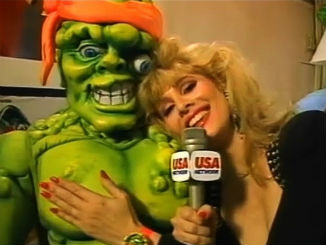
Staying Up All Night with Rhonda Shear
Favicon 
theretronetwork.com

Staying Up All Night with Rhonda Shear

Rhonda Shear was an iconic staple of late-night television in the '90s. She was beautiful, funny, and oozed sex appeal. We pay tribute to her greatness and define why she was so magical. CONTINUE READING... The post Staying Up All Night with Rhonda Shear appeared first on The Retro Network.
Like
Comment
Share
INFOWARS
INFOWARS
2 yrs

‘Betrayal’: KENNEDYS Throw RFK Jr. Under Bus Following Trump Endorsement

https://www.infowars.com/posts..../betrayal-kennedys-t

Attention Required! | Cloudflare
Favicon 
www.infowars.com

Attention Required! | Cloudflare

Site has no Description
Like
Comment
Share
Daily Signal Feed
Daily Signal Feed
2 yrs

WATCH: RFK Jr. Turns Harris-Walz Sugar High Into Caffeine Crash
Favicon 
www.dailysignal.com

WATCH: RFK Jr. Turns Harris-Walz Sugar High Into Caffeine Crash

On the latest episode of “The Tony Kinnett Cast,” back from our live coverage of the Democratic National Convention in Chicago, we discuss Robert F. Kennedy’s endorsement of Donald Trump for the presidency as he drops out of the race, sort of. Are we really going to see any difference in the polls nationally? What about the swing states? Get out the popcorn, because the legacy media’s reaction to Vice President Kamala Harris and the DNC this week is a spectacle to behold. Get ready to laugh and cry (from secondhand embarrassment) as “hard-hitting journalists” cover serious and important issues such as the number of balloons falling from the ceiling at United after Harris’ acceptance speech Thursday night—as opposed to the riots outside. What are the results of those riots? Did the socialists, pro-Palestinians, and other far-left actors get all of their anger out of their systems? Is a unified base ready to support the wondrous JOY of Kamala Harris and Minnesota Gov. (and stolen valor champion) Tim Walz? Finally, in Mail Time, we dig into an avalanche of questions sent straight from your phones and computers into our inbox. We take the best and worst and answer them live on air to the amusement and bemusement of our syndicated audience. Catch the live radio show and livestream weeknights at 7 p.m. EDT on The Daily Signal’s YouTube, X, or Facebook. The post WATCH: RFK Jr. Turns Harris-Walz Sugar High Into Caffeine Crash appeared first on The Daily Signal.
Like
Comment
Share
Daily Signal Feed
Daily Signal Feed
2 yrs

How American Voters Got Dumb
Favicon 
www.dailysignal.com

How American Voters Got Dumb

Editor’s note: This is a lightly edited transcript of the accompanying video from professor Peter St. Onge. How did American voters get so dumb? Thank a public school. It’s a modern fetish that we’re brilliant but our ancestors were idiots. After all, they didn’t have iPhones, internets, or Kim Kardashian. This is also academic consensus, for what it’s worth. It’s called the Flynn Effect—the idea is people do better on puzzles, so we must be smarter. Of course, one wonders if puzzles translate into, say, understanding monetary policy or how welfare destroys families. Thankfully, we have a real-world test: actual political campaigns. Back when I was a professor, I ran every inaugural address through a Flesch-Kinkaid text analysis to measure the grade level. The logic being top speechwriters know how to talk at voters’ level. Doing that, it turns out we are getting dumb breathtakingly fast. In 1900, inaugurals were written at between 13th and 14th grade—modern college level. Today, they’re eighth grade for Obama, ninth grade for Trump, and … seventh grade for Biden. It gets worse the further back we go: Andrew Jackson’s 1828 inaugural was written at 22nd grade—meaning, strictly speaking, two Ph.D.s was the median voter in 1828. Keep in mind Jackson was a populist man-of-the-people. George Washington’s inaugural was closer to 26th grade. Also keep in mind almost nobody in 1828—or 1789—had a formal education. Jackson kicks off with, “Undertaking the arduous duties that I have been appointed.” Washington starts with, “Among the vicissitudes incident to life.” For Biden, it’s “This is America’s day.” So how did we get so dumb? Easy: public schools. The modern government school came from 1800s Prussia, which had enough of worker riots and peasant revolts and resolved to indoctrinate kids into pro-regime obedience. It worked like a charm, turning the once unruly Germans into a government-directed army that went on to do terrible things. Left-wing American intellectuals were fascinated by Prussia’s indoctrination and imported it to the U.S. They were motivated not by peasant revolts but by the frustratingly small-government ethos of Catholics. Progressives figured they couldn’t frog-march American Catholics into government utopia, but they have the children. These activists spread government schools to every state and got a major boost postwar, when competence tests for employment were declared discriminatory, forcing companies to instead rely on formal education to discover talent. This launched the university from a fringe toy for the 1% into a $300,000 tax on anybody hoping for a white-collar job. Meanwhile, like all government programs, opportunists—teachers unions—took over, spending $878 billion per year dutifully peddling politics but neglecting the actual purpose of education, leaving American kids illiterate and innumerate. In a video last year, I mentioned how fully 23 Baltimore schools had precisely zero students proficient in math, and in Detroit, 96% of students lacked proficiency in math, and 95% can’t even read. But by gum, they know their demi-genders. Take people who can’t name a state or don’t know what the Supreme Court is, wash them with decades of left-wing propaganda, stick them in a voter booth, and here we are. So, what’s next? If we’re to save our democracy, we have to save our voters—by replacing government schools with schools that actually teach instead of indoctrinate. That could mean school choice, it could mean vouchers, it could mean home schooling co-ops. But until we fix it, things will keep getting worse. We publish a variety of perspectives. Nothing written here is to be construed as representing the views of The Daily Signal. The post How American Voters Got Dumb appeared first on The Daily Signal.
Like
Comment
Share
Daily Signal Feed
Daily Signal Feed
2 yrs

Fourth Circuit Decision Sets Up Next Potential 2A Showdown at Supreme Court
Favicon 
www.dailysignal.com

Fourth Circuit Decision Sets Up Next Potential 2A Showdown at Supreme Court

The U.S. Court of Appeals for the Fourth Circuit upheld Maryland’s ban on so-called “assault weapons” earlier this month, likely setting the stage for the next major Second Amendment showdown at the Supreme Court. The case, Bianchi v. Brown, features Maryland residents who challenge the constitutionality of a 2013 state law that generally prohibits them from buying or possessing any firearm deemed an “assault weapon.” The statute defines that term to include hundreds of specific models of semiautomatic rifles, as well as any other semiautomatic rifle that either (1) has a fixed magazine capable of holding more than ten rounds, (2) has an overall length shorter than twenty-nine inches, or (3) has both a detachable magazine and at least two of the following three features: a folding stock, flash suppressor, or grenade or flare launcher. While semiautomatic rifles aren’t outright prohibited, Maryland residents are required to buy heavily modified “featureless” versions of those guns. The plaintiffs argue that this prohibition on owning virtually all of the most popular semiautomatic rifles in the nation violates the Second Amendment. The Supreme Court hasn’t definitively addressed the question of whether the Second Amendment protects the possession of semiautomatic rifles, but to say that its overall Second Amendment jurisprudence favors the plaintiffs’ argument is an understatement, to say the least.    First, in District of Columbia v. Heller, the Supreme Court in 2008 struck down the District of Columbia’s total ban on the possession of handguns and explained that the Second Amendment’s protections extend “prima facie to all instruments that constitute bearable arms, even those that were not in existence at the time of the founding.” The right is not unlimited, and the Supreme Court noted a historical tradition of “prohibiting the carrying of ‘dangerous and unusual weapons.’” It emphasized, however, that handguns are “commonly possessed by law-abiding citizens for lawful purposes,” and constitute a “class of ‘arms’ that is overwhelmingly chosen American society” for exercising their natural right of self-defense. Most recently, in New York State Rifle & Pistol Ass’n v. Bruen, the Supreme Court explained that judicial analyses of Second Amendment challenges must be based on text, history, and tradition, and not on any interest-balancing tests that allow courts to determine whether the government has a sufficiently compelling reason for the regulation. Bruen didn’t specifically delve into what types of arms are protected, but the case is nonetheless instructive about how courts must go about discerning the answer to that question: when the law regulates conduct that is protected by the plain language of the amendment, the government must demonstrate that the law is consistent with the nation’s historical tradition of firearms regulation. Under the Bruen test, the government doesn’t have to show a historical doppelganger for its modern law, but at the very least, it needs to provide evidence of historical laws that were relevantly similarly both in how they burden the right to keep and bear arms, and in the reason for why the laws burden that right. Additionally, the historical tradition must be formed by more than a handful of late-in-time historical outliers. In short, under the Supreme Court’s jurisprudence, the government would have to show some longstanding national tradition of not only banning the civilian possession of semiautomatic rifles like the AR-15, but banning them because they are a type of weapon that is so inherently dangerous and unusual that it’s not commonly possessed by law-abiding citizens for lawful purposes. It can’t do so. First, semiautomatic rifles like the AR-15 are hardly a new invention for which we must draw nuanced analogies to historical categories of small arms. The first successful semiautomatic rifle design was produced in the 1880s, and subsequent models achieved widespread commercial success by the earliest days of 20th century. Meanwhile, the features that typically distinguish “assault-style” semiautomatic rifles from “non-assault” rifles—such as pistol grips, collapsing stocks, and barrel shrouds—are only slightly more recent developments that, importantly, have no bearing on the weapon’s lethality, functionality, or concealment. Yet, complete bans on their civilian possession are a strikingly recent phenomenon. The Supreme Court admitted as much nearly thirty years ago in Staples v. United States, when it referred to a semiautomatic AR-15 rifle among the categories of weapons that “traditionally have been widely accepted as lawful possession,” unlike automatic machineguns, artillery pieces, and hand grenades.   While machine guns have been heavily regulated since the early 20th century, the first attempt to regulate semiautomatic rifles didn’t come until California’s passage of a comparatively narrow law in 1989. Yes, the federal government passed what it called “an assault weapons ban” in 1994. But the Supreme Court never ruled on its constitutionality. And while that law imposed a 10-year ban on the civilian purchase of certain semiautomatic weapons, it didn’t prohibit their possession by the millions of civilians who already owned them. Moreover, Congress allowed that statute to “sunset” in 2004, in significant part because the government’s official report concluded that these weapons were rarely used in crime even before the law was passed, and reinstating it therefore have little impact on violent crimes rates. Even today, only 10 states and the District and Columbia regulate the sale or possession of semiautomatic “assault” weapons, and the majority of those regulations were enacted within the last 15 years. They are not just historical outliers, but modern outliers, as well. Second, semiautomatic rifles like the AR-15 are clearly commonly possessed by law-abiding citizens for lawful purposes. Even the Supreme Court’s notoriously anti-gun justices admitted in their dissent in Garland v. Cargill that semiautomatic rifles are “commonly available” to ordinary civilians. Finally, even if one believes that, somehow, firearms that are both commonly possessed for lawful purposes and that historically haven’t been subjected to significant regulation can nonetheless qualify as uniquely dangerous and unusual weapons under the Bruen test, the fact remains that the semiautomatic “assault-style” rifles banned under the Maryland law are functionally the same as the featureless semiautomatic rifles it permits. Again, nothing about the defining features of “assault-style” firearms impacts any measure of “dangerousness,” such as rate of fire, muzzle velocity, or the caliber of the bullet fired. Despite all of this, a majority of the Fourth Circuit determined that Maryland’s prohibition was perfectly constitutional. Unsurprisingly, it was only able to come to this conclusion by making a mockery of Supreme Court precedent. The Fourth Circuit upheld the statute by declaring semiautomatic rifles “military-style weapons designed for sustained combat operations that are ill-suited and disproportionate to the need for self-defense.” As such, Maryland’s ban on their possession “fits comfortably within our nation’s tradition of firearms regulation,” which the court framed as “regulating excessively dangerous weapons once their incompatibility with a lawful and safe society becomes apparent.” The opinion is replete with problems that make it ripe for review by the Supreme Court. Some of the Fourth Circuit’s rationale is just downright nonsensical, such as its argument that the AR-15 was “designed for combat” in the first place. In reality, the AR-15 was quite literally designed as the civilian model of its select-fire military counterpart, and has only ever been sold to civilians and law enforcement officers for non-military use. The most significant of these problems, however, is foundational. In essence, the Fourth Circuit manipulated the Bruen test to “find” a historical tradition of engaging in the very sort of interest-balancing that Heller, McDonald, and Bruen deemed inappropriate, for the clear purpose of circumventing the Supreme Court’s proscription of interest-balancing tests. The Fourth Circuit has made a mockery of the Bruentest and effectively dared the Supreme Court to do something about it. If the court is serious about its vindicating Second Amendment jurisprudence, it should grant certiorari and finally (and definitively) settle the “assault weapon” question. The post Fourth Circuit Decision Sets Up Next Potential 2A Showdown at Supreme Court appeared first on The Daily Signal.

Like
Comment
Share
Hot Air Feed
Hot Air Feed
2 yrs

Snickers Alert: Burnt Out On Burning Man
Favicon 
hotair.com

Snickers Alert: Burnt Out On Burning Man

Snickers Alert: Burnt Out On Burning Man
Like
Comment
Share
Hot Air Feed
Hot Air Feed
2 yrs

Multiple People Killed in Random Stabbing Attack in Germany
Favicon 
hotair.com

Multiple People Killed in Random Stabbing Attack in Germany

Multiple People Killed in Random Stabbing Attack in Germany
Like
Comment
Share
The Blaze Media Feed
2 yrs

BREAKING: Secret Service FAILED to warn Trump of threat — AGAIN
Favicon 
www.theblaze.com

BREAKING: Secret Service FAILED to warn Trump of threat — AGAIN

An Arizona sex offender who allegedly threatened to assassinate former President Donald Trump was arrested after a three-day manhunt, dangerously close to where Trump was speaking about the border crisis. The man, Robert Lee Syvrud, is a registered Democrat who had apparently been posting threats on the Republican presidential candidate's life online. “You would think given the Thomas Crooks fiasco, obviously the Secret Service would have alerted Donald Trump to this particular situation right?” Sara Gonzales of “Sara Gonzales Unfiltered” asks. “Not so fast,” she adds. As Trump addressed reporters at the border in Arizona, one reporter asked if he was aware of the situation. “In this county, somebody made death threats to you. Did you hear about that before coming, and what are your thoughts coming down here?” the reporter asked. “I’ve heard it’s dangerous, but I also have a job to do. I heard it’s very dangerous, I haven’t heard about that. They probably want to keep it from me. Thank you for telling me, let’s get out of here right now,” Trump responded, drawing laughs from the crowd. “He is just so good at this,” Gonzales comments. Pat Gray of “Pat Gray Unleashed” isn’t surprised this keeps happening. “Will this ever be a little clue to the Democrats that maybe you stop demonizing this man as much as you are?” he asks, adding, “I mean the rhetoric that they spew about him, of course there’s crazies looking to do harm to Donald Trump.”Want more from Sara Gonzales?To enjoy more of Sara's no-holds-barred take to news and culture, subscribe to BlazeTV — the largest multi-platform network of voices who love America, defend the Constitution, and live the American dream.
Like
Comment
Share
The Blaze Media Feed
2 yrs

Baby's first junk food: How companies prey on new parents
Favicon 
www.theblaze.com

Baby's first junk food: How companies prey on new parents

Almost two-thirds of supermarket baby food is unhealthy while nearly all baby food labels contain misleading marketing claims designed to "trick" parents. Those are the conclusions of an eyebrow-raising study in which researchers at Australia's George Institute for Global Health analyzed 651 foods marketed for children ages 6 months to 36 months at 10 supermarket chains in the United States.The study, published in the peer-reviewed journal Nutrients on Wednesday, found that 60% of the foods failed to meet nutritional standards set by the World Health Organization.'Our findings highlight the urgent need for better regulation and guidance in the infant and toddler foods market in the United States - the health of future generations depends on it.'In addition, 70% of the baby food failed to meet protein requirements, 44% exceeded total sugar recommendations, 25% failed to meet calorie recommendations, and 20% exceeded recommended sodium limits set by the WHO.The study said the most concerning products were snack foods and pouches."Research shows 50% of the sugar consumed from infant foods comes from pouches, and we found those were some of the worst offenders,” said Dr. Elizabeth Dunford, senior study author and an adjunct assistant professor of nutrition at the University of North Carolina at Chapel Hill.Sales of such convenient baby food pouches soared 900% in the U.S. in the past 13 years, according to the study. "These pouches are very worrisome. Children have to learn to chew, so they should be eating regular fruits, not pureed, sweetened things in a pouch. Often, these blends are not natural and much sweeter than real fruit, so the child’s being taught to only like super sweet things," said Dr. Mark Corkins, a University of Tennessee gastroenterologist and a chair of the American Academy of Pediatrics Committee on Nutrition.Corkins noted that children not exposed to a variety of textures of food can "develop a texture aversion and will refuse anything but smooth, pureed types of foods."According to the study, "Snack and finger foods, such as fruit bars, cereal bars, and puffed snacks, made up nearly 20% of products available for purchase in 2023, yet had some of the lowest compliance rates across the WHO's nutrition and promotional criteria. These foods contained low levels of protein and high levels of energy, sodium, and sugar and frequently contained added free sugars and sweeteners."Dunford noted that consumption of processed foods in early childhood can set lifelong habits of poor eating that could lead to obesity, diabetes, and some cancers. She continued, "Time-poor parents are increasingly choosing convenience foods, unaware that many of these products lack key nutrients needed for their child’s development and tricked into believing they are healthier than they really are."The study also found that 99.4% of the baby food analyzed had misleading marketing claims on the labels that violated the WHO's promotional guidelines. On average, products contained four misleading marketing claims; some had as many as eleven.The authors of the study wrote, "Common claims included ‘non genetically modified (GM)’ (70 percent), ‘organic’ (59 percent), ‘no BPA’ (37 percent), and ‘no artificial colors/flavors’ (25 percent)."Dunford said these types of marketing advertisements can lead consumers to believe the product is more nutritious than it actually is. Dr. Daisy Coyle — a research fellow at the George Institute and one of the authors of the study — said these marketing claims create a "health halo" around these products."The lack of regulation in this area leaves the door wide open for the food industry to deceive busy parents," Coyle explained. "We saw this not only in the use of misleading claims but also in the use of misleading names, where the product name did not reflect the main ingredients found on the ingredient list."Childhood obesity has more than doubled in children and tripled in adolescents in the past three decades. There are nearly 15 million U.S. youths aged 2-19 years who have obesity, according to the Centers for Disease Control and Prevention. Dunford declared, "Our findings highlight the urgent need for better regulation and guidance in the infant and toddler foods market in the United States – the health of future generations depends on it."Like Blaze News? Bypass the censors, sign up for our newsletters, and get stories like this direct to your inbox. Sign up here!
Like
Comment
Share
Showing 15091 out of 56670
  • 15087
  • 15088
  • 15089
  • 15090
  • 15091
  • 15092
  • 15093
  • 15094
  • 15095
  • 15096
  • 15097
  • 15098
  • 15099
  • 15100
  • 15101
  • 15102
  • 15103
  • 15104
  • 15105
  • 15106

Edit Offer

Add tier


Select an image
Delete your tier
Are you sure you want to delete this tier?

Reviews

In order to sell your content and posts, start by creating a few packages. Monetization

Pay By Wallet

Payment Alert

You are about to purchase the items, do you want to proceed?

Request a Refund