YubNub Social YubNub Social
    Advanced Search
  • Login

  • Night mode
  • © 2026 YubNub Social
    About • Directory • Contact Us • Privacy Policy • Terms of Use • Android • Apple iOS • Get Our App

    Select Language

  • English
Install our *FREE* WEB APP! (PWA)
Night mode
Community
News Feed (Home) Popular Posts Events Blog Market Forum
Media
Headline News VidWatch Game Zone Top PodCasts
Explore
Explore Jobs Offers
© 2026 YubNub Social
  • English
About • Directory • Contact Us • Privacy Policy • Terms of Use • Android • Apple iOS • Get Our App

Discover posts

Posts

Users

Pages

Group

Blog

Market

Events

Games

Forum

Jobs

Daily Signal Feed
Daily Signal Feed
2 yrs

American Peronism: Kamala Harris’ Economic Plan to Ruin the US
Favicon 
www.dailysignal.com

American Peronism: Kamala Harris’ Economic Plan to Ruin the US

Price controls, higher taxes, government intervention, and subsidies paid for by printing a constantly devalued currency. These are the essential pillars of “21st century socialism” and of the radical left ideology of Peronism that obliterated Argentina. These are also the main elements of the economic plan presented by Kamala Harris and the Democratic Party. Undoubtedly, this is the most radical socialist economic plan ever announced by the Democrats. According to the Committee for a Responsible Federal Budget (CRFB), Harris’s proposals will cost $1.95 trillion over 10 years. However, it emphasizes that if certain measures become permanent, this figure could increase to $2.25 trillion. The Harris campaign has stated that these costs will be offset by a classic excuse of socialism in any election: “higher taxes on corporations and high earners.” This is, obviously, ludicrous, because there is no revenue measure that will cover the already bloated $2 trillion annual deficit and the added $2 trillion from Harris’ proposals. Increasing the corporate tax to 28% will cripple small businesses and reduce investment, while the large corporations that Harris attacks can move parts of their business to other nations. This would bring the United States to one of the highest business tax burdens in developed nations. The worldwide average statutory corporate income tax rate is 23.45%. Ironically, Harris boasts about record tax receipts in 2024 using the Trump tax rate. In her own proposal, Harris admits that increasing the corporate rate tax would harm the economy. Why, if not, has she lowered it from her 35% proposal of 2020? Furthermore, the optimistically estimated revenue boost of $800 billion in a decade, which is more than debatable, does not even scratch the surface of her $2.25 trillion expenditure added to the $2.6 trillion deficit expected by the CBO for 2035. The mantra of “higher taxes for the rich” always means higher taxes and more inflation, a hidden tax, for you. The Congressional Budget Office (CBO) has already warned of the fiscal disaster of the United States, with an annual deficit of 6% of GDP. Despite not accounting for a recession and projecting record tax revenues from 2024 to 2034, the CBO predicts an explosion in the budget deficit from $1.9 trillion to $2.8 trillion by 2034, even before factoring in Harris’s new spending plan. This means that the adjusted deficit will rise above 6.9% of GDP by 2034, almost twice the average of 3.7% over the previous 50 years. Following the Harris plan, the United States public debt will likely increase by $24 trillion in a decade. As I have explained, there is no set of revenue measures that can bring $2 trillion per year in additional tax receipts, and tax hikes will harm both investment and growth. An economy that generates an annual deficit of 6% of GDP to achieve a mere 2% annual growth is already on a dangerous path, and Harris’ plan would make it even worse. Kamala Harris promises to cut inflation by spending and printing more money, reducing competition, and attacking businesses. It has never worked and never will, because it is upside-down economics. Welcome to the U.S.’s “Peronism.” Former Argentine President Juan Perón instituted a form of socialism that bankrupted Argentina and threatens to devastate the U.S., as well. Imagine all those United States citizens who have escaped Latin American or European economies impoverished by interventionism to find a better opportunity in the United States only to find that the same policies will be implemented by Harris. The narrative of price gouging and greedflation that drives American Peronism is simply false. In 2023, profit margins in the grocery industry hit the lowest level since 2019, at 1.6%, according to the IMF. Corporations, even if they were stupid and reckless, cannot make all prices rise constantly. Competition would eat away at their market share; newcomers would eliminate them, and aggregate prices would fall. Furthermore, stores and businesses cannot make aggregate prices soar, maintain the increase, and consolidate it, which is the measure of inflation (CPI) we read every month. The only thing that can make all prices rise and continue increasing at a slower pace is printing money and eroding the purchasing power of the currency. The only thing that can make aggregate prices rise constantly is the destruction of the purchasing power of the currency, which comes from massive government spending and printing currency to disguise fiscal imbalances. Kamala Harris and her team know that their spending plan will make the national debt soar and that price controls do not reduce prices. In fact, these should not be called “price controls” but “limits to competition.” If corporations were the cause of inflation and price controls were the solution, Peronist Argentina would have enjoyed the lowest inflation in the world in the past decades. Harris’ proposals to forgive debt are profoundly anti-social. They do not forgive any debt; they just add it to the national debt and make you pay for it. This enormous increase in public debt will be a burden for every American, particularly the poorest, with persistent inflation and lower real wages. U.S. citizens have already endured negative real wage growth since January 2021, when Biden took office, according to the Federal Reserve of St Louis. Expect worse. Why does Harris promote the same policies that have failed everywhere? Promising free stuff and blaming others for the negative consequences is the defining strategy of socialist politicians. Are you surprised to see how Germany, France, and other historically rich nations slump into stagnation, high debt, persistent inflation, enormous taxes, and the destruction of the middle class? Those policies are what Harris is promising. Who benefits? The vast government and its surrounding corporations reap the benefits. Many people hold the belief that a nation cannot be considered socialist if it contains private companies. This argument makes no sense. State control does not limit itself to capital ownership but also to the imposition of increasingly restrictive laws, regulations, and confiscatory taxes. In fact, the government likes to absorb most of the wealth created by the private sector without the inconvenience of managing the businesses. Huerta de Soto defines socialism as “any system of institutional, methodical aggression against the free exercise of entrepreneurship” and that is precisely what Harris promises. Higher taxes and more debt. The government will print money to provide subsidies in a currency that is constantly losing value. It will blame stores and businesses for inflation. Interventionist policies will continue to erode the private sector. And they will repeat. The makers of these policies are aware that they will negatively impact the economy, yet they will also engender a significant number of enslaved citizens who rely on the government and must abide by its decisions. Voters see an alleged tsunami of free money but ignore the fact the fact that they will pay for it through higher inflation, lower real wages, and diminishing opportunities for small businesses and families. The Harris team believes deficits do not matter and that the Federal Reserve can always disguise any budget imbalance. However, cracks have already appeared. Persistent inflation is the consequence of years of excessive spending and monetization, as it was in Peronism. The next step is the risk of losing the U.S. dollar as the world reserve currency when the world stops accepting the ever-increasing debt. Harris’ plan is anti-growth. Her main advisors do not even disguise it. There is not a single pro-growth policy in the plan announced. There is nothing more anti-social than to destroy the purchasing power of the currency and accumulate trillions of dollars in debt. Big government has led to big debt and diminishing opportunities for small businesses and families. What the United States needs is a pro-growth plan, smaller government, sound monetary policy, and lower taxes. The post American Peronism: Kamala Harris’ Economic Plan to Ruin the US appeared first on The Daily Signal.
Like
Comment
Share
Fun Facts And Interesting Bits
2 yrs

Private Jet Flight Attendants Reveal What Their Job Is Really Like
Favicon 
www.factable.com

Private Jet Flight Attendants Reveal What Their Job Is Really Like

Have you ever wondered what it might be like to work in the inner sanctum of a private jet? With only one or two hostesses on a flight, their world is vastly different from their commercial airline counterparts. From sourcing strange and exotic foods to racking up bills on their own credit cards – there's a lot that we just don't know. Luckily for us, some hostesses have broken their vow of... Source
Like
Comment
Share
Reclaim The Net Feed
2 yrs

Texas is Sued Over Attempts To End Online Anonymity
Favicon 
reclaimthenet.org

Texas is Sued Over Attempts To End Online Anonymity

If you're tired of censorship and dystopian threats against civil liberties, subscribe to Reclaim The Net. Free speech group the Foundation for Individual Rights (FIRE) has gone to court in a bid to block Texas state age verification law, Securing Children Online through Parental Empowerment Act (SCOPE Act, HB 18). We obtained a copy of the complaint for you here. This largely Republican-backed law will take effect on September 1, starting when online platforms will be under obligation to register and verify the age of all users. This will apply if “more than a third” of content on the platforms is considered “harmful” or “obscene.” But FIRE believes this is a form of pressure to make sure sites collect biometric and ID data from adults in Texas as they access what is lawful (to them) content. Hence the case, Students Engaged in Advancing Texas v. Paxton, where FIRE is suing state Attorney General Ken Paxton on behalf of four plaintiffs that the group says would have their rights threatened by the SCOPE Act – unless the US District Court for the Western District of Texas issues declaratory and injunctive relief. In other words, FIRE wants the judges to stop the enforcement of the law, which the filing brands as unconstitutional. Said FIRE Chief Counsel Bob Corn-Revere: “In a misguided attempt to make the internet ‘safe’, Texas’ law treats adults like children. But even minors have First Amendment rights. Whether they’re 16 or 65, this law infringes on the rights of all Texans.” This is by no means a sole voice expressing disagreement with the idea that more, and more invasive online censorship and surveillance will result in better protection of children. Senator Rand Paul has penned an opinion piece where he goes after the Kids Online Safety Act (KOSA), which has raised privacy, censorship, and digital ID concerns among civil rights activists. According to Paul, what motivated those behind the legislation to come up with it is not questionable, but the actual bill falls short to the point where it “promises to be a Pandora’s box of unintended consequences.” The senator notes that those pushing the bill insist the goal is not to regulate content, but he believes online platforms would face unprecedented demands regarding mental health harms, like anxiety, depression, and eating disorders. However, Paul believes – “imposing a duty of care on internet platforms associated with mental health can only lead to one outcome: the stifling of First Amendment–protected speech” while at the same time empowering “speech police” to “silence important and diverse discussions that are essential to a free society.” Paul speaks in favor of making sure those protections continue to apply and suggests coming up with “clear” rules for platforms, allowing them to comply with the law. But KOSA, according to him, “fails to do that in almost every respect.” The senator sees it as (yet another) bill that is too vague for (legal) comfort, so much so that “many of its key provisions are completely undefined.” If you're tired of censorship and dystopian threats against civil liberties, subscribe to Reclaim The Net. The post Texas is Sued Over Attempts To End Online Anonymity appeared first on Reclaim The Net.
Like
Comment
Share
History Traveler
History Traveler
2 yrs

The Strange Sport of Pedestrianism Got Victorians Hooked on Coca
Favicon 
www.historyhit.com

The Strange Sport of Pedestrianism Got Victorians Hooked on Coca

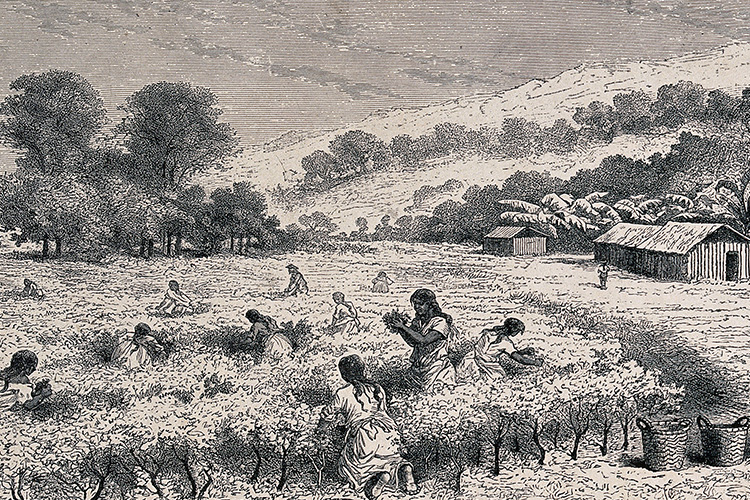
Cocaine has a reputation as a modern party drug, but it was among Victorians that it became ubiquitous – as an essential in medical science. In fact, before cocaine’s invention the Victorians had already developed an obsession for chewing the coca leaves from which cocaine is refined. Coca leaves had been a central feature of Incan cultural life centuries before Europeans adopted the substance in the late 19th century. But the key moment in the popularisation of the coca leaf in Britain came with the rise of competitive long-distance walker Edward Payson Weston. Weston was an American participant in the spectator sport of pedestrianism who established his celebrity when he walked nearly 500 miles from Boston to Washington D.C. in 1861 in a little over 10 days. “He came to dominate the world of this very strange Victorian sport, essentially competitive long-distance walking,” says Dr Douglas Small on Dan Snow’s History Hit podcast. “This sounds remarkable to us now but the Victorians absolutely went mad for this.” Women gathering leaves of the coca plant (Erythroxylum coca) in Bolivia. Wood engraving, c. 1867.Image Credit: Wellcome Collection / Public Domain When he visited Britain in 1876, some 5,000 people watched him compete in a 24-hour championship race against Englishman William Perkins. After winning the race, Weston revealed that his doggedness had been fuelled, in part, by munching on coca leaves. “That’s actually what really moves coca for British people from being something that’s occasionally discussed in travellers’ tales, something that’s mentioned every now and again in accounts of life in South America, to being something that people are really interested in,” explains Small, a historian and author of Cocaine, Literature, and Culture, 1876-1930. “[It] almost becomes for a while like tea and coffee, something that people really want to use in their daily lives.” By this point the use of steamships across the American continent and the Atlantic meant that the transport and supply of coca had become easier. With new demand, people began to acquire and use coca leaves in a way they hadn’t previously. Pep in your step As a result, Victorians started chewing coca leaves as the Andeans had been doing for centuries. Coca consumers even filled Mincing Lane, the centre of London’s 19th century tea and spice trade, looking to purchase what had so recently been a rarity. “Very quickly after Weston popularises their use they catch on amongst all kinds of sportsmen,” says Small. “They start being advertised for bicyclists, other pedestrians. There are accounts that are written in the British Medical Journal that talk about how great it is for shooting parties because they apparently help to stabilise your nerves and give you a bit more pep and confidence which people say makes them much better shots.” Illustration from ‘The Sportsman’s Cyclopaedia’ by TB Johnson, 1848.Image Credit: Wellcome Collection / Public Domain They were even given to difficult race horses before races. A boom emerged in chewing coca leaves in the 1870s and 1880s. Yet this was mere foreshadowing for the later prevalence of cocaine, which commenced a few years later in 1884 thanks to innovations in the European chemical industry. Cocaine is stronger in its effects than raw coca leaves. Sigmund Freud was among its advocates for use as a stimulant and therapy for morphine addiction. But it found lasting use as an effective local anaesthetic, an essential in medical science for decades. A century later, cocaine is one of the most criminalised substances on earth. Listen to Dan Snow’s History Hit now or sign up to History Hit for advert-free listening, with early access and bonus episodes for subscribers. Sign up to listen advert free
Like
Comment
Share
Hot Air Feed
Hot Air Feed
2 yrs

CNN Analyst: Here's the 'One Glaring Hole' In Harris' 'Change' Argument
Favicon 
hotair.com

CNN Analyst: Here's the 'One Glaring Hole' In Harris' 'Change' Argument

CNN Analyst: Here's the 'One Glaring Hole' In Harris' 'Change' Argument
Like
Comment
Share
Hot Air Feed
Hot Air Feed
2 yrs

'Queering Nuclear Weapons'
Favicon 
hotair.com

'Queering Nuclear Weapons'

'Queering Nuclear Weapons'
Like
Comment
Share
NewsBusters Feed
NewsBusters Feed
2 yrs

Todd Hails Michelle Obama As America's 'Best Nonpolitical Speaker'
Favicon 
www.newsbusters.org

Todd Hails Michelle Obama As America's 'Best Nonpolitical Speaker'

MSNBC chief political analyst Chuck Todd twisted himself into a pretzel on Wednesday’s Jose Diaz-Balart Reports as he recapped former First Lady Michelle Obama’s Tuesday address to the Democratic National Convention. Todd argued that every four years, Obama reminds the country “she's probably the best nonpolitical speaker in the country.” That those reminders always line up with the political calendar appeared to go right over his head. Co-host Ana Cabrera led Todd with a clip of Obama declaring that “We cannot get a goldilocks complex about whether everything is just right, and we cannot indulge our anxieties about whether this country will elect someone like Kamala instead of doing everything we can to get someone like Kamala elected.”     After the clip, she asked, “Chuck, what do you see as the significance of that part of her speech?” Todd claimed the speech was a plea for the party’s various factions to unite, “It is a message, look, there are a lot of skeptical Democrats about how this thing—how quickly it is trying to get off the ground, everybody has got an opinion about what she should do next, should she do a press conference, should she do this, should she do that. And think that's what she was trying to address with that. As for Obama herself, Todd added, “But, you know, I do want to say something else about Michelle Obama, I don't think we should compare her to other political folks. She doesn't do this for a living. The fact—every four years we're reminded she's probably the best nonpolitical speaker in the country, and I think that's important to remind people, look, Barack Obama does it for a living. Did it for a living, all right. Giving a speech every day of his life for about 15 straight years. That isn't what Michelle Obama has done. She's sort of a civilian in that.” Todd then unwittingly undermined his point by pointing out that Obama gives more speeches than the typical person, but he still tried to portray her as some public speaking novice, “Certainly, she has more experience than maybe some of us on this set of giving big speeches, but I think it is all the more remarkable how good she is at this for how little she does it for how little she does it.” Michelle Obama has political opinions about everything; just because she doesn’t hold elected office doesn’t mean she’s “nonpolitical.” Here is a transcript for the August 21 show: MSNBC Jose Diaz-Balart Reports 8/21/2024 11:10 PM ET ANA CABRERA: Chuck, what do you see as the significance of that part of her speech? CHUCK TODD: I think what she's trying to say is, hey, “if you're worried that, oh, how's Kamala Harris going to handle an interview or has she put out enough policy proposals” or is she signing on with this direction of the party versus that direction of the party, that, you know, you essentially a little bit of message to the heads of the various fiefdoms inside the Democratic coalition, like, “hey, you know, don't sit here and get angry, go home and get angry if you're not getting the response you're expecting in the moment.” She even went on to say, “you don't get the phone call that says, hey, you know, I need your vote, and you're not going to vote until you get that phone call, don't be that petty.” And it is a message, look, there are a lot of skeptical Democrats about how this thing — how quickly it is trying to get off the ground, everybody has got an opinion about what she should do next, should she do a press conference, should she do this, should she do that. And think that's what she was trying to address with that. But, you know, I do want to say something else about Michelle Obama, I don't think we should compare her to other political folks. She doesn't do this for a living. The fact — every four years we're reminded she's probably the best nonpolitical speaker in the country, and I think that's important to remind people, look, Barack Obama does it for a living. Did it for a living, all right. Giving a speech every day of his life for about 15 straight years. That isn't what Michelle Obama has done. She's sort of a civilian in that. Certainly, she has more experience than maybe some of us on this set of giving big speeches, but I think it is all the more remarkable how good she is at this for how little she does it for how little she does it.
Like
Comment
Share
The Blaze Media Feed
2 yrs

My new Henry: Shooting the gun that won the West
Favicon 
www.theblaze.com

My new Henry: Shooting the gun that won the West

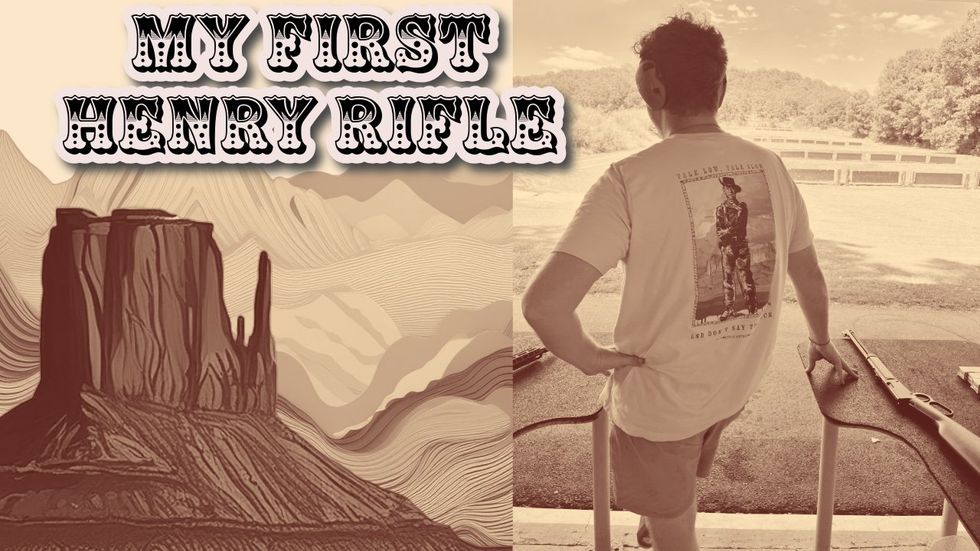
I just bought my first Henry rifle, a .22 lever action. When one of my AR-loving friends saw it, he said, “Look out, squirrels!” Most everyone else, however, responded with stories about their favorite .22 lever action. One of them, a novelist friend, said that he’s fended off thousands of prairie dogs with his .22 rifle. Unless life in America gets real bad, real fast (definitely possible), I won’t be killing any critters with my Henry. But I am going to learn every part of this wonderful machine and, hopefully, get good at using it. It’s not an AR-15 or an AK-47 or an M16. It’s their grandpa, the gun that won the West. Technically, the Henry rifle was only made for six years, through all of the Civil War. During that brief period, the New Haven Arms Company produced 14,000 Henrys. The company even crafted a gold-adorned Henry for President Abraham Lincoln. One Confederate officer described the Henry as 'that damned Yankee rifle that can be loaded on Sunday and fired all week.' The Henry that I own is a modern reimagining of the original, made by Henry Repeating Arms, founded in 1996 by New Yorkers Louis Imperato and his son Anthony Imperato, who has since become the CEO. The company is headquartered in Wisconsin, with a factory there and another in Bayonne, New Jersey. This article is not a promotion for Henry Repeating Arms. But the company sells a great product and espouses commendable values. It is an unabashedly pro-America company whose motto is “made in America, or not made at all.” Kevin Ryan Ringo the Kid A good friend of mine loves Henry repeating rifles, so I’ve shot a variety of them. He also collects various lever-action rifles, including Marlins, Rugers, Spencers, and Brownings. I love these Wild West rifles, especially the ones made by Henry. Brand loyalty, maybe. But it’s also a relationship based on feeling. How does the gun sit in your hands? Does it rest nicely on your shoulder? Is there an intuitive flow to its movements and anatomy? Cheesy as it sounds, you have to sync with the rifle. I bought it for $370 at Whitey’s Pawn and Tools, just outside Tulsa, Oklahoma. The owner was enthusiastic about my purchase, as my daughter tore through the stacked aisles past banjos and swivel hooks. I went with the cheapest lever-action sold by Henry Repeating Arms, the Classic. It has none of the ornamentation that makes the company’s rifles so elegant, like the Big Boy .45 caliber designed to honor John Wayne. I’ll work my way up to the Golden Boy, then the Big Boy. My rifle weighs about five pounds, heavier than it appears. It’s got a hooded front sight — a tiny metal canopy at the end of the barrel. So when you look down the pointy rear sight, your field of vision contains a frame for the target. The magazine is a tube with a loading port near the front end of the outer tube that is kept in place by a notch pin, a simple locking mechanism. There’s a bullet-shaped hole where you slot your .22 rounds. A skinny rod serves as the inner magazine tube. When you use it to shove the rounds into place, it feels like you’re a chimney sweep. Cradle the stock into your shoulder. Squint at the target — we often use a metal spinner. Then there’s the familiar motion of pushing the lever down then pulling it back up, in one decisive and swift movement. A snail-sized round flies into the rifle chamber, and the bolt has shoved the hammer into full-cock position. Time to shoot. Release. Then you get to do the John Wayne lever motion all over again. And again and again. It’s a wonderful gun to take to the range. It’s accurate. But it’s not immediately easy. I like that. There’s zero recoil, and .22 caliber ammo is cheap. It’s a great varmint rifle. It’s good for home protection, too, in case you would prefer not to liquify an intruder with a 12-gauge shotgun. The loading process is difficult enough that kids couldn’t fire it by accident — especially for responsible gun owners who follow the rules of firearm safety. I’m by no means a gun expert. Not at all, actually. I’m a student at best. I’m sure I even botched parts of the above descriptions. I couldn’t tell you why .22 cartridges are rimfire or how rimfire is different from centerfire. But I am lucky enough to spend time with some actual experts. And it’s like one of them often says after I lower my rifle, “Doesn’t it just bring a smile to your face?” My Rifle, My Pony, and Me The original Henry 1860 has been used in a ton of Westerns, including “Once Upon a Time in the West” (1968) and “How the West Was Won” (1962). In ”Silverado” (1985), Danny Glover’s character asks, “You ever seen what a Henry rifle can do in the hands of somebody who knows how to use it?” You can find it in many of the Westerns slated to appear in this series: “Lonesome Dove” (1989), “The Man from Laramie” (1955), “The Ballad of Buster Scruggs” (2018), “Heaven’s Gate” (1980), “Dances with Wolves” (1990), “Ride with the Devil” (1999), and “Django Unchained” (2012). It also appears in the animated Western “Rango” (2011), which I excluded from the family-friendly list at the last minute — it’ll reappear. Versions of the Henry rifle appear in a number of video games, including The Last of Us Part II, Fallout 3, Red Dead Redemption, and Red Dead Redemption 2. There are even some newer games that feature Henry Repeating Arms, including the great Call of Duty: Black Ops Cold War. Those are only a few examples. Henry and Henry-derived lever-action rifles are nearly as ubiquitous in Westerns as six-shooters. When you hold one, you can feel the spirit of the West. Winchester, a brutal man In the mid-1800s, a young man named Benjamin Tyler Henry set out to be a gunsmith. During his apprenticeship, he worked alongside Horace Smith and Daniel Wesson (Smith & Wesson). From there, they founded their own firearms company. One of the investors was Oliver Winchester, who also has a famous last name and who quickly wrested control of the company, rebranded it, moved headquarters to New Haven, Connecticut, then renamed it New Haven Arms Company. Benjamin Henry landed a supervisor role at the factory. Then, with America on the cusp of civil war, he designed the first lever-action repeating rifle. At a time of muskets, which had to be muzzle-loaded, Henry’s .44 caliber 16-shot rifle was formidable. The patent was registered on October 16, 1860. Henry rifles played an interesting role in the Civil War. They were used primarily by the Union Army, most of whose soldiers bought them with their own money. Henry rifles allowed soldiers to rapid-fire 16 shots, giving them an incredible advantage over their wartime adversaries. Confederate soldiers weren’t able to consistently get the ammunition. One Confederate officer described the Henry as “that damned Yankee rifle that can be loaded on Sunday and fired all week.” The Henry was also used at the Battle of the Little Bighorn, only it was in the hands of the Lakota, Arapaho, and Cheyenne tribes that obliterated Custer. In 1864, Benjamin Henry soured on his boss, Oliver Winchester. Irked by his salary, Henry sought to wrest the New Haven Arms Company from Winchester. Before he could, in 1866, Winchester dissolved the New Haven Arms Company into the Winchester Repeating Arms Company. Benjamin Henry died before the dawn of a new century. Winchester, meanwhile, modified the Henry rifle until it became the Winchester Model 1866. From there, the Winchester took all the credit. The Winchester company pushed the promotional slogan for its newfangled rifle: “The gun that won the West.” John Wayne used the Winchester Model 1892 in roughly a dozen films, beginning with “Stagecoach” (1939). It also appears throughout “True Grit” (1969). In 2021, the rifle sold for a whopping $88,500. Of course the Winchester appears in “Winchester ‘73” (1950). One of my favorite scenes is early on, right as the shooting competition is about to begin and Wyatt Earp is presenting the coveted rifle, one of 1,000. He struggles to speak over a pair of fighting boys. Boy 1: “My old man shoots a Henry, and he says it's the best gun there is!” Earp: “Gentlemen, if you please!” Boy 2: “Ain't no better than a Spencer! Earp: “When the Winchester people —” Boy 2: “A Spencer's better than anything you can get!” Earp: “Young men, dry up!” (Everyone laughs.) “Without being unkind to either the Henry or the Spencer, do you suppose we could agree that this is the finest gun in the world?” Please note that the company profiles and product recommendations that Align publishes are meant solely to inform and edify our subscribers; unless explicitly labeled as such, they are neither paid promotions or endorsements. Even in cases in which a company is a paid sponsor of Blaze Media, Align editorial content is created independent of any commercial relationships.
Like
Comment
Share
The Blaze Media Feed
2 yrs

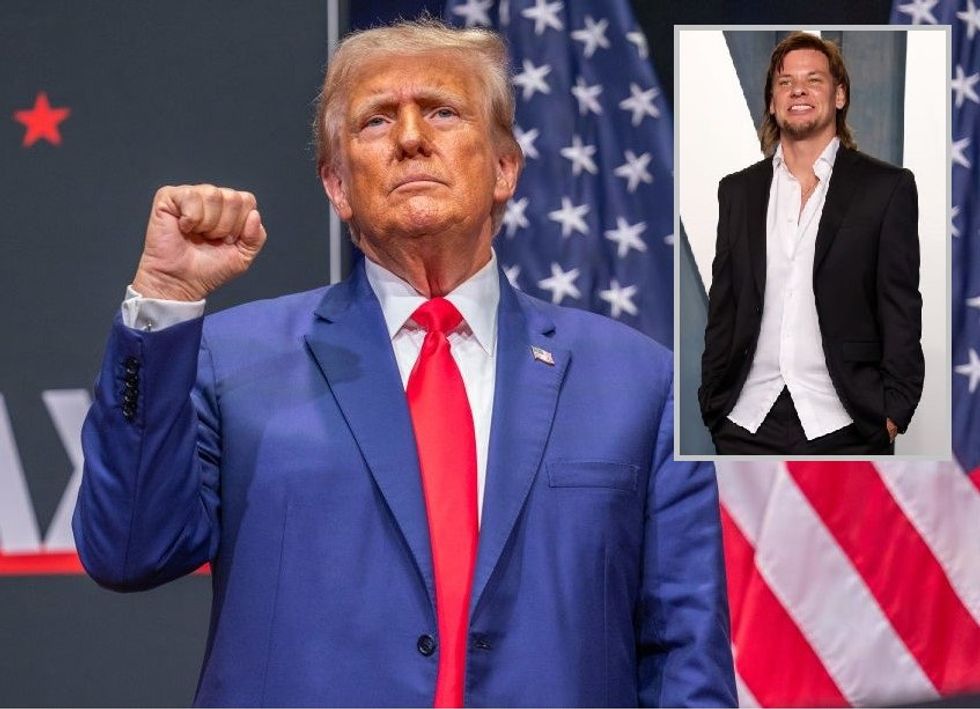
Trump opens up about late brother's struggles with alcoholism in moving conversation with Theo Von
Favicon 
www.theblaze.com

Trump opens up about late brother's struggles with alcoholism in moving conversation with Theo Von

During a candid conversation with comedian and podcast host Theo Von released earlier this week, former President Donald Trump opened up about his late brother who struggled with alcohol addiction.Von, 44, and Trump, 78, touched on a number of topics during the episode of Von's podcast "This Past Weekend," including illegal immigration, Trump's recent debate with Biden, and his son Barron, who's reportedly a fan of Von. The segments of their conversation that have gone viral on social media, though, related to their discussion about substance abuse, and Trump shared stories about his late brother Fred Trump, an alcoholic who died in 1981 at the age of 42.'The reason it's good talking about it is, it might help other people. If it helps one other person, it's worth the conversation.'The former president claimed that Fred "knew he had a problem" with alcohol but could not break it. Because of his struggles, Fred always advised younger brother Donald to steer clear of addictive substances."Don't drink, don't drink," Donald Trump recalled Fred saying. "And he said, 'Don't smoke.' He smoked, and he drank."Donald Trump apparently followed his older brother's advice, telling Von he has "never had a glass of alcohol." Moreover, he admitted that, like Fred, he likely has the "personality" that would lend itself toward addiction."I think maybe I'm a personality type where I could have had the problem if I drank," he explained."I couldn't have been successful if I had that problem."During the exchange, Trump also hinted at his continued grief over Fred's untimely death. His voice became rather quiet as he described Fred as a "great guy" and a "great brother" who was "very handsome.""I admired a lot, so much about him," Trump told Von. "He had so much going. He had the look. He was an unbelievable personality, like, an incredible personality."When pressed to describe a poignant memory with Fred, Trump shared that Fred was a "very talented" pilot who "loved" to fly and who even helped other skillful pilots improve their craft. "But ultimately he had to give that [up] because of the alcohol," Trump said. "He had to give that up, which was a hard thing for him to do."When Von expressed concern that he was touching on too sore of a subject, Trump claimed he wanted to share these stories about Fred in hopes of helping others with similar challenges."The reason it's good talking about it is, it might help other people. If it helps one other person, it's worth the conversation," Trump stated.Trump claimed he also had a friend from business school who likewise died from alcohol addiction. The friend insisted on drinking scotch, which he didn't like, "to be successful in business.""He hated the taste of scotch, and then he couldn't live without it — literally," Trump recalled of his friend, whom he did not name.For his part, Von admitted that he has been in recovery for alcohol and drug addiction off and on for the past decade. He claimed he has been sober for the past two years or so. When Trump asked which addiction, drugs or alcohol, was more difficult to shake, Von claimed drugs were harder but said that consuming alcohol was the gateway to using other drugs."If I have a drink then it's tougher for me to prevent myself from [using drugs]," explained Von, who said addiction runs in his family.Later in the episode, the conversation returned to drug use, and Von went into more detail about the racing feeling caused by cocaine."Cocaine will turn you into a damn owl, homie," Von said, addressing the 45th president of the United States. "You know what I'm saying? You'll be out on your own porch, you know, you'll be your own street lamp."Von insisted the feeling is "horrible" but that addicts continue to pursue it anyway. "Just like the guy ... with the scotch," he explained.The full one-hour interview between Trump and Von — which was apparently arranged in part by UFC president Dana White — can be viewed here.Like Blaze News? Bypass the censors, sign up for our newsletters, and get stories like this direct to your inbox. Sign up here!
Like
Comment
Share
The Blaze Media Feed
2 yrs

Kamala Harris and Walz skipped Obama's DNC speech reportedly to avoid Biden's anger over backstabbing
Favicon 
www.theblaze.com

Kamala Harris and Walz skipped Obama's DNC speech reportedly to avoid Biden's anger over backstabbing

President Joe Biden said he had no ill will toward those who helped oust him from his re-election campaign, but there may be real anger behind the scenes, according to a report. 'We are in tricky territory.'A source familiar with the situation between the Harris-Walz campaign and Biden told Fox News that Vice President Kamala Harris and Minnesota Gov. Tim Walz skipped former President Barack Obama's speech at the Democratic National Convention to ease Biden's anger."[The] Obamas are still not on the White House good side. It would not be helpful to their relationships," the source said. "We are in tricky territory," the source added. Instead of attending Obama's speech, Harris and Walz were a hundred miles away at a rally in Milwaukee. Their absence helped defuse Biden's anger by avoiding the optics of the presidential candidates standing on a stage next to the man who led the crusade against Biden. Both Walz and Harris have a long history with Obama. The vice president had been nicknamed by many as "the female Obama." Obama used his speech to laud Harris and attack former President Donald Trump. At one point, he appeared to make a joke referencing Trump's manhood to uproarious applause from the Democrats in attendance in Chicago, Illinois. While the Democratic convention is designed to present a united front by the party, behind the scenes, voices are wondering whether the unity will hold if poll numbers dip for Harris or if she stumbles in any way. Harris will give the final speech at the Democratic convention on Thursday after accepting the party's presidential nomination. Like Blaze News? Bypass the censors, sign up for our newsletters, and get stories like this direct to your inbox. Sign up here!
Like
Comment
Share
Showing 15481 out of 56670
  • 15477
  • 15478
  • 15479
  • 15480
  • 15481
  • 15482
  • 15483
  • 15484
  • 15485
  • 15486
  • 15487
  • 15488
  • 15489
  • 15490
  • 15491
  • 15492
  • 15493
  • 15494
  • 15495
  • 15496

Edit Offer

Add tier


Select an image
Delete your tier
Are you sure you want to delete this tier?

Reviews

In order to sell your content and posts, start by creating a few packages. Monetization

Pay By Wallet

Payment Alert

You are about to purchase the items, do you want to proceed?

Request a Refund